Page 1714 of 2546
1 1.712 1.713 1.714 1.715 1.716 2.546

La caza de los niños albinos en África, víctimas de la magia y la superstición

En los últimos 19 meses, 18 personas albinas han sido asesinadas en Malaui y cinco han sido secuestradas.

9 jun 2016 /RT
El número de los ataques contra las personas albinas en Malaui ha aumentado desde finales del 2014, informa Reuters. Amnistía Internacional (AI) ha instado al Gobierno del país africano a tomar medidas urgentes destinadas a proteger a estas personas.

Los albinos, que debido a una condición genética tienen poca o ninguna pigmentación en la piel, cabello y ojos, son perseguidos por agresores que creen que las partes del cuerpo de sus víctimas tienen propiedades mágicas y atraen la buena suerte.

La ola sin precedentes de ataques brutales contra personas con albinismo ha creado un clima de terror

Las autoridades locales sostienen que en los últimos 19 meses, 18 personas albinas han sido asesinadas y cinco han sido secuestradas. Sin embargo, AI señala que el número de víctimas puede ser mayor, ya que muchos ataques en las áreas rurales no han sido reportados.

El director de Amnistía Internacional en el sur de África, Deprose Muchena, ha declarado que «la ola sin precedentes de ataques brutales contra personas con albinismo ha creado un clima de terror para este grupo vulnerable y sus familias». De acuerdo con el informe de la ONG, un gran número de estos casos siguen sin resolverse.

Mwigulu Matonage Magesa, el albino de 12 años de Tanzania, 21 de septiembre de 2015, Nueva York

Según familias, policías y líderes de comunidades, el número de los ataques ha aumentado, lo que podría ser causado parcialmente por el desempleo masivo y la sequía en el país. Algunos niños han sido vendidos por sus propios padres y en varios casos los atacantes eran parientes cercanos.

El miedo entre algunas familias hace que los padres escondan a sus hijos y como resultado los niños no estudian. Malaui cuenta con 10.000 personas albinas, siendo su población 16,5 millones de personas.

Fuente: https://actualidad.rt.com/sociedad/209738-caza-ninos-albinos-africa-magia-supersticion

Comparte este contenido:

España: El Ministerio de Educación, Cultura y Deporte evalúa la Sentencia del TJUE sobre la copia privada, a la espera del pronunciamiento del Tribunal Supremo

España: El Ministerio de Educación, Cultura y Deporte evalúa la Sentencia del TJUE sobre la copia privada, a la espera del pronunciamiento del Tribunal Supremo

España/ 09 de junio de 2016/Ministerio de Educación Cultura y Deporte

• El Gobierno espera el pronunciamiento del Tribunal Supremo para determinar los efectos de esta interpretación sobre el ordenamiento interno y promover, en su caso, las medidas necesarias
En relación a la sentencia del Tribunal Superior de Justicia de la Unión Europea respecto a una cuestión prejudicial planteada por el Tribunal Supremo sobre el Real Decreto 1657/2012, el Ministerio señala:
– Cuando se aprobó el Real Decreto-ley de compensación por copia privada, ya se indicó que se trataba de un sistema transitorio hasta tener una directriz clara por parte de la Unión Europea.
– Con ese sistema se regularizaba una situación de inseguridad jurídica, desencadenada a raíz de la sentencia ‘Padawan’ de 2010, que declaraba fuera de la legalidad el sistema de canon digital (por el que se cobraban tasas indiscriminadas por cada aparato o soporte reproductor). El Gobierno anterior no quiso acometer la reforma, que se le requirió incluso por moción aprobada en Cortes, generando incertidumbre tanto en los ciudadanos como en la industria cultural.
– La sentencia emitida hoy por el Tribunal Superior de Justicia de la UE responde a la cuestión prejudicial planteada por el Tribunal Supremo en el procedimiento en el que enjuiciaba la legalidad del Real Decreto 1657/2012, de 7 de diciembre, por el que se regula el procedimiento de pago de la compensación equitativa por copia privada con cargo a los Presupuestos Generales del Estado. Corresponde ahora al Tribunal Supremo dictar sentencia.
– El Gobierno en funciones espera este pronunciamiento del Tribunal Supremo para determinar los efectos de la interpretación del Derecho comunitario que realiza el TJUE tienen sobre el ordenamiento interno y adoptar las medidas que, en su caso, resulten necesarias.
Fuente:
http://www.mecd.gob.es/prensa-mecd/actualidad/2016/06/20160609-canon.html

Comparte este contenido:

Reino Unido: Universities ‘too often’ focusing inwards in debates like EU

Reino Unido: Universities ‘too often’ focusing inwards in debates like EU

Reino Unido/junio de 2016/ Times Higher Education

RESUMEN: Universidades y académicos se centran en la forma en que las principales cuestiones políticas, tales como el referéndum de la Unión Europea los afectaraa ellos, en lugar de todo el país, y el riesgo de convertirse en «parroquial, conservadora e insular» si no pueden abrazar el compromiso cívico. Emran Mian, director de la Fundación Social de Mercado, hace comentarios en un ensayo para una colección que marca el lanzamiento oficial de la Fundación UPP, una organización benéfica creada para abordar los grandes problemas que enfrenta la educación superior del Reino Unido.
La colección, sienta las bases en el examen de la relación entre las universidades, los estudiantes y la sociedad, abarca los temas de la fundación centrada en el acceso y la retención, la universidad cívica, la empleabilidad y ciudadanos del mundo.

Universities and academics focus too much on the way major political questions such as the European Union referendum will affect them, rather than the whole country, and risk becoming “parochial, conservative and insular” if they fail to embrace civic engagement.
Emran Mian, director of the Social Market Foundation, makes the comments in an essay for a collection marking the official launch of the UPP Foundation, a charitable organisation established to tackle the big issues facing UK higher education.
The collection, Laying the Foundations: Examining the Relationship between Universities, Students and Society, covers the topics the foundation is focusing on: access and retention, the civic university, employability and global citizens.
In his essay, Mr Mian argues there are three symptoms for universities “losing confidence in themselves as civic institutions”. Primarily, he suggests that academics too often frame societal issues within the context of what it means to higher education.
“When you look closely, are people from universities engaging in the debate about immigration or the future of the UK in the EU from the perspective of what it means for universities or what it means for the country? All too often it is the former,” he writes.
Mr Mian also noted an “unwillingness for academics to be at the leading edge of cultural change or to take risks in political, religious and economic debate” and universities’ propensity to treat widening participation as an issue of “regulatory compliance” instead of an opportunity for civic engagement.
Speaking to Times Higher Education, he said that autonomous universities “wouldn’t quite be living up to the credence that they have and the scale that they have if they’re not challenging some of our cultural assumptions, if they weren’t getting stuck into some of the most difficult and controversial ethical, religious or political debates that are going on in society”.
“If universities continue to talk about public issues in a parochial way, it risks becoming a bit of a cycle. If vice-chancellors only talk about the Europe debate with respect to what it might mean to their future funding, then it feeds into that idea that they are not a broader part of our society and our economy – [that] v-cs are mainly there to look after the interests of their institution.
“When they get involved with public debates, they should be thinking about the role of the university within the wider public.”
Por: John Elmes

Fuente: https://www.timeshighereducation.com/news/universities-too-often-focusing-inwards-debates-eu

Comparte este contenido:

República de Togo: L’école évolue

República de Togo: L’école évolue

República de Togo/ junio de 2016/republicoftogo.com

Resumen: En la Republica De Togo, el Ministerio De Educación señala que el número de profesores ha aumentado durante 4 años como producto de la contratación de 8.023 nuevos empleados. Mientras tanto, las instituciones se han modernizado y jardines de infancia habilitados en todo el país. Con la integración de maestros en las 200 escuelas construidas se eleva la incorporación e inauguración de las escuelas. Además, el Ministerio de Educación ha proporcionado más de 3 millones de libros de texto a 4.359 escuelas primarias cuya educación es gratuita y libre. Por último, el gobierno ha hecho la enseñanza obligatoria para todos hasta la edad de 15 años. Los esfuerzos continuarán, explican los funcionarios del ministerio cuya ambición es adaptar la educación al mercado laboral cambiante.

L’effectif des enseignants s’est accru depuis 4 ans avec le recrutement de 8.023 nouveaux fonctionnaires. Parallèlement, les établissements ont été modernisés et des jardins d’enfants ont ouvert leurs portes dans tout le pays.
200 écoles ont été construites et 5 écoles d’instituteurs inaugurées.
En outre, le ministère de l’Education a fourni plus de 3 millions de manuels scolaires aux 4.359 écoles primaires dont l’enseignement est gratuit.
Enfin, le gouvernement a rendu obligatoire l’école pour tous jusqu’à l’âge de 15 ans.
Les efforts vont se poursuivre, expliquent les responsables du ministère dont l’ambition est aussi d’adapter l’éducation aux évolutions du marché de l’emploi.
Fuente: http://www.republicoftogo.com/Toutes-les-rubriques/Education/L-ecole-evolue

Comparte este contenido:

Ethiopian: Education: Key to resilience, sustainable development

Ethiopian: Education: Key to resilience, sustainable development

Ethiopian/ 07 Jun 2016/ The Ethiopian Herald

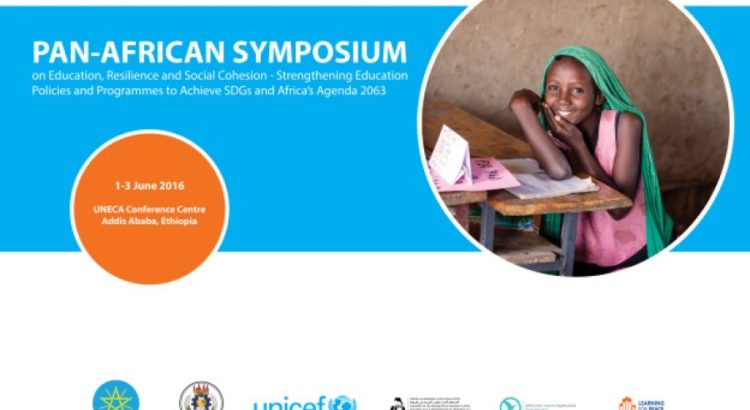
Resumen: La educación juega un papel importante en la obtención de los derechos de los ciudadanos, garantizando la equidad, la igualdad y la justicia para los ciudadanos en los más de todo el desarrollo económico de un país. La educación de calidad, como una oportunidad para todos, es esencial para el desarrollo del país y para garantizar la paz y la seguridad. Por lo tanto, muchos países están trabajando para ofrecer una mejor educación para todos. Garantizar el acceso equitativo a la educación es clave en el alivio de la pobreza, así como para abordar las causas profundas de los conflictos y la inestabilidad en África. Y es con esta visión en mente que los interesados en asistir al Simposio Panafricana sobre la Educación, la resistencia y la Cohesión Social, que se celebró aquí en Addis Abeba recientemente subrayó la necesidad de un programa de educación que está destinado a la construcción de un desarrollo sostenible a través de la construcción de la paz y la seguridad. Educación para el Desarrollo Sostenible se refiere al acto de incluir las cuestiones clave para el desarrollo sostenible en la enseñanza y el aprendizaje; por ejemplo, el cambio climático, la reducción del riesgo de desastres, la biodiversidad, la reducción de la pobreza, El Simposio panafricana sobre la Educación, la resistencia y la Cohesión Social tiene como objetivo determinar las implicaciones de políticas y programas para África sobre la base de las lecciones de los programas de consolidación de la paz, educación y promoción de UNICEF en Este, África del Sur, África Occidental y Central Regiones.

It is a well known fact that education plays significant roles in securing the rights of citizens by ensuring equity, equality and justice for citizens on the over all economic development of a country. Quality education, as an opportunity for all, is essential for nation’s development and to secure peace and security. Hence, many countries are working to offer better education for all.
Ensuring equitable access to education is key in alleviating poverty as well as in addressing the root causes of conflict and instability in Africa. And it is with this view in mind that stakeholders attending the Pan- African Symposium on Education, Resilience and Social Cohesion that was held here in Addis Ababa recently underlined the need for an education program that is meant to building sustainable development through building peace and security.
Education for Sustainable Development allows every human being to acquire knowledge, skills, attitudes and values necessary to shape a sustainable future. Education for Sustainable Development refers to the act of including key sustainable development issues into teaching and learning; for example, climate change, disaster risk reduction, biodiversity, poverty reduction, and sustainable consumption. It also requires participatory teaching and learning methods that motivate and empower learners to change their behaviors and take action for sustainable development. Education for Sustainable Development consequently promotes competencies like critical thinking, imagining future scenarios and making decisions in a collaborative way. All these necessitate far-reaching changes in the way education is often practiced today. And to do that education system should have great contribution for peace, stability and poverty eradication and economic advancement.
Conflict and insecurity are the development challenges of our time; as a result, there are considerable barriers to realizing the right to education for all children and young people in many countries. Access to quality education is a right that should be sustained even in the most difficult circumstances. Education has the potential to build the capacities of children, parents, teachers and community members in general to prevent or reduce conflicts and to promote equality and peace.
Education has crucial linkages to a society’s social, economic and political spheres. And it is central to promote cohesive societies and contribute to state-building. On the other hand, inequitable provision of services or biased curriculum and teaching methods as well as poor governance of the sector can reinforce existing exclusion and stereotypes. Thus, education needs to be delivered effectively and equitably to ensure that it is a driver of peace and development.
The role of education in poverty eradication, in close co-operation with other social sectors, is crucial. No country can succeed if it has not educated its people. Education is not only important in reducing poverty but also a key to wealth creation. Within this context, one of the pledges of the Dakar Framework for Action – Education for All: was to promote better education policies within a sustainable and well-integrated sector framework that is clearly linked to poverty elimination and development strategies.
The role of education in this process is particularly achieving universal primary education and adult literacy. Fighting against poverty will only be realized through educating citizens and investing a lot on that regard. In fact, education is the social institution that reaches the largest segment of the population with the goal of guiding them through a systematic learning process.
Recently, The Ministry of Education of the Federal Democratic Republic of Ethiopia has underlined that education is a powerful contributor towards building peace as it creates a crucial link between humanitarian and long-term developments so as to develop the right conditions for social cohesion and community resilience.
On a three days symposium co-organized by the Ministry of Education of Ethiopia, UNICEF, Association for the Development of Education in Africa (ADEA) and Inter-Country Quality Node (ICQN) on Peace Education participants stressed that the moment countries need to share evidences and best practices from the UNICEF’s peace-building, education and advocacy program through assessing how inclusive, equitable and innovative education policy and programs can contribute to sustainable peace and development across the continent.
According to Shiferaw Shigute, Minister of Education, his ministry is working with a due commitment and focus towards peace building and quality education. The government of Ethiopia has a clear pro-poor growth strategy focused around guaranteeing full access to basic social services and infrastructures. The ministry has identified peace building, equity, equality, quality, early childhood care and education as well as improved learning outcomes as key components of its current Education Sector Development Plan (ESDP).
Recent reports from the ministry shows that over 27 million Ethiopian children are now attending schools across the country in more than 37, 000 schools. And the number of teachers have currently increased to 530,000 from what it was 82,000 twenty and five years before.
Though some 230 million people around the globe and half of the school age children live in countries that are affected with crisis, education should be a birth right that should be given prime attention by countries of the world as it is a means to addressing poverty and helping in preventing instability.
Brenda Haiplik, Senior Education Adviser, UNICEF Head Quarter, told that more than 327 million children in Sub-Saharan Africa live in fragile contexts with the majority of the estimated 29 million primary school aged children out of school in fragile settings; and they are particularly at risk of conflicts.
Education can catalyze economic, social and political transformations to support peace and prosperity in Africa and it will also support to achieving Sustainable Development Goals. And access to quality education can minimize inequalities or grievances among conflict-affected communities; and it can strengthen skills, attitudes and values that support peace.
Martial De-Paul Ikounga, African Union Commissioner for Human Resources, Science and Technology, speaks of the 2020 as “all guns will be silent”. And a culture of peace and tolerance would nurture in Africa’s children and youth through quality education and peace building.
The goal areas of the continent that member states should be giving a due consideration are in the areas of human capital, human development and creating a friendly environment for African people. For that to happen, better policies, issues of equality, equity in education, and more importantly promoting education for peace through avoiding conflicts in the continent are mandatory. Investing on the youth through education is the central point that we should be going through with a due consideration.
Ministers, technical experts and stakeholders from across 16 African countries have taken part on the three days symposium hosted in Addis Ababa. All the participants have finally agreed that quality education which is accessible for all is crucial for securing peace, stability and rapid economic growth in the continent.
The pan- African Symposium on Education, Resilience and Social Cohesion aims to determine policy and program implications for Africa based on lessons from UNICEF’s peace building, education and advocacy programs in Eastern, Southern Africa, Western and Central Africa Regions.
Fuente: http://www.ethpress.gov.et/herald/index.php/technology/item/4941-education-key-to-resilience-sustainable-development


Comparte este contenido:

India: Bihar ‘toppers’ case isn’t unique: Education system is broken and no one wants to fix it

India: Bihar ‘toppers’ case isn’t unique: Education system is broken and no one wants to fix it

India/Junio de 2016/ firstpost.com

RESUMEN: ¿Qué necesitan nuestros políticos para despierten a la crisis que están destruyendo el sistema de educación escolar? Ni siquiera recientes revelaciones de los resultados de aprendizaje sorprendentemente pobres de los primeros de la clase XII en Bihar han sacudido a la clase política. Las últimas revelaciones de Bihar han provocado indignación entre los ciudadanos y la desesperación entre los estudiantes, que fueron agasajados un día y al dia siguiente a la papelera. Blanco de burlas pública, los estudiantes son, sin embargo, las víctimas del sistema, no sus arquitectos. El sistema de educación indígena – el cual está generando toda una generación de cerca de alfabetizados – está empujando a los jóvenes fuera de las estructuras de la economía del conocimiento. Por ahora nuestros legisladores y clases gobernantes deberían haber sacado todas las paradas para reintegrar al aula su santidad como lugar de aprendizaje; en lugar de usarlo como un espacio para simplemente marcar la asistencia. Pero la calidad de la educación primaria es la última cosa que agita a los políticos.
What will it take for our politicians to wake up to the crisis destroying the school education system? Not even recent revelations of the shockingly poor learning outcomes of Class XII toppers in Bihar have jolted the political class out of nonchalance. The latest disclosures from Bihar have sparked outrage among citizens and despair among students, who were feted one day and trashed the next, in full media glare. Butt of public ridicule, the students are however, victims of the system, not its architects.
The Indian education system — which is spawning a whole generation of near-literates — is pushing young people outside the structures of India’s fast-paced knowledge economy even before they have a chance to compete in the real world. By now our policymakers and governing classes should have pulled out all the stops to reinstate to the classroom its sanctity as a site of learning; instead of using it as a space to merely mark attendance. But the quality of primary education is the last thing agitating politicians. Never mind that the very demographic advantage they cite for India – its youth – are looking at a bleak future.
This is what a report in The Indian Express said in the case from Bihar just mentioned above: “While arts topper Ruby Rai pronounced political science as “prodigal science” and said the subject dealt with “cooking”, science topper Saurav Shrestha could not define proton and electron.” Faced with public outcry, the Bihar School Examination Board decided to go for a retest and interview of 13 top Class XII students. Saurav Shrestha and Rahul Raj, both Science students of Vaishali’s Vishnu Roy College, had their results cancelled. Ruby Rai, from the same college, did not appear for the retest because of ‘depression’, and has been given another week’s time to appear for a retest, failing which her result will also be cancelled.
This crisis in schooling is not however, peculiar to Bihar. State after state has reported large-scale failures in classes X and XII. Under Right to Education Act, regardless of their lack of performance, students can’t be failed, till class VIII. That policy is currently under review. This month, only 20 out of 120 students of Government Senior Secondary School at Pathiar, Kangra in Himachal Pradesh, passed the Class X examination. Seventeen other students ended up with compartments, while most others fared poorly in English, Math, and Science. That’s not all. Not a single student could pass Class X in as many as 16 government schools, while none passed Class XII in three schools, according to a report in The Indian Express.
Ironically, Himachal Pradesh once used to be among India’s top ranking states in primary schooling. Two years ago, the Annual Survey of Educational Research (ASER) revealed all was not well.
The ASER showed that 17 percent of Class VIII in rural schools could not recognise digits, 15% could not identify numbers between 10 and 99, while 0.5 percent could not read capital letters in English and 1.2 percent could not read even small letters.
That economic achievements do little by way of improving educational standards is corroborated by the abysmal learning outcome statistics of Gujarat. An annual evaluation drive, Gunotsav, has found students of classes VI to VIII unable to read and write simple words and sentences in Gujarati, besides failing to solve simple mathematical problems. The evaluation drive found that six lakh students of Class VI could not write in Gujarati.
In this situation, successive governments that claim to be committed to improving the lives of the underprivileged, should have, long ago, launched a national conversation on primary education. But we have little other than emotive campaigns in this country, on issues that can grab votes and eyeballs. For the moment, it is the volatile Uttar Pradesh – going to polls next year – which is at the centre of political attention, where dietary habits are making headlines.
There is simply no time to talk about the state of classrooms – the site where students are meant to acquire basic knowledge. It’s one thing to raise a clamour about textbook rewriting and historical personalities. But these meaningless controversies have no bearing on pedagogy or knowledge production in a context where the system itself is broken and no one wants to repair it.
Por: Monobina Gupta

Fuente: http://www.firstpost.com/india/bihar-toppers-case-isnt-unique-education-system-is-broken-and-no-one-wants-to-fix-it-2826416.html

Comparte este contenido:

México: Egresados de UA de C logran empleo formal

México: Egresados de UA de C logran empleo formal

Mexico/junio de 2016/Zócalo Saltillo

Monclova, Coah.- Un alto porcentaje de los estudiantes egresados de las facultades de la Universidad Autónoma de Coahuila logran colocarse en un empleo formal, definitivamente ya cambió el que profesionistas tengan que dedicarse a ser taxistas o taqueros al no encontrar una oportunidad de trabajo, sostuvo el rector, Blas Flores Dávila.

Aunque no precisó qué porcentaje de los egresados consigue acomodarse en un empleo, dijo que es alto porque desde antes de concluir sus estudios muchos de los alumnos de la FCA, FIME o Metalurgia ya están realizando prácticas profesionales o trabajando.

Entrevistado en el acto que encabezó el Secretario de Educación Pública, Aurelio Nuño Mayer, para entregar credenciales del seguro social a estudiantes en el Politécnico de Monclova, dijo que la colocación de egresados se logra gracias al importante crecimiento que tiene Coahuila, uno de los Estados que más crece en promedio nacional en las distintas regiones, entre ellas la del Centro.

Añadió que el crecimiento que registra la entidad es muy alto, arriba del 3.5 por ciento, cuando el país crece al 2 por ciento, eso permite que los universitarios puedan colocarse en un empleo después de egresar de las diferentes carreras profesionales.

Ante esa situación, dijo que ya no sucede lo mismo de hace unos años, en que los egresados tenían que trabajar como taxistas o taqueros, al no encontrar un empleo formal relacionado a la carrera que estudiaron.

Por otro lado manifestó que la seguridad está garantizada dentro del Campo de la Unidad Norte de la UA de C, donde se instalaron video cámaras en la totalidad de los planteles escolares y los campos deportivos.

Al referirle que se han cometido robos de pilas de automóviles e incluso han asaltado estudiantes, el funcionario comentó que no tiene noticias al respecto, y si acaso se han registrado casos de ese tipo es fuera de la institución, no adentro.
Fuente: http://www.zocalo.com.mx/seccion/articulo/egresados-de-ua-de-c-logran-empleo-formal-1465538979

Comparte este contenido:
Page 1714 of 2546
1 1.712 1.713 1.714 1.715 1.716 2.546