Page 1737 of 2546
1 1.735 1.736 1.737 1.738 1.739 2.546

EEUU: Parents wrote about their transgender five-year-old, and readers had strong reactions

EEUU/8 junio 2016/Fuente: Whashinton 

Resumen:

Ron y Vanessa Ford son los padres de un niño transgénero 5 años de edad, y recientemente escribió para The Washington Post acerca de por qué ellos aprecian y apoyan la directiva de la administración de Obama a las escuelas sobre la acogida de los estudiantes transgénero. La directiva ha provocado una reacción de las autoridades locales y estatales que lo consideran extralimitación federal, y que sobre todo oponerse a la exigencia de que las escuelas permiten a los estudiantes transgénero a utilizar baños que corresponden a su identidad de género.

————————————————————————————-

Ron and Vanessa Ford are the parents of a 5-year-old transgender child, and they recently wrote for The Washington Post about why they appreciate and support the Obama administration’s directive to schools on accommodating transgender students. The directive has spurred a backlash from local and state authorities who call it federal overreach, and who particularly object to the requirement that schools allow transgender students to use bathrooms that correspond to their gender identity.
During a town hall event on June 1, President Obama said his decision to direct public schools to allow transgender students to use the bathrooms of their choice was based on the law and is intended to keep children out of «a vulnerable situation.» (Reuters)
For the Fords, the debate about bathroom access is really a debate about discrimination, and about whether the government will or will not sanction discrimination against their child.

“We are an interracial couple,” they wrote. “Fifty years ago, in many places across the country, it would have been legal to discriminate against us because, many people said, a fundamental part of who we are was somehow offensive and perverse. Our daughter is transgender. In many places across the country, it is legal to discriminate against her because, many people say, a fundamental part of who she is somehow offensive and perverse.”

We asked readers to weigh in on how the bathroom debate compares to earlier civil rights debates. There were many responses, representing the wide range of views and strong feelings that have characterized the discussion about transgender rights in America.

We heard from people who believe that the fight for transgender rights is akin to the civil rights battles of the Jim Crow era, and others who believe it is insulting to compare the two.

We heard from Christians who said that people should live according to their biological sex because God doesn’t make mistakes, and we heard from Christians who said their faith calls for loving and respecting all people, regardless of gender identity.

We heard from transgender adults who praised the Fords for giving their daughter the gift of unconditional love, and from parents of transgender children who said they appreciated the Fords’ courage in speaking publicly.
Others said they believe the Fords are encouraging a child’s delusion, and they questioned whether such a young child is capable of deciding that her gender doesn’t match the sex she was assigned at birth. How do the Fords know that their daughter isn’t going to change her mind?

Vanessa Ford pointed to an emerging body of research on transgender children who are supported and affirmed by their families — a population that has been difficult to study until now because the acceptance of transgender children is a relatively recent phenomenon.

One recent study from the University of Washington — published in Psychological Science in 2015, and part of a longer longitudinal study of transgender children younger than 12 — suggested that transgender children’s gender identity is real, and not the result of confusion or acting. Another, published in February in Pediatrics, showed that transgender children who are supported by their families have the same rates of anxiety and depression as children who are not transgender — and they have much lower rates of anxiety and depression than gender-nonconforming children in earlier studies.

Ford said that people who want to know more about their decision to support their child’s gender identity can read the letter they sent to family and friends, which appears in full below.
Here are a selection of responses The Post received from readers to the Fords’ original essay, who wrote about how the debate about transgender rights compares to past civil rights battles. Some have been edited for length and clarity.

“Being transgender myself, I spent my childhood, youth and most of my adult life in denial and hiding my true self”
I fully agree with the article and the notion it expresses. Being transgender myself, I spent my childhood, youth and most of my adult life in denial and hiding my true self, resulting in self-loathing, self-harm and two suicide attempts. (Thank the Lord, also in a 30+3 year marriage — yes, three years already as wife and wife — and with two open-minded children.) No kid, no youth, no adult who happen to be trans should be discriminated against. Bathroom bills aren’t about bathrooms, aren’t about safety, they are about discrimination. 70 years ago, the marriage of my mother and my father would have been illegal, I would have been sent to a concentration camp (probably right into the gas chambers) which is why I am very sensitive to discrimination and do advocate for equal rights for any human being no matter age, ethnicity, gender, sexual orientation, whatever.
— 55 years old, Germany
“People who are transgender/non-conforming need protection”
Bless you for having the courage to share your family’s story. Your children are both fortunate to have you as parents.
Since your story was personal, I wanted to add a comment to readers who worry that pedophiles will use this legal protection as a means to abuse children in public bathrooms. We can protect children from abuse only if we adults move beyond fear and learn facts. Pedophilia is not characterized by random — or public — crimes. (Consider wrenching stories of well-hidden clergy abuse.) The truth is, people who are transgender/non-conforming need protection from others wishing to harm them.
— 53 years old, Silver Spring, Md.

“God bless parents like yourselves”
I am a transgender woman, now aged 71, who grew up in fear of being locked up and the key thrown away, so I tried to conform but I was bullied at school, called names and “rechristened” a girl’s name by the boys because of how I was. I tried to transition in 1962 when I was 17, but I didn’t have supportive parents or support groups, and the Internet was not even dreamt about at that time. So I thrust it deep, lost myself in studies and got innumerable degrees — and also became borderline alcoholic in a desperate attempt to numb my mind. A failed suicide attempt at the age of 27 led me to seek help from a medical professional. I transitioned in the early 1970s and have had a wonderful, fulfilling life for almost half a century now. God bless parents like yourselves who by accepting their child as they are, can avoid the fear, trauma and pain of trying to be somebody that you are not.
— 71 years old, United Kingdom

“I wish we could change our society”
Instead of changing bodies, I wish we could change our society to one that accepted feminine boys and men and masculine girls and women so that no one felt compelled to expose themselves to the risks of life-long hormone administration or the removal of healthy organs.
— 50 years old, Philadelphia

“I was so close to suicide so many times I have lost count”
Having lived through the civil rights movement since the 1950s, I see little difference in the nasty justifications to discriminate based on race or gender identity. Among certain people there still seems a deep seated need to identify those who are different and exclude them from society and to limit their rights. I am a transgendered woman and the discrimination kept me in the closet from about age 8 until my transition this year at the age of 67. What was it like to live a restricted, unauthentic life for 6 decades? I really can’t put it into words and when I try all that comes is tears. It is a miracle that I am still here today to enjoy my newfound life as myself. I was so close to suicide so many times I have lost count. I am only here because my sense of duty towards family kept me tied to this life. This long, long lonely sojourn was not because there was anything wrong, perverse or abnormal about me, but was entirely the result of a cruel and uncaring society that promised the complete destruction of my life and the lives of those I held dear should I ever express my true self. When I realized my difference in 1957 we were living north of Atlanta and I still can see in my mind the towering figures in white satin robes manning their KKK Labor Day roadside coffee stops to disseminate hate under the pretense of performing a civic service. Human cruelty seems to have no limits. I think we can win the fight this time, but it is very hard. I cannot bear the thought of children like Ellie experiencing any of what I had to endure. People who support these laws have not the slightest concept of the suffering and damage they are attempting to inflict on the transgender community and its children. The human heart still has an infinite capacity for ignorance and cruelty.
— 67 years old, Sequim, Wash.

“This boy is not and never can be a girl”
This is outrageous! These “feel good” articles are deceiving and totally evil. This is nothing more than social engineering! Any parent who allows this “transgender” fantasy is guilty of child abuse! This boy is not and never can be a girl because his sex is defined in his DNA and CANNOT BE CHANGED! STOP THE MADNESS! Children who act this way need help, not pandering to their delusional fantasies! As for bathrooms, people need to go to the one according to their biological sex! Period!
— 70 years old, Orlando, Florida
“You are made to feel you are not wanted”
I wish you all the best with your transgender child. It is a rough life as most are not accepting. I transitioned almost twenty years ago so I have seen the storms directly. Looking just for bathroom rights is probably one of the more minor issues – not that it is not important. Being able to secure work, housing and overall life opportunities are far more critical. As a transgender person, there is a pressure everywhere that is forcing you out of society. You are made to feel you are not wanted and are not accepted as you are. Anyone can deal with such attitudes in the short term, but in the long-term it is easy to just give up. Your skills do not mean anything, because any potential employer just looks at your transgenderism and decides not to hire. That is the killer!
— 48 years old, Reno, Nev.

“It is extremely insulting to compare trans rights with the struggle that black people have faced”
It doesn’t compare at all because they’re two completely different situations in different time periods affecting two different types of people. It is extremely insulting to compare trans rights with the struggle that black people have faced ever since they came to America. Until trans people are lynched, getting bit by police dogs, hosed with hard pressured water, and treated like actual second class citizens then the comparison is extremely silly!
— 23 years old, Houston, Texas

“Get over it, people. It’s no one’s business what’s in someone’s pants.”
This issue pisses me off. Let a person use the bathroom that they want to use. People are afraid there will be “men” in the ladies room, while the person next to you checking their makeup may have a penis, they think of it as a mistake because they have a woman’s brain. Transgender people have been around since the dawn of time and have been using public restrooms since their invention. Sex reassignment surgery has been done since the 1930’s (Google it). Get over it, people. It’s no one’s business what’s in someone’s pants when it comes to marriage or bathrooms. If we would all treat each other with the love and respect they deserve as a human being the world would be a much nicer place, and just maybe “officials” would be free to tackle the important issues.
— 53 years old, Washington, Pa.

“A child of 4 or 5 cannot and should not make a decision like that”
It is a parent’s job to guide the child in the right direction, and a child of 4 or 5 cannot and should not make a decision like that. If their “daughter” shows her penis in any bathroom I’m in, HE will be told he’s a BOY and told to get out of the LADY’S ROOM!!!
— 60 years old, Seattle, Wash.

“No child should have to grow up that way”
My daughter claimed her identity as female at age eight. Before that time she lived in constant stress. She was constantly forced to use the wrong restroom. The boys’ room was a foreign and unsafe space for her. She was bullied there. She knew it wasn’t the right place for her, and consequently she stopped going. She developed a bowel disorder that could plague her for the rest of her life. Even though we live in a relatively accepting community, she still faces a lot of pressure from a society that does not completely accept transgender children. No child should have to grow up that way. There is an immediate and direct connection with previous civil rights struggles. It’s the same phenomenon cloaked in different labels.
— 52 years old, Boulder, Colo.
“We are becoming too permissive with our children”
As a Catholic, and a Christian, I believe we are becoming too permissive with our children. I remember when my sister and I were growing up, we were allowed to play as we wanted. We hung out with boys and dressed in boyish clothes. We played with toys meant for boys. We never doubted the fact that we were girls. Until we come to terms with the fact that a person’s gender cannot completely be changed, nobody will be happy. As for the bathroom, a lady should never be forced to share a bathroom with a man.
— 44 years old, Lubbock, Tex.

“This push towards transgender acceptance is very dangerous”
How did this turn into a civil rights movement? Because it shouldn’t be, it should be about teaching your child right from wrong and ignoring those who would disturb morality. The bathroom and transgender rights would not be a problem if people understood that it is harmful to allow one to identify as the opposite gender. Transgenders have a 41 percent chance of committing suicide. In what way is allowing children to do the same a positive thing? You can google transgender violence or bullying and it’s common. This push towards transgender acceptance is very dangerous. It’s a safety issue that should have been addressed before experts decided that kids should transition. The best way to protect your child is to let them know they need to follow what their parents say instead of the child doing what they want. Parents need to teach kids right from wrong.
— 25 years old, Chicago, Ill.

“Christians should act like Christians and embrace the diversity of humankind”
My husband and I have been foster parents for 30 years to children from many backgrounds and inclinations. Our role as adults is to do all we can to make a child feel included. Fear is what creates stupid laws and an atmosphere of paranoia. Remember the mean girls in the high school bathrooms? Those were the people I feared. Haven’t had an issue with a restroom since then. Do we start challenging people who do not fit the model of femininity, masculinity and become the bathroom police of who can enter? Anyone with evil intent can always find a way. Christians should act like Christians and embrace the diversity of humankind.
— 76 years old, Kensington, Md.

“Students are much more accepting than their parents”
I think state bathroom laws regarding transgender students IS the new civil rights debate. I am a teacher at a public school and I can tell you that students are much more accepting than their parents, so there is hope in the next generation for all civil rights issues. I agree with the rights of all humans and agree with the Dept. of Justice and the federal government withholding money from states that discriminate.
— 58 years old, Bowie, Md.

“Separate but equal”
To those who want to compare sex-segregated facilities to race-segregated facilities, I would only ask this: if requiring people to use facilities that match their sex regardless of their gender identification is the same as prohibiting people of different races from using the same facilities, what possible moral or legal justification can there be for “separate but equal” facilities for different sexes — or for different genders, for that matter?
— 62 years old, Arlington, Va.

“This controversy is about fear”
Oh, I don’t think it is even about civil rights. This controversy is about fear. All of a sudden we are concerned about predators accosting our women in public restrooms. There has never been a law to prevent men from entering a women’s room in the first place, but now, men or even worse, boys, are going to pretend they are female to enter a restroom to attack women?? Who thinks like this? Most people do not flash their private parts in public restrooms. I don’t have any personal experience with transgenders that I know of, but I have always had gay friends or co-workers. I never thought I would see the progress we have achieved in the last few years. It’s about time, and now we have another hurdle. Can’t we just accept them as people?
— 58 years old, Crownsville, Md.

“I’m afraid they’re making a terrible mistake”
A 5-year-old transgender?! At 5, I wanted to be a boy. I’m so glad my mother didn’t indulge that. I’d be so screwed up if she had. I’m now a happy healthy adult heterosexual female who is still a bit of a tomboy. Just do gender neutral activities and buy gender neutral clothes until the kid finds out who s/he is. These parents think they’re doing a good thing, but I’m afraid they’re making a terrible mistake.
— 32 years old, Los Angeles

“I too worry about what would happen if society turns against my child”
Vanessa, I am so proud of you and Ellie and your entire family. Your words are powerful. As the parent of another transgender 5-year-old, I too worry about what would happen if society turns against my child and discrimination were to be legislated on the basis of fear and falsehood. I start too many days reading missives filled with fear and anguish from parents whose children are not affirmed in their communities, and who hang in the balance between life and death. I urge people to listen to your words carefully, and to allow you to be the bridge by which they cross over and experience for a moment, the life of the “other.” Love to you and your family.
— 39 years old, Melrose, Mass.

“Last time I checked, restrooms had private stalls”
I really don’t understand all this fear of ‘perverts’ in the bathrooms. As far as I can tell there has never been a reported case of a transgender person ‘misbehaving’ in a restroom. Although there are now many cases of cis-gendered persons being harassed because they don’t look ‘male’ or ‘female’ enough in some people’s eyes to be using the restroom of their sex. Last time I checked, restrooms had private stalls – if we could all just respect that privacy – this would be a non-issue.
— 64 years old, Reston, Va.

“My daughter is also transgender”
My daughter is also transgender. I fear for her safety because she is living in an area where politicians are actively advocating laws to discriminate against her. The least-informed people are spreading fear and hatred against some of the most wonderful, caring people I know. I know I will never fully know the pain and suffering of those who struggled with racial discrimination, but having a transgender daughter has opened my eyes to how heartbreaking it can be to parent an innocent child who is targeted by those who know nothing about her.
— 54 years old, Houston area

“I salute these kids for their courage and strength”
I find it totally fascinating that kids at 4 and 5 are now confident enough to in essence come out and express who they are and how they feel. Just as a parent, I find it amazing. (It also shows that even at early ages kids listen and form their own ideas and actions.) My kids are not transgender, but I deal with issues of self-image, self-confidence, anxiety and depression. From that perspective alone I salute these kids for their courage and strength at any age and the parents that provide and support them!
— 50 years old, Washington, D.C.

“I am the father of a gender non-conforming daughter”
I am the father of a gender non-conforming daughter. At age 5 she refused to wear dresses. She sometimes said that she wanted to be a boy and periodically asked to be called by a boy’s name. She often refers to herself as “he” in her various imaginary games. At age 6, she started asking for “fancy” clothes, i.e., boys’ suits, which she loves wearing. That being said, she has never complained about using a girls’ bathroom, has never said she wished she had a penis and refers to herself as our daughter. Her teachers have been incredibly understanding and supportive, and her fellow elementary school students appear to treat her just like anyone else. I confess that I don’t understand all of her preferences but what I do understand is that she’s my child and deserving of my unconditional love, support and acceptance. My daughter is a remarkably happy, easygoing child and we attribute that, in part, to the casual acceptance of those around her. Of course I have no idea what path my daughter will take through life but I know that the objective of all parents is to help their children become the best versions of themselves that they can be. It baffles and infuriates me that some people might stand in my way to do that.
— 56 years old, Bethesda, Md.

“As a Christian this deeply disturbs me!”
I find it outrageous. As a Christian this deeply disturbs me! It has gotten progressively worse. My daughters are grown but I won’t subject my 3 yr old gbaby to such foolishness. She should never have to worry about who’s in the bathroom with her. The problem with this is it will open the door to perverts and that IS the problem. As far as the little boy wanting to be a little girl, I wont even comment but to say, Puhlease, God makes NO mistakes!
— 48, Waldorf, Md.

“I have a few questions”
This is a good article. I support people being who ever they are. I also believe that this is a civil rights issue. Bathrooms should be built that are unisex so this does not continue to be a real issue. However, I have a few questions as I am trying to learn more about transgender people. Is this a chromosome issue? What happens when this child starts to grow facial hair? Will she have some kind of surgery to deal with genitalia? What about her voice? Will she take hormones? Will these hormones stunt her growth? Does she get psychological counseling? Sometimes people fear other people who are different because they lack information. Just like racism, sexism, ageism etc.
— 58, Washington D.C.
The Ford family’s letter to family and friends about their child’s coming out as transgender:

Dear Friends,

For a long time, we said, “Our son likes dresses but also ninjas” to describe our child to others. However, we, and a number of experts and specialists, don’t feel that’s a fair description of our child anymore. Our child insists every day, in many ways that they are a girl and has for a long time. Our child has asked for us to call them her/she/sister and Ellie is a name she chose once she realized people would think she was a boy with her birth name.

Starting around age 4, Ellie has consistently and persistently told us she is a girl in many ways. The most clear have been “I’m not a boy. I am a girl.” “I’m a girl in my heart and my brain.” Most times when she says these things, she says them without prompting or questioning. She draws herself as a stick figure girl, says she’s a girl — often many times a day when playing (“I’m the girl power ranger, I’m Wonderwoman/SpiderGirl/BatGirl etc). We purchased a whole “girl” wardrobe after a tantrum one morning about having to wear “boy” underwear. Since that point, our daughter has truly emerged. She has blossomed, is happier and just seems more herself. It’s hard to explain. (Ellie chose her new name by the way. It’s the name of her lovey and it means “shining light”!)

We haven’t seen that she’s experienced a lot of the distress (dysphoria) that often appears in transgender children but we have seen some, and it’s been concerning. For example, we’ve heard her talking in her room late at night pointing and poking at her chest saying “Boy! Boy! Boy! I am a boy! I like power rangers!” It was unsettling and her tone was worrisome. That was the last time she ever mentioned being a boy and we soon got her the clothes to match who she said she really was. This has helped. Another example was when we didn’t have a “girl” swimsuit and she had a rash guard that said “surfer girl” on it. Twice she threw a tantrum having to put on a life jacket. We didn’t know why but eventually she said, “It will make me a boy! It covers my girl words. People will think I’m a boy and I’m not!” So we got her a “girl” suit and she is much happier… and safer in the water!

When a person is transgender, their brain doesn’t match their body and we are going to work to ensure we can do whatever we can to affirm our child so she doesn’t feel the conflict between how she feels inside and how she is seen on the outside.
We thought about waiting with the name and pronouns… seeing how this played out over time. But the reality is, the risks are too high for us to ignore her true self as she tells us, and has been telling us. If, later in her life, she tells us differently, we will listen then too. Over 50% of transgender teens attempt suicide, even higher for teens of color like Ellie. Ron and I are going to do every single thing we can so our child knows they are loved for whoever they tell us they are. And our child tells us she is Ellie.

Finally, and very importantly, we don’t see anything “wrong” with our daughter. This is the way our child was born and we love her… and hope the community around her in school, playgroups etc. will do so too. 
All experts say how important it is for parents and other important people to be knowledgeable about this all and that acceptance and support of the child is the #1 predictor of the child’s health and safety (especially when it comes to that horrific statistic above). The leading groups around all of this are here in DC so that’s good. Ultimately we don’t care at all about the label, only about the well-being and happiness of our child.

If you have more questions, or want to learn more, we have listed some resources below . Thank you so much for your support!
8 Great Children’s books
Lots of great resources for families here
PFLAG has a great new resource guide for families of transgender or gender-expansive children. Childhood focus starts on page 16.
Human Rights Campaign
Children’s National Medical Center

Fuente de la Noticia:

https://www.washingtonpost.com/news/education/wp/2016/06/08/parents-wrote-about-their-transgender-five-year-old-and-readers-had-strong-reactions/?wprss=rss_Copy%20of%20local-alexandria-social&utm_source=twitterfeed&utm_medium=twitter

Comparte este contenido:

España: Ser mayor y estudiar en la Universidad: una realidad en Córdoba

Córdoba / 07 de junio de 2016 / Por: Redacción / Fuente: http://www.elintransigente.com

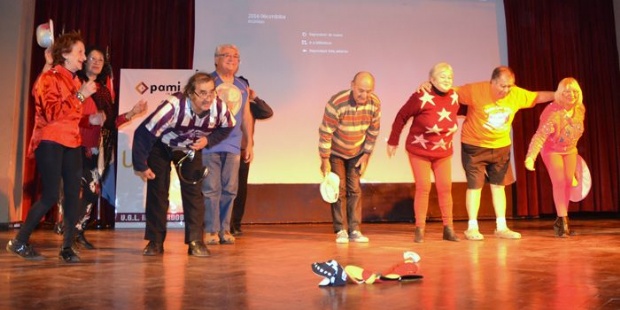
Cada vez son más los adultos que quieren terminar esa carrera que comenzaron aluna vez. En Córdoba, el director ejecutivo de PAMI, Carlos Regazzoni, inauguró el ciclo lectivo de UPAMI, el programa que ofrece formación universitaria a jubilados. Lo que posibilita la integración educativa para muchas personas de la tercera edad con ganas de estudiar una carrera.

«Entregarse al conocimiento y al rigor universitario en edad adulta es un acto profundamente transformador, no sólo para los jubilados sino para todo el ambiente universitario y para la sociedad en general”, afirmó Regazzoni durante su discurso inaugural en la sede de la Universidad Nacional de Córdoba.

El programa UPAMI contempla una amplia variedad de cursos y carreras oficiales en todo el país para adultos mayores, promoviendo. «A los 65 años hay tiempo para hacer una carrera y mucho más, la vida cada vez es más larga y productiva”, agregó el titular del PAMI. Durante su visita a Córdoba, Regazzoni también visitó un centro de jubilados, donde compartió un partido de ajedrez en el marco del programa «Ágilmente”, que promueve actividades de estímulo cognitivo.

«Promovemos este tipo de encuentros porque está comprobado que esta actividad sirve para ejercitar la memoria, la atención y la percepción, además de incentivar relaciones sociales y el intercambio grupal”, explicó Regazzoni. Por último, el titular de PAMI inauguró una nueva boca de atención en Villa Allende junto al intendente de la localidad, que se suma a las 45 agencias con las que cuenta el Instituto en la provincia.

Sobre UPAMI

La Universidad Nacional de Córdoba participa del Programa Upami desde el año 2008, a partir de un convenio celebrado con el Pami. La experiencia surge de una solicitud del Instituto Nacional de Servicios Sociales para Jubilados y Pensionados (Pami) a esta Universidad  para crear espacios inclusivos destinados a adultos mayores.

En el marco de este Programa, se han generado  propuestas educativas que promueven el envejecimiento activo y la promoción de la salud individual y colectiva como derecho humano esencial. Estas actividades  apuntan a promover el bienestar y  la calidad de vida de los adultos mayores, favoreciendo la integración social, la autonomía, un rol activo en la comunidad y una ciudadanía plena.

Fuente noticia: http://www.elintransigente.com/politica/2016/6/7/mayor-estudiar-universidad-realidad-cordoba-387315.html

Comparte este contenido:

La cientificidad y el género (mujer y hombre)

Source: La cientificidad y el género (mujer y hombre) Publicado el 8 de junio del 2016

La cientificidad y el género (mujer y hombre)

8 de junio de 2016

Soraya Margarita Yaracuna González de Abreu. Directora de la fundación San Benito, Para Prevenir, Orientar y Educar sobre el Embarazo Temprano. Los Teques, Venezuela. IBERCIENCIA. Comunidad de Educadores para la Cultura Científica
A continuación, dejó entrever que si bien es importante resaltar el valor de la mujer en el desempeño de las ciencias, en el arte de motivar, los géneros tiene igual capacidad de atraer hacia la cientificidad a las nuevas mentes creadoras e investigadoras que se forman de alguna manera con el entusiasmo y ejemplo de científicos en todos los ámbitos de la racionalidad.

Para comenzar a redactar esta nota, me permití no hablar de la mujer científica, o de cómo se desempeña la mujer en las ciencias , o de la valoración de la mujer como científica en el mundo, se preguntarán quienes leen estas líneas el ¿por qué? . Pues bien, a estas alturas del siglo XXI , con todos los avances y evoluciones de nuestras sociedades considero que se debe reconocer la labor de la mujer , sin duda, pero no admito que se honre, distinga o valore ni a la mujer, ni al hombre, por su condición de género, a cada uno por su lado. En mi opinión que no tiene nada que ver con religión, pero si desde el enfoque antidiscriminatorio y equidad de género, mal se puede pretender comparaciones de eficacia o de óptimo rendimiento entre mujeres y hombres científicos.

Quiero destacar, que la cientificidad en la cual quiero equiparar a hombre y mujer , pues siendo ambos humanos, con el poder más grande que esa cualidad le sobreviene a todas las demás especies que habitan sobre la Tierra ; poseen capacidades tan idénticas o comunes, que el carácter de un método científico no les permite establecer entre ellos muchas diferencias, por lo contrario les aproxima en cualidades cognitivas. Pero esos conocimientos no solo se desempeñan o valorizan en el ámbito académico, el saber tradicional, el que se transmite por transmisión oral, el que se valora por las comunidades por su simbología y axiología. El que reafirma el concepto de identidad, de pertenencia de arraigo… el que permite que la memoria perdure en su narrar histórico. El que nutre las conciencias ciudadanas y les permite hibridar o sacrificar en algún momento lo propio por lo nuestro, y con ese tipo de resistencia propiciar la comprensión de saberes compartidos , pudiendo originarse en la herencia ancestral como en la realidad actual.

Pudiera decirse que fenotípicamente hombre y mujer son diferentes, por su anatomía con varias características de órganos o sistemas funcionales que les asignan un rol estipulado en la sociedad que conforman. Algunas de estas sociedades delimitan, discriminan, etiquetan, las funciones de cada uno. Esto ha sido así, y se ha registrado en la historia, no sin dejar de reconocer la forma de enfocar el rol social de la mujer y en contraposición el del hombre . Al mismo tiempo puede acotarse que genéticamente sus funciones son propias de sus géneros, de allí que la mujer se embarace y alumbre mientras que el hombre engendre y ayude en la crianza.

Lo dicho anteriormente, es lo común que se pudiera decir de ambos individuos, en cada una de nuestras comunidades sociales. Por lo que infiero muy a lo método científico, que es la sociedad la que interviene en su rol principal de modeladora y conductora de lo que el resto debe opinar o actuar, según esos patrones que se le imponen.

En el caso de la mujer y el hombre venezolanos que practican la rigurosidad del método científico, como en cualquier país del planeta, ambos pueden reconocerse y valorar en sus disciplinas. En cualquier ámbito de la racionalidad, bien sea el académico o en el de los saberes populares. Del mismo modo que su actuación puede generar suficiente inspiración para que las nuevas generaciones se introduzcan en el mundo de la cientificidad aprovechando los saberes populares y los conocimientos académicos.

Si relaciono la forma de proyectar la ciencia, de esas mujeres con un excelente desempeño para interesar hacia las vocaciones, hacia la praxis del saber y la racionalidad, asumo que el rol del hombre ha variado en la forma de aceptar y tolerar la presencia femenina en las aulas de aprendizaje, hasta el punto de compartir saberes y experiencias epistemológicas.

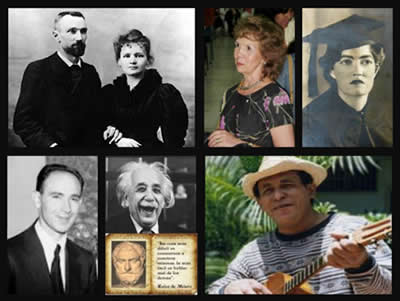
A nivel internacional se conocieron casos como los de María Salomea Skłodowska-Curie, quien fue de alguna manera la compañera científica ideal de su esposo, el también celebre científico Pierre Curie. Llegando a convertirse en la primera mujer en ejercer la docencia en la universidad de la Soborna en París y primera en recibir 2 premios nobeles en 2 disciplinas: la química y la física.

O el caso de la insigne pedagoga María Montessori primera mujer en obtener el grado de médico en Italia, sobreponiéndose a cualquier cantidad de prejuicios ideológicos políticos y de conductas sociales de la época.

Muchas mujeres puedo nombrar en este pliego, que me motivan siempre a hacer ciencia, la primera fue mi abuela materna que sin tener gran preparación académica poseía al igual que mi suegra, y acotó, no creo que fuera casualidad , pues ambas llevaban por nombre Ana, estas dos grandes matronas , forjadoras de valores familiares manejaban los métodos cuantitativos, hermenéuticos, cualitativos y hasta la teoría emergente, todos estos sin ser aún determinantes en la aplicación de las ciencias , tanto las exactas como las sociales. Lo cierto es… y les invito a todos los que me leen que me contradigan si es o no cierto, lo que dice una canción célebre en Venezuela que dice esto en su “Coro” “Mi abuela nunca aprendió lo que es la Geometría. (bis) Pero una arepa en sus manos redondita le salía. .(bis) Pero una arepa en sus manos redondita le salía “. Cada uno de nosotros integrantes de esta gran comunidad de maestros recibimos el estímulo de cada una de nuestras madres para ser artífices de ciencia , ¿Cómo? ¿Cuándo? ¿Dónde? ¿Por qué? …

Pues quiero ser portavoz de algunos de ustedes , mi madre en lo particular no culminó estudios académicos, sin embargo, sus tipos de inteligencias múltiples las desarrolló una a una, a medida que fue creciendo como persona, fue pragmática y ontológicamente su ser predicó el amor al prójimo , supo ayudar al vecino , al compañero de labores, al mendigo, curó una escara, limpio heridas , ayudó a cuidar enfermos en sus lechos agonizantes y esto es más que hacer ciencia, es demostrar hipótesis de humanismo y de sensibilidad extrema.

En ese andar peregrino que nos asigna la vida, hay caminos, arrieros, posadas, y tropiezos pero hay maestros como el del jardín del amado :

“Señor, he oído decir que eres un maestro en el arte del Amor, y deseo, sobre todas las cosas, llegar a serlo yo también. Me pregunto si, por caridad, tomarías de aprendiz a uno tan ignorante e inexperto como yo. De buen grado te pagaría lo que me pidieses por aceptarme, pues soy rico en la manera en que los hombres entienden por riqueza”. Pp 4.

Ahora de este lado del ordenador, con algo de nostalgia, evocó momentos donde se pierde la pasión por la metodología y quieres abrazar a ese ser que ya no está y que te enseño tanto … familia y maestras como Águeda de Prieto entre las que mi mente puede retener en justicia de mérito. “Y donde el amor es la base de toda realidad que se pueda construir, el arma de toda lucha y la mejor estrategia para vencer lo que obstaculiza las metas “

Estas mujeres motivadoras hacia el hacer ciencia, desde una receta de conservas o dulces de coco, con ese toque afrodescendiente, el ceviche de pescado crudo con su toque del ají dulce, el cadencioso baile de tambor, la gaita de mi natal Maracaibo y todo aquello que trae a la memoria, especias como: el clavo de olor y la canela de orígenes ancestrales en la gastronomía , pero que siguen un metódico procedimiento en su aplicación que garantiza la enseñanza o estrategia adecuada para lograr el producto deseado.

Es aquí donde enlazó nuevamente el discurso hacia la cientificidad y el género (mujer y hombre). Porque tal motivación en mi caso particular emana de mujeres, sin menospreciar el esfuerzo de la mujer venezolana por involucrarse al claustro académico, para lo cual había como en muchas localidades del mundo, prejuicios dejos de desiguialdad. Tal como se evidencia en la biografía de la primer doctora egresada de la universidad Central de Venezuela: Sara Bendahan .

Sin embargo siento que los hombres presentes en el contexto de crianza y desarrollo de quien escribe, por ejemplo debo mencionar con la misma intensidad y entusiasmo alegórico al leer sobre la vida de los tres grandes filósofos: Platón, Sócrates y Aristóteles. Así mismo, la de otros tantos como lo fueron Tales de Mileto, Jesús de Nazaret, Leonardo Davinci, quien junto a Miguel Angel Buonarotti, escrudiñaban en los ya cadavéricos cuerpos a fin de determinar cada músculo, vena , arteria y órgano que les conformaban, para transmitir ciencia a través de las Bellas Artes … Luego en esa secuencia cronológica se devela ante mí la presencia más importante e influyente hacia mi vocación por la ciencias como lo fue el científico que me conduce a la relatividad de la existencia y me facilita la transición hacia lo cuántico, hablo y refiero al Sr Albert Einstein. Quien a mi parecer es el causante de muchas acciones derivadas de sus descubrimientos científicos a tal punto que se mantenga presente en la memoria de las generaciones actuales.

Es importante señalar que a nivel nacional (Venezuela) encontramos destacados científicos. Quiero mencionar al destacado Humberto Fernández Moran, inventor del bisturí de diamante y mi coterráneo. Que fue reconocido en 1967, en los Estados Unidos, donde se le postula al premio Nobel por este invento, el cual no aceptó, ya que se le exigía renunciar a la nacionalidad venezolana , ocasionando derivado de esta causa un gran regocijo en la comunidad local.

El hecho anterior, fue motivo de que se transmitiera a esas generaciones siguientes, pero es necesario y justo destacar a la rigurosa disciplina de mi padre militar, el que extendía esos argumentos que son de verdad funcionales a la hora de hacer ciencias.

Del mismo modo, los vecinos , padrinos y compañeros de trabajo de esos hombres integrantes del medio familiar, con sus procederes y sus explicaciones oportunas, su paciencia hacia las interrogantes planteadas y las soluciones a la problemática.

Por todo lo antes expuesto concluyo, que si bien es cierto que las mujeres pueden ser ejemplo y motivación para el ejercicio de la ciencias, los hombres a la par pueden complementar estas acciones o viceversa , no debe separarse el rol de los géneros en cuanto a ejemplificar quien podría ser la mejor motivación hacia las ciencias para las generaciones actuales y futuras. Lo importante en mi percepción seria que las cientificidad sea integral, holística e involucre todos los saberes , partiendo de la premisa que “todos aprendemos de todos” y “todos enseñamos algo al otro“. Con la esperanza de que este pequeño documento motive no solo a los que lo lean sino a la prolongación del compartir en esta comunidad de educadores.

Collage: elaborado por Itzeliz Valentina Puche Abreu con imágenes extraídas de páginas de la web.

Gualberto Ibarreto
Que iba a saber mi abuela de Ciencia y de Medicina.
Si mi abuela se pasaba todo el día en la cocina. (bis)
Que iba a saber mi abuela la tabla de dividir Si mi abuela nos decía lo mejor es compartir. (bis)
Coro
Mi abuela nunca aprendió lo que es la Geometría. (bis)
Pero una arepa en sus manos redondita le salía. .(bis)
Que iba a saber mi abuela las reglas del Castellano .Si mi abuela se paraba a bregar desde temprano. (bis)
Que iba a saber mi abuela de Maniquiur y Pediquiur. Si mi abuela se bañaba siempre con jabón azul. (bis)
Coro
Mi abuela nunca aprendió lo que es la Geometría. (bis)
Pero una arepa en sus manos redondita le salía. .(bis)
Que iba a saber mi abuela lo que era una Servidumbre .Si mi abuela siempre estuvo contra esa mala costumbre. (bis)
Que iba a saber mi abuela de esa moda tan fatal. Si mi abuela remendaba con aguja y con dedal. (bis)
Coro
Mi abuela nunca aprendió lo que es la Geometría. (bis)
Pero una arepa en sus manos redondita le salía. .(bis)
Que iba a saber mi abuela de política barata.
Si mi abuela no ofrecía para no meter la pata. (bis)
Que iba a saber mi abuela y ni se lo imaginaba. Que este mundo no es el mundo que para sus nietos soñaba. (bis)
Coro
Mi abuela nunca aprendió lo que es la Geometría. (bis)
Pero una arepa en sus manos redondita le salía. .(bis)
Fuente: musica.com Letra añadida por Rafaelh

http://www.lasverdadesdemiguel.net/edicion-529-mujeres-venezolanas-destacadas-en-la-investigacion-cientfica/ http://www.musica.com/letras.asp?letra=1842751

Gualberto Ibarreto canta autor venezolano cumanés. Autor e intérprete de esta canción

El jardín del amado de Robert .E .Way (1976)
 

Comparte este contenido:

La contaminación de los océanos por los combustibles fósiles equivale a cuatro vertidos como el de BP al mes

Fuente: elmundo.es  / 8 de junio de 2016

La quema de combustibles fósiles, principalmente petróleo y carbón, tiene un impacto generalizado en los océanos del planeta. La polución que genera cada mes sería equivalente a la que producirían cuatro vertidos de petróleo como el que en 2010 causó el grave accidente petrolero de la plataforma Deepwater Horizon de BP en el Golfo de México (EEUU).

Así lo asegura un equipo de investigadores que durante la expedición oceanográfica española Malaspina , del CSIC, cuantificó la cantidad de sustancias contaminantes que llegan al Atlántico, al Índico y al Pacífico procedentes de la atmósfera.

Los resultados del análisis de las muestras de aire (gases y aerosoles), del agua de lluvia y de las aguas superficiales del océano que recogieron cuando viajaban a bordo del buque Hespérides, entre diciembre de 2010 y julio de 2011, se publican esta semana en la revista Nature Geoscience. Los análisis se realizaron en laboratorios de Madrid y en Barcelona.

Según detalla por teléfono Jordi Dachs, coautor del estudio e investigador delInstituto de Diagnóstico Ambiental y Estudios del Agua (CSIC), en Barcelona, su equipo midió un grupo de sustancias denominadas hidrocarburos aromáticos policíclicos: «Se producen sobre todo durante la quema de petróleo y carbón. Cuando la combustión es incompleta, es decir, que no se queman bien, se generan estos hidrocarburos».

Cada mes, aseguran, llegan a los océanos procedentes de la atmósfera unas 90.000 toneladas de hidrocarburos aromáticos policíclicos, es decir, cuatro veces más que las que generó el vertido en el Golfo de México, considerado el mayor de la Historia.

La expedición Malaspina no llegó a Asia, por lo que en esta cifra no estaría incluida la polución generada por la quema de combustibles fósiles en países como China o India.

Un problema generalizado

No obstante, según Jordi Dachs, más relevante que la cantidad de sustancias contaminantes producidas por la combustión incompleta de carbón o petróleo es que éstas parecen estar presentes en todas partes: «Es un problema generalizado», sostiene.

Debido a su cercanía, en las proximidades de los continentes había mayor concentración que en mar abierto. Y también había más hidrocarburos en los 100 metros superficiales que en el fondo. Aunque en este estudio no han tomado muestras de aguas profundas, saben por otras investigaciones que los más persistentes llegan a los 4.000-10.000 metros de profundidad.

A pesar de que no estudiaron específicamente las concentraciones de estos hidrocarburos en aguas próximas a España, los niveles detectados, señala el científico, eran similares a los encontrados en otras zonas.

Por lo que respecta al efecto que tienen en la vida marina, Dachs recuerda que «todavía existen pocos estudios. Los hidrocarburos más persistentes van al fondo del océano, hay otros que se degradan y otros que tienen efectos tóxicos», explica. De hecho, algunos de ellos, como el benzopireno, son cancerígenos.

Sin embargo, el investigador no cree que estos contaminantes supongan un riesgo para las personas si consumen pescado expuesto a estas sustancias: «Los peces pueden incorporarlos a su organismo y metabolizarlos, es decir, transformarlos en otras sustancias que pueden eliminar. Pero en esa transformación sí pueden sufrir efectos tóxicos».

La única forma de reducir las emisiones, señala el investigador, es disminuir la quema de combustibles fósiles, a los que los científicos atribuyan un papel clave en el aumento de temperaturas, y mejorar la eficiencia de los procesos de combustión. Sin embargo, Dachs lamenta que la tendencia a nivel global sea la contraria: «A nivel planetario, estamos aumentando el consumo de combustibles fósiles».


Enlace original: http://www.elmundo.es/ciencia/2016/05/16/5739e3d146163f13788b4647.html


Comparte este contenido:

EEUU: Bringing Spoken Word Into the Classroom

EEUU/8 junio 2016/Autor: Alex Lenkei/Fuente: http://blogs.edweek.org/

Resumen:


Palabra del Sur , con sede en Nashville, Tenn., ofrece residencias de poesía para estudiantes de secundaria en el estado. Durante estas residencias, que tipicamente duran entre uno y diez días, los estudiantes practican la lectura, la escritura, y la realización de la poesía bajo la dirección de dos mentores poeta. El objetivo, según Benjamin Smith, director ejecutivo de la organización, es el desarrollo de las habilidades comunicativas de los alumnos y darles la posibilidad de compartir historias personales acerca de quiénes son.

A través de talleres de Southern palabra hablada-texto, programas de composición de canciones, y otras oportunidades de difusión, la organización tiende un puente sobre una «brecha cultural» que a menudo existe entre el plan de estudios de la clase y los estudiantes, así como profesores y estudiantes, especialmente en las comunidades de color, Smith agregó. A nivel nacional, menos del 2 por ciento de maestros de escuelas públicas son hombres de raza negra , una tendencia Sur Word intenta contrarrestar aumentando el número de modelos masculinos negros visibles para los estudiantes de aproximadamente la mitad de los mentores son hombres de raza negra. En 2015, el sur de la Palabra dio residencias a cerca de 4.000 estudiantes en cinco condados de Tennessee y talleres organizados en casi todas las escuelas secundarias de Nashville.

———————————————————————————————

Following the widespread praise of Donovan Livingston’s spoken-word poem, «Lift Off,» which went viral after he delivered it at the Harvard Graduate School of Education convocation last month, educators should take a closer look at the role spoken-word poetry can play in helping young people express themselves in creative ways. Of particular note is Livingston’s comment he shared prior to reading the poem, in which he shared how his high school English teacher «threatened to replace me or cut off my mic when she discovered that I wanted to perform a poem as part of my [graduation] remarks.»

Southern Word and Urban Word NYC are two examples of nonprofit organizations that bring spoken word into the classroom, providing in-school poetry workshops, primarily to youths of color.

Southern Word, based in Nashville, Tenn., offers poetry residencies for in-state high school students. During these residencies, which typically last between one and 10 days, students practice reading, writing, and performing poetry under the leadership of two poet mentors. The goal, according to Benjamin Smith, the organization’s executive director, is to develop students’ communication skills and give them the ability to share personal stories about who they are. The organization fills a need in schools that are «financially and culturally underresourced,» Smith said in a telephone interview with BookMarks.

Through Southern Word’s spoken-word workshops, songwriting programs, and other outreach opportunities, the organization bridges a «cultural gap» that often exists between the class curriculum and students as well as teachers and students, especially in communities of color, Smith added. Nationally, less than 2 percent of public school teachers are black men, a trend Southern Word tries to counter by increasing the number of black male role models visible to students—about half of the mentors are black men. In 2015, Southern Word gave residencies to about 4,000 students in five Tennessee counties and organized workshops in almost every Nashville high school.

In New York City, Urban Word NYC offers student workshops designed to empower middle and high school students by developing their public speaking skills and self-esteem. While Urban Word NYC primarily serves those in the city, the organization has partner programs in 35 cities across the country, including Chicago, Houston, and Los Angeles. The workshops, led by one or two poets, typically include a creative writing component, where students write a poem, as well as the opportunity to perform their poem for a group of 15-20 of their peers. Urban Word NYC primarily serves youths of color—40 percent of the students are African-American, 20 percent are Latino, and 18 percent are Asian or Pacific Islander, according to the organization’s 2015 annual report.

Since many of the most successful spoken-word poets are in their teens and early 20s, this form of poetry provides a good opportunity to reach students where they are, Urban Word executive director Michael Cirelli said in an interview with BookMarks. The organization also offers college scholarships, open mic events, and other opportunities.

For teachers interested in incorporating spoken-word lessons into their English classes, a 2015 article in English Journal, published by the National Council of Teachers of English, recommends a workshop structure that includes poetry analysis, sharing, and writing exercises. The article’s author, former English teacher Wendy Williams, stresses the importance of creating a safe space for students by reminding teachers and students to be respectful of each individual’s voice. Williams is currently a Ph.D. candidate in English education at Arizona State University.

Photo: U.S. Air Force photo/Senior Airman George Goslin

Fuente de la Noticia:

http://blogs.edweek.org/edweek/bookmarks/2016/06/bringing_spoken_word_into_the_classroom.html

Comparte este contenido:

México: Anuncia Eruviel Ávila entrega de mil 700 becas al extranjero

México / 07 de junio de 2016 / Por: REDACCION / Fuente: http://www.cronica.com.mx/

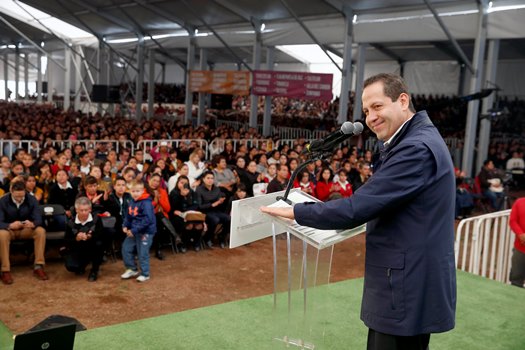
El gobernador del Estado de México, Eruviel Ávila Villegas anunció que la próxima semana serán entregadas mil 700 becas al extranjero para universitarios mexiquenses, quienes irán a estudiar a 14 países, como Canadá, España, Malasia, Brasil y Chile, entre otros, como parte de las acciones para elevar el índice educativo y dar vigencia a la reforma educativa.

“Catorce países en el mundo, con quienes tenemos convenios, gracias al apoyo de la Secretaría de Educación del gobierno de la república, se van a ir a preparar, se van a ir a especializar en las áreas de sus carreras respectivas y también van a perfeccionar su inglés, ésta es la reforma educativa amigas, educación para todos”, expresó.

En Tlalnepantla, durante la entrega de más de 5 mil laptops a estudiantes de excelencia académica, de 10 mil que serán entregadas en este ciclo escolar, y acompañado del secretario de Educación Pública, Aurelio Nuño Mayer, el gobernador Eruviel Ávila afirmó que en la entidad mexiquense se llevan a cabo este tipo de acciones para incorporar a los estudiantes a las nuevas tecnologías, las cuales son herramientas especiales para el aprendizaje.

Afirmó que el Estado de México se incorpora a esta nueva era de la educación, para hacer vigentes las recomendaciones que realizan la UNESCO y la UNICEF, organismos que califican al uso de las tecnologías como un derecho, además de que contribuyen al desarrollo de la creatividad, a la equidad de género y a la autonomía en las personas con discapacidad.

Por ello, dijo, en el Edoméx se han construido y remodelado 4 mil 400 laboratorios de cómputo y aulas telemáticas, entre otras acciones.

Fuente noticia: http://www.cronica.com.mx/notas/2016/965552.html

Comparte este contenido:

Experts sound alarm over mental health toll borne by migrants and refugees

Fuente: .theguardian / 8 de junio de 2016

The grief of losing a child made more unbearable by the knowledge that you decided to take them in a boat that capsized; nightmares about torture;depression induced by the awfulness of living in a camp, unable to go forward or back.

As concern mounts about the conditions faced by refugees and migrants in camps across Europe, and more people die trying to reach the continent, the mental health of those who have risked everything in the hope of starting a new life inEurope is gaining more attention.

A report last year by the German Federal Chamber of Psychotherapists said 40%-50% of people arriving in Germany suffered from post-traumatic stress disorder (PTSD), with half also suffering from depression.

“They have nightmares or flashbacks to pictures or scenes. These memories feel very intense, and it is just like they are reliving the traumatising experience,” the report said. Other symptoms include jumpiness, sleep disorders, problems with concentration, and emotional numbness.

“It is shameful that people suffering with such psychological injuries do not get the help they need,” the report said.

Post-traumatic stress is just the tip of the iceberg. “PTSD is very important, but it is also the disorder that everyone jumps to, including the media. We see much more depression and anxiety disorders, and also, surprisingly, a lot of epilepsy and psychotic disorders, including schizophrenia,” said Dr Inka Weissbecker, global mental health and psychosocial adviser at the International Medical Corpsin Washington.

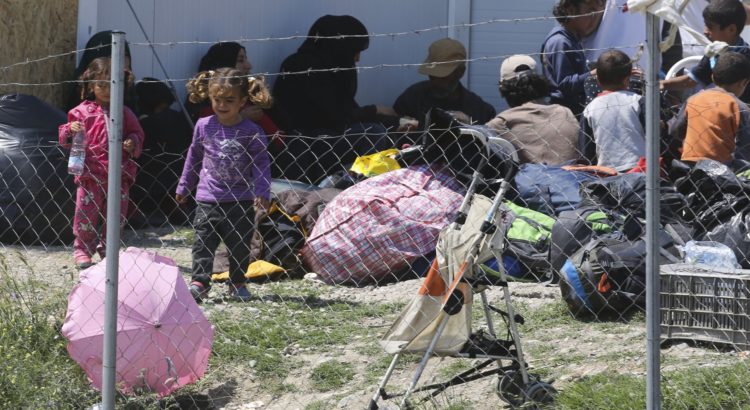
“There are huge amounts of anxiety – we see children bursting into tears when helicopters or airplanes fly over the camps, and we can’t understand why, until we realise what they’re associating it with,” said Harriet Zych, a nurse who worked in Idomeni – site of Europe’s largest informal refugee camp, on Greece’s northern border with Macedonia – before Greek police moved people to other locations in May.

“We came across many people in a state of collapse, whose problems turn out to be psychological rather than physical,” she said. “One man hit himself with a rock on his head until he became unconscious when he found out he couldn’t cross the border.”

Nikos Gionakis, a psychologist with the Athens-based mental health unit Babel, tells the story of Hassan, 34, who fled Syria with his four children. “Passing from Turkey to Greece, he was forced to get into a boat by smugglers. Two of his kids drowned as the boat sank. He was referred to Babel because of depression. He blames himself for not having been able to protect his kids,” Gionakis said.

The UN refugee agency, the UNHCR, says mental health disorders can hinder integration into host populations, creating long-term problems for European countries that are accepting refugees fleeing from conflicts in Syria and elsewhere.

In a paper to the European commission last year, the European Psychiatric Association said: “Acute and long-term psychiatric care needs to be provided to all asylum seekers in order to avoid reaching chronic conditions of mental disorders.”

Aid workers in Greece say diagnosis, never mind treatment, is almost impossible in the chaos of the camps and detention centres in southern Europe.

“You cannot say how many people are suffering from PTSD because diagnosis takes too long, and with such a stream of people, it is impossible. I am a trained psychologist with 40 years’ experience; it would take me two and a half hours to diagnose someone with PTSD,” said Renos Papadopoulos, director of the Centre for Trauma, Asylum, and Refugees at Essex University, who recently returned from Greece. “There is no evidence [on the prevalence of PTSD] because there cannot be evidence. The situation is complete chaos.”

“We don’t do diagnosis,” said Zoi Marmouri, a psychologist working for Médecins Sans Frontières in Idomeni. Even if diagnosis were possible, World HealthOrganisation (WHO) guidelines stipulate that clinical treatment is not appropriate for refugees on the move.

“Therapies should not be started without assurances that there can be follow-up. You have the potential to retraumatise people,” said Claire Whitney, Middle Eastmental health and psychosocial support adviser at the International Medical Corps.

The most effective treatments for PTSD include cognitive behaviour therapy with a trauma focus, eye movement desensitisation and reprocessing therapy, as well as narrative exposure therapy. But these take time as they involve slowly exposing people to their trauma, while building up their capacity to deal with it. “It cannot be rushed,” said Whitney. “When people actually have PTSD, it is one of the most complex problems to treat.”

The WHO says refugees and migrants needing diagnosis should be referred to existing non-governmental or state services. But even for those who make it into host communities, cost, stigma and language problems can lock them out of treatment.

“We have serious lacks in the services we can provide. If they need hospitalisation, there aren’t any specialised units for this,” said Gionakis.

International funds have been pledged for psychosocial support, although neither Britain’s Department for International Development nor the EU were able to provide a full breakdown.

Some experts warn there is a risk of overdiagnosing PTSD. “They are distressed, yes, but is this PTSD? Often it will not be. These are instead normal reactions to an abnormal situation,” said Papadopoulos.

The UNHCR and other agencies say much of the emotional suffering experienced by refugees and migrants is directly related to present-day stresses and concern about the future.

“People live in very difficult and inhumane conditions here in camps that are too crowded. Basic needs are not met,” says Gionakis.

The UNHCR advocates “psychological first aid”, which encourages those interacting with refugees to respond in a culturally sensitive and humane way that avoids distressing people further.

“The humanitarian principle of ‘do no harm’ is a huge part of it,” said Whitney. “What everyone was advising, for the most part, was really to focus on the most basic kinds of support, which do contribute to mental health. Often, basic needs must be provided before people are ready – and willing – to engage with therapy.”


Enlace original: http://www.theguardian.com/global-development/2016/jun/08/experts-sound-alarm-mental-health-toll-migrants-refugees-depression-anxiety-psychosis?CMP=twt_a-global-development_b-gdndevelopment

Comparte este contenido:
Page 1737 of 2546
1 1.735 1.736 1.737 1.738 1.739 2.546