Page 2467 of 2579
1 2.465 2.466 2.467 2.468 2.469 2.579

España: La delegada de Educación conoce los proyectos de dos colegios bilingües de Torrox

Málaga / 07 de junio de 2016 / Fuente: http://www.elfarodemalaga.es/

La delegada territorial de Educación de la Junta de Andalucía, Patricia Alba, ha visitado este martes los Colegios de Educación Infantil y Primaria (CEIP) El Morche y Mare Nostrum, en el municipio malagueño de Torrox.

Estos centros educativos imparten parte del currículo en inglés y alemán, respectivamente. En concreto, el CEIP Mare Nostrum fue un centro pionero en la provincia en la implantación de las enseñanzas bilingües.

En este municipio todos los Institutos de Educación Secundaria (IES) son bilingües y en el caso de los Colegios de Educación Infantil y Primaria la cifra asciende al 60 por ciento.

En su visita, Alba ha destacado «el trabajo y dedicación de los docentes, pues sin su formación y esfuerzo para actualizarse en los ámbitos lingüísticos no sería posible contar con centros como los que hoy visitamos».

De la misma forma, ha declarado que «las enseñanzas bilingües manifiestan la voluntad de conseguir un sistema educativo de calidad para formar a la ciudadanía del siglo XXI».

Los dos colegios forman parte de la red de centros educativos públicos bilingües de la provincia de Málaga, que para el próximo curso serán 160. Éstos impartirán parte del currículo en inglés, francés o alemán.

Comenzarán a impartir enseñanzas bilingües en inglés el CEIP Victoria Kent de Málaga y los IES Pintor José María Fernández de Antequera, Nueva Andalucía de Marbella, Ben al Jatib de La Cala del Moral (Rincón de la Victoria), Sagrado Corazón de la capital y Salvador Rueda de Vélez-Málaga.

También lo harán en la misma lengua los CEIP Nuestra Señora de los Remedios de Cártama, Hogarsol, Luis Braille y Luis de Góngora de Málaga, Antonio Checa de Torre del Mar y Los Llanos de Torrox-Costa.

Por otra parte, el IES Cánovas del Castillo continuará impartiendo Bachillerato en la modalidad Bachibac, que permite al alumnado obtener la doble titulación española y francesa.

Fuente noticia: http://www.elfarodemalaga.es/index.php?id=ampliada&tx_ttnews%5Btt_news%5D=37495&cHash=d618258be26493c4086d8cc00c6204e8

Comparte este contenido:

Argentina: Comenzó la semana de la educación y seguridad vial en San Martín

Buenos Aires / 07 de junio de 2016 / Fuente: http://noticias.zonanortediario.com.ar/

El intendente Gabriel Katopodis participó de la primera jornada que se realizó en la Plaza Central.

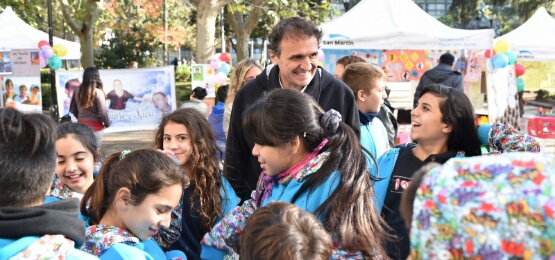
En el marco de la Semana de la Educación y Seguridad Vial, el intendente de San Martín, Gabriel Katopodis, participó del primer encuentro en la Plaza Central, donde se realizaron distintas actividades para concientizar sobre la prevención de los hechos de tránsito.

Durante la jornada, alumnos de escuelas primarias expusieron trabajos temáticos, en el marco del Programa de Educación Vial. Además, en distintos stands, los Familiares de Víctimas de Tránsito brindaron asesoramiento acerca de la prevención de hechos de tránsito y entregaron material educativo.

Las actividades continuarán mañana con el curso de capacitación que se brinda a los aspirantes a obtener la licencia de conducir, que en esta fecha será abierto al público en general. El mismo se llevará a cabo en el Salón Malvinas Argentinas del Palacio Municipal, de 9 a 12.

El jueves 9, de 9 a 12, habrá un taller de capacitación dirigido especialmente a docentes y directivos de escuelas del distrito que estará a cargo de la Agencia Nacional de Seguridad Vial y que tendrá como objetivo brindar bases y herramientas para maestros y profesores en materia de Educación Vial.

En tanto, el viernes 10, fecha en la que se celebra el Día Nacional de Seguridad Vial, habrá operativos de control vehicular en la vía pública que contarán con la participación de Familiares de Víctimas de Tránsito.

Para el cierre de la semana, el sábado 11 en la Plaza Alem (San Andrés), de 14 a 17, se desarrollará una jornada de concientización vial abierta a la comunidad, con stands donde los Familiares de Víctimas de Tránsito brindarán información sobre la importancia de la prevención de los accidentes y cómo mejorar la seguridad vial.

Mediante el Programa Educación Vial, el Municipio lleva adelante jornadas de capacitación en escuelas primarias y secundarias sobre distintos aspectos de la seguridad vial, en cuanto al rol de los menores como peatones y como usuarios del transporte, en el caso de los alumnos de los primeros ciclos, y con los estudiantes del secundario se abordan temáticas referidas a la conducción de vehículos y el cumplimiento de las leyes de tránsito.

Las charlas, a cargo de la Subsecretaría de Derechos Humanos e Igualdad de Oportunidades y la Dirección General de Tránsito Transporte, junto a integrantes de la ONG Malditas Picadas, ya alcanzaron a casi 10.000 alumnos, de 30 escuelas primarias de la ciudad.

Durante la segunda mitad del año, las capacitaciones continuarán en las escuelas secundarias del distrito, y en noviembre, los estudiantes exhibirán sus propuestas para mejorar la seguridad vial en el Día Internacional de las Víctimas de Tránsito.

La iniciativa, organizada en forma conjunta con la Subsecretaría de Derechos Humanos e Igualdad de Oportunidades, dependiente de la Secretaría de Desarrollo Social; la Subsecretaría de Educación; la Dirección General de Tránsito y Transporte, y la Organización Malditas Picadas, tiene como objetivo contribuir a fortalecer la educación vial en sus diferentes niveles educativos y promover las actividades didácticas para el aprendizaje.

De la primera jornada, también participaron la subsecretaria de Derechos Humanos e Igualdad de Oportunidades, Mercedes Contreras; y el director de Tránsito y Transporte, Luis Martínez.

Fuente noticia: http://noticias.zonanortediario.com.ar/despachos.asp?cod_des=49285&ID_Seccion=149

Comparte este contenido:

Colombia: Procuraduría pide a la Corte que den becas a colombianos por adopción

Colombia / 07 de junio de 2016 / Por: EDUCACIÓN / Fuente: http://www.eltiempo.com/

Según la Procuraduría, no hay distinción en ejercicio de derechos económicos, civiles y sociales.

Por considerar que hay un sesgo en la igualdad de oportunidades para los colombianos nacidos en el exterior, la Procuraduría General de la Nación le solicitó a la Corte Constitucional declarar inexequible el artículo de la Ley 1678 de 2013 que indica que solo se le puede otorgar becas a los colombianos de nacimiento.

El procurador, Alejandro Ordóñez, indicó que “la Constitución Política estableció que se es colombiano por nacimiento o por adopción, por lo que no hay diferencia entre ambos grupos en lo que se refiere al ejercicio de derechos civiles, económicos y sociales”.

Esta ley es la que garantiza la educación de posgrados al 0,1 por ciento de los mejores profesionales graduados en las instituciones de educación superior públicas y privadas del país. No obstante, el numeral 1 del artículo 4 indica que para poder acceder al beneficio de la beca, se debe ser colombiano de nacimiento.
Por su parte, el Ministerio Público también justificó la decisión debido a que la Corte Constitucional “ha reiterado en varias ocasiones que la ley colombiana indica que todas las personas son iguales ante ella y merecen el mismo trato y garantías, sin importar su sexo, raza, origen, lengua, opinión política o filosófica”.
Fuente noticia: http://www.eltiempo.com/estilo-de-vida/educacion/procuraduria-pide-a-la-corte-que-le-den-becas-a-los-colombianos-por-adopcion/16613923
Comparte este contenido:

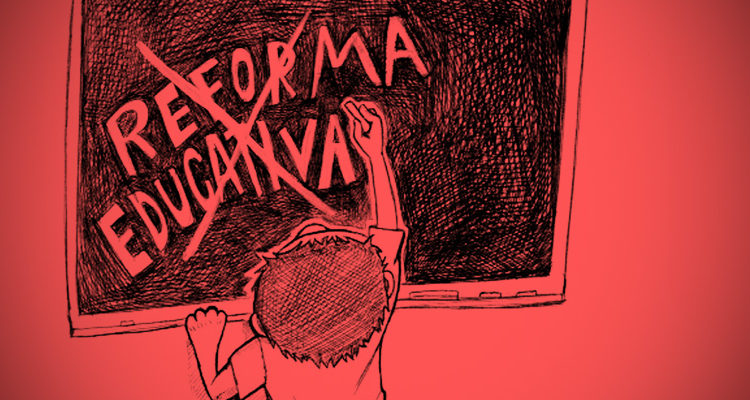
México: Reforma educativa en 3 años no ha formulado programas que impliquen cambios de fondo en la enseñanza: experto

Fuente: revoluciontrespuntocero / 8 de junio de 2016

César Navarro Gallegos, profesor e investigador del Instituto José María Luis Mora, declaró que la reforma educativa ha privilegiado la fase jurídica, administrativa y de sanción peor no ha hecho ningún solo aporte a la educación en el país.

Detalló que después de tres años de la aprobación de la reforma y las modificaciones a los artículos tercero y 73 constitucionales, la Secretaría de Educación Pública (SEP) no ha formulado ni planes, ni programas o contenidos que implique un cambio de fondo en la enseñanza y formación básica en México, ya que lo que menos ha interesado en este proceso es la infancia y adolescencia.

Navarro opinó en la mesa de análisis de la reforma educativa frente a los maestros que se encuentran en lucha y plantón en La Ciudadela, que la negación por parte de Aurelio Nuño de entablar un diálogo con la Coordinadora Nacional de Trabajadores de la Educación (CNTE), no permitirá que se aplique la reforma porque lo que se pretende es un diálogo sin diálogo.

Tras concluir la mesa de análisis los maestros se dirigieron a la Bolsa Mexicana de Valores, donde exigieron que los empresarios se involucren en la problemática por la que atraviesa la educación.

Anunciaron que el día de hoy llegarán trabajadores de la educación de Chiapas,Michoacán, Guerrero, Oaxaca, Tlaxcala, Puebla e Hidalgo que acudirán a la movilización que se prevé a mediodía; agregaron que monitorearan la llegada de los profesores a la Ciudad de México en caso que se intente impedir otra vez el acceso a la capital con el fin de obstaculizar los derechos de libre tránsito y expresión.

Enlace original: http://revoluciontrespuntocero.com/reforma-educativa-en-3-anos-no-ha-formulado-programas-que-impliquen-cambios-de-fondo-en-la-ensenanza-experto/


Comparte este contenido:

Artículo: Scientists aren’t superheroes – failure is a valid result

El artículo nos ayuda a desmitificar la representación del científico, o la científica, como un ser infalible, perfecto y siempre obligado a aportar soluciones inequívocas ante cualquier problema planteado. Esta circunstancia, sólo emulable por los superhéroes, es la que nos revela Andrew Gelman como una muy alejada de la realidad cotidiana de quien se enfrenta a investigaciones científicas día a día. De los fallos, también en ciencia, siempre se aprende.

Source: Scientists aren’t superheroes – failure is a valid result Publicado el 8 de junio

The widely reported finding that ‘power poses’ offer a hormonal boost could not be replicated in follow-up studies. Photograph: Alamy

Concern has been growing in the past decade about published scientific claims that other laboratories can’t successfully replicate. Some of these studies are pretty silly – for example, the claim that women’s political preferences change by 20 percentage points depending on the time of the month. Others were potentially useful but didn’t work out, like the one which says that holding your body in a “power pose” gives you a hormonal boost.

Related:Study delivers bleak verdict on validity of psychology experiment results

Then there are claims which may have policy relevance, such as the study that says early childhood interventions could increase young adults’ earnings by 40%. The claim came from a longitudinal study which would require at least 20 years to replicate, but, on the basis of statistics alone, we have good reason to be sceptical about the findings.

This replication problem has become a crisis in the sense that researchers, ordinary citizens and policymakers no longer know what or whom to trust. Even the most prestigious scientific journals are publishing papers that fail to replicate and which, in retrospect, are simply ridiculous.

One notorious example is a 2014 paper from the Proceedings of the National Academy of Sciences (Pnas), comparing the damage done by hurricanes with male or female names. The research was based on historical data and so could not be replicated, but featured the same sort of statistical errors that commonly appear in any work that fails the replication test.

And it’s not just journals that get sucked in. Some of our most trusted explainers and interpreters of science have been fooled by work with fatal statistical flaws. Science writer Malcolm Gladwell fell for a mathematician’s claim to be able to predict divorces with 94% accuracy and the Freakonomics team fell for the erroneous claim that beautiful parents are more likely than ordinary-looking parents to have female babies.

Statistical errors are unfortunate but unavoidable. Science is open to all, and we wouldn’t want strict gatekeeping even if it were possible. Speculative (even completely misguided) work can still indirectly advance scientific understanding. The problems come when entire fields are so shaky that outsiders – and even insiders – don’t know what to believe. This is the replication crisis, and we need to do something about it.

The problems come when entire fields are so shaky that outsiders, even insiders, don’t know what to believe

For starters, researchers need to stop making excuses and address attitudes that are getting in the way of progress. By progress, I mean moving towards a future where there are clearer links between research designs, data, analyses, criticisms and replications. The goal is not the elimination of errors, but a system with better feedback, so that dubious claims can be disputed and discussed at the point of publication, not years later when the findings have been used in news articles, TED talks, radio features and beyond.

So what’s getting in the way? Sunk cost fallacy – the error of throwing good money (or, in this case, scientific resources) after bad – certainly plays a role.

An example of this can be found in a recent New York Times op-ed by psychologist Jay Van Bavel, entitled Why Do So Many Studies Fail to Replicate?. Bavel doesn’t dodge the bad news that only 39 percent of the 100 psychological studies used had been successfully replicated – but he moves quickly to the position that the studies failed to replicate because it was difficult to recreate the exact conditions of the original.

Context certainly matters, but we should also be aware that a lot of published work is just noise. It’s always worth considering the possibility that a published finding was real and that it failed to replicate because of changing conditions, but that should not be the default assumption.

It’s natural to want to spare the feelings and reputations of hardworking researchers and it’s horrible to think that there could be hundreds of papers, published in leading journals, that are nothing but dead ends. I can see the appeal in trying to preserve some value in this mountain of published work. A paper can be seriously flawed and fail to replicate but still contain valuable insight. But our starting point has to be that any given finding can be spurious.

Related:Academics: you are going to fail, so learn how to do it better

Replications are often controlled, meaning that the researchers have chosen their data selection and analysis rules ahead of time. But published findings are almost always uncontrolled, meaning that researchers have degrees of freedom to come up with statistically significant findings. When a well-publicised study fails to replicate, this is typically consistent with a model in which the first study was merely capitalising on chance.

So how can we do better? As scientists, we have to recognise sunk cost fallacy. We need to be willing to cut our losses and accept when a research programme has not advanced, rather than grasping to explain variations that can easily be understood as mere chance.

Researchers should, of course, feel free to explore speculative routes. But we must also accept that failure is an option.

La imagen destacada es tomada de: http://www.theguardian.com/higher-education-network/2016/jun/08/scientists-arent-superheroes-failure-is-a-valid-result#img-1

Professor Gelman is giving the keynote lecture at the ESRC Research Methods Festival

Join the higher education network for more comment, analysis and job opportunities, direct to your inbox. Follow us on Twitter @gdnhighered. And if you have an idea for a story, please read ourguidelines and email your pitch to us athighereducationnetwork@theguardian.com

Comparte este contenido:

Cuba: La Unesco resalta éxitos de Cuba en educación, ciencia y cultura

La Habana / 07 de junio de 2016 / Fuente: http://www.radiohc.cu/

El subdirector general para las Relaciones Exteriores e Información Pública de la Unesco, Eric Falt, destacó los éxitos de Cuba en áreas como la educación, las ciencias y la cultura.

Un informe publicado en la página oficial del Ministerio de Relaciones Exteriores del país caribeño precisa que al reunirse con el vicecanciller cubano, Abelardo Moreno, el visitante expresó su satisfacción por estar nuevamente en Cuba y elogió los avances alcanzados por la mayor nación de las Antillas en esas esferas.

El encuentro permitió a las partes analizar la necesidad de promover la participación de las Comisiones Nacionales de la Unesco en la elaboración del Programa y Presupuesto de la institución para el próximo periodo, tema que será analizado en la III Reunión Interregional de las referidas Comisiones Nacionales a celebrarse en China este mes de junio.

Por su parte, Moreno reiteró el apoyo y compromiso de Cuba con la Unesco y agradeció, además, la posición de ese organismo internacional en contra de la política de bloqueo impuesta por Estados Unidos contra el pueblo cubano.

Fuente noticia: http://www.radiohc.cu/noticias/nacionales/96053-la-unesco-resalta-exitos-de-cuba-en-educacion-ciencia-y-cultura

Comparte este contenido:

Cash Transfer Programs Succeed for Zambia’s Poor, Offer Lessons for Battling African Poverty, AIR Finds

Fuente AIR / 8 de junio de 2016

Programs designed to alleviate hunger and increase food supply through cash transfers to some of Zambia’s poorest families achieved those goals and more, final evaluations conducted by the American Institutes for Research (AIR) revealed.

Overall, researchers found that a cash-transfer program geared toward families with at least one young child had effects that amounted to a net benefit of 1.5 kwacha—Zambia’s currency—for each kwacha transferred. A second program for households with fewer able-bodied people to farm had effects that amounted to a net benefit of 1.68 kwacha for each kwacha transferred.

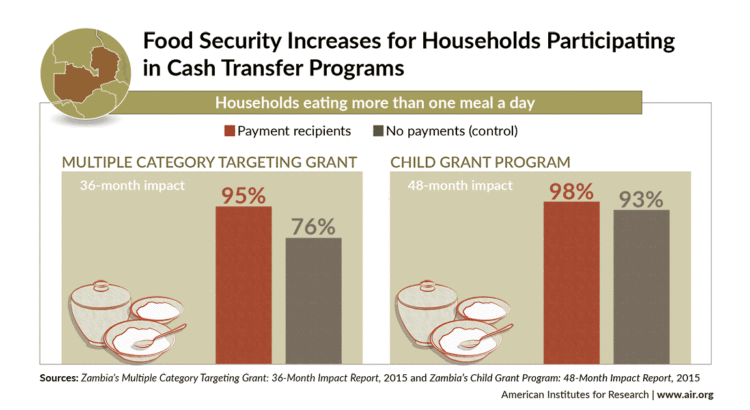
Besides eating more meals and building more reliable food reserves, families used the money to improve their housing, buy additional necessities for their children, acquire more livestock and reduce debt.

The studies, commissioned by UNICEF, are likely to be closely watched as African nations increasingly embrace cash transfers to combat the continent’s cycle of poverty. South Africa’s program is the largest, with roughly 16.1 million people—about a third of its population—receiving some kind of social grant.

Notably, the two Zambian programs were unconditional—providing small, consistent sums of money with no strings attached on how they were spent. The programs bucked general criticisms that cash transfers spark dependency. Rather, the discretionary approach empowered families, who used the grants to improve their living standards in ways that made sense given their individual circumstances. At no point during the multiyear grants did alcohol consumption increase. Nor was there any impact on fertility, according to the evaluations.

“The unconditional approach worked,” said Stanfield Michelo, director of social welfare at Zambia’s Ministry of Community Development and Social Welfare. “And because it did, the region is making positive strides. Without a doubt, the changes would not have been possible without AIR’s rigorous evaluations.”
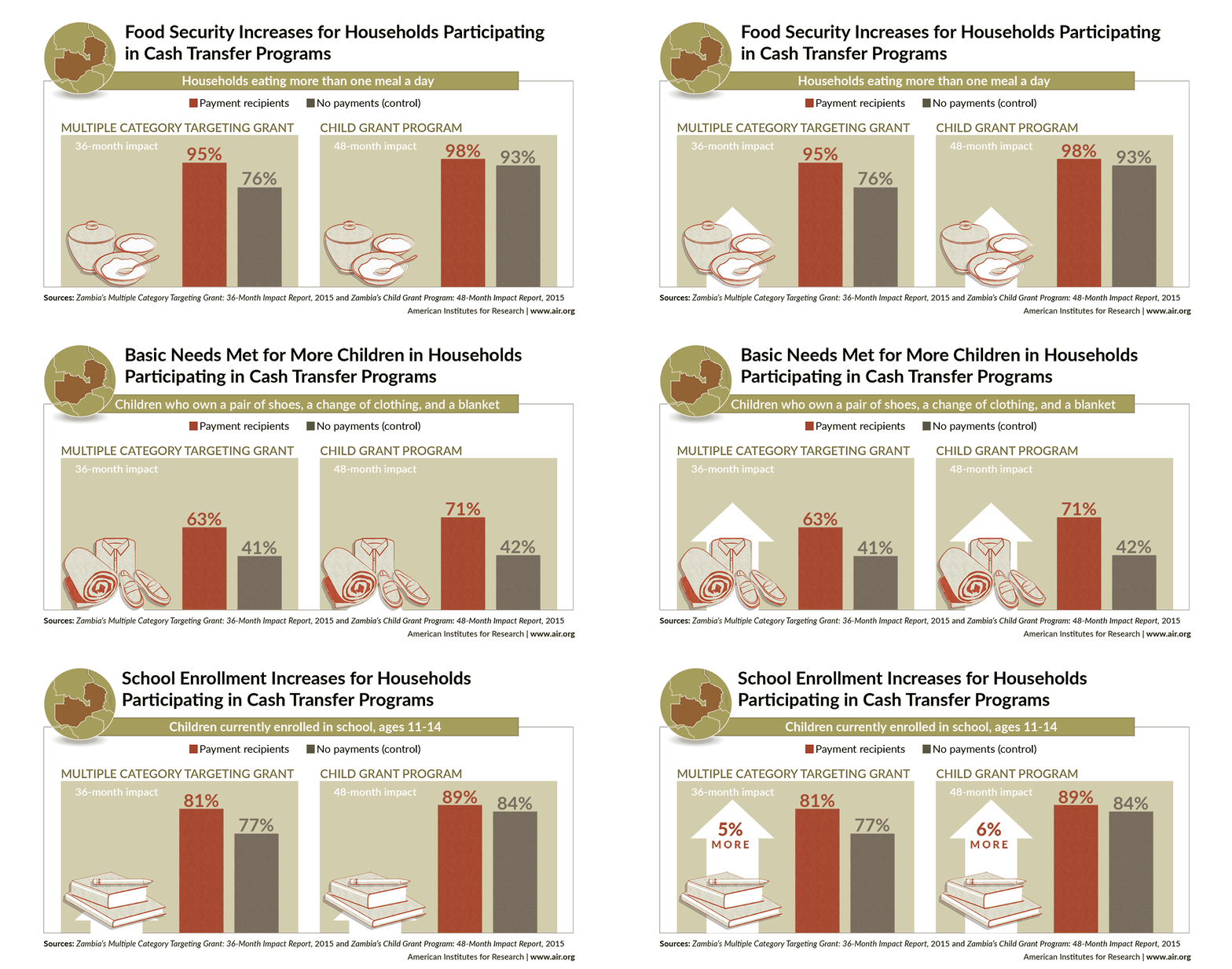
Animated infographic: Zambia cash transfer results

The evaluation of the Child Grant cash-transfer program (CGP) lasted four years, and the evaluation of the Multiple Category Targeting Grant (MCTG) lasted three years. Begun in 2010 in three of Zambia’s poorest districts, the CGP was open to all households with at least one child under age 4. Half were randomly assigned to receive cash transfers of 60 kwacha ($12) a month, and half to a control group that did not receive funds. The MCTG was aimed at poor households with fewer able-bodied people to farm, due largely to a “missing generation” of parents in their 30s and 40s and disproportionally high numbers of adolescents and orphans cared for by widows and grandparents. As with the CGP, half the MCTG participants received the equivalent of $12 a month and half were in a control group that didn’t.

The studies were notable not only for their duration, but also for their use of randomization and control groups to tease out the program’s true effects.

“Few evaluations of cash transfer programs can make such strong causal claims with as much certainty as these two evaluations,” said David Seidenfeld, AIR’s senior director of international research and evaluation and lead study author. “The design of the study, which extended over several years, allowed us to see that the beneficiaries do not grow complacent over time, but instead find ways to grow the value of the transfer beyond benefits related to food security and consumption.”

Although the studies revealed persistent successes, they also offered future researchers and policymakers an idea of cash transfers’ limitations. The studies did not show consistent successes in education or child nutrition, possibly due to large-scale infrastructure issues—namely, the supply of social services, access to clean water, and a lack of health care and education facilities.

Among the studies’ principal lessons, researchers found that the degree of positive impact depended largely on the participants’ characteristics. For example, the multiple-category grants had large impacts on schooling because participating households had more school-age children. Overall, school enrollment jumps of 8 percent for children ages 11–14 and 11 percent for children 15–17 were attributed to the program, and these age groups are at the greatest risk of dropping out in Zambia, according to the report. By contrast, four years into the program, the child grants had no enrollment or attendance impacts for children in three groups: ages 4–7, 8–10 and 15–17.

“Another lesson is that the unconditional nature of the grants gave participants the flexibility to use the money to combat principal life challenges,” said UNICEF Zambia Representative Hamid El-Bashir Ibrahim. “For example, the CGP significantly affected many indicators commonly associated with resiliency—the ability to manage and withstand shocks. Households with transfers significantly improved housing quality and tools, livestock procurement, and opportunities to diversify income-generating activities so they could better withstand emergencies.”

“The overall results demonstrate unequivocally that common perceptions about cash transfers—that they are handouts and cause dependency, or lead to alcohol and tobacco consumption, or increases in pregnancy—are not true in Zambia,” Seidenfeld said. “Quite the contrary. Due to the unconditional nature of the grants, households had the flexibility needed to meet their most pressing challenges head on.”

The final reports on the Child Grant cash transfer program and the Multiple Category Transfer Grant program can be found on AIR’s website. The site also features a video of David Seidenfeld discussing lessons learned from the multiyear studies.

About AIR
Established in 1946, with headquarters in Washington, D.C., the American Institutes for Research (AIR) is a nonpartisan, not-for-profit organization that conducts behavioral and social science research and delivers technical assistance both domestically and internationally in the areas of health, education and workforce productivity. For more information, visit www.air.org.

###

Comparte este contenido:
Page 2467 of 2579
1 2.465 2.466 2.467 2.468 2.469 2.579