Page 2520 of 2579
1 2.518 2.519 2.520 2.521 2.522 2.579

Radical Politics in the Age of American Authoritarianism: Connecting the Dots

The United States stands at the endpoint of a long series of attacks on democracy, and the choices faced by many in the US today point to the divide between those who are and those who are not willing to commit to democracy. Debates over whether Donald Trump is a fascist are a tactical diversion because the real issue is what it will take to prevent the United States from sliding further into a distinctive form of authoritarianism.

The willingness of contemporary politicians and pundits to use totalitarian themes echoes alarmingly fascist and totalitarian elements of the past. This willingness also prefigures the emergence of a distinctive mode of authoritarianism that threatens to further foreclose venues for social justice and civil rights. The need for resistance has become urgent. The struggle is not over specific institutions such as higher education or so-called democratic procedures such as elections but over what it means to get to the root of the problems facing the United States and to draw more people into subversive actions modeled after both historical struggles from the days of the underground railroad and contemporary movements for economic, social and environmental justice.

If progressives are to join in the fight against authoritarianism in the US, we all need to connect issues.

Yet, such struggles will only succeed if more progressives embrace an expansive understanding of politics, not fixating singularly on elections or any other issue but rather emphasizing the connections among diverse social movements. An expansive understanding such as this necessarily links the calls for a living wage and environment justice to calls for access to quality health care and the elimination of the conditions fostering assaults by the state against Black people, immigrants, workers and women. The movement against mass incarceration and capital punishment cannot be separated from a movement for racial justice; full employment; free, quality health care and housing. Such analyses also suggest the merging of labor unions and social movements, and the development of progressive cultural apparatuses such as alternative media, think tanks and social services for those marginalized by race, class and ethnicity. These alternative apparatuses must also embrace those who are angry with existing political parties and casino capitalism but who lack a critical frame of reference for understanding the conditions for their anger.

To read more articles by Henry A. Giroux and other authors in the Public Intellectual Project, click here.

What is imperative in rethinking the space of the political is the need to reach across specific identities and stop mobilizing exclusively around single-issue movements and their specific agendas. As the Fifteenth Street Manifesto Group expressed in its 2008 piece, «Left Turn: An Open Letter to US Radicals,» many groups on the left would grow stronger if they were to «perceive and refocus their struggles as part of a larger movement for social transformation.» Our political agenda must merge the pedagogical and the political by employing a language and mode of analysis that resonates with people’s needs while making social change a crucial element of the political and public imagination. At the same time, any politics that is going to take real change seriously must be highly critical of any reformist politics that does not include both a change of consciousness and structural change.

If progressives are to join in the fight against authoritarianism in the United States, we all need to connect issues, bring together diverse social movements and produce long-term organizations that can provide a view of the future that does not simply mimic the present. This requires connecting private issues to broader structural and systemic problems both at home and abroad. This is where matters of translation become crucial in developing broader ideological struggles and in fashioning a more comprehensive notion of politics.

There has never been a more pressing time to rethink the meaning of politics, justice, struggle and collective action.

Struggles that take place in particular contexts must also be connected to similar efforts at home and abroad. For instance, the ongoing privatization of public goods such as schools can be analyzed within the context of increasing attempts on the part of billionaires to eliminate the social state and gain control over commanding economic and cultural institutions in the United States. At the same time, the modeling of schools after prisons can be connected to the ongoing criminalization of a wide range of everyday behaviors and the rise of the punishing state. Moreover, such issues in the United States can be connected to other authoritarian societies that are following a comparable script of widespread repression. For instance, it is crucial to think about what racialized police violence in the United States has in common with violence waged by authoritarian states such as Egypt against Muslim protesters. This allows us to understand various social problems globally so as to make it easier to develop political formations that connect such diverse social justice struggles across national borders. It also helps us to understand, name and make visible the diverse authoritarian policies and practices that point to the parameters of a totalitarian society.

There has never been a more pressing time to rethink the meaning of politics, justice, struggle, collective action, and the development of new political parties and social movements. The ongoing violence against Black youth, the impending ecological crisis, the use of prisons to warehouse people who represent social problems, and the ongoing war on women’s reproductive rights, among other crises, demand a new language for developing modes of creative long-term resistance, a wider understanding of politics, and a new urgency to create modes of collective struggles rooted in more enduring and unified political formations. The American public needs a new discourse to resuscitate historical memories and methods of resistance to address the connections between the escalating destabilization of the earth’s biosphere, impoverishment, inequality, police violence, mass incarceration, corporate crime and the poisoning of low-income communities.

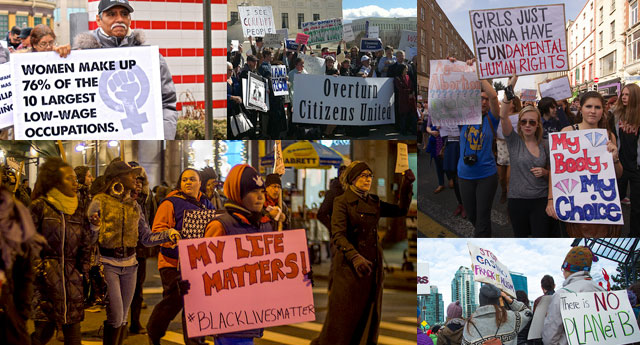
Not only are social movements from below needed, but also there is a need to merge diverse single-issue movements that range from calls for racial justice to calls for economic fairness. Of course, there are significant examples of this in the Black Lives Matter movement (as discussed by Alicia Garza, Keeanga-Yamahtta Taylor andElizabeth Day) and the ongoing strikes by workers for a living wage. But these are only the beginning of what is needed to contest the ideology and supporting apparatuses of neoliberal capitalism.

The call for broader social movements and a more comprehensive understanding of politics is necessary in order to connect the dots between, for instance, police brutality and mass incarceration, on the one hand, and the diverse crises producing massive poverty, the destruction of the welfare state and the assaults on the environment, workers, young people and women. As Peter Bohmer observes, the call for a meaningful living wage and full employment cannot be separated from demands «for access to quality education, affordable and quality housing and medical care, for quality child care, for reproductive rights and for clean air, drinkable water,» and an end to the pillaging of the environment by the ultra-rich and mega corporations. He rightly argues:

Connecting issues and social movements and organizations to each other has the potential to build a powerful movement of movements that is stronger than any of its individual parts. This means educating ourselves and in our groups about these issues and their causes and their interconnection.

In this instance, making the political more pedagogical becomes central to any viable notion of politics. That is, if the ideals and practices of democratic governance are not to be lost, we all need to continue producing the critical formative cultures capable of building new social, collective and political institutions that can both fight against the impending authoritarianism in the United States and imagine a society in which democracy is viewed no longer as a remnant of the past but rather as an ideal that is worthy of continuous struggle. It is also crucial for such struggles to cross national boundaries in order to develop global alliances.

Democracy must be written back into the script of everyday life.

At the root of this notion of developing a comprehensive view of politics is the need for educating ourselves by developing a critical formative culture along with corresponding institutions that promote a form of permanent criticism against all elements of oppression and unaccountable power. One important task of emancipation is to fight the dominant culture industry by developing alternative public spheres and educational institutions capable of nourishing critical thought and action. The time has come for educators, artists, workers, young people and others to push forward a new form of politics in which public values, trust and compassion trump neoliberalism’s celebration of self-interest, the ruthless accumulation of capital, the survival-of-the-fittest ethos and the financialization and market-driven corruption of the political system. Political responsibility is more than a challenge — it is the projection of a possibility in which new modes of identification and agents must be enabled that can sustain new political organizations and transnational anti-capitalist movements. Democracy must be written back into the script of everyday life, and doing so demands overcoming the current crisis of memory, agency and politics by collectively struggling for a new form of politics in which matters of justice, equity and inclusion define what is possible.

Such struggles demand an increasingly broad-based commitment to a new kind of activism. As Robin D. G. Kelley has recently noted, there is a need for more pedagogical, cultural and social spaces that allow us to think and act together, to take risks and to get to the roots of the conditions that are submerging the United States into a new form of authoritarianism wrapped in the flag, the dollar sign and the cross. Kelley is right in calling for a politics that places justice at its core, one that takes seriously what it means to be an individual and social agent while engaging in collective struggles. We don’t need tepid calls for repairing the system; instead, we need to invent a new system from the ashes of one that is terminally broken. We don’t need calls for moral uplift or personal responsibility. We need calls for economic, political, gender and racial justice. Such a politics must be rooted in particular demands, be open to direct action and take seriously strategies designed to both educate a wider public and mobilize them to seize power.

The left needs a new political conversation that encompasses memories of freedom and resistance. Such a dialogue would build on the militancy of the labor strikes of the 1930s, the civil rights movements of the 1950s and the struggle for participatory democracy by the New Left in the 1960s. At the same time, there is a need to reclaim the radical imagination and to infuse it with a spirited battle for an independent politics that regards a radical democracy as part of a never-ending struggle.

None of this can happen unless progressives understand education as a political and moral practice crucial to creating new forms of agency, mobilizing a desire for change and providing a language that underwrites the capacity to think, speak and act so as to challenge the sexist, racist, economic and political grammars of suffering produced by the new authoritarianism.

The left needs a language of critique that enables people to ask questions that appear unspeakable within the existing vocabularies of oppression. We also need a language of hope that is firmly aware of the ideological and structural obstacles that are undermining democracy. We need a language that reframes our activist politics as a creative act that responds to the promises and possibilities of a radical democracy.

Movements require time to mature and come into fruition. They necessitate educated agents able to connect structural conditions of oppression to the oppressive cultural apparatuses that legitimate, persuade, and shape individual and collective attitudes in the service of oppressive ideas and values. Under such conditions, radical ideas can be connected to action once diverse groups recognize the need to take control of the political, economic and cultural conditions that shape their worldviews, exploit their labor, control their communities, appropriate their resources, and undermine their dignity and lives. Raising consciousness alone will not change authoritarian societies, but it does provide the foundation for making oppression visible and for developing from below what Étienne Balibar calls «practices of resistance and solidarity.» We need not only a radical critique of capitalism, racism and other forms of oppression, but also a critical formative culture and cultural politics that inspire, energize and provide elements of a transformative radical education in the service of a broad-based democratic liberation movement.


May not be reprinted without permission of the author
Comparte este contenido:

España: Experiencias de Transformación Educativa

RedIberoamericanaDeDocentes(RID)/10 de abril de 2016/Por: Formación IB


clase202

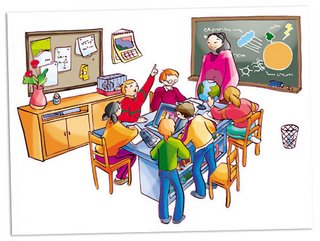
El próximo martes, 12 de abril, a las 20:00 horas se celebra una nueva mesa redonda por Hangout de Experiencias de Transformación Educativa dentro del proyecto de «Identificación y divulgación de buenas prácticas de centros educativos» en esta ocasión de transformación educativa por medio de proyectos internacionales e intercentro.

Participarán directores y docentes de 3 centros de referencia por sus
premios eTwinning, proyectos internacionales y metodologías pedagógicas: Camilo Rodriguez, (director del CEIP Giner de los Ríos), Maxi Marín y Mariano Suárez (director y coordinador del CP Tremañes) y Cristina Lorenzo (Coordinadora sección bilingüe del IES Profesor Emilio Lledó).

Os animamos a difundirlo entre vuestros contactos (podéis invitar dentro del evento directamente) y en las redes para que la máxima gente posible pueda disfrutar de ella y participar añadiendo las preguntas que quieran a
los participantes con los hashtag #AbiertaEDU y #TransformaEDU en Twitter.

Fuente: http://formacionib.ning.com/profiles/blogs/experiencias-de-transformacion-educativa

Comparte este contenido:

Auge de educación superior en China esconde deficiencias, dice informe

China / 8 de abril de 2016 / Por: Agencia de Xinhua / Fuente: http://spanish.china.org.cn

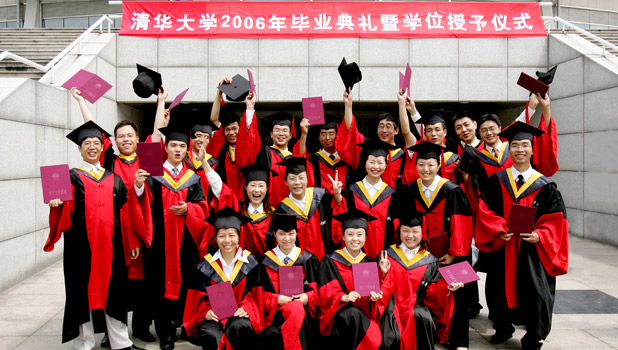
China tiene más estudiantes universitarios que cualquier otro país, con 37 millones inscritos en 2.852 instituciones de educación superior, de acuerdo con un informe publicado el jueves por el Ministerio de Educación.

China tiene más estudiantes universitarios que cualquier otro país, con 37 millones inscritos en 2.852 instituciones de educación superior, de acuerdo con un informe publicado el jueves por el Ministerio de Educación.

La tasa bruta de matriculación de la educación superior en China es del 40 por ciento, por encima de la media mundial, según el documento, que predijo que la tasa se elevará al 50 por ciento en 2019.

La cartera señaló que los ingresos procedentes de la educación superior y el presupuesto del gobierno en este ámbito en 2013 fue 3,6 veces y 4,9 veces mayor, respectivamente, que en 2003.

El informe se basa en los comentarios de más de 4.000 expertos, 700 institutos de enseñanza superior y más de 200.000 cuestionarios, así como en otras estadísticas.

Wu Yan, director del Centro de Evaluación de la Educación Superior del ministerio indicó que un aumento en el número de universidades había satisfecho la demanda de educación superior y ayudado a cultivar talentos para todos los oficios y profesiones.

Sin embargo, en comparación con las potencias mundiales en educación superior, China va a la zaga en la calidad de la misma, agregó Wu.

El informe señaló varias deficiencias a las que China se enfrenta en este campo, como la falta de éxito en la transferencia de la investigación científica en resultados tangibles, la escasez de iniciativa y espíritu empresarial en la enseñanza, y la insuficiencia de fondos.

Fuente de noticia: http://spanish.china.org.cn/china/txt/2016-04/08/content_38202400.htm

Foto: http://china.globalasia.com/estudiar-chino-en-espana/intercambio-de-creditos-y-reconocimiento-de-titulos-entre-china-y-espana/

Comparte este contenido:

Argentina: Protesta de auxiliares de Educación durante la visita de Vidal a Bahía Blanca

www.diariohoy.net/11-04-2016/

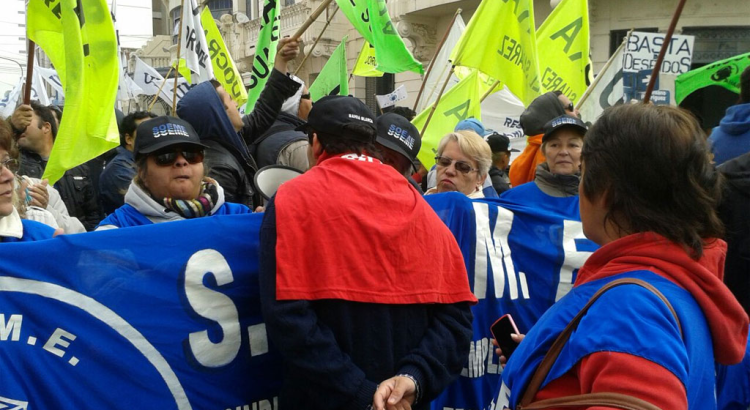
Durante la visita que la gobernadora María Eugenia Vidal  realizó en la jornada de hoy con motivo del aniversario de Bahía Blanca, auxiliares de la Educación enrolados en Soeme de esa región, se manifestaron masivamente en el centro de esa ciudad.

La protesta se realizó en el marco de lo ocurrido en las últimas horas en Mar del Plata, donde una auxiliar docente de la escuela especial 506 falleció de un ataque al corazón, al advertir que en su cuenta bancaria sólo había $40, producto de un descuento de $6.000 sobre su salario. El hecho derivó en una denuncia penal contra el gobierno Provincial.

A su vez los auxiliares se manifestaron en reclamo del salario mínimo de 10 mil pesos en el marco del conflicto salarial que ocurre con el sector en las negociaciones paritarias.

Hay que recordar que el Juzgado en lo Contencioso Administrativo Nº1 de La Plata, a cargo de Luis Federico Arias, hizo lugar a la presentación realizada por Soeme y dispuso el cese y la devolución de los descuentos indiscriminados aplicados por el gobierno bonaerense.

Además, la semana pasada el gremio firmó la conciliación obligatoria con el Ministerio de Trabajo para volver a discutir la situación salarial. Ahora, las partes en conflicto se sentarán a dialogar. De esta manera, el SOEME se comprometió a suspender todas las medidas de fuerza, mientras que las autoridades provinciales deberán hallar respuestas a los legítimos reclamos de los trabajadores.

Comparte este contenido:

Una niña india de 9 años gestiona una biblioteca en su barrio

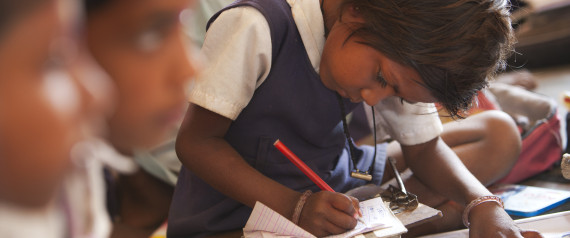
Dicen que la pluma es más fuerte que la espada. Que le pregunten a Muskaan Ahirwar, de 9 años, si está de acuerdo. Muskaan es una niña muy curiosa, va al colegio, como el resto de niños de su edad, y disfruta mucho jugando en su tiempo libre. Esta estudiante de Bhopal (India) también lleva las riendas de una biblioteca para niños.

En Bhopal, un barrio pobre del área de Arera Hills, justo detrás del Rajya Siksha Kendra (Centro de Educación Estatal), esta niña de 9 años dirige una biblioteca, Bal Pustakalay, tal y como recoge el periódico Times Of India.

INDIA 2

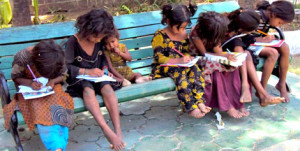
Todos los días, después de volver del colegio a las 4 de la tarde, Muskaan prepara la biblioteca para los niños del barrio marginal en el exterior de su casa. Los estudiantes esperan ansiosos a que abra la biblioteca y, en cuanto lo hace, la rodean para escuchar sus historias y leer. «Aquí jugamos, aprendemos, escuchamos y leemos un montón de libros sobre los defensores de la libertad, los grandes reyes indios y muchas otras personas», declaró un apasionado lector al Times Of India.

La idea de una biblioteca en un barrio marginal se concibió en diciembre, cuando en una sede local del Centro de Educación Estatal se dieron cuenta de que aunque muchos niños iban al colegio, no se molestaban en leer cuando volvían a casa. En un primer momento, se donaron unos 25 libros para que los niños los compartieran y leyeran. Actualmente, la biblioteca tiene 119 libros.

Para despertar el interés de los niños, los miembros del Centro de Educación Estatal organizaron un concurso entre ellos. Muskaan ganó el concurso y fue una de las participantes más entusiastas que el centro ha visto jamás.

Se le encargó la educación de otros estudiantes del barrio.

«Me encanta hacer esto. Algunos niños del barrio cogen los libros y los devuelven otro día. Otros se quedan a leer conmigo y me preguntan las cosas que no entienden», explicó al Times Of India.

Con la ayuda de su hermana mayor, que tiene 12 años, Muskaan también lleva un registro de su biblioteca.

Su padre es carpintero y su madre, ama de casa. «Nunca pensamos que podría cambiar la sociedad», reconoció la madre, que se confiesa orgullosa de sus dos hijas.

Iniciativas como la de  Muskaan  definitivamente transforman sociedades y dejan huellas indelebles para la humanidad, construir una mejor sociedad sera posible desde lo colectivo, la unión y las acciones que permitan un continuo educativo.

Fuente de la noticia: http://www.huffingtonpost.es/2016/03/14/nina-biblioteca-india_n_9461742.html

Imagen 1: http://i.huffpost.com/gen/4093622/images/n-POOR-KIDS-INDIA-BOOKS-large570.jpg

Imagen 2: https://queleerblog.files.wordpress.com/2016/03/yourstory-muskaan-ahirwar-bhopal.jpg?w=470&h=237

Socializado por:

Dulmar Pérez. Candidata al Doctorado Pedagogía, Magister en Docencia Universitaria, Especialista en Docencia para la Educación Inicial. Ha publicado artículos internacionales y nacionales PEII-A Investigadora adscrita al CIM. Coordinadora CNIE en Barinas

Comparte este contenido:

Ministra belga de Educación dimitió tras ser inculpada de fraude de fondos públicos

www.noticias24.com

(Bruselas, 11 de abril – EFE).- La ministra belga de Educación, Joëlle Milquet, presentó hoy su dimisión al Parlamento tras ser inculpada por haber contratado supuestamente, cuando era titular de Interior en el anterior Gobierno federal, a ocho colaboradores que en realidad acabaron trabajando para la campaña electoral de 2014.

La instrucción de este caso, conocido en Bélgica como el de los “empleos ficticios”, se abrió en abril de 2015, informó el diario “La Libre Belgique”.

La ministra, sobre cuya gestión pesaban sospechas desde que se abrió la instrucción de este caso en abril de 2015, ha anunciado su decisión en una rueda de prensa en la que ha explicado que su puesto depende ahora de su partido.

Se sospecha que Milquet cuando era ministra de Interior e Igualdad de oportunidades en el anterior Gobierno federal utilizó fondos del Ministerio para contratar a ocho colaboradores

“Tras varios días de vacaciones -en Bélgica concluyeron hoy las vacaciones escolares de Semana Santa- recibí una carta que ha significado mi inculpación, infundada y precipitada“, consideró Milquet.

La ministra dijo que se expresa ahora por primera vez sobre el asunto y que “he dejado a la instrucción hacer su trabajo en este asunto”, recoge la cadena pública RTBF.

“No tengo nada que reprocharme y voy a poner toda mi energía en demostrarlo”, afirmó, y añadió que, “a pesar de esta inculpación infundada, he decidido remitir mi mandato al Parlamento“.

La Fiscalía sospecha que Milquet incurrió en un conflicto de intereses en este caso al pagar con dinero público a los trabajadores de su campaña electoral.

“No se trata de empleos ficticios ya que cinco de ocho me siguieron al Ministerio de Educación“, apuntó.

Según dijo, sus cuentas han sido examinadas “a fondo” y “no se ha constatado ningún fraude”.

Comparte este contenido:

Argentina: El premio Clarín-Zurich a la educación lanzó una nueva convocatoria

www.clarin.com/09-04-2016/

El premio Clarín-Zurich a la Educación lanzó su octava edición. Este año está dedicada a promover las prácticas de lectura y producción escrita y oral en las distintas disciplinas de la escuela secundaria.

Como se sostiene en las Bases, existe consenso en considerar que aprender los contenidos de cada asignatura implica no solo apropiarse de saberes, sino también de sus prácticas discursivas: “En contexto de estudio, la lectura y la escritura no son objetivos exclusivos del área de Lengua, sino que constituyen prácticas insoslayables para el dictado y el aprendizaje de todas las disciplinas”.

Por eso, en esta edición se convoca a especialistas y al conjunto de los profesores de enseñanza secundaria a elaborar propuestas tendientes a ayudar a los estudiantes a mejorar sus prácticas de lectura, escritura y oralidad en las diferentes asignaturas. Y se alienta “a la elaboración de proyectos interdisciplinarios que hagan hincapié en la importancia que estas prácticas tienen en el aprendizaje y que tengan en cuenta las particularidades de los textos que los estudiantes deben leer y producir”.

Los proyectos pedagógicos que se presenten deberán, entre otras condiciones, poder ser replicados en otras escuelas secundarias, ser sostenibles en el tiempo con éxito y vigencia, articular teoría y práctica, incorporar criterios de creatividad e innovación, favorecer la construcción de aprendizajes significativos para alumnos y docentes y establecer sus plazos de aplicación.

En esta edición se entregarán 440.000 pesos en premios:  230.000 pesos al proyecto ganador: recibirá 40.000 pesos el autor/a del Proyecto y 190.000 pesos estarán destinados a su implementación. También habrá tres Menciones de Honor de 70.000 pesos cada una.

Como en las ediciones anteriores, especialistas de la Escuela de Educación de la Universidad de San Andrés realizarán el seguimiento de la implementación del proyecto ganador.

Podrán participar mayores de 18 años, personas jurídicas, escuelas y universidades públicas y privadas de todo el país. Se pueden presentar proyectos pedagógicos a desarrollar o que ya se encuentren en etapa de implementación, pero en todos los casos la condición del Premio es que las propuestas ganadoras se implementen en una o más escuelas secundarias públicas de gestión estatal. La fecha de cierre para la entrega de los trabajos es el 31 de agosto.

Una comisión de preselección, designada por representantes de Clarín y de Zurich, evaluará el conjunto de los proyectos recibidos y seleccionará un máximo de 10 finalistas que someterá a la consideración del jurado, que elegirá el Proyecto ganador y las tres Menciones de Honor.

El jurado está integrado por Guillermo Jaim Etcheverry, médico y Doctor en Medicina (UBA); Diego Golombek, Licenciado y Doctor en Ciencias Biológicas (UBA); María Marta García Negroni, Doctora en Ciencias del Lenguaje (EHESS, Francia); Pablo Miguel Jacovkis, Licenciado y Doctor en Matemáticas (UBA) y Beatriz Hall, Profesora en Letras (USAL).

Quienes tengan interés en participar podrán descargar el Formulario de inscripción y las Bases y Condiciones del concurso en www.clarin.com/premioalaeducacion. Luego deberán enviar el formulario completo y el desarrollo del proyecto a la dirección premioalaeducacion@clarin.com, o bien hacer llegar el formulario y tres copias del proyecto en papel, junto con su versión digitalizada, a Finocchietto 872, Ciudad de Buenos Aires, Código Postal Argentino C1140ABK, de lunes a viernes de 11 a 17 horas.

En la misma página también encontrarán una “Guía para el diseño de Proyectos Educativos” que tiene como objetivo contribuir a la calidad de los proyectos que se presentan cada año en el marco de este Premio. En ella los participantes encontrarán un documento de fácil lectura y que en su conjunto representa una herramienta práctica para visualizar la forma de pensar y escribir un proyecto educativo.

Con esta distinción, Clarín y Zurich, con el apoyo de la Fundación Noble, se proponen realizar un aporte a la mejora de la calidad educativa en todos los niveles del sistema, desde el inicial hasta el universitario. Las ediciones anteriores del premio estuvieron destinadas a la Educación Técnica, a la Lengua, las Ciencias Naturales, la Matemática, el uso de las TIC, la Educación Ambiental y las Ciencias Sociales.

Comparte este contenido:
Page 2520 of 2579
1 2.518 2.519 2.520 2.521 2.522 2.579