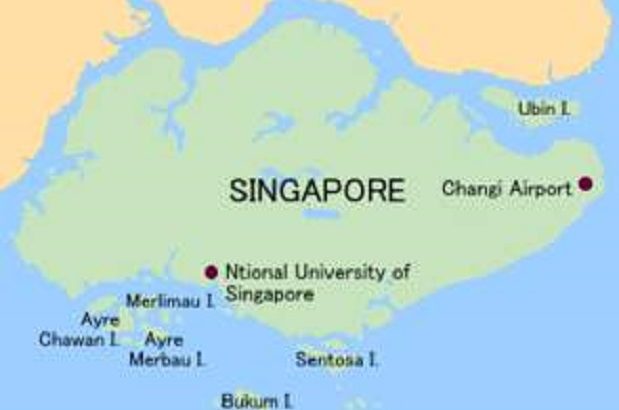
Conference Name: 4th Singapore International Conference on Social Science & Humanities (ICSSH), 12-13 June 2018
Conference Dates: 12-13 June 2018
Conference Venue: Nanyang Technological University, Nanyang Executive Centre, Singapore
Deadline for Abstract/Paper Submissions: 15 November 2017
Contact E-Mail ID: info@gahssr.org
GAHSSR President: Merissa Ocampo PhD.
Language: English
(Vernacular Session, e.g., Persian, Bahasa, Thai, European Languages, Chinese, will be organized for minimum 5 or more participants of particular language)
(Only english language, full-length, original papers will be considered for publication in conference journals)
Venue: Nanyang Technological University, Nanyang Executive Centre, Singapore. International Publication of accepted research papers with ISSN, DOI, Archiving and Indexing. Great opportunity for international Networking and Collaborations.
Organized by: GAHSSR – Global Association for Humanities and Social Science Research Deadline for abstracts/proposals: 10th June 201
Visitors
For Online Apllications Form:-
https://www.gahssr.org/online-application-form.php?id=55&status=applicationRegistration and Fees Details:-
https://www.gahssr.org/registration-form.php?id=55&status=registration
Kenia / 06 de septiembre de 2017 / Fuente: http://www.nation.co.ke
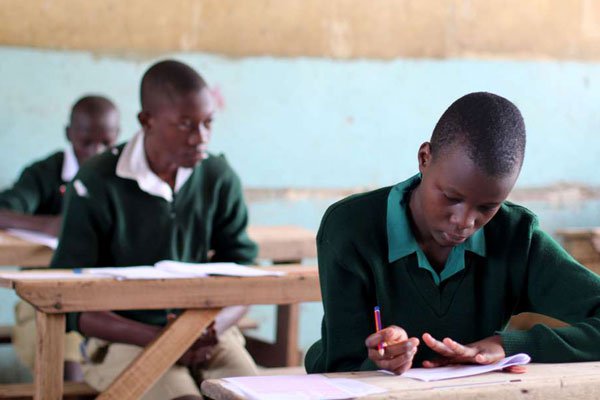
National Super Alliance leader Raila Odinga wants national examinations to be postponed for two weeks to allow for the repeat presidential election.
According to the opposition coalition’s presidential flagbearer, there is nothing wrong in adjusting the exam timetable to enable “an important national exercise like an election” to be conducted.
He said pushing the exam dates forward would not “make the students die”.
SCHOOL CALENDAR
He spoke at the Wilson Airport before leading his team to a campaign in Kisii.
Education Cabinet Secretary Fred Matiang’i has cautioned that the repeat election could disrupt the school calendar for next year.
Dr Matiang’i said programmes such as the selection of Form One students and the rollout of free secondary education are among activities that could be disrupted.
EXAM DATES
The minister proposed October 17 as a more convenient date for the poll.
The Independent Electoral and Boundaries Commission later announced the election will be held on that date.
The Kenya Certificate of Secondary Education (KCSE) exam will start on November 6 and end on November 29.
The Kenya Certificate of Primary Education exam will start on October 31 and end on November 2.
KCSE candidates will start sitting their practical tests on October 23.
Schools will close by October 29.
LEARNERS
On Tuesday, Mr Odinga’s proposal drew criticism from Murang’a Woman Rep Sabina Chege, Elimu Yetu Coalition, the National Parents Association (NPA) and the Kenya Private Schools Association (KPSA).
Ms Chege termed the remarks disrespectful to Kenyan children.
“I want to tell Mr Odinga that education matters should not be politicised or trivialised.
«The administration of exams requires time,” Ms Chege, who served in the last Parliament as Education Committee chairperson, said.
CRITICISM
Elimu Yetu national coordinator Muthoni Ouko said exams are equally important to the more than 1.6 million children who will be sitting them.
NPA chairman Nicholas Maiyo said: “We are against the latest calls by the political class that the national exams be put off by two weeks. We consider this proposal untenable.”
KPSA chief executive officer Peter Ndoro said: “If the political class believes in consultation, any matter concerning the child should be subjected to the same process.”
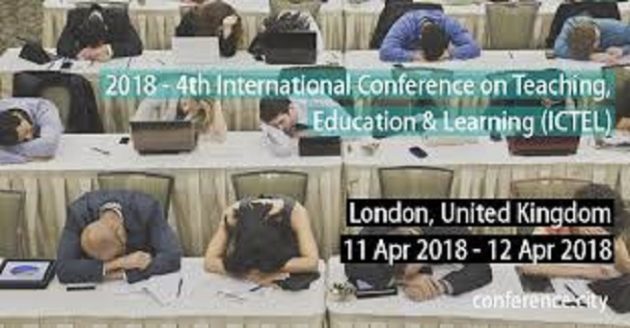
Conference Name: 2018 – 4th International Conference on Teaching, Education & Learning (ICTEL), Apr 11-12, London
Conference Dates: 11-12 April 2018
Conference Venue: South Kensington Campus, Imperial College London | London SW7 2AZ, United Kingdom
Deadline for Abstract/Paper Submissions: 15 November 2017
Contact E-Mail ID: info@adtelweb.org
Association President: Prof. Vivian Iglesia-Buhain
Language: English
(Vernacular Session, e.g., Persian, Bahasa, Thai, European Languages, Chinese, will be organized for minimum 5 or more participants of particular language)
(Only english language, full-length, original papers will be considered for publication in conference journals)
Visitors
For Online Applicaton Form:-
https://www.adtelweb.org/online-application-form.php?id=50&status=applicationRegistration and Fees Details:-
https://www.adtelweb.org/registration-form.php?id=50&status=registration
Jamaica/ September 05, 2017/ Source: http://www.jamaicaobserver.com
Back to school 2017.
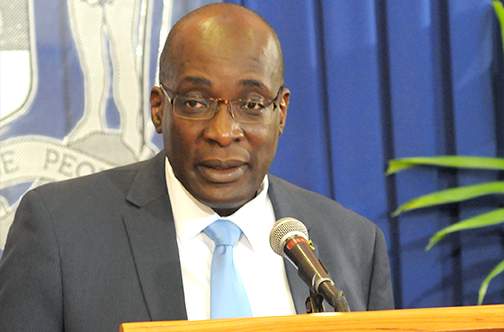
EDUCATION Minister Senator Ruel Reid says he is hopeful and optimistic that the country will see great improvement in the education system this year.
The minster, in his back-to-school broadcast yesterday, not only expressed optimism, but also indicated that all the necessary preparations had been made for the start of the new academic year, which begins today.
“My fellow Jamaicans, as we begin this new school year we do so with much optimism and confidence that this will be a very good year for the education of our young people in Jamaica.
“Much work has been done to lay the foundation for improved student performance. School plants have been renovated, furniture and other equipment have been provided, and most important, the first tranche operational grants have been sent to our schools in good time to allow for the smooth reopening of our institutions,” Senator Reid said.
The minister said he was further encouraged by the examination results from the nation’s students, which point to the progress being made through new initiatives to improve outcomes.
“With the continued excellent guidance of our teachers and application of our students we will see good results,” he said.
Minister Reid said that approximately $36.7 billion was being spent on secondary education for this academic year, which covers salaries, grants, technical and vocational education and training, information and communications technology, science, infrastructure, furniture, and nutrition.
Additional support, he added, will be provided, such as additional teachers for those schools that require special support based on the nature of the students and special programmes being offered; 25 temporary deans of disciples; more than 1,000 young people to be engaged as lab technicians, safety and security support officers, clerical officers, and environmental wardens and will be placed in selected schools; and payment to 913 cooks across the system to the tune of $274.8 million.
In addition, Senator Reid promised that the ministry would be honouring its commitment to increase funding to primary, all-age and junior high schools with a budget of $1 billion, excluding salaries.
At the early childhood level, he said many schools need help and, as part of the efforts to improve standards and give the children a strong foundation as they begin their education journey, the ministry would be taking over a number these schools.
According to the minister, 117 basic schools will be converted into 56 infant departments by the education ministry.
“Our mantra ‘Every child can learn, every child must learn’ is at the centre of what we do. So we are ensuring that our children with special needs are not left behind,” he added, noting that the ministry’s Special Education Unit will place 1,474 students in special education facilities at a cost of $57.8 million.
As it relates to the new national curriculum, which started last year, the minister said it will be fully implemented in all grades up to nine in the first term of the new school year. The Alternative Pathway for Secondary Level Education will also be launched in 84 schools, he said.
He added: “The Career Advancement Programme has been expanded as the flagship programme for the creation of an additional two years at the secondary level. Over 123 schools have been approved to offer the programme to date and others are being processed.”
In the meantime, the minister reiterated the Government’s non-obligatory policy towards the payment of fees at the secondary level.
However, he has encouraged parents to contribute to their children’s school, once an agreement has been reached and approved by the board of governors.
“My fellow Jamaicans, this year we have another great opportunity to redouble our efforts to help create an education system which enables every child to achieve his or her full potential,” said the education minister.
Ghana/ September 05, 2017/By Elsie Appiah-Osei, GNA/Source: http://www.ghananewsagency.org
Dr Bridget Boakye, a Dentist at the the Okomfo Anokye Teaching Hospital, has called on parents to see themselves as active participants in their children’s education at all times and at all levels in the educational cycle.
She said: «To build an inheritance for your child, you must see yourself as a major shareholder in your child’s education.
«The little time you allocate each day for your child is the valuable inheritance you are accumulating for your child’s future success.»
Dr Boakye said this at the first Graduation and Speech and Prize-Giving Day ceremony of the Star of Hope Academy held in Berekusu over the weekend.
She urged parents especially fathers to contribute positively to their children’s academic performance as this would help the children to have a sound mind to excel at school.
Dr Boakye also called on parents to provide for the basic needs of children both at school and at home adding that «Parents, provision of balanced diet for your children is an essential responsibility you should not fail, a balanced diet is a necessity for children’s growth and development,» she said.
Speaking under the theme: «Enhancing Quality Education Delivery, the Role of Patents», Mr Alex Lanbon, the Proprietor of Star of Hope Academy, advised parents to invest both quality time and money in their children’s education as doing so make them to be involved in the academics of their children.
«From nursery to class three, is the formative stage of children’s development, and this is a critical stage of human development process, «he said.
Recounting the history of the school, Miss Rita Abaikih Keney, the Head of Star of Hope Academy, said the school which started in 2014 with two children namely Master Micheal and Andrews Kissiedu can now boast of about105 pupils currently.
She said within a three-year period, authorities had introduced more innovation in teaching and learning including the introduction of Information Communication Technology (ICT) as well as the French language which has become a necessity as the world is advancing in this modern age.
In all 11 pupils graduated from Kindergarten two to class one.
There was the commissioning of a 15 seater- school bus as well as a sod-cutting exercise to officially begin the construction of an ultra-modern 26-unit classroom block.
The project which is expected to be completed in an approximately five years time would have an ICT Laboratory, a sick bay, staff common and an assembly hall.
There were drama, choreography performance as well as poetry recitals by the pupils to mark the occasion.
Certificates and awards were also presented to pupils and staff who had excelled in their various fields over the years.
Dr Bridget Boakye, a Dentist at the the Okomfo Anokye Teaching Hospital, has called on parents to see themselves as active participants in their children’s education at all times and at all levels in the educational cycle.
She said: «To build an inheritance for your child, you must see yourself as a major shareholder in your child’s education.
«The little time you allocate each day for your child is the valuable inheritance you are accumulating for your child’s future success.»
Dr Boakye said this at the first Graduation and Speech and Prize-Giving Day ceremony of the Star of Hope Academy held in Berekusu over the weekend.
She urged parents especially fathers to contribute positively to their children’s academic performance as this would help the children to have a sound mind to excel at school.
Dr Boakye also called on parents to provide for the basic needs of children both at school and at home adding that «Parents, provision of balanced diet for your children is an essential responsibility you should not fail, a balanced diet is a necessity for children’s growth and development,» she said.
Speaking under the theme: «Enhancing Quality Education Delivery, the Role of Patents», Mr Alex Lanbon, the Proprietor of Star of Hope Academy, advised parents to invest both quality time and money in their children’s education as doing so make them to be involved in the academics of their children.
«From nursery to class three, is the formative stage of children’s development, and this is a critical stage of human development process, «he said.
Recounting the history of the school, Miss Rita Abaikih Keney, the Head of Star of Hope Academy, said the school which started in 2014 with two children namely Master Micheal and Andrews Kissiedu can now boast of about105 pupils currently.
She said within a three-year period, authorities had introduced more innovation in teaching and learning including the introduction of Information Communication Technology (ICT) as well as the French language which has become a necessity as the world is advancing in this modern age.
In all 11 pupils graduated from Kindergarten two to class one.
There was the commissioning of a 15 seater- school bus as well as a sod-cutting exercise to officially begin the construction of an ultra-modern 26-unit classroom block.
The project which is expected to be completed in an approximately five years time would have an ICT Laboratory, a sick bay, staff common and an assembly hall.
There were drama, choreography performance as well as poetry recitals by the pupils to mark the occasion.
Certificates and awards were also presented to pupils and staff who had excelled in their various fields over the years.
América del Norte/Canada/thetyee.ca/By Katie Hyslop
Resumen: Con el aumento de la retórica racista, The Tyee pregunta a los maestros y abogados cómo ayudar a los estudiantes a luchar. En un artículo publicado en The Tyee la semana pasada, la profesora de educación de la Universidad de Columbia Británica, Michelle Stack, pidió a sus colegas educadores blancos que hablaran con sus estudiantes sobre el racismo: «Tenemos que negarnos a minimizar la opresión a pesar de la tentación de hacerlo. La supremacía blanca es real y hace daño inconmensurable. ¿Qué enseñamos a nuestros hijos? ¿Aprenden sobre la supremacía blanca y el racismo y maneras de luchar contra ella? » El racismo es parte del legado de la Columbia Británica, desde su fundación en tierras de las Primeras Naciones sin terminar hace más de 150 años. Ese legado se enseña en el programa de kindergarten hasta el 12º grado de la provincia, incluyendo las escuelas residenciales y la Scoop de los sesenta , el impuesto sobre la cabeza de China , los campamentos de internamiento japoneses y los cientos de inmigrantes sij a bordo del Komagata Maru. Pero si usted habla con los estudiantes de BC y los maestros, ellos le dirán que el racismo no es sólo en el pasado. Ellos lo oyen en silbidos insultos en los pasillos, ya través de estereotipos planteados en clase. Lo ven en las mesas de almuerzo dividido por raza y cultura.
With the rise in racist rhetoric, The Tyee asks teachers and advocates how to help students fight back.
In an op-ed published on The Tyee last week, University of British Columbia education professor Michelle Stack called on her fellow white educators to talk to their students about racism:
Racism is part of the legacy of British Columbia, from its founding on unceded First Nations land more than 150 years ago. That legacy is taught in the province’s kindergarten to Grade 12 curriculum, including residential schools and the Sixties Scoop, the Chinese head tax, Japanese internment camps, and the hundreds of Sikh migrants aboard the Komagata Maru denied entry to the province.
But if you talk to B.C. students and teachers, they’ll tell you racism isn’t just in the past. They hear it in hissed slurs in the halls, and through stereotypes raised in class. They see it in the lunch tables divided by race and culture.
With the current climate in the U.S. (and Donald Trump in the White House), racist rhetoric has found its way back into the mainstream discourse. BC Teachers’ Federation president Glen Hansman says the way that schools address racism must change to reflect that.
“We also have the responsibility as a union — and the Ministry of Education, working with school boards, too — to make sure that we are equipping teachers properly to be able to have these conversations in schools, and we’re still not there yet,” he said.
‘1980s approach to multiculturalism’
So what supports do B.C. teachers have to provide anti-racism education?
Five years ago, the BC Teachers’ Federation’s Committee for Action on Social Justice released “Show Racism the Red Card,” an anti-racism teaching resource.
Based on a similar program in the United Kingdom, the “lesson aid” includes background information for teachers on anti-racism education, as well as sample lesson plans for kindergarten to Grade 12. The resource is available online for free, though Hansman acknowledges it needs to be updated.
The union also provides its own anti-racism workshops for teachers, including how to teach from an anti-oppression framework; making schools racism-free for Indigenous students; and deconstructing racist myths.
But access to the workshops is limited for teachers who live outside of B.C.’s urban hubs, and cuts to school districts’ professional development budgets means there is little or no support in some districts for anti-racism professional development.
“All teachers have a bit of understanding about how to do anti-racist pedagogy in the classroom based on their own school experience or what they received in teacher education training,” Hansman said. “But we can’t just rest on our laurels about what we encountered 20 years ago.”
Since the mass shooting at a Quebec City mosque earlier this year, the union has received pushback from the public and some teachers who believe the best way to address racism is to be “colour-blind” and not talk about it at all, Hansman said.
That’s a “1980s approach to multiculturalism,” he added. “It negates the very real lived experience of students from marginalized groups, including racialized groups. It also nullifies that differences that people are proud of.”
Using privilege for good
Annie Ohana makes the conscious choice to deconstruct racism in her classes. Ohana, who teaches social science, law and social justice, and is the Aboriginal teacher advisor at L.A. Matheson Secondary in Surrey, B.C., starts every school year with a class discussion about privilege.
“We absolutely start with white privilege, male privilege, etc. But there’s many different forms of privilege: education, citizen, heterosexual — there’s tons,” she said. It’s not about making students feel bad, she said, but exploring how they can use their privileges to help others.
Ohana, who helped organize the counter-protest to the anti-Muslim rally planned for Vancouver this month, exposes her students to voices and perspectives not found in most textbooks. For example, when discussing the First World War she doesn’t just focus on European experience but also that of the one million Indian soldiers who fought alongside the British.
A big part of Ohana’s approach to anti-racist education is disrupting students’ comfort zones, she said. That can be as simple as changing the seating plan so students work with different people. It also means being open to dialogue on students’ viewpoints, even when they disagree with her own.
“Everybody can have an opinion and can have it heard. They need to be ready to be challenged — not in a violent way, but a way that is respectful of other people,” she said.
“If somebody says, ‘I’m against Islam because the Qu’ran advocates for violence,’ for example, if other students would like to counter that and break that down, we’re going to do so in a safe space.”
That doesn’t mean it’s safe to spread hate in Ohana’s class, though. “You’re not allowed to point fingers. You’re not allowed to swear at another person or insult them,” she said. “You are in a school and there are rules to follow.”
Diversity in the classroom
Education isn’t just the domain of teachers, however. The Tyee reached out to anti-racist advocates and community groups for their thoughts on how schools should address racism.
One of those advocates is Jessie Kaur Lehail, co-founder of the Kaur Project, which takes its name and focus from the stories of Sikh women in B.C. who have adopted Kaur as a middle or last name.
Lehail shows students in the classes she’s visited the differences and similarities between the women featured in the Kaur Project, and the students’ own lives.
“It really doesn’t matter what background these women are, they just showcase that we’re all humans and we all have trials and tribulations. They’re just socially and culturally different on some levels,” she said. “And it’s an opportunity for understanding, to learn something new, and also to have empathy for other people.”
Lehail, who spoke at last month’s counter-protest and has visited Ohana’s classes, says it’s important for teachers and schools to address racist incidents. But they could be proactive, too, and tackle these issues before anything happens.
“Ensure that non-Caucasian voices, ideas, authors and thoughts are included [in your lessons]. It’s important to have Indigenous voices, women’s voices, people of colour, to show that there is diversity,” she said, adding this shouldn’t be limited to books but include people from the community, bringing them into the classroom.
Wendy Addo of Black Lives Matter-Vancouver agrees, advocating for schools to develop ongoing relationships with B.C.’s black and Indigenous communities.
But the first step towards creating an anti-racist school environment, she says, is schools and districts asking themselves what they’re doing to make their schools safe for students of colour, where their voices and viewpoints are respected.
“Is there an accessible and swift path to recourse for students who have been the victims of racism within the school and/or the school community? Is the school fostering a culture of accessibility and accommodation for [English Language Learning] students and a culture of accommodating and respecting non-white cultural practices in the school and community?” Addo wrote in a Facebook message to The Tyee.
Addo wants the curriculum to include lessons about white privilege, supremacy, and fragility, as well as the historic and current impacts of colonialism on people of colour.
“[Students] need to learn a critical perspective on the police, the military and contemporary and historic land occupation,” she wrote. “They need to learn often erased and neglected parts of our history such as the histories of genocide, forced eviction and slavery in Canada, and the histories of Indigenous and African-Canadian communities — their struggles and their resistance.”
Learning from the past
Addo isn’t advocating for a total erasure of the old, Eurocentric curriculum. Instead, she says that teachers should use it as a critical thinking lesson on how historical narratives can cover up other people’s histories in favour of a white supremacist narrative.
Edward Liu, an anti-racism advocate from Richmond who helped organize a protest against the anti-Chinese flyers that appeared in his city last November, echoed Addo’s assessment of the white-centric provincial history that was taught to many British Columbians.
“The history of B.C. gives the impression that it was the European colonists who built the province single-handedly. People from other ethnic groups were just some sort of supporting actors that helped the white colonists,” Liu wrote in an email to The Tyee.
“For instance, the Chinese were more than railroad workers who just appeared in the early 1880s; they were one of the major contributors to many of the interior communities in southern B.C. area, even before B.C. joined Canada.”
The multicultural social service organization S.U.C.C.E.S.S. is no stranger to community discussions on racism. After those anti-Chinese flyers appeared in Richmond mailboxes last fall, the organization held a community forum to discuss racism against newcomers.
While recognizing some school districts may already be doing this work, Winnie Tam, director of strategic communications and marketing at S.U.C.C.E.S.S., suggested that districts develop comprehensive policies on inclusion and anti-racism, including how teachers, students and parents can report and followup on racist incidents at school.
Tam also echoed Hansman’s recommendation that teachers, as well as school administrators, receive anti-racism and inclusion training, while providing age appropriate programming for students, and settlement support for newcomer families and kids.
The Tyee reached out to the First Nations Education Steering Committee and the Urban Native Youth Association for their thoughts on what schools should do to battle racism, but did not hear back by press time.
However, an early 2000s FNESC document provides suggestions from the BC Aboriginal Education Partners Committee — a working group made up of FNESC, teachers, provincial government representatives and school administrators — on tackling racism against Indigenous students.
Suggestions included educating and hiring more Indigenous teachers; building support and awareness for Indigenous-focused courses like First Peoples 12; educating teachers on Indigenous issues; and including students in the development of anti-racism programs.
More than a decade later progress has been made, but work still needs to be done.
“Certainly the auditor general’s report on the experience of Aboriginal youth in schools should have been a wake-up call for the entire sector,” said Hansman, referring to a 2015 report — released more than a decade after FNESC’s anti-racism suggestions — highlighting the “racism of low-expectations” that brings down the Indigenous youth graduation rate.
“One of the solutions to that has to be making space for students’ voices to come to the fore,” said Hansman. “Actually listening to what they’re saying and not minimizing their experiences.”
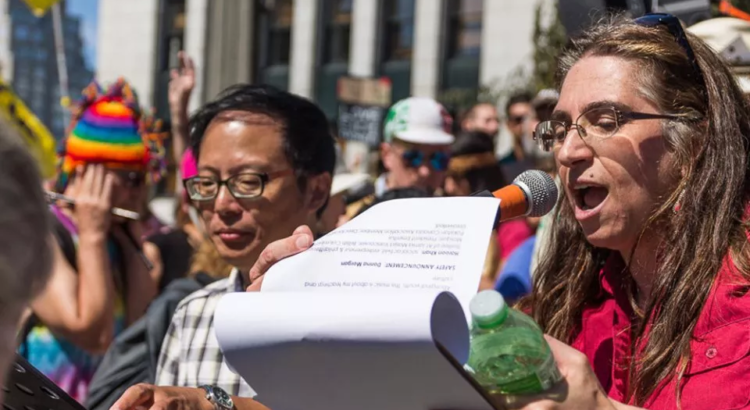
*Correction, Aug. 28. A caption accompanying the cover photo for this story today previously misidentified the subjects.
Kenia / 30 de agosto de 2017 / Por: OUMA WANZALA / Fuente: http://www.nation.co.ke
The government on Tuesday released Sh2.5 billion for free primary education, a day after schools reopened for the third and final term.
Education Principal Secretary Belio Kispang said Sh6.4 billion for subsidised secondary education will be released to schools by Friday.
There are about 23,000 primary and 9,000 secondary schools across the country.
MANAGEMENT
The timely release of the funds is set to ease the burden head teachers faced in the past in managing schools due to regular delays in disbursing the cash.
The delays saw school heads being harassed by suppliers over failure to pay for goods and services on time.
“We want learning for this term to go on smoothly without any hitches,” Dr Kipsang said.
Two weeks ago, the government released 18 per cent of last term’s capitation.
The delay hurt the management of most public schools in the second term.
EXAMS
According to a government schedule, 50 per cent of the capitation is released in the first term, 30 per cent in the second term and 20 per cent in the third term.
The government allocates Sh32 billion for subsidised secondary school education and Sh14 billion for free primary education annually.
Schools will close on October 29 to allow the start of national examinations in November for Standard Eight and Form Four candidates.
SCHOOL FEES
The fee structures for the different categories of public secondary schools indicate that the government pays a subsidy of Sh12,870 while a parent pays Sh53,554 for a child in boarding school.
For a student attending a day school, the parent is supposed to pay Sh9,370.
Parents with children in special-needs schools are required to pay Sh37,210 while the government pays Sh32,600.
For primary schools, the government pays Sh1,420 per child per year.
SUPPLIERS
Kenya Secondary Schools Heads Association chairman Kahi Indimuli said the timely release of the cash will enable schools to plan effectively.
“We are going to have examinations this term and the early release of the money will make us move forward as planned,” Mr Indimuli said.
Kenya Primary Schools Heads Association chairman Shem Ndolo made similar remarks.
He said principals can now pay suppliers on time.
“Since 2013, we have increased enrolment from 2.9 million to 3.9 million at the early childhood development level, 9.9 million to 10.1 million in primary schools and 2.1 million to 2.6 million in secondary schools.
«The number of special-needs education students increased from 107,000 to 132,000,” President Uhuru Kenyatta said last week.
At the same time, Elimu Yetu Coalition has urged teachers to ensure the term runs smoothly as candidates prepare for the national exams.
The Kenya National Union of Teachers has threatened to call a strike if members are not awarded an annual salary raise.
OtrasVocesenEducacion.org existe gracias al esfuerzo voluntario e independiente de un pequeño grupo de docentes que decidimos soñar con un espacio abierto de intercambio y debate.
¡Ayúdanos a mantener abiertas las puertas de esta aula!
![[Tyee]](https://thetyee.ca/ui/img/xico_fishie.png.pagespeed.ic.qRYDhMYjhr.webp)


 Users Today : 102
 Total Users : 35459568
 Views Today : 160
 Total views : 3417918