Page 1532 of 6195
1 1.530 1.531 1.532 1.533 1.534 6.195

Bangladesh: Rohingya children get access to education

Bangladesh: Rohingya children get access to education

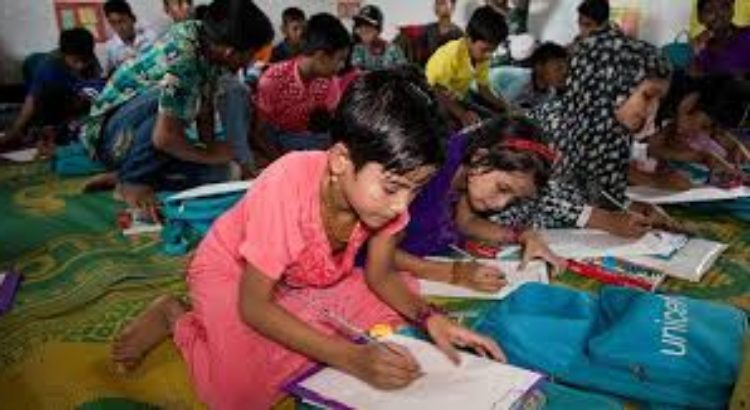
Amnesty International and other human rights organizations have been campaigning for the nearly half a million Rohingya children in Bangladesh’s refugee camps to be allowed to enjoy their right to quality education, warning of the costs of a ‘lost generation’.

“This is an important and very positive commitment by the Bangladeshi government, allowing children to access schooling and chase their dreams for the future. They have lost two academic years already and cannot afford to lose any more time outside a classroom,” said Saad Hammadi, South Asia Campaigner at Amnesty International.

“It is important that access to appropriate, accredited and quality education be extended to all children in the Cox’s Bazar area, including Rohingya refugees and the host community. The international community has a key role to play here in ensuring the Bangladesh government has the resources it needs to realize this goal.”

Up to now, the Bangladesh government had resisted calls to grant Rohingya refugee children access to education, limiting learning opportunities to a few provisional learning centres that offer playtime and early primary school lessons scattered across the refugee camps in the Cox’s Bazar district. A few children who managed to gain access to local secondary schools were expelled on the government’s instructions.

Amid fears of either being forcibly returned to Myanmar or relocated offshore to the uninhabited silt isle of Bashan Char, these children have faced an uncertain future. Many were on the verge of completing their schooling when the Myanmar military attacked their villages, forcing them to flee to Bangladesh and throwing their lives into limbo.

Bangladesh’s Foreign Secretary, Masud bin Momen, told journalists today: “The government has felt the need to keep Rohingya childrens’ hope for the future alive with extending education and skills training to them.”

Under the government’s plans, Rohingya refugee children will get school education up to the age of 14, through the provision of the Myanmar curriculum, and children older than 14 will get skills training. The schools will need adequately trained teachers who can use the Myanmar curriculum and teach in Burmese.

A pilot project led by UNICEF and the Bangladesh government will start off with the involvement of 10,000 children. The scheme will then be extended to other children, including those from the host community, who will be taught separately according to Bangladesh’s national curriculum.

The Convention on the Rights of the Child, a binding treaty which Bangladesh has ratified, makes clear that education can and should ensure the development of the child’s personality, talents, mental and physical abilities to their fullest potential while enhancing respect for human rights and preparing them for a responsible life in a free society.

“The benefits of educating children cannot be underestimated, with the positive effects rippling through their communities and broader society. They can speak up for themselves, claim their rights, and lift themselves and others out of a difficult situation. But the costs of denying children education can be severe, including leaving them vulnerable to poverty and exploitation. We welcome this significant breakthrough and look forward to the government delivering on its commitments,” said Saad Hammadi.

Amnesty International’s campaign for the right to education

  • On World Refugee Day last year, Amnesty International held an ‘art camp’ for children in the refugee camps of Cox’s Bazar. Working with a group of Bangladeshi artists, they spent two days drawing sketches depicting their aspirations for the future – some of whom wanted to become teachers, doctors, pilots and nurses. In collaboration with UNICEF, the works of art were exhibited in Dhaka and later made their way to Washington DC, London and other major world cities.
  • In August 2019, Amnesty International published a briefing, “I don’t know what my future will be”: Rohingya refugees in Bangladesh, detailing conditions in the camps, particularly for children who had not seen the inside of a class room since arriving in the camps in 2017.

We’re stronger when we stand together

Our members make change possible. They’re the people we call on whenever and wherever human rights are under attack. Join 7 million activists around the world and help us protect human rights.

Fuente de la Información: https://www.amnesty.org/en/latest/news/2020/01/bangladesh-rohingya-children-get-access-to-education/
Comparte este contenido:

Reino Unido: Private schools criticise plans to get more poor students into university

Private schools criticise plans to get more poor students into university

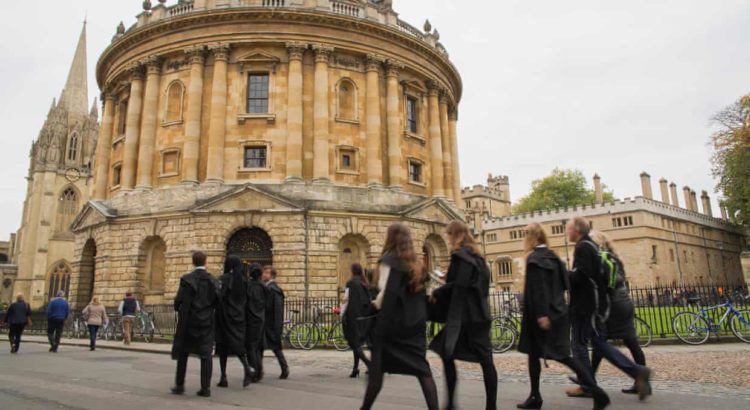
Leading private schools have challenged plans to widen access to the most selective universities in England, warning they could lead to discrimination against young people “on the basis of the class they were born into”.

The intervention by the Headmasters’ & Headmistresses’ Conference (HMC), which represents many of the country’s most expensive independent schools, reflects members’ concerns that new measures to improve access for the most disadvantaged students could lead to discrimination against students from elite private schools.

The HMC was responding to plans, published on Wednesday by the higher education regulator for England, the Office for Students, that promise to halve the access gap at England’s most selective institutions in the next five years, increasing the number of disadvantaged students by 6,500 each year from 2024-25.

HMC’s executive director, Mike Buchanan, said universities should expand to accommodate as many “truly suitable students” as necessary, rather than “rob some students of a future to award it to others”. He also called on universities to review the increasing number of international students, rather than “deny places to UK students based on their class”

.Since the lifting of the student admissions cap in 2015, the number of places at many universities has grown exponentially, but undergraduate numbers have remained relatively stable at Oxford and Cambridge, though both claim to have made significant progress in diversifying their student body.

The OfS report, Transforming Opportunity in Higher Education, details ambitious commitments by universities to improve equality of opportunity for students. Currently, young people from advantaged areas of England are more than six times as likely to attend selective universities, including Oxford, Cambridge and other members of the Russell Group, as those from disadvantaged areas.

Despite the huge expansion in university places, the gap has barely changed. Under new plans drawn up by universities and approved by the OfS, the ratio will be cut to less than 4:1 by 2025, and could be eliminated in 20 years. The OfS is also hoping to reduce the gap between the proportion of white and black students awarded a top degree – a first or a 2:1 – from 22% to 11%.

Buchanan said the HMC was confident their students would continue to secure places at prestigious universities at home and overseas, thanks to excellent results and soft skills. “However, care is needed in starting actively to discriminate against individual young people on the basis of the class they were born into. The country needs all its young people to reach their potential if we are to create a bright new future for Britain post-Brexit.”

Buchanan said contextual admissions – which allow universities to take into account an applicant’s educational and socio-economic background – were reasonable “if used on a sophisticated, individual basis”, but it should not be about school type.

“Independent schools play an important role in getting disadvantaged students into university through offering free and discounted places. Not all state-educated students are disadvantaged and the majority of students from affluent backgrounds are not educated in HMC schools. This is why a sophisticated approach is needed for the country genuinely to level up.”

Kalwant Bhopal, a professor of education and justice at Birmingham University, said: “It is clear that those students who attend independent fee-paying schools are more likely to be white and middle-class and are more likely to go on to hold top high-earning jobs. These schools continue to perpetuate privilege. Contextual admissions are one small step to addressing inequalities of opportunity facing children from many working-class, and black and ethnic minority families.”

Chris Millward, the OfS director of fair access and participation, said if universities did not increase student numbers, then groups that were currently highly represented would end up being less represented as a result of the new targets.

“We expect providers to work towards these targets because they tackle two urgent priorities: the need to open up all of our universities to people from those communities where progress into higher education is lowest, and to ensure that every student has the same chance to succeed once they get there.”

The universities minister, Chris Skidmore, said it was damning that such large gaps still remained between disadvantaged students and their peers. “I am pleased to see universities being ambitious in their plans to reach out to those from disadvantaged backgrounds and to support them through their studies. But for universities which do not meet their registration conditions, I fully support the OfS to take appropriate action.”

Fuente de la Información: https://www.theguardian.com/education/2020/jan/29/private-schools-criticise-plans-to-get-more-poor-students-into-university


Comparte este contenido:

El Salvador: “Tuve que dejar la escuela por las amenazas de las maras”

Centro América/ El Salvador/ 28.01.2020/Por: Alba Llanos/ Fuente: www.magisnet.com.

El 24 de enero se celebró el Día Internacional de la Educación, un derecho que no está al alcance de todos.

La violencia de “las maras” producen que miles de niños no tengan la posibilidad de ir a la escuela.

La Asamblea General de las Naciones Unidas proclamó el 24 de enero, Día Internacional de la Educación, en celebración del papel que esta desempeña en la paz y el desarrollo. Pese a ser un derecho humano, un bien público y una responsabilidad colectiva, la realidad dista de esta idea: miles de menores no pueden aprovecharse de este derecho.

Fernanda, una adolescente de 15 años que vive en El Salvador, dejó su escuela porque, tras presenciar el asesinato de un miembro de su familia, su madre lo consideraba peligroso. “A mi madre le dio miedo que siguiera yendo a la escuela por las amenazas de las maras, sobre todo después de lo que había pasado”.

Las ‘maras’ son pandillas que se dedican a la extorsión, el narcotráfico o el tráfico de personas en América Central. Todo esto genera una situación de violencia que impide que los menores lleven una vida adecuada. “Yo quería seguir estudiando y me sentí mal al ver que no podía hacerlo. Ahora ya hace seis meses que no voy a la escuela”, declaraba Fernanda.

Gracias a la labor que hacen las ONG como Educo con programas de atención a las víctimas desplazadas por la violencia, Fernanda podrá retomar sus estudios este año.

Incertidumbre de futuro

El sur de Asia es otro punto clave del planeta que sufre la falta de acceso a la Educación.

En Bangladesh vive Mosharrofa, una niña de 12 años que tiene clara su vocación y sin embargo, ninguna seguridad de que pueda cumplir su objetivo: “Quiero ser doctora, pero no sé si podré cumplir mi sueño”. Mosharrofa vive en el campo de refugiados de Cox’s Bazar, al sur de Bangladesh, y pertenece a los ‘Rohingyas’, un grupo étnico al que el gobierno da la espalda. Pese a vivir en la región desde hace generaciones, el gobierno insiste en que son inmigrantes ilegales. No les reconoce como ciudadanos, no pueden circular libremente y tienen un acceso limitado a la asistencia médica, la escuela y el empleo.

El oeste de África es la región más pobre del planeta y una de las más afectadas por la crisis humanitaria del Sahel (región compuesta por cinco países: Mauritania, Malí, Níger, Burkina Faso y Chad). En esta región se convive con el ataque de conflictos armados, criminalidad y riesgos climáticos. Todo ha contribuido a provocar una crisis alimentaria que ha puesto a la región al borde de la hambruna y una inseguridad que ha causado la huida de miles de menores a lugares más seguros.

Ticoro es un niño de 14 años que vive en Malí. Huyó con sus padres de su aldea porque se convirtió en un lugar muy inseguro para vivir. En su aldea asistía a la escuela y Educo le ha dado la oportunidad de retomar sus estudios en su nuevo hogar. Ticoro lo ha agradecido: “Me gusta volver a estudiar, pero echo de menos estar en mi aldea y espero que podamos volver pronto a vivir allí”.

MIKEL EGIBAR Responsable de Educación de la ONG Educo «La falta de oportunidades educativas hace más difícil que los niños salgan de la pobreza

»

Educación para todos

Educo es una ONG de cooperación global para el desarrollo, centrada en la Educación y la protección de la infancia. Actúa en 13 países de África, América Central y Asia, y en sus proyectos participan más de 400.000 niños y de 200.000 adultos. El objetivo es reintegrar en el sistema educativo a los menores desplazados a causa de la violencia que se vive en estas regiones. Según la ONG, el hecho de que los niños no asistan a la escuela aumenta el riesgo de que puedan sufrir más violencia.

El responsable de Educación de Educo, Mikel Egibar expone: “Es habitual que, ante situaciones de crisis humanitarias, el derecho a la Educación se considere secundario. Volver a estudiar les permite estar en un entorno seguro, recuperar una parte de su vida y sobrellevar el trauma vivido, así como disponer de nuevas expectativas y opciones de futuro. La falta de oportunidades educativas hace más difícil que puedan salir del círculo de pobreza e inestabilidad en el que viven”.

Hay que concienciar sobre la importancia de esta situación y luchar para que los siguientes 24 de enero no queden niños sin una Educación digna.

Comparte este contenido:

Egypt’s Higher Education Exams to Start Following ‘Open Book’ System

Africa/ Egypt/ 28.01.2020/ Source: egyptianstreets.com.

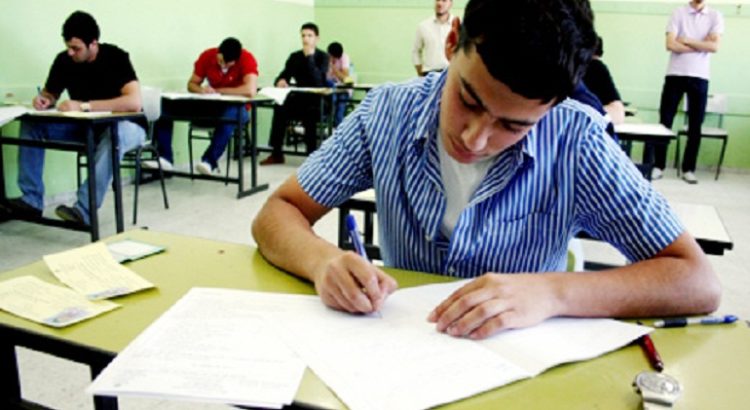
The Ministry of Education and Technical Education announced that students from grades 1 and 2 in the secondary level of the Thanaweya system would be following the new system in which they would have open access to textbooks during their exams.

The implementation in the system, announced through the Ministry of Education itself, was long anticipated since Egypt’s Minister of Education Tarek Shawki announced a new reform in Egypt’s education system.

Such updates are expected to be implemented as of the next the round of exams set for January for most Egyptian students or students in the public ‘thanawiya ammah’.

Over one million students are expected to be venturing into this change, with the exams designed to be a combination of both paper and electronic forms, as per local news outlets.

For years, Egypt’s ailing educational system has relied on heavy set memorization and ‘ideal answer’ practices. Switching to an ‘open book’ form of examination is intended to spark critical-learning skills as learners become less reliant on memorizing facts.

To score highly in the competitive system, Egyptian students largely depend on expensive private tutoring in which they are encouraged to submit ‘expected’ and ‘model’ answers rather answers than based on understanding which hinders long-term retention of information and the quality of education overall.

Indeed, Egypt in its Global Competitiveness Report 2018–2019, the World Economic Forum ranked the quality of Egypt’s ‘critical thinking in teaching’ as 2.7 out of 7. In 2018, the country’s education quality ranked 129 in Spectator Index

Egypt introduced a new education system in August 2018, with the beginning of the new school year. Part of the reviving the curriculum is introducing a digital system to replace the old paper-based examinations. This move comes in an attempt to prevent manipulation of grades.

The upgrade of the educational programme comes after Egypt received a US $500 million loan from the International Bank of Reconstruction and Development (IBRD) last April to help revamp the system. This also feeds Egypt’s ‘2030 Vision’ development plan that emphasized the importance of educational reform to achieve social development in the country.

Source of the notice: https://egyptianstreets.com/2020/01/10/egypts-higher-education-exams-to-start-following-open-book-system/

Comparte este contenido:

Coronavirus: Schools told to keep staff and students recently in China away from classroom

Oceania/ New Zealand/ 28.01.2020/ Source: www.stuff.co.nz.


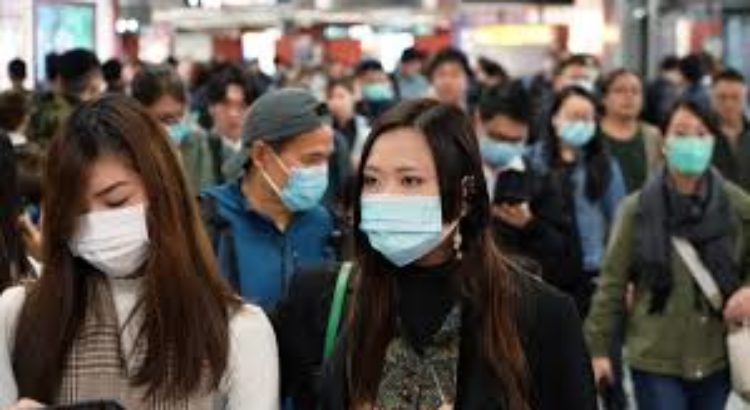
School principals are being urged to delay the start of the school year for staff or students who have recently been to China over fears of coronavirus.

Education Secretary for the Ministry of Education, Iona Holsted said the ministry had warned school principals to «err on the side of caution» with the .

On Monday Ministry of Health officials said there was a «high likelihood» of coronavirus reaching New Zealand, with a moderate chance that it would spread when it arrives.

The new virus originated in the Chinese province of Wuhan in December and has rapidly spread to other countries, including Australia.

Cabinet is expected to make the virus a notifiable disease on Tuesday, giving public health officials the power to quarantine people suspected of infection.

Children and young people were currently returning to classrooms and the health of students and staff was a priority, Holsted said.

Official advice for principals included a list of steps to take that advised keeping students away from school if they had been in China.

«For any staff member or student who may be at high risk of exposure because they have recently been to China or have been in close contact with someone confirmed with the virus, I encourage you to ask that the staff member or parent/caregiver of the student delay the start of their school year for 14 days and voluntarily stay away.»

The advice states that anyone who was unwell should not be at school or at their early learning service and provided a number for Healthline.

If a student still attends school while showing symptoms, the principal of a state school could preclude them if they believed on reasonable grounds they may have a communicable disease, her advice said.

«The student has to stay away for the infectious period of the specific disease.»

This did not apply for private schools but principals could request that a student with an infectious disease or is suspected of having an infectious disease, did not attend.

Principals can also request that a staff member with an infectious disease or was suspected of having an infectious disease, did not attend.

Meanwhile, National Party education spokeswoman Nikki Kaye has written to the Education Minister asking about what support was in place for schools, early learning centres and tertiary institutions.

She sought the sought urgent advice on Sunday but was yet to get a response.

«Tens of thousands of international students will be arriving in New Zealand to study over the coming weeks, some of them from places which have been affected by the outbreak.

«There needs to be clear advice for host families, parents, schools and teachers about what they should do if an outbreak were to occur.»

Some schools started back on Monday and more will be starting on Tuesday and later this week.

The University of Canterbury (UC) expected «several hundred» new Chinese students to enrol in person from February 11 to 13. It was exploring late enrolments for students whose travel from China was disrupted.

The university had urged staff and students to reassess whether planned trips to China were essential and had «contingency plans» in case the situation changed, a spokeswoman said.

Kaye said: «It’s time the Government gave clear advice about will happen if this virus reaches New Zealand.»

«The Government is missing in action while the rest of the world is taking this seriously. It’s time for action.»

Source of the notice: https://www.stuff.co.nz/national/politics/119085941/coronavirus-schools-told-to-keep-staff-and-students-recently-in-china-away-from-classroom

Comparte este contenido:

Paraguay: En mesas temáticas iniciaron diseño del Plan Nacional de Transformación Educativa 2030

América del Sur/ Paraguay/ 28.01.2020/ Fuente: www.ip.gov.py.

El Ministerio de Educación y Ciencias (MEC) inició las jornadas de recopilación de datos y diagnóstico exhaustivo de la realidad educativa del país, trabajo que será abordado mediante las mesas temáticas que integran diferentes grupos y referentes del sector educativo nacional con el fin de diseñar el Plan Nacional de Transformación Educativa 2030 y la Hoja de Ruta 2020-2030.

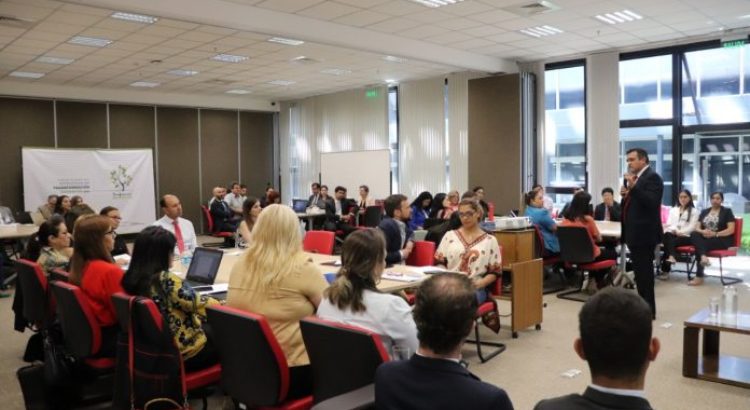
En la sede del Banco Central del Paraguay inició desde hoy martes las reuniones de las mesas técnicas con expertos nacionales e internacionales que impulsarán el proceso de diálogo y participación ciudadana en el marco del Proyecto de “Diseño de la Estrategia de Transformación Educativa 2030”.

En ese sentido el viceministro de Culto, Fernando Griffith informó que las mesas técnicas son necesarias ya que mediante ellas se puede llegar a recopilar datos y contar con diagnóstico fundamental sobre la situación actual de la educación en el Paraguay.

«Se deben recoger y profundizar en el análisis y a partir de ellos reconocer todo lo que ha sido publicado en los últimos años y ver todo el proceso educativo del Paraguay y todas sus reformas, sus éxitos y fracasos, aspectos que aparentemente son menos relevantes, y que sin embargo no lo son, cómo la infraestructura, la provisión de materiales y la formación docente», refirió en contacto con Radio Nacional del Paraguay.

En ese sentido dijo que todos esos puntos serán analizados en estas mesas técnicas para después proseguir con las mesas temáticas. «En estas últimas los gremios, los sindicatos, las asociaciones y los ciudadanos podrán emitir sus opiniones y van a poder sugerir y criticar los procesos ya que este es un proceso participativo amplio democrático y transparente», resaltó.

Griffith explicó que en la jornada se dio apertura a las mesas temáticas de gestión educativa, de desarrollo profesional del educador, de financiamiento educativo, entre otros; que cuentan con el acompañamiento de técnicos extranjeros de la Universidad Columbia de Nueva York y de la Universidad Pontificia de Chile, además de expertos paraguayos egresados de universidades privadas y nacionales.

El ministro dijo que el proceso de las mesas técnicas y temáticas tiene sus etapas y que las mismas culminarían a finales de este año. «Desde el año 1904 el Paraguay cada 30 años el país tuvo una reforma y en esta oportunidad será la primera vez en lo que se hará un proceso participativo y amplio»,  concluyó el viceministro.

Datos proporcionados por la cartera Educativa detalla que el evento es organizado por el MEC, el Ministerio de Hacienda (MH), y la Secretaria Técnica de Planificación del Desarrollo Económico y Social (STP) y la Unidad de Gestión de la Presidencia de la República (UGPR), entidades que conforman el Comité Estratégico de Transformación Educativa, conjuntamente con representantes de la sociedad civil de destacada trayectoria, en calidad de miembros titulares y suplentes.

El mismo cuenta con apoyo y el financiamiento del Fondo para la Excelencia de la Educación y la Investigación (FEEI), con el apoyo de la Unión Europea, la Organización de Estados Iberoamericanos para la Educación, la Ciencia y la Cultura (OEI) y el Fondo de las Naciones Unidas para la Infancia (Unicef).

Fuente de la noticia: https://www.ip.gov.py/ip/mediante-mesas-tematicas-iniciaron-diseno-del-plan-nacional-de-transformacion-educativa-2030/

Comparte este contenido:

Alberto Fernández lanzó el programa nacional Argentina Unida por Educación y Trabajo

América del Sur/ Argentina/ 28.01.2020/ Fuente: www.perfil.com.

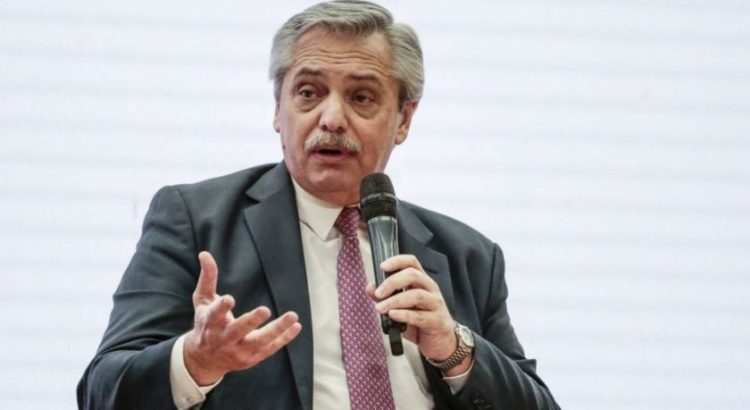
Se lanzó este lunes el Programa Nacional Argentina Unida por Educación y Trabajo, por el cual titulares de programas sociales refaccionarán escuelas públicas durante el receso de verano. La presentación se realiza en el Club Recreativo Los Indios de Moreno, ubicado en avenida Piovano 2969. Mediante esta iniciativa, el Ministerio de Desarrollo Social busca redirigir los programas sociales al trabajo. Se implementará en las provincias de Buenos Aires, Tucumán, La Rioja, Misiones, Chaco, Santa Fe, Catamarca, Chubut, Salta y Córdoba. También se firmarán convenios con los municipios de Rosario y Córdoba Capital.

«La reconversión de programas sociales al trabajo y la refacción de escuelas para que los niños y niñas puedan comenzar el calendario escolar en mejores condiciones edilicias se logra a partir de un trabajo conjunto entre la Secretaría de Economía Social de la Nación, que garantiza el incentivo adicional, y las provincias, que aportan los materiales y herramientas para llevar a cabo las tareas de refacción. Asimismo, la UOCRA llevará adelante el control de asistencia y la supervisión de las obras», consignaron desde el Gobierno.

Fuente de la noticia: https://www.perfil.com/noticias/politica/alberto-fernandez-lanza-el-programa-nacional-argentina-unida-por-educacion-y-trabajo.phtml

Comparte este contenido:
Page 1532 of 6195
1 1.530 1.531 1.532 1.533 1.534 6.195