Page 1625 of 6198
1 1.623 1.624 1.625 1.626 1.627 6.198

Ecuador: 23.000 Estudiantes abandonan cada año la Educación Superior

23.000 Estudiantes abandonan cada año la Educación Superior

El sistema de educación superior ecuatoriano se enfrenta a una paradoja: cada año 133.000 jóvenes que quieren ingresar a la universidad pública no lo logran, mientras que de los que sí lo lograron, 23.000 optan por desertar del sistema.

Las causas son variadas, según Agustín Albán, titular de la Secretaría de Educación Superior, Ciencia y Tecnología (Senescyt): la falta de formación durante la educación secundaria, hasta jóvenes que abandonan su formación por razones económicas. Incluso, estudiantes que optaron por carreras típicas por falta de conocimiento de la existencia de carreras no tradicionales.

Según Albán, la oferta universitaria en Ecuador está compuesta por 2.037 carreras, pero el 60% de los aspirantes sigue optando por 20 carreras tradicionales.
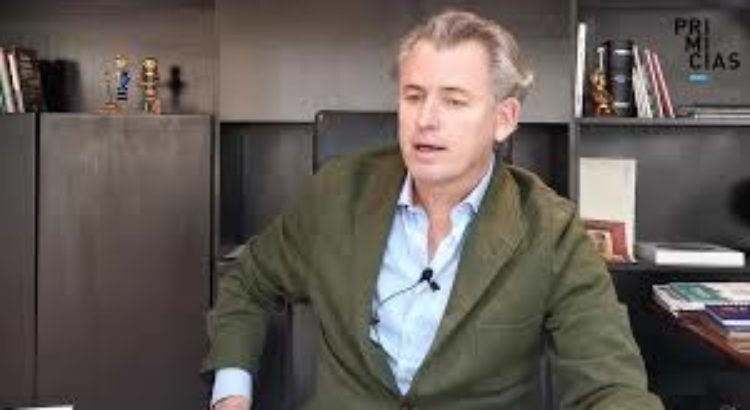
Albán llegó a Senescyt el 3 de julio de 2019. En una entrevista con PRIMICIAS asegura que entre sus principales objetivos están modernizar la educación superior e impulsar la utilización de la tecnología en las universidades, sobre todo en las públicas. Uno de los temas más polémicos es el examen de ingreso a la universidad pública, conocido como Ser Bachiller, e implementado en 2012 como uno de los principales requisitos de acceso a la universidad.

Albán llegó a Senescyt el 3 de julio de 2019. En una entrevista con PRIMICIAS asegura que entre sus principales objetivos están modernizar la educación superior e impulsar la utilización de la tecnología en las universidades, sobre todo en las públicas. Uno de los temas más polémicos es el examen de ingreso a la universidad pública, conocido como Ser Bachiller, e implementado en 2012 como uno de los principales requisitos de acceso a la universidad. A este examen se suma el promedio de calificaciones que los estudiantes obtienen desde octavo año de educación básica hasta tercero de bachillerato. Hasta 2019, el Ser Bachiller tuvo un peso del 85%, frente al 15% del promedio de calificaciones. Desde el próximo año, el gobierno cambiará los porcentajes, aduciendo que busca brindar más oportunidades de acceso a estudiantes de zonas rurales y provincias que no sean Guayas, Pichincha o Azuay.
Además, ya no serán 155 preguntas sino 120, que deberán ser resueltas en dos horas y media y no en tres.

Según Albán, los cambios en la prueba Ser Bachiller se dieron porque también hay estudiantes que obtienen altas calificaciones en el examen, pero su rendimiento en la universidad no siempre es satisfactorio.

Universidades con menos recursos La Universidad Central, la de Guayaquil, del Litoral y la Escuela Politécnica Nacional vieron reducido su presupuesto en USD 37 millones para 2020. Albán dice que la Universidad de Guayaquil recibirá USD 10 millones menos, de los USD 170 millones que necesita cada año. La Universidad del Litoral tendrá USD 77 de los USD 81 que recibía, mientras que el presupuesto la Escuela Politécnica Nacional pasará de USD 64 millones a USD 59 millones.

La Universidad Central tendrá USD 160 millones de los USD 168 millones que manejaba. Estás son las razones, según Albán:
El funcionario dice que las universidades como Yachay e Ikiam -que fueron calificadas como emblemáticas por el gobierno de Rafael Correa- deben dejar de usar ese nombre para ser parte del marco regulatorio que controla a todas las universidades.
También dice que en 2020 la universidad indígena recibirá a sus primeros estudiantes aunque aún se desconocen la malla curricular que tendrá y el lugar en el que funcionará. Lo que sí está seguro es que el edificio de la Unsaur -ubicado en Quito- no es apropiado para este centro de estudios como lo había anunciado el presidente Lenín Moreno en julio de 2018.

Fuente de la Información: https://www.primicias.ec/noticias/sociedad/agustin-alban-senescyt-ser-bachiller-universidades/
Comparte este contenido:

Estudiantes de India luchan por una educación accesible

Estudiantes de India luchan por una educación accesible

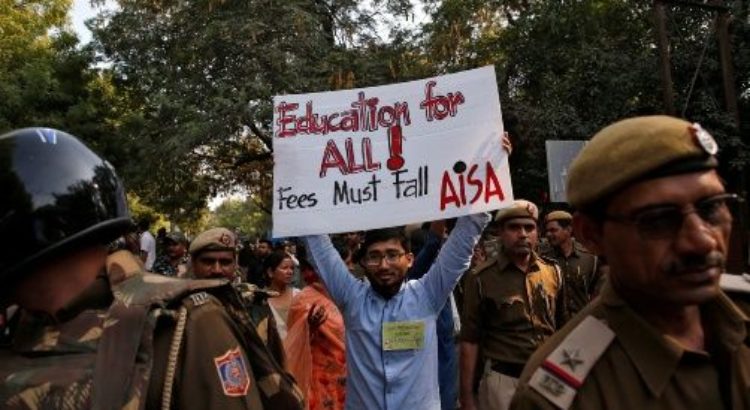
El país ha estado marcado por protestas, desde el pasado mes de octubre, luego que la Universidad Jawaharlal Nehru, en Nueva Delhi subió los costos de los estudios.

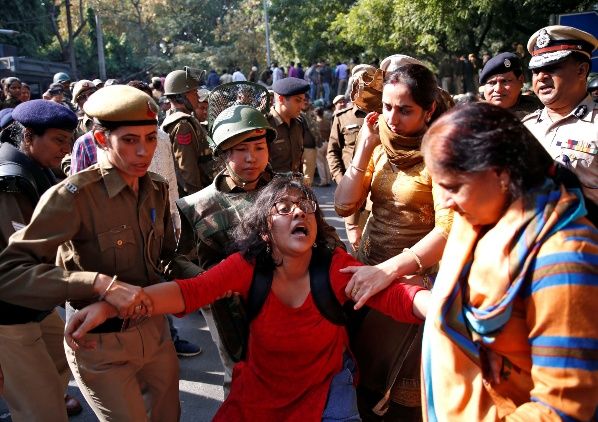
Organizaciones estudiantiles de la India se movilizaron este viernes hasta el Parlamento del país para exigir una educación asequible para los jóvenes más humildes de la nación.

La prensa local reseña que desde finales del pasado mes de octubre comenzó la lucha de los estudiantes de varias universidades del país, luego que se intesificara la privatización de la educación.

Bajo los lemas «educación asequible para todos» y «lucha por tus derechos», los jóvenes están en las calles exigiendo que se reduzacn los costos para estudiar en las universidades, ya que esto es un derecho y no un privilegio.

Los jóvenes estudiantes han marchado bajo las consignas «educación asequible para todos» y «lucha por tus derechos». | Foto: Reuters.

Los estudiantes denuncian que la privatización en la educación superior el Gobierno elude su responsabilidad de garantizar ese derecho y excluye a los jóvenes más humildes en prepararse con una profesión.

El pasado mes de octubre, el vicerector Mamidala Jagadesh Kumar anunció la subida del 400 por ciento en las tarifas de albergue para la Universidad Jawaharlal Nehru.

Ante la medida de la JNU de la India, los estudiantes iniciaron las protestas por el aumento de tarifas debido a que temen que los jóvenes de familia más humildes no puedan seguir con sus estudios.

Fuente de la Información: https://www.telesurtv.net/news/india-estudiantes-protestas-educacion-accesible-20191129-0019.html

Comparte este contenido:

El derecho a la educación en un contexto adverso

El derecho a la educación en un contexto adverso

La educación pública y particular subvencionada atiende a la población estudiantil más vulnerable del país, aquella que en sus instituciones educativas no sólo debiese encontrar un espacio de aprendizaje, sino que también de contención, de interacción social, e incluso de servicios tan básicos como la posibilidad de alimentación. La grave crisis social por la que está atravesado el país ha surgido justamente por abandonar a aquellos que más lo necesitan, lo que se refleja también por la enorme desigualdad en las oportunidades educativas y el sostenido deterioro de la educación pública. En el fondo, parte de este gran malestar social se vincula a que no se ha garantizado la realización plena del derecho a la educación de niños, niñas y jóvenes del país.

Una condición básica del derecho a la educación es que la educación con financiamiento del estado sea accesible. Un cierre anticipado del año escolar en forma masiva tendrá graves consecuencias para aquellos que justamente necesitan más de este espacio educativo, sobre todo luego del estallido social por el que ha atravesado el país. Lejos de promover un sentido de normalidad anticipada, las escuelas y liceos deberían permanecer abiertos para recibir a sus estudiantes, para contenerlos, dialogar y reflexionar sobre el momento histórico por el que se encuentra atravesando el país, así como para identificar los mecanismos para que la nueva pérdida de clases no sea una desigualdad adicional en sus oportunidades de desarrollo a lo largo de la vida, y en cómo abordaremos los desafíos de una calidad integral de la educación.

Aun existiendo casos específicos donde no existen las condiciones para realizar un proceso de enseñanza y aprendizaje, ni tampoco de seguridad para estudiantes, profesores y asistentes de la educación, estas excepciones no deberían actuar como regla general. El interés de algunos sostenedores por cerrar masivamente el año escolar no debiera ser superior al de garantizar el derecho a la educación de los estudiantes del país. Así nos han hecho saber profesoras y profesores del país que quieren continuar recibiendo a sus estudiantes, pues saben que muchos de ellos necesitan de sus escuelas y liceos. La pregunta, entonces, no es sobre si debemos o no hacer un cierre anticipado del año, sino sobre qué apoyos necesitan profesores y equipos directivos para que puedan perseverar y desarrollar de la mejor forma posible el funcionamiento de sus establecimientos.

La grave crisis social por la que atraviesa el país nos exige con mayor fuerza defender y proteger la plena realización del derecho a la educación, y eso se consigue poniendo al centro el bienestar de los estudiantes como norte para tomar la decisión de mantener abiertos los colegios con jornadas regulares, flexibles y sólo en casos extremos cerrarlos anticipadamente, reconociendo las particularidades de cada situación específica. Por ello, este mismo énfasis en continuar el año escolar debe servirnos de ejemplo también para evitar todo tipo de políticas educativas que amenacen el cierre de las escuelas públicas, y apoyar aquellas que permitan el pleno desarrollo del derecho a la educación de sus estudiantes.

Fuente de la Información: https://www.latercera.com/opinion/noticia/derecho-la-educacion-contexto-adverso-2/922695/

Comparte este contenido:

Education: Why have Wales’ teenagers under-performed?

The latest international test results for teenagers – Pisa – have been published.

There is a keen eye on how students in Wales have performed, but why? Here is our guide.

What are Pisa tests?

Pisa’s full title is Programme for International Student Assessment – the main tests are in maths, reading and science and are run every three years by the Organisation for Economic Co-operation and Development (OECD)

Tests take about two hours and all are done on computer.

In 2018, they were taken by 600,000 15-year-old pupils in 79 countries and regions.

In the last results, Singapore outperformed all other participating countries. Japan, Estonia, Hong Kong and Canada were also among the top performers. This time around, four Chinese provinces finished top in all areas.

How has Wales performed?

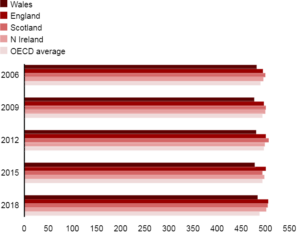
This was the fifth time Wales has taken part – results in 2010 saw Wales slip below average performance in all three subject areas and was described by the then-education minister as «unacceptable» and «alarming». But the 2018 tests have brought improvements, if Wales is still trailing England in particular, of the other UK nations.


Source: OECD, December 2019

Wales has moved closer to the international average. Education Minister Kirsty Williams said: «We have caught up, we are continuing to improve in all areas and as a nation we must be determined to keep up this momentum.» In reading, latest tests showed a significant increase in the scores of higher achieving pupils in Wales since 2015 but the scores of lower achieving pupils have not changed significantly.

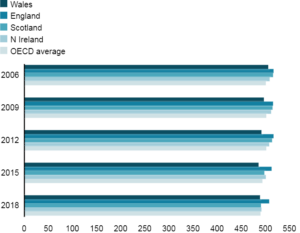
Pisa test result averages in science

Scores of 15-year-old pupils, UK nations

Source: OECD, December 2019

Wales has moved closer to the international average. Education Minister Kirsty Williams said: «We have caught up, we are continuing to improve in all areas and as a nation we must be determined to keep up this momentum.» In reading, latest tests showed a significant increase in the scores of higher achieving pupils in Wales since 2015 but the scores of lower achieving pupils have not changed significantly.

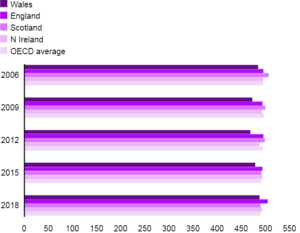
Pisa test result averages in mathematics

Scores of 15-year-old pupils, UK nations

In science, back in 2015, there were 28 countries with mean scores higher than Wales; that figure is now 19 countries. The study also said Wales had made «encouraging progress» in mathematics, and was close to the OECD average for the first time.

Why had we been doing so badly?

There is no single reason, but one factor identified by the OECD was the need improve the quality of teaching.

Former education minister Leighton Andrews said the Welsh Government may have taken its «eye off the ball» in the 2000s when it scrapped testing and league tables.

The report into the 2015 tests found only 6% of the variation in student performance in Wales could be put down to their socio-economic background. The results also showed Wales’ highest performers were achieving lower scores than the OECD average and top performers in other parts of the UK.

Andreas Schleicher, head of education and skills at the OECD, said the nation had under-performed and the education system had «lost its soul» by not focusing on high-quality teaching.

He said reforms in Wales were on the right lines but it will take a while for these to have an impact.

Why are they important?

They have become an increasingly influential indicator of global education performance since they were introduced in 2000. Some argue that major businesses look at Pisa scores before making investment decisions, but there are plenty of sceptics who say too much emphasis has been placed on Pisa by politicians.

There are also questions about how useful it is to compare 15-year-olds in such varied education systems and cultures across the world.

In Wales, ministers have made improving Pisa scores a top priority over the past decade and said they tested the skills young people will need in future.

  • 500-score Pisa target dropped in Wales
  • Wales still worst in UK in world education tests
  • What can Wales learn from Poland?
  • Still from Educating Is Changing video

    What has happened since the last tests?

    Education is going through a period of major reforms, many of which have been influenced by Pisa. Some were introduced after the 2010 results, including a renewed focus on literacy and numeracy. There have also been changes to teacher training.

    Reformed GCSEs are also more aligned with the skills Pisa tests assess. The last results highlighted concerns more able and talented pupils were not being stretched so the Welsh Government has invested £3m to boost their performance.

    The biggest reform of all is the ongoing development of a new curriculum which will be introduced in classrooms from 2022. The OECD welcomed the changes, but said improvements in results would take time.

  • Pupil in Singapore

    What are the thoughts from the top performers?

    In Singapore, which had the best performance last time, education expert Dr Pak Tee Ng said it was about resources and investment.

    «It’s not just about investing money, it is investing in teachers, investing in professional development, investing so that the schools will be places, safe places and places for children to learn and to grow,» he said.

    «Not only that, I think we play a lot of attention to making sure that we have a much more positive narrative of education. That is to say we would like people to know that good things are happening in the schools and to us teachers are nation builders.

    «The right spirit for education should be that for the sake of our children, for the sake of our country, we will improve regardless of where we stand in international comparative tests.»

    When asked about creating a more positive narrative in Wales, Dr Pak said: «Let’s not make any international comparative tests into some kind of world cup – children’s education is not about competition like a world cup of some sorts.

    «I would say it is right and proper for any country to improve the education system with or without international comparative tests.»

    Should we still take part?

    Prof Alma Harris, head of Swansea University’s school of education, said: «Pisa does exactly what it says on the tin.

    «It looks at the performance of 15-year olds in three different subjects every three years but an education system is way more dynamic than that and therefore looking at issues of mental health in young people, well-being, inclusion, equity – these are all things that Pisa can’t measure but they’re very important to any education system – it’s what gives it excellence and equity.

    «So I’d say that Pisa is one dimension, one indicator that we should take account of – of course – policy-makers will take account of it whatever we say – but to recognise that it is really one very small indicator amongst many others that would give a more contextualised picture of how a system is performing.

    «Pisa of itself is not problematic, it’s what people do with Pisa and how they interpret Pisa and I think where it’s been most unhelpful is where it’s changed the policy discourse in a country, away from the way the country may have been going.»

    Prof Harris said Pisa was problematic if it distracted a country from reform and Wales was «on a very clear reform trajectory.»

    Fuente de la Información:  https://www.bbc.com/news/uk-wales-50587348

Comparte este contenido:

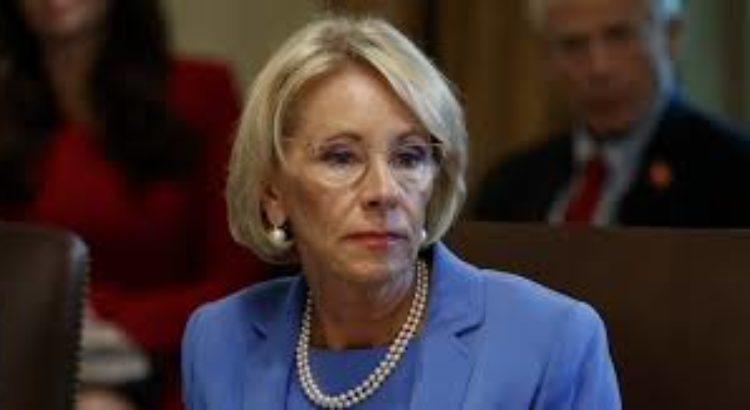
Estados Unidos: Betsy DeVos has cut 600 staff positions at the Department of Education

Remember the confirmation of Betsy DeVos as education secretary? It feels kind of quaint now, because congressional Democrats have so completely outdone their hysterics in the time since.

For the first time, a vice president had to break the tie in favor of confirmation, all because liberals didn’t like that DeVos was wealthy and unlikely to devote her energy as secretary to ensuring that the department worked for teachers unions rather than students.

If Democrats and the national media weren’t in a sticky mess right now over impeachment, they might notice that DeVos has done some things that might concern them. And she still has at least a year left to do more.

The Washington Examiner‘s editorial board recently checked in with DeVos for her thoughts on her tenure as secretary.

She said in an interview that she’s most proud of introducing a major bill that would make $5 billion available to parents of K-12 students so that they can choose where their child attends school.

She also noted her rollback of the Obama-era guidelines on adjudicating sexual misconduct claims in higher education. DeVos’s new regulations on the subject are set to go into effect soon and ensure all students have the right to due process — a nice change from the current standard, which basically offers prayer as the only defense for male students accused of sexual misconduct.

But something DeVos has consistently said since the start was that her primary goal is to shrink the department all around, reducing its power as much as possible.

She’s had some success there. Under her watch, the department has eliminated 600 staff positions, bringing the total from 4,300 to 3,700.

“Well, I have long advocated for the notion that it would be great to work myself out of a job,” she said.

The department will still be there when DeVos leaves, but it’s getting smaller so long as she’s around.

Fuente de la Información: https://www.washingtonexaminer.com/opinion/betsy-devos-has-cut-600-staff-positions-at-the-department-of-education

Comparte este contenido:

China arrasa en un ranking mundial sobre educación

Asia/ China/ 03.12.2019/ Fuente: elintranews.com.


La OCDE difundió el «informe PISA», en el que se destacaron los países asiáticos y Chile y Uruguay en Latinoamérica.

China y otros países asiáticos arrasaron en un ranking global sobre educación, manteniendo los buenos resultados que muestran desde los últimos años. Se trata del “Informe PISA”, que cada trienio la Organización para la Cooperación y el Desarrollo Económicos (OCDE) publica respecto a la calidad educativa en ciencias, matemáticas y comprensión lectora.

Los resultados de 2018, difundidos recién este 3 de diciembre, dejaron a cuatro ciudades de China (Beijing, Shanghai, Jiangsu y Zhejiang) como las mejor colocadas en el ranking global. La suma de ellas permite que el país chino arrase en los tres ítems evaluados. Luego, se posiciona Singapur, otra ciudad china como Macao, y el territorio de Hong Kong.

El primer país que aparece en el informe y no está ubicado en la zona de Asia oriental es Estonia. Luego están Canadá, Finlandia e Irlanda y posteriormente el ordenamiento vuelve a Asia con Corea del Sur. Estados Unidos, por su parte, es el 13º , aunque tiene una falencia en matemáticas respecto a las ciencias y la comprensión lectora.

En América Latina, Chile obtiene el primer lugar con el puesto 43º a nivel global. Muy cerca se ubica Uruguay (48º), Costa Rica, un lugar después, y México, que está 53º. El triunfo chileno a nivel regional repite lo mostrado en el anterior informe de 2015, aunque su índice aumentó. No obstante, ninguno de ellos logró alcanzar el promedio establecido por la OCDE como parámetro mundial.

Para realizar el informe, se establecieron una serie de ejercicios unificados que en mayo de 2018 se le realizaron a 600.000 alumnos de 15 años en 79 países. Como conclusión, el organismo evaluador lamentó que uno de cada cuatro estudiantes “no pueden completar las más básicas tareas de lectura. Esta situación se ve aún más agravada en los países más pobres, ya que como informó El Intransigente América, la UNESCO estimó que hay 12 millones de chicos que no pueden ir a la escuela primaria.

Fuente de la noticia: https://elintranews.com/mundo/2019/12/03/tifon-kammuri-deja-la-primera-victima-fatal/

Comparte este contenido:
Page 1625 of 6198
1 1.623 1.624 1.625 1.626 1.627 6.198