Page 1758 of 6180
1 1.756 1.757 1.758 1.759 1.760 6.180

Argentina: Todos los caminos conducen a la Educación

úmamente oportuna la declaración de Axel Kicillof la última semana, prometiendo un gobierno «más austero, más transparente y más eficiente». Así puntualizó no sólo una bandera de campaña y un buen propósito, sino que también señaló, implícitamente, la mayor urgencia nacional, que es recuperar la educación pública.

Puede sonar grandilocuente, porque lo es. Y lo es porque todos los problemas argentinos derivan de un desastre educativo cuya reconstrucción dependerá de profundos cambios. De paradigmas y de rumbos, de postulados y de ejemplos a inculcar, y de presencia del Estado como rector y orientador de un pueblo capaz de desarrollar sus capacidades en plenitud, consistencia y persistencia. Todo eso sólo puede garantizarlo la educación pública gratuita, obligatoria y laica, vía magna para hacer de la Argentina el país soñado por generaciones.

Al menos en El Manifiesto Argentino lo tenemos claro desde hace años, y subrayado a finales de 2015, cuando el gobierno macrista-radical inició el desguace de todas las políticas pedagógicas positivas implementadas desde 2003, a lo que sumó despidos y represión a los trabajadores de la Educación. Retomaron así el proceso negativo iniciado en los años 60, cuando sucesivos ministros de la dictadura de Onganía (Astigueta, Pérez Guilhou, Cantini, Malek) aplicaron las primeras «reformas» que eliminaron el Magisterio e iniciaron la subsidiaridad del Estado y las transferencias del sistema educativo a las provincias, sistema retrógrado que en 1992 perfeccionó la Ley Federal de Educación menemista.

También por eso es urgente renacionalizar la educación, entendida como el retorno a un Sistema Educativo Nacional Único con validez en toda la república, que garantice una plataforma curricular que conciba contenidos educativos igualitarios en todo el territorio nacional y se organice respetando desarrollos regionales y locales.

Con pareja urgencia habría que desarrollar sistemas de evaluación que prioricen principios y necesidades de interés nacional y latinoamericano, tanto en la evaluación de los aprendizajes como de las instituciones y el sistema educativo mismo, que a su vez debería promover la conciencia de nuestra lengua nacional, el Castellano Americano, garantizando a la vez la educación intercultural bilingüe respecto de cada uno de los pueblos originarios que habitan el territorio nacional.

Obviamente, la vastedad y complejidad de acciones necesarias contemplará promover la educación técnica y de adultos, así como la educación popular operada por iniciativa de ONGs, cooperativas, empresas recuperadas y organizaciones territoriales, incorporando de entrada el estudio permanente de principios de Filosofía, Lógica y sobre todo Formación Moral, materia ausente de casi todos los currículos argentinos y que debería ser obligatoria desde el nivel primario en adelante y en todo el país, como inicio de una educación para la transparencia y la concientización de la honradez como cualidad humana fundamental. Porque de muy poco sirven las leyes anticorrupción si no hay políticas de transparencia a largo plazo, para lo cual hay que lanzar sostenidas campañas nacionales de educación cívica, orientadas a que la sociedad sepa ejercer controles y fiscalización.

Asimismo, es urgente promover el debate y sanción de una Ley de Educación Superior que reasegure, profundice y actualice los principios de la Reforma Universitaria de 1918, explicitando a la Educación Superior como bien público y como derecho, e incorporando la materia Ética Profesional en todas las carreras universitarias y terciarias, públicas o privadas.

Ante tanta, tan veloz y tan torpe degradación del sistema educativo nacional como ejecutó el neoliberalismo macrista, es hora ya de consagrar a la educación como un derecho colectivo en el marco de procesos institucionales de enseñanza y aprendizaje, a cargo del Estado y consolidando la instrucción elemental, pero, también, asegurando los valores históricos que construyen nacionalidad. E incluso incursionando en campos educacionales heterodoxos, pero urgentes, puesto que nuestro país es hoy, quizás, uno de los más groseros, mal hablados y de modos de comportamiento más violentos de todo el mundo.

Acaso la recuperación en materia educativa deba incluir los contenidos y el espíritu de los programas transversales que mejoraron el sistema hasta 2015: educación sexual, prevención de violencia escolar, orquestas infantiles y juveniles, ajedrez escolar, educación y memoria, educación y medios, educación por el arte, centros de actividades infantiles y juveniles en contraturno y días sábados en las escuelas. Y por supuesto es urgente reinstalar las dos grandes acciones hoy discontinuadas perversamente: el Plan Nacional de Lectura, para retomar la urgente capacitación de mediadores y la provisión de libros y materiales de lectura en todo el territorio. Y el Plan Conectar Igualdad, que estimuló el talento de millones de estudiantes, además de que generó tecnología y trabajo argentino. Y definir como política educativa de Estado la distribución de tecnología digital para que todos los estudiantes del país, sin diferencias, tengan acceso al mundo.

Súmese todavía la integración del sistema bibliotecario escolar con todo el sistema educativo, garantizando la existencia de bibliotecas en todas las escuelas e institutos, así como cargos profesionales, mantenimiento infraestructural, conexión en red y renovación anual de acervos.

Y habría también que incorporar, de una buena vez, la Educación Agraria básica y la Educación Ambiental en todos los niveles educativos, para desarrollar la conciencia ecológica y del riquísimo sistema de Parques Nacionales de que disponemos y que en general nuestro pueblo ignora.

Así y con muchas otras medidas y decisiones, y con miras a servir a tres, cuatro o más generaciones venideras, la política educativa pública podría ser el instrumento fundamental de la cantera en la que millones de futuros argentinos y argentinas se educarán para garantizar que los próximos gobiernos sean protagonistas ­–como bien ha dicho Axel Kicillof– de gestiones «más austeras, más transparentes y más eficientes».

Fuente de la Información: https://www.pagina12.com.ar/218469-todos-los-caminos-conducen-a-la-educacion

Comparte este contenido:

Argentina: Especialista advierte que gobiernos “hablan mucho de educación” pero hacen poco por ella

Se trata de la licenciada en educación Graciela Morgade, quien disertó el último sábado en el marco del Pre Congreso de Educación, en el marco del Segundo Congreso Internacional “Educación e Inclusión desde el Sur” que se realizará en noviembre. La profesional observó que “las políticas educativas se hacen así, haciendo y no solo hablando”.

La licenciada en Educación Graciela Morgade advirtió que aveces «los gobiernos hablan mucho de educación» pero hacen poco por ella.

La profesional disertó el último sábado en el marco del Precongreso en Educación, en el marco del Segundo Congreso internacional «Educación e Inclusión desde el Sur» que se realizará en Noviembre.

El evento realizado en Río Grande contó con dos ponencias, una el viernes en la ciudad de Ushuaia y la segunda este sábado en Río Grande.

Esta última se llevó a cabo en lss instalaciones del gimnasio Carlos Margalot, donde se presentó a la licenciada Graciela Morgade brindando la charla «Toda educación es sexual».

Al respecto la secretaria de Promoción Social del Municipio Río Grande Analia Cubino destacó que «como municipio hemos enfrentado algo muy importante como es la educación», en el entendimiento de que «somos corresponsables de lo que les pasa a nuestros ciudadanos y ciudadanas y entendemos que la educación sexual integral es un tema prioritario».

«Es un tema que atañe no sólo a las escuelas, sino a toda la comunidad, así que estamos muy felices de la convocatoria, ayer en Ushuaia y hoy en Río Grande, y es destacable el compromiso de la docencia en participar».

Cubino recordó así mismo que «éste es ya un encuentro final del «precongreso » e indicó que en Noviembre ya vamos a tener nuestro segundo congreso internacional y notamos que esto ha traído mejoras.

Por su parte la Licenciada Graciela Morgade «valoró el gran esfuerzo que hace el municipio Río Grande para llevar adelante estos precongresos y el próximo encuentro internacional que se llevará aquí en Tierra del Fuego».

«Hay que destacar que además es un esfuerzo económico, porque estamos en el verdadaero Sur del país, y nos sentimos felices por haber sido convocados a esta gran movilización que tiene que ver con poner a la educación como prioridad» señaló.

«A veces las gobiernos hablan mucho de la educación, pero las políticas educativas se hacen así, haciendo y no sólo hablando», advirtió, razón por la cual consideró que «esta iniciativa es un enorme gesto y una señal de la enorme valoración que esta gestión de Gustavo Melella y el Municipio tiene sobre la educación».

Fuente de la Información: https://www.infofueguina.com/social/2019/9/16/especialista-advierte-que-gobiernos-hablan-mucho-de-educacion-pero-hacen-poco-por-ella-41588.html


Comparte este contenido:

Pasó 5 Años en Prisión por “Educación Robada” para su Hijo

La mujer no tenía un hogar en ese momento, y utilizó la dirección de una amiga para mandar a su hijo a una escuela mejor

(NOTICIAS YA).- Una madre sin techo de Connecticut fue sentenciada a pasar cinco años en prisión por inscribir a su hijo en un distrito escolar que no le correspondía utilizando la dirección de una amiga; una diferencia abismal comparada con la sentencia de 14 días que recibió Felicity Huffman por el escándalo de admisión a la universidad.

En 2011, Tanya McDowell de Bridgeportfue sentenciada a pasar cinco años en prisión por inscribir a su hijo Andrew, entonces de 5 años, en una escuela en la ciudad vecina de Norwalk utilizando la dirección de una amiga para el registro escolar.

En ese momento, Tanya y el pequeño pasaban algunas noches en su camioneta y otras en refugios para personas sin hogar, algunas noches las pasaban en un departamento en Bridgeport, según detalla el Connecticut Post.

Cuando las autoridades descubrieron lo de la dirección, la madre fue arrestada y acusada de hurto en primer grado con una sentencia que se determinó en cinco años por “educación robada”.

“¿Quién hubiera pensado que desear una buena educación para mi hijo me pondría en esta situación?”, dijo McDowell en ese entonces.

Tanya, también enfrentaba cargos por drogas, por los que también cumplió una condena, al momento de su sentencia.

“No me arrepiento de buscar una mejor educación para él, lamento mi participación en este caso de drogas”, dijo la madre ante la controversia del caso, que difiere mucho de otros.

“Todavía lo volvería a hacer porque no me ha decepcionado”, dijo la mujer, quien entonces debía dinero al distrito escolar por la “educación robada”, según detalla Refinery29.

De acuerdo con el Washington Post, un estudio mostró que los distritos escolares blancos recibieron $ 23 mil millones más en fondos del gobierno que los distritos escolares no blancos en 2016, independientemente del hecho de que tenían la misma cantidad de estudiantes, algo que muestra la disparidad de la educación en Estados Unidos.

Fuente de la Información: https://noticiasya.com/tampa/2019/09/16/paso-5-anos-en-prision-por-educacion-robada-para-su-hijo/

Comparte este contenido:

Estados Unidos: Sec. DeVos Calls for a «New Birth of Freedom» in Milwaukee, the Birthplace of Education Freedom, to Kick Off 2019 Back to School Tour

MILWAUKEE — Today, U.S. Secretary of Education Betsy DeVos began her 2019 Back-to-School Tour in Milwaukee, Wisconsin, the birthplace of modern education freedom. In a speech at St. Marcus Lutheran School, Sec. DeVos noted the incredible progress the education freedom movement has made since visionary leaders like Annette «Polly» Williams and Howard Fuller ignited the parental choice movement 30 years ago but acknowledged there is still much work left to be done.  Secretary DeVos urged leaders across the country to embrace the Administration’s education freedom agenda so that every student in America can have unlimited access to the education that best helps them reach their fullest potential.

Secretary DeVos said, «Now is the time to ignite a new birth of freedom for all of America’s students. We have a bold plan to do just that—an American education freedom agenda. The freedom to learn. The freedom to grow. The freedom to advance.  The freedom to pursue the education that works for you. Students in control of their pathway to a successful education, career, and life. Families in control of how, when, and where their students will learn best. Teachers in control of their classrooms and their careers. States and communities—not Washington, D.C.—in control of local decisions.»

QUOTES TO NOTE:

«Students: We’re here because of you—and for you. In fact, everything about education should be focused solely on you. After all, as a nation, we’ve committed to help each student prepare for the future. Some people confuse that as a commitment to a building, to a system, or to a particular way of learning. But your education must be about who you are and all that you see for yourself, for your family, for your community, and importantly for our country.»

***

«There are still too many [students] who don’t know how to read. There are still too many who don’t know how to add, subtract, divide, or multiply. And too many have no power to do anything about it.  That’s because the education cabal puts other issues above what’s right for students. Mixed-up priorities are borne out in the numbers. Consider that American taxpayers spend—on average— about $13,000 per student, per year. With an average class size of 21 students, that adds up to $273,000 per classroom, per year. We know the average classroom teacher makes about $60,000 annually. So, where does the rest of the money go? More than $200,000 per classroom and teachers are still buying school supplies out of their pockets.

«Well, here’s the dirty little secret: it’s to highly paid administrators, coordinators, consultants, assistant principals, assistant superintendents… layers and layers of bureaucracy. The growth in non-instructional school staff has increased nine times faster than student enrollment growth.»

«We know American families want more control and more options when it comes to education. That’s why every poll shows growing, bipartisan support for education freedom. And for every approach to education freedom—public charter schools, vouchers, education savings accounts, tax credit scholarships—support crosses ethnic and political lines.  Education freedom policies work. We just need more of them. Many more.»

«Think of Education Freedom Scholarships as keys to unlocking the opportunities you want to pursue. This isn’t about picking a school building. That’s thinking too small. Instead, think about unleashing thousands of not yet imagined ways for students of all ages to learn.»

SECRETARY DEVOS’ REMARKS AS PREPARED FOR DELIVERY:

Thanks, everyone, for letting me join you today.

It’s hard to see summer end. But «back to school» season is an exciting time of year. I think it’s useful, as we begin any new season, to reflect on where we’ve been, where we are, and importantly, where we want to go.

Students, we’re here because of you—and for you. In fact, everything about education should be focused solely on you. After all, as a nation, we’ve committed to help each student prepare for the future. Some people confuse that as a commitment to a building, to a system, or to a particular way of learning.

But your education must be about who you are and all that you see for yourself, for your family, for your community, and importantly for our country.

That’s what I like about St. Marcus. This school community is built around giving students what they need.

Something important is happening here. You’re doing things differently, and as a result, students who learn here far and away outperform their peers.

I think that has to do with how you are so intentional about cultivating the relationship between student, parent, and teacher.

You call it a covenant—indeed, a sacred promise—to do everything in your power «to ensure academic success.» Your students, your families, and your great teachers choose to commit to this covenant. You each acknowledge everyone has a role to play, and that you all depend on one another.

This should be commonly understood. Obvious. Normal. But we know it all too often isn’t, and it wasn’t always this way in Milwaukee.

Parents, teachers: you remember the problems you and your students faced years ago. Fewer than 60 percent of students finished high school.

Students’ confidence crushed, teachers frustrated, and parents heartbroken. Everyone wanted something different. Something better.

Then, along came «Polly.»

You all know the «mother» of our movement, Annette «Polly» Williams. She wanted better for her own children, and for children in her own community. She couldn’t bear to see her city’s students struggling, so she did something about it. 

Polly worked with anyone and everyone to help students—and pushed back against anyone who didn’t. She and civil rights icon Howard Fuller fought their own political party, the NAACP, and the unions. And they won when Governor Tommy Thompson, who was from a different political party, established the Milwaukee Parental Choice program.

They all put politics aside and did what was right for kids.

They believed that students matter. It didn’t matter who their parents were, nor where they lived, nor what color they were, or who they knew, or how much they had in their pockets. All that mattered was that students were students.

Polly’s will to win 30 years ago was the first of many victories for students and families. At first, the program was small, able to empower only a few of Milwaukee’s parents. But as demand expanded, so did the program. Today, the Parental Choice program and others like it serve about 37,000 students statewide, including almost every student here at St. Marcus.

You wouldn’t be here—and I wouldn’t be here—if not for the courage of Polly, Howard, and the parents who joined them in the fight.

So, I’ve come to Milwaukee—the birthplace of education freedom—to stand on the shoulders of giants and say:

Now is the time to ignite a new birth of freedom for all of America’s students.

We have a bold plan to do just that—an American education freedom agenda.

The freedom to learn. The freedom to grow. The freedom to advance.

The freedom to pursue the education that works for you.

Students in control of their pathway to a successful education, career, and life.

Families in control of how, when, and where their students will learn best.

Teachers in control of their classrooms and their careers.

States and communities—not Washington, D.C.—in control of local decisions.

Why is this freedom so desperately needed today?

Because what we’re doing—what we’ve been doing—isn’t working.

Open up our Nation’s Report Card and you’ll see what I mean. Two in three of our Nation’s 8th graders aren’t learning what they need to be prepared for their futures.

And consider this: The United States ranks 24th in reading, 25th in science, and 40th in math in the world. Think about it. These statistics have very real consequences for our future.

For one, students can’t pass military entrance exams. Nearly one in four Americans who want to serve are turned away because they fail the Army’s basic test.

I also think of my recent visit to an Indiana prison. The warden told me that the biggest problem there is not violence or discipline. It’s illiteracy.

Then there’s the story of a father whose son, a recent high school graduate, was honored in the local newspaper. Dad’s pride turned to disappointment after he discovered his son couldn’t read or comprehend the article. So, dad marched over to the high school principal’s office with his son and newspaper in tow and asked his son to read the article to the principal. He couldn’t. Then the father pointedly asked the principal how he could’ve graduated his son—or anyone—who can’t read.

There are still too many who don’t know how to read. There are still too many who don’t know how to add, subtract, divide, or multiply. And too many have no power to do anything about it.

That’s because the education cabal puts other issues above what’s right for students.

Mixed-up priorities are borne out in the numbers.

Consider that American taxpayers spend—on average— about $13,000 per student, per year. With an average class size of 21 students, that adds up to $273,000 per classroom, per year. We know the average classroom teacher makes about $60,000 annually.

So, where does the rest of the money go? More than $200,000 per classroom and teachers are still buying school supplies out of their pockets.

Well, here’s the dirty little secret: it’s to highly paid administrators, coordinators, consultants, assistant principals, assistant superintendents—layers and layers of bureaucracy. The growth in non-instructional school staff has increased nine times faster than student enrollment growth.

It just doesn’t add up.

And though Federal taxpayer spending is less than 9 percent of total education spending, over the past 40 years taxpayers have spent well-over one trillion dollars at the Federal level alone trying to improve student outcomes. And the research shows almost no progress in closing the achievement gap.

Yet, there are many in Washington still arguing to spend more—way more—doing more of the same things.

Our sole focus should be on how to do better—starting today.

Doing better begins by expanding freedom.

Let me paint a picture of what that might mean.

Students, education freedom for you could look like this: If you need more time to learn a concept or lesson, you get it. If you need less time, you can move on. If you want to study a language or a subject that your school building doesn’t offer, you can learn it somewhere else. If you don’t like to study behind a desk and learn better in a lab or in a garden or between skyscrapers, you can do that. If you want hands-on experiences to help decide your learning pathway, you can have those. You should be free to learn in any way and in any place that works for you.

Teachers, education freedom for you could look like this: If you want to try something new in your classroom that you think will better help your students, you can. If you want to mentor other teachers, you can do that, and you should be rewarded for it. If you want to control your professional development and career path, you’d have the power to do so. You should be free to teach in any way and in any place that works for you and your students—and you should be properly paid for your success.

Parents, education freedom for you could look like this: If the government-assigned school isn’t working for your child, you can take him or her anywhere else. And if your school is working for your child, you can stay put. Another parent’s freedom to make a choice doesn’t mean you have to make the same choice. If you want to homeschool your children for part of the week and send them to a classical academy the rest of the week, you can do that. If one type of learning or instruction is best for your son and another is better for your daughter, you have the flexibility to make those choices. If a school closer to your work is a better fit for your family, that’s your choice. You should be free to make the decisions that work best for your children and your family.

We know American families want more control and more options when it comes to education. That’s why every poll shows growing, bipartisan support for education freedom. And for every approach to education freedom—public charter schools, vouchers, education savings accounts, tax credit scholarships—support crosses ethnic and political lines.

Education freedom policies work. We just need more of them. Many more.

That’s why this Administration has put forward the most transformative idea for American education in decades:  Education Freedom Scholarships. I hope you’ve seen our proposal.

I don’t want to dive into the details here; you can visit our website for those. What I do want to talk about is what Education Freedom Scholarships will mean.

For the student who wants to gain valuable career skills by apprenticing, she can use an Education Freedom Scholarship to learn her craft while learning her core subjects.

For the student who is bullied at his government-assigned school, he can use an Education Freedom Scholarship to learn elsewhere.

To the student who wants to get a head start on college credit while completing her high school studies, she can use an Education Freedom Scholarship to do just that.

For the single mom who works three jobs just to make ends meet while her kid is trapped in a school that’s chronically failing him, she can use an Education Freedom Scholarship to give her son opportunities for a better life.

Think of Education Freedom Scholarships as keys to unlocking the opportunities you want to pursue.

This isn’t about picking a school building. That’s thinking too small. Instead, think about unleashing thousands of not yet imagined ways for students of all ages to learn.

On last year’s Back to School tour, I saw some great examples. This year, we’ll head across the Midwest to see more innovations and options that are meeting kids’ needs.

Students, you are our future. Nothing should limit your success, and nothing should be off-limits if it helps you learn and grow.

I loved learning about Terrance, a St. Marcus grad.

His father died when he was young, but his mother Deanna was not about to let that derail TJ’s bright future. He did well in school but wasn’t being challenged and learning behind a desk all day didn’t work for him. So, his mom used the Milwaukee Parental Choice Program to enroll TJ here at St. Marcus. And, for the first time, someone at school asked him what he was passionate about learning.

TJ is a food artist. He wanted to know more about making his interest a profession. So, St. Marcus focused his studies around the culinary arts. He even prepared a few meals for his classmates using food grown right here at St. Marcus. And he’s interning at a renowned local restaurant where he continues to develop his culinary skills.

His mom believes that because of Milwaukee’s voucher program, because of St. Marcus, because he was free to learn in ways that worked for him, TJ found his purpose.

All of America’s mothers and fathers want that for their sons and daughters. All of America’s families want more options, more choices, more freedom.

Everyone—no matter their age—needs the freedom to learn, to grow, to pursue their passions, to use their talents, and to achieve their fullest potential.

In every student I meet across the country I am filled with great hope. Ahead there is daylight. Here’s a glimpse into the future: American education is bustling. It’s dynamic. It’s innovative. Adaptive. Personalized. Relevant. And our students are number one in the world.

So, let’s recommit ourselves to the cause of education freedom—right here where it all began. Standing shoulder to shoulder with the first freedom students, let’s resolve together—form our own covenant—to finish the work that was started here more than 30 years ago.

Thank you all. May God bless America and our Nation’s future, her students.

Fuente de la Información: https://www.ed.gov/news/press-releases/sec-devos-calls-new-birth-freedom-milwaukee-birthplace-education-freedom-kick-2019-back-school-tour

Comparte este contenido:

Escocia: Education review ordered amid subject choice concern

The Scottish government has ordered a full review of the senior phase of education in secondary schools.

The move follows a critical report by MSPs on the Scottish Parliament’s education committee, who examined how S4, S5 and S6 work.

They found there had been a narrowing of the subject choices which were on offer for some pupils.

Education Secretary John Swinney said the review would identify any areas for improvement.

  • MSPs call for ‘urgent action’ over school subject choice
  • Scottish Conservatives call for ‘reset’ of Curriculum for Excellence
  • Fears over fall in number of courses offered in Scottish schools

However, he defended the school curriculum and said it was possible the review would conclude that no change was required.

«The curriculum was designed to give flexibility to schools to design a curriculum that met the needs of their learners,» he told the BBC’s Good Morning Scotland programme.

«That will mean inevitably we will not have the same approach taken in every school in our country. I don’t believe we should have.»

S4, S5 and S6 classes – known as the senior phase of secondary education – were overhauled with the introduction of Curriculum for Excellence (CfE).

That resulted in a new set of qualifications – including National 4 and 5s, in effect replacing Standard Grades.

‘Lack of leadership’

Committee convener, Clare Adamson MSP said the breadth of learning available to pupils was rightly a cornerstone of Scottish education.

But she said a lack of leadership from Scotland’s public education bodies had affected subject choice.

She added: «Our committee found the lack of clear leadership from Education Scotland and SQA around the curriculum structure has resulted in some narrowing of subject choice.

«This was compounded by a lack of awareness from these bodies, who are charged with supporting Scottish education, about the extent of the problem and their role in leading change.

«These organisations need to take responsibility so that our education system does not let down Scotland’s young people.»

Swinney and Smith
Image captionJohn Swinney and Liz Smith have clashed over subject choice at Holyrood

Ahead of the publication of their report, the committee heard concerns about:

  • The varying number of subjects young people were able to in S4 at different schools
  • The choice of subjects on offer
  • The practice of teaching students studying for different qualifications together – for instance, Higher pupils learning alongside National 5 pupils

The MSPs also heard evidence that the changes had affected the number of pupils studying languages and Stem subjects – science , technology, engineering and maths.

The Committee was told that following the introduction of CfE, which changed the way education was delivered in Scotland, there had been confusion and inadequate support from Education Scotland and the SQA.

‘Detriment of pupils’

Despite «innovative work» to deliver a broad range of subjects in Scotland’s schools, the committee noted that one impact of the changes was the increase in multi-level teaching – where different levels of qualification were taught in the same class.

The report said this should never be used to solve resource issues or to the detriment of pupils’ educational experience.

The Scottish government said the review would ensure young people had the best possible opportunities.

classroomImage copyrightGETTY

Deputy First Minister John Swinney said learners in Scotland could choose from the «widest range of qualifications» ever offered and that CfE gave children and young people the skills and knowledge to achieve their ambitions.

He said: «Learners can now choose from the widest range of qualifications ever and what matters is outcomes – and last year a record proportion of pupils went on to positive destinations such as work, training or further study.

«Following a strong set of exam results, we must continue to ensure teachers can provide the most appropriate senior phase for their learners.»

‘Lost control’

Scotland’s largest teachers union, the EIS, said changes to the senior phase still had to achieve their full potential and cautioned against a radical overhaul.

General secretary Larry Flanagan said: «The EIS submission made clear that the senior phase has yet to achieve all of its aims but as far as teachers are concerned a period of stability and consolidation, especially around qualification changes, is now essential.»

However, Scottish Conservative education spokeswoman Liz Smith called the education committee’s report «deeply troubling».

She added: «Not only do they confirm that subject choice provision has been diminished in S4, with knock-on effects in S5 and S6, but they also confirm that the main education agency, Education Scotland, has lost control of the Curriculum for Excellence.

«The report also makes clear that these concerns have been made worse by teacher shortages and by an increasing number of schools being forced to adopt multi-level teaching.»

She said she did not believe a review was necessary, as the issue had been looked at thoroughly by Holyrood’s education committee. Instead she called for urgent action to address the problems.


School pupilsImage copyrightGETTY IMAGES

Analysis by BBC Scotland Education Correspondent Jamie McIvor

The senior phase in secondary schools is designed to try and meet the needs of a diverse range of learners.

Once S4 was about completing the O-Grades or Standard Grades started a year earlier. S5 and S6 were principally designed for those studying for Highers and the qualifications they led on to.

Today S4, S5 and S6 try to offer something for everyone and the bulk of students now remain in school until S6.

But the way the senior phase operates varies from school to school. Decisions are taken by individual schools or councils after consultations with parents.

The differences between schools are at their most obvious in S4. It used to be the normal practice in the overwhelming bulk of schools to give students the chance to obtain seven or eight Standard Grades by the end of S4.

Today the system varies: Some schools work on models, which would allow S4 students to study for up to six qualifications, some offer seven or even eight. A handful offer five or actively try to avoid S4 qualifications completely.

Technical studiesImage copyrightGETTY IMAGES

They argue that what matters is the range of qualifications a student has obtained by the time they leave and their highest level of achievement in each subject.

Students in the senior phase can also get the chance to do a whole range of other courses and obtain other qualifications – for example, they may start college courses or do vocational or voluntary work.

There is meant to be parity of esteem between the choices on offer.

However, some parents fear that a student with the chance to get six National 5 qualifications in S4 is at a disadvantage over someone at another school who gets the chance to do seven or eight.

This also led to fears that choices were being restricted or that some subjects were being squeezed out.

Meanwhile, the practice of teaching different qualifications together – for instance having National 5 and Higher History students in the same class – has vocal critics but others believe it has a role to play on some occasions.

With many of these issues, part of the problem is that there are important, nuanced arguments to be made for and against.

But is there an argument for a degree of national standardisation?

Subject choices can also vary from area to area. For instance in urban areas it is possible to offer less popular Highers and Advanced Higher courses at central hubs – in rural areas this would be impractical but other options for distance learning may help.

Multi-level teaching may work well in some situations but not in others.

All these issues are likely to be looked at in the independent review.

Fuente de la Información: https://www.bbc.com/news/uk-scotland-49706462

Comparte este contenido:

Piden a los profesores que se unan a la huelga mundial por el clima del día 27

Europa/ 17.09.2019/ Fuente:

El colectivo Docents pel futur ha pedido este martes a maestros y profesores que se unan a la huelga mundial por el clima del próximo 27 de septiembre. La entidad ha explicado que este pasado lunes celebraron una reunión conjunta del grupo coordinador con miembros de las diferentes comisiones de trabajo creadas. Ésta se centró en las actuaciones previstas para la semana del 20 al 27 de septiembre, una semana de movilizaciones global a favor del clima y de la Tierra.

Así, han acordado proponer a docentes y centros de educativo adherirse a la campaña ‘Escuelas por el futuro’ con el objetivo de incorporar el compromiso ambiental a la práctica educativa y a la gestión de los centros.

Otra concentración el viernes 20 de septiembre

Además, han convocado a los docentes a la concentración del viernes 20 de septiembre, a las 18:00 horas en la plaza de Cort, y los invitan a realizar actividades en los centros educativos sobre la crisis climática y el medio ambiente, así como a proponer en los centros la celebración de acciones simbólicas para el día 27.

Greta Thunderg: La adolescente que inspira a millones de jóvenes en todo el mundo

Greta Thunberg, la activista sueca de 16 años, nunca soñó que su protesta a las puertas del Parlamento de su país eclosionaría en un movimiento contra el cambio climático presente en más de 100 países y que toma forma cada viernes.

Inspirada por Rosa Parks, rechaza convertirse en un icono a pesar de que ya es uno de los rostros visibles del ecologismo.

Todos los viernes desde agosto de 2018, Thunberg se planta delante del Parlamento sueco con una pancarta donde se puede leer escrito a mano «huelga estudiantil por el clima». Desde entonces se han sumado a las protestas para pedir acción contra el cambio climático más de 1.600 ciudades alrededor del mundo.

La joven protestando frente al parlamento de Suecia (Foto: Twitter)

«Creía que esto iba a durar tres semanas»

«Creía que esto iba a durar tres semanas, nadie confiaba en que pudiese hacerlo. Pero lo hice. Y después de eso no quedé satisfecha, así que empecé #FridaysForFuture, un movimiento que he visto crecer lentamente día a día», afirmó Thunberg en una entrevista reciente.

La activista sueca ha inspirado a miles de jóvenes, que están presionando a sus políticos para que tomen medidas destinadas a limitar el aumento de la temperatura global a 1,5 grados tomando como referencia los niveles preindustriales, el reto marcado en el acuerdo climático de París en 2015.

¿De dónde surgió su idea?

Thunberg explicó que la idea de la huelga estudiantil estuvo inspirada por los alumnos del instituto de Parkland, en Florida, donde murieron 17 personas en febrero de 2018 debido a un tiroteo.

Fuente de la noticia: https://mallorcaconfidencial.com/2019-09-17-piden-a-los-profesores-que-se-unan-a-la-huelga-mundial-por-el-clima-del-proximo-dia-27

Comparte este contenido:

Motorizados dispararon durante protesta de docentes en Caracas

América del Sur/ Venezuela/ 17.09.2019/ Fuente: www.elnacional.com.

Agentes de la GNB cerraron el paso de los docentes, que protestaban para exigir mejoras salariales y la renuncia del ministro de Educación Aristóbulo Istúriz

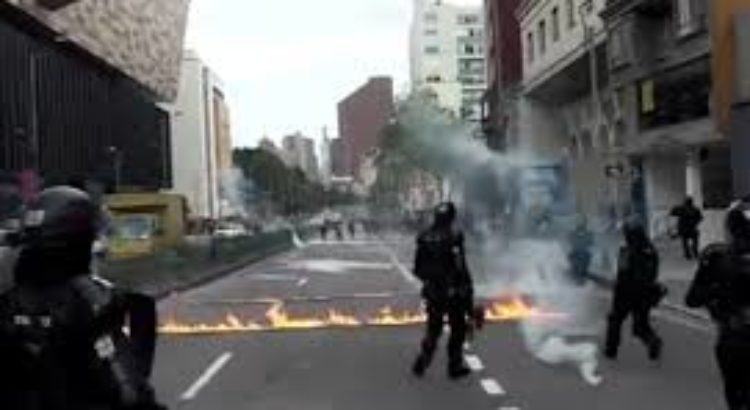
Un grupo de motorizados vestidos de civil hizo disparos este lunes durante la protesta de docentes que se realizó en el centro de Caracas para pedir mejoras salariales.

Luego de amedrentar a tiros, colectivos oficialistas golpearon a los docentes y les lanzaron agua para sabotear la manifestación que se desarrollaba frente al Ministerio de Educación.

Los delincuentes les pegaron con cascos y con los puños mientras los maestros se defendían.

La Policía Nacional Bolivariana intentaba controlar la situación, pero los manifestantes les achacaron las agresiones. “Son cómplices”, le gritó uno de los ciudadanos.

A pesar de que la protesta se dispersó por un momento, los docentes se mantuvieron en la calle pasadas las 11:40 am.

Del Ministerio de Educación salieron miembros de la Misión Chamba Juvenil y se enfrentaron con los maestros, pero fueron repelidos con consignas como “¡Fuera, fuera”, que les gritaron los educadores.

A continuación comenzó una golpiza entre ambos grupos.

Piquetes y militares

La manifestación también fue impedida más temprano por agentes de la GNB, quienes la interceptaron con un piquete.

Los militares intentaron cerrarle el paso a la manifestación, mientras unos hombres empujaban a los agentes para permitir a los maestros protestar.

Entre empujones a hombres, mujeres y periodistas, los policías lograron cerrar la movilización.

En la protesta, los maestros, además de mejoras salariales, exigieron la renuncia de Aristóbulo Istúriz.

Fuente de la noticia: https://www.elnacional.com/venezuela/educacion-venezuela/motorizados-dispararon-durante-protesta-de-docentes-en-caracas/

Comparte este contenido:
Page 1758 of 6180
1 1.756 1.757 1.758 1.759 1.760 6.180