Page 2011 of 6195
1 2.009 2.010 2.011 2.012 2.013 6.195

Inscriben en Francia a 15 ovejas en una escuela rural para evitar el cierre de una clase

Europa/Francia/09 Mayo 2019/Fuente: La vanguardia

Tras una leve caída en la matriculación de niños, de 266 a 261 alumnos, avisaron a la escuela de Crets en Belledone que debería cerrar una de sus aulas más grandes

Para evitar el cierre de una clase como consecuencia de la falta de niños en la edad pertinente, los residentes de un pequeño poblado francés al pie de los Alpes han inscrito simbólicamente a 15 ovejas este martes al registro de escolares.

Los alumnos «Saute-Mouton» (Salta carnero), «Baaaaah-Beast» (onomatopeya de balidos) y «Panurge» (aborregarse), entre otros, han sido integrados a las listas de la escuela de Crets en Belledone, en Francia.

El colegio había sido informado en marzo de que una de sus once clases probablemente cerraría en septiembre, con el comienzo del nuevo curso, tras una leve caída en la matriculación, de 266 a 261 alumnos.

Este martes por la mañana, un granjero local ha entrado a la escuela con unas 50 ovejas y su perro. Quince de ellas (con sus partidas de nacimiento en regla) han sido inscritas en presencia de alumnos, padres y maestros.

Gaëlle Laval, miembro de una asociación de padres y una de las organizadoras de la iniciativa ha dicho: «Aquí hay niños en dificultades, pero a la Educación nacional no le preocupan los argumentos sobre el terreno, sino solamente las cifras».

«Con esto, no debería tener lugar el cierre» de la clase, sonríe Gaëlle Laval, quien ha reconocido «haber jugado con el humor para movilizar a la gente», y así evitar un verdadero «desastre» en esta escuela, en la que la alcaldía local ha invertido mucho en estos últimos años.

Los padres de los alumnos también han subrayado que con una clase cerrada, las otras más pequeñas tendrían una gran sobrecarga de niños en el inicio de las clases del curso 2019-2020, en otoño.

Imagen tomada de: https://e00-elmundo.uecdn.es/assets/multimedia/imagenes/2019/05/07/15572499727621.jpg

Fuente: https://www.elmundo.es/internacional/2019/05/07/5cd1c011fdddff24918b492c.html

Comparte este contenido:

La polémica ley sobre profesores de Portugal podría votarse este viernes

Europa/Portugal/09 Mayo 2019/Fuente: La Vanguardia

La polémica ley sobre la actualización de los salarios de los profesores que provocó una crisis política en Portugal podría votarse este viernes, en vez del día 15, después de que los diputados acelerasen su tramitación.

Los diputados de la comisión parlamentaria de Educación dieron hoy su visto bueno global al texto final, por lo que se espera que llegue a tiempo de ser discutida en el pleno de este viernes.

La ley, que reconoce toda la antigüedad de los profesores, incluidos más de nueve años congelados durante la crisis, para actualizar sus salarios, generó una tormenta política en Portugal después de que todos los partidos, a excepción de los socialistas, aprobasen la norma en comisión parlamentaria.

Esta votación llevó el pasado viernes al primer ministro, el socialista António Costa, a amenazar con dimitir si la ley es aprobada en la votación final, ya que, según defiende su Ejecutivo, pondría en peligro el equilibrio de las cuentas públicas y la credibilidad externa de Portugal.

Dos días después del anuncio de Costa, la derecha informó de que cambiaría su voto y rechazaría la ley si no incluye una salvaguarda financiera que asegure que la medida no pondrá en peligro la estabilidad del país.

La izquierda asegura que no dará su apoyo a esta condición, por lo que se espera que la ley no sea aprobada y la dimisión de Costa no se materialice.

El primer ministro aseguró el lunes en una entrevista en la cadena lusa TVI que la crisis política no fue «intencional», como le acusaron otros partidos, sino que con su amenaza de dimisión estaba intentando evitar una «crisis presupuestaria».

Costa defendió además que, desde el punto de vista financiero, contabilizar toda la antigüedad congelada de los profesores no será posible «ni de aquí a diez años».

El Ejecutivo ya aprobó un decreto ley sobre la materia que tiene en cuenta sólo dos años, nueve meses y 18 días de los más de nueve años congelados, el periodo que considera viable financieramente.

Fuente: https://www.lavanguardia.com/politica/20190507/462110431404/la-polemica-ley-sobre-profesores-de-portugal-podria-votarse-este-viernes.html

Comparte este contenido:

Drástica baja en población infantil del sistema educativo de Puerto Rico

Centroamérica/Puerto Rico/09 Mayo 2019/Fuente: Metro

Además, el revelador estudio de Hunter College presenta un cierre de escuelas desproporcionado entre la zona rural y urbana del país

Una drástica merma de alumnos en el sistema de enseñanza del país se ha registrado en los últimos doce años, cuando la matrícula se redujo a casi la mitad de estudiantes.

Así lo establece el estudio “Disminución poblacional y cierres de escuelas en Puerto Rico”, del Centro de Estudios Puertorriqueños de Hunter College en Nueva York, que plantea que en 2006 había 544,138 estudiantes que disminuyeron a 306,652 en 2018, lo que representa una reducción de 44 %.

De acuerdo con el documento, tan solo el año pasado hubo una reducción de 11 %, ya que en 2017 había 346 mil estudiantes y, en el presente año escolar, hay 306 mil alumnos. El estudio advierte que las cifras podrían tener cambios luego del huracán, ya que la recopilación de estos datos se detuvo con el paso de los huracanes Irma y María. Además, precisa que la población de niños y niñas menores de cinco años compone la proporción más pequeña de la población de Puerto Rico en relación con otros grupos de edad. Bajó en Puerto Rico de 251,606 en 2006 a 146,699 en 2017. Esto representa una reducción de un 42 %.

El Centro también abordó el tema del cierre de escuelas que señala que ha sido desproporcionado, ya que el 65 % de los cierres han sido en zona rural y un 35 % en zona urbana. La cifra total de escuelas en operación bajó de 1,515 en su nivel más alto en 2006 hasta 855 en 2018. De ellas, 265 fueron cerradas el pasado año escolar.

Al final del documento, se ofrecen recomendaciones de política pública para prevenir el cierre de escuelas en comunidades vulnerables, así como para contrastar las variables que provocan la merma poblacional, que atribuyeron a migración, natalidad, crisis económica y los huracanes.

Cierres rurales son para ahorrar – Análisis: Ángeles Molina Iturrondo, catedrática

“En las áreas rurales, las escuelas tienden a ser pequeñas, pocos niños, son escuelas que están ubicadas en áreas más remotas, pero son pequeñas. Algunas tienen 100 niños; son escuelas bien pequeñas. Si se hace memoria de qué decían los papás de áreas rurales, precisamente eso es lo que dicen. Tienen que depender de transportación de porteadores escolares para poder llegar a la receptora o que la distancia es muy grande.

Sospecho que lo que se ha pretendido es cerrar escuelas pequeñas porque tienen un gasto operacional relativamente alto y una masa crítica pequeña, así que lo que hacen es que mandan a los niños a escuelas más grandes que, típicamente, están en áreas más urbanas. Esos niños se tienen que adaptar a escuelas receptoras que son grandes. Esos niños tienen que adaptarse a un contexto escolar muy diferente. No quiere decir que no se van a adaptar, porque los niños son resilientes. Pero los niños de Educación Especial son los que se afectan, porque esos niños, cuando se adaptan a un ambiente escolar, si los sacas de ese ambiente, cambias los maestros, eso sí tiene un impacto importante y no es favorable”.

Otro estudio presenta leve rezago en la tasa de grados postsecundarios en la isla

A pesar de que la tasa de personas que cuentan con grado asociado o un título mayor en Puerto Rico es de 47.1 % y ha aumentado en 8.4 puntos porcentuales desde 2008, un reciente estudio cuestiona los objetivos de grados académicos de la isla.

“Puerto Rico no ha establecido formalmente un objetivo de grados académicos en todo el territorio que cumpla con los criterios de rigor y eficacia de Lumina”, indicó Courtney Brown, vicepresidenta de Impacto Estratégico de Lumina Foundation.

La Fundación Puertorriqueña de las Humanidades (FPH) presentó estos hallazgos del estudio “A Stronger Nation through Higher Education”, realizado por la prestigiosa organización educativa Lumina Foundation.

Entre los municipios de Puerto Rico, las tasas más altas de títulos postsecundarios se encontraron en Guaynabo (59.4 %), Trujillo Alto (52.4 %) y San Juan (50.9 %). Los de tasas más bajas son Maricao (16.8 %) y Culebra (23.0 %).

Fuente: https://www.metro.pr/pr/noticias/2019/05/08/drastica-baja-poblacion-infantil-del-sistema-educativo-puerto-rico.html

Comparte este contenido:

Senegal: Primero el colegio; la boda, ya veremos

África/Senegal/09 Mayo 2019/Fuente: El país

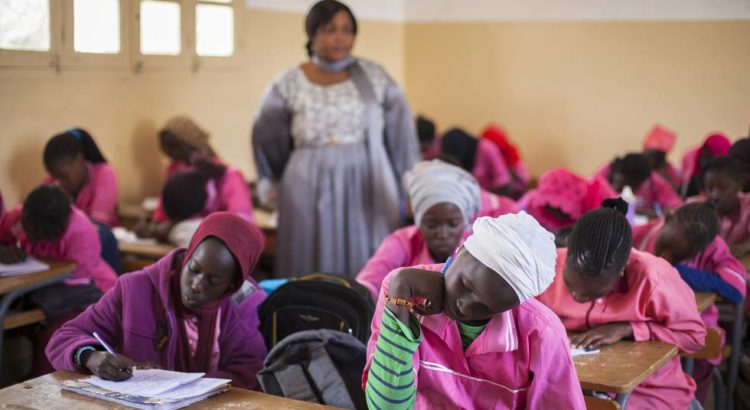
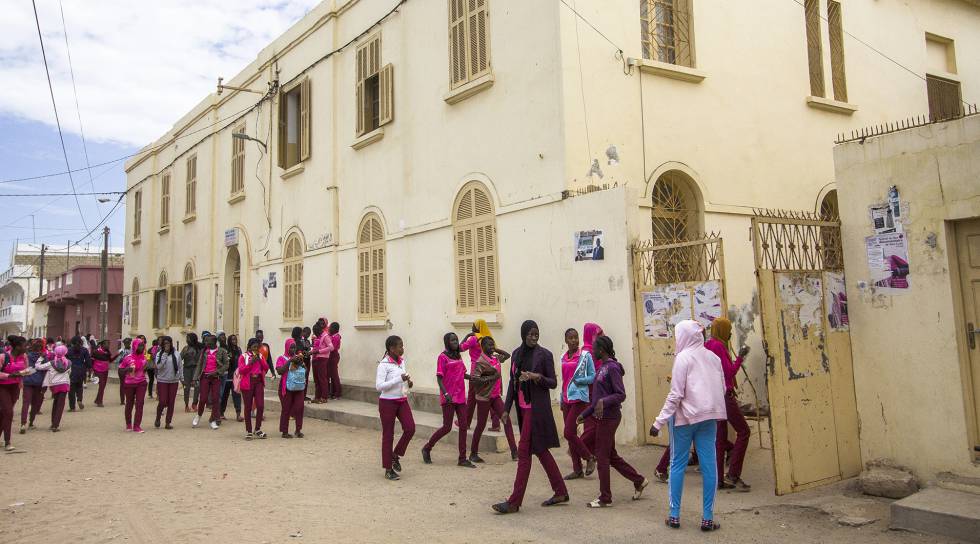
En muchos países, las niñas abandonan los estudios para contraer matrimonio demasiado pronto. Y estos las suelen formar solo para su tarea como esposas. Por eso este instituto, el Ameth Fall de Senegal, es una rara avis en un país en el que el 31% de las niñas se casan antes del cumplir 18. Es un centro exclusivamente femenino y les enseñan a tener autoestima e independencia

En todo el edificio y los alrededores pululan de un lado a otro alumnas vestidas con uniforme rosa. En este instituto africano tienen carteles que exigen que se hable de la regla en las aulas y que haya más mujeres en las carreras de ciencias. Algo no muy habitual en un país en el que el 31% de las adolescentes llegan casadas a los 18 y el 9% a los 15, según Unicef. Es el instituto Ameth Fall de Saint Louis de Senegal, una localidad costera al norte del país que fue la capital de África occidental bajo la ocupación francesa. 1.500 alumnas de entre 12 y 20 años acuden aquí cada día.

Comparte este contenido:

Prevén mayor déficit de profesores en Chile para 2025

América del sur/Chile/09 Mayo 2019/Fuente: Prensa Latina

Para 2025 Chile presentará un déficit del 15 por ciento de profesores con la formación pedagógica requerida, lo que equivale a 32 mil 166 educadores, reveló un estudio sobre el tema publicado hoy.

De ellos, el 45 por ciento corresponde a docentes de asignaturas que se imparten en todos los niveles como Inglés, Tecnología y Música, 43 por ciento a educación media y 12 por ciento a la enseñanza básica, lo que significa que la carencia se manifestará en todos los niveles.

El problema se manifestará en todo el país, pero más en las regiones del norte, particularmente en la de Atacama donde el déficit se calcula en 42 por ciento de los profesores necesarios.

El estudio fue realizado por Elige Educar, una organización sin fines de lucro cuyo objetivo es trabajar por una educación de calidad promoviendo la formación calificada del personal docente.

Las proyecciones de la pesquisa señalan que para 2025 se cuadruplicará el déficit actual de docentes, que ya es de unos seis mil 900 profesionales, plazas que están cubiertas por personal sin la formación requerida en sus respectivas asignaturas, lo cual influye negativamente en la formación de los alumnos.

Esta situación se debe, plantea el análisis, a la caída de la matrícula de pedagogía, por existir mayores exigencias para las instituciones que imparten la carrera, y el aumento de horas para que los profesores puedan preparar mejor sus clases, lo que obliga a contratar más maestros, a pesar de ser menor la cifra de egresados.

Para corregir el problema, Elige Educar considera necesario aumentar la matrícula de estudiantes de pedagogía, disminuir la deserción de profesores en ejercicio, que solo en 2014 fueron alrededor de 10 mil, así como implementar otras acciones adicionales, según explicó Joaquín Walker, director de Elige Educar.

Entre ellas señaló potenciar la atracción de jóvenes con alto desempeño académico, reactivar mecanismos de financiamiento para licenciados de otras disciplinas que deseen continuar estudios en pedagogía, y que el Estado promueva con las universidades el aumento de las matrículas.

También, desarrollar un programa de acompañamiento y orientación que responda a las necesidades de los estudiantes de pedagogía para reducir su deserción durante la carrera, Homologación de títulos de universidades extranjeras y estimular materialmente a quienes se trasladen a zonas con déficit de educadores idóneos significativo.

Fuente: https://www.prensa-latina.cu/index.php?o=rn&id=274742&SEO=preven-mayor-deficit-de-profesores-en-chile-para-2025
Comparte este contenido:

Transformative Change for Children and Youth in the Context of the 2030 Agenda for Sustainable Development

UNRISD

The 2030 Agenda for Sustainable Development is a new opportunity to address the key development challenges of our time with the aim to improve the well-being and rights of all people while protecting the natural environment. Children are important agents and beneficiaries in this process: many children are not only among the most vulnerable groups affected by poverty, inequality, conflict and climate change, they are also the generation that will reach adulthood during the realization of the 2030 Agenda. To create the sustainable, long-term transformation ambitiously laid out in Agenda 2030, new transformative approaches to policy must be implemented and applied to children and youth—approaches that target the underlying generative framework of social injustice as opposed to implementing affirmative remedies that simply seek to alleviate the symptoms.

The objective of this paper is to develop a conceptual framework to help assess the transformative potential of policies – particularly with regard to their impact on children and youth – and how these are meaningfully integrated and represented in decision-making processes. It will shed light on the policy space for transformative change by analysing a range of relevant factors which present both challenges and opportunities for fostering child rights and well-being through the implementation
of Agenda 2030. The paper then applies the framework to a selection of policy areas that are of high relevance for child development, such as social policy and care policy assessing necessary means of implementation such as resource mobilization and governance systems and looking at economic and environmental impacts in a cross-cutting way. The aim is to stretch boundaries and invite new thinking on how to grasp the numerous opportunities offered by the Sustainable Development Goals (SDGs) to approach development challenges holistically and from a child-centred perspective. This
involves integrating economic, social and environmental dimensions of development and fostering cross-sectoral approaches.

At the time of their collaboration, Katja Hujo was Senior Research Coordinator at the United Nations Research Institute for Social Development (UNRISD) and Maggie Carter was a Research Analyst at UNRISD.

Fuente de la Información: http://www.unrisd.org/80256B3C005BCCF9/(LookupAllDocumentsByUNID)/32E31F8A706FD2A9C12583CB004186D9?OpenDocument


Comparte este contenido:

EEUU: ‘Intersectionality and Higher Education’

Editors discuss new volume of essays on the ways higher education is changing because of issues of race, gender and sexuality — and how they think higher ed needs to change even more.

Diversity and inclusion are topics of conversation at most American colleges and universities. So are reports of frustrations of many students, faculty members and others who feel colleges are still designed for people of privilege — generally those who are white and are middle or upper class. And so are reports of frustrations that many college leaders have a hard time understanding that issues are not just about black people or women or gay people, but that issues relate to many people in multiple groups and with multiple identities and needs.

That is central to intersectionality, the frame for the essays in Intersectionality and Higher Education: Identity and Inequality on College Campuses (Rutgers University Press). The editors of the collection are W. Carson Byrd, associate professor of sociology at the University of Louisville; Rachelle Brunn-Bevel, associate professor of sociology and anthropology at Fairfield University; and Sarah Ovink, associate professor of sociology at Virginia Tech.

They responded via email to questions about the new book:

Q: Do you think race relations in American higher education are getting better or worse these days?

A: More campuses are engaging the concerns of historically underrepresented students than in the past, but as always, more work needs to be done. Similar to institutions around the nation, our campuses have announced plans to dramatically increase the proportion of the undergraduate student body that identifies as first generation or as members of minoritized groups. At the same time, there is a tense pushback from those trying to bring hate speech (in the guise of “free speech” and “dialogue”) onto campus.

In response to student demands, administrators are working with students using the powerful example set by students at the University of Missouri to reform policies for accountability and acknowledge that racism is an institutional reality and not limited to what one person may do on campus. That said, institutions of higher education are small-c conservative; they are slow to change, and they often rely on tradition as a bulwark of their prestige. Most university administrations are still predominantly white and male as they have been in the past. We still have racial disparities in hiring and promotion of faculty.

Students are still battling for more curricular offerings and resources that recognize and support marginalized communities. It is important for researchers and those who care about the future of higher education in general to take note of when campuses are making full-faith efforts toward actions that can have real benefits for race relations — or as we would prefer to think of it, reducing oppression and increasing inclusion — such as improving racial and ethnic diversity in faculty hiring, slowing the tide of adjunct positions that do not pay a living wage, and taking action when campus community members report bias and discrimination. In the short term, this may look like “worse” relations, because these can be painful topics. But we won’t get to “better” without putting in that difficult work.

Q: In terms of linking race and gender, many colleges have noted that their black enrollments are majority (in some cases overwhelmingly) female. This seems true at historically black colleges and majority white institutions. How might colleges deal with the particular issues facing black men?

A: Most undergraduate populations at colleges and universities in the United States are majority female. This is true for all racial and ethnic groups. However, this is particularly true for black undergraduates and it has been true for a long time, in fact. Some institutions now have mentoring groups targeted toward black men or men of color where junior and senior students, faculty and staff help first-year and sophomore students get acclimated to life on campus …

Reaffirming their experiences in academia, supporting their degree pursuits and assisting with exploring career options after college, providing support networks and resources to help students navigate difficult circumstances on campus as well as off, and other extensions of this work are vital to supporting black men and other men of color historically excluded from many institutions across the nation. It’s also important to note that “majority female” does not mean that women no longer experience discrimination or sexist treatment in higher education. We should continue to pay attention to institutional features that were built without people of color including women in mind as we move toward a more equitable vision of institutional support for students, staff and faculty that takes into account how racial and gender disparities intertwine to inform future initiatives and efforts.

Q: At many campuses, Latinx and Asian populations are growing at faster rate than are black students, and colleges boast about growing minority enrollments. What do you make of this?

A: We have seen many changes in enrollments for students of color, and it’s important to not “run with the numbers” without critically examining what they may mean for issues of access and inclusion. Many institutions post enrollment numbers for students of color without disaggregating by racial and ethnic groups, or without pointing out what proportion are made up of international students, who tend to be wealthier than U.S.-born students. For example, people often lump all Asian and Pacific Islander students together, which can hide disparities that affect certain ethnic groups and can shift perspectives of where campuses should improve their support for students or not.

Also, rates vary for groups depending on the type of postsecondary institution (private liberal arts college, research-intensive university, community college, Hispanic-serving institution, etc.) and geographically. That said, getting more students of color through the college gates does not equate to being more supportive and a racism-free campus. If institutions want to boast about their increasing racial and ethnic diversity as a key aspect of marketing, then these institutions have to seriously consider how such a marketing approach speaks more to using students for money-generating purposes rather than showing their support for these students.

As the recent American Council on Education report on race and ethnicity in higher education poignantly describes, increases in student representation on campuses does not mean these institutions assist students toward graduation or avoiding mounds of student loan debt. There are many efforts that administrators must pursue to support students who are historically excluded and underrepresented at their institutions. These efforts are dependent upon the context of the specific institution and cannot be easily fixed by seeking universal solutions that seem to work at other institutions, even if they have similar contexts, because each institution must reflect on its own needs and goals to build a more holistic approach to supporting students, not just increasing diversity.

Q: Your book includes faculty experiences — particularly those of adjuncts, who on many campuses include many minority academics. Many books about diversity in higher education focus either just on students or just on faculty members. You have both (plus staff members and grad students). Why is it important to consider all of these groups?

A: We aimed to provide readers with a broad discussion of how people in different positions experience higher education, and highlight groups who may not be fully included in conversations about the inequalities on our campuses. What is sometimes overwhelming is to consider that all of these experiences are happening simultaneously at the same institution, and putting this volume together can move discussions forward about how multiple experiences with inequalities are related to explore possible solutions.

For example, the conversations about graduate student experiences are vital for identifying ways to be more supportive of the next generation of faculty and limit reproducing the same issues of marginalization and alienation in our departments. Colleges and universities increasingly rely on adjunct faculty members, who are more susceptible to institutional changes such as budget cuts and face less supportive working conditions than tenure-stream faculty. Staff members are often placed in difficult positions to support students with disabilities and tackling STEM disparities that are often glossed over because they are viewed as “supporting” particular aspects of university missions and initiatives and not being integral actors for institutions. All of these groups have important experiences we must consider if we aim to create a more equitable and inclusive environment for people to live, work and study … In the end, using a more intersectional lens for higher education shows how inequality is as much of a lived experience as an outcome that our institutions need to take seriously.

Q: Your book also notes issues facing LGBTQ populations. In higher ed, there is more support for these groups on many campuses, but some politicians are moving against their rights. How do you see the trends in higher education for these groups?

A: The increasing support for LGBTQ faculty, staff and students in higher education is important on many fronts, but the targeting of these campus community members by politicians and other political groups should have administrators concerned about how far their support extends including with regards to legal protections. The Supreme Court is set to hear a group of three cases to decide whether federal antidiscrimination law extends to sexual orientation and gender identity in the workplace. Two of the cases have plaintiffs arguing they were discriminated against because of their sexual orientation, while the third case explores if discrimination law applies to transgender workers. These cases will have obvious impacts on higher education employment practices, but can also signal the extent to which diversity and inclusion efforts at institutions will go to create more equitable places to work and study for LGBTQ community members.

Institutions have increased their accessibility with the adoption of trans* policies in admissions and creating more inclusive efforts on campus with new campus organizations, resources and policies, but the persistent targeting of LGBTQ community members and possible rulings on these and future Supreme Court cases will bring additional tests to higher education.

Fuente de la información: https://www.insidehighered.com/news/2019/04/30/editors-discuss-their-new-book-intersectionality-higher-education


 

April 30, 201
Comparte este contenido:
Page 2011 of 6195
1 2.009 2.010 2.011 2.012 2.013 6.195