Page 2595 of 6196
1 2.593 2.594 2.595 2.596 2.597 6.196

Think Tank: States Aren’t Teaching Consent in Sex Ed

By: usnews.com/16-05-2018

Not all require teachers to mention ‘healthy relationships,’ ‘sexual assault’ or ‘consent’ in class.

The Center for American Progress recently released an analysis of what it called «the current state of sex education standards» across the U.S., focusing on discussions of consent and healthy relationships in those teaching standards. Analysts at the think tank considered state laws in 24 states and Washington, D.C., that require sex education in public schools and found that not all states address those topics in their sex education standards.

According to the review, just 10 states and Washington, D.C., reference «healthy relationships,» «sexual assault» or «consent» in their sex education programs.

Rhode Island, West Virginia and Washington, D.C., mandate detailed state standards that «address aspects of sexual health and clearly categorize topic areas» by age, according to the analysis. Hawaii, Maine, Maryland, North Carolina and Vermont don’t spell out these requirements, but they have revamped state standards to address consent or health relationships.

Moreover, the review found that California, New Jersey and Oregon have comprehensive sex education standards, requiring teachers to discuss healthy relationships as part of sex education. Each state, CAP says, requires educators to use medically correct materials, as well as incorporate lessons on healthy relationships or consent. California, New Jersey and Oregon also boast teen pregnancy rates 3, 4 and 11 percent lower than the national average, respectively. 

The majority of the states analyzed – Delaware, Georgia, Iowa, Kentucky, Minnesota,Mississippi, Nevada, New Mexico, North Dakota, Ohio, South Carolina and Utah – reportedly provide teachers with little guidance on which subjects should be covered in sex education curriculums. Those teachings cover pregnancy prevention and preventing sexually transmitted diseases, but don’t address the development of healthy relationships and don’t divide standards by age, according to the review.

Still, the think tank reports that a number of reforms are building momentum in state legislatures across the country.

*Fuente: https://www.usnews.com/news/best-states/articles/2018-05-15/cap-states-arent-teaching-consent-healthy-relationships-in-sex-education

Comparte este contenido:

Learning from Liberia’s educational partnerships

By: Marcus S. Wleh/ newtimes.co.rw/ 16-05-2018

MONROVIA – Around the world, some 263 million children remain out of school, and of those who do attend classes, 330 million are receiving substandard education. As a result, an estimated 617 million school-age children are unable to read at grade level.

The problem is a global one, but it is particularly acute in Sub-Saharan Africa, where 88% of young students– some 202 million boys and girls – are not achieving a sufficient level of reading proficiency. And it is also here where solutions are being tested.

African governments and international donors have long paid lip service to improving educational outcomes, especially in basic skills like reading, writing, and math. At a financing conference for the Global Partnership for Education in February, developing countries vowed to increase spending on education by $110 billion, and wealthy donors pledged an additional $2.3 billion to improve school systems in poor countries.

But as important as these commitments are, Africa’s education crisis will not be overcome by donations and pledges alone. A new approach is needed to strengthen struggling schools, train teachers, and ensure that every child can obtain the necessary skills to succeed. One pilot programme being tested in my country, Liberia, has shown considerable promise.

Because low-income countries rarely have enough money to implement needed education reforms, pooling public and private resources is an attractive alternative. Since 2016, Liberia’s education ministry has merged select public schools with various independent operators in an effort to increase educational quality in a tight budget environment. Early results are impressive.1

For example, at the free public schools currently managed by expert contractors participating in the program, learning outcomes improved by 60% in the first year. At the 25 schools operated by my employer, Bridge Partnership Schools for Liberia, average student test scores doubled in just nine months. Parents and pupils have embraced these reinvigorated schools, with many calling them the best they have ever experienced. As a result, the previous government expanded the program, and the current one is committed to continuing support.

One of the most powerful components of a Bridge Partnership School is the pedagogy. For every lesson in every subject across every grade, educators have access to detailed lesson plans developed by academics. These plans help teachers prepare and deliver instruction to maximise learning outcomes. By assisting in classroom planning, Bridge ensures a degree of standardisation across schools, and helps teachers focus more attention on individual students.

At first glance, Liberia’s school system might seem a poor fit for such an innovative experiment. Today, some 58% of Liberian children are out of school, the literacy rate is among the lowest in the world, and teachers are in short supply. Moreover, the current government budgets just $50 annually for each child attending elementary school. The average in the OECD in 2013 was $9,200.

But programmes like these are attractive for two reasons: they deepen a country’s access to educational expertise, and, more important, they open up new funding streams.

Developed countries have already recognised the value of strong public-private partnerships in education. Notably, the United Kingdom’s 2018 education policy encourages the expansion of such programs because they have been found to “improve access to education for poor and marginalized children.”

Not everyone will agree; partial partnerships with the private sector and NGOs in education generates considerable controversy, and there is little doubt that in Liberia, the Bridge model remains a work in progress. (A new impact analysis is due in the next academic year.)

But while costs were high, they are quickly falling. And continuous teacher training for those who are part of Bridge PSL is helping to increase the quality of instruction. As test results in Liberia demonstrate, children are learning more than ever. With the support of prominent global investors, our schools are achieving outcomes that were previously unthinkable.

From my perspective, the public-private partnership model has revolutionised education in Liberia, and I am confident that it can work in other parts of Africa, too. In countries where learning outcomes continue to lag, governments need collaborative solutions. And, as past failures have demonstrated, education systems in much of the Global South cannot succeed alone.

To achieve “education for all” by 2030, the target set by the UN Sustainable Development Goals, educators must embrace bold solutions like Bridge Partnership Schools. With millions of children still being denied the right to an education, the world can no longer afford the status quo.

The writer is the country director of Bridge Partnership Schools for Liberia.

*Fuente: http://www.newtimes.co.rw/opinions/learning-liberias-educational-partnerships

Comparte este contenido:

Fighting Inequality in Asia and the Pacific

By Shamshad Akhtar/thediplomat.com/16-05-2018

The region’s remarkable economic success story belies a widening gap between rich and poor.

Inequality is increasing in Asia and the Pacific. Our region’s remarkable economic success story belies a widening gap between rich and poor. A gap that’s trapping people in poverty and, if not tackled urgently, could thwart our ambition to achieve sustainable development. This is the central challenge heads of state and government will be considering this week at the Economic and Social Commission for Asia and the Pacific (ESCAP). A strengthened regional approach to more sustainable, inclusive growth must be this Commission’s outcome.

It’s imperative, because ESCAP’s Sustainable Development Goal Progress Report shows that at the current rate of progress, Asia and the Pacific will fall short of achieving the UN’s 2030 Agenda. There has been some welcome progress, including in some of the least developed countries of our region. Healthier lives are being led and wellbeing has increased. Poverty levels are declining, albeit too slowly. But only one SDG, focused on achieving quality education and lifelong learning, is on track to be met.

In several critical areas, the region’s heading in the wrong direction. Environmental stewardship has fallen seriously short. The health of our oceans has deteriorated since 2015. On land, our ecosystems’ biodiversity is threatened. Forest conservation and the protection of natural habitats has weakened. Greenhouse gas emissions are still too high. But it’s the widening inequalities during a period of robust growth that are particularly striking.

Wealth has become increasingly concentrated. Inequalities have increased both within and between countries. Over thirty years, the Gini coefficient increased in four of our most populous countries, home to over 70 percent of the region’s population. Human, societal and economic costs are real. Had income inequality not increased over the past decade, close to 140 million more people could have been lifted out of poverty. More women would have had the opportunity to attend school and complete their secondary education. Access to healthcare, to basic sanitation or even bank accounts would have been denied to fewer citizens. Fewer people would have died from diseases caused by the fuels they cook with. Natural disasters would have wrought less havoc on the most vulnerable.

The uncomfortable truth is that inequality runs deep in many parts of Asia and the Pacific. There’s no silver bullet, no handy lever we can reach for to reduce it overnight. But an integrated, coordinated approach can over time return our economies and our societies to a sustainable footing. Recent ESCAP analysis provides recommendations on how to do just that.

At their heart is a call to in invest in our people: to improve access to healthcare and education.

Only a healthy population can study, work and become more prosperous. The universal basic healthcare schemes established by Bhutan and Thailand are success stories to build on. Expanding social protection to low income families through cash transfers can also help underpin a healthy society.

Increasing investment in education is fundamental to both development and equality. Here the key to success is making secondary education genuinely accessible and affordable, including for those living in rural areas. Where universal access has been achieved, the focus must be on improving quality. This means upskilling teachers and improving curricula, and tailoring education to future labor markets and new technologies.

Equipping people to exploit frontier technologies is becoming more important by the minute. Information and Communication Technology (ICT) is a rapidly expanding sector. It can quicken the pace of development. But it is also creating a digital divide which must be bridged. So investment in ICT infrastructure is key, to support innovative technologies and ensure no one is left behind. Put simply, we need better broadband access across our region. Geography can’t determine opportunity.

This is also true when it comes to tackling climate change, disasters and environmental degradation. We know these hazards are pushing people back into poverty and can entrench inequality. In response, we need investment to help people to adapt in the region’s disaster hotspots: targeted policies to mitigate the impacts of environmental degradation on those most vulnerable, particularly air pollution. Better urban planning, regular school health check-ups in poorer neighborhoods, and legislation guaranteeing the right to a clean, safe and healthy environment into constitutions should be part of our response.

The robust growth Asia and the Pacific continues to enjoy, gives us an opportunity to take decisive action across all these areas. But for this to happen, fiscal policy needs to be adjusted. More effective taxation systems would increase the tax take, and better governance would increase people’s willingness to contribute. Public expenditure could then be made more efficient and progressive, the proceeds of growth shared more widely, and inequalities reduced.

My hope is that leaders will seize the moment, strengthen our commitment to fighting inequality on all fronts and put us back on track to sustainable development in Asia and the Pacific.

Shamshad Akhtar is the Under-Secretary-General of the United Nations and Executive Secretary of Economic and Social Commission for Asia and the Pacific (ESCAP)

*Fuente: https://thediplomat.com/2018/05/fighting-inequality-in-asia-and-the-pacific/

Comparte este contenido:

EEUU: NC march leaders want teacher pay and education spending to reach national average

Por: hastingstribune.com/16-05-2018

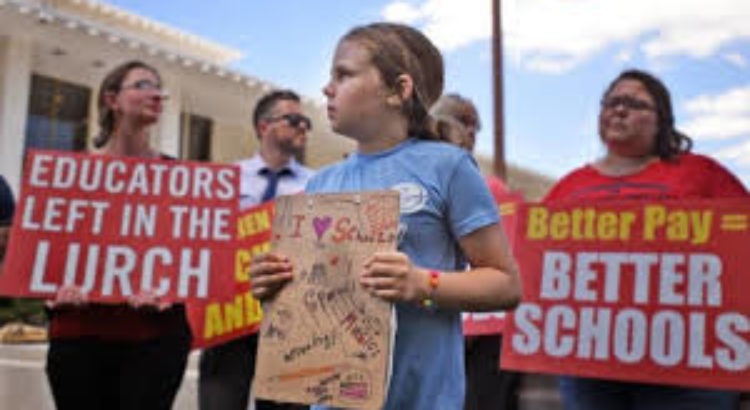
RALEIGH, N.C. — The group organizing Wednesday’s mass teacher rally in Raleigh says it wants state lawmakers to sharply raise education spending — including pay raises for all school employees — and to reverse many of the education changes made in the past seven years.

More than 15,000 teachers have signed up to attend the “March for Students and Rally for Respect,” an event that’s causing at least 38 school districts, including Wake, Charlotte-Mecklenburg, Durham and Johnston counties and Chapel Hill-Carrboro, to cancel classes Wednesday.

On Monday, the North Carolina Association of Educators released its priorities for the march, which coincides with the opening day of this year’s state legislative session. The list includes raising both teacher pay and per-pupil spending to the national average over the next four years. The group also wants “significant and livable raises for all public school employees.”

The National Education Association estimates that North Carolina’s average teacher salary is $9,622 below the national average and per-pupil spending is $2,406 below the national average. The NCAE says lawmakers should not cut corporate taxes until both teacher pay and per-pupil spending reach the national average.

“North Carolina public school educators, parents, and our communities demand better for our students,” NCAE President Mark Jewell said in a statement. “These specific public education priorities will give every student an opportunity to succeed and help recruit and retain educators as we face a critical shortage in our classrooms and school buildings.”

Senate Leader Phil Berger’s office responded Monday by pointing to how the Republican-led state legislature has increased public education spending by nearly $2 billion since 2011. Berger’s office also noted that lawmakers have promised a fifth consecutive teacher pay raise that will lead to an average 6.2 percent raise next year.

“Over 44,000 teachers in North Carolina — half the state’s workforce — are receiving at least a $10,000 raise since 2014 under the General Assembly’s budgets,” added Joseph Kyzer, a spokesman for House Speaker Tim Moore. “That’s why North Carolina has ranked No. 1 and No. 2 the last two years for teacher pay growth by the NEA.”

Other big-ticket items for the NCAE, which is the state affiliate of the NEA, include adding at least 500 school nurses, social workers and counselors this year and expanding Medicaid to improve health options for students. The group also wants lawmakers to put a $1.9 billion statewide school construction bond referendum on the ballot “to fix our crumbling schools and large class sizes.”

In the face of rising health insurance premiums, the NCAE also wants legislators to provide school employees with “enhanced and protected health insurance and pension.”

Some of the NCAE’s “expectations” for legislators would require reversing changes made since Republicans gained the majority in 2011, including:

— Restoring extra pay for teachers with advanced degrees.

— Restoring longevity pay for school employees based on their years of service.

— Restoring career status, colloquially called teacher tenure, that gives due process rights to teachers before they’re fired or demoted.

— Ending pay for performance based on student test scores for teachers and administrators.

“There isn’t a vision here for increasing student achievement,” said Terry Stoops, vice president of research for the conservative John Locke Foundation. “There’s a vision for increasing the amount of money we spend on public schools but with very little sense on how that money would be used.”

*Fuente: http://www.hastingstribune.com/nc-march-leaders-want-teacher-pay-and-education-spending-to/article_8dd0ef1d-2b2d-5e85-b112-ec2a0e3aaa37.html

Comparte este contenido:

Oman: Ministry of Education signs pact to promote technology

Oman/May 15, 2018/by Times News Service/Source: http://timesofoman.com/

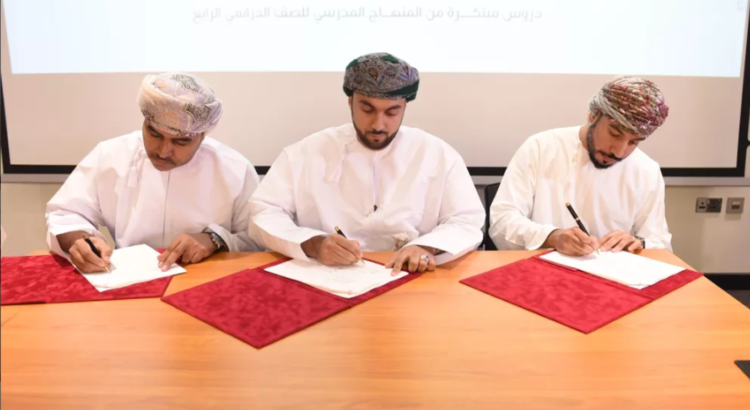
The Ministry of Education signed a memorandum of understanding (MoU) with Oman Oil Production Company and Innovation (Ebtikar) for Intelligent Solutions Company.

The MoU comes to implement a number of technical projects that promote the use of technology in the field of education. It also seeks the integration of innovative digital projects that promote the educational process in the Sultanate.

With the presence of Dr Homoud Al Harthi, Undersecretary of the Ministry of Education for Education and Curriculum, Yahya Al Harthi, Director-General of the Directorate-General for Curriculum Development at the Ministry of Education, signed the MoU with Ashraf Al Mamari, vice-chairman of Oman Oil Company, and Eng Tamer Al Abri, Executive manager of Innovation Company.

The MoU is part of the Ministry of Education’s efforts to develop innovative electronic services that enhance the educational process in the Sultanate. It is also within the framework of the Oman Oil Exploration and Production Company’s keenness to support innovative scientific projects that enhance the educational aspect. The MoU also comes in line with the fact that Ebtikar (Innovation) for smart solutions is an Omani company characterised by the industry of smart applications and new technologies as well as innovating a new concept through the delivery of knowledge in entertainment.

Source:
http://timesofoman.com/article/133893/Business/Economy/Ministry-of-Education-signs-Memorandum-of-Understanding-with-Oman-Oil-Company-and-Innovation-Company
Comparte este contenido:

Australia: Education, Catholic systems yet to sign off on education reforms

Autralia/ May 15, 2018/By Emily Baker/Source: https://www.smh.com.au

Reforms aimed at improving the ACT’s education system for children with complex needs and challenging behaviours continue to lag.

An expert panel behind a 2015 review of the education system – triggered after a Canberra school used a $5000 cage to manage the behaviour of a child with autism – made a suite of recommendations broadly accepted by the public and Catholic education sectors.

But the Schools For All December 2017 progress report, only released this week, showed the ACT Education Directorate and Catholic Education Office were yet to finalise five and seven recommendations respectively.

Among recommendations not yet completed by the ACT Education Directorate and Catholic Education was the professionalisation of learning support assistants.

A directorate-specific progress update said the system had partnered with the Canberra Institute of Technology to offer a pilot group of workers a Certificate IV in Education Support and further pledged to «consider the minimum expected level of training for LSAs».

The Catholic system reported 80 per cent of its classroom support assistants had either completed or started a Certificate IV or equivalent training.

Both systems were also yet to sign off on a recommendation relating to alternatives to out-of-school suspensions, originally due in June 2016.

The directorate’s Schools for All update said an off-campus alternative education option was under development «for a small number of students» who could not «effectively» access learning in a mainstream setting.

«The directorate is working closely with Canberra high school principals and the community sector to design and implement the off campus flexible learning program,» the report said.

«A first intake of students is expected to participate in the program in the second semester of 2018.»

The directorate’s progress report hinted at possible future projects in the public system.

The directorate had investigated the «schools as hub» model, according to the progress update, which had included a visit to Melbourne’s Doveton College. A report had been handed to the directorate’s Future of Education and early childhood education strategy team, it said.

Most remaining Catholic recommendations related to administrative processes. One called on the system to establish procedures to apply, monitor and report on restrictive practices.

The Archdiocese-specific report said early career teachers and «several targeted schools» had received a course on managing aggression and potential aggression. Processes to report and respond to critical incidents had been developed, it said, and «schools have and will continue to be advised on alternatives for restraint».

A key advancement in the December quarter was the development of an evaluation baseline against which the Schools for All reforms could be measured, another government report said.

Public, Catholic and independent schools had also joined to ensure their disability criteria aligned with the Diagnostic and Statistical Manual of Mental Disorders Fifth Edition.

» … we have begun to see a systemic cultural change where all children and young people in ACT schools are placed at the centre of all decision-making relating to education policy and practice to enable their social, academic and wellbeing needs to be met,» the summary report said.

Source:

https://www.smh.com.au/national/act/education-catholic-systems-yet-to-sign-off-on-education-reforms-20180509-p4ze9o.html?utm_medium=rss&utm_source=rss_national

Comparte este contenido:

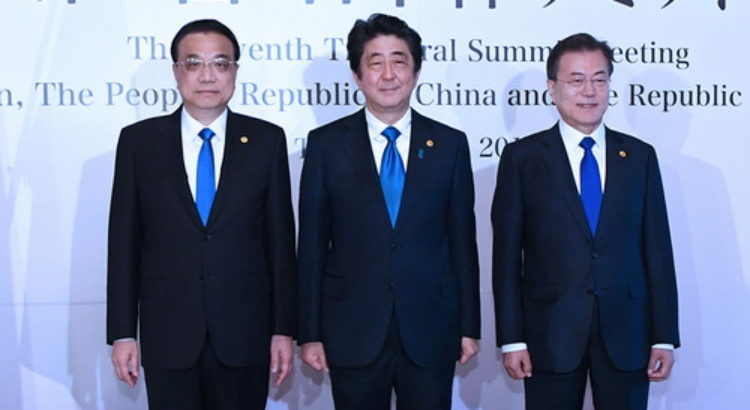
Li Keqiang asiste a la 7ª Reunión de Líderes de China, Japón y ROK

Asia/15 de mayo de 2018/Fuente: http://www.fmprc.gov.cn

el Primer Ministro Li Keqiang junto con el Primer Ministro japonés Shinzo Abe y el Presidente de ROK Moon Jae-in asistieron a la 7ª Reunión de Líderes de China, Japón y la República de Corea (ROK) en la Casa de Húespedes de Tokio e intercambiaron los puntos de vista sobre la cooperación entre China, Japón y ROK así como temas regionales e internacionales.

Li Keqiang dijo que como las tres principales economías del mundo, China, Japón y la República de Corea son mutuamente socios importantes de cooperación económica y comercial y tienen importantes responsabilidades para promover el desarrollo económico regional, dirigir los procesos de integración regional y mantener la paz y la estabilidad regionales. Frente a la compleja y cambiante situación política y económica internacional, fortalecer la cooperación entre China, Japón y ROK no sólo es una necesidad del desarrollo de los tres países, sino también una expectativa común de los países de la región y la comunidad internacional. Las tres partes deberían aprovechar la oportunidad para ampliar la integración de intereses y esforzarse por promover la paz duradera y la prosperidad común en la región.

Primero, acumular confianza política y crear un buen ambiente. Los intereses comunes de las tres naciones superan con creces las diferencias, y las diferencias también se pueden gestionar y resolver con la sabiduría de los orientales. Debemos encarar a la historia y enfrentar el futuro, encontrarnos en un nuevo punto de partida histórico y desarrollar una cooperación de más alto nivel.

Segundo, salvaguardar conjuntamente el libre comercio y promover la integración económica regional. Debemos salvaguardar firmemente el sistema de comercio multilateral basado en normas y oponernos al proteccionismo y el unilateralismo. Elevar el nivel de integración económica regional y promover conjuntamente la construcción de un sistema económico asiático abierto, vinculante, inclusivo y equilibrado. Acelerar el proceso de negociación del TLC China-Japón-República de Corea y promover la pronta conclusión del «Acuerdo de Asociación Económica Integral Regional» (RCEP). Dirigir e impulsar el diseño de un plan para la Comunidad Económica de Asia Oriental y fortalecer la cooperación en las 6 áreas tales como la liberalización y la facilitación del comercio, la capacidad de producción y la inversión, la infraestructura y la interconexión, la finanza, el desarrollo sostenible y los intercambios culturales y personales.

Tercero, construir el modelo «China, Japón y República de Corea + X» para promover el desarrollo sostenible en la región. Debemos reunir las ventajas de tres partes, y a través del modelo «China Japón y ROK + X», ejecutar los proyectos conjuntos en las área tales como la cooperación de la capacitad productiva, la prevención y redección de desastres, ahorro de energía y protección del medio ambiente, dirigir y promover a los países de la región para lograr un mejor y más rápido desarrollo.

Cuarto, profundizar los intercambios culturales y personales y sentar una base sólida para la opinión pública. Debemos aprovechar al máximo las connotaciones culturales de las tradiciones históricas de los tres países, fortalecer los intercambios y la cooperación en cultura, educación, turismo, medios de comunicación y otras áreas, y promover la comunicación espiritual, ampliar los intercambios personales y fortalecer los intercambios entre los jóvenes.

Quinto, estimular la innovación tecnológica, promover la reducción de la pobreza, la protección del medio ambiente y la resistencia de desastres naturales, y promover el crecimiento inclusivo global.

Li subrayó que los tres países deben hacer esfuerzos conjuntos para salvaguardar la estabilidad y la prosperidad de la región y contribuir a la paz y el desarrollo mundial. Hay que promover la construcción de la comunidad de destino común de la humanidad y la edificación de un Asia y un mundo con paz duradera, seguridad generalizada, prosperidad común, abierta e inclusiva, bella y limpia. Hay que promover la desnuclearización de la península, adherirse a la orientación general de dialogar para resolver, a la meta principal de la desnuclearización y al gran principio de despachar a la vez los problemas superficiales y sustanciales con el fin de hacer una contribución positiva para la solución política del problema de la península y la realización de una paz duradera en la región. Hay que consultar, construir y compartir de forma conjunta «una franja y una ruta» para fortalecer aún más la comunicación y la coordinación de las políticas, orientar a las empresas para llevar a cabo la cooperación en diversas formas de los tres países.

Shinzo Abe dijo que los tres países son los principales países comerciales del mundo y ambos respaldan el libre comercio y los mercados abiertos. Hay que proponer normas comerciales de alto estándares que corresponden con el siglo XXI. En el área de intercambios culturales y personales, hay que tomar los Juegos Olímpicos y Paralímpicos que se celebrarán en los tres países como una oportunidad para promover intercambios personales, fortalecer la cooperación educativa y turística, y promover el desarrollo de la región hacia un rumbo de mayor apertura e inclusividad. La parte japonesa felicitó por el éxito de las conversaciones entre los líderes del Sur y del Norte, apreció el compromiso de la total desnuclearización de la Declaración de Panmunjom y expresó su reconocimiento por los incansables esfuerzos de China en el tema de la Península. Japón, China y la República de Corea deberían colaborar con la comunidad internacional para promover la desnuclearización de la península. La promoción de la cooperación orientada hacia el futuro entre los tres países es crucial para la paz y la prosperidad regionales.

Moon Jae-in dijo que la reunión de líderes de la República de Corea, China y Japón vuelve a celebrarse dos años y medio después. Los tres países son socios inseparables. Se espera celebrar reuniones periódicas de líderes en el futuro para lograr la institucionalización y sistematización. La cumbre Sur-Norte estableció una buena base para la desnuclearización y la paz y la estabilidad de la península. China y Japón insistieron en la desnuclearización de la península y apoyaron las conversaciones Norte-Sur, lo que inyectó fuerza para el éxito de las conversaciones. Al realizar el proceso de paz en la península, China y Japón son indispensables. La península y el noreste de Asia seguramente recibirán la paz y la prosperidad. Los tres países deberían enriquecer el contenido de la cooperación pragmática, promover la cooperación en las áreas de protección ambiental, atención médica, energía y resistencia a los desastres naturales que están estrechamente relacionadas con la vida de los pueblos, y dejar que los pueblos de los tres países sientan los beneficios reales.

Wang Yi y He Lifeng asistieron a la reunión.

Fuente de la Noticia:

http://www.fmprc.gov.cn/esp/zxxx/t1558523.shtml

Comparte este contenido:
Page 2595 of 6196
1 2.593 2.594 2.595 2.596 2.597 6.196