África/Etiopía/26 Abril 2018/Fuente: Prensa Latina
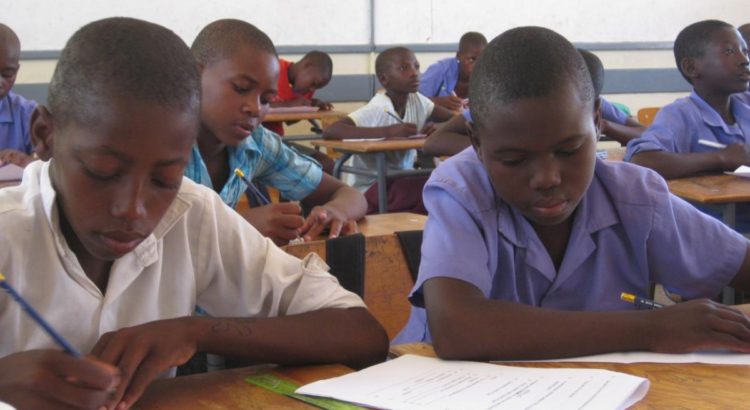
Al menos un millón 200 mil estudiantes en Etiopía se beneficiarán con la entrega de 30 mil computadoras como parte de un convenio de cooperación en materia educativa y tecnológica firmado con Irlanda, se conoció hoy en esta capital.
El envío se hará de manera paulatina en un plazo de tres años y alcanzará a un total de mil 250 escuelas.
Como parte del acuerdo, se acaba de abrir un nuevo laboratorio de computación y un centro de aprendizaje electrónico en la escuela secundaria Shimelis Habte, en Addis Abeba.
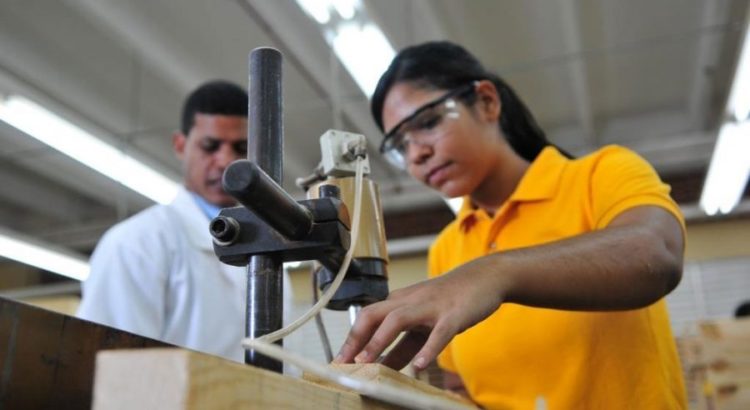
El objetivo del programa es incentivar y motivar a los alumnos para que se centren en las oportunidades de empleo y en las carreras de Ciencia, Tecnología, Ingeniería y Manufactura.
‘Como organización, estamos dedicados a hacer que la enseñanza con tecnología de clase mundial sea accesible para todos’, dijo Batseba Seifu, jefe de Relaciones Públicas del ministerio de Educación.
‘Nuestras creencias centrales son que la pobreza es inaceptable en el siglo XXI, la educación es la clave para aliviar ese mal y la tecnología tiene la capacidad de mejorar radicalmente la calidad de preparación del educando’, aseguró Seifu.
‘Este programa en Etiopía existe porque creemos que el mundo sería un mejor lugar si todos los jóvenes tuvieran el poder, mediante una educación innovadora, de crear la vida que quieren llevar sin importar su origen’, añadió el funcionario.
México/24 de abril de 2018/Fuente: http://amqueretaro.com
Dos terceras partes de niños de tres a cinco años de edad están inscritos en educación preescolar y en secundaria se alcanza una cobertura de 93%
La consejera del Instituto Nacional para la Evaluación de la Educación (INEE), Sylvia Schmelkes del Valle, informó que en México se ha avanzado en cobertura y disminución de brechas educativas en los últimos 50 años.
En un comunicado, indicó que dos terceras partes de niños de tres a cinco años de edad están inscritos en educación preescolar; prácticamente todos entre seis y 11 años están en la escuela, y en secundaria se alcanza ya una cobertura neta de 93 por ciento.
Además, las diferencias en cobertura educativa, índices de reprobación y en eficiencia terminal de grupos indígenas han disminuido de forma consistente, dijo.
“Con esos resultados, se avanza sustantivamente en hacer realidad el derecho a la educación, al menos en su dimensión de acceso a la misma”, añadió.
Sin embargo, mencionó que a pesar de estos avances, todavía no asisten a la escuela 5.5 millones de niños y jóvenes, de entre tres y 17 años.
Afirmó que el país no se ha logrado que todos los alumnos tengan las mismas oportunidades de aprendizaje en cada escuela, lo que muestra que se requieren políticas de equidad que establezcan un mismo gasto y dotación por alumno, dar más a quien más lo necesita y atender las zonas en mayor desventaja con programas intersectoriales.
También muestra la necesidad de incluir el enfoque intercultural en todo el sistema educativo y la formación pedagógica de todos los docentes, atendiendo de forma prioritaria a los que trabajan con los excluidos, consideró.
Al presentar la ponencia Justicia y equidad en educación, presentada en el IV Congreso Nacional de Educación 2018, Pablo Latapí, de la organización Genera Educación, informó que un gran número de alumnos no están aprendiendo lo que necesitan para enfrentarse a la sociedad actual y para vivir de forma digna, como consecuencia de la educación obligatoria.
Indicó que más de la mitad de los estudiantes de primaria, secundaria y media superior no logran los conocimientos y habilidades fundamentales, correspondientes a su nivel, en matemáticas, y que cerca de la mitad de ellos tampoco lo hacen en lenguaje y comunicación.
Dijo que el nivel de logro se correlaciona con la modalidad de la escuela a la que se asiste, el grado de marginación de la zona en donde se vive y la escolaridad de los padres de familia.
Vietnam – Australia/ 24 de abril de 2018/Fuente: https://es.vietnamplus.vn
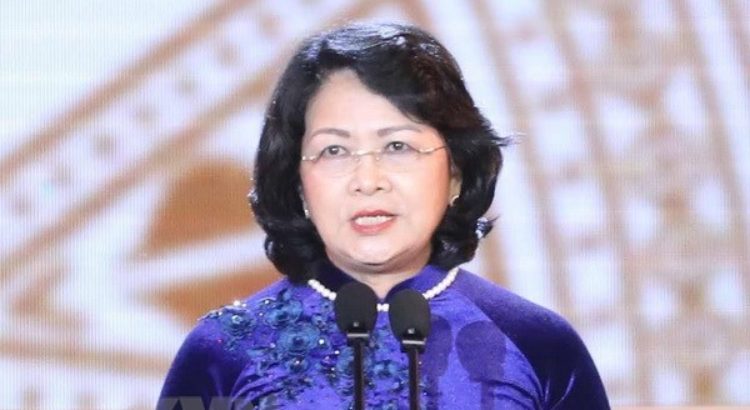
La vicepresidenta de Vietnam Dang Thi Ngoc Thinh afirmó hoy la disposición de su país de impulsar la cooperación con los centros de educación de Australia, particularmente el Instituto Real de Tecnología de Melbourne (RMIT, por sus siglas en inglés).
Ngoc Thinh, quien realiza un viaje de trabajo a Australia y asistirá a la Cumbre Global de Mujeres aquí, visitó la tercera universidad más antigua del estado de Victoria, donde están matriculados alrededor de mil vietnamitas en especialidades como comunicación, finanzas, administración de negocios, tecnología de construcción, transporte e ingeniería.
Al dialogar con dirigentes de la institución, la vicepresidenta subrayó que la cooperación en el sector de educación constituye un pilar de las relaciones entre las dos naciones, y afirmó que Vietnam reconoce los avances de a esa esfera de Australia.
Particularmente, expresó su esperanza de que RMIT, que cuenta en la actualidad con filiales en Hanoi y Ciudad Ho Chi Minh, amplíe sus actividades en el país indochino y fortalezca su conectividad con los centros educativos locales.
Durante una charla con estudiantes vietnamitas en esa institución, Ngoc Thinh destacó el crecimiento de los nexos entre ambas naciones y estimuló a los universitarios a aprovechar las condiciones creadas por RMIT para perfeccionar su calificación, al servicio del desarrollo de su tierra natal.
Este lunes la dirigente también visitó la granja de tomate de Thai Ngoc Nha -miembro de la Asociación de empresarios vietnamitas en Australia- quien aplicó con éxito la tecnología más avanzada de Países Bajos en el cultivo hidropónico sobre más de una hectárea, para generar cada día cuatro toneladas del producto.
Ngoc Thinh manifestó su deseo de que Ngoc Nha comparta sus experiencias con los empresarios connacionales, en aras de impulsar la aplicación de alta tecnología en la producción agrícola en Vietnam. – VNA
República Dominicana/ 24 de abril de 2018/Fuente: https://www.eldinero.com.do
Experto pide mejorar la calidad del sistema educativo para garantizar la empleabilidad de los jóvenes.
El coordinador regional de la iniciativa Nuevas Oportunidades de Empleo para los Jóvenes (NEO), Francisco Larra Bujalance, aseguró que para entender “las dificultades de inserción laboral de los jóvenes en República Dominicana, en particular de aquellos que pertenecen a grupos en situación de mayor vulnerabilidad, es indispensable conocer su perfil educativo al momento de ingresar al mercado de trabajo”.
Además de la calidad en la formación, afirma que los empleadores reclaman que los jóvenes “sin experiencia laboral refuercen las habilidades para la vida como: trabajar en equipo, seguir instrucciones o saber expresarse”.
Larra Bajulance explicó las acciones que desde NEO han implementado, a través de la Guía de estándares de calidad NEO, para que las instituciones que ofrecen servicios de formación y empleo puedan medir su calidad y pertinencia.
Con esta iniciativa, buscan verificar la relevancia del contenido de un curso de formación para el mercado de trabajo local; la efectividad de un sistema de seguimiento de jóvenes formados para analizar si se lograron insertar en el mercado de trabajo, y la validez de un modelo de orientación vocacional o un servicio de intermediación laboral.
“Es un producto muy novedoso en sí mismo, es una especie de norma ISO 9000 para servicios de formación y empleo enfocados en jóvenes, especialmente los más vulnerable”, afirmó. Este proyecto se desarrolla con la colaboración del Fondo Multilateral de Inversiones y la división de Mercados Laborales del Banco Interamericano de Desarrollo (BID) y la International Youth Foundation.
El represente de NEO en el país informó que se está “implementando una experiencia piloto con 28 instituciones públicas, privadas y de la sociedad civil dominicana que son pioneras en realizar un proceso de autoevaluación para desarrollar una cultura de mejora continua de sus servicios”.
Otra iniciativa, es la capacitación de 200 profesiones con el primer Diplomado en Intermediación Laboral, ofertado en la Pontificia Universidad Católica Madre y Maestra (PUCMM). Este programa tiene por objetivo mejorar la calidad de los servicios de formación, orientación vocacional e intermediación laboral.
México/ 24 de abril de 2018/por Laura Banda Campos/ Fuente: https://www.diariodequeretaro.com.mx
Los candidatos al Senado de la República de la coalición Por México al Frente, Guadalupe Murguía y Mauricio Kuri y el aspirante a la diputación federal Felipe Fernando Macías, se reunieron con docentes de universidades públicas y privadas con quienes se comprometieron a gestionar mayores recursos para la educación en Querétaro.
Reconocieron que sólo a través de la educación se abatirá el tema de pobreza y desigualdad que vive la entidad y el país en general.
Ante un centenar de maestros universitarios, coincidieron en que debe de haber mayores recursos para las universidades.
Debe de haber una visión de largo plazo en los presupuestos de las universidades a fin de que haya certeza y continuidad, resaltó Guadalupe Murguía Gutiérrez.
En este tenor, Mauricio Kuri González se comprometió a que de ganar en las elecciones del primero de julio, será un legislador que gestione mayores recursos a favor de la educación, en temas de investigación, desarrollo tecnológico además de becas y apoyos.
Ante los cuestionamientos de maestros, participantes en el encuentro de ir en busca de presupuestos multianuales para las casas de estudios, Guadalupe Murguía, dijo es una realidad que el trato que se le da a las universidades estatales en el presupuesto federal no es suficiente.
“Normalmente se apoya a las universidades estatales cuando tienen un problema grande, pero no hay un premio con mayor recurso a una universidad que tenga buenos niveles académicos, que se esfuerza en un saneamiento financiero, es decir que parece ser que se premia la ineficiencia, los problemas financieros para darle continuidad a estas instituciones y no aquellas que estén haciendo verdaderos esfuerzos para brindar una mejor educación, cuidar lo recursos, transparencia y dar cuentas”.
Dijo que si bien por parte de las autoridades hacendarias respecto al presupuesto multianual hasta este momento hay una resistencia total, lo cierto es que “tenemos que seguir insistiendo en que haya una visión de largo plazo en los presupuestos”.
España/24 de abril de 2018/Fuente: https://www.libremercado.com
El Ministerio de Educación ha publicado recientemente el anuario Las cifras de la educación en Españasobre el curso académico 2015-2016 que incluye un apartado con diversas estadísticas internacionales sobre los resultados de los alumnos, la tasa de abandono escolar o el gasto en Educación a partir de fuentes como la Asociación Internacional para la Evaluación del Rendimiento Educativo o Eurostat y que muestra un panorama con áreas importantes de mejora.
Abandono escolar y exceso de universitarios
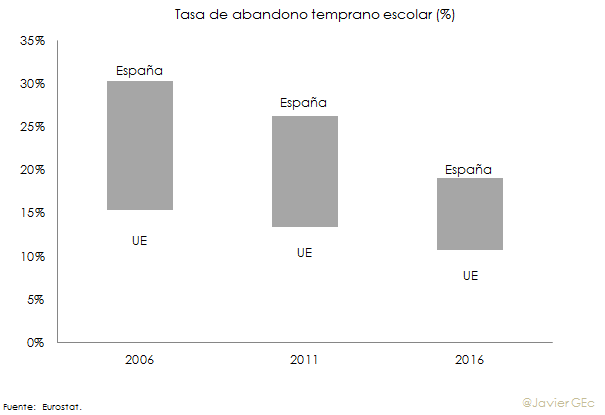
España ha sufrido históricamente una tasa de abandono -definida como la proporción de la población de 18 a 24 años que no ha completado la Educación Secundaria- superior a la media de la Unión Europea. Antes de la crisis afectaba al 30%, el doble que el promedio de la UE. Desde entonces, dicha tasa ha descendido en toda Europa, por lo que en 2016, si bien había descendido en España hasta el 19%, seguía siendo el doble del de la UE. Además, la posición relativa ha empeorado: mientras que en 2006 Portugal y Malta tenían una tasa superior, diez años después únicamente la segunda, y por unas décimas, estaba en una peor situación en 2016.
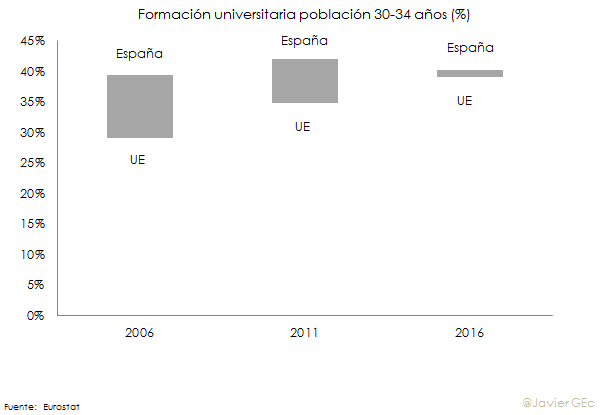
Otro indicador que la UE toma como referencia de los sistemas educativos es el porcentaje de población de 30 a 34 años con formación superior. En este aspecto, el sistema español obtiene un registro superior a la media, reduciéndose eso sí el diferencial favorable a España desde 10 puntos porcentuales en 2006 a casi converger en 2016 en el 40%.
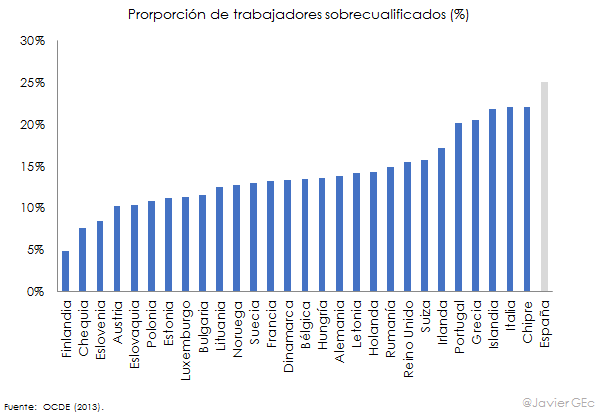
Esa convergencia se ha producido tras un continuo crecimiento en la UE y un estancamiento en España, que en su caso tiene sentido dado la elevada sobre cualificación del trabajador español, cuya tasa es la mayor de la OCDE. El hecho de que uno de cada cuatro trabajadores desempeñe una función por debajo de su formación puede ser una señal de que el número de universitarios es excesivo para la demanda del mercado laboral, por lo que, en ese contexto, una elevada ratio de población con formación superior puede no considerarse un factor positivo.
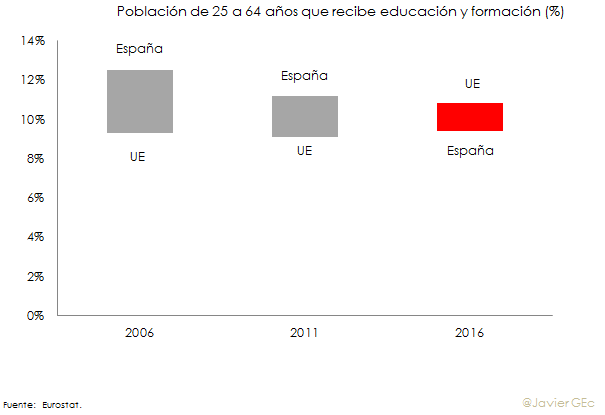
Por último, una tercera referencia es la población que recibe algún tipo de formación y, en este caso, los resultados tampoco invitan al optimismo, puesto que el diferencial favorable español se ha revertido recientemente.
Gasto relativamente bajo
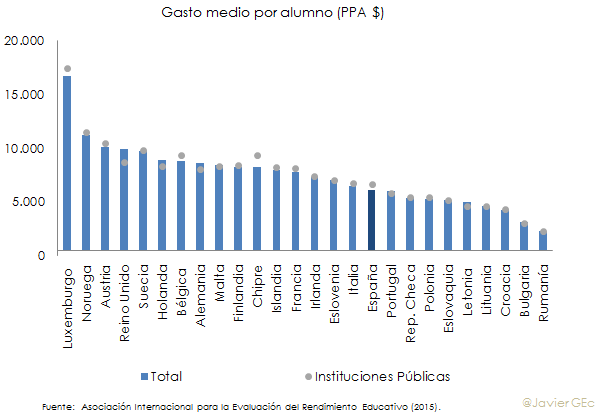
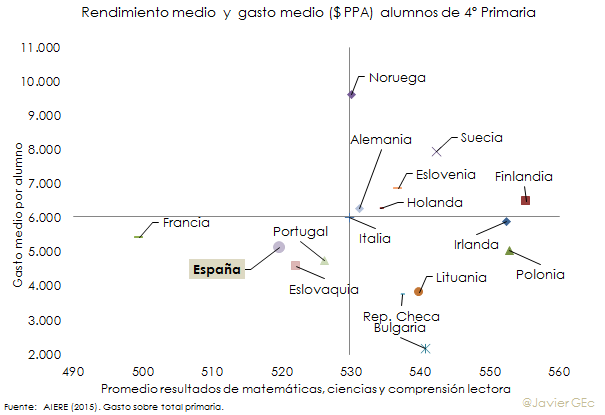
El gasto -aunque mejor habría que hablar de inversión por el retorno futuro que genera- por alumno medido en términos equivalentes de poder adquisitivo es de 6.173 euros y se sitúa en la parte medio-baja, por detrás de Italia (6.503 euros por alumno) y, especialmente, de Francia o Alemania (7.783 y 8.599 euros respectivamente). Con un nivel de gasto inferior se sitúan los países del Este de Europa y Portugal.
El bajo gasto en España se explica por el reducido gasto en las etapas previas a la Universidad, dado que en la formación de grado Superior se sitúa en la media (posición 14 de 28 países). Otro aspecto a destacar es que el gasto por alumno es mayor en la enseñanza pública que en la concertada privada, cuando lo normal en el resto de países es lo contrario, posiblemente debido, entre otros motivos, a que la concertada y privada está más extendida en España para la Educación Primaria y Secundaria.
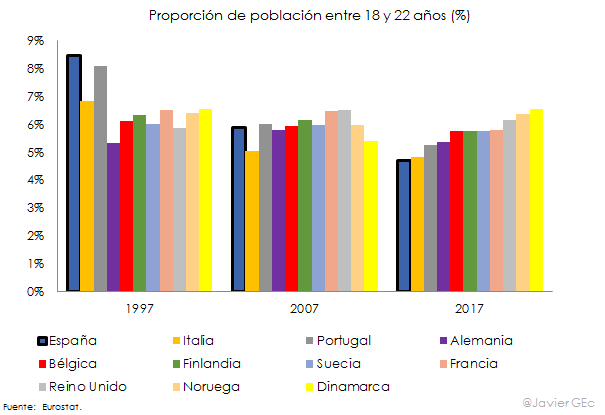
Otro parámetro de medición, como es el gasto público sobre el PIB, sí se sitúa entre los más bajos de la UE (posición 19 de 23 países), si bien, en este caso, hay que considerar el factor demográfico. En España, el peso de la población en edad de 18 a 22 años es el cuarto menor sobre 34 países europeos y, lo que es más preocupante, es un 45% menor al de hace 20 años: mientras en 1997 la proporción de población joven en España era superior a la de Reino Unido, Francia, Alemania o Suecia, en 2017 es inferior al de todos estos países.
Bajo rendimiento escolar
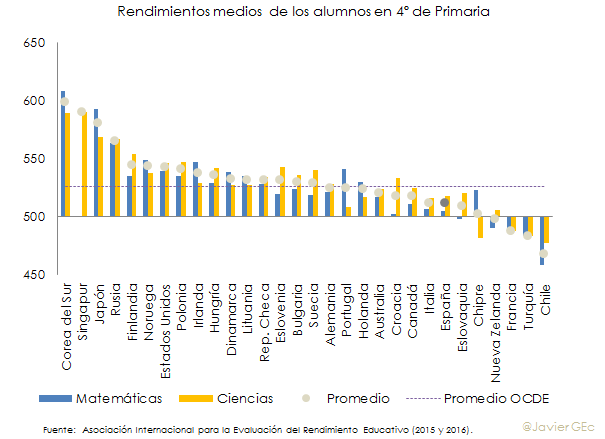
Mientras que existe un factor demográfico preocupante por el envejecimiento de la población, el rendimiento de los estudiantes tampoco ofrece noticias nada positivas. La IEA (Asociación Internacional para la Evaluación del Rendimiento Educativo) elabora los proyectos TIMSS en materia de números (Matemáticas y Ciencias) y PIRLS en comprensión lectora, que son, junto a PISA, los más conocidos de evaluación internacional de la calidad de los sistemas educativos.
Los resultados de los alumnos de 4º de primaria se encuentran por debajo del promedio de la OCDE, y sobre un total de 30 países los estudiantes españoles ocupan la posición 24. En esta clasificación, los mejores resultados son para tres países asiáticos -Corea del Sur, Singapur y Japón-, seguidos de Rusia, países nórdicos -Finlandia y Noruega- y Estados Unidos. Entre los países con peores resultados están Francia, Turquía y Chile.
Resultados muy mejorables
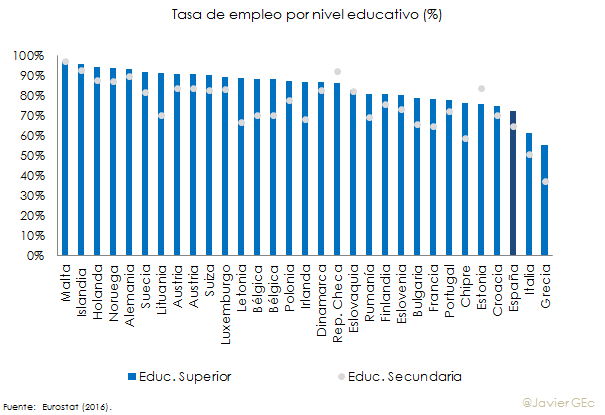
En el entorno europeo, el sistema educativo español se caracteriza por una tasa de abandono escolar muy alta, un rendimiento bajo de sus estudiantes, un gasto moderado y una elevada proporción de universitarios que provoca una frecuente sobre cualificación y una tasa de empleo entre los trabajadores con formación superior que únicamente es menor en Italia y Grecia.
En cuanto al gasto, que incluye tanto el público como el concertado y privado, podría incrementarse con el objetivo de mejorar el rendimiento y, de esta forma, situarse en el cuadrante superior derecho del siguiente gráfico junto a Suecia, Alemania u Holanda.
En definitiva, existen datos que muestran un sistema educativo en España que no funciona del todo bien. Una posible solución, aunque no la única, es un incremento del gasto por alumno, quizá no tanto en número de profesores, puesto que el promedio de alumnos por profesor en España es de 12,6 vs 14,2 en la OCDE, sino en sus medios, en las fases anteriores a la Educación Superior, así como un replanteamiento sobre cuál es la demanda del mercado laboral -estudiantes con una Formación Profesional más adaptada a las necesidades de las empresas antes que universitarios-.
Alemania/24 de abril de 2018/Fuente: https://www.lanacion.com.ar/
En Alemania, cuando los chicos y las chicas cumplen once años, el sistema educativo los divide en tres grupos de acuerdo a sus notas y de su velocidad de aprendizaje. Un grupo será el que continúe con su formación en el gymnasiumpara luego pasar al bachillerato y preparase para el acceso a la Universidad, mientras que el resto estudiará profesiones más técnicas.
Si bien no es un concepto nuevo (se implantó en 1969) y cada uno de los 16 estados federados alemanes tiene su propia normativa educativa, esta modalidad causa polémica ya que los chicos y las chicas son aún muy pequeños y eso marcará su futuro. Detlev Flottmann, director del colegio público Astrid Lindgren, en la localidad de Marienfeld, señaló al diario El País que «lo ideal sería que todos permaneciesen juntos hasta los 16 años para que los más inteligentes motivasen a los más rezagados. Pero los buenos se relajarían y no llegarían a los niveles de excelencia requeridos».
Según detalla, en función de las notas, los profesores generan un informe y ahí se determina si el estudiante continuará en el camino a la Universidad o irán a realschule o hauptschule, escuelas de nivel medio que finalizan con 16 años y en donde estudian profesiones más técnicas. Si bien dichos alumnado puede postularse para ingresar a la Universidad, lo pueden hacer recién a los 21 años en vez de a los 18.
Alemania tuvo una tasa de abandono escolar del 10,1% en 2015, inferior a la media europea que se situó en el 11% según datos de Eurostat. «No se puede afirmar que el sistema educativo alemán es eficiente por su tasa de abandono escolar, porque otros países como Polonia que emplean un modelo comprensivo, en el que los estudiantes permanecen juntos hasta los 16 años, tienen indicadores más bajos», señala Enric Prats, profesor del departamento de Teoría e Historia de la Educación de la Universidad de Barcelona.
Desde el punto de vista pedagógico, explica Prats, se desconoce cuál es la mejor edad para dividir a los niños en función de sus capacidades y del recorrido académico que encaja con cada uno.
El modelo, aunque criticado, en números es exitoso. ¿La clave? Su sistema de orientación académica que sabe identificar en qué tipo de estudios encaja cada alumno y alumna. «En España sería un fracaso absoluto. Es una cuestión de cultura: cuando tienen ocho años ya saben que se tomará la decisión y se preparan para ello», sostiene Prats y nombra al país hispano ya que tiene una tasa de abandono escolar del 20%.
Por su parte, Carmen Pellicer, presidenta de la Fundación Trilema -centrada en la difusión de nuevas pedagogías- y coautora del Libro Blanco de la Profesión Docente, considera que ese sistema condiciona las expectativas del alumnado y que puede mermar su autoestima. «Van a vivir durante toda su vida en una sociedad diversa y la escuela tiene que prepararles para ello, la desigualdad no puede ser el precio a pagar por la eficacia académica», sostiene.
Otra de las cifras que destacan el éxito de este sistema es la baja tasa de desempleo juvenil entre los menores de 25 años que es, en Alemania, de un 6,2% en 2017, mientras que, la española, está en 37,4%-. El Gobierno alemán señala que la Formación Profesional Dual es clave en la obtención de ese resultado.
OtrasVocesenEducacion.org existe gracias al esfuerzo voluntario e independiente de un pequeño grupo de docentes que decidimos soñar con un espacio abierto de intercambio y debate.
¡Ayúdanos a mantener abiertas las puertas de esta aula!



 Users Today : 172
 Total Users : 35491584
 Views Today : 297
 Total views : 3605415