Page 2656 of 6196
1 2.654 2.655 2.656 2.657 2.658 6.196

Pakistán: FC for promoting girls’ education


Por: tribune.com.pk/ 18-04-2018

QUETTA: Commandant Frontier Corps (FC) 77 Wing Colonel Hussein Ahmad has said that in this era of innovation and scientific development, acquiring education in line with modern technology is imperative for female youth of Balochistan.

“The Balochistan FC is taking concrete measures for provision of girls’ education in the province,” said Col Ahmad while speaking at the FC Girls Public School Harnai on Monday.

Different civil society members, political leaders, social workers and tribal elders were also present on this occasion. Col Ahmad was the chief guest.

Col Ahmad said, “The mother’s lap is considered to be the first step towards discipline and knowledge. It is a fact that a child’s education and training begins in the world as soon as it comes to the mother’s lap. An educated mother can raise a good and disciplined child.”

Col Ahmed said that along with the restoration of peace and security in the province, FC was taking potential steps for the establishment of modern educational institutions in far-flung and retrograde areas of the province and providing all basic educational facilities to the Baloch people.

He said that previously FC Boys Public School was established in the Harnai district, which was playing a vital role in educational development of the district.

He said, “Now the Balochistan IGFC has initiated establishment of FC Girls Public School in Harnai, keeping in mind customs and traditions of the region.”

He said that a separate building was constructed for the girls school, enabling girls to study in a peaceful environment without any confliction.

He said that women’s education was important for both the development of the country and the maintenance of a good domestic environment.

“By educating girls we are empowering women and providing them pace for their socioeconomic development.

*Fuente: https://tribune.com.pk/story/1687398/1-fc-promoting-girls-education/

Comparte este contenido:

La «agroecología», clave para el futuro de la humanidad según la FAO

Por: Rebelión/18-04-2018

La «agroecología», es decir el desarrollo agrícola ecológico y sostenible, es considerada clave para el futuro de la humanidad, que debe preservar el planeta y a la vez garantizar alimentos sanos para todos, según los expertos convocados esta semana en Roma por la FAO.

«Necesitamos promover un cambio transformador en la forma en que producimos y consumimos alimentos», aseguró el director general de la FAO, el brasileño José Graziano da Silva, al abrir el martes en la sede central del Organización de Naciones Unidas para el Desarrollo de la Agricultura y la Alimentación (FAO) el segundo simposio internacional sobre agroecología.

«Tenemos que proponer sistemas alimentarios sostenibles que ofrezcan alimentos saludables y nutritivos, y también preservar el medio ambiente», agregó.

El evento reúne hasta el 5 de abril a cerca de 400 especialistas en agroecología, académicos y representantes gubernamentales, de la sociedad civil y organismos de la ONU, para discutir sobre las políticas e iniciativas para incrementar ese nuevo concepto de producción agrícola.

«La estrategia de aumentar la producción a cualquier precio no ha sido suficiente para erradicar el hambre y además asistimos a una epidemia global de obesidad», reconoció da Silva.

La tendencia, sobre todo en algunas regiones del mundo, a aplicar conceptos ecológicos a la producción agrícola se ha convertido en un ejemplo a seguir, ya que ofrece soluciones viables y según cada caso.

Abandonar la agricultura intensiva

Para los expertos hay que abandonar la idea de que la producción de alimentos debe ser intensiva, con maquinarias y productos químicos y pasar a una agricultura sostenible, para lo cual la información y el conocimiento son fundamentales.

«Transformar nuestros sistemas alimentarios para que sean sostenibles significa realizar cambios tanto económicos, como sociales y culturales», advirtió Gilbert Houngbo, presidente del Fondo Internacional de Desarrollo Agrícola (FIDA), el llamado «banco» de Naciones Unidas para la agricultura, que apoya ese nuevo modelo de producción diversificada.

Entre los ejemplos citados por los expertos figura el de los campesinos chinos que utilizan hojas de moreras para alimentar a gusanos de seda cuyos desechos corporales se usan a su vez para los peces.

«Estamos en un momento decisivo en la historia de la humanidad y depende de nosotros tomar decisiones que serán esenciales para nuestro futuro colectivo», reconoció Stéphane Le Foll, exministro francés de Agricultura, al llamar a una «doble revolución verde», agrícola y ecológica.

Para ello es necesario implementar un diálogo mundial, que impulse el conocimiento y la innovación en sectores claves.

«Invertir en conocimiento e innovación es clave para aprovechar el potencial de la agroecología», reconocieron los expertos que esperan con ello abrir el camino para un desarrollo sostenible, que proteja la biodiversidad, contribuya a frenar el cambio climático y además produzca alimentos saludables y nutritivos que combaten el hambre y la malnutrición.

Una exposición en la sede de la FAO ilustra las mayores innovaciones hechas en el sector de la agroecología en todo el mundo.

Entre ellas, la creación de una plataforma en línea para compartir información ecológica así como la producción proveniente de campos agrícolas africanos a cargo de mujeres sin uso de herbicidas.

Unos 30 países, entre ellos la mayoría de los países de América Latina, junto con Corea del Sur, China, Costa de Marfil así como Austria, Alemania, Dinamarca, Francia, Suiza e Italia, han adoptado ya un marco legislativo o más bien una serie de reglamentos para facilitar el desarrollo de la agroecología.

«Hay mucho por hacer» para convencer a la mayoría de los agricultores convencionales de que el sistema es viable y rentable, comentó Le Foll.

«Algo está cambiando, debemos continuar la batalla», afirmó.

*Fuente: http://www.rebelion.org/noticia.php?id=240006&titular=la-%22agroecolog%EDa%22-clave-para-el-futuro-de-la-humanidad-seg%FAn-la-fao-


Comparte este contenido:

Germany: Governor remakes Ky. Board of Education

Germany/By: Ronnie Ellis CNHI Kentucky/ Source: http://www.dailyindependent.com

Hal Heiner, a charter school supporter and critic of the Kentucky Education Association, resigned Monday as Secretary of the Education and Workforce Development Cabinet to accept an appointment to the Kentucky Board of Education.

Gov. Matt Bevin also appointed his former communications director, Amanda Stamper, and five others to the board effectively remaking the board.

The appointments come after a tumultuous General Assembly which drew thousands of teachers to Frankfort protesting changes in their pension system and lobbying for more funding for public schools and a session during which the Republican-controlled legislature declined to provide funding for charter schools which they authorized last year.

Many teachers were still reeling Monday from comments Bevin made last Friday, saying children were likely — he used the word guarantee at one point — subjected to abuse and danger when some school systems closed to allow teachers to travel to Frankfort for the protests.

Stamper, who is now public relations director for Anthem, also commented on the school closings on Friday by posting on her Twitter account that: “Heavy on my heart are the children who’ve been left at home by themselves because their parents can’t afford the extra childcare expense due to school being cancelled.”

The appointments also come against the backdrop of a state audit of the school’s larges public school system in Jefferson County. That audit — prompted by reports of inappropriate restraints of some children and other problems — should be completed soon, according to Education Commissioner Stephen Pruitt.

Heiner has frequently criticized the Jefferson County system. He also was critical of KEA during the 2017 General Assembly during testimony before the education committee on behalf of charter school legislation.

“I am grateful for Sec. Heiner’s skilled and selfless leadership of the Education and Workforce Development Cabinet over these past two and a half years,” Bevin said in a press release announce Heiner’s resignation as cabinet secretary. “He has overseen a pivotal time of transformation as we strengthen Kentucky’s education system and modernize workforce training. I appreciate his willingness to continue serving Kentucky in a less time-intensive but very important role as a member of the state Board of Education. In his new role, I am confident he will work to ensure that every K-12 student in the commonwealth has the best possible opportunity for success.”

Heiner, a former member of the Louisville Metro Council, was one of four Republican contestants in the 2015 Republican gubernatorial primary won by Bevin who subsequently appointed him Secretary of the Education and Workforce Development Cabinet.

In the press release, Heiner said his time as cabinet secretary has been “the highlight of my career,” a time of progress in workforce readiness and education.

“There is, however, work still to be done, and I look forward to focusing my time and energy on students at the elementary and secondary levels as a member of the Board of Education,” Heiner said.

The seven new appointees join the 11-member Kentucky Board of Education who are appointed by the governor. The other five appointed Monday be Bevin are:

• Laura Timberlake of Ashland is chief operating officer for Big Sandy Distribution/Big Sandy Superstores, a furniture store chain. She serves on the boards of Ashland Alliance and Our Lady of Bellefonte Hospital and holds a bachelor’s degree in human resources from Park University.

• Kathy Gornik of Lexington is the retired co-founder and president of Thiel Audio and has served as chairwoman of the Consumer Electronics Association and on the board of the National Science and Technology Education Partnership. She holds a BA degree in education from the University of Dayton.

• Tracey Cusick of Union is mother to 10 children and has served as a parental advisor to the board with a background in home schooling, private and public schools. She holds an associate’s degree in applied science from State University of New York’s Health Science Center in Syracuse.

• Joe Papalia of Louisville is chief executive officer of Munich Welding and Deposition Technology Innovations. He has a bachelor’s degree in mechanical engineering from Massachusetts Institute of Technology and is a non-voting member of the Council on Postsecondary Education.

• Ben Cundiff of Cadiz was initially appointed by Bevin to an unexpired term. He is owner and operator of Cundiff Farms, an attorney and former chairman and CEO of Trigg County Famers Bank. He holds a degree in chemical engineering from Vanderbilt University.

Ronnie Ellis writes for CNHI News Service and is based in Frankfort. Reach him at rellis@cnhi.com. Follow him on Twitter @cnhifrankfort.

Source:

http://www.dailyindependent.com/news/governor-remakes-ky-board-of-education/article_61106b5c-41a0-11e8-8754-238b72440f96.html


Comparte este contenido:

Young Japanese turn to financial education to prepare for future of uncertain pensions

Por: www.japantimes.co.jp/ 18-04-2018

Education programs to help people make financial plans for their future are spreading as young Japanese face a bleak horizon of uncertain pension benefits.

Their worries are well-founded, given the aging population and low birthrate.

Japanese are often regarded as being reluctant about making investments, with cash and deposits accounting for more than half of about ¥1.8 quadrillion in financial assets held by households in Japan, according to the Financial Services Agency.

Meanwhile, the share of stocks and investment trusts, including those indirectly owned through insurance and pension programs, is only around 19 percent.

In the United States, where many people engage in asset-building activities, households have some 46 percent of financial assets in stocks and investment trusts.

“There is an unfavorable image about investing,” which is often considered identical to speculation in Japan, according to Hiroshi Nodomi, the senior general manager for financial literacy and education support at the Japan Securities Dealers Association.

But stock prices have maintained an upward trend in recent years, creating an environment that encourages a shift in popular interest from deposits and savings to investment.

A 2016 survey conducted by the Central Council for Financial Services Information, which is affiliated with the government and the Bank of Japan, found that 62.4 percent of people aged 18 and older believe it necessary to conduct financial literacy education at schools, while 12.9 percent said there is no such need.

The FSA is also promoting “long-term tsumitate (accumulation) and diversified investment,” an official said.

For example, the Tsumitate Nippon Individual Savings Account (NISA), a tax-exempt scheme for investment by individuals that was introduced in January, is designed for modest investing in financial instruments.

Amid the increasing awareness, Kyorin University in 2016 started teaching financial literacy — skills and knowledge allowing an individual to make effective decisions on financial resources — as a required course for first-year students in the social science department.

“I receive many after-class questions, suggesting that many students consider asset management a matter that concerns them,” said Nobuyuki Oda, a professor who, with two other teachers, holds about 30 classes per year on insurance, pensions, stocks and other financial issues.

During the first day in the class on financial education at Kyorin University, students are asked what kind of life they want to live. Students often recognize a wide gap between their envisioned lives and reality after they learn about lifetime income and other specific data, and become willing to acquire financial literacy, Oda said.

The university’s one-year financial education program is designed to give students knowledge required for the third, or lowest, grade of “certified skilled financial planning professional” credentials, a form of certification issued by the government.

Financial education should start in high school because it teaches “pension and other matters linked to our lives,” said Ayana Mineshima, who took the course at Kyorin University.

Under the government’s new curriculum guidelines for high school studies, financial education will be “considerably upgraded,” according to an official in the education ministry.

Expectations are increasing that the financial literacy of young people in Japan will improve in the coming years.

*Fuente: https://www.japantimes.co.jp/news/2018/04/17/business/young-japanese-turn-financial-education-prepare-future-uncertain-pensions/#.WtYpwSPhC_E

Comparte este contenido:

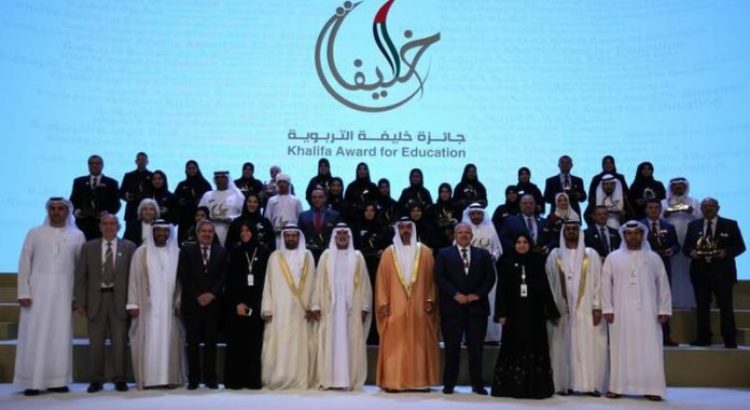
UAE: Sheikh Nahyan wins educational personality award

Por: khaleejtimes.com/ Ismail Sebugwaawo -Abu Dhabi /18-04-2018

This cycle of the awards included 39 winners, comprising of those from the UAE and the Arab region

 Sheikh Nahyan bin Mubarak Al Nahyan, Minister of Tolerance, won the Educational Personality of the Year at the Khalifa Award for Education.

He was recognised for his tireless efforts in promoting education and supporting learning activities across the UAE.

Sheikh Hamed bin Zayed Al Nahyan, chief of the Abu Dhabi Crown Prince’s Court and member of the Abu Dhabi Executive Council, honoured the winners of the Khalifa Award for Education 2017/2018 at a ceremony held at the Emirates Palace Hotel in Abu Dhabi on Monday.

This cycle of the awards included 39 winners, comprising of those from the UAE and the Arab region.

Hussein Al Hammad, Minister of Education, said at the award’s mission, supported by the President, Sheikh Khalifa bin Zayed Al Nahyan, is to be a leading national initiative to encourage people, who work in education, to innovate and develop education, in compliance with the challenges of the information age.

«Education has been so pivotal in the growth and development of the UAE and the nation’s leaders are keen in supporting the education sector for quality learning,» said Al Hammadi.

On receiving the award, Sheikh Nahyan said: «I am very proud to be selected for this coveted award, which is named after the President, Sheikh Khalifa bin Zayed Al Nahyan.»

Other awardees

Affaf Tobbala, 77, professor of mass communications at the Modern Sciences and Arts University in Egypt, won an award for her work on children’s literature including a book for young innovators. «I am happy that my work about authoring books for educating children has been recognised.»

Tobbala, who is also an editor, scriptwriter and art producer of a number of short documentaries and films, was recognised in the category of distinguished university professor in the field of scientific research.

Fatimah Saeed, 35, a kindergarten teacher at Al Woorod School in Ras Al Khaimah was recognised for her creativity in the classroom. «I am keen on doing research about the best and latest teaching methods and this helps me to develop good teaching skills and create good teaching materials for my pupils,» Saeed told Khaleej Times, aft-er getting her award.

«I love teaching small children and this award is a big honour for me. It will motivate me into doing more for the excellence of children.»

Saeed has represented the UAE in various international educational workshops. She said she is looking forward to presenting her suggestion to authorities about creating a ministry for children’s affairs.

Moza Mohammed, 35-year-old teacher at Hala School in Fujairah, received the award for her tireless work on Islamic strategic and creative projects. «I am so happy to receive this award. My research and creative projects in the religious field have helped improve children’s learning because they can easily get the concepts.»

Among the award categories included; educational innovation, promising teacher, distinguished university professor in the field of teaching, distinguished university professor in the field of scientific research, creative teacher, special needs, creativity in teaching Arabic and others.

ismail@khaleejtimes.com

*Fuente: https://www.khaleejtimes.com/nation/sheikh-nahyan-wins-educational-personality-award

Comparte este contenido:

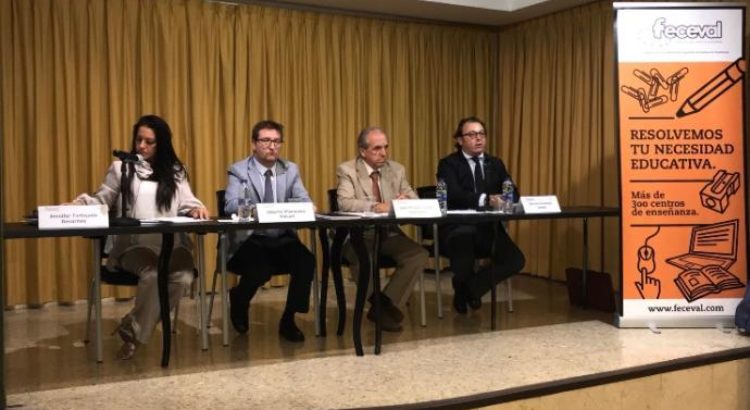
España: El nuevo presidente de Feceval llama al diálogo con Educación

España/17 de abril de 2018/Fuente: http://www.levante-emv.com

Alberto Villanueva critica que la educación infantil sufra un «acoso innecesario» – La patronal de la enseñanza privada defiende su «contrastada calidad» y avisa del peligro de desaparición de centros.

La reciente asamblea de la Federación de Centros de Enseñanza de València (Feceval), la principal patronal autonómica de la enseñanza privada y concertada, ha aupado como su nuevo presidente a Alberto Villanueva, que sucederá en el cargo a José Manuel Boquet, que ha estado al frente de la entidad en los últimos 10 años. «Considero que este momento es una oportunidad para defender el sector de la enseñanza privada, sostenida o no con fondos públicos, por la que he luchado siempre y lo seguiré haciendo», sostuvo Villanueva.

Este plan, tal como lo ha expuesto la propia conselleria, implica ofrecer el próximo curso más de 14.400 plazas para niños y niñas nacidos en 2016. La ampliación en 10.330 plazas más, multiplicando po 3,5 la oferta existente, llega en esencia a través de la suma al plan de las 485 aulas de 2 años de las 248 «escoletes» municipales de la Comunitat Valenciana. Cada unidad tiene una ratio máxima de 20 alumnos por aula, con lo que en total son 9.700 plazas.

En su discurso de toma de posesión de su cargo, Villanueva puso el acento en la situación en la que se encuentran los centros de Educación Infantil de primer ciclo, que en sus opinión, «están sufriendo un acoso innecesario» por parte de la Administración.

Para el nuevo presidente de Feceval el plan del departamento que dirige el conseller Vicent Marzà «pone en grave peligro la continuidad de muchos centros» de Educación Infantil. A este respecto, señaló que «nuestras escuelas infantiles han implantado un modelo educativo de contrastada calidad», ya que «allí donde han instalado su centro educativo, barrios, pueblos o ciudades siempre llevaron un plus de responsabilidad hacia los niños y sus familias en un tiempo en el que las autoridades educativas no miraban hacia esta etapa educativa».

El nuevo presidente se mostró, de esta manera, abierto al diálogo: «Desde esta federación continuaremos luchando, trabajando, con la Conselleria de Educación y con el resto de agentes sociales, para llegar a conseguir nuestros logros y demostrar nuestra fuerza y nuestra razón de ser».

En la asamblea celebrada el pasado jueves en el salón de actos de La Petxina de València, Feceval aprobó por mayoría un documento que avanza la presentación de alegaciones al borrador del Bono Infantil en la franja de 2 años. Feceval denuncia, de hecho, lo que ve como «claros indicios discriminatorios» en el borrador de la Conselleria de Educación, y concluye Feceval que «la Administración educativa nos tiene acostumbrados a una planificvación unilateral y sin diálogo».

Finalmente, el nuevo Comité Ejecutivo de Feceval queda constituido por Ana Marín Medina, vicepresidenta; Josefina Grao Guillen, secretaria general; Domingo González Sanchis, tesorero; y Regina Fernández Canet, Vicente Rodríguez Bon y Pedro Ramírez Sánchez como nuevos vocales.

Fuente de la Noticia:
http://www.levante-emv.com/comunitat-valenciana/2018/04/15/nuevo-presidente-feceval-llama-dialogo/1704363.html
Comparte este contenido:

UK university strikes called off after UCU members accept pension proposals

UK/April 17, 2018/By: Colin Drury/ Source: https://www.independent.co.uk

Students welcome decision to avoid walkout.

Further strikes at UK universities are to be called off after members of the University and College Union (UCU) voted to accept proposals aimed at resolving a dispute over pensions.

Thousands of staff – including lecturers, academics and researchers – were were due to walk out next week in protest at plans which they said would reduce their retirement pots by £10,000 a year. Fourteen days of strikes have already hit 65 universities since 22 February.

But members of the UCU voted to call off more action after bosses at Universities UK agreed a joint panel would be set up to reassess the pension issue.

The news was welcomed by the National Union of Students (NUS), with estimates suggesting up to 1 million students were affected by previous walkouts.

Shakira Martin, NUS president, said: “We are pleased to see a deal has been reached. Students have wholeheartedly chosen to support their staff during this dispute, and we have seen inspiring displays of solidarity on campuses across the UK since day one.”

The strikes were called after Universities UK revealed plans to change the Universities Superannuation Scheme from a defined benefit scheme – which gives a guaranteed retirement income – to a defined contribution scheme, which would make pensions vulnerable to changes in the stock market. Universities UK had said the alterations would help make up a £6bn deficit.

But, with the proposals now dropped, members of the UCU voted almost two to one to stop more walkouts and instead reopen negotiations. There was a record 63.5 per cent turn out, the union said.

Sally Hunt, UCU general secretary, said: “The union has come a very long way since January when it seemed that the employers’ proposals for a defined contribution pension were to be imposed.

“Now we have agreement to move forward jointly, looking again at the USS valuation alongside a commitment from the employers to a guaranteed, defined benefit scheme.”

And she added: “We hope this important agreement will hearten workers across the UK fighting to defend their pension rights and was won through the amazing strike action of UCU members.

“UCU has more work to do to ensure that the agreement delivers the security in retirement that university staff deserve.”

Universities UK said the decision to appoint an expert panel and suspend industrial action would reassure students that summer exams and graduations would not be affected by industrial action.

But a spokesperson warned: “It is important that interested parties engage with the panel and remain open-minded about its possible findings.

“Working in partnership with UCU, we will now appoint a jointly agreed chair for the panel as soon as possible before developing its terms of reference, order of work and timescales.”

Source:

https://www.independent.co.uk/news/education/education-news/uk-university-strikes-called-off-uss-ucu-accept-pension-proposals-a8303086.html

Comparte este contenido:
Page 2656 of 6196
1 2.654 2.655 2.656 2.657 2.658 6.196