Page 3021 of 6181
1 3.019 3.020 3.021 3.022 3.023 6.181

España: “La educación aporta más cosas que la cualificación para un puesto de trabajo”

España/28 de noviembre de 2017/Fuente: http://m.noticiasdenavarra.com

Un sociólogo de la UPNA rechaza restringir el acceso universitario para generar sólo los titulados que el mercado puede absorber.

No son pocas las voces que afirman que en España hay demasiados titulados universitarios y que sería conveniente equilibrar la balanza entre la Formación Profesional y la Universidad, como ocurre en muchos países de Europa.

Y es que hay un alto porcentaje de egresados a los que les cuesta mucho conseguir un empleo o que, pese a encontrar trabajo, éste no se corresponde con sus estudios o es de menor cualificación. ¿Hay que reorientar a los jóvenes hacia la Formación Profesional superior en lugar de animarles a estudiar una carrera universitaria? ¿Hay que pensar sólo en la empleabilidad?

Esta disyuntiva, en opinión del sociólogo y profesor de la Universidad Pública de Navarra, José Mª Pérez Agote, “es poco equitativa” si se plantea, tal y como propone algunas voces, restringiendo el acceso a la Universidad para producir sólo los titulados que el mercado puede absorber. “Cuanto más restringes el acceso universitario menos oportunidades van a tener los hijos de familias trabajadoras”, afirma este experto, quien reconoce que esta visión “es un poco ineficiente en términos exclusivamente económicos” pero la educación, añade, “aporta más cosas que la cualificación para un puesto de trabajo. En mi opinión mientras el país pueda pagarlo hay que dar la oportunidad a todas las personas de enriquecerse ”.

Este experto asegura que el informe de la OCDE sólo hace referencia al ajuste entre el mercado laboral y el sistema universitario. “No se plantea ningún otro indicador sobre la utilidad que tiene la enseñanza universitaria excepto la empleabilidad”, afirma Pérez Agote para añadir que “sin embargo se observan los indicadores de la Unión Europea para el Horizonte 2020 aparecen otras cuestiones como la equidad, la cohesión social o la ciudadanía activa. No sólo la empleabilidad”. Y es que, tal y como señala este experto en sociología de la educación, “si sólo se examina el valor de la Universidad desde el punto de vista de la empleabilidad de los egresados entonces hay un problema pero, ¿es lo único que aporta?”.

Tras reconocer que, en la actualidad, las políticas educativas son cada vez más economicistas, Pérez Agote cree que estamos ante un “cruce de caminos” en el que hay que salvaguardar, por un lado, “la eficiencia económica del sistema”, pero sin olvidar que “cada vez somos una sociedad más opulenta, y que la educación aporta más cosas que la cualificación para un puesto de trabajo”.

ESTATUS SOCIAL

Otra cuestión que plantea este experto es que la formación está estrechamente relacionada con la movilidad social, ascendente y descendente. “Cuando somos niños y adolescentes nuestro estatus social y económico es el de nuestras familias. El de adultos viene condicionado con lo que hemos heredado y lo que conseguimos a partir de la formación recibida, que nos permite acceder a un tipo u otro de empleo que, a su vez, conlleva un prestigio social y una remuneración más elevada”, explica Perez Agote, quien considera que “se da por supuesto que la universidad te va a dar más posibilidades, un estatus más elevado en el futuro que una carrera profesional fomentada sobre la Formación Profesional cuyos puestos de trabajo van a ser de clase trabajadora aunque cualificada”.

En cuanto a los motivos por los que en Europa los porcentajes entre alumnado universitario y de FP están más equilibrados, este experto asegura que debería tener más información, como por ejemplo, saber cómo son los procesos de selección del alumnado por itinerarios, a qué edad se empieza a dividir al alumnado según su rendimiento, si son más exigentes a la hora de entrar en la universidad… “Lo que sé seguro que no influye es el coste de las carreras porque en España no es de los países más baratos de Europa”, afirma.

Otra cuestión que podría influir, en opinión de este experto, es que en España se sigue viendo la FP “como una enseñanza de segunda” a pesar de que en los años 90 estas enseñanzas mejoraron en calidad. “Tiene menos prestigio social y las familias creen que es mejor la universidad”, concluye. – M.O.J.

ABANDONO ESCOLAR

¿MEJORA POR LA CRISIS O SE CONSOLIDA?

Juventud. El sociólogo Pérez Agote asegura que la formación de los jóvenes de 18 a 25 años y de 25 y 34 años (edad que analiza el informe de la OCDE) “ha evolucionado positivamente aunque estemos peor que en Europa”. En su opinión “hay que ver de dónde venimos, y en los años 90 la tasa de fracaso escolar era del 30-33% y ahora es del 20%”. Ligado a este concepto está el abandono escolar (jóvenes de 18 a 25 años que no han completado la educación secundaria postobligatoria), que ha mejorado durante la crisis. “Muchos siguen escolarizados al no haber trabajo. Habrá que ver si la mejora es transitoria o se consolida pese a la recuperación”.


Información de la Foto:

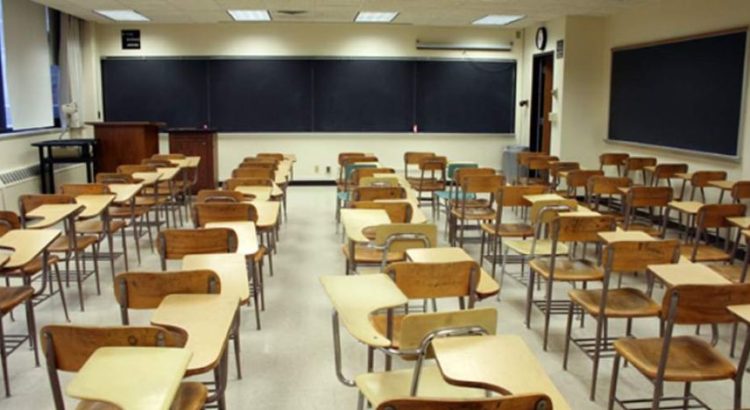
Estudiantes universitarios charlan en el campus. (Foto: Javier Bergasa)

Fuente de la Noticia:

http://m.noticiasdenavarra.com/2017/11/26/sociedad/navarra/la-educacion-aporta-mas-cosas-que-la-cualificacion-para-un-puesto-de-trabajo

Comparte este contenido:

Ghana: Education experts call for partnership between industry and academia

Ghana/November 28, 2017/ Source: http://citifmonline.com

Experts in education at a high level panel discussion organised by the Association of African Universities (AAU), have called for strong partnership between industry and academia, to accelerate Ghana’s socioeconomic development.

The panelists said such a collaboration will enable universities get funding from industry, whereas industry gets the needed research from universities.

They expressed the hope that a strong collaboration between industry and universities, will also help prepare graduates adequately with the requisite skills for employment by industry.

The panelists included Professor Nicholas N. N. Nsowah-Nuamah, President, Regent University College of Science and Technology; Dr Eva Esther Shalin, the Associate Dean, Students Affairs and Collaboration, BlueCrest University College (GH) Limited; Mr Rizwan Ahmad, the Director, IPMC; and Mrs Eva Hazel, the Director of Tertiary Education, Ministry of Education.

The panel discussion forms part of the AAU week celebration on the theme “AAU@50: Achievements and Prospects for Sustainable Development in Africa”.

It was attended by participants from the Regent University College of Science and Technology, Bluecrest University College, University of Energy and Natural Resources and Koforidua Technical University.

Others are University of Professional Studies, Accra, Knutsford University College, IMPC, Accra Institute of Technology, Ghana Institute of Journalism, Anglican University College of Technology and Wisconsin International University College.

Prof Nsowah-Nuamah said in designing the syllabus for various schools, there is the need for universities to find out from industries whether the programmes they intend to run are in line with their needs.

He said in addition, the inputs of other stakeholders should be sought before the new programmes take off.

He urged the Government to come out with a new policy that would make industrial attachment compulsory for all tertiary education students; stating that at the moment, it was only the Technical Universities and the Polytechnics which were implementing such a policy.

Dr. Shalin urged industries to open their doors to the universities; adding that universities must be innovative and proactive.

She advised students to have mentors and be mindful that research was about global networking.

Mr. Ahmad called for a holistic approach in addressing the needs of education and industry.

Mrs. Hazel said the Ministry of Education was developing a new policy that would ensure that the syllabi of educational institutions, right from the kindergarten to the tertiary level, are related to industry.

She said the syllabi of educational institutions would be structured in such way that it would give people employable skills.

She said the Ministry would be coming out with a new policy to ensure that students actually benefit from industrial attachments.

Professor Etienne Ehouan Ehile, the Secretary-General of the AAU, reiterated the AAU’s commitment to partner with the right institutions in improving the quality of higher education in Africa, as demanded by its mandate.

“The AUU is further playing a key role in promoting and sustaining best practices across higher education institutions on the continent,” he said.

Source:

http://citifmonline.com/2017/11/26/education-experts-call-for-partnership-between-industry-and-academia/

Comparte este contenido:

India can learn from China, Turkey how to infuse technology in education: Intel

India- China – Turkey/November 28, 2017/By:  IANS/Source: http://www.financialexpress.com

Technology can do wonders in providing a great educational experience and create a pool of talent for these disrupting technologies.

With emerging technologies like Artificial Intelligence (AI), Internet of Things (IoT) and Big Data Analytics knocking at India’s doors, the country needs to sow the learning seeds early — in the classroom — and China and Turkey can show the way, top global Intel executives have said. The world has realised what is coming its way in the next 10-20 years and has already begun modernising classrooms at schools to prepare a technology-ready workforce. “The Chinese and Turkish authorities have given kids IoT-enabled devices in millions of schools. Every student has a device connected to an intelligent whiteboard at the front of the classroom. There are teacher-controlled devices too. The curriculum is designed for that kind of environment. This is the future of education,” Joe D. Jensen, Vice President, Internet of Things (IoT) Group, and General Manager, Retail Solutions Division at Intel, told IANS. “Intel has installed 400,000 IoT-enabled connected devices for schools in Turkey, a million-and-a half in Chinese schools and another million to go in China in the next two years,” Jensen informed.

Technology can do wonders in providing a great educational experience and create a pool of talent for these disrupting technologies. “In China, the newest innovation is that there are eight video cameras and a series of microphones in a classroom at certain private schools and colleges. The videos of the classroom activities are recorded daily. Parents can later log on and see the student-teacher interaction,” Jensen told IANS. For Lisa Davis, Vice President and General Manager, IT Transformation for Enterprise and Government at Intel, while India is at the cusp of dramatic changes in delivering next-generation education, it is also set to learn new ways to infuse technology in many other sectors. “Not just education, we are looking at the financial services, transportation, retail and health-care sectors too in India. The next big wave is coming in video surveillance and the security sector, and our teams are engaged with the stakeholders in the country,” Davis told IANS.

Intel has also pushed the envelope towards creating a modern workforce in India. In April this year, Intel made a commitment to democratise AI in the country by training 15,000 developers and engage with not just businesses but also the government and academia to enable the adoption of AI. Intel India has trained 9,500 developers, students and professors in the past six months. The chip giant has collaborated with 40 academic institutions that are using the technology for scientific research and 50 public and private organisations across e-commerce, health-care, technology, defence, and banking and financial services.

Intel India has also launched an initiative to strengthen the use of technology in the country’s education ecosystem. It is collaborating with leading device manufacturers, education digital content publishers and education solution providers to build end-to-end solutions that promote the use of technology. The company will then help deploy management solutions for schools, classrooms, content and learning, and also manage student information systems. There is an Intel India Maker Lab in Bengaluru to drive the innovation ecosystem in the country. The lab offers access to start-ups of hardware and software development kits, reference boards, design collaterals, test and debugging equipment. It provides technical support for design, development and testing products. “India is at the cusp of a technology boom, but needs training and teaching right from the beginning to prepare a future digital workforce,” Davis stressed.

Source:

http://www.financialexpress.com/industry/technology/india-can-learn-from-china-turkey-how-to-infuse-technology-in-education-intel/948478/

Comparte este contenido:

Vietnam: Irish and VN higher education institutions promote co-operation

Vietnam/November 28, 2017/Source: http://english.vietnamnet.vn

Irish Aid will grant 578,000 euros (US$685,000 ) to support ten partnerships between Irish and Vietnamese higher education institutions on teaching and research co-operation during 2017-2018.

The partnerships were launched on Thursday under the Việt Nam-Ireland Bilateral Education Exchange (VIBE) Programme which aims to encourage co-operation and research links between higher education and research institutions of the two contries.

Under the programme, during 2016-2017, five such partnerships were granted about 250,000 euros.

Minister of Education and Training Phùng Xuân Nhạ and Minister of Education and Skills of Ireland Richard Bruton who is on a working visit to Việt Nam from November 23-25, attended the launch ceremony.

They also discussed potential co-operation opportunities in education between the two countries, especially those relating to higher education.

Nhạ said that Việt Nam wanted to change the structure of its economy from labour-intensive to a service-based one, so it was in need of high quality human resources.

However, Nhạ admitted that Việt Nam’s higher education quality was not good enough and its students faced difficulties after graduating from universities because of a lack of skills desired by employers.

Assistance from other countries with high-quality higher education like Ireland would be very useful to Việt Nam, he said.

Minister Richard Bruton said that Irish higher education institutions are strong in fields such as technology and applied research, implying that Ireland and Việt Nam had huge potential co-operation.

Over the last ten years, as many as 219 Vietnamese students have been offered scholarships from the Government of Ireland Scholarship Programme. In Ireland, Vietnamese students usually study Finance and Economics, Pharmaceuticals, Management, Engineering, Marketing and Computer and Data Science.

Before his visit to Việt Nam, he said: “Increasing international cooperation is a key objective under my Action Plan for Education, which aims to make Ireland’s education and training service the best in Europe within a decade, and our International Education Strategy. I am looking forward to increasing opportunities for Irish students to travel to Vietnamese and South Korean higher level institutions, by strengthening and building partnerships with institutions in these countries. By building these bilateral relationships, we can ensure mutual benefit for both the institutions and students alike.” — VNS

Source:

http://english.vietnamnet.vn/fms/education/190916/irish-and-vn-higher-education-institutions-promote-co-operation.html

Comparte este contenido:

EEUU: UPTB looks to infuse rigor into College of Education

EEUU/November 28, 2017/By: By Ruth Campbell rcampbell@oaoa.com/ Source: http://www.oaoa.com

President wants to grow the university, provide more hands-on opportunities.

The University of Texas of the Permian Basin officials say they are reorganizing the College of Education to ensure that prekindergarten through 12th grade activities are connected to the rigor of the university and the academic programs it offers.

This would include creating linkages between the College of Education, Childcare Center, UTPB STEM Academy and Ector County Independent School District’s Falcon Early College High School. STEM stands for science, technology, engineering and math.

President Sandra Woodley also is formulating plans to promote future growth at UTPB.

Dean of the College of Education Selina Mireles said the core of what the university does is academics and research, so the goal is to bring all these aspects together to prompt more faculty involvement and research. Mireles said this will also strengthen these parts of the university and local education system.

In separate interviews, Mireles and Woodley said First 5 Permian Basin, which offered a variety of services for new mothers and fathers in their child’s first years of life, still exists and still offers the same programs, but are being infused with a more academic component.

First 5 currently falls under Roy Hurst, associate dean of the College of Education.

She added that the College of Education also is examining its mission statement and how it can better tailor what it does to the community.

Mireles said energy, agriculture and water are important to West Texas and the College of Education is looking at the path from theoretical academic concepts to work and careers.

She noted that the STEM Academy was part of the College of Education, under its charter, and programs that were part of First 5 still exist, but plans are to make them more research based.

Woodley said she thinks the First 5 programs were working fine, but her observation was that they could be enhanced if they were directly connected to the academic rigor of the programs in the College of Education.

“The programs were good and they can be better and we hope to make them better by this alignment with the College of Education. … We have an early childhood program in the College of Education that there was no connection to. The faculty and the students in that program and the work of … First 5 benefit from being together. That’s the reason I made the decision to align them,” Woodley said.

Tara Wilson, an assistant professor of reading at UTPB, is going for a grant related to incarcerated fathers reading to their children through video and studying the educational impact that may have, Mireles said. She said the grant has been submitted and is pending.

“It’s starting to look at the efficacy and the impact on their social-emotional learning and we will look at reading scores, of course. It’s not the end-all of interventions, but these are the kinds of investigations that we’re starting and that we’re utilizing our current structure to springboard and continue,” Mireles said.

The journey to future teacher’s early childhood certificates and continuous credentialing and experiences also are being examined.

For instance, if someone wants to become a math or science teacher, they could gain experience by tutoring at the local schools, attain tutoring certification and start building their portfolio that way, Mireles said.

The college also is looking for opportunities for externships and internships for students to equip them with the practical knowledge and experience they’ll need in the future.

“Putting those field-based experiences up front is really critical …,” Mireles said.

Starting young students on a path toward a future career also is part of the discussions, for example, having kindergarteners learn how to test the acidity of a lemon.

“… We’re working on grade appropriateness and linkages to the TEKS (Texas Essential Knowledge and Skills),” Mireles said.

Future Falcon Leaders in Teacher Education, UTPB’s program for high school students interested in becoming teachers, also will still go on.

“We’re soliciting more grants to support some of these things so that they continue and we look at them from different avenues,” Mireles said. “We’re looking at what does it mean to be teacher- ready? Does it mean you have content expertise, pedagogical knowledge? What does that mean? What does that profile look like, so developing an instrument that could contribute to the research knowledge and actually piloting that and looking at that, that’s another area where we’re interjecting that research piece.”

The Early Childhood Coalition also still exists and they are examining the same community issues. “What (existed) is still in motion. What we’re doing now is just adding and strengthening the pieces that were part of the program to begin with,” Mireles said.

Something Mireles said that Woodley has brought to the table is the idea of stackable credentials for people who have gone through different pathways and experiences to get to a four-year degree.

Another aspect is a desire to investigate going from at-risk to no-risk students.

For at-risk students, Mireles said the college would try to figure out how to make at-risk students less at risk and address soft skills such as communication, reading and writing.

“We’re not quite sure what that’s going to look like when all said and done, but know it has to be addressed,” Mireles said.

Woodley said she thinks the College of Education has a chance to ramp up the number of teachers it trains.

“There’s a shortage of teachers here and teachers that stay. We want to be part of that solution and we want the teachers that we graduate to know about and to be involved in developing these innovations around teaching and learning. The First 5 and the STEM Academy and the early college high school give us an opportunity to do that through the College of Education,” Woodley said.

Woodley said she and Mireles have both talked to ECISD Superintendent Tom Crowe and are collaborating on several ideas with a view to improving education in Odessa and Midland.

“I think the university being the university, we have a responsibility here. We need to look to that k-12 pipeline. … We have a self interest in that, as well, in the sense that we have STEM programs that we need students to choose and be successful at like engineering, math and nursing. The STEM Academy, the teacher training and all the things that we’re doing around that provide us with the ability to grow our own pipeline here, too, to make sure that these students are academically well prepared to be successful in our STEM programs,” Woodley said.

Woodley also has been working on a strategic plan for UTPB. The planning process for that will be kicked off more formally in the next several weeks, she said.

“We’ll look at key themes and some goals and objectives. I’ll be spending time with key stakeholder groups. I have already talked to students and will be spending more time with them, time with faculty, the leadership here and our professional staff but also we’ll be spending time with external stakeholders and looking for what are those key contributions that University of Texas of the Permian Basin needs to make to have the maximum impact to this region,” Woodley said.

Woodley said UTPB has a lot to be proud of and a lot of “really great programs.”

“We’re a growing institution. We’ve got new state-of-the-art facilities coming on board. I think growing our student population will be really important and we’re paying close attention to continuing to have very high quality programs for the students when they are here,” Woodley said.

Another key thing is greater connectivity between what is done on the UTPB campus and what is needed in the economy, particularly with the university’s business and industry partners.

“For example, in the engineering programs we want to connect with those that are hiring our graduates to make sure that they’re getting what they need. We want more internships and coops from those companies so that our students can get more hands-on learning experience in those business and industries here in the Basin,” Woodley said.

“We think those are things that will set our students apart, provide an area of expertise that not all students have in engineering programs. We have so much going on in the Permian Basin around the energy industry and that concentration of work that’s going on in the companies that do business here, that’s not true everywhere. I think the ability for our students to connect with that hands-on learning experience here in the Basin will be something that we’ll be spending a lot of time working on … over the coming years,” she added.

Mireles will be working with people in the university’s Student Success centers to see how the university can improve the way UTPB handles developmental math, Woodley said.

“I want to make sure that our engineering programs, our nursing programs and our science programs (are) … able to reach students who otherwise wouldn’t have the opportunity. We’re going to have to be the best at developmental math and those kinds of things if we’re going to grow that pipeline. That’s part of what’s exciting about having the First 5 and the STEM charter and the early college high school because that’s your training ground for trying out some of these new things” and perfecting math teaching techniques for those who may not be as good at it, Woodley said.

Source:

http://www.oaoa.com/community/article_f8212f16-d168-11e7-8c01-ff23d55a00e7.html

Comparte este contenido:

Japan: Education: Best investment for our future

Japan/November 28, 2017/By:  IKUKO TSUBOYA-NEWELL/ Source: https://www.japantimes.co.jp

Among the 34 nations in the Organisation for Economic Co-operation and Development, Japan has always been among the bottom three when it comes to public spending on education as a percentage of GDP. In 2011, Japan was the worst at 3.8 percent, followed by Slovakia and Italy — against the OECD average of 5.6 percent. Countries that come on top in this category are Denmark, Norway and New Zealand.

Of course, to be fair, the ratio of student numbers to the total population needs to be considered with respect to this data. Japan, in fact, has the second-lowest ratio at 15.5 percent, sitting between Chile, the lowest, and Italy. The OECD average is 22.2 percent.

Looking at the ratio of spending on education to total general government spending, the OECD average is 12.9 percent. Again Japan ranks low, coming in second to last at 9.1 percent, just above Italy at 8.6 percent. At the top is New Zealand with 21.6 percent.

In summary, Japan does not invest heavily in education. This creates financial pressure on households as they try to provide fundamental education to their children, particularly in the underfunded areas of preschool and higher education. Data show that when it comes to household expenditures for pre-elementary school education, the top five spenders are Japan, Australia, South Korea, the United States and Spain. For higher education they are Chile, South Korea, the United Kingdom, Japan and the U.S.

In all of these countries, a large number of households bear heavy financial burden for these two important stages of education.

In the case of Japan, we see that annual government spending per head is quite unevenly distributed — people in their 70s and 80s receive far more, for example, than newborns to 16-year-olds because of the heavy cost of welfare programs such as pensions, medical services and nursing care.

While this lopsided distribution has long been the case, the government is now seeking to shift resources more toward the younger generation. It plans to provide more public funding for preschool education, and Prime Minister Shinzo Abe’s Liberal Democratic Party is considering the introduction of a scheme to ease household costs for higher education similar to the HECS-HELP system in Australia, in which the government issues an interest-free loan on behalf of students to pay tuition fees directly to higher education providers. This loan is subject to indexation but charges no real interest. Students begin to repay the debt once their income is above a minimum threshold.

These are good initiatives, but are they enough? There are other factors that should be considered as well, and one very important issue is class size and diversity of students per class. As far as elementary schools are concerned, countries with the largest class sizes are Chile, with an average of 30.4 students, followed by Japan with 27.9 and Israel with 27.3. The OECD average is 21.2. For junior high schools, the average in South Korea is 34.0, while in Japan it is 32.7 and for Israel it is 28.7. The OECD average is 23.3 students per class.

It must be noted that the numbers for Japan include schools in severely depopulated areas. There can actually be up to 40 students per class in any public school (except for the first grade, where the maximum is set at 35). This means populated areas generally have classes with far more students than the average. This is particularly problematic because these are the areas in Japan where students are more likely to be socio-economically and academically at risk.

In Japan, there are 631,000 students identified as having developmental disabilities in the public elementary and junior high schools. This translates to 2.5 students out of the maximum class size of 40. One out of seven students comes from a household of relative poverty, or 5.7 out of every 40. Among public elementary school students, 13.4 percent, or 5.3 out of every 40, say classes are too easy and boring. Another 15 percent, or six out of every 40, say classes are too difficult and that they have difficulty understanding the content. There are 80,119 non-Japanese students in public or state schools, from elementary to high school, who need intensive Japanese lessons. This is a distribution of 0.3 students per class.

Overall, there is likely to be a considerable range of students in any one large class. Surely this must impact the likelihood of effective teaching.

Reducing class size to increase student achievement has been debated and analyzed for several decades. Smaller class sizes are generally welcomed for allowing teachers more time to spend with each student and less time on classroom management. This means the teacher can provide better teaching, tailored to each student’s individual needs, to ensure maximum success. In this respect, smaller class sizes may be viewed as an indicator of the quality of a school system.

An influential and credible study of the effects of reduced class size is the Student Teacher Achievement Ratio (STAR) study carried out in the U.S. state of Tennessee in the late 1980s. In this study, students and teachers were randomly assigned either to a small class, with an average of 15 students, or a regular class, with an average of 22 students. It was found that a smaller class size increased student achievement by an amount equivalent to about three additional months of schooling over four years. A long-term follow-up survey of participants into adulthood showed that they were about 2 percent more likely to be enrolled in college at the age of 20.

International studies also provide evidence of the positive effect of class-size reduction. Israel, just like Japan, has a limit of 40 students. Researchers there found positive effects from smaller fourth- and fifth-grade classes.

Why then, do we in Japan, continue to maintain a class size limit of 40 when in the U.S., U.K., France and Germany the limit is around 30? Of course, to some extent the answer is related to decisions about the careful use of taxpayer money and considerations that it be used most productively without undue waste. Perhaps, because of historical and cultural factors, it has been easier to have larger classes in Japan. For instance, a Confucian heritage means that teachers are highly respected and easily obeyed, and thus less affected by larger class sizes.

The OECD points out that data from the Program for International Student Assessment (PISA) suggests that high-performing education systems, such as those in Japan and South Korea, prioritize the quality of teachers rather than class size. Catherine Rampell, writing in the The New York Times, also points out that South Korea and Japan, which have some of the highest-achieving students in the world, also have the biggest class sizes. Both of these reports are right and we should be proud of our achievement and the high quality of our teachers. However, even with our Confucian roots, it is growing ever more difficult for a single teacher to meet students’ individual needs in today’s educational contexts.

As far as I am concerned, I would support having my tax contributions spent on providing better educational environments suited to student needs. Why not start by aiming to achieve the OECD’s average number of students per class by limiting class size to 30 students? I do not think I am alone in thinking that one of the best investments for the future is to invest in our children’s education.

Ikuko Tsuboya-Newell is the founder and chair of Tokyo International School. She serves as the International Baccalaureate Japan ambassador and as adviser on revitalization of education commissioned by the Ministry of Education, Culture, Sports, Science and Technology.

Source:

https://www.japantimes.co.jp/opinion/2017/11/26/commentary/japan-commentary/education-best-investment-future/#.Whuxz0qWY2w

Comparte este contenido:

China construye biblioteca con 1.2 millones de libros en su interior

China/28 de Noviembre 2017/Fuente: diariocorreo

Como sacado de una película futurista, China tiene la primera biblioteca realizada con más de cinco ambientes dedicados a la lectura con 1.2 millones de libros. La compañía holandesa MVRDV, junto con el Instituto de Planificación y Diseño Urbano de Tianjin (TUPDI), han diseñado la futurista Biblioteca Tianjin Binhai como parte de proyecto que proporcione un distrito cultural para la ciudad.

El edificio no actua solo como centro educativo, sino también como un puente entre el parque que la rodea y el distrito cultura.

La planta subterránea es un conjunto de espacios para el almacenamiento de libros y un gran archivo, mientras que en la planta baja están las áreas de lectura, con accesos fáciles pensados para niños y ancianos.

Como se recuerda, China es considerado uno de los países con mayor potencia económica pero también lo es en la educación.

Fuente de la noticia: 

https://diariocorreo.pe/cultura/china-construye-biblioteca-con-12-millones-de-libros-788403/

Fuente de la imagen: 

https://diariocorreo.pe/media/thumbs/uploads/img/2017/11/25/china-construye-biblioteca-con-1-2-millones-de-l

Comparte este contenido:
Page 3021 of 6181
1 3.019 3.020 3.021 3.022 3.023 6.181