Page 3551 of 6193
1 3.549 3.550 3.551 3.552 3.553 6.193

Calidad educativa frente al fracaso escolar en Benín

Un proyecto de un beninés formado en España impulsa la enseñanza de excelencia frente al hacinamiento y la falta de profesores y recursos en un barrio de la ciudad de Parakou

Africa/Parakou (Benín)/Elpais

Calles polvorientas, falta de alcantarillado, decenas de motos, niños jugando o mujeres vendiendo casi cualquier cosa conforman el paisaje de Tibona, un barrio joven situado a ocho kilómetros del centro de Parakou, la ciudad más importante del norte de Benín. La falta de infraestructuras y urbanización se hace patente una vez que se accede a él. La zona está poblada en su mayoría por personas venidas de otras partes del país en busca de trabajo. No son de la etnia bariba dominante en la región, lo que provoca la marginalidad, que se acentúa con la ausencia de centros educativos.

 El gran número de jóvenes sentado bajo cualquier atisbo de sombra es indicativo de la alta tasa de desempleo juvenil que reina en el área. Ni siquiera ahora, que las fábricas de algodón de la ciudad están trabajando día y noche para empaquetar todo el producto que les llega en plena campaña de recolección, se les ofrece una oportunidad. Solo les queda el trapicheo y la economía informal para sobrevivir. El abandono que sufre la población de esta zona se nota de manera muy especial en la educación. El hacinamiento, la falta de profesores y de facilidades de los pocos colegios que existen en Tibona son, entre otras muchas razones, causa directa del alto índice de fracaso escolar que se registra en el barrio.

Estas son las principales razones que impulsaron a la Fundación Vie pour Tous (Vida para Todos) a ofrecer oportunidades a los menores de Tibona con la apertura de centros escolares. Tras realizar en 2011 una escuela infantil con la colaboración de Caja Segovia y edificar en 2013 un centro de primaria con la aportación de la Fundación Salvador Soler, en septiembre de 2016, se ha abierto la sección de secundaria. El edificio, separado unos cuantos metros de los anteriores, todavía está en construcción. Los trabajos que han permitido acomodar a los alumnos de los tres primeros años de este ciclo se han desarrollado por la herencia dejada a la fundación de un sacerdote de la diócesis de Bilbao.

No es el primer centro escolar que esta organización abre en un lugar remoto. Más al norte, en Kandi, una zona de fuerte influencia musulmana, han sido pioneros en establecer un internado y clases mixtas; y llevan siete años seguidos siendo la mejor escuela de todo el país, según la inspección del Ministerio de Educación en Parakou. La clave está en la calidad de la educación ofrecida, comenta el beninés Theodore Soume, fundador de Vie pour Tous, que ostenta un MBA por la Escuela Europea de Negocios de Bilbao, un doctorado en teología dogmática por la Universidad Pontificia de Salamanca, un máster en cooperación por la Universidad del País Vasco y que escribe su tesis doctoral sobre la cultura como base del desarrollo humano integral.

En Benín se han conseguido avances considerables en la matriculación de menores en la enseñanza primaria desde que se adoptaran los Objetivos de Desarrollo del Milenio (ODM), en el año 2000, pero mantener a los alumnos en la escuela sigue siendo un reto importante, según se  vislumbra del Programa de Naciones Unidas para el Desarrollo (PNUD). A pesar de ello, se ha logrado que el 55,8% de los inscritos terminen la primaria, lo que supone en sí un gran logro.

Sin embargo, preocupa la gran cantidad de jóvenes de entre 15 y 24 años que están fuera del sistema educativo. Entre 2010 y 2014 se consiguió reducir la tasa en 13 puntos, pero todavía son muchos, especialmente chicas, los que no reciben educación. Esto tiene como consecuencia directa que más de la mitad de las mujeres del país (56.1%) no sepa leer ni escribir. Entre los hombres jóvenes la tasa también es alta, aunque algo menor, el 40,1%.  El Gobierno de Benín se esfuerza para escolarizar a su población. El 18,2% está en edad de acudir a la escuela, y la mayoría vive en zonas rurales, por lo que la tarea no es fácil. «El ejecutivo responde de manera adecuada a este reto destinando recursos a la educación, según afirma el PNUD», que reasalta que el país está a punto de alcanzar la paridad en educación primaria.

«Yo he aprendido que la práctica religiosa no define la calidad de una persona”, dice el fundador de Vie pour tous

Sin embargo, Benín debe poner más esfuerzo en el nivel pre-primario y en la alfabetización de adultos, reconoce el PNUD. Además, la gran asignatura pendiente del país, en materia de educación, es su calidad. Por ejemplo, Benín tiene una ratio media de 48 estudiantes por profesor, que en zonas rurales es superada con bastante frecuencia y muchos maestros carecen además de la formación adecuada. El material escolar es también difícil de adquirir por la mayoría de las familias, por o que el organismo internacional pide que se dediquen más esfuerzos a la formación profesional y a becas para ayudar a todos los alumnos a continuar sus estudios.

“El gobierno beninés no prioriza la educación, muy al contrario, está poniendo todo su esfuerzo en industrializar el país descuidando todos los demás sectores”, afirma Soume aún con los datos oficiales. Un ejemplo es la campaña contra los pequeños negocios gracias a los que viven cientos de familias. Estos son la base de la llamada economía informal. Se han destruido quioskos, tenderetes, puestos y tiendas que se levantaban en las aceras de las ciudades y al borde de las carreteras de entrada y salida de las grandes urbes y en los que se ofrecía de todo: comida, bebidas, recambios para motos y otros vehículos… y mucho combustible traído clandestinamente desde la vecina Nigeria.

Ahora, un reguero de escombros sustituye al bullicio que hasta hace poco caracterizaba a esos lugares. La excusa utilizada por el ejecutivo es que hay que modernizar el país y esa faceta anárquica que ofrecían esos mercadillos no cuadra con la nueva imagen. Además, como estas edificaciones suelen estar construidas sobre suelo público, los dueños no son indemnizados, por lo que a los políticos les sale casi gratis la operación. Una consecuencia directa de esta medida es que muchas personas se han quedado sin ingresos y eso ha repercutido en una retirada masiva de los hijos de los colegios. “Puede que lo que las autoridades están haciendo sea legal, pero no es humano”, concluye el fundador de la entidad.

Escudo con iglesia y mezquita

En el colegio del barrio Tibona se buscan fórmulas para dar respuesta a estos problemas. Al entrar en él llama la atención el orden y la limpieza. Las aulas no tienen más de 15 alumnos, existen ayudas para evitar el abandono escolar y la fundación corre con el gasto de los sueldos de los profesores. La tolerancia y la convivencia entre alumnos de distintas etnias y religiones son algunos de los valores difundidos. De hecho, el escudo de la fundación luce una iglesia y una mezquita. “Nadie puede perder su cultura, su tradición y sus creencias por venir a la escuela”, afirma Soume.

Creó la Fundación Vie pour Tous en 2005 basándose en su experiencia personal. “Soy de una familia muy rica en confesiones religiosas”, comenta el beninés en un perfecto castellano. “Mi padre viene de una familia que es cuidadora de nuestros ancestros y mi madre es musulmana. Todos hemos vivido unidos respetándonos unos a otros. Yo he aprendido que la práctica religiosa no define la calidad de una persona”, reflexiona. La primera escuela se abrió en Kandi, luego vino N’Dali donde la fundación tiene varias bibliotecas infantiles, centros de formación para mujeres y una escuela de soldadura. Y finalmente llegó a Parakou, donde gestiona cuatro escuelas y un centro de formación para mujeres.

«Si se ofrecen oportunidades, todos los niños,  de forma independiente  a su condición social, pueden conseguir las mismas metas», dice Soume

En la clase del último curso de primaria de Tibona impera un silencio absoluto. Todos los alumnos están concentrados sobre sus cuadernos resolviendo los ejercicios de matemáticas que el profesor ha escrito en la pizarra. Soume comenta que este grupo recibe especial atención por parte de los profesores porque tiene que hacer el examen para acceder a la escuela secundaria y quieren conseguir los mejores resultados del país para demostrar que si se ofrecen oportunidades, todos los niños, de forma independiente a su condición social, pueden conseguir las mismas metas. Es la falta de recursos y el abandono de las instituciones lo que condena a los menores de las zonas menos privilegiadas al fracaso.

“No basta con dar a los niños la oportunidad de estudiar, hay que ofrecerles la mejor educación posible para ayudarles a progresar en la vida”, comenta Mindo Gore, director de la escuela primaria. La fundación, entre otras cosas, ha optado por los idiomas. La educación es en francés, pero se estudia también castellano e inglés y son pioneros en la enseñanza en bariba (idioma predominante en la zona).

En la clase de segundo de primaria una niña recita un poema delante de todos sus compañeros y a mitad del mismo se le une un chico que continúa con las rimas. En esta clase hay total paridad de género, pero recorriendo las aulas se puede apreciar como el número de chicas disminuye a medida que se sube de curso. Por eso la fundación hace un gran esfuerzo para evitar que las niñas abandonen el colegio.
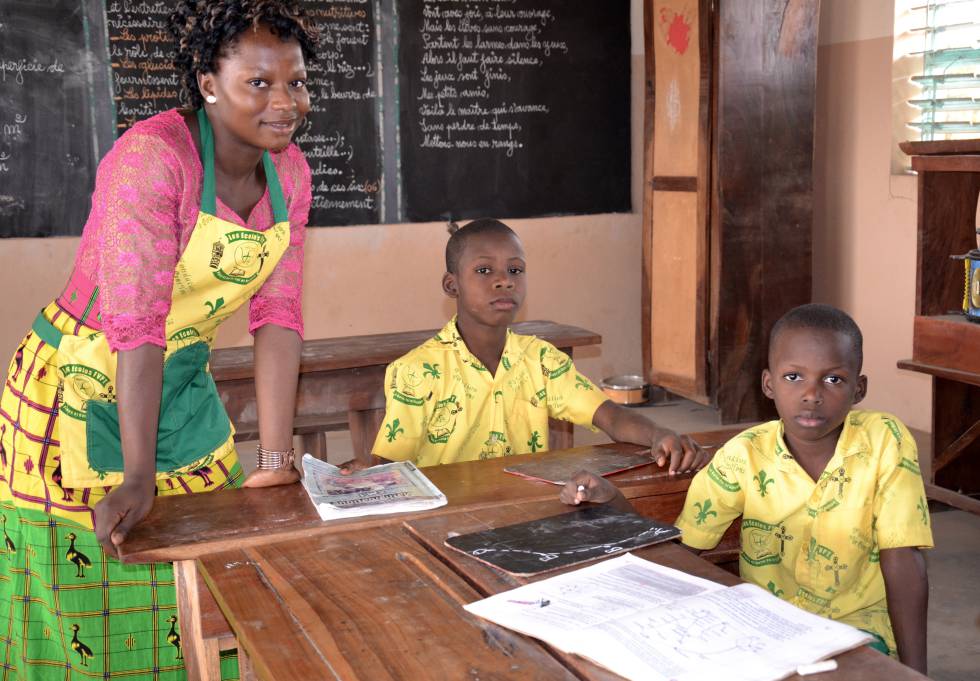
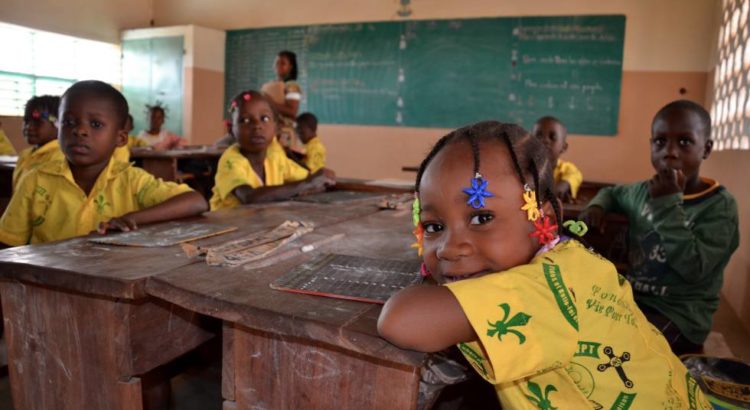
Una profesora supervisa los trabajos de sus alumnos en una clase de primaria.
Una profesora supervisa los trabajos de sus alumnos en una clase de primaria. CH. C.
 Trabajan con las familias para concienciar de la importancia de educar a las hijas igual que a los hijos. “Muchos padres retiran a sus hijas para que trabajen en casa o para casarlas”, explica Pascualine Abo, directora de la fundación. Cuando eso sucede los trabajadores sociales de la organización visitan a la familia y hablan con ella. “En algún caso, incluso, hemos tenido que dar a los padres una pequeña ayuda para que no pongan a la niña a trabajar y ellas puedan continuar con sus estudios”, dice Abo.

Pero para no tener que depender siempre de fuera, la fundación ha empezado un proceso de autofinanciación con la puesta en marcha de varios negocios como venta de agua o el alquiler de algunos de los coches que les han donado. Pequeñas ayudas para ofrecer una educación de alta calidad a los más vulnerables.“Para poder ofrecer calidad hay que invertir en ella y pagar bien a los maestros”, afirma Soume.

Fuente: https://elpais.com/elpais/2017/07/14/planeta_futuro/1500022755_679026.html

Comparte este contenido:

Holanda: «Let boys be boys» campaign sparks heated debate

Europa/Holanda/dutchnews

Resumen: Una campaña para «permitir que los niños sean niños», lanzada por una agencia de publicidad independiente y «social» el martes, ha generado comentarios considerables y las premisas de la campaña han sido cuestionadas tanto en los periódicos como en las redes sociales. La agencia de campañas Sire afirma que los niños aprenden experimentando y tomando riesgos, pero que este tipo de comportamiento es cada vez más desalentado, lo que conduce a la frustración ya la caída de los resultados escolares. El video está dirigido a iniciar una discusión entre padres y educadores acerca de dar a los niños el espacio que necesitan para desarrollarse, dice la agencia. El NRC   recorre los locales uno por uno y le pregunta al profesor de diversidad en la crianza y el desarrollo Judi Mesman (no uno de los cinco expertos consultados por Sire) si los niños realmente aprenden de experimentar y asumir riesgos si los educadores son más difíciles en los niños que en las niñas Y si esto dificulta su desarrollo. «Los niños experimentan más que las niñas y muestran comportamientos arriesgados, pero si esto realmente les enseña algo no está claro. No conozco ninguna investigación que demuestre que los chicos aprenden más si los tratan de cierta manera y las niñas en otro «, dijo a la NRC.

Read more at DutchNews.nl: ‘Let boys be boys’ campaign sparks heated debate http://www.dutchnews.nl/news/archives/2017/07/let-boys-be-boys-campaign-sparks-heated-debate/


A campaign to ‘allow boys to be boys’, launched by an independent and ‘social’ advertising agency on Tuesday, has generated considerable comment and the campaign’s premises have been questioned both in the papers and on social media.

The Sire campaigning agency claims boys ‘learn by experimenting and taking risks’, but that this type of behaviour is increasingly discouraged which leads to frustration and falling school results. The video is aimed at starting a discussion among parents and educators about giving boys the space they need to develop, the agency says.

The NRC  walks through the premises one by one and asked professor of diversity in parenting and development Judi Mesman (not one of the five experts consulted by Sire) if boys do indeed learn from experimenting and taking risks, if educators are harder on boys than girls and if this hampers their development.

‘Boys do experiment more than girls and show risky behaviour but whether this actually teaches them anything is not clear. I know of no research that proves that boys learn more if you treat them in a certain way and girls in another,’ she told the NRC.

School

Boys are being told off in class more often, the Sire campaign claims, and this is holding them back. But that does not fit in with the strict order that reigned in classrooms in the 1950s when boys were doing fine, Mesman says.

‘Perhaps in order to do well in school it is necessary to sit still and listen. It may be that the more democratic climate which allows boys more space is now affecting them. But this is just a supposition, just as Sire’s premise is a supposition,’ she said.

Mesman objects to the campaign because it is based on shaky scientific ground and because it confirms a stereotypical view of boys and girls.

Stereotypes

‘I don’t like the stereotypical message that children’s gender determines their preferences when there is much more variation between children of the same sex than between the sexes as a whole. And children pick up this message and start to behave accordingly,’ the NRC quotes her as saying.

Elsewhere in the NRC journalist Colin van Heezik questions the ideology of Sire, a collective of ad makers who tackle social issues. One of their best-known ads is ‘Who is that man who comes to carve the meat on Sundays?’ about the (lack of) involvement of dads in family life.

‘It seems to me we should consider the future of this independent propaganda channel,’ he writes.

Nuisances

In the Volkskrant  professor of neuropsychology Jelle Jolles, who supports the campaign, says educators should ‘stop looking at boys as nuisances. There are indications that this affects their confidence, concentration and development,’ he told the paper.

He does think, however, that the Sire video is too simplistic. Girls should be allowed to mess about just as much as boys and ‘it is important that boys learn skills such as communication and insight in their own actions, which girls are quicker to do.’

Social media Reactions on Twitter are also highly critical with reactions ranging from ‘Sire is a collective of marketeers. Of course they want people to behave in a stereotypical way’, to ‘Sire campaign makes sense. Completely feminised educational system leads to falling results.’

Read more at DutchNews.nl: ‘Let boys be boys’ campaign sparks heated debate http://www.dutchnews.nl/news/archives/2017/07/let-boys-be-boys-campaign-sparks-heated-debate/

Comparte este contenido:

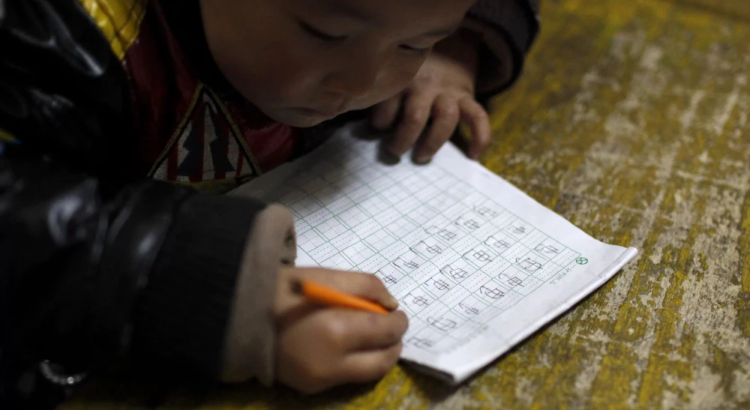
Education Charity in China Struggles to Soar Amid Rural Brain Drain

China/Agosto de 2017/Fuente: The News Lens

Resumen:  Las lágrimas brotaron en los ojos de Luo Maoling mientras se dirigía a la pequeña multitud en la ceremonia de clausura del campamento de verano. Más de 70 donantes de largo plazo de la Fundación Adream habían llegado a la ciudad de Barkam, sus familias en remolque, para participar en el campamento de cuatro días. Ahora, el jefe adjunto de la autoridad educativa local, Luo ha sido testigo del arco de la fundación caritativa desde su programa piloto lanzado en la ciudad de alrededor de 55.000 hace una década. «Me avergonzaba de que no hubiéramos puesto en práctica bien el programa», dijo. «Podríamos haber hecho un mejor trabajo haciéndonos dignos de todas estas donaciones». Barkam está situado en las montañas de la provincia de Sichuan en el suroeste de China. Su población es predominantemente poblada por tibetanos, aunque los residentes están bastante dispersos: La ciudad ocupa un área aproximadamente del tamaño de Shanghai, pero alberga alrededor del 0,2 por ciento de la población de la ciudad más grande. Cuando un terremoto de 8.0 grados de magnitud devastó la provincia en 2008, Barkam fue sobre todo salvado. De los estimados 87.600 que murieron, el terremoto sólo cobró ocho vidas de Barkam, que estaba a sólo unas horas de viaje desde el epicentro, pero protegido por una cresta de la montaña. Tres meses antes del terremoto, Adream abrió su primer «Centro de los Sueños», una especie de sala de lectura de alta tecnología para los jóvenes estudiantes de Barkam.

Tears welled up in Luo Maoling’s eyes as he addressed the small crowd at the summer camp’s closing ceremony. Over 70 longtime donors to the Adream Foundation had come to the city of Barkam, their families in tow, to participate in the four-day camp. Now the deputy head of the local education authority, Luo has witnessed the charitable foundation’s arc since its pilot program launched in the city of around 55,000 a decade ago.

“I was ashamed that we had not implemented the program well,” he said. “We could have done a better job of making ourselves worthy of all these donations.”

Barkam is nestled in the mountains of Sichuan province in southwestern China. It’s predominantly populated by Tibetans, though residents are fairly spread out: The city occupies an area roughly the size of Shanghai but is home to about 0.2 percent of the larger city’s population. When an 8.0-magnitude earthquake devastated the province in 2008, Barkam was mostly spared. Of the estimated 87,600 who died, the quake claimed just eight lives from Barkam, which was only a few hours’ drive from the epicenter but protected by a mountain ridge. Three months before the earthquake, Adream opened its first “Dream Center,” a sort of high-tech reading room for Barkam’s young students.

A decade later, you can still see signs of the earthquake in the mountains lining the raging, lead-colored rivers that snake through that part of the province. Since its founding, Adream has expanded from a single pilot project to 15 schools in the area and countless others across China, contributing the equivalent of 3 million yuan (US$446,000) in educational resources — classroom materials, teacher trainings, and online tech support — to the local school system. From its humble beginnings in Barkam, Adream has grown into one of the most influential education charities in China, serving 3 million underprivileged students with 2,600 Dream Centers, mostly in China’s oft-neglected heartland. Though the idea for Adream was conceived in Hong Kong and they are now headquartered in Shanghai, Barkam was ground zero.

In contrast to the philanthropic group’s rampant growth, Barkam itself has stayed more or less the same since the first Dream Center opened. Special instructors at the city’s partner schools are still holding Dream Classes for faculty, as they have for years. Serving as a sort of testing ground for creative teaching methods, these classes are a far cry from the rote learning methodology embraced by many schools in China. Yet because teachers are so often evaluated according to their students’ test scores, many of the Dream Teachers were given the cold shoulder by their peers, who saw little incentive to introduce change in their classrooms. And even if the faculty had been more receptive to the Dream Teachers, having just one per school was rarely enough to make a splash.

Beginning in 2015, Deputy Director Luo managed to transfer the few talented Dream Teachers working in the countryside into schools in downtown Barkam — up the professional ranks, for all intents and purposes. But by that time, most of Barkam’s Dream Teachers had become discouraged and quit. Only 13 remained. The high dropout rate made the program difficult to sustain in Barkam: Despite being Adream’s home base, the city was no beacon of success for other Dream programs to emulate.

Barkam No. 2 Middle School, the program’s flagship institution, saw seven Dream Teachers resign and its Dream Center nearly dismantled. Today, however, the school has a rising star in 26-year-old Cai Wenjun. Expressive, upbeat, and charming, Cai is often invited to travel to far-flung places such as Xinjiang and Inner Mongolia to train cohorts of China’s 60,000 Dream Teachers, who come from all walks of life and from partner schools all over the country.

China is a notoriously top-down society. For nonprofit and for-profit businesses alike, relationships with the authorities can spell doom or boom — and Adream has understood this since day one. The fact that Barkam’s Party secretary, Zhang Peiyun, and the head of the local education bureau, Liu Rongxin, attended the summer camp’s opening and closing ceremonies, respectively, speaks volumes about the guanxi — interpersonal relationships that facilitate business and other dealings — that the foundation has managed to cultivate in official circles. In fact, the charity counts at least one local government among its donors: In exchange for financial support from Zunyi, a city in southwestern China’s Guizhou province, the organization will introduce Dream Centers at all of the city’s public schools.

With nearly 3,000 Dream Centers now open to students, Adream is hungry for funding to cover both its current overhead costs and its plans for future expansion. So far, increased attention from government bodies has proved beneficial in helping the organization gain funding and an official vote of confidence — along with all the public credibility and influence that carries.

Out in the audience at the camp’s closing ceremony, Zhuokeji Primary School’s headmaster, Yan Bo, is less concerned about Dream Teachers needing training and Dream Centers needing refurbishing. Instead, he’s worried about the very survival of his school. It’s well-run and has a beautiful campus, but at 10 kilometers from the city center, it has trouble retaining students, who are leaving in droves for more central alternatives believed to have more resources at their disposal.

Urbanization is taking a mounting toll on rural schools, and Barkam is no exception. Zhuokeji Primary School was designed for 300 students but currently accommodates just 80. Sure to accelerate what until now has been a steady decline is the fact that just 4 kilometers away, the local government has built a massive new school for over a thousand students. Rumored to have topflight teachers and better facilities, Barkam No. 4 Primary School will open its doors this fall — and may soon force Zhuokeji to shutter its own.

Even after a decade of innovation and hope for Barkam’s schools, deputy education chief Luo has seen three of his young relatives settle down in Shanghai for work. But he understands their decisions: To him, true education stems from an awareness of the wider world — a world the Adream Foundation has opened up to the children of Barkam — and from pursuing the chance to roam and experience new things while we’re still young, willing, and able.

Fuente: https://international.thenewslens.com/article/75265

Comparte este contenido:

Australia: Scant return for billions spent on education

Australia/Agosto de 2017/Fuente: The Australian

Resumen: Una vez más, un nuevo conjunto de resultados del Programa Nacional de Evaluación – Alfabetización y Numeración demuestra que gastar miles de millones de dólares extra no es garantía de elevar el desempeño de las clases, especialmente en habilidades básicas como la escritura que son la base de la educación. La falta de un corolario de este tipo no es una novedad; hemos hecho muchas veces lo mismo en la última década. Sin embargo, es más pertinente que nunca en la actualidad, dado el compromiso del gobierno de Turnbull de gastar otros 23.500 millones de dólares en sus llamadas reformas de Gonski 2.0 desde el próximo año.

Yet again, a fresh set of results from the National Assessment Program — Literacy and Numeracy proves that spending billions of extra dollars is no guarantee of lifting classroom performance, especially in basic skills such as writing that are the foundation of further education. The lack of such a corollary is not new — we’ve made the same point many times over the past decade. It is more pertinent than ever at present, however, given the Turnbull government’s commitment to spend another $23.5 billion on its so-called Gonski 2.0 reforms from next year.

The slowest learners of all, unfortunately, are politicians. Faced with the news that South Australian students’ results in writing had gone backwards and that the state was last or second last in 16 out of 20 NAPLAN categories, yesterday’s knee-jerk response by the Weatherill government was predictable. It will spend another $70 million. How it spends it could make or break the academic, career and life chances of countless children. Federal opposition education spokeswoman Tanya Plibersek showed the same utilitarian thinking that has created the current malaise. Her spokesman claimed the Coalition was “holding Australian schools back — they are giving schools less funding and have no plan to improve them”. Not true. But Labor has promised to spend even more, another $17bn on top of the government’s needs-based reforms. In the real world, however, the vast sums already spent, $5bn over six years, have brought patchy improvements at best in reading and writing.

What has been well established by the most rigorous educational research is that the quality of classroom teaching is the greatest influence on student achievement. For that reason, the focus of reform and further investment should be on improving the expertise of trainee and qualified teachers in “the basics’’ of reading, writing and numeracy, especially in early years when foundations are set down for life.

The NAPLAN scores, and the reactions of different stakeholders, raise interesting issues. Yet again, the Australian Education Union showed how far removed it is from parents’ expectations when it claimed that placing excessive emphasis on the results was “simply a waste of time’’. We disagree, as do most parents, especially if their children can’t read, write or add up proficiently. Independent Education Union federal secretary Chris Watt was more constructive, raising legitimate concerns about non-academic learning crowding the school day such as “bike education, pet education … bushfire awareness’’ and much else. The Safe Schools and Respectful Relationships programs should be chopped for a start.

On the positive side, the progress (from a low base) of Year 3 and Year 5 children in the Northern Territory in reading, spelling, grammar and numeracy is encouraging and needs to be maintained as they progress through school. The fact that only half of the Territory’s Year 9 students meet minimum writing standards, however, demands urgent attention if the students’ chances of avoiding severe disadvantage in adult life are to be cut.

Across all states, the slump in writing scores at a time when children are texting and tapping more, from a young age, and handwriting less, raises questions about whether the move away from pencil and paper has impacted on their ability to put together sentences, paragraphs, a simple story or argument. Research is limited. But US studies show that handwriting in the early years helps in developing communication skills.

Education Minister Simon Birmingham is right to urge educators to look at what can be learned from high-achieving schools and applied in others. That goal should drive the government’s review into academic standards that will determine how the next $23.5bn in extra funding will be spent. Kevin Donnelly nailed the issue recently when he wrote: “It’s rare that a private business will invest billions without an idea of where or how the money will be spent. Not so with Gonski 2.0.’’ Australia cannot afford a re-run of the costly educational failures of recent years.

Fuente: http://www.theaustralian.com.au/opinion/editorials/scant-return-for-billions-spent-on-education/news-story/25f3212974dc17e8b012a664c6744ee1

Comparte este contenido:

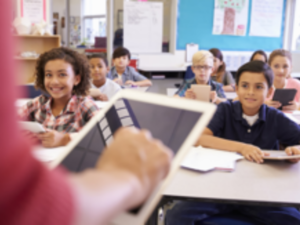
Sudáfrica: Harnessing the power of technology in SA’s broken education system

Sudáfrica/Agosto de 2017/Fuente: It News Africa

Resumen: Si bien es erróneo comenzar a hablar de la tecnología como la bala de plata para la plétora de desafíos enfrentados por la educación sudafricana – particularmente cuando muchas escuelas carecen de servicios básicos como la electricidad – hay una esperanza creciente en el potencial de la tecnología para salvar muchos de los agujeros dentro de nuestro sistema comprometido. Así dice Alan Goldberg, Director de Educación de Digicape, un distribuidor Premium de Apple. Goldberg fue uno de los primeros entrenadores certificados de Apple en Sudáfrica y su mandato en Digicape es ayudar a las instituciones a ofrecer a los estudiantes una experiencia de aprendizaje más rica y personalizada mediante el uso de la tecnología de Apple.

While it’s misguided to start hailing technology as the silver bullet to the plethora of challenges faced by South African education – particularly when many schools lack basic amenities like electricity – there is growing hope in tech’s potential to bridge many of the holes within our compromised system.

So says Alan Goldberg, Director of Education at Digicape, an Apple Premium Reseller. Goldberg was one of the first certified Apple trainers in South Africa, and his mandate at Digicape is to assist institutions in offering learners a richer, more personalised learning experience through the use of Apple technology.

Despite South Africa having one of the highest budget allocations for education in the world (around 20% of total government expenditure), the South African education system is still chronically over-burdened and under-resourced. And it’s not just the case in South Africa, explains Goldberg: “All across the world governments are finding that their education systems lack infrastructure, and are not meeting the demands of these exponentially increasing populations.”

Technology is being sought to expand the educational curricula at all levels of schooling, and service larger classrooms. “However, without the guidance of a skilled educator, technology in itself is redundant. If an engaged teacher facilitates and guides the learning process, the full power of technology can be harnessed to truly transform the education experience.”

Goldberg refers to Dr Ruben Puentedura’s SAMR model, which is designed to help educators infuse technology into learning. ‘SAMR’ is an acronym of ‘Substitution’, ‘Augmentation’, ‘Modification’ and ‘Redefinition,’ four fundamental aspects of incorporating technology into education.

“The first two elements, ‘Substitution’ and ‘Augmentation’, focus on enhancing the learning process, while ‘Modification’ and ‘Redefinition’ are concerned with transformation. The model emphasises the need for a continuum of learning… through the use of technology, learning is no longer restricted to just the classroom – all locations become a space of learning, resulting in an immersive learning experience.”

And there’s no denying that transformation is desperately needed, given our local context. “If you set aside a host of other challenges for a moment – including the lack of amenities and misuse of resources – one of the core challenges identified is that many South African teachers do not have the basic pedagogic and content knowledge required to impart much-needed skills, due to a lack of investment in teacher training. This is where technology can bridge certain gaps,” explains Goldberg.

On a practical level, the concept of ‘connected classrooms’ allows a privileged school to connect with one in a rural area through an iPad, and share the learning experience.

In addition, given South Africa’s history and socio-economic context, the disparity in aptitude among students is vast. Goldberg sees technology as the great equaliser: “Technology allows for the learning process to be tailored by the educator to accommodate each student’s academic strengths and weaknesses, interests and motivations, and pace of learning.”

Most importantly, technology provides the child with greater agency, meaning they self-motivated students are able to process information for themselves, and seek their own solutions to problems.

Says Goldberg, “It is essential that effective programmes are put in place which facilitate student access and support teacher training. If teachers lack confidence when using technology, this will lead to resistance in its adoption. Many organisations, such as Digicape, offer teacher training programmes, so that educators can feel more confident utilising new technology and guiding students in its use.”

“In a nutshell, for the potential of technology in South Africa to be fully realised, the state and education system need to formally buy into its potential and invest in teacher training programmes. Adequate funding for its adoption and advancement in schools – starting with those whose students are primarily from previously disadvantaged backgrounds – needs to be allocated. It also requires effective safeguarding of devices, particularly in communities prone to crime.

“We, at Digicape, have a strong focus on education as we believe that it holds the key to levelling the playing field for students from previously disadvantaged backgrounds, and across the full socio-economic spectrum, provided there is an equipped educator leading the learning process,” concludes Goldberg.

Fuente: http://www.itnewsafrica.com/2017/08/harnessing-the-power-of-technology-in-sas-broken-education-system/

Comparte este contenido:

INDIA, RUSSIA JOIN HANDS ON EDUCATION SECTOR

Rusia/Agosto de 2017/Fuente: The Pioneer

Resumen:  Amigos de todos los tiempos – India y Rusia – colaborarán en el sector de la educación. El CNIITMASH de Rusia se ha vinculado con la Corporación de Ingeniería Pesada (HEC) de Ranchi para capacitar a estudiantes de ingeniería indios en la construcción de maquinaria y otras áreas especializadas. El Centro de Ingeniería General y Capacitación Técnica, que se establecerá en el campus de HEC en Ranchi, contará con 200 estudiantes en el primer lote con la sesión que comenzará a finales de este año o principios de 2018. El acuerdo entre la India y Rusia sobre el establecimiento del primer Centro de Excelencia en la India y la modernización de las instalaciones de HEC concluyó en diciembre de 2015 entre HEC y la empresa rusa CNIITSMASH. Sin embargo, la segunda etapa de implementación comienza ahora, coincidiendo con el 70 aniversario de los lazos diplomáticos India-Rusia.

All-weather friends — India and Russia — will collaborate in the education sector. Russia’s CNIITMASH has tied up with Ranchi-based Heavy Engineering Corporation (HEC) for training Indian engineering students in machine building and other specialised areas.

The Centre for General Engineering and Technical Training, to be set up in HEC’s Ranchi campus, will have 200 students in the first batch with the session to begin by this year-end or early 2018.

The agreement between India and Russia on establishing the first Centre of Excellence in India and modernisation of HEC’s facilities had concluded in December 2015 between HEC and Russian company CNIITSMASH. However, the second stage of implementation begins now, coinciding with the 70th anniversary of India-Russia Diplomatic ties.

«CNIITMASH and HEC Limited have launched the second stage of implementation of the agreement to establish the Center for General Engineering and Technical Training in India. The students will start their education program in the end of 2017 or early in 2018,» spokesperson of Rosatom, which is making nuclear plants in India, told The Pioneer.

CNIITMASH specialists are at present preparing training materials for the new course. HEC will provide the training space in Ranchi for the full-scale functioning of the Centre. The training will take place in nine different courses including machine building and lasting from one to four months. It will be carried out by CNIITMASH specialists.

The Rosatom representative said the participation of CNIITMASH in the establishment of this centre will help in raising efficiency of production in energy and engineering sectors and to develop qualification of Indian engineers. «All courses are designed for continuity, which in the future will allow building up skills of workers of various engineering enterprises in India,» the spokesperson said.

«Russian specialists, in turn, will gain a valuable experience of teaching foreign colleagues the technological skills of Russia’s engineering school, which will reinforce its image among the international technical community,» he added.

CNIITMASH is part of Atomenergomash, a machine-building division of Rosatom. Rosatom is jointly with NPCIL building nuclear power plants in Kudankulam in Tamil Nadu.

Interestingly, the new collaboration involves HEC, the flagship symbol of Indo-Soviet friendship, set up in 1958 as Asia’s largest integrated engineering complex over 7,200 acres and dedicated to the nation by former Prime Minister Jawahar Lal Nehru on November 15, 1963. Incidentally, November 15 happens to be marked as Jharkhand’s Foundation Day.

In fact, 17 years after Jharkhand’s creation, it’s only now that the State has made moves to have its own Legislative Assembly. It was HEC’s infrastructure that Jharkhand converted for housing its seat of power and still does so. The ‘Russian Hostel’, once meant for HEC officers, now serves as MLAs’ hostel while the auditorium ‘Lenin Hall’ continues to serve as the Jharkhand Assembly. The HEC’s project building is Jharkhand’s main secretariat even as its sprawling bungalows now accommodate Jharkhand Ministers and other high-ranking officials.

Fuente: http://www.dailypioneer.com/nation/india-russia-join-hands-on-education-sector.html

Comparte este contenido:

Venezuela: Una Gota de Amor para el Mantenimiento Escolar beneficia a 12 mil estudiantes de Guárico

Venezuela/Agosto de 2017/Autora: Felicia Graterol/Fuente: MPPE

En favor de las mejoras del sistema educativo, continúa en marcha el Plan una Gota de Amor para el Mantenimiento Escolar 2017-2018, impulsado por el Ministerio del Poder Popular para la Educación (MPPE), Elías Jaua, desplegando sus actividades en 20 edificaciones educativas del estado Guárico, favoreciendo de esta manera a 12 mil estudiantes.

Las instituciones de la entidad llanera atendidas se encuentran distribuidas en los municipios: Francisco de Miranda, Pedro Zaraza, José Félix Ribas, José Tadeo Monagas, Camaguán, San José de Guaribe, San Gerónimo de Guayabal, Juan German Roscio, Julián Mellado, Chaguaramas, Ortiz, El Socorro y Las Mercedes.

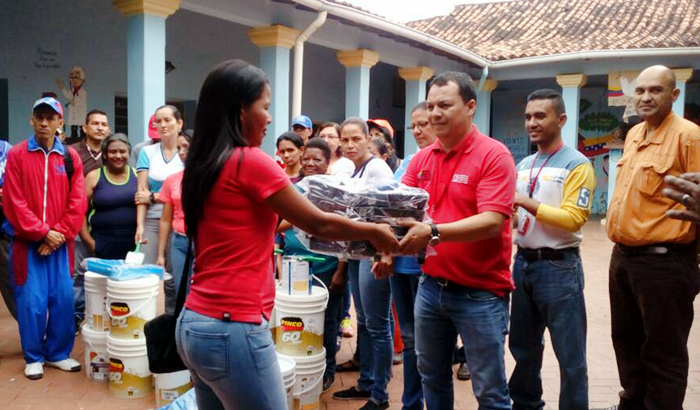
Estas jornadas de mantenimiento correctivo y preventivo son ejecutadas por la comunidad junto al acompañamiento técnico por parte de profesionales de la Fundación de Edificaciones y Dotaciones Educativas (FEDE); quien además, se encarga de entregar personalmente a los directivos de cada plantel, los materiales necesarios para ejecutar las labores de pintura, arreglos menores de instalaciones eléctricas y sanitarias, desmalezamiento y limpieza en general de toda la institución.

Adicional a este abordaje, los estudiantes guariqueños de la Unidad Educativa Alberto Isaac Padra en El Sombrero y la Unidad Educativa Vicente Yánez Pinzón en el municipio Julián, recibieron 300 mesassillas respectivamente; otras escuelas favorecidas con esta entrega fueron el Liceo Bolivariano Eligio Maluenga, la ETAR Diego Bautista Urbaneja y la Escuela Bolivariana Luis Guglietta de Ramos.

Al respecto, Jaqueline Martínez, directora del Grupo Escolar Licenciado Francisco Aranda, dijo que «estamos muy agradecidos con el Ministerio de Educación y FEDE por estos recursos materiales que nos han entregado para mejorar nuestra escuela, es algo que necesitábamos, ha sido una gran sorpresa y por eso nuestro personal, junto a representantes y estudiantes abocados, recuperaremos el color de nuestro plantel en esta temporada vacacional».

Parte de las escuelas a atender con estas acciones son: E.B. Francisco Salías, E.B. Rafael Urdaneta, E.B.N. Dr. Vicente Peña, C.E.I. José de los Santos Pereira, E.B Joaquín Crespo, U.E.N.B Federación Venezolana de Maestros, entre otras.

Fuente: http://me.gob.ve/index.php/noticias/85-noticias-2027/agosto/3174-una-gota-de-amor-para-el-mantenimiento-escolar-beneficia-a-12-mil-estudiantes-de-guarico

Comparte este contenido:
Page 3551 of 6193
1 3.549 3.550 3.551 3.552 3.553 6.193