Page 3567 of 6195
1 3.565 3.566 3.567 3.568 3.569 6.195

OCDE califica favorablemente las políticas de Educación de Costa Rica

OCDE- Costa Rica/01 de Agosto de 2017/Por: Marvin Barquero/Fuente: http://www.nacion.com

Organización evaluó el informe «Revisión de Políticas Nacionales de Educación: Educación en Costa Rica»

Ministra de Educación resaltó rigurosidad y profundidad del proceso de análisis realizado


La Organización para la Cooperación y el Desarrollo Económicos (OCDE) evaluó positivamente las politicas de  Educación de Costa Rica, en el marco de los exámenes de sectores para la adhesión de nuestro país a ese grupo de naciones.

La organización presentó el informe «Revisión de Políticas Nacionales de Educación: Educación en Costa Rica», el el cual evalúa las políticas costarricenses en ese campo, resaltó el Gobierno en un comunicado de prensa.

Según el Gobierno, en el informe se valoran los avances del país en relación con las mejores políticas y prácticas de los países miembros de la OCDE y las de otros países referentes en la región latinoamericana.

Los campos de referencia son: enfoque centrado en la mejora de los resultados del aprendizaje, equidad en las oportunidades educativas, habilidad para recolectar y usar evidencia para fundamentar y realimentar las políticas, financiamiento eficaz de las reformas y participación de todos los sectores y actores interesados en el diseño e implementación de las políticas.

Los comentarios finales dela OCDE se darán durante una visita de los expertos encargados de la evaluación, que se espera para este jueves en Costa Rica. Una vez presentado el informe de los especialistas en Costa Rica, pasa a revisión final del comité respectivo en la organización, el cual daría el visto bueno final.

En el proceso de adhesión de Costa Rica a la OCDE se evalúan 22 comités o sectores. El primero en lograr la aprobación fue el de políticas de comercio, luego siguió el de salud y posteriormente el de agricultura. El de educación sería el cuarto de los 22 comités en lograr el visto bueno del organismo.

Costa Rica debe aprobar todos los exámenes sectoriales o de comités para aspirar a que esa organización apruebe su ingreso.

Sonia Marta Mora, ministra de Educación, resaltó que la evaluación positiva de Costa Rica en ese campo es un gran logro.

«La rigurosidad y profundidad del proceso de análisis realizado –continuó la ministra– no solo indica los avances nacionales en materia educativa sino que destaca prácticas y estrategias positivas e innovadoras que el país puede compartir con otras naciones, tal es el caso de la estrategia ‘Yo me apunto’, que trabaja para prevenir y luchar contra la exclusión escolar, a la cual se le brinda mucha atención en el informe».

El ministro de Comercio Exterior (Comex) y coordinador por el Gobierno del proceso de adhesión a la OCDE, Alexánder Mora, también se manifestó sobre esta evaluación positiva.

«El informe ha evaluado las políticas y prácticas en materia de educación y desarrollo de habilidades, comparándonos con países miembros de la OCDE, conocidos referentes de las mejores prácticas en esta área. El equipo del Ministerio de Educación, liderado por la ministra Mora, logró dar un importante paso para la adhesión de nuestro país a la OCDE, en un área clave para nuestro desarrollo».

La OCDE es una organización de 34 países, de afiliación voluntaria, que promueve prácticas de primer mundo en las políticas de los gobiernos. Por eso, evalúa a todos los sectores, para destacar las fortalezas y recomendar ajustes en sus políticas.

El director de Educación de la OCDE, el señor Andreas Schleicher, será quien entregue al presidente de la República, Luis Guillermo Solís, este informe en un acto especial en San José el próximo jueves 3 de agosto, informó el Gobierno.

Fuente de la Noticia:

http://www.nacion.com/economia/politica-economica/OCDE-favorablemente-politicas-Costa-Rica_0_1649235127.html

Comparte este contenido:

South African Education Head Welcomes Racist Teacher’s Dismissal

South African/August 01, 2017/By: News24/Source: All Africa

Gauteng Education MEC, Panyaza Lesufi has welcomed the decision by St John’s College to fire a teacher who was found guilty of misconduct in an internal hearing about a racist campaign against black, Indian and Greek students, as well as foreign students.

Lesufi said the teacher left the school with immediate effect on Friday, following his visit to the school earlier in the day.

The elite school in Houghton, Johannesburg was engulfed in a race crisis after the teacher was charged with bringing the school into disrepute; contravening the South African Council of Education’s code; and making racist remarks.

He was found guilty during the internal hearing and given a final written warning, but retained by the school.

The school’s spokesperson Jacqui Deeks told News24 on Thursday although the educator had been found guilty, there were «mitigating circumstances which did not warrant dismissal».

«St John’s College would like to emphasise that it takes allegations of racism and discrimination very seriously and we are vehemently opposed to bigotry in any form and will not tolerate racist actions,» Deeks said at the time.

 Lesufi rejected the school’s position and called for the teacher to be fired. He then visited the school on Friday morning to give the school an opportunity to redeem itself.
 During his meeting with the school’s management, Lesufi demanded that the school dismiss the teacher before 1pm on Friday and said legal action would be taken if it failed to do so.

«The MEC said the final written warning was unsatisfactory considering the seriousness of the charges and the guilty finding against the educator,» the department said.

Following the meeting, Lesufi met the representatives of the Independent Schools Association of South Africa (ISASA) to discuss the issues facing the private education sector.

«It was agreed that a summit would be facilitated in September 2017 to deal in detail with all issues affecting private and independent schools in particular. A date for the summit will be announced in due course,» he said.

He said all schools, whether they fell under the public or private sector, could not have codes of conduct which contravened the country’s Constitution.

«We will deal with racism decisively and not give racists space to breath because non-racialism is non-negotiable,» Lesufi said.

Source:

http://allafrica.com/stories/201707280656.html

Comparte este contenido:

Nigeria Restructures Religious Teaching in Schools

Nigeria/August 01, 2017/

Minister of Education Malam Adamu Adamu has disputed allegation that the ministry is planning to Islamise Nigeria.

Adamu who paid a courtesy visit yesterday to Governor Abdullahi Umar Ganduje of Kano State, said, «Since the controversy started, I did not say anything about it until today. The ministry is accused and by extension I am accused of picking out Christian Religious Knowledge from the education curriculum and then imposing Islamic Religious knowledge on both Christian and Muslim schools. This is not true at all. In 2012, the then Federal Government under Goodluck Jonathan formulated a policy where IRK and CRK were grouped together. The implementation of the policy started since 2014. That was two years after the formulation of the policy and about two years before I became minister of education.»

He said at the last National Executive Council (NEC) meeting, he suggested to the council that IRK and CRK should be made core subjects which students of the respective faiths must be made to study.

Tracing the history of the IRK, CRK policy further, the minister said, «If some people still believe that the policy was formulated to Islamize Nigeria, with due respect, the President at the time the policy was formulated was Goodluck Jonathan, the Minister was Nyesom Wike the present governor of Rivers State; the formulator and writer of the policy was Professor Godswill Obioma and Mrs Okwonko who was at the time the policy was implemented the director of basic education in the ministry were all Christians. So, I cannot see how people are accusing the ministry or me of imposing this policy to Islamize Nigeria.»

Source:

http://allafrica.com/stories/201707280787.html

Comparte este contenido:

EEUU: Experience the World: Culture & Education at the Dinner Table

EEUU/August 01, 2017/By: Sarah Rohler/Source: einnews.com

Ahnnyeonghase-yo. Hej. Namaste. Hello. A greeting in any language implies the same thing; yet what makes each of them unique is the culture surrounding these everyday words. And each of these cultures are breathtaking to get to know; providing a spark of inspiration and warmth in our lives. ETC offers such an opportunity – hosting a student would mean to take in an international student for a brief term as a member of the family. Host families and students are encouraged to engage with each other as warmly and welcoming as possible; exchanging their respective cultures through pictures, stories, food, and affection.

The philosophy of ETC is to promote international goodwill and understanding through international student exchange experiences. It is our staunch belief that participating as a host to a student needing a home to stay will foster understanding and friendship between international cultures.

Education at the Dinner Table:
While in school one may memorize the various gendered pronouns of the Spanish language, or learn how to differentiate between the many homophones present in the English language; true learning of culture and life happens socially. This is especially true for life at home – whether it be through conversation at the dinner table, a small thank you whilst sharing the chores, or through showing each other humorous videos, daily life in a host family will impact the core of each exchange student and expand their worldview. These lessons are not only restricted to the student; families as well will learn about the many nuances present in a strange culture, and change the way they perceive their world.

Travelling Without Leaving Home:
A ticket to Iceland may be out of your price range; a week in Japan may be unthinkable when considering how expensive hotels are. Hosting negates all of these costs and difficulties that arise from planning a trip abroad, as families are allowed to bring a small part of this foreign culture straight into their living room. No longer will Korea or Honduras be a mere name on the map, but a dear second home that elicits countless warm memories spent with your student.

Foreign Partners:
ETC closely works with carefully screened, experienced agents that work diligently in each of the countries that offer students for hosting. Each agent painstakingly screens and examines each of the students and offers them with an orientation so that the students will be able to adjust to the United States with minimal difficulty. When the student finally arrives stateside, our partner organizations will always be available to act as a friendly liaison and counselor between the host family, ETC, and the student’s natural parents.

Special Activities:
We are highly involved with each of the host families and students that are part of the ETC family. ETC hosts fall welcome parties, monthly local activities, themed holiday parties, five (optional) trips every year, and a spring farewell picnic – all of which are available to ETC Local Coordinators, host families, and students, as a way to encourage bonding within a family-like atmosphere.

American Public High Schools:
ETC maintains a strict standard for those students who will be attending American public high schools on a J-1 visa. Each student will be placed within such a high school in their homestay community and will be required to take classes in English and American History or Civics. They are not permitted to take ESL or English immersion classes. Those students who are unable to maintain a C average are required to hire a tutor at their own expense.

Financial Responsibilities:
Host families are not required to take on the burden of the student’s financial expenses. Every student possesses comprehensive medical insurance, and are required to pay for their own personal expenses, which include but are not limited to school activity charges, class fees, clothing expenses, travel expenses, entertainment allowances, bus passes, long distance phone charges, and lunches purchased at the school. Each host family is considered as a volunteer, and are not expected to pay for such student expenses.

Learning About the World, at Home:
Each ETC foreign exchange student is brave and willing to leave family and friends for nearly ten months to broaden their horizons and learn about the culture of the United States. By considering a new short term addition to the family, host families can help courageous students out immensely, whilst learning similar things to the student themselves.

ETC is now accepting host family applications for both five-month and ten-month students. Each student speaks a proficient level of English, has been carefully screened, and will attend the host family’s local high school. Each student arrives fully covered by medical insurance and possesses their own spending money.

About Education, Travel & Culture:
Education, Travel & Culture is a non-profit [501 (c)(3)] educational exchange organization. Its purpose is to promote international understanding and goodwill by providing high quality educational and cultural exchange programs in the United States and abroad. ETC provides inbound program opportunities for high school students throughout the world to study in an American high school and live with an American family.

For more information, FAQs or even to apply to become a host family, visit http://edutrav.org or email Field Director, Brenda Ferland at bferland@edutrav.org

Sarah Rohler
Education, Travel & Culture
6236937999

ETC Is Your Opportunity to Experience the World

Source:

http://education.einnews.com/pr_news/395486931/experience-the-world-culture-education-at-the-dinner-table


Comparte este contenido:

NAAC Monitors Private Universities in India

India/August 01, 2017/Source: http://abclive.in

NAAC: National Assessment and Accreditation Council (NAAC) is the recognized accreditation agency in the Country for all Higher Educational (Non-technical) Institutions. As per procedure for accreditation, the Institutions/Universities submit the data and information in the prescribed format to NAAC.

The data are validated by a peer team constituted by NAAC before submission of its report to NAAC for accreditation of the Institutions. At times, NAAC, thorough its visiting team and complaints / RTIs from the stakeholders, has noticed that various Institutions have submitted fraudulent data for acquiring higher grade. These complaints are considered by visiting team of NAAC before assigning the final scores under the respective components of assessment.

To avoid submission of fraudulent data by the Institutions for accreditation, NAAC has taken following steps:

  1. It is mandatory for the Institutions to upload the information provided to NAAC on their website and retain the information on their website until completion of the validity period of accreditation and provide access to all the stakeholders.
  2. Institutions are instructed to videograph the whole assessment exercise and submit the same to NAAC and also upload on its website.

iii.            A Complainants Management Committee has been established which looks into the complaints especially those received after accreditation for initiating necessary action.

  1. The new procedure of Assessment and Accreditation (A&A) implemented by NAAC w.e.f. July 2017, has introduced an additional step, wherein the data submitted by Institution are subjected to a Data Verification and Validation (DVV) process. The new process has also provision for imposing severe penalties on Institutions submitting fraudulent data.

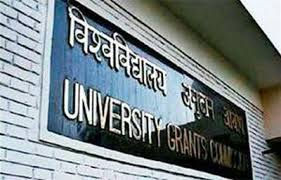
There is no such proposal under consideration of the Government to set up a Regulatory Commission for monitoring the performance of Private Universities. All existing private universities are established by the Act of their respective State Legislatures.  These universities are governed and regulated by their respective State Acts and University Grants Commission (UGC) (Establishment of and Maintenance of Standards in Private Universities) Regulations, 2003. As far as Private Deemed to be Universities are concerned, they are regulated by UGC (Institutions Deemed to be Universities) Regulations, 2016. As per the Regulations, UGC conducts periodic inspection of these Universities and deficiencies, if any, observed during inspection are communicated to respective University for rectification. In addition, various Professional Regulatory Councils viz. Bar Council of India (BCI), Dental Council of India (DCI), Indian Nursing Council (INC), Medical Council of India (MCI), National Council for Teacher Education (NCTE), Pharmacy Council of India (PCI), etc. also review these Universities in their respective areas. Further, ranking of Higher Educational Institutions done by the Government under National Institutional Ranking Framework acts as performance indicator.

This information was given by the Minister of State (HRD), Dr. Mahendra Nath Pandey today in a written reply to a Lok Sabha question.

http://abclive.in/naac-monitors-private-universities-india/

Comparte este contenido:

Islamic University best in Gaza, third in Palestine

Gaza – Palestine/August 01, 2017/Source: https://www.middleeastmonitor.com

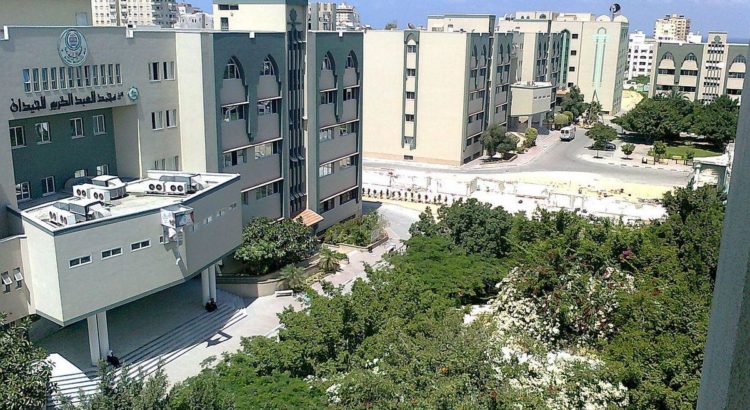
The Islamic University of Gaza (IUG) announced yesterday that it was classed the top higher education institution in the Gaza Strip and the third in Palestine based on Webometrics July 2017 edition, Safa news agency reported.

The IUG said it came in at number 54 among 988 high education institutions in the Arab region which were included in the evaluation.

Chairman of the IUG, Professor Adel Awadallah, hailed the efforts of the university staff who worked hard to maintain these high levels and ensured its continued development.

The university has been subjected to destructive Israeli rocket attacks in 2008 and 2014 and in 2007, the Palestinian Authority (PA) security services affiliated to Fatah President Mahmoud Abbas attacked and burnt its buildings.

Since the start of the Israeli siege 11 years ago, the IUG has suffered from severe shortages of educational equipment and materials.

The Webometrics system is the largest system for evaluating international universities, covering more than 25,000 institutions worldwide. It is published in Spain by the Higher Council for Scientific Research. It is linked to the standard of research and technical files and is updated every six months.

Source:

Islamic University best in Gaza, third in Palestine

Comparte este contenido:

Mayoría de escuelas en ciudad Siria de Alepo habilitadas

Siria/31 julio 2017/Fuente: Prensa Latina

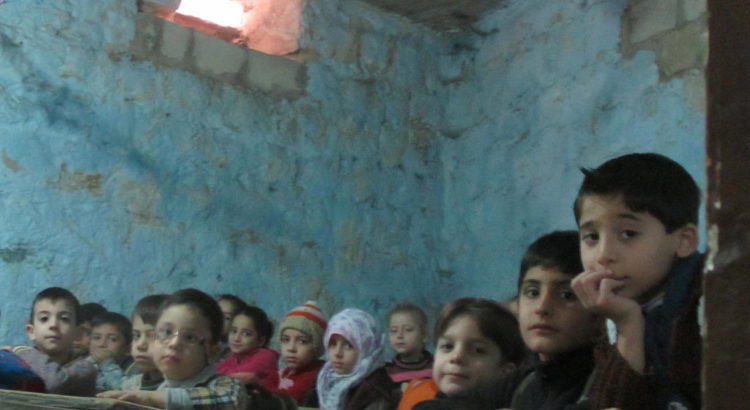
Más de un tercio de las escuelas destruídas por los terroristas en la ciudad siria de Alepo están listas para la apertura del próximo curso escolar, informaron hoy las autoridades del sector.
Luego de los intensos combates y la liberación de la ciudad a fines del 2016, el Departamento de Educación rehabilitó 150 centros educacionales, 70 de ellos ubicados en la zona oriental de la urbe que ocuparon los extremistas armados.

Según datos de las autoridades, 50 centros están habilitados para recibir a los alumnos de la región suburbana al este de la localidad.

De acuerdo con las cifras, un total de 267 instalaciones educacionales sufrieron daños y en numerosos casos fueron utilizadas como puestos de mando y lugares de detención por parte de los terroristas.

Fuente noticia: http://prensa-latina.cu/index.php/component/content/?o=rn&id=104614&SEO=mayoria-de-escuelas-en-ciudad-siria-de-alepo-habilitadas

Fuente imagen: https://farm4.staticflickr.com/3951/15103642084_fe87549072_b.jpg

Comparte este contenido:
Page 3567 of 6195
1 3.565 3.566 3.567 3.568 3.569 6.195