Saltar al contenido principal
Page 3865 of 6193
1 3.863 3.864 3.865 3.866 3.867 6.193

¿Hacia dónde debería apuntar la educación de América Latina? Los mejores profesores del continente responden

EligeEducar/CamilaLondoño

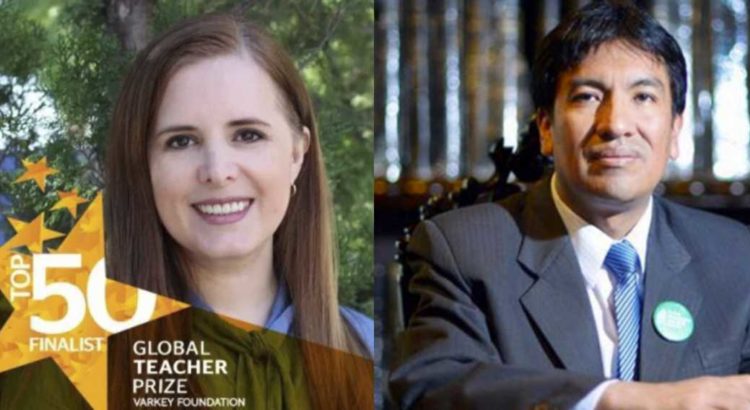
De 20.000 nominados al “Nobel” de la educación, 50 profesores quedaron como semifinalistas, varios de ellos eran latinoamericanos. Hablamos con algunos para que nos contarán su visión con respecto a la educación en Latinoamérica.

En marzo de 2017 se celebró en Dubái la premiación del Global Teacher Prize, evento conocido como el “Nobel” de la educación. A la ceremonia asistieron los 10 finalistas que competían por el importante galardón y cientos de profesores más alrededor del mundo. En esa larga lista de profesores se encontraban los que, por su labor, fueron nominados en América Latina como los mejores. Aunque no estuvieron entre los primeros 10, estos profesores llegaron muy lejos; pasaron de ser profesores locales a ser profesores globales, agentes de cambio con historias potentes que evidencian su compromiso con una labor que representa grandes desafíos.

Entre ellos estaban Juan Raúl Cadillo de Perú, Félix López de Paraguay, Elisa Guerra de México y Màrcio Andrade de Brasil, con quienes hablamos para preguntarles hacía dónde (según su experiencia como docentes latinoamericanos) debería apuntar la educación en nuestro continente. Esto fue lo que respondieron:

Elisa Guerra, México

Primero estudió Letras Hispánicas. Cuando se convirtió en madre, se transformó también en la primera maestra de sus hijos. Fue ahí cuando descubrió su vocación. Empezó trabajando con niños de preescolar de escasos recursos, hecho que la llevó a diseñar su propio material de trabajo. Luego pasó a ser maestra en tres niveles de educación básica. Actualmente diseña y supervisa programas de educación temprana, tecnología, historia y geografía, principalmente para estudiantes de secundaria. Alumnos y otros docentes pueden acceder de forma gratuita en la web a todo el material que ella ha diseñado. Trabaja actualmente en el Colegio Valle de Filadelfia, escuela que fundó en Aguascalientes, México. Su modelo escolar ahora es una franquicia y hay cinco colegios más como este en su país.

“Hay muchas, muchísimas cosas de las que podríamos hablar para la educación en América Latina. Sin embargo, si yo tuviera que elegir una sola, sería quizá la importancia de la educación temprana. Cada vez hay más evidencias del impacto que puede tener la educación de los más pequeños, no sólo para la vida académica y laboral de cada uno de ellos, sino para el desarrollo económico de su país. América Latina va rezagada en educación, con respecto a los logros obtenidos por países desarrollados en Europa y Asia. Invertir en educación temprana puede redituar un mayor impacto y conseguir el mejor retorno de inversión. Cuando los niños son muy pequeños, son especialmente sensibles a un buen ambiente de aprendizaje que les permita desarrollar al máximo su potencial. Pero un ambiente de pobreza – de recursos, de estímulos, de nutrientes, de amor- no sólo tiene consecuencias desastrosas en la vida del niño, sino que perpetúa la brecha de aprovechamiento académico entre los más pobres y los que tienen mejores oportunidades. Creo firmemente que el poder de la educación temprana reside en la posibilidad de erradicar brechas y lograr el desarrollo más pleno de la semilla de la genialidad que cada niño lleva dentro de sí”.


Félix López, Paraguay

Félix es técnico agropecuario, profesor de Educación Agropecuaria, Contador Público y Magíster en Educación. Actualmente enseña en tres instituciones secundarias con estudiantes de 15 a 18 años. La institución donde más tiempo pasa es de modalidad agropecuaria y enseña allí las asignaturas Horticultura y Administración Rural. En las otras instituciones enseña las asignaturas de Economía y Administración Financiera.

Este profesor paraguayo trabaja para convertir la escuela en un modelo de educación ambiental que promueva buenas prácticas agrícolas, integre el concepto de cadenas de valor y enseñe producción sostenible y gestión de residuos. Félix ha logrado conectar a sus estudiantes con el entorno agrícola industrial a través de pasantías y viajes a sitios de investigación, además los prepara enseñándoles habilidades sociales necesarias. Bajo su supervisión, la escuela en la que pasa más tiempo construyó dos viveros modelo e instaló una planta de procesamiento de residuos orgánicos sólidos donde el municipio del cual hace parte puede traer desechos orgánicos, tanto de viviendas individuales como del vertedero de la ciudad, para convertirlos en tierra.

Esto fue lo que respondió:

“Creo que América Latina necesita jóvenes más preparados, la enseñanza debe ser más especializada. Tenemos una educación muy general y muy flexible que hace que el egresado de secundaria termine con muy poca preparación para enfrentar el mundo laboral y proseguir los estudios universitarios. Creo que es necesario definir qué clase de ciudadanos queremos y re-ingeniar el currículo para lograrlo. Debemos incentivar las responsabilidades y las obligaciones del individuo como persona y como ciudadano”.


Màrcio de Andrade Batista, Brasil

Màrcio de Andrade es ingeniero químico e hizo un máster y actualmente está terminando un doctorado en ingeniería. Trabaja en la universidad estatal como investigador y voluntario en escuela secundaria con adolescentes. Màrcio estableció el Programa Junior de Iniciación Científica en varias escuelas dando conferencias locales financiadas por él mismo.

Màrcio ha creado una metodología para la aplicación de conceptos científicos y técnicos en la vida cotidiana de los estudiantes. Él los anima a hacer sus propias investigaciones científicas, cuestionan el modo estándar de hacer las cosas y proponen mejoras innovadoras y nuevos productos que resuelvan los problemas locales de una manera sostenible. Trabaja principalmente con estudiantes mujeres de familias de escasos recursos. Una de ellas ganó el premio científico más importante en América Latina por una invención en particular que consistía en crear pan a partir del suero del queso.

Esto fue lo que respondió:

“La educación en América Latina es un asunto complejo. Deberíamos invertir más en innovación y tecnología. Nuestras escuelas están disociadas de lo que pasa en otras partes del mundo. Tenemos planes de educación a largo plazo con logros y objetivos definidos. Tenemos serios problemas cuando pensamos en los inmediato y es es lo que tenemos que solucionar”.

Juan Raúl Cadillo, Perú

Es educador, Licenciado en Educación Primaria e Ingeniero de Sistemas. Tiene un doctorado en Educación y una Maestría en Psicología Educativa. Trabaja en la Institución Educativa Jesús Nazareno (Huaraz, Perú) y en varias universidades de la zona. En la escuela trabaja con estudiantes de Educación Primaria. Juan ha desarrollado una metodología enfocada en la innovación y la tecnología para mejorar los estándares en educación del lugar donde trabaja. Desarrolló una plataforma para que sus estudiantes escriban, ilustren y compartan historias en la web, permitiendo así el desarrollo de varias habilidades y fomentando un ámbito educativo colaborativo.

Esto fue lo que respondió:

“La educación en Latinoamérica debería apuntar a la generación de personas capaces de resolver problemas que se planteen a nivel local y global, es decir formar ciudadanos globales. Además hacia la formación en valores que permitan una mejor comunicación y colaboración entre las personas”.

Y tú ¿hacia dónde crees que debería apuntar la educación en América Latina?

Fuente: http://www.eligeeducar.cl/hacia-donde-deberia-apuntar-la-educacion-america-latina-los-mejores-profesores-del-continente-responden
Comparte este contenido:

EEUU: Activists Call on Rauner to Avoid School Voucher Programs

América del Norte/EEUU/lawndalenews.com

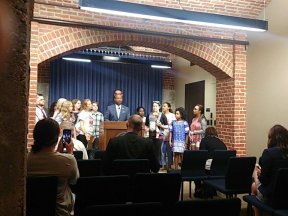
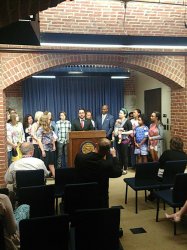
Resumen: Esta semana, 34 legisladores firmaron una carta al gobernador Bruce Rauner instándole a evaluar los programas de vales escolares de Illinois y mantener el dinero público en el sistema de educación pública y no ser desviado a escuelas privadas y religiosas. “Lo que necesitamos en Illinois no es un sistema de vales. Para mejorar la educación, necesitamos dos cosas: un presupuesto que financia por completo nuestras escuelas y una fórmula de financiación de las escuelas equitativa. No podemos permitir que el gobernador Rauner salga a vender otro bien público al mejor postor. El plan de educación Trump-Rauner no ayudará a los estudiantes de Illinois “, dijo el senador Omar Aquino, el martes, en la décima sexta reunión de mayo realizada en el Capitolio del Estado de Illinois, donde fue acompañado por los estudiantes, padres, activistas y compañeros legisladores.

This week, 34 legislators signed a letter to Governor Bruce Rauner urging him to keep school voucher programs out of Illinois and keep public dollars within the public education system not to be diverted to private and religious schools. “What we need in Illinois is not a voucher system. To improve education, we need two things: a budget that fully funds our schools and an equitable school funding formula. We cannot allow Governor Rauner to sell off another public good to the highest bidder. The Trump-Rauner education plan will not help Illinois students,” said Senator Omar Aquino, on Tuesday, May 16th inside the Blueroom at the Illinois State Capitol Building, where he was joined by students, parents, activists, and fellow legislators.

Lawndale News Chicago's Bilingual Newspaper - Education

The press conference was in direct response to Secretary of Education Betsey DeVos and President Trump’s support for the use of federal funds for voluntary school voucher programs at the state level. President Trump’s proposed budget for fiscal year 2018 includes $250 million for private school choice initiatives. A school voucher can be thought of as a coupon supported by state dollars that allows parents to use them to send their kids to the school of their choice, even private, religiously affiliated schools. The money is all or some of what the state would have otherwise spent to educate the child in a public school. Vouchers are often reserved for low-income students, children with disabilities or for families zoned to a failing public school. Currently, 14 states offer the student voucher program, including Arkansas, Florida, Georgia, Indiana, Louisiana, Maine, Maryland, Mississippi, North Carolina, Ohio, Oklahoma, Utah, Vermont, and Wisconsin, in addition to Washington, D.C.

The letter to the Governor from state legislators that they “oppose the creation of any program that will divert public funds from the public school system to be used to pay tuition, fees or other costs at private and religious schools—whether in the form of vouchers or scholarship tax credits, other than that which already exists under current state and federal law to provide students with disabilities with a Free and Appropriate public education.” Community groups delivered the letter to Governor Rauner’s office following the press conference. Legislators who signed on to the letter include: Representatives Carol Ammons, Kelly Cassidy, Linda Chapa LaVia, Barbara Flynn Currie, Mary Flowers, Robyn Gabel, Will Guzzardi, Michael Halpin, Sonya Harper, Greg Harris, Camille Lilly, Theresa Mah, Robert Martwick, Christian Mitchell, Anna Moeller, Elaine Nekritz, Juliana Stratton, Silvana Tabares, Chris Welch, Ann Williams, Senators Omar Aquino, Jennifer Bertino-Tarrant, Daniel Biss, Melinda Bush, Cristina Castro, John Cullerton, Bill Cunningham, Don Harmon, Kimberly Lightford, Iris Martinez, Laura Murphy, Kwame Raoul, Heather Steans, and Patricia Van Pelt.

Fuente: http://www.lawndalenews.com/2017/05/activists-call-on-rauner-to-avoid-school-voucher-programs/

Comparte este contenido:

E.I. research reinforces advocacy against growing privatisation of public education

Prensa Internacional de la Educación

Resumen:

En el marco de su respuesta mundial a la privatización de la educación, la Internacional de la Educación ha publicado documentos que exploran la privatización y su impacto en el acceso a la educación, la educación de calidad, y las condiciones de trabajo de los maestros. Cada tema se considera a través del prisma de cuatro estudios de casos basados ​​en investigaciones llevadas a cabo en nombre de la Internacional de la Educación (IE) en Kenia, Uganda, Ghana y Filipinas. Para la IE, la privatización y la comercialización de la educación sigue siendo la mayor amenaza para el logro de la calidad, la educación inclusiva y equitativa para todos, tales como el desarrollo sostenible Objetivo 4 (SDG4). En un mundo donde prevalece el afán de lucro, los estudiantes, los profesores, la calidad de la educación, y las comunidades atendidas por los educadores, son los primeros en ser afectados.

In the framework of its Global Response to the privatisation of education, Education International has published documents exploring privatisation and its impact on access to education, quality education, and teachers’ conditions of employment.

Each topic is considered through the prism of four case studies based on research undertaken on behalf of Education International (EI) in Kenya, Uganda, Ghana, and the Philippines. For EI, the privatisation and commercialisation of education remains the greatest threat to the achievement of quality, inclusive and equitable education for all, such as the Sustainable Development Goal 4 (SDG4). In a world where the profit motive prevails, students, teachers, the quality of education, and the communities served by educators are the first to be affected.

Access to education

Following SDG4, Target 4.1, governments have committed to ensuring that all girls and boys complete free, equitable and quality primary and secondary education leading to relevant and effective learning outcomes. The EI’s research underlines that the growing presence of corporate actors in many countries and across sectors poses serious human rights challenges to achieving free quality public education for all. Whilst claiming to offer “affordable” education, the fees charged are certainly not affordable for the populations they purport to serve. The evidence shows that any price put on accessing education serves as a barrier for the poorest and most disadvantaged and therefore deepens inequality and segregation.

Education International reaffirms that anything other than free quality education for all undermines inclusive and equitable education.

Quality education

In addition, the business model implemented by for-profit corporate-backed school chains involves measures designed to increase profitability and which compromise quality teaching and learning. EI insists that that this business model is predicated on the employment of unqualified staff and delivers a standardised scripted curriculum showing little, if any, respect for inclusive education and cultural and linguistic diversity. It is a curriculum which invariably does not satisfy national standards.

This does not constitute quality education, EI stresses.

Teachers’ conditions of employment

Noting that teachers’ salaries account for approximately 70 percent of a school budget, EI strongly deplores the practice of employing fewer teachers, underqualified teachers, or unqualified staff in order to boost profit margins.

Privatisation, and the associated deregulation of working conditions that accompanies it, results in downward pressure being put on professional standards, salaries and working conditions for all teachers, and ultimately the quality of education.

Fuente: https://www.ei-ie.org/en/detail/15075/ei-research-reinforces-advocacy-against-growing-privatisation-of-public-education

Comparte este contenido:

UNICEF joins tech giants in artificial intelligence group

América del Norte/EEUU/Prensa UNICEF

Resumen:

UNICEF se une a la Asociación para la Inteligencia Artificial (IA) fundada por Amazon, Apple, Google / DeepMind, Facebook, IBM y Microsoft, a través de la asociación de la Oficina de Innovación de UNICEF, con el propósito de establecer colaboraciones para escalar el uso de la IA para el bien social a través de soluciones innovadoras a los retos humanitarios en beneficio de los niños.  Con ello se espera que a través de colaboraciones con empresas de tecnología tecnólogos de datos de UNICEF pueden utilizar AI para resolver los problemas sociales. Un ejemplo de esto es la plataforma Caja Mágica, que reúne datos de los socios como IBM, Google, Amadeus, y Telefónica para informar en tiempo real la toma de decisiones en situaciones de emergencia como terremotos e inundaciones.

UNICEF joins the Partnership on Artificial Intelligence (AI) founded by Amazon, Apple, Google/DeepMind, Facebook, IBM and Microsoft.

Through the partnership UNICEF’s Office of Innovation will forge collaborations to scale the use of AI for social good through innovative solutions to humanitarian challenges to benefit children.
Through collaborations with tech companies UNICEF data technologists can use AI to solve societal problems. An example of this is the Magic Box platform, which pools data from partners like IBM, Google, Amadeus, and Telefonica to inform real-time decision-making in emergencies like earthquakes and floods.

Chris Fabian, Senior Advisor, Ventures, UNICEF Innovation said, “UNICEF has always been an organization driven by data – and the capacity to process and learn from the massive amounts of data that exist around us will let us work to improve the life of every child.

“We are in a position where we can connect the needs of the world’s most vulnerable children to the capacities of the most advanced technology.

“We believe that machine learning and the future of AI will help us address globally relevant issues like the spread of disease, responses to climate change and disasters, and the uncertain future of jobs and employment.”

###

Notes to Editors:

About UNICEF
UNICEF promotes the rights and wellbeing of every child, in everything we do.  Together with our partners, we work in 190 countries and territories to translate that commitment into practical action, focusing special effort on reaching the most vulnerable and excluded children, to the benefit of all children, everywhere.

For more information about UNICEF and its work for children, visit www.unicef.org.
For more information about UNICEF Office of Innovation visit www.unicefstories.org and @unicefinnovate
Follow UNICEF on Twitter and Facebook

About The PAI
The Partnership on AI to Benefit People and Society (Partnership on AI) is a not-for-profit organization, founded by Amazon, Apple, Google/DeepMind, Facebook, IBM and Microsoft.  Our goals are to study and formulate best practices on the development, testing, and fielding of AI technologies, advancing the public’s understanding of AI, to serve as an open platform for discussion and engagement about AI and its influences on people and society and identify and foster aspirational efforts in AI for socially beneficial purposes. We actively designed the Partnership on AI to bring together a diverse range of voices from for-profit and non-profit, all of whom share our belief in the tenets and are committed to collaboration and open dialogue on the many opportunities and rising challenges around AI.

Full list of partners

AI Forum of New Zealand (AIFNZ), Allen Institute for Artificial Intelligence (AI2), Centre for Democracy & Tech (CDT), Centre for Internet and Society, India (CIS), Cogitai, Data & Society Research Institute (D&S), Digital Asia Hub, eBay, Electronic Freedom Foundation (EFF), Future of Humanity Institute (FHI), Future of Privacy Forum (FPF), Human Rights Watch (HRW), Intel, Leverhulme Centre for the Future of Intelligence (CFI), McKinsey & Company, SAP, Salesforce.com, Sony, UNICEF, Upturn, XPRIZE Foundation and Zalando.

For more information, please contact:
Ms Gbolayemi (Yemi) Lufadeju, UNICEF New York, Tel: +1 917 213 4034, glufadeju@unicef.org

Fuente: https://www.unicef.org/media/media_95995.html

Comparte este contenido:

En Galicia, España: Educación congelará por séptimo año las tasas de la universidad

La Xunta cifra el ahorro de las familias en 350 euros al año para estudiantes de grado

Europa/España/M. NESPEREIRA @ABCEnGalicia

El lugar más barato para cursar una carrera universitaria. Por séptimo año consecutivo, Galicia quiere seguir aferrada a ese trono, en la comparación con el resto de autonomías. La Consellería de Educación comunicará al Consello Galego de Universidades que volverá a congelar las tasas, de cara al curso académico 2017-2018. Se continuará el camino emprendido con la llegada de Feijóo a San Caetano, allá por el año 2009. Desde entonces, las universidades públicas de la Comunidad han mantenido en el mismo nivel su barrera económica de acceso, mientras en otros territorios ese umbral no ha hecho más más que subir.

Si en el mapa de centros españoles todo se mantiene igual, el precio medio de la matrícula del primer grado en Galicia se situará en los 11,89 euros por crédito. En Cataluña, el territorio invocado por Feijóo para hacer sus comparativas, la cifra asciende a 25 euros. En el caso de los máster, la matrícula gallega oscila alrededor de los 26,4 euros por crédito matriculado; mientras que en el sistema catalán, el precio se dispara hasta los 65,8 euros.

Según los cálculos del Gobierno autonómico, la política de congelación de impuestos universitarios ha servido para ahorrar a las familias 170 millones de euros. El balance parte de que, durante los últimos nueve años, los hogares con un hijo estudiante de grado, se han evitado un desembolso de 350 euros al año, durante los cuatro cursos de duración habitual de las carreras de Bolonia. Si se trata de un matriculado en un master, el ahorro se eleva alcanza los 660 euros.

 «Es justo para los estudiantes, y es justo también para Galicia. No tendrán que estudiar fuera por un problema económico, al contrario (…) La gente que tenga talento y esfuerzo, que sepa que el lugar más barato donde estudiar es Galicia», valoró la medida el presidente de la Xunta, después de presidir la reunión habitual de sus conselleiros. Junto a la congelación de las tasas, Feijóo insistió en que el Gobierno ofrecerá programas de becas para dotar a las personas desempleadas de una ayuda para seguir adquiriendo nuevos conocimientos.

Al margen de la universidad, la Formación Profesional se ha convertido en una de las prioridades para la política educativa gallega. Precisamente ayer, el Consello dio luz verde a la creación de seis nuevos ciclos formativos para la escala básica.

Fuente: http://www.abc.es/espana/galicia/abci-educacion-congelara-septimo-tasas-universidad-201705251057_noticia.html

Comparte este contenido:

India: The Dalai Lama underlines: Need secular values in education

India/Mayo de 2017/Fuente: Indian Express

Resumen: El sistema educativo moderno no es «holístico» y se inclina hacia la adquisición materialista del conocimiento, dijo el gurú espiritual tibetano el jueves el Dalai Lama, argumentando que hay una necesidad de incluir valores seculares y humanos como la compasión en el currículo educativo. Hablaba en el lanzamiento del último libro de Arun Shourie, Dos santos: Especulaciones alrededor y sobre Ramakrishna Paramahamsa y Ramana Maharshi. Señalando al líder BJP L K Advani, quien estuvo presente en la ocasión, el Dalai Lama dijo: «Advani me dijo una vez … según el entendimiento de la India, secular significa respetar todas las religiones y también respetar a los no creyentes. Desde que escuché eso de ti … quiero considerarte mi maestro.

The modern educational system is not “holistic” and leans towards materialistic acquisition of knowledge, Tibetan spiritual guru The Dalai Lama said on Thursday as he argued that there is a need to include secular and human values like compassion in the educational curriculum.

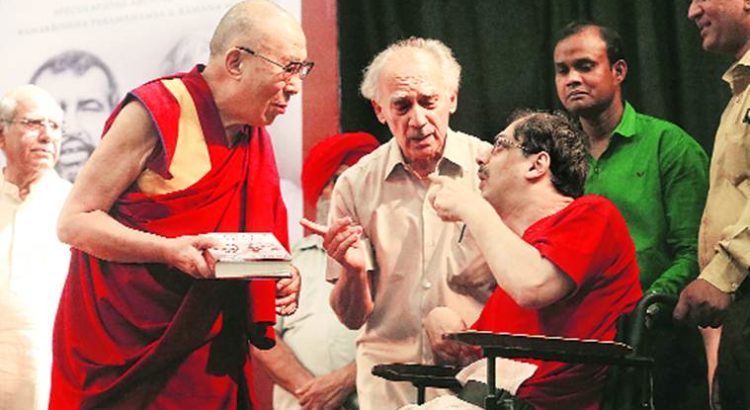
He was speaking at the launch of noted journalist Arun Shourie’s latest book, Two Saints: Speculations Around And About Ramakrishna Paramahamsa and Ramana Maharshi.

Pointing to senior BJP leader L K Advani, who was present on the occasion, the Dalai Lama said, “Advani once told me…according to Indian understanding, secular means respect all religions and also respect non-believers. Since I heard that from you…I want to consider you my teacher.”

Speaking about drafting a curriculum based on secular ethics, he said, “Within this year, we will finalise that.” He went on to add that some schools should start using this draft curriculum.

“Then we will see what effect this curriculum (has) after one year, two year, three year…in America, two cities…I can’t remember the name… but the city they developed as city of kindness, city of compassion…within the city, more activities referring kindness and compassion… as a result, the schoolchildren become more compassionate…It is quite pity, in this country… ahimsa… karuna is always said, but no city with the name of karuna,” he said.

Speaking on the occasion, jurist Fali Nariman said, “…Arun (Shourie) has chosen with deliberation in these spiritually troubled times these two individuals and no others in order to make a point. And the point is this…to express his anguish that the age-old Hindu tradition of tolerance is showing signs of strain…The strain of religious tension fanned by fanaticism and that the true Hindu faith is not being followed in present day India…by a larger number of his countrymen.”

Former Foreign Secretary Shyam Saran said wisdom is important but wisdom without compassion is of no value. “…what Shourie has talked about is precisely that,” he said.

Shourie, on his part, said the Dalai Lama is the only religious leader who has said Buddhism must face facts so that if there are new discoveries in science and they contradict something that is written in the ancient scriptures, the part of description is to either reinterpreted or cast away.

“This shows both open mindedness and great confidence in the traditions…And by contrast, in our case, we are so protective of our Gods, of our godmen, of our scriptures that we just do not allow the examination and even when the slighest question is raised…then an avalanche descends upon you…” he said.

Fuente: http://indianexpress.com/article/india/the-dalai-lama-underlines-need-secular-values-in-education-release-of-arun-shouries-book-4674035/

Comparte este contenido:

Nueva Zelanda: Small gains for schools, little for early childhood education

Nueva Zelanda/Mayo de 2017/Fuente: RNZ

Resumen: Alrededor de la mitad de la financiación aumentada durante los próximos cuatro años – $ 767 millones – simplemente está cubriendo el costo del aumento de la matrícula en la educación temprana y en las escuelas, y el aumento de los salarios de los maestros. Alrededor de $ 400 millones proveerán nuevas escuelas y más aulas – nuevamente un aumento impulsado en gran medida por el aumento de matrículas. Las escuelas estarán aliviadas de ver un aumento de 1,3 por ciento en sus subvenciones de operación, pero por tercer año consecutivo los centros de la primera infancia no han recibido un aumento general de sus subsidios gubernamentales.

The Budget’s $1.5 billion boost for education addresses pressure points for schools but leaves early childhood centres facing another year of belt-tightening.

About half the increased funding over the next four years – $767 million – is simply meeting the cost of increased enrolments in early education and schools, and rises in teachers pay.

About $400m will provide new schools and more classrooms – again an increase driven largely by rising enrolments.

Schools will be relieved to see a 1.3 percent increase in their operations grants, but for the third consecutive year early childhood centres have received no across-the-board increase to their government subsidies.

Schools

Operations grants increase 1.3 percent and the targeted funding introduced in last year’s budget to help children from disadvantaged backgrounds rises 2.7 percent for a total increase of $17m per year.

Special education spending rises by about $15m per year. The increase includes about $10m per year to allow the Education Ministry’s behaviour service to help about 1000 more children aged up to eight years over the next four years. There is also funding to provide teacher aide support to an extra 625 children per year.

About $456m over the next four years, most of it capital funding, will go towards school property. The spending will provide six new schools, expand two schools and 11 special education satellite units, and provide 305 new classrooms. More than half of the money, $278m, will be used in Auckland.

The government will spend $7.6m on Māori language curriculum resources over the next four years and $9.4m on support for students with English as a second language.

Early Childhood Education

The budget provides no across-the-board increases to early childhood subsidies for the third consecutive year.

However, the government is spending $10m per year to extend its new method of targeting funding to children from disadvantaged backgrounds to the early childhood sector.

The system was introduced to schools this year and is widely expected to replace decile funding in that sector.

The government expects about 2000 out of 4500 licensed early childhood services will receive the funding at an average rate of $5000 per year.

Tertiary education

The budget includes a 1 percent increase in the subsidies tertiary institutions receive for each student they enrol, worth nearly $20m per year. The increase to enrolment subsidies for courses at Level 3 and above is the first across-the-board increase in about seven years as previous increases were targeted to particular subject areas.

The Performance Based Research Fund for tertiary institutions’ research increases by $15m per year.

About $6.8m will be provided over four years to grow enrolments by foreign students.

‘Timid sprinkling of initiatives’

Teacher unions said the government’s budget was «timid» and delivered the bare minimum for schools and early childhood centres.

Both the Post Primary Teachers’ Association (PPTA) and the Educational Institute (NZEI) said their members would be disappointed by the budget, which delivered what the government said was a record $1.1bn in operational spending plus a further $400m in capital funding.

PPTA president Jack Boyle said the budget provided a «timid sprinkling of initiatives» that did not keep up with inflation.

The president of the NZEI, Lynda Stuart, said teachers had been hoping for a major boost, but education was the loser in the budget.

She said the 1.3 percent increase to schools’ operations grants would not cover inflation and the $10m per year allocated to disadvantaged children in early childhood centres amounted to very little.

«This is a devastating blow to a sector that has been struggling to make ends meet and give our children a quality public education,» she said.

The government said the funding would be worth an average of $5000 per year to the 2000 early childhood services expected to receive it.

New Zealand Kindergartens was also disappointed by the lack of an across-the-board increase to early childhood subsidies.

Its chief executive Clare Wells said the hourly rate paid to early childhood services was lower than it was in July 2008, while costs had escalated by about 12 percent.

Ms Wells welcomed the new targeted funding for disadvantage and said kindergartens would use the money for things transport, food and warm clothing for children.

Fuente: http://www.radionz.co.nz/news/political/331573/budget-offers-timid-sprinkling-for-education-teachers

Comparte este contenido:
Page 3865 of 6193
1 3.863 3.864 3.865 3.866 3.867 6.193
OtrasVocesenEducacion.org