Page 3928 of 6179
1 3.926 3.927 3.928 3.929 3.930 6.179

Sex Education in Croatia. The war between the Church and government

Croatian/09 May 2017/Source: https://www.balcanicaucaso.org

It is open clash between the Croatian Catholic Church and the center-left government. The disputed issue is sex education in schools, recently introduced in the broader context of civic education and health.

The three hours of class throughout the year when students, within the general framework of health education, will learn the basics about sexuality, gender equality, and proper behavior in this regard have raised an unprecedented war between the Catholic Church and the Croatian government. The word «war» is no overstatement: Valentin Pozaić, Zagreb’s deputy bishop, urged against the introduction of sex education in schools and for a new «Oluja» (Storm), alluding to the armed action conducted by Croatia in the region of Knin in August 1995.

The deputy bishop calls for a new «Oluja»

Not to leave any doubt about the target of the «Storm», Pozaić said: «The Nazis came to power through democratic elections, then abused the legitimacy of their mandate and imposed a dictatorship, and you know how it ended. Do we still need to warn about the similarity with today’s Communists in Croatia?»

In appeals from the altars as well as public statements, the Church has fought hard the introduction of sex education in schools, allegedly a mere excuse hiding other intentions such as «indoctrination of children with the ideology of homosexuality and eroticism». Of course, what troubles the Church most is that children, in those three hours of health education, would receive knowledge that is contrary to its own teaching – that masturbation is not a sin, homosexuality is not a disease or a perversion, and contraception is the best way to avoid an unwanted pregnancy.

The Archbishop of Zagreb, Cardinal Josip Bozanić, said that the suggested model for health education is dangerous «because some parts of it destroy man». Bozanić did not explain what are the dangerous parts of sex education and how they destroy man, but reiterated that the government did not respect the democratic process and the right of parents to decide whether and how their children will study sex education in school.

The Ministry of Education resists

It was not long before the Church invited parents to boycott sex education classes. Education Minister Željko Jovanović, whose department is responsible for the introduction of sex education in schools, said students who do not attend those classes will be considered absent without leave.

The answer came quickly. «Jovanović, in the name of God, leave our children alone!» screams a little boy, complete with red and white checkered shirt, from a giant billboard on the streets of Croatia, reading «Forget health education» and a quote from the Croatian Constitution on how parents «have the right and freedom to decide on the education of children». The idea came from the “Christian, patriotic” magazine Nacija, known for publishing articles that warn about the dangers of yoga, support the excommunication of women who have had abortions, and offers its readers the confessions of people healed from homosexuality.

New areas of conflict

While the war on health education has not subsided at all, a new debate rages among the Croatian public. A harmless theater poster for the play «Fine mrtve djevojke» (Fine dead girls), staged at the Gavella theater in Zagreb, was withdrawn at the request of the Catholic association «vigilant».

The poster showed two statues of the Virgin Mary embracing, alluding to the lesbian theme of the play – an image that seemingly greatly annoyed the faithful. The mayor of Zagreb, Milan Bandić, ordered the withdrawal of posters and said that anyone who had «put themselves in the shoes of the faithful» would have done the same.

Croatia had looked down on the strong reactions in the Islamic world following the publication of caricatures of the Prophet Mohammed in some Western countries, branding them as an expression of blind religious fanaticism. Yet, now something similar has happened in the center of Zagreb.

The warning from the Minister of Culture

Artists and intellectuals of the Croatian capital wonder if the witch hunts of the Church will now find new targets, e.g. with public burnings of books deemed unsuitable for the faithful.

Minister of Culture Andrea Zlatar Violić announced that in Croatia there is an «incomprehension of those who are different from the majority, be it for religious reasons, gender, or any other form of marginalization». Violić considers Croatia a «society with strong rigidity, which tends to push to the margins those who are different». That is why – said the Minister – posters like the one that was banned by mayor Bandić under pressure from religious groups «are very necessary to teach us to respect those who, from the point of view of the majority, are different».

Source:

https://www.balcanicaucaso.org/eng/Areas/Croatia/Sex-Education-in-Croatia.-The-war-between-the-Church-and-government-129226


Comparte este contenido:

Oman Education Council seminar discusses future trends

Oman/09 May 2017/By ONA/Source: http://timesofoman.com

To help prepare a plan for education in accordance with the future trends identified in the 9th and 10th national development plans, a seminar was organised on Monday by the Education Council.

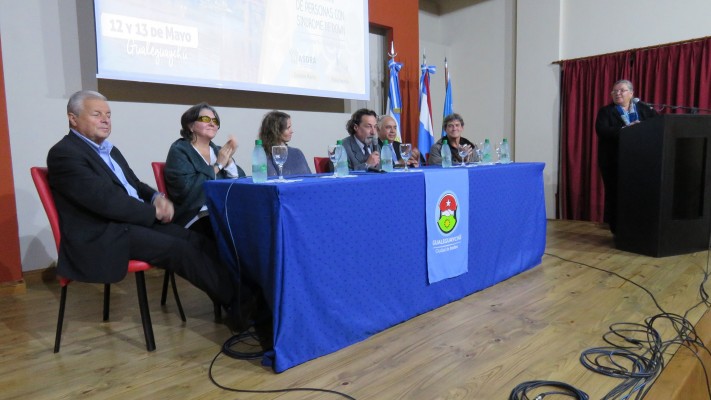
The seminar was organised at Al Wahat Club in Muscat today a seminar on “Education, Development Trends, and Current and Future Employment Opportunities in the Labour Market” under the patronage of Dr. Rawya bint Saud al-Busaidiyah, Minister of Higher Education, Chairperson of the Education Council.

The seminar aimed at preparing a procedural plan on the actions required by the variety of bodies responsible for education and employment in accordance with the future trends of the economic sectors identified in the 9th and 10th national development plans.

The seminar also aimed at identifying the global trends related to the 4th Industrial Revolution and the implications on education and the labour market, identifying the current economic situation in the Sultanate and its future trends, as well as the implications on education and employment. It also aimed at identifying the outcomes of the national project on the alignment of higher education outcomes with needs of the labour market and arriving at clear insights into the aspects and quality of the programs and disciplines required for the labour market, as well as the mechanisms to monitor future needs in jobs and professions in various sectors.

After opening the seminar, the Minister of Higher Education said that the seminar aimed at exploring the appropriate mechanisms through which needs of various development sectors in the Sultanate can be closely viewed to identify disciplines and skills that can be offered in the future as academic programs at government and private higher education institutions.

She stressed the importance of conducting revision by those concerned with education and employment, planning and supervision of economic activities in various sectors in the Sultanate.

The seminar touched on three key themes namely the 4th Industrial Revolution and its implications on education and the labour market, the current economic situation in the Sultanate and its future trends, as well as the implications on education and employment and the national project on the alignment of higher education outcomes with the needs of the labour market.

Dr. Said bin Hamad al-Ruba’iee, Secretary General of the Education Council gave a presentation reviewing an overview on basic topics of the seminar, stages of its preparations, its objectives and statistics about higher education Outputs expected in the five-year plan.

He also touched on the 4th Industrial Revolution and its implications on education and employment. Dr. al-Ruba’iee also reviewed the discussion workshops, which were held in September 2016 and February 2017.

The seminar included three discussion workshops. The session was moderated by Eng. Mohammed bin Salim al-Busaidi, Member at Majlis A’Shura. The session included the first working paper on the National Project on the Alignment of Higher Education Outcomes with the Needs of the Labour Market. The paper was co-presented by Dr. Salim bin Zuwaid al-Hashmi, Chairman of the Project’s Administrative and Financial Committee as Representative of the Sultan Qaboos University (SQU) and Sheikha bint Mohammed al-Mukhainiyah, Member of the Project’s Executive Committee.

Professor Costas Chryssou, Deputy Vice Chancellor of Muscat University for Enterprise and Engagement presented the second working paper on the Global Trends related to the Fourth Industrial Revolution, and the Implications on Education and the Labour Market.

The third working paper themed the Current Economic Situation in Oman and its Future Trends, and the Implications on Education and Employment, was presented by Sayyid Dr. Adham bin Turki al-Said, Assistant Professor at the SQU College of Commerce and Political Sciences.

Various government and private institutions representing sectors of education, business and planning in the Sultanate, as well as health, tourism, agriculture, fisheries, mining, logistics, transport and communications sectors took part in the seminar.

The seminar’s opening ceremony was attended by ministers, honourable members at the State Council, undersecretaries and members at Majlis A’Shura.

Source:

http://timesofoman.com/article/108588/Oman/Education/Oman-Education-Council-seminar-discusses-future-trends

Comparte este contenido:

Argentina: Murió el exministro de Educación Juan Carlos Tedesco

Argentina/09 de mayo de 2017/Fuente: http://www.ambito.com

Argentina perdió al pedagogo y ex ministro de Educación de la Nación Juan Carlos Tedesco, referente y hombre de consulta permanente en materia educativa, quien falleció a los 73 años en Buenos Aires tras una larga enfermedad.

Licenciado en Ciencias de la Educación por la Universidad de Buenos Aires (UBA), Tedesco fue profesor universitario y funcionario de la UNESCO, donde dirigió la Oficina Regional de Educación para América Latina y el Caribe (OREALC), en Santiago de Chile; la Oficina Internacional de Educación en Ginebra, Suiza; y la sede regional del Instituto Internacional de Planificación de la Educación en Buenos Aires.

Fue ministro de Educación de la nación entre 2007 y 2009 y fue hasta su fallecimiento profesor-investigador de la Universidad Nacional de San Martín.

«Lamento profundamente la muerte de Juan Carlos Tedesco, un hombre de bien, un hombre de la educación. Acompaño a sus familiares y amigos», escribió en su cuenta de Twitter el ministro de Educación de la Nación, Esteban Bullrich.

Durante la gestión de Tedesco al frente de la cartera educativa se creó el Instituto Nacional de Formación Docente y se diseñó un plan para elevar a cuatro años la formación de los maestros.

«Murió uno de los mejores educadores que tuvo América Latina. Ejemplo y maestro de más de una generación», dijo a Télam conmocionado por el deceso el ex Representante de la Unesco en Brasil Jorge Werthein, un doctor en Educación por la Universidad de Standford que llegó a Buenos Aires para despedir a Tedesco, con quien compartió 30 años de amistad y trabajo.

Tedesco, también, dictó cursos de posgrado en universidades de varios países de América Latina y publicó numerosos artículos y libros sobre las relaciones entre educación y sociedad. Entre ellos se destacaron «Educación y sociedad en Argentina: 1800-1945 (Buenos Aires, 1972); El Proyecto Educativo Autoritario: Argentina 1976-82 (Buenos Aires, 1983); El Nuevo Pacto Educativo (Madrid, 1995); Educar en la sociedad del conocimiento (Buenos Aires, 2000); Educación y Justicia Social en América Latina (Buenos Aires, 2012): Pedagogía y Democratización de la Universidad (Buenos Aires, 2014).

Tedesco representó una de las voces de mayor prestigio en la Argentina y a nivel mundial a la hora de pensar en el diseño de políticas educativas. Investigador y humanista, ingresó a la Unesco en 1976 como especialista en política educativa.

Miembro de número de la Academia Nacional de Educación, Tedesco era también un especialista en historia de la educación.

Sus restos serán velados a partir de las 21 en O’Higgins 2842. Mañana será enterrado a las 10.30 en el cementerio de Chacarita.

Fuente de la Noticia:

http://www.ambito.com/882070-murio-el-exministro-de-educacion-juan-carlos-tedesco

Comparte este contenido:

EEUU: A comprehensive look at charters and what they mean for Philadelphia’s Education

EEUU/ 09 may 2017/by Diamond Jones/Source: http://thenotebook.org

It is 4:20 p.m. and the security line at the school district’s Education Center was beginning to grumble with agitation. A mother clutched a poster-board using it as a fan as she stood in line in the heavy humid air. The small crowd took steps forward almost in unison, rushing to the auditorium hoping to get one of the limited seats.

As the group entered, the tension in the room could immediately be felt, sticking to everyone like that heavy humid air outside. The School Reform Commission budget meeting started and the agitation only grew.

Students, teachers, education advocates and community members filled the seats of the auditorium while the presiding board ushered through the meeting’s presentations. The room would erupt in cheers one second, then a wave of groans and sighs would roll through the back of the hall.

Filling up four rows of chairs were members from Memphis Street Academy, a charter school recommended for closure by the School District board. They wore bright orange shirts holding up signs saying “Save Our School” when speakers of their group were up at the podium.

Memphis Street Academy is one of two charter schools at risk of closing its doors due to a non-renewal contract recommendation.

“The community and our scholars will face a great loss if Memphis were to close,” Tracey McKnight, a Memphis parent, urged while speaking at the meeting.

For many years charter schools have been popping up throughout the city of Philadelphia. While the number of schools grow, the misunderstanding and lack of information on what exactly a charter school is, also rises.

A school, in general, is supposed to serve as a place of learning and as a pillar in communities for families. So then, what are charter schools and why have they sprouted up in almost every neighborhood of Philadelphia?

“A charter school is basically a contract,» Julian Vasquez Heilig, a professor of educational leadership and policy studies at California State University, Sacramento said. «It’s a contract involving education, the government and a private organization.”

According to the U.S. Department of Education, a charter school by definition is a publicly funded school typically governed by a group under a legislative contract with the state or respective jurisdiction. The independently operated public schools originated in the early 1990s in Minnesota. Since then, they have spread across the nation with 176 schools developing in Pennsylvania.

The Pennsylvania Charter School Law was enacted in 1997 allowed local boards of education to launch new schools that can operate freely from many local and state requirements that apply to traditional public schools. Of those 176 state schools, 86 are located in the city of Brotherly Love. According to the School District of Philadelphia, the schools were established to provide students with more educational alternatives.

Source:

http://thenotebook.org/articles/2017/05/08/a-comprehensive-look-at-charters-and-what-they-mean-for-philadelphia-s-education


Comparte este contenido:

Colombia: Profesores del sector oficial de Bogotá anuncian paro el 17 de mayo

Colombia/08 mayo 2017/Fuente: Caracol Radio

La Asociación Distrital de Educadores, ADE, anunció un paro indefinido para las cero horas del próximo 17 de mayo, ante el incumplimiento del pliego de peticiones de la Administración Distrital.

La confirmación la hizo el presidente de la Asociación Distrital de Educadores, ADE, William Agudelo, quien dijo que este cese de actividades en la capital del país inicia dos días después de la celebración del Día del Maestro, porque el Gobierno Distrital no ha dado respuesta a las peticiones de la ADE.

Los puntos de este petitorio de acuerdo con el dirigente sindical se basan en cuatro elementos fundamentales que son: suspender la Jornada Única, porque para implementarla no hay refrigerios, no hay infraestructura y se le duplica la jornada a los educadores a 10 horas.

También garantizar la universalización de la educación desde los tres grados de preescolar, aumentar la planta de docentes y el fortalecimiento de la educación para niños y jóvenes, entre otros.

El dirigente sindical dijo que este paro se podría volver nacional, en la medida en que no les han resuelto el problema de salud a los educadores, sumado a que está suspendido el proceso de negociación del pliego de los trabajadores del Estado.

Fuente:http://caracol.com.co/emisora/2017/05/07/bogota/1494183506_276682.html

Comparte este contenido:

España: 200 jóvenes con y sin discapacidad intelectual ponentes en el II Congreso Por Ti Mismo de Down Madrid

España/08 mayo 2017/Fuente: Que.es

200 jóvenes con y sin discapacidad intelectual han participado este jueves en el II Congreso Por Ti Mismo, organizado por la Fundación Síndrome de Down Madrid (Down Madrid) y la Cátedra de Familia y Discapacidad: Telefónica-Fundación Repsol-Down Madrid de la Universidad Pontifica de Comillas, en el que, un año más, han expuesto como ponentes el resultado de su trabajo en diferentes áreas, como educación, sociedad, vida adulta o retos de futuro.

200 jóvenes con y sin discapacidad intelectual han participado este jueves en el II Congreso Por Ti Mismo, organizado por la Fundación Síndrome de Down Madrid (Down Madrid) y la Cátedra de Familia y Discapacidad: Telefónica-Fundación Repsol-Down Madrid de la Universidad Pontifica de Comillas, en el que, un año más, han expuesto como ponentes el resultado de su trabajo en diferentes áreas, como educación, sociedad, vida adulta o retos de futuro.

El encuentro, celebrado  el jueves en el Aula Magna de la Facultad de Educación de la Universidad Complutense de Madrid, ha sido inaugurado por la directora de Formación de Down Madrid, Paula Martinelli; la directora de la Cátedra de Familia y Discapacidad Telefónica-Fundación Repsol Down Madrid, Ana Berastegui, y la presidenta del Patronato de la Fundación Down Madrid, Inés Álvarez Arancedo.

Paula Martinelli ha indicado que el congreso «da la oportunidad a los jóvenes con discapacidad intelectual de poder expresar sus intereses, opiniones y reflexiones, mostrar lo que sienten y lo que quieren y cuestionar la realidad en la que viven día a día». Esta iniciativa surge de la necesidad de escuchar a estos jóvenes, ya que Martinelli ha indicado que «la fundación quiere pensar con ellos y no sólo para ellos«. Es por esto que ha asegurado que este congreso es «una oportunidad de normalización y un espacio muy importante de escucha frente a todo lo que los jóvenes con discapacidad intelectual tengan que decir».

En esta línea, Ana Berastegui ha destacado que «no se pueden hacer las cosas por vosotros sin contar sin vosotros». Una idea que «está tardando en llegar en el mundo del conocimiento, especialmente en la universidad». Por este motivo, Berastegui ha pedido que las personas con discapacidad se conviertan en «sujetos partícipes de investigación en la universidad».

En este sentido, ha aclarado que para que la investigación sea inclusiva tiene que contar con las personas con discapacidad como sujetos, que sean ellos los que hagan las preguntas, también las respondan y que estas respuestas les sirvan en su día a día. Además, ha destacado que los jóvenes con discapacidad «tienen cosas muy importantes que decir, pero tiene que haber gente dispuesta a escucharles».

Por su parte, Inés Álvarez Arancedo ha señalado que la Fundación Síndrome de Down nació hace más de 25 años por el trabajo de familiares de personas con discapacidad intelectual «que pensaron en qué podían hacer por ellos». Pero desde hace unos años, ha indicado que han cambiado esa idea y se han dado cuenta «de la importancia que tiene no solo trabajar para ellos, sino por y con ellos«. En este sentido, ha señalado que este congreso es un espacio de reflexión muy importante y ha asegurado que «trabajaremos para que las personas con síndrome de Down y otras discapacidades intelectuales participen de forma activa en todos los ámbitos».

A lo largo de la jornada se han sucedido diferentes ponencias en las que jóvenes con y sin discapacidad intelectual han participado como moderadores principales y han presentado el resultado de su trabajo en las áreas de vida laboral, educación y tecnología y accesibilidad.

Entre los expertos que han colaborado como moderadores de las diferentes mesas, ha sido la directora de Facility Manager de la empresa PWC, Carmen Ruiz, quien ha indicado que hay seis jóvenes con discapacidad intelectual que llevan casi siete años trabajando en PWC. «Ellos han aprendido mucho, pero os puedo asegurar que nosotros hemos aprendido mucho más de ellos». Ruiz ha señalado que no le gusta hablar de discapacidad sino de «capacidades diferentes» y que «habría que encontrar un mundo laboral para esas capacidades diferentes que todos tenemos».

Además, ha aprovechado para dar algunos consejos a los jóvenes que se vayan a incorporar a un puesto de trabajo para que tengan en cuenta «que la formación que reciben en casa es (y la académica) es muy importante en el mundo laboral y que el puesto de trabajo se lo tienen que ganar día a día».

Finalmente, ha concluido su ponencia indicando que «es un gusto ver que muchas empresas están incorporando en sus puestos de trabajo a gente con discapacidad».

El congreso ha contado con la colaboración de la Fundación Aprocor, la Fundación Prodis como entidades invitadas, y con la participación de los alumnos del Colegio Sagrado Corazón de Chamartín.

Fuente: http://www.que.es/quesocial/201705051114-jovenes-discapacidad-intelectual-ponentes-congreso.html

Comparte este contenido:

Escuelas chinas reforzarán manejo de riesgos de seguridad

China/08 mayo 2017/Fuente: spanish.china

Las autoridades chinas incluirán al manejo de riesgos de seguridad como una medida para evaluar las escuelas primarias y secundarias y jardines de niños, dijo hoy un funcionario del Ministerio de Educación.

Las escuelas y jardines de niños deberán colocar instalaciones antichoques en las entradas de las escuelas si las condiciones lo permiten, dijo el funcionario Wang Daquan en conferencia de prensa. Los directores de escuelas y jardines de niños deben ser responsables de la seguridad de la escuela.

Los departamentos educativos deben coordinarse con los departamentos correspondientes para preparar libros guía para prevenir y controlar el acoso y violencia, indicó Wang, quien hizo referencia a una directriz publicada recientemente por el Consejo de Estado.

Las escuelas deben adquirir un seguro de responsabilidades y las organizaciones sociales son alentadas a establecer fondos de riesgo sobre seguridad en las escuelas o fundos de ayuda para los estudiantes.

Fuente noticia: http://spanish.china.org.cn/science/txt/2017-05/04/content_40748906.htm

Fuente imagen: http://i158.photobucket.com/albums/t101/xgu/364wushisizhongxue.jpg

Comparte este contenido:
Page 3928 of 6179
1 3.926 3.927 3.928 3.929 3.930 6.179