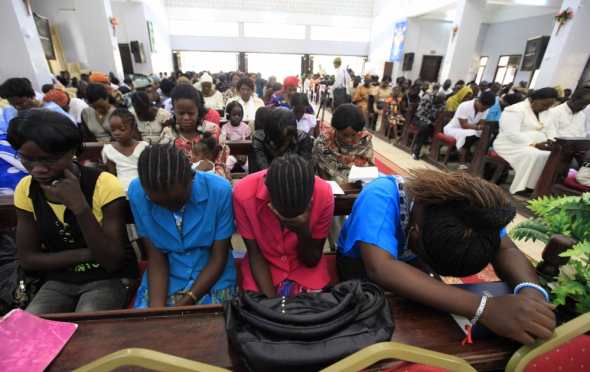
Bahri / Omdurman — Bahri University students were barred from entering the campus in Khartoum on Monday, leading to a riot in which police detained at least twenty students. 40 women students have been suspended from the University of Kordofan.
The university administration issued a decision to ban students who have not paid their registration fees. A student told Radio Dabanga that a large number of students, mostly from Darfur, were surprised on Monday morning when they were prevented from entering the campus. They heard that they were not allowed inside on the pretext that they have not been registered for non-payment of the tuition fees yet.
«The students started to gather at the university’s gate and cheer slogans against the decision. Police forces, stationed in front of Bahri, intervened. They beat and chased the students until Kadaro and arrested at least 20,» he said.
Exemption from tuition fees for students from Darfur was one of the conditions of the Doha Document for Peace in Darfur. Students from Darfur, who have been impoverished by years of conflict, could then afford an opportunity to study. However, the measure has been met with resistance at universities thoughout Sudan and Darfuri students regularly protest the non-implementation or delays regarding the measure.
The administrators of Bahri University dismissed two students and suspended two others for speaking out against the administration in December.
‘The government pursues a policy of dismissing students who demand the cancellation of fees.’ – Students association
40 students suspended
On Sunday, several associations of Darfuri students announced that the names of 40 women from Darfur were removed from the student registry list of the Faculty of Health Sciences at the University of Kordofan, in El Obeid. The reason is that the 40 students were unable to pay the tuition fees, according to the student associations.
At a press conference in Omdurman, at the premises of the National Umma Party, the representatives of the associations said that students have recently been suspended for the same reason from the universities El Zaim El Azhari, Holy Quran, and others.
«The government pursues a policy of dismissing students who demand the cancellation of fees, after it failed to suppress the students’ protests by arbitrary arrests and assassinations,» a student told journalists.
Five banned
On Sunday, the University of Bahri also issued a decree and banned five students from entering the campus until they cooperate with an investigation committee. Mutasim Hamid Ibrahim, Hassan Tijani, Hussein Adam, Sadig Abdeljabbar and Mustafa Osman reportedly participated in a gathering of student supporters of the rebel SLM-Minni Minawi at the campus.
Yesterday a student told Radio Dabanga that the decision came a day after the SLM students addressed a crowd at the university, which was disrupted by student supporters of the ruling National Congress Party.
Europa/Francia/Abril del 2017/Noticias/https://theconversation.com/
Depuis le forum mondial de Dakar sur l’Éducation pour tous (EPT) en 2000, une mobilisation internationale sans précédent a eu lieu en faveur de l’éducation en direction des pays les plus en retard, pour la plupart en Afrique subsaharienne. Considérés comme un droit et un moteur du développement, l’accès, la qualité et le financement de l’éducation posent encore un très grand nombre de questions sur lesquelles la recherche est amenée à travailler pour envisager l’atteinte des Objectifs du développement durable (ODD) en 2030.
La production de connaissances sur l’éducation dans les pays en développement, de statuts divers (scientifique comme institutionnelle) s’est donc considérablement accrue dans les dernières décennies et de nombreux espaces dédiés d’études et recherches ont vu le jour dans le monde. Commanditée par l’Agence française de développement (AFD), une récente étude réalisée par un collectif de chercheurs de l’Association pour la recherche sur l’éducation et les savoirs (ARES) apporte des éléments de réponses inédits sur la production scientifique française au travers des thèses, des offres de formation de niveau master, des publications académiques des chercheurs et des programmes de recherche dans ce champ de l’éducation.
Plus de 600 thèses de doctorat en France depuis 1990 sur le sujet, en nette augmentation depuis 2000
À partir des bases existantes de référencement de thèses dans le champ de l’éducation (hors linguistique, pédagogie et didactique) sur les pays en développement entre 1990 et 2013, un corpus de 448 thèses soutenues et 179 thèses en cours a pu être identifié. Fruit d’un « effet EPT », l’évolution globale du nombre de thèses sur l’éducation dans les pays en développement révèle une nette augmentation au cours des années 2000. Si ces thèses de doctorat sont toutes soutenues en France, un grand très nombre d’entre elles le sont par des étudiants originaires des pays en développement.
Figure 1 : thèses soutenues en France sur l’éducation dans les pays en développement, répartition (%) par année et par discipline
Une concentration des thèses soutenues sur les sciences de l’éducation, l’Afrique subsaharienne, le cycle primaire et l’offre éducative
Au niveau des disciplines de ces thèses, on observe une prédominance des sciences de l’éducation (60 %), suivies de l’économie (20 %) et de la sociologie (10 %). En termes de régions, il faut noter une nette priorité géographique accordée à l’Afrique subsaharienne (54 %). Sur la période 1990-2013, il y a un intérêt croissant pour l’Asie et une diminution des thèses portant sur l’Afrique du Nord.
Répartition ( %) des thèses selon la région concernée au cours des deux périodes de temps, 1990-2004 et 2005-2013
En ce qui concerne le niveau d’enseignement, il y a un intérêt porté avant tout sur le niveau primaire (35 %), mais également un fort pourcentage de thèses portant sur l’ensemble du système éducatif (29 %) ; en revanche, l’enseignement technique et professionnel est très peu traité (3 %), de même que l’éducation non formelle (2 %) et la petite enfance (0,8 %).
Répartition ( %) des thèses selon le niveau/type d’enseignement concerné au cours des deux périodes de temps, 1990-2004 et 2005-2013
Du côté des thématiques abordées, l’accent est mis avant tout sur l’offre éducative, à travers principalement la question des enseignants (statut, formation, pratique), la pédagogie, les apprentissages, les curricula, mais aussi les politiques éducatives et l’analyse des systèmes éducatifs. Parmi les thématiques peu traitées, on peut noter les différentes formes d’équité, la santé (hormis quelques thèses sur le handicap), les violences en milieu scolaire, les conflits, le secteur privé, les parcours scolaires, les langues d’enseignement et l’éducation non formelle.
Une dispersion grandissante des directeurs des thèses et une absence de pôle académique spécialisé
En termes de cartographie académique, 44 % des thèses soutenues l’ont été à Paris (Universités, Institut d’études politiques, Institut national des langues et civilisations orientales et École des hautes études en sciences sociales), dont près de 20 % dans seulement deux universités : Paris 5 Descartes et Paris 8. Seulement 13 universitaires ou chercheurs ont dirigé au moins 5 thèses relatives à l’éducation au Sud sur la période 1990-2013. Malgré le nombre très important de thèses soutenues, l’analyse démontre l’inexistence, en France, de pôle académique structuré et centré sur le champ de l’éducation dans les pays en développement. Il y a ainsi 137 directions de thèse différentes sur les 179 thèses en cours au total.
Près de 386 publications académiques généralement en français, publiées après 2000 et axées sur le primaire et l’Afrique subsaharienne
À partir de différentes sources existantes depuis 1990, 386 publications sur l’éducation dans les pays en développement peuvent être référencées : 279 articles parus dans 63 revues à comité de lecture, 68 chapitres d’ouvrage et 39 ouvrages. Les revues anglophones et hispanophones représentent plus du tiers des 63 revues répertoriées. Près de 80 % des références ont été publiées après 2000. L’analyse, réalisée à partir des titres des articles parus en français, met en évidence une recherche fortement concentrée sur le niveau primaire en Afrique subsaharienne.
Une recherche insuffisamment structurée, faiblement soutenue et donc peu visible
Cet état des lieux, assurément incomplet et bien sûr provisoire, a permis de recenser un peu moins de 70 chercheurs (majoritaires) et enseignants-chercheurs travaillant actuellement sur ce thème, réparti dans 23 structures de recherche. Parmi celles-ci, le Centre Population et Développement (CEPED) apparaît aujourd’hui comme la seule structure de recherche qui comporte une équipe explicitement centrée sur l’éducation dans les pays en développement. Parmi les autres laboratoires, seuls cinq affichent encore au moins deux enseignants-chercheurs, chercheurs permanents et/ou associés travaillant sur les questions d’éducation dans les pays en. Au cours de toute son histoire, une institution comme l’Institut de recherche pour le développement (IRD) a recruté moins de dix chercheurs en rapport avec le champ de l’éducation.
Ce qui ressort globalement de cette analyse, c’est à la fois l’intérêt continu porté sur le sujet en France, qui confirme l’analyse des thèses passées ou en cours, mais aussi la dispersion de ces forces et la déperdition qui en résulte. Les chercheurs qui travaillent isolés manquent visiblement de soutien qui les aiderait à poursuivre des recherches dans cette voie et à publier.
Par ailleurs, l’inventaire des offres de formation de niveau master, portant sur l’éducation avec une dimension internationale et orientée vers les pays du Sud, s’avère très limitée. La faible présence d’enseignants-chercheurs, responsables de la formation des futurs doctorants, ne laisse pas augurer d’une amélioration prochaine de ce relatif isolement de la recherche française sur l’éducation dans les pays en développement. En outre, très peu de programmes de recherche dédiés ont bénéficié d’un financement spécifique, de type Agence nationale de la recherche (ANR).
Finalement, la recherche française démontre une dispersion grandissante des directeurs de thèses, un nombre très restreint de ces directeurs étant spécialistes de la question et une absence de pôles académiques spécialisés ; elle apparaît insuffisamment structurée, faiblement soutenue et donc peu visible, alors même que l’intérêt pour le champ est croissant. Face à cette situation, il revient à la communauté scientifique impliquée dans ce champ, en France mais aussi dans l’ensemble de l’espace francophone et tout particulièrement dans les pays du Sud, de trouver les voies et moyens pour davantage communiquer, échanger et se rendre plus visible
América del Sur/Venezuela/Abril del 2017/Noticias/http://informe21.com/
«Las bolsas plásticas generan grandes impactos sociales y ambientales, de allí la necesidad de ampliar la comprensión sobre la urgencia de disminuir su uso, con acciones coordinadas para promover la utilización de otros envoltorios alternativos, sobre todo en los ecosistemas vulnerables de los Parques Nacionales que reciben mayor afluencia durante temporadas como la Semana Santa», indicó en una nota de prensa el gerente general de Fundación Tierra Viva, Alejandro Luy, organización que trabaja en alianza con la red de farmacias y botiquerías.
Agregan que ambas instituciones promueven la adopción de medidas para frenar la contaminación de ambientes marinos y favorecer la preservación de la diversidad biológica con campañas para disminuir el uso de bolsas plásticas, que además redunda en una mejor calidad de vida de los ciudadanos.
Se confunden
Según el biólogo Alejandro Luy, «la bolsa plástica que llega al mar es generalmente confundida con alimento por aves, peces, tortugas y ballenas, y sabemos que en el mundo más de 250 especies marinas mueren por la ingesta de plástico. En muchos países se han aprobado leyes nacionales, así como ordenanzas o medidas ejecutivas por parte de gobiernos nacionales o locales, orientadas a regular el uso de la bolsa plástica y con ello reducir sus impactos», señaló.
El cuido de parques nacionales y otros espacios naturales contribuye a mejorar la calidad de vida de los residentes y a potenciar los atractivos del sector turístico, como ocurre en la isla de Margarita, receptora de buena afluencia de visitantes.
En este boletín informativo indican que desde el año 2012 Fundación Tierra Viva trabaja en alianza con la red mencionada para promover la reducción del uso de bolsas plásticas a través de diversas acciones divulgativas y educativas, utilizando distintas estrategias y medios. De esta manera se ha impulsado en los clientes de las farmacias Botiquería, así como en la opinión pública nacional, la reflexión en torno a esta problemática, para todos aportar un granito de arena.
Alternativas
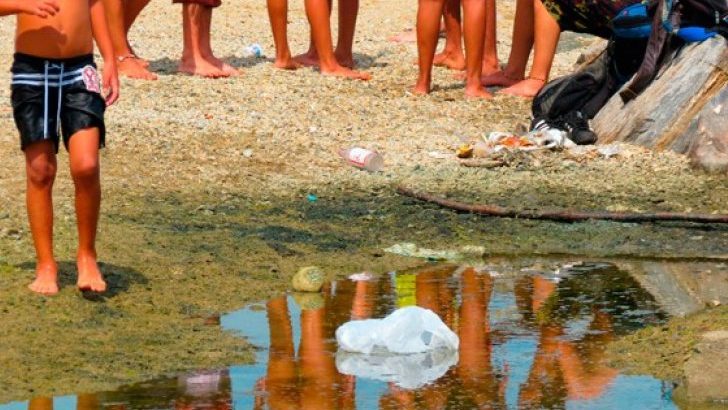
En el marco del disfrute de este asueto, cuando miles acuden a las playas para disfrutar del ambiente, hay sabias recomendaciones: llevar consumibles a la playa en bolsas ecológicas (de tela o reutilizables), bolsos o morrales; disminuir el uso de pitillos, removedores y vasos de plástico; usar el bolso para guardar compras pequeñas; no solicitar ni aceptar el doble embolsado en el supermercado y llevar los envases de plástico y las tapas a los centros de reciclaje.
Asia/China/Abril del 2017/Noticias/https://theconversation.com/
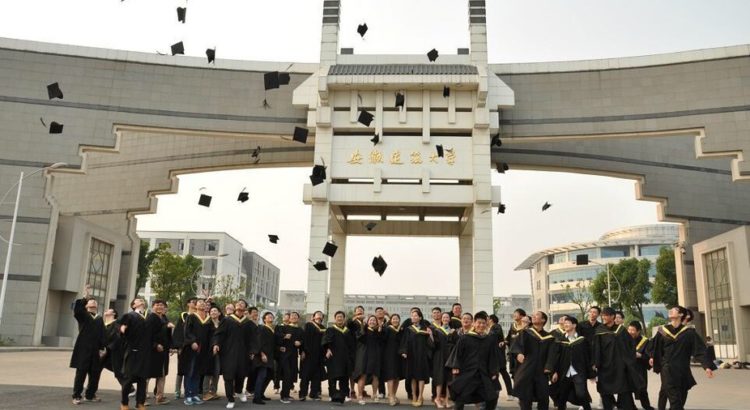
A record-breaking 8m students will graduate from Chinese universities in 2017. This figure is nearly ten times higher than it was in 1997 and is more than double the number of students who will graduate this year in the US.
Just two decades ago, higher education in China was a rare privilege enjoyed by a small, urban elite. But everything changed in 1999, when the government launched a program to massively expand university attendance. In that year alone university admissions increased by nearly 50% and this average annual growth rate persisted for the next 15 years, creating the largest influx of university educated workers into the labour market in history.
Annual enrolment of new students in higher education institutions.Author provided
Growth in the number of engineering students has been particularly explosive as part of the government’s push to develop a technical workforce which can drive innovation. But overall student numbers have increased in all subjects – even in the humanities and social sciences. New universities have sprung up and student enrolment numbers have rocketed. The second most popular subject major is in fact literature – and the fastest growing is law.
Underemployment
In 2013, Chinese citizens started blogging about the “hardest job hunting season in history” – and each year it seems to get harder for Chinese graduates. In 2017 there will be 1m more new graduates than there were in 2013. And yet, the graduate unemployment rate has remained relatively stable – according to MyCOS Research Institute, only 8% of students who graduated in 2015 were unemployed six months after graduating.
But if you delve a little deeper it’s clear that unemployment rates mask the more subtle issue of “underemployment”. While most graduates eventually find work, too many end up in part-time, low-paid jobs.
Six months after graduating, one in four Chinese university students have a salary that is below the average salary of a migrant worker, according to MyCOS data. History, law and literature have some of the lowest starting salaries, and also the lowest employment rates.
And for students who choose arts and humanities subjects in high school, the average starting salary after university is lower than that of their classmates who didn’t go to university, according to survey data. Of the 50 most common graduate occupations, 30% are low-skilled and don’t require a degree. For these students, low starting salaries and limited career progression call into question the value of their degree.
The high cost of living, particularly in big cities, has also forced millions of graduates into “ant tribes” of urban workers living in squalid conditions – often in basements – working long hours in low-paid jobs.
The big divide
But for a different group of graduates, the contrast is striking. Engineering, economics and science majors in China all enjoy high starting salaries and the top employment rates. These graduates fill the highest-paid entry positions in the most attractive employment sectors of IT, operations, real estate and finance. Chinese tech graduates do particularly well. In 2015 the top five highest paying graduate jobs were all IT related.
The government’s “Made in China 2025” strategy to become a global high-tech leader in industries such as advanced IT and robotics has created plenty of opportunities for graduates in these fields.
Top highest paying graduate jobs.
Not only are the starting salaries high, but long-term earnings follow a starkly different trajectory. Three years after graduating, the top 15% of engineering, economics and science graduates earn more than double the median salary for other graduates.
Wrong types of skills
Despite the rapid increase in the number of university graduates, Chinese companies complain of not being able to find the high-skilled graduates they need. The main deficit is in so-called “soft skills” such as strong communication, analytical and managerial skills. According to research by McKinsey, there is a short supply of graduates with these assets.
Chinese universities have a great track record of teaching students “hard skills”, but the test-focused education system has placed little emphasis on the development of anything else. So while graduates from technical or quantitative majors find employment because they have the necessary “hard skills”, graduates from less technical majors are hampered by their lack of both types of skills.
Two types of graduates
It seems then that the problem is not the rising number of students attending university, but that there is a mismatch between the skill composition of graduates and the skills employers need.
Demand for graduates with technical or quantitative skills has in fact risen faster than supply, resulting in attractive employment opportunities for graduates with these skills.
But for the rest, their education leaves them badly prepared for the jobs that are available. Until this changes, the polarisation in the graduate job market is likely to continue.
America del Sur/ Argentina/Abril 2017/Noticias/http://www.bbc.com/
Los argentinos estamos acostumbrados a que los demás latinoamericanos nos mofen o critiquen por diversas cosas… nuestro acento, nuestra arrogancia, nuestra obsesión con el psicoanálisis.
Pero hay una cosa que casi siempre se nos ha reconocido con admiración: nuestra cultura y educación.
La escuela pública argentina fue históricamente considerada de las mejores de la región, si no la mejor.
Por eso resultó tan extraño oír recientemente duras críticas sobre su estado, sobre todo por quién lo dijo: el propio presidente de Argentina, Mauricio Macri.
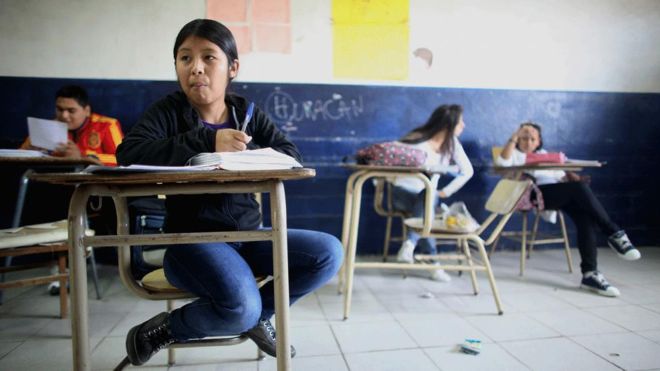
Macri sorprendió hace unos días, dando a conocer los resultados de la evaluación Aprender, un trabajo realizado a finales de 2016 para «conocer el estado» del sistema educativo argentino.
La evaluación -que el mandatario definió como la “más importante de la historia”- analizó los conocimientos educativos de alumnos de primaria y secundaria de 39.000 escuelas públicas y privadas de todo el país.
Pruebas PISA: ¿cuáles son los países que tienen la mejor educación del mundo?
Y los resultados, según él, fueron “dolorosos”.
“Cinco de cada diez alumnos no comprenden textos”, resaltó Macri, quien también destacó que «siete de cada diez que terminan el secundario no tienen conocimientos de matemática”.
«La mejor manera de mejorar es saber adónde estamos parados, en qué estamos fallando”, señaló el jefe de Estado, al explicar por qué ordenó la evaluación.
4 medidas que Macri revirtió en Argentina tras polémicas que lo dejaron mal parado
Paro docente
Sus palabras fueron dichas en el contexto de una dura batalla entre el gobierno y un grupo de sindicatos de maestros que mantuvieron un prolongado paro en reclamo de aumentos salariales.
La medida interrumpió el primer mes de clases en gran parte de las escuelas públicas del país, algo que ocurre cada año cuando comienza el ciclo escolar.
Y hubo una frase que dijo Macri durante su presentación que resultó particularmente controvertida.
Al resaltar que en los colegios públicos hubo el doble de alumnos que no entendieron textos que en los colegios privados dijo que eso “marca otro problema de fondo que es la terrible inequidad entre aquel que puede ir a la escuela privada versus el que tiene que caer en la escuela pública”.
El hecho de que usara la despectiva expresión “caer en la escuela pública” generó una oleada de críticas contra el presidente.
Miles se volcaron a las redes sociales -algunos bajo el hashtag #Yocaí– para contar, con orgullo, que ellos se habían graduado de esa escuela pública que Macri estaba denostando.
Qué ha mejorado, qué ha empeorado y qué sigue igual en Argentina desde que Macri llegó al poder“A la educación pública no se llega, no se elige, se cae por descarte, porque no queda otra”, escribió la periodista Nora Veiras en el diario Página 12, crítico con el gobierno.
“(El partido de gobierno) Cambiemos está decidido a modificar la matriz cultural del país (…) Para lograrlo tiene que aniquilar lo constitutivo de la conformación de la Argentina: la escuela pública”, acusó la periodista.
Y Vaieras no fue la única. Son muchos los que creen que las críticas de Macri a la educación pública esconden un deseo privatizador del ex empresario, famoso por haberse graduado de uno de los colegios privados de elite más prestigiosos del país, el Cardenal Newman.
Sin embargo, otros tantos salieron a defender al mandatario, e incluso a felicitarlo por decir algo que pareciera ser tabú en Argentina: que la amada educación pública está en crisis.
Desaprobado
Esa crisis no solo la evidencia la evaluación Aprender.
El Informe del Programa Internacional para la Evaluación de Estudiantes -más conocido como PISA– que cada tres años realiza la Organización para la Cooperación y el Desarrollo Económico (OCDE), también reveló los problemas en la calidad educativa.
Europa /Reino Unido/Abril del 2017/Noticias/https://theconversation.com/
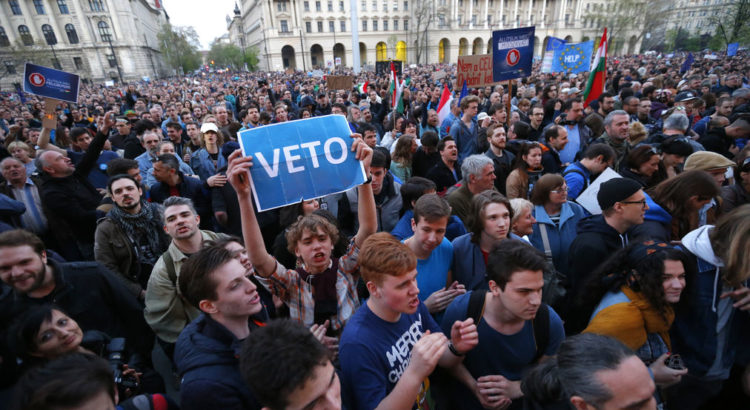
Tens of thousands of people recently demonstrated in the Hungarian capital of Budapest against attempts by their government to close the Central European University (CEU).
This was the second large-scale demonstration in Budapest in as many weeks – with protesters turning out en masse to challenge recent amendments to the national law on higher education that have been adopted by the Hungarian parliament.
As a university, CEU has a dual identity, and offers degrees accredited in both the US and Hungary. But the latest amendments make the university’s continued operation in Hungary virtually impossible. This is because the bill would require CEU to operate under a binding international agreement and to provide higher education programmes in its country of origin – the US – all within a very short time-frame.
At the time of writing, the legislation is on the desk of the Hungarian president for signature or referral to the Constitutional Court. Signature of the law would mean that the legislative changes would come into force, requiring a binding international agreement to be signed within six months of the publication of the law.
Referral to the Constitutional Court – a move which many of the protesters were calling for at the demonstration in Budapest – would mean that the law could be scrutinised for its legality and constitutionality.
Campaign against liberalism
CEU is a privately funded university with more than 1,400 students from more than 100 countries, that offers degrees accredited in both the US and Hungary. It is ranked among the top 200 universities in the world in eight disciplines. It excels in political science and international studies.
It has had its home in Budapest for more than 25 years, and is part of the life of the city. That CEU was founded after the fall of communism to promote democracy makes the current move against it all the more reprehensible.
The university, ably led by the rector Michael Ignatieff – a former Canadian politician and internationally renowned academic – has mobilised an impressive campaign for supporteSTADO DE dERECHO.
Michael Ignatieff, rector of the Central European University.Reuters.
The response has been huge – with leading academic institutions in Hungary and around the world, as well as governments, politicians and individuals condemning the moves by the Hungarian government. The hash-tag #IStandWithCEU has also been trending on Twitter.
Freedom to teach
This outpouring of support underscores the importance placed in institutions that promote education and critical thinking.
Academic freedom is also a prized European value, and countries across Europe rightfully take pride in the quality of their universities and support their development.
The freedom of universities to teach, research, and publish is fundamental to a free and open society. Article 13 of the Charter of Fundamental Rights of the European Union provides that:
The arts and scientific research shall be free of constraint. Academic freedom shall be respected.
The need for such explicit protection of academic freedom is clear: universities and academics have long been targeted by autocrats because of the threat that free and critical thinking poses to their continued existence. And for an attack of this nature to take place within the EU should be cause for concern across Europe.
This is because the precedent it would set puts all academic freedom at risk. It is also a stark reminder of the need for constant vigilance to safeguard European democracies.
Targeting European values
While CEU has said that it will take all legal steps available to it to challenge the Hungarian law, this is not just a legal fight.
This move to shut an independent university poses a fundamental question as to the extent to which European values can be ignored by an EU member state. Rule of law is supposed to be central to the operation of member states – and targeting freedom of expression through the closure of academic institutions runs directly counter to this.
Threat to academic freedom and European values.Reuters
This is not the only recent move by the Hungarian Government that potentially contradicts the rule of law. In October, a major national newspaper – Népszabadság – closed alleging government pressure. And the government has also recently targeted civil society with the proposed introduction of restrictive legislation justified by national security concerns and the need for additional transparency.
There also doesn’t seem to be much understanding within Hungary as to why the threatened closure of CEU is causing such outrage. Just a few days ago, in response to the protests and influx of letters in support of CEU, the Hungarian government spokesman called the situation a “storm of political hype” that was part of a “political circus”.
The European Commission has said it will discuss the situation in Hungary – and this is an important opportunity to reinforce fundamental EU principles.
But for now, individuals, institutions and governments in the UK, and across Europe, need to take note of what is happening in Hungary, and take action to make the closure of CEU a red line that cannot be crossed.
América del Sur/Argentina/Abril del 2017/http://www.2001.com.ve
Un grupo de activistas de agrupaciones de izquierda de Argentina marcharon este miércoles a la embajada de Estados Unidos en Buenos Aires, donde denunciaron el papel que juega Washington en las crisis de Siria y Venezuela.
Con grandes banderas y algunos con los rostros cubiertos, la protesta reclamó el respeto por «la autodeterminación de los pueblos», dijo Guillermo Caviasca, uno de los activistas.
«Cada pueblo tiene derecho a definir su futuro, ellos (el gobierno de Estados Unidos) no tienen por qué meterse en diferentes países generando golpes de Estado, maniobras desestabilizadoras o, literalmente, levantamientos armados de grupos de derecha o grupos terroristas», agregó Caviasca a la AFP.
Noemí Lamberti, integrante de la agrupación Movimiento Patriótico Revolucionario Quebracho, sostuvo que «los pueblos están siendo agredidos por el imperialismo a través de bombas, de explotación, a través de conspiraciones como la que desarrollan en nuestra hermana República de Venezuela, con la cual tenemos nuestra solidaridad y la hermandad como pueblo».
Quebracho dijo en un comunicado que «Estados Unidos y (el presidente Donald) Trump respalda a la derecha golpista de Venezuela y buscan voltear a (mandatario Nicolás) Maduro».
Trump ordenó la semana pasada la primera acción directa contra Siria, bombardeando con misiles una base siria en represalia al presunto ataque químico perpetrado por las fuerzas del presidente Bashar al Asad a una ciudad rebelde, que dejó 86 muertos.
Del lado venezolano, Washington urgió el lunes al mandatario Nicolás Maduro que «reconsidere» la decisión de inhabilitar durante 15 años a Henrique Capriles, uno de los líderes opositores más emblemáticos.
Además, pidió a Caracas garantizar que los ciudadanos ejerzan «su derecho a elegir a sus representantes en elecciones libres y justas» y que las fuerzas de seguridad «protejan la protesta pacífica» de los miles de venezolanos que salen a las calles desde principios de abirl en contra del gobierno.
OtrasVocesenEducacion.org existe gracias al esfuerzo voluntario e independiente de un pequeño grupo de docentes que decidimos soñar con un espacio abierto de intercambio y debate.
¡Ayúdanos a mantener abiertas las puertas de esta aula!








 Users Today : 75
 Total Users : 35490887
 Views Today : 86
 Total views : 3604309