Page 4053 of 6193
1 4.051 4.052 4.053 4.054 4.055 6.193

Reino Unido: The contradiction at the heart of Rachel Dolezal’s ‘transracialism’

Europa/Reino Unido/Abri

l del 2017/Noticias/https://theconversation.com/

Rachel Dolezal, the former branch president of the National Association for the Advancement of Colored People (NAACP) who gained global notoriety in 2015 after being “outed” as a white woman pretending to be black, is back with a new book on race. Dolezal, who is ethnically German, now claims that she is “transracial”, a condition she compares to transgenderism. By this she means that although she was born white, she identifies with being black, arguing that race is a social construct.

Dolezal complains of further victimisation because “transracialism” is not recognised in the same way as transgenderism. And Dolezal sees herself as triply stigmatised; because of her race, because of her trans status and also because of the perceived illegitimacy of this status.

For someone like me, concerned both with race and with the role of narrative in culture, the narrative spun by Dolezal is both confounding and uniquely fascinating. In an interview with BBC Newsnight, she announced – not incorrectly, in my view – that “race is a lie”. At the same time, she laid claim to the transracialism that she demands to be accepted as a truth.

But while Dolezal has been roundly – to borrow from the old slave spiritual – rebuked and scorned by many, her claim deserves to be considered seriously. Is there really such a thing as transracialism, or is Dolezal correct in her simultaneous – if contradictory – assertion that “race is a lie”? Because in a binary universe, the two statements cannot both be true.

I’d like to tell you a story. I found it in a book of folklore collected from real folk in the American Deep South at around the turn of the last century. The story is about a black girl who is magically transformed into a white girl. While she’s the white girl she lives a charmed life, like Cinderella at the ball. But when she becomes a black girl again, she not only loses all her privileges but worse, is accused of having murdered the now-vanished white girl, and is sentenced to hang.

Now, I won’t tell you the whole story. But “passing” – when a person with mixed African and European ancestry is sufficiently light-skinned to “pass” for a white person – has a long history in the United States. This was no small matter, since during slavery, those who “passed” successfully may have been able to escape and remain undetected, living free within the white community.

Of course, this meant that, unlike the black girl in the story, any person who “passed” would need to have a substantial amount of European ancestry. Dolezal, who cosmetically modifies her skin-tone and hair-texture to assume some characteristics associated with African descent, appears to all intents and purposes as a person of mixed European and African ancestry.

‘Black’ and ‘white’

Patti Smith’s 1978 track, Rock ‘n’ Roll Nigger, plays with the construction of black identity, arguing in her song for a positive re-appropriation of blackness and that “nigger” applies to anyone excluded from mainstream society: “Jimi Hendrix was a nigger, Jesus Christ and Grandma too, Jackson Pollock was a nigger, nigger, nigger, nigger”. The idea that identities are constructed and performed has gained credence in recent decades, not least associated with the academic Judith Butler’s ideas around “performativity” (Pdf) – the idea that gender roles, in particular, are largely performed as a result of acculturation and expectation rather than representing innate characteristics.

But racial identities – and race as we understand it – were constructed in support of a political caste system in a way that gendered identities were largely not, and are wholly bound up in recent legacies of slavery and colonialism.

Alexandre Dumas, author of the Three Musketeers, had a grandmother who was an African slave. Google Cultural Institute/Wikipedia

Blanket categories of “black” and “white” are an entirely modern phenomenon. In the 17th and 18th centuries, those Europeans who were actively involved in the slave trade made a point of distinguishing between different African ethnic groups; some were considered to be better house slaves, others better field slaves. The Igbo people, for instance, were considered prone to suicidal ideation, which posed problems for the incipient slaver. In the early days of “race” as we know it, there really was no sense of the generic catch-all blackness to which Dolezal lays claim.

As generations passed, ideas of “black” and “white” were further complicated by the complex striations of racial coding that were implemented both during and after slavery, across the Americas, as a consequence of voluntary and involuntary coupling between Europeans and Africans.

This led to a dizzying taxonomy of racial mixes, including (but not confined to) so-called mulattoes, quadroons, octoroons, tercerons, quintroons and beyond, depending on how many generations back a person’s African ancestry was traced. A person might be able to pass as white if their direct African ancestry was three or four generations removed – although if their relative “blackness” was discovered, it was a source not only of shame but was a precondition of legal slavery.

The reason why any of this is important is because we must recognise that the history of race is two things. It’s both a fallacy, created in support of a master-slave caste system; and it’s a complex taxonomy based on continental and ethnic inheritance.

At no level beyond metaphor is it an identity that can be selected, because the whole point of any caste system is to create fixed separations of power that cannot be changed or chosen. If they could, then everyone would choose to belong to the privileged caste – which would render the whole caste system meaningless. At the same time, inheritance is not an accident of birth. It is not a Y chromosome rather than an X, but based on real people in one’s familial line and whose histories cannot be erased retroactively.

Dolezals’s problem is this: to choose one’s racial identity irrespective of inheritance is tantamount to an admission that race does not exist. It would be one thing to adopt a black identity as a show of political resistance and solidarity, but Dolezal is instead in danger of laying claim to what is arguably a racist fantasy of “blackness”. If we fail to take her seriously, we run the risk both of ignoring the critical issues at stake and, worse, accepting uncritically Dolezal’s repurposing of racial ideology. If we are to accept that there is any such thing as “transracial” then it should be as an opportunity for all of us to transcend the politically expedient but specious categories of race.

Instead, by claiming race as some kind of mysterious inner state divorced either from its political, historical or ethnic specificity, Dolezal could do the opposite of transcending race; rather, she runs the risk of reinforcing racial and racist models by insisting that race is an innate, inner experience rather than something imposed from without.

If Dolezal is genuine in her claim that “race is a lie”, then she must recognise that her claims to transracialism are also lies. She simply cannot have it both ways; because race either is, or it isn’t.

Fuente :

https://theconversation.com/the-contradiction-at-the-heart-of-rachel-dolezals-transracialism-75820


Comparte este contenido:

La ONU denuncia «más violencia» en Siria tras ataque de Estados Unidos

Abril del 2017/Noticias/http://www.2001.com.ve/


La ONU denunció hoy que tras el ataque de EE.UU. contra Siria de la semana pasada ha habido «más luchas y violencia» en el país, con nuevas denuncias de armas prohibidas que han castigado zonas habitadas por la población civil.

«Es hora para pensar con claridad», afirmó el enviado especial de la ONU para Siria, Staffan de Mistura, al presentar hoy un informe ante el Consejo de Seguridad de Naciones Unidas para hacer un repaso de la situación política en el conflicto de ese país.

El pasado jueves, Estados Unidos lanzó 59 misiles Tomahawk contra la base aérea siria de Shayrat para castigar al régimen de Bachar al Asad tras denuncias sobre el uso de armas químicas, dos días antes, en la localidad de Jan Shijún.

«Desde entonces hemos visto más lucha y violencia, con nuevas denuncias del uso de bombas de racimo y de barril en zonas habitadas, incluyendo las cercanías de Jan Shijún», dijo De Mistura, aludiendo a armas prohibidas por la legislación internacional.

De Mistura dijo que las acciones armadas en ese país se conocen en medio de un «frágil» proceso de diálogo político que se lleva a cabo en Ginebra, donde se han completado cinco rondas de consultas para buscar una solución política a la guerra siria.

El representante de la ONU insistió en que sólo una solución política puede poner fin a esa guerra, «y no una solución militar, a pesar de los que intentan hacer creer» que hay esa posibilidad.

La guerra en Siria, que ha causado más de 300.000 muertos y ha generado millones de desplazados y refugiados, estalló en 2011 primero como un movimiento político de oposición a Al Asad y posteriormente con un alzamiento armado.

Fuente:

http://www.2001.com.ve/en-el-mundo/157079/la-onu-denuncia–mas-violencia–en-siria-tras-ataque-de-estados-unidos.html

Fuente Imagen:

https://lh3.googleusercontent.com/Bg86IRoftw4BFYEP4PMh4p1jUvbA_SL34eoaR625Y4w18if6wnCfz1p2qTXSDy__B_VdDA=s85

Comparte este contenido:

Emiratos Arabes Unidos: Teachers from certain countries to be fast-tracked through UAE’s new education licensing scheme

Emiratos Arabes Unidos/Abril de 2017/Autora: Roberta Pennintong/Fuente: The National

RESUMEN: Los maestros con una licencia profesional de algunos países de habla inglesa tendrán acceso rápido a través del nuevo sistema de licencias. Los maestros, gerentes y directores licenciados de Australia, Canadá, Irlanda, Nueva Zelanda, Reino Unido, Estados Unidos y Sudáfrica pueden solicitar una exención del programa de Licenciatura de Maestros y Liderazgo Educativo. No tendrán que sentarse tras de los exámenes, saltando directamente a la etapa final de la concesión de licencias. «Sabemos que estos maestros son competentes, ya han aprobado sus licencias en un país que sabemos que tiene mucha integridad», dijo el Dr. Naji Al Mahdi, de la Autoridad de Conocimiento y Desarrollo Humano de Dubai. «Sabemos exactamente su sistema y ya hemos emparejado sus estándares con los nuestros», dijo el Dr. Al Mahdi, director de calificaciones de la autoridad. El sistema de licencias se extenderá a todo el país simultáneamente. Pero el Consejo de Educación de Abu Dhabi, que administra las escuelas públicas y regula las escuelas privadas del emirato, y el Ministerio de Educación, que supervisa las escuelas públicas de Dubai y todas las escuelas de los Emiratos del Norte, aún no han anunciado cómo se aplicará. Los maestros con calificaciones de los países seleccionados recibirán una licencia de enseñanza provisional que tendrá una validez de entre 12 y 18 meses.

Western Cape education MEC Debbie Schafer has been «disrespectful towards the rights of learners», said Judge Elizabeth Baartman in the Western Cape High Court on Tuesday, during arguments in the eviction case of the Grootkraal Primary School and church.

GroundUp reports that the new owner of the land, which is situated near the Cango Caves in Oudtshoorn, wants to evict the community from a portion of the farm that the community have, by their submission, used for some 185 years.

The school itself has been on the land for about 90 years. The community’s heads of argument asserts that the land that it uses «is the only place where the members of the community can get together as a group, it is the venue where all the community activities take place».

«The loss of the use of this land in effect will mean the loss of the Grootkraal community as an entity,» it states.

Baartman’s comments on the MEC’s response to the matter came after counsel for the school argued that the department failed to consult properly with the school about its possible relocation.

Both the community and the school are opposing the eviction. In a counter application to the eviction, the community is calling for the court to recognise its rights to the land, which the residents believe they have established through long standing use, or to develop the law itself to recognise these rights. Residents also want the court to register these rights against the title deed.

‘What if that was the NG Kerk?’

Advocate Anne-Marie De Vos, for the community – who are represented by Lawyers for Human Rights – said that she couldn’t find «real reason» why the owners opposed the community using the land.

«What if that was the NG Kerk? What if it were white children going to the school?» she asked, suggesting that if this was the case, the community would be allowed to continue using the land. She also called on the court to «recognise the injustices of the past».

The school wants the department to consider expropriating the land.

The department on the other hand, is not opposing the application for eviction. If the eviction is granted, the department wants to move to the school 17km away to land that currently houses a school in Oudtshoorn.

The Centre for Child Law is another respondent in the matter and also supports expropriation, as does the amicus curiae (friend of the court), Equal Education.

Problems began in 2010 when the land that the Grootkraal community had been using was sold and the school was granted a one year lease to continue operating.

When the lease expired, the department entered into negotiations with the owners of the land to extend the lease. After initially asking for rent of R32 000 a month from the department, they lowered this amount to R14 000. The department was only willing to pay R10 000.

Unable to reach an agreement, the owners sought an eviction order and the school was told that it was to close.

No engagement

Following this, the school interdicted the department from implementing the closure or relocating it without following proper consultations with the school, the governing body and the parents.

The department was also ordered to meaningfully engage with the owners to renegotiate a lease agreement.

Advocate Mushahida Adhikari, for the school and the school’s governing body, said that there is no evidence that the department complied with the order.

Adhikari highlighted the inability of the department to engage with the school about its future.

She said that the MEC needed to come to court to explain what the plan would be if the school was «relocated». She also pointed to the lack of action taken by the department while the case has been stalled over the past few years.

Responding to this, Baartman said that rural schoolchildren were the «stepchildren» of education. She said that the MEC seems to think that the court can order the relocation of the school and then the department will «make a plan».

«It is common sense, not a court in the land will do that,» a frustrated Baartman said.

‘Gross mischaracterisation’ of case

She questioned how the department came to their decision regarding the move.

«How did the department reach that decision? Was there any consultation with the school, [or] parents or was it just decided in a boardroom?» asked Baartman.

«With respect, it’s not business as usual,» she said.

Baartman said that the MEC had taken a «hands off approach». She also criticised the department for just «waiting for this case to finish» before it took action.

Advocate Ewald De Villiers-Jansen for the department, said that Adhikari’s version was a «gross mischaracterisation of the MEC’s case».

The department’s heads of argument state that following the owners’ application for eviction, the department erected a number of mobile classrooms on the grounds of the school that they were to be moved to and «undertook to provide the necessary transport» for the learners.

The department also says it upgraded the electricity and provided adequate ablution facilities.

Baartman said that in determining whether an eviction order is just and equitable she needs to know what the plans are for the children.

«I have evidence of a child getting up at 05:00. Does that mean child must get up at 04:00? [to get to the new school] What will this entail?» she asked.

Transport

She also pointed to the bad state of the roads and how negotiating these roads earlier when it is darker would be more difficult.

«What physically will happen on the ground, to say that it is just and equitable to evict these people?» she asked.

De Villiers-Jansen said that the department would provide transport for the children and that school could begin later so that children don’t need to wake up earlier.

As for the expropriation relief, he said that the court cannot compel the MEC to consider expropriation as this would be in breach of separation of powers. However, he said that the MEC may indeed consider this at a later date.

De Vos, for the community, said that given the facts, the owners are not entitled to an eviction order. She argued that the community had the right to use that land as they had used it for 185 years.

She said that there «cannot be one single person in this court in their heart that thinks it’s fair that the community must stop using that land».

De Vos insisted that the argument over exactly how big the piece of land that was used over the years or exactly what areas of the land were used, were «side issues». If need be, a surveyor could determine the extent of the land that they used.

Landless farmworkers

She said that it «shouldn’t be necessary for us to argue the justness of the community staying there». As a coloured farming community, like many others, they had used the land for years but had no rights, she said.

De Vos said that if the new owners of the land were prudent buyers they would have gone to the farm and inspected it themselves. There they would have seen signs for not just of a school, but also a church.

At this, Baartman said that the fact that there was a church on the land «should have made alarm bells go off» for the buyer. As for the suggestion that the owners wanted to bring wild animals onto the farm, De Vos said that a fence could be erected.

De Vos added that in all the farms in the Klein Karoo, there was not a single farmworker who was a landowner.

«It doesn’t exist. Why not?» she asked, saying that all the Grootkraal community was asking for was a church and a school.

The matter continues tomorrow.

Fuente: http://www.thenational.ae/uae/teachers-from-certain-countries-to-be-fast-tracked-through-uaes-new-education-licensing-scheme

Comparte este contenido:

Bolivia: Alistan un plan para la nivelación escolar de los niños trabajadores

Bolivia/Abril de 2017/Autora: Aleja Cuevas/Fuente: La Razón

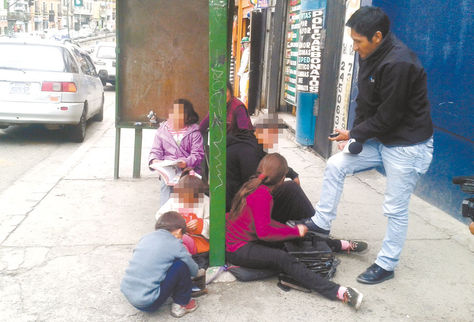
El Ministerio de Educación alista para Niños, Niñas y Adolescentes Trabajadores (NNAT) un plan que incluye la nivelación escolar. El programa contempla la tolerancia en el ingreso y la salida de las clases para esta población. Este miércoles se celebra el Día del Niño en Bolivia.

Para evitar que los menores de edad trabajadores queden rezagados en sus clases, el Ministerio de Educación alista espacios educativos alternativos para nivelar a los estudiantes. “Se prevé abrir más de 63 sedes en las ciudades capitales y en los municipios con mayor población”, anticipó el viceministro de Educación Regular, Valentín Roca.

Juan Catari, coordinador nacional de la Unión de Niños y Adolescentes Trabajadores de Bolivia (Unastsbo), recordó que la nivelación académica fue una de las solicitudes del II Encuentro Plurinacional de Educación de los NNAT, en abril de 2016.

“Yo repetí dos años porque los maestros no me apoyaban”, dijo uno de los niños trabajadores que participó en ese evento.

  • Un niño vende huevos de pascua en el centro de La Paz. Foto: José Lavayén

De acuerdo con Lizet Salazar, quien es parte del Espacio Niño, entidad ligada con NNAT de Cochabamba, hay prejuicios contra el niño que cursa un nivel inferior al de su edad: por ejemplo, alguien de 13 años que está en 5° de primaria.

DEMANDA. Otra demanda es la tolerancia en el ingreso y la salida de  clases. Los menores de edad que trabajan no pueden cumplir con los horarios. Así, tienen problemas a la hora de ser evaluados.

Hay más. El Ministerio de Educación analiza que algunas materias sean opcionales, por ejemplo Educación Física y Filosofía.Los menores de edad que trabajan realizan un doble esfuerzo a la hora de estudiar, comentan sus dirigentes.

Salazar cuenta que en Cochabamba existen menores de edad dedicados a la limpieza en los cementerios, otros que son lavadores de autos y también hay quienes trasladan en carretilla productos que compra la gente en las ferias. “Con lo que ganan pagan su ropa, el recreo y también el material escolar”.

Según el Ministerio de Educación, en Bolivia hay 34.000 menores de edad que estudian y trabajan  con un pago. Esto representa el 1,22% de los 2,8 millones de matriculados en educación regular.

Fuente: http://www.la-razon.com/sociedad/Bolivia-educacion-plan-nivelacion-ninos-trabajadores_0_2690130973.html


Comparte este contenido:

Sudáfrica: Judge accuses education minister of disrespecting pupils’ rights

Sudpafrica/Abril de 2017/Fuente: News 24

RESUMEN: Educación del Cabo Occidental MEC Debbie Schafer ha sido «irrespetuosa hacia los derechos de los estudiantes», dijo la jueza Elizabeth Baartman en el Tribunal Superior de Cabo Occidental el martes, durante los argumentos en el caso de desalojo de la Escuela Primaria Grootkraal y la iglesia. GroundUp informa que el nuevo dueño de la tierra, que está situado cerca de las Cuevas de Cango en Oudtshoorn, quiere desalojar a la comunidad de una parte de la finca que la comunidad, por su sumisión, ha utilizado durante unos 185 años. La escuela misma ha estado en la tierra por cerca de 90 años. Los jefes de la comunidad afirman que la tierra que utiliza «es el único lugar donde los miembros de la comunidad pueden reunirse como grupo, es el lugar donde se llevan a cabo todas las actividades comunitarias».«La pérdida del uso de esta tierra en efecto significará la pérdida de la comunidad Grootkraal como una entidad», afirma. Tanto la comunidad como la escuela se oponen al desalojo. En una contra-solicitud para el desalojo, la comunidad está pidiendo que el tribunal reconozca sus derechos a la tierra, que los residentes creen que han establecido mediante el uso de larga data, o para desarrollar la ley misma para reconocer estos derechos. Los residentes también quieren que el tribunal registre estos derechos contra la escritura de propiedad.

Western Cape education MEC Debbie Schafer has been «disrespectful towards the rights of learners», said Judge Elizabeth Baartman in the Western Cape High Court on Tuesday, during arguments in the eviction case of the Grootkraal Primary School and church.

GroundUp reports that the new owner of the land, which is situated near the Cango Caves in Oudtshoorn, wants to evict the community from a portion of the farm that the community have, by their submission, used for some 185 years.

The school itself has been on the land for about 90 years. The community’s heads of argument asserts that the land that it uses «is the only place where the members of the community can get together as a group, it is the venue where all the community activities take place».

«The loss of the use of this land in effect will mean the loss of the Grootkraal community as an entity,» it states.

Baartman’s comments on the MEC’s response to the matter came after counsel for the school argued that the department failed to consult properly with the school about its possible relocation.

Both the community and the school are opposing the eviction. In a counter application to the eviction, the community is calling for the court to recognise its rights to the land, which the residents believe they have established through long standing use, or to develop the law itself to recognise these rights. Residents also want the court to register these rights against the title deed.

‘What if that was the NG Kerk?’

Advocate Anne-Marie De Vos, for the community – who are represented by Lawyers for Human Rights – said that she couldn’t find «real reason» why the owners opposed the community using the land.

«What if that was the NG Kerk? What if it were white children going to the school?» she asked, suggesting that if this was the case, the community would be allowed to continue using the land. She also called on the court to «recognise the injustices of the past».

The school wants the department to consider expropriating the land.

The department on the other hand, is not opposing the application for eviction. If the eviction is granted, the department wants to move to the school 17km away to land that currently houses a school in Oudtshoorn.

The Centre for Child Law is another respondent in the matter and also supports expropriation, as does the amicus curiae (friend of the court), Equal Education.

Problems began in 2010 when the land that the Grootkraal community had been using was sold and the school was granted a one year lease to continue operating.

When the lease expired, the department entered into negotiations with the owners of the land to extend the lease. After initially asking for rent of R32 000 a month from the department, they lowered this amount to R14 000. The department was only willing to pay R10 000.

Unable to reach an agreement, the owners sought an eviction order and the school was told that it was to close.

No engagement

Following this, the school interdicted the department from implementing the closure or relocating it without following proper consultations with the school, the governing body and the parents.

The department was also ordered to meaningfully engage with the owners to renegotiate a lease agreement.

Advocate Mushahida Adhikari, for the school and the school’s governing body, said that there is no evidence that the department complied with the order.

Adhikari highlighted the inability of the department to engage with the school about its future.

She said that the MEC needed to come to court to explain what the plan would be if the school was «relocated». She also pointed to the lack of action taken by the department while the case has been stalled over the past few years.

Responding to this, Baartman said that rural schoolchildren were the «stepchildren» of education. She said that the MEC seems to think that the court can order the relocation of the school and then the department will «make a plan».

«It is common sense, not a court in the land will do that,» a frustrated Baartman said.

‘Gross mischaracterisation’ of case

She questioned how the department came to their decision regarding the move.

«How did the department reach that decision? Was there any consultation with the school, [or] parents or was it just decided in a boardroom?» asked Baartman.

«With respect, it’s not business as usual,» she said.

Baartman said that the MEC had taken a «hands off approach». She also criticised the department for just «waiting for this case to finish» before it took action.

Advocate Ewald De Villiers-Jansen for the department, said that Adhikari’s version was a «gross mischaracterisation of the MEC’s case».

The department’s heads of argument state that following the owners’ application for eviction, the department erected a number of mobile classrooms on the grounds of the school that they were to be moved to and «undertook to provide the necessary transport» for the learners.

The department also says it upgraded the electricity and provided adequate ablution facilities.

Baartman said that in determining whether an eviction order is just and equitable she needs to know what the plans are for the children.

«I have evidence of a child getting up at 05:00. Does that mean child must get up at 04:00? [to get to the new school] What will this entail?» she asked.

Transport

She also pointed to the bad state of the roads and how negotiating these roads earlier when it is darker would be more difficult.

«What physically will happen on the ground, to say that it is just and equitable to evict these people?» she asked.

De Villiers-Jansen said that the department would provide transport for the children and that school could begin later so that children don’t need to wake up earlier.

As for the expropriation relief, he said that the court cannot compel the MEC to consider expropriation as this would be in breach of separation of powers. However, he said that the MEC may indeed consider this at a later date.

De Vos, for the community, said that given the facts, the owners are not entitled to an eviction order. She argued that the community had the right to use that land as they had used it for 185 years.

She said that there «cannot be one single person in this court in their heart that thinks it’s fair that the community must stop using that land».

De Vos insisted that the argument over exactly how big the piece of land that was used over the years or exactly what areas of the land were used, were «side issues». If need be, a surveyor could determine the extent of the land that they used.

Landless farmworkers

She said that it «shouldn’t be necessary for us to argue the justness of the community staying there». As a coloured farming community, like many others, they had used the land for years but had no rights, she said.

De Vos said that if the new owners of the land were prudent buyers they would have gone to the farm and inspected it themselves. There they would have seen signs for not just of a school, but also a church.

At this, Baartman said that the fact that there was a church on the land «should have made alarm bells go off» for the buyer. As for the suggestion that the owners wanted to bring wild animals onto the farm, De Vos said that a fence could be erected.

De Vos added that in all the farms in the Klein Karoo, there was not a single farmworker who was a landowner.

«It doesn’t exist. Why not?» she asked, saying that all the Grootkraal community was asking for was a church and a school.

The matter continues tomorrow.

Fuente: http://www.news24.com/SouthAfrica/News/judge-accuses-education-minister-of-disrespecting-pupils-rights-20170411

Comparte este contenido:

La concentración de la tierra, causa de conflicto social y subdesarrollo

Abril del 2017/Ecoportal/http://www.ecoportal.net/

El 1% de los propietarios de América Latina concentra más de la mitad de las tierras agrícolas. La Organización de la ONU para la Alimentación y la Agricultura (FAO), retomó estos datos de un informe de la ONG OXFAM para describir la enorme desigualdad que atraviesa al continente.

tema de la concentración de las tierras junto con la reflexión sobre el impacto de las reformas agrarias de la región, constituyó el tema central de la Reunión de alto nivel sobre “Gobernanza Responsable de la Tenencia de la Tierra, la Pesca y los Bosques en América Latina y el Caribe”, realizada en Santiago de Chile en el transcurso de la primera semana de abril.

La región de América Latina y el Caribe tiene la distribución de la tierra más desigual del mundo. La FAO destacó que esa distribución es aún más inequitativa en Sudamérica, mientras que en Centroamérica es levemente inferior.

La región tiene la distribución de tierras más desigual de todo el planeta: el coeficiente de Gini –que mide la desigualdad– aplicado a la distribución de la tierra en el continente alcanza al 0,79, superando ampliamente a Europa (0,57), África (0,56) y Asia (0,55).

El organismo de la ONU sostiene que administrar mejor los derechos de la tierra, así como el acceso a los bosques y la pesca es fundamental para reducir la pobreza en las zonas rurales y proteger los recursos naturales. E instó a mejorar el reconocimiento de los derechos de tenencia.

Mejorar el reconocimiento de los derechos de tenencia de la tierra y su distribución es un paso necesario para erradicar el hambre y avanzar hacia los Objetivos de Desarrollo Sostenible en América Latina y el Caribe, subrayó la FAO en Santiago de Chile.

Otro problema significativo, según el organismo onusiano: cada vez es menor el porcentaje de la tierra en manos de pequeños propietarios. Fenómeno que conspira, en particular, contra las mujeres. En Guatemala, por ejemplo, sólo el 8% de las mujeres es propietaria. En Perú, sólo el 31%.  En la mayoría los casos, estas propiedades son de menor tamaño y calidad que las que poseen los hombres.

A fines del año pasado OXFAM publicó “Desterrados: Tierra, Poder y Desigualdad en América Latina”, uno de los informes más completos realizados hasta ahora sobre la situación agraria del continente. El mismo centraliza su análisis en 17 países latinoamericanos.

“El 1% de las fincas acapara más de la mitad de la superficie productiva. Es decir, este 1% concentra más tierra que el 99% restante. Esta situación no ofrece un camino para el desarrollo sostenible, ni para los países, ni para las poblaciones”, indica el informe de la ONG, retomado ahora por la FAO.

La desigualdad económica y social es uno de los mayores lastres que impiden a las sociedades latinoamericanas alcanzar el desarrollo sostenible y supone un obstáculo para su crecimiento económico. “En la región, 32 personas privilegiadas acumulan la misma riqueza que los 300 millones de personas más pobres. Esta desigualdad económica está íntimamente relacionada con la posesión de la tierra, pues los activos no financieros representan un 64% de la riqueza total”, subraya OXFAM.

Fuente:

https://lh3.googleusercontent.com/yJ1JhhrUY5V56z54RKRq0LTR1pPiHpCykiCrOXXkVFHTzOMDvRvDVYHHOWHY4K66JDwu=s85

Fuente imagen

https://lh3.googleusercontent.com/yJ1JhhrUY5V56z54RKRq0LTR1pPiHpCykiCrOXXkVFHTzOMDvRvDVYHHOWHY4K66JDwu=s85

Comparte este contenido:

Estados Unidos: Adams 12 Native Education program growing fast under new leadership

Estados Unidos/Abril de 2017/Autora: Megan Mitchell/Fuente: The Denver Post

RESUMEN: Gover, de 47 años, asumió el cargo de Defensor de la Juventud Indígena en Adams, 12 Escuelas Cinco Estrellas desde hace casi dos años después de mudarse a Broomfield con su esposa y sus hijos de Arizona, donde trabajó como defensor público de los indios americanos viviendo en la reserva. Ahora dirige el programa emergente de educación nativa del Distrito Adams 12, una organización extraescolar  donde estudiantes nativos americanos, de Alaska y Hawai pueden obtener tutoría y aprender prácticas culturales y artesanías que honren su herencia ancestral. El programa se inició hace más de una década, pero había caído en el camino hasta que apareció Gover. «Si estás involucrado en la escuela, tiendes a hacerlo mejor», dijo Gover. «Ése es el punto principal de nuestro programa: Dar a estos niños una base cultural y fomentar su éxito a través de la comprensión de su propia identidad nativa».

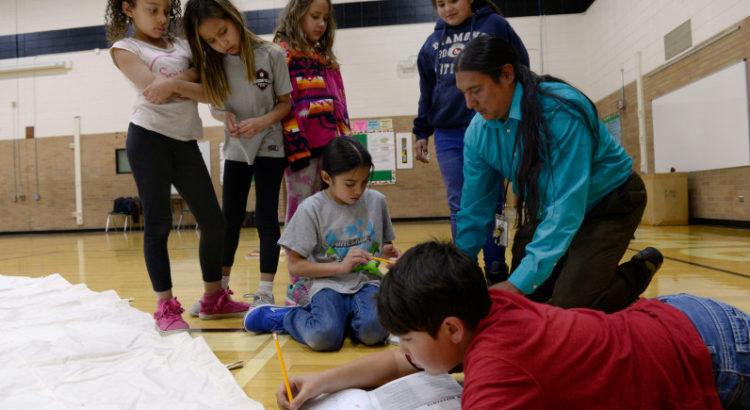
Phil Gover was on the gym floor pouring over notebook drawings of a flattened teepee with several middle school kids during his after-school Native Education group on a recent day. He was helping the students figure out how the teepee should be set up.

“Which way do we put it up, and which way will the door open?” Gover asked, looking around at the students huddled in next to him inside Vantage Point High School in Northglenn. “Which way do the winds come from?”

“The door faces where the sun rises — east,” said Alijah Zavala, 8. “The winds blow from the west, where the back faces.”

Gover asked him why, and all the kids in the circle tried to explain at the same time how positioning the teepee with its back facing the wind makes it stronger against the elements — the correct answer.

“This is what I’ve always wanted to do,” Gover said. “I want to create something for these students to where they have the kind of chances that I had. I want them to get to go to law school. We need native students who know who they are, and who use it to make themselves better people.”

Gover, 47, took over as the Native American Youth Advocate for Adams 12 Five Star Schools almost two years ago after he moved to Broomfield with his wife and children from Arizona, where he worked as a public defender for Americans Indians living on the reservation.

Now, he heads up the Adams 12 district’s burgeoning Native Education program, an after-school and extracurricular organization where Native American, Alaskan and Hawaiian students can get tutoring and learn cultural practices and crafts honoring their ancestral heritage. The program was started more than a decade ago, but had fallen to the wayside until Gover showed up.

“If you’re involved in school, you tend to do better,” Gover said. “That’s the whole point of our program: Give these kids some cultural base and encourage their success through the understanding of their own native identity.”

Greg Phillips, chair of the Adams 12 American Indian Parent Advisory Committee, which organizes the district’s annual Native American Powwow at Century Middle School in Thonton, said that Gover has taken the Native Education program to a completely new level.

“Since Phil came on as our youth adviser, it’s worked very, very well — better than it has in the last six years prior,” Phillips said. “There’s so much more interaction between the council and the school district. He’s really brought the parents and school district together and truly puts native students’ needs at the forefront.”

The Native Education program qualifies for federal funding under Title VII, the U.S. Department of Education’s Indian, Native Hawaiian, and Alaska Native Education act that funds local school districts that offer educational and cultural activities that meet the unique academic needs of American Indians and Alaska natives.

“They do a lot of leadership programming that’s built into the framework of their culture,” said Mark Poshak, a spokesman for Adams 12. “It isn’t just a hangout group;  it’s propelling them in a way that helps with their academics.”

Since Gover took the full-time position with Adams 12, student participation has increased from a rapidly dwindling five kids, to more robust and dedicated core group of nearly 20 native students from across the district who can demonstrate impressive knowledge from their ancestral practices.

“One of our daughters is graduating from Mountain Range High School this year, and the native leadership program that she participated in certainly helped her,” Phillips said. “But it’s really helpful to show all native students that leadership in terms of how we can work with the school district on issues that are relevant to them.”

But it’s just the beginning for Gover, who has big plans for programming for native students in Adams 12 over the coming years, including starting a Native American athletic club.

“The issue has become finding gym space because all the district gyms support charter schools and other programs,” he said. “But one of the biggest challenges I have is transportation. Parents work, and I can only drive one bus, and these kids come from all over the district. I need another person to reach more kids. That’s my goal.”

This year alone, students attending the Native Education program on Mondays and Tuesdays after school have done some Navajo weaving, drum making and teepee construction.

“We’re about to start a beadwork class that will go for about six weeks,” Gover said. “And just about every Thursday at 6 p.m. we have a cultural night here at Vantage Point where all our native families get together and have dinner.”

He said: “A lot of these classes are taught and guided by our parents. I rely on their knowledge and diverse skills for so much. There are so many different tribes represented throughout Adams County alone. It’s amazing.”

There are between 250 and 300 American Indian students in Adams 12 with more than a dozen tribal roots including Navajo, Pawnee, Kickapoo, Lakota, Oglala, Sioux and Shoshone.

“While it looks like we have a lot of native students here, they all go back to their schools and are just one out of hundreds of other students,” Gover said. “This may be the only time they interact with other native students from their school or community. We want to create the type of extended family that is more customary in larger native populations and encourage students to thrive with that support.”

Fuente: http://www.denverpost.com/2017/04/12/adams-12-native-education-program/

Comparte este contenido:
Page 4053 of 6193
1 4.051 4.052 4.053 4.054 4.055 6.193