Page 4065 of 6193
1 4.063 4.064 4.065 4.066 4.067 6.193

United Kingdom: Scrambler bike zones and better sex education – the teen manifesto for Liverpool

United Kingdom/April 11, 2017/ By: Tom Belger/Source: http://www.liverpoolecho.co.uk

Young people also call for votes at 16 and more mental health support

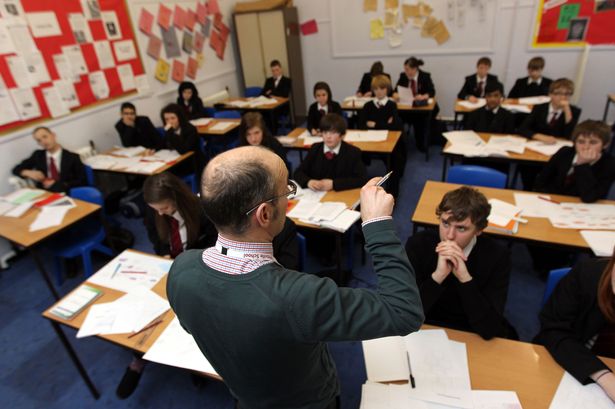
Teenagers in Liverpool want areas to ride scrambler bikes legally and better sex education, according to the council’s youth advisors.

More cash for mental health and youth services, cheaper public transport and compulsory political education in schools were also highlighted in the youth manifesto draft.

Teenagers in youth centres and alternative education across the city were surveyed in a bid to get a wider range of voices than just mainstream school pupils and their elected reps.

Other priorities included more support finding work in chosen industries, life skills like financial education and the right-to-vote for 16-year-olds.

Some young people said they were struggling because of benefit cuts, and said bullying, racism and homophobia should not be taboo and deserved more open discussion in schools.

Only 14% of people interviewed said they felt listened to about politics, but 79% said they would vote if they were old enough.

One young person claimed it was “extremely hard to get any support from an over-diluted service” when struggling with mental health problems and the NHS.

Several participants said having an area to use scrambler bikes safely would help reduce public or antisocial use of the controversial bikes.

The survey was carried out by a paid team aged 15-19 from the Liverpool Safeguarding Children Board Young Advisors.

Councillor Lynnie Hinnigan, mayoral lead for youth and citizen engagement, said: “This was about getting the voice of all young people.

“We have a Schools Parliament who have a manifesto, but that only reflects people engaged in school. So the young advisors went to alternative providers and youth clubs.

“Some things I obviously won’t be able to do, like votes at 16, but next year I’ll do what I can to make the 10 priorities my priorities.”

The findings will be used to help shape the annual Schools Parliament manifesto, created by elected students from schools across the city.

A council report said the survey could help shape future local authority policy, support funding applications for services and educate councillors and pupil reps on young people’s concerns.

Source:

http://www.liverpoolecho.co.uk/news/liverpool-news/scrambler-bike-zones-better-sex-12862642
Comparte este contenido:

Guatemala: BID otorga plazo para préstamo de la mejora en la calidad educativa

Guatemala/11 de abril de 2017/Autora: Joseline Ayala, jayala@lahora.com.gt/Fuente: La Hora

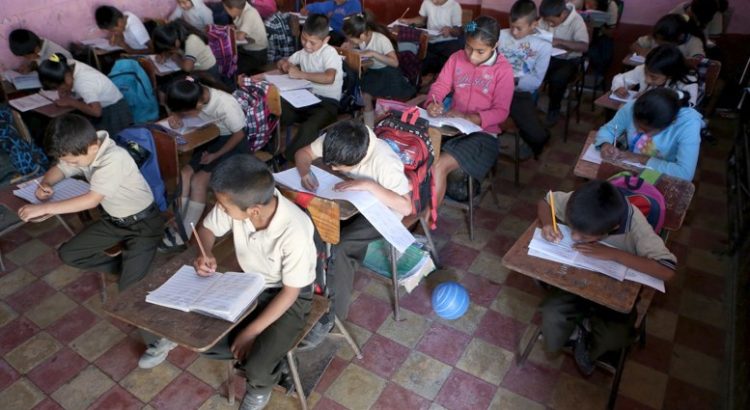
El Banco Interamericano de Desarrollo (BID) extendió el plazo para que el Congreso de la República apruebe el préstamo entre el Estado y esa entidad bancaria por US$150 millones, para el programa de mejoramiento de la cobertura y calidad educativa.

De acuerdo con el presidente de la Comisión de Finanzas del Legislativo, Adim Maldonado, las autoridades negociaron con personeros del banco para que se amplíe el plazo que tenía el país para darle trámite al adeudo solicitado por el Ejecutivo desde febrero del año pasado.

Según lo proyectado por el Ministerio de Educación, se tiene contemplado invertir US$89 millones en habilitación y remozamiento de centros escolares, US$55 millones en calidad de enseñanza y aprendizaje, y US$6 millones en supervisión y evaluación.

Fuente de la Noticia:

http://lahora.gt/bid-otorga-plazo-prestamo-la-mejora-la-calidad-educativa/

Comparte este contenido:

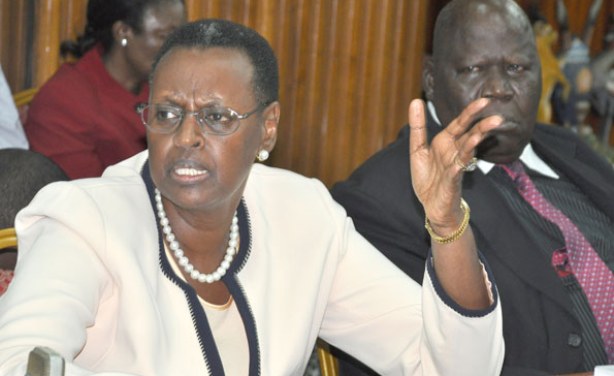
Janet Museveni’s No-Win Situation as Education Minister in Uganda

Uganda/ April 11, 2017/By:Daniel Kalinaki/Source: All Africa

Why has there been so much truculent criticism of First Lady Janet Museveni since she became Education minister? This question, which your columnist has pondered for many months, is easy to answer but difficult to explain.

The Banana Republic-esque optics, of a president and his wife sitting together in cabinet, are certainly damning. But Janet has been in cabinet for 10 years and, in the first of her two parliamentary race wins, in 2006, had the highest number of votes of any MP countrywide.

Her decade in cabinet, albeit in a provincial role, has put some executive knowledge and managerial nous under her belt – and she is far from the least qualified minister.

Questions about her failure to carry out teaching practice, a key requirement for her first degree, in Education, are not new; in any case better them than the allegations of outright forgery of academic credentials levelled against many other public officials.

One might say that it has to do with the crumbling state of the education sector but these problems, deep-seated as they are, are neither new nor peculiar to it. The health and agriculture sectors, for instance, are in similar dire straits but few people can name the line ministers.

Even Ms Museveni’s well-publicised public utterances do not tell the whole story. Her concerns about school children on overcrowded boda bodas; long school hours or infamously asking poor parents to buy food flasks have a heart-warming naiveté about them – but they are not the worst we’ve heard in a country where a minister can justify rape and keep their cabinet post.

First, it seems that Ms Museveni has not leveraged her political capital in the time she has been in the Education ministry. Being the wife of the President is an optical handicap but the access can also be a practical asset. Instead of bemoaning the lack of money for sanitary pads, for instance, Ms Museveni could have pushed Parliament and the President to help the most-in-need girls in the short-term and incentives for local manufacturing capacity in the medium term.

Yet one suspects that Ms Museveni can say the right things, promote the right policies, and still, invariably, invite invectives. Even the best government would struggle to remain popular after 30 years in power – now imagine how hard it is if, as a recent report by the charity Oxfam pointed out, in those years the rich have become richer and the poor have become poorer.

It is hard for people you’ve never shared a wooden bench with in a crowded hospital, or waited with you outside a headmaster’s office while looking for a place, to believe it when you say you share their pain.

I give the minister the benefit of the doubt when she says she wants to reform the public education system but for an entire generation it feels like closing the kraal gate long after the cows have escaped considering that many of their contemporaries born to the privileged fighting class have been educated in expensive schools abroad, many at taxpayer’s expense?

It seems, therefore, in a rather counter-intuitive manner, that Janet was appointed to cabinet 20 years too late. If she had been appointed minister in 1996 when President Museveni was at his most popular and had a new constitution he had not yet tampered with, it would have raised fewer eyebrows and allowed her to get her hands dirty and develop her own political capital.

Her concern about the welfare of children, for instance, would have fed into the design of the UPE programme, which kicked off soon after the election. When schools and sports fields were being relocated to make way for hotels, Ms Museveni could have been the voice of reason. Twenty years later, and her best intentions not withstanding, it feels like a doctor has been sent to a patient who needs a priest.

That is what one can call Janet’s ‘Museveni dilemma’. To overcome suspicions of dynastic intent (or even justify them!) and stop being the lightning conductor for criticism of the Museveni family, she has to force through reforms that undo the patronage and corruption that have kept the system in power for 30 years. But to do so risks unplugging the patient’s life support equipment.

Janet’s naiveté – in the kindest sense of the word – is her greatest strength, for she can question and challenge many flaws that we’ve come to consider normal in our education system. It is also her greatest weakness, for how could she not have seen or known when the rain started beating the rest of us?

Mr Kalinaki is a Ugandan journalist based in Nairobi.

Source:

http://allafrica.com/stories/201704060035.html

Comparte este contenido:

United Kingdom: Outdoor education centre closure postponed

United Kingdom/ April 11, 2017/Source: http://www.bbc.com/news

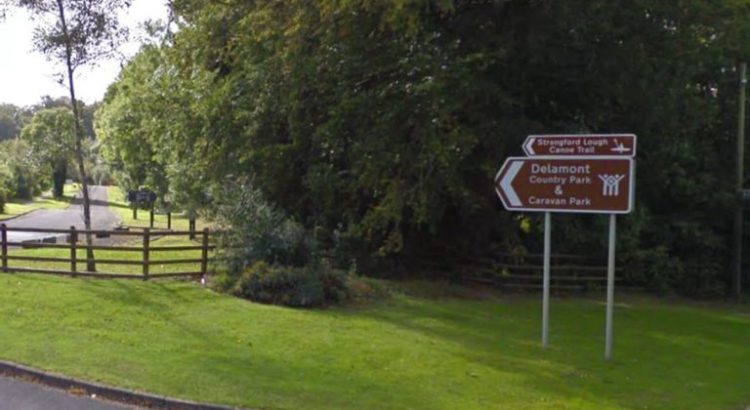
The proposed closure of Delamont Outdoor Education Centre in County Down has been postponed.

An Education Authority (EA) review of the centre, published last year, recommended it close on 31 March 2017.

However, the EA have now said that it will not close until responses to a consultation on the proposals are fully considered.

In November 2016, the EA announced plans to close half of its eight large outdoor residential activity centres.

It was hoped the move could save around £1.5m.

As part of the EA review, three other centres were also earmarked for closure in August 2017.

They are Bushmills Outdoor Education Centre in County Antrim, Ardnabannon Outdoor Education Centre in County Down and Killowen Outdoor Education Centre, also in County Down.

Local opposition

However, the plans met with some local opposition and 1,850 responses to the consultation on them have been received.

In a statement, the EA said that it was considering those responses.

«The review recommendations will not be implemented until this process is complete,» it said.

Delamont Outdoor Education Centre opened in 1987 and is situated within the 300-acre Delamont Country Park.

It has the capacity to accommodate up to 30 students, as well as accompanying staff on both weekdays and weekends.

However, it is only two miles away from Killyleagh Outdoor Education Centre, which is also operated by the EA.

The EA review recommended that the Killyleagh centre remain open.

Source:

http://www.bbc.com/news/uk-northern-ireland-39530401

Comparte este contenido:

EEUU: Our Current Education System Is Designed Based On False And Fuzzy Knowledge; And It Needs To Be Redesigned.

EEUU – New Jersey/April 11, 2017/By Sajid Khan/Source: EINPresswire.com/

Our education system will have to be redesigned to shift the focus from teaching emotional intelligence to creating emotional health.

Our experts are trying to understand and solve problems by crunching false data.”

— Sajid Khan, Defining Wisdom Correctly is the First Step to a Wise Society.
The number 1 fundamental problem begins with the premise that wisdom, which in science terms is emotional intelligence; is an independent and stand-alone entity. Thus wisdom education is designed to teach wisdom knowledge directly. It is the same as trying to create smoke without lighting fire. Wisdom is the smoke where emotional health is the fire.

The number 2 problem begins with not having a clear definition of the human mind. Our experts are so very ignorant of what the mind is; that there is no topic mind in High School Psychology textbooks! The ‘I’ in me and the ‘you’ in you is the mind. The self-image is the face of the mind/’I’. Improve the self-image to improve the mind. Measure the self-image to measure the mind. Know the self-image to know the mind. Define your self-image to define your mind.

The number 3 problem is our experts treating the brain and mind as the single entity of the mind. The brain and mind are two separate entities, and yet the brain is below the radar screen of our experts. Thus brain education and mind education are lumped together as just mind education. As a result, we have 44,000 books on wisdom and yet not one makes us wise. It is because all these books try to teach the mind wisdom but when the brain is wired to generate ignorance; then it is the brain that needs healing.

Imagine trying to understand and solve problems by crunching false data. We are doing the same when trying to address the ills of society. America is the land of opportunity for economic success but it also produces a lot of emotional stress and tiredness. Our experts try very hard to figure out and bring pure happiness and deep physical relaxation to every home. As their work is based on false data it is like we need to go South and they direct us North. Nothing will change unless we take the first step of defining wisdom, emotional intelligence, emotional health, mind, and brain correctly.

By creating emotional health, all the attributes of wisdom including pure happiness will generate effortlessly.

Our education system will have to be redesigned to shift the focus from teaching emotional intelligence to creating emotional health. We will need to create universal Wise Parenting for the young and Brain Therapy for the old. We will need to create a whole new profession of Brain Healers and a brand new subject of Brain Education.
Sajid Khan
4th R Foundation
2108141808
Source:
http://world.einnews.com/pr_news/375148339/our-current-education-system-is-designed-based-on-false-and-fuzzy-knowledge-and-it-needs-to-be-redesigned?afid=777&utm_source=MailingList&utm_medium=email&utm_campaign=Breaking+News%3A+world1543-Sunday
Comparte este contenido:

Semana Mundial de la Educación: Por la transparencia y el cumplimiento del derecho a la educación

10 abril 2017/Fuente: guiaongs

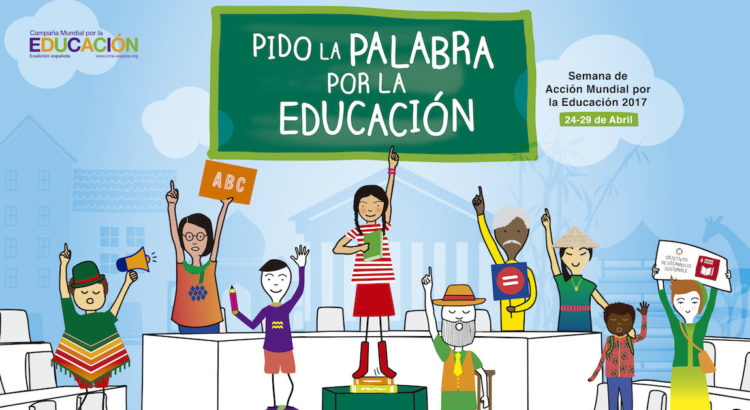
Del 24 al 29 de abril volverá a celebrarse la Semana de Acción Mundial por la Educación (SAME) y ya empiezan a publicarse mensajes relacionados con la importancia de la formación. Este año se quiere exigir a los Gobiernos un compromiso con los ciudadanos: que se cumpla el derecho a la educación, creándose espacios de participación ciudadana y con transparencia absoluta de las cuentas del Estado.

La SAME se celebra de manera simultánea en 124 países, con diferentes actividades y programación de eventos que tienen como objetivo poner sobre la mesa la relevacia del cumplimiento de ese derecho a la educación. Este año el lema es ‘Pido la palabra por la educación’ y para ello han apostado por la participación activa de la ciudadanía. Se quiere promover el compromiso en las comunidades educativas, tanto docentes como tutores, niños y  niñas.

Han habilitado una página web, www.cme-espana.org, donde se van a ir difundiendo las propuestas que lleguen. Cuantas más personas se apunten para apoyar el proyecto de una formación de calidad mejor y mayor la repercusión de una campaña que es realmente importante. Se hará también un seguimiento en redes sociales, con los hashtags #PorLaEducación y #SAME2017.

En España habrá numerosas movilizaciones. Se prevén manifestaciones en más de 28 ciudades y eventos donde van a participar más de 10.000 personas, entre estudiantes, docentes y activistas. Durante todo el curso van a involucrarse de manera activa más de 150 centros formativos y grupos de educación no formal. La idea es que puedan poner en marcha actividades didácticas en relación a la necesidad de promover cambios para darle más acceso a la educación a todo el mundo.

El ejercicio anterior la SAME fue todo un éxito: se movilizaron más de 200 centros escolares, con 1.700 docentes y educadores y más de 27.000 niños y jóvenes. Se llevaron a cabo actos en hasta 28 ciudades españolas.

2017 es un año muy importante para el cumplimiento de la Agenda de Educación 2030. A lo largo de los 12 meses de 2017 los Gobiernos deben definir los indicadores que midan el cumplimiento de los Objetivos del Desarrollo Sostenible (ODS).

 Fuente:http://www.guiaongs.org/noticias/semana-mundial-por-la-educacion-same/
Comparte este contenido:

Ser albino en África, el «pasaporte» a la mutilación

África/10 abril 2017/Fuente: debate

Va en aumento el tráfico de albinos ya que son considerados “mágicos” y partes de sus cuerpos son utilizadas en la brujería

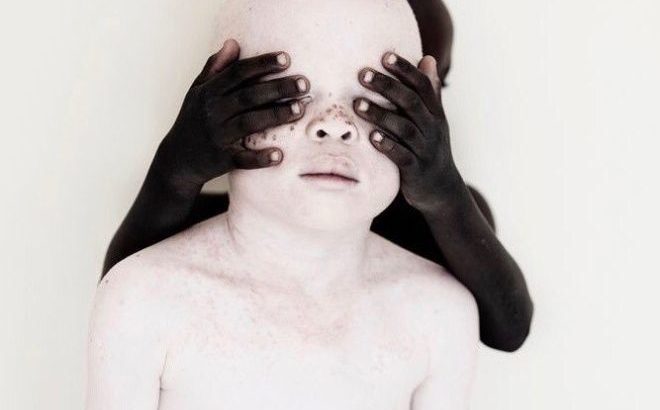
Las personas albinas en África no solamente deben preocuparse por los problemas o inconvenientes producidos de su trastorno, sino además, de no ser víctimas de crueles ataques, que van desde ser mutilados hasta la muerte.

El albinismo es una alteración genética caracterizada por la ausencia congénita de pigmentación de ojos, piel y pelo; puede causar cáncer de piel y ceguera a temprana edad.

En Tanzania, comenzó el tráfico de albinos, con fines de utilizar partes de su cuerpo en la brujería. En este lugar, los albinos son considerados “fantasmas” o que tienen relación con el diablo y creen que miembros como brazos, piernas e, incluso, genitales son necesarios para diversas pociones de la brujería.

Ser albino entre la raza negra es una «condena». FOTO: AFP

Se cree que el cuerpo albino sin vida es de “buena suerte” y “mágico”.

Es por eso que ser un individuo de piel blanca entre una población negra, es sinónimo de sufrir daños psicológicos,mutilaciones y hasta la muerte.

Los niños y mujeres son el objetivo principal. FOTO: forosdelavirgen.com

Las partes del cuerpo de estos inocentes se cotizan hasta en nueve mil euros en el mercado negro, un aproximado de 178,482.19 pesos, por lo mágico de sus huesos para los rituales. El cuerpo completo ronda los 60 000 euros, 1,189,881.25 pesos aproximadamente, apuntan los últimos datos del Alto Comisionado de las Naciones Unidas para los Refugiados (ACNUR).

El tráfico se extiende a otros países

Los traficantes se han extendido a diversos países cercanos, entre ellos Malaui, Burundi y Kenia.

“Estamos muy preocupados. Es difícil sentirse seguro porque nuestras vidas están en juego”, admite a EFE el coordinador de la Sociedad de Albinismo en Kenia, Isaac Mwaura.

Las víctimas son atacadas con machetes. FOTO: forosdelavirgen.com

En Kenia, tres hombres atacaron con machetes a un albino de 56 años e intentaron cortarle las extremidades.

“Yo mismo he vivido de cerca estos ataques. Hace poco intentaron secuestrar a uno de los niños albinos que viven conmigo. Por suerte, está bien”, relata Mwaura.

Los ataques van en incremento en África. FOTO: marcianos.mx

El Gobierno tanzano prohibió la brujería en enero; sin embargo, son los políticos y grandes empresarios los que pagan grandes sumas de dinero para conseguir huesos, cabellos o extremidades de albinos, lo que complica la erradicación de estas prácticas.

“Tenemos mucho miedo. Pedimos a las autoridades del país que nos protejan”, añade Mwaura que, pese a las dificultades, ha conseguido convertirse en el primer albino en el Parlamento keniano.

Los albinos viven un «infierno» en África. FOTO: @ondaverdediario

Los más atacados son las mujeres y niños, por creerse el grupo más débil de la población y por la creencia de que tener relaciones con personas albinas cura el VIH y el SIDA, muchas mujeres son abusadas sexualmente.

A través de Global Medical Relief Fund, una organización caritativa iniciada por Elissa Montanti en 1997, se han refugiado a niños albinos mutilados en los Estados Unidos que están huyendo del “infierno” y les ayudan a encontrar prótesis personalizadas, según publica The Associated Press.

Muchos niños han sido mutilados por estas prácticas. FOTO: Badabum.com

El mundo tiene indignación hacia este «fenómeno», creen increíble que en este siglo continúen este tipo de creencias que dañan a la humanidad.

Los albinos sufren problemas de piel, vista, entre otros. FOTO: 13Tves

Fuente: https://www.debate.com.mx/mundo/-Ser-albino-en-Africa-el-pasaporte-a-la-mutilacion-20170409-0074.html

Comparte este contenido:
Page 4065 of 6193
1 4.063 4.064 4.065 4.066 4.067 6.193