Page 4413 of 6193
1 4.411 4.412 4.413 4.414 4.415 6.193

Panamá: 20 mil estudiantes abandonarán escuelas privadas

Panamá/Enero de 2017/Fuente: Panamá América

Cerca de 20 mil estudiantes migrarán del sistema de educación particular al público en 2017, producto de la situación económica que se vive en el país.

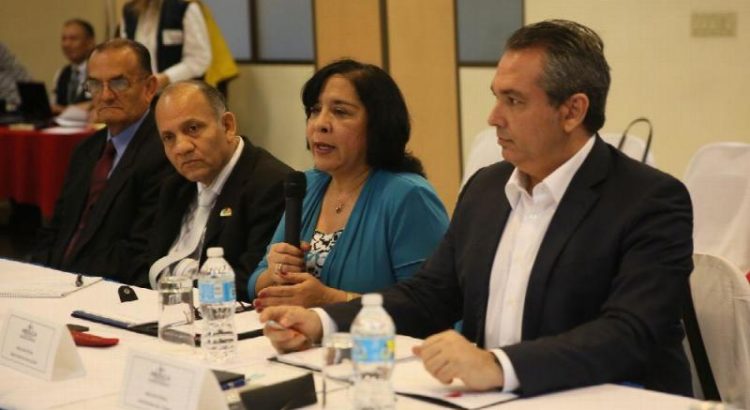
Katya Echeverría, vicepresidenta de la Unión Nacional de Centros Educativos Particulares (Uncep), mostró su preocupación por la cifra y lo atribuyó a cambios externos a los centros de educación privada que impactan directamente a los padres de familia.

Los acuerdos tras la huelga docente en el sector oficial que se registró el año pasado en el que se acordó una incremento salarial para los docentes de tiempo completo es una de la medidas que impacta en el funcionamiento de los colegios particulares, lo que se traduce en aumentos de matrículas o mensualidades.

«Muchas escuelas no están preparadas para asumir el impactos que puede tener esto. Estamos esperando respuesta de una comisión especial que determinó el Ministerio de Educación para evaluar la alternativa de ofrecer incentivos que no impacten tanto al padre de familia en la situación económica», manifestó Echeverría.

Si esos incentivos no se dan para el sector particular, explicó Echeverría, es muy probable que para el 2018 se vean incremento para los padres de familia.
Fuente: http://www.panamaamerica.com.pa/nacion/20-mil-estudiantes-abandonaran-escuelas-privadas-1057697
Comparte este contenido:

New Zealand children could start school at age four under cohort entry proposal

Nueva Zelanda/Enero de 2017/Fuente: Stuff

RESUMEN: Los padres pronto podrían enviar a sus hijos a la escuela a los cuatro años bajo un cambio de ley propuesto para los arreglos de entrada a la escuela. La propuesta de que las escuelas tengan la opción de «entrada de cohortes» significaría que los niños comiencen la escuela primaria al comienzo del período más cercano a su quinto cumpleaños, antes que de su sexto. Los padres decidirían si sus hijos entran a la educación formal a la edad de cuatro o cinco años y el Ministerio de Educación creía que el esquema ofrecería mayor flexibilidad a las escuelas, limitaría los costos de educación de la primera infancia para las familias y daría a los nuevos participantes la oportunidad de comenzar la escuela juntos. En su informe sobre la entrada de cohortes, el ministerio observó una tendencia lenta y no reglamentada hacia las escuelas que experimentan con la práctica presentando un «riesgo emergente» para las finanzas de la Corona al incrementar los costos de la educación primaria y de la primera infancia.

Parents could soon be sending their children to school at age four under a proposed law change to school entry arrangements.

The proposal that schools have the option of «cohort entry» would mean children start primary school at the start of the term closest to their fifth birthday, rather than before their sixth.

Parents would decide whether their children enter formal education at age four or five, and the Ministry of Education believed the scheme would offer greater flexibility to schools, limit early childhood education costs for families and give new entrants the opportunity to start school together.

In its report on cohort entry, the ministry noted a slow, unregulated trend towards schools experimenting with the practice presented an «emerging risk» to Crown finances by increasing primary and early childhood education costs.

Several national education groups have opposed the change, which would cost the early childhood sector $11 million if it was adopted by all schools.

The proposal is one of a raft of changes proposed in the Education (Update) Amendment Bill, which is at the select committee stage in Parliament. Submissions on the bill close at the end of the month.

Early Childhood Council chief executive Peter Reynolds called the cohort proposal a «funding cut by stealth».

Childcare centres had lost an average of $900,000 in subsidies since 2010 and the law change, while not necessarily bad for schools, would further hurt smaller early childhood centres if large numbers of their charges left at the same time, he said.

He said suggestions children starting school in groups would be less isolated were a «red herring» as most – 90 per cent according to Government figures – started within two weeks of their fifth birthday and were not long separated from their preschool friends.

Of 1117 public submissions on the cohort proposal, nearly three-quarters were supportive, including 76 per cent of parents and 80 per cent of teachers.

Teachers’ union NZEI, the New Zealand Principals’ Federation, school trustees association, council for educational research and New Zealand Kindergartens are among those who oppose cohort entry.

NZEI president Lynda Stuart said there was no research to suggest group entry provided educational benefits over the current individual system.

«Age five is really early when you look at other countries and the potential is kids could start at age four.

«We have got a really nice way of children entering into schools, it’s almost a rite of passage. It’s an exciting time and also a time where a child can still be evaluated as an individual.»

New Zealand Kindergartens chief executive Clare Wells said if schools were already using cohort entry systems, the education sector could benefit from hearing their experiences.

Portobelo​ Preschools principal leader Dr Sandy Radford was concerned starting school before age five would hinder children’s cognitive and social development and change the culture of new entrant classrooms.

«Instead of having a culture already established where children already know the ropes, there is whole group who don’t have experienced children to show them how it’s done.»

She hoped children’s individual maturity and abilities would be prioritised over administrative preferences.

Isleworth School principal and Canterbury Primary Principals’ Association president Jeanette Shearer said cohort entry could simplify schools’ enrolment processes.

«In some ways it would be easier to know you are starting with a cohort of children on a particular day rather than constantly transitioning children into your school.»

While it was possible parents whose children were enrolled at age five might feel disadvantaged, it was hard to gauge the community’s feelings because very few families were aware of the proposed change, she said.

Dr Peter Ferrar at Cornerstone Christian School in Palmerston North said he thought most schools would be happy with the change.

He said the school might «have a crack» at cohort entry twice a term but held reservations about starting school before age five, saying it was already too early for many pupils.

Fuente: http://www.stuff.co.nz/national/education/88750698/new-zealand-children-could-start-school-at-age-four-under-cohort-entry-proposal

Comparte este contenido:

Sudáfrica: Education a Weapon for Economic Transformation

Sudáfrica/Enero de 2017/Fuente: All Africa

RESUMEN: El presidente Jacob Zuma dice que el gobierno sudafricano siempre dará prioridad a la educación porque es sólo a través de una educación de calidad que el país puede ganar la lucha contra el desempleo, la pobreza y la desigualdad. El presidente dijo esto el martes cuando se dirigió a los tres días del Sector de Educación Básica Lekgotla celebrado en Pretoria. El Lekgotla, que concluirá el miércoles, tiene como objetivo alinear los planes del sector con el Plan Nacional de Desarrollo (PND). Representantes del Ministerio de Educación Básica, MECs de todo el país, Jefes de Departamentos de los Departamentos Provinciales de Educación, Directores de Distrito y otras partes interesadas se han reunido bajo un mismo techo para compartir ideas sobre la mejora del sector. El presidente Zuma dijo que la educación es el arma principal en la lucha por la transformación económica y en la búsqueda de una vida mejor para todos, especialmente para los pobres.

President Jacob Zuma says the South African government will always prioritise education because it is only through quality education that the country can win the struggle against unemployment, poverty and inequality.

The President said this on Tuesday when he addressed the three-day Basic Education Sector Lekgotla held in Pretoria.

The Lekgotla, which will conclude on Wednesday, is aimed at aligning the sector’s plans with the National Development Plan (NDP).

Representatives from the Basic Education Ministry, MECs from across the country, Head of Departments from Provincial Education Departments, District Directors and other stakeholders have come together under one roof to share ideas on improving the sector.

President Zuma said education is the primary weapon in the struggle for economic transformation, and in the quest for a better life for all, especially the poor.

«It is for this reason that education gets the biggest slice of the national budget. Education is the ladder out of poverty and economic stagnation.»

President Zuma alluded to progress that has been made in education in the past 22 years.

Fuente: http://allafrica.com/stories/201701250100.html

Comparte este contenido:

Vietnan: Too many, too little: a teaching conundrum

Vietnan/Enero de 2017/Fuente: Vietnam News

RESUMEN: Las regulaciones poco realistas y la corrupción emergentes de la descentralización de la contratación y administración de funcionarios públicos en el sector de la educación han llevado a una distribución desigual de maestros en todo el país, dijo un alto funcionario de educación. Trần Kim Tự, Directora del Departamento de Maestros y Administradores de Educación, hizo esta declaración en una conferencia organizada la semana pasada por el Ministerio de Educación y Capacitación (MoET) para revisar las actividades y los logros del primer ciclo escolar. Las discusiones se centraron en gran medida en el hecho de que, si bien muchas localidades gozan de una alta concentración de maestros y educadores, incluso hasta el punto de ‘sobresaturación’, otros estaban seriamente insuficientes.

Unrealistic regulations and corruption emerging from the decentralisation of hiring and administration of civil servants in the education sector have led to uneven distribution of teachers nationwide, a senior education official says.

Trần Kim Tự, Director of the Department of Teachers and Education Administrators, made this statement at a conference organised last week by the Ministry of Education and Training (MoET) to review activities and achievements of the first school term.

Discussions focused largely on the fact that while many localities enjoy a high concentration of teachers and educators, even to the point of ‘oversaturation,’ others were seriously understaffed.

A report tabled by the department said provinces and cities had performed several functions quite satisfactorily, including planning, recruiting, arranging, appointing and dismissing staff.

Many localities had implemented proactive, flexible initiatives to hire teachers, staff and education managers to make best use of payroll policies, ensuring a decent living standard for teachers, it said.

The report also identified several problems. It said a number of civil servants’ entrance examinations had failed to observe existing regulations, leaving the process exposed to bribery and corruption.

Issues such as “serial” termination of contracts of hundreds of teachers, teachers/instructors contracted for a year not being paid, as well as scandal-ridden appointments and dismissal of teachers in provinces like Thanh Hoá, Nghệ An and Cà Mau were highlighted in the report.

These issues had been a source of public criticism and disgruntlement among teachers, the report said.

It also said 26,750 teachers in public schools were ‘redundant’ (3,194 in primary schools; 21,005 and 2,551 in secondary and high schools, respectively) in several localities, while 45,000 teachers were still needed (32,600 for kindergartens; 7,824 for primary schools; 2,800 and 1,800 for secondary and high schools) in other areas.

Thái Bình and Quảng Nam Provinces had more than 1,000 ‘redundant’ teachers, while Nghệ An and Thanh Hoá had a ’surplus’ of 1,742 and 2,188 secondary school teachers. Meanwhile, HCM City and the northern province of Sơn La were struggling with a deficiency of thousands of kindergarten teachers. In Bắc Giang and Nghệ An provinces, the shortage was even higher at 2,000 and 3,300 teachers, respectively. Primary schools throughout the nation are struggling to find teachers. For instance, Hà Nội needs nearly 3,000, while Sơn La and Gia Lai provinces could use another 1,100 teachers each.

“The mobilisation from or transfer of teachers between schools remains fraught with difficulties, due to the mismatch between the required posts and teachers’ qualifications, or wide socio-economic development gaps between one locality and the other,” Tự said.

“Haphazard signing of contracts with teachers by local governments, going against regulations, have sparked public protests. Relegating redundant teachers from secondary and high schools to kindergarten and primary schools without giving them any professional training has proved problematic, most notably in Thanh Hoá Province,” he said.

Tự also noted that at present, foreign language was not a mandatory subject in primary schools, so foreign language teachers (mostly for English) were not on the state payroll, but on contracts.

In addition, he said, documents that set out regulations on training for teachers and managers of educational institutions were not satisfactorily comprehensive. Training programmes and materials, delivery methods, organisation of activities, or even procedures for reviewing and assessing the training that teachers and managers receive, were still outdated, not matching actual demand.

Arbitrary imposition

Thanh Hoá is one of the provinces worst-hit by the shortage of teachers, said Phạm Thị Hằng, Director of the provincial Department of Education and Training. She said decisions on policies or transfer of teachers must be done based on localities’ inputs, not arbitrarily imposed from the top.

She said that in the 2011-2016 period, the province’s payroll quota “hit a freeze point” and the provincial department of home affairs didn’t adjust this quota; so, in order to meet with changing number of students, the education department ‘aggressively’ pushed for transferring teachers from where there is a surplus to where there is a shortage.

Hằng said that at present, the education sector did not have enough say in hiring and using educators. «The Ministry of Home Affairs manages the recruitment and the Ministry of Finance controls the funds and monetary allocation while the education sector has to bear the ultimate responsibility for the quality of educators.» This has posed many difficulties for the provincial education department, she said.

Can’t act in haste

Minister of MoET, Phùng Xuân Nhạ, stressed that “teachers’ quality decides the quality of education.”

Since the State Budget is limited, part of the investment would have to be sourced from localities themselves as well from the private sector, he said.

He said while plans were made after due consideration of all aspects, factors like unexpected fluctuations in the population, migration, the emergence of industrial parks and export-processing zones, among others, led to unforeseen changes in number of students in all grades, and the ministry was still trying to resolve this issue in the long-term with better forecasts and master plans.

The Minister also cautioned the provinces over the practice of transferring teachers from grades where there is a surplus to where there is a shortage, for example, from high school down to kindergarten schools. It might be an effective temporary solution, but quality must come first, and transferred teachers must be trained and equipped with proper skills, he said.

“Yes, the shortage is serious, but it’s not something that has come up only recently. Actions taken in haste, without careful consideration and planning, will result in potentially damaging consequences down the road,” he said.

In order to ensure fairness in transferring redundant teachers, Hằng said that localities in Thanh Hoá Province had been instructed to build a transparent set of standards and criteria against which teachers would be assessed by a qualified council.

Regarding this year’s agenda, the education minister said that the ministry would place a stronger focus on training managerial-level officers – first and foremost, directors and deputy directors of provincial and municipal departments of education and training.

He believed that with knowledge, skills, and experience in education management gained through proper training, managers would become more efficient and effective.

Minister Nhạ pledged to conceive and organise a unified professional training programme that would be implemented nationwide for transferred teachers, instead of having to build one each year

Fuente: http://vietnamnews.vn/society/education/350116/too-many-too-little-a-teaching-conundrum.html#iSi0qXdW3xZWsc8l.97

Comparte este contenido:

Canadá: Westerfield College, Canada partner on foreign education

Canadá/Enero de 2017/Autor:Amaka Abayomi/Fuente: Vanguard

RESUMEN: WESTERFIELD Collegein, en colaboración con el gobierno de Canadá, ha lanzado el Programa de la Fundación Canadá, CFP, con el objetivo de ofrecer a más estudiantes nigerianos oportunidades de estudiar en el Norte El Sr. Marc-Andre Savage, Primer Secretario, Alto Comisionado Adjunto de Canadá, quien representó al Alto Comisionado Adjunto, dijo que la asociación es para consolidar la sinergia existente en las escuelas nigerianas y canadienses. Sus palabras «En 2016, había más de 10.000 estudiantes nigerianos en varias instituciones canadienses. Esto se debe a que Canadá está en los tres primeros países para vivir y la educación de calidad es nuestro foco principal, ya que estas escuelas están ocupadas por personas que son apasionadas por la educación. Vender a Canadá como el destino preferido del estudio nos ayudaría a alcanzar nuestro objetivo de proporcionar educación de primera clase e internacional para los nigerianos «.

WESTERFIELD Collegein partnership with the government of Canada, has launched the Canada FoundationProgramme, CFP, aimed at offering more Nigerian students opportunities to study in the North

Mr. Marc-Andre Savage, First Secretary, Canada Deputy High Commission, who represented the Deputy High Commissioner, said the partnership is to cement the synergy existing Nigerian and Canadian schools. His words “As at 2016, there were over 10,000 Nigerian students in various Canadian institutions.
This is because Canada is in the top three countries to live in and quality education is our main focus as these schools are manned by people who are passionate about education. Selling Canada as the preferred study destination would help us achieve our goal of providing top notch and internationalising education for Nigerians.” On how the partnership would work, the CEO, Westerfield College, Mr. Mike Dosumu, said students would do one year with Westerfield then proceed to complete the remaining three years in Canada.
Education destinations He said “Canada is understated but is one of the best countries in the world and is ranked as one of the top three education destinations. Instead of selling Canada as a destination, we would get students to do one year in Nigeria and three years in Canada. This way, we would help parents save over 50,000 Canadian dollars.” On why Canada, the vice president, North West Community College, Canada, Mr. Justin Kohlman, said the quality of education and safety of students are two of the top reasons why people choose to study in Canada. He said “The Canadian education system is such that the first two years are spent at the colleges while the remaining two years are at the varsities. But if you do one year with Westerfield College, you now spend one year at the college and two at the varsity in Canada.
We do most of our learning outside the classroom to complement what is being taught and the teachers know each student by their names and have their phone numbers. Students also have the opportunity to complete the last two varsity years outside Canada.”

Fuente: http://www.vanguardngr.com/2017/01/westerfield-college-canada-partner-foreign-education/
Imagen: http://www.aulaplaneta.com/2015/04/09/noticias-sobre-educacion/las-diez-claves-de-la-educacion-en-canada-infografia/
Comparte este contenido:

Cuba: Diputados cubanos dialogan con estudiantes en Universidad de La Habana

Cuba/Enero de 2017/Fuente: Cuba.cu

Diputados a la Asamblea Nacional del Poder Popular (Parlamento) de Cuba celebraron hoy una audiencia pública con estudiantes universitarios en torno a los sistemas político y electoral del país, y a la actividad parlamentaria.

La iniciativa responde a planteamientos recogidos en estudios y a propuestas hechas desde distintos sectores, y su objetivo es generar el debate y elevar el conocimiento de los ciudadanos sobre esos temas, explicó Eddie Galán, de la dirección nacional de la Unión de Jóvenes Comunistas (UJC).

Un grupo de diputados encabezados por la presidenta de la Comisión de Relaciones Internacionales del Parlamento, Yolanda Ferrer, dialogó con estudiantes de la Facultad de Derecho de la Universidad de La Habana sobre los logros, retos y tareas pendientes del poder legislativo.

Ferrer expuso a la audiencia que el sistema cubano y su modelo de democracia son autóctonos, “del pueblo, por el pueblo y para el pueblo”, y son las personas las que proponen como candidatos a quienes consideran tienen los méritos suficientes.

Agregó que, precisamente, son los méritos y no las campañas electorales los elementos determinantes en el proceso.

También apuntó que en los 612 diputados existe una representación elevada de los territorios, sectores sociales y económicos del país, así como un 48,86 % de participación femenina.

Por su parte, Eulogio Pimentel, diputado y director del Centro de Ingeniería Genética y Biotecnología de Cuba, señaló que se trata de modelos perfectibles, pero que concentran los valores más importantes de la revolución social de esta isla caribeña.

De acuerdo con el también diputado Lázaro Barredo, uno de los asuntos apremiantes en el presente es elevar la cultura jurídica y el dominio de la Constitución por parte de la ciudadanía para lograr los avances deseados.

Asimismo, Barredo se refirió a la necesidad de incrementar y aprovechar las potencialidades de las instancias municipales.

Durante el intercambio, los estudiantes transmitieron a los diputados sus inquietudes y propuestas, entre las cuales figuran el incremento del accionar de los legisladores en los medios de comunicación y de la difusión de los debates de las comisiones de la Asamblea.

También se interesaron por temas como el enfrentamiento efectivo a la suplantación de las funciones de los diputados y delegados por parte de algunos funcionarios públicos.

Igualmente los universitarios recomendaron consultar y aprovechar los asuntos más relevantes de las tesis de grado y maestría producidas en los centros de educación superior relacionadas con los procesos legislativos.

De acuerdo con dirigentes de la UJC, las audiencias públicas de los diputados tendrán lugar en universidades de todo el país, así como en centros de la enseñanza media y técnico-profesional.

tecnología de Cuba, señaló que se trata de modelos perfectibles, pero que concentran los valores más importantes de la revolución social de esta isla caribeña.

De acuerdo con el también diputado Lázaro Barredo, uno de los asuntos apremiantes en el presente es elevar la cultura jurídica y el dominio de la Constitución por parte de la ciudadanía para lograr los avances deseados.

Asimismo, Barredo se refirió a la necesidad de incrementar y aprovechar las potencialidades de las instancias municipales.

Durante el intercambio, los estudiantes transmitieron a los diputados sus inquietudes y propuestas, entre las cuales figuran el incremento del accionar de los legisladores en los medios de comunicación y de la difusión de los debates de las comisiones de la Asamblea.

También se interesaron por temas como el enfrentamiento efectivo a la suplantación de las funciones de los diputados y delegados por parte de algunos funcionarios públicos.

Igualmente los universitarios recomendaron consultar y aprovechar los asuntos más relevantes de las tesis de grado y maestría producidas en los centros de educación superior relacionadas con los procesos legislativos.

De acuerdo con dirigentes de la UJC, las audiencias públicas de los diputados tendrán lugar en universidades de todo el país, así como en centros de la enseñanza media y técnico-profesional.

Fuente: http://www.cuba.cu/educacion/2017-01-25/diputados-cubanos-dialogan-con-estudiantes-en-universidad-de-la-habana/35018

Imagen de archivo: http://elabrelata.com/cuba-saluda-cambio-de-eeuu-en-politica-migratoria-hacia-la-isla/

Comparte este contenido:

México: Muro fronterizo va en contra de los derechos humanos: CNDH

México/Enero de 2017/Fuente: Publímetro

El titular de la Comisión Nacional de Derechos Humanos (CNDH), Luis Raúl González Pérez, señaló que el muro que pretende construir el presidente estadounidense, Donald Trump, viola los derechos humanos reconocidos universalmente.

“Reprobamos esta actitud negacionista de los derechos humanos, de parte de las autoridades americanas porque va en contra de los derechos humanos efectivamente, reconocidos universalmente”, dijo.

Durante una conferencia de prensa, luego de entregar el Informe de Labores 2016 de la CNDH, el ombudsman nacional instó a denunciar expresiones de discriminación, exclusión o racismo, y advirtió que la violación a los derechos humanos se puede agudizar con la repatriación de los connacionales.

Además, pidió al presidente Enrique Peña Nieto que defienda la dignidad de los connacionales “en cualquier mesa de negociación”, en referencia a su próximo encuentro con Trump el 31 de enero.

Subrayó que ombudsman del mundo pidieron a la Comisión Interamericana de Derechos Humanos (CIDH) pronunciarse sobre las medidas de deportación que ha pronunciado el mandatario estadounidense.

Fuente: https://www.publimetro.com.mx/mx/noticias/2017/01/25/muro-derechos-humano.html

Comparte este contenido:
Page 4413 of 6193
1 4.411 4.412 4.413 4.414 4.415 6.193