Page 769 of 6179
1 767 768 769 770 771 6.179

España: Las universidades vigilarán que no se formen aglomeraciones en las pruebas de Selectividad

Las universidades vigilarán que no se formen aglomeraciones en las pruebas de Selectividad

La comisión de salud pública aprobará esta tarde las medidas de prevención de contagio de las pruebas de acceso a la universidad

Barcelona, Catalunya

EP

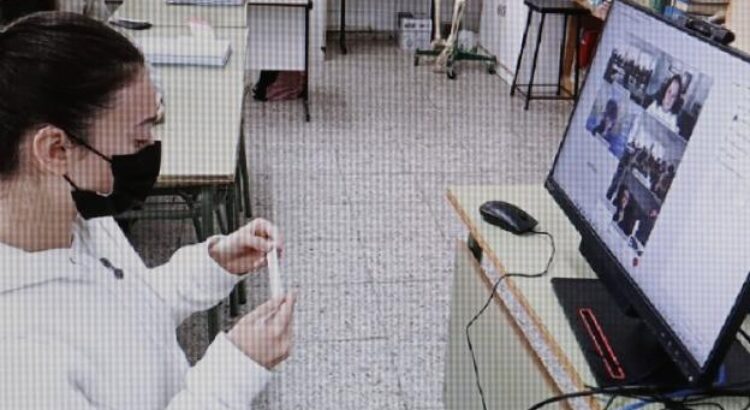
La comisión de salud pública aprobará hoy las medidas recomendadas en la celebración de las pruebas de acceso a la selectividad (PAU), también denominadas EBaU, convocadas por las autonomías para el mes de junio. Según el documento, al que ha tenido acceso La Vanguardia, estas recomendaciones de prevención y control de la infección se basan en el escenario actual de la epidemia por SARS-CoV-2 y en la última información disponible.

Las conocidas como ventilación, distancias, mascarillas e higiene de manos, que también se especifican, se suman al objetivo de evitar la formación de grupos. El documento indica que con la evidencia científica acumulada, se considera que SARS-CoV-2 puede transmitirse de persona a persona por diferentes vías, “siendo la principal mediante el contacto y la inhalación de aerosoles respiratorios o partículas de mayor tamaño, emitidos por una persona infectada, con las vías respiratorias superiores e inferiores de una persona susceptible”.

Añade que “el riesgo de propagación aumenta a mayor interacción de las personas y mayor tiempo de duración de la misma”. Y que se ha demostrado que hay “mayor transmisión en distancias cortas”, en espacios cerrados y concurridos, cuando no hay una buena ventilación y sin las adecuadas medidas de prevención

Acceso al recinto y exteriores del aula

Así, las autoridades sanitarias recomiendan la presencia de personal que se encargue de “distribuir y regular la cantidad de personas que acuden al examen, evitando aglomeraciones en los accesos, así como en el interior” y observar el uso adecuado de la mascarilla, que en ningún caso debe tener válvula. Asimismo, la entrada al edificio debe ser en fila y manteniendo la distancia física de 1,5 metros entre los estudiantes.

Solo podrán entrar al centro de examen las personas de administración y servicios del centro, examinadores/as, alumnado y acompañantes de personas que puedan precisar asistencia.

Este son varios puntos que aparece en el documento como medidas específicas para los días que se realizan la prueba y que regulan el acceso al recinto y los exteriores, el acceso a las aulas, en el interior del aula y la salida del aula y del recinto.

También se aconseja señalizar los circuitos indicando el sentido de circulación y la distancia física interpersonal y establecer un flujo de entrada y otro de salida, a fin de evitar la doble circulación de personas. El acceso a las aulas deberá ser escalonado.

Preferentemente, los estudiantes harán uso de las escaleras y se guardará el aforo establecido en los ascensores si tienen que utilizarlo.

Acceso al aula

El aula estará ventilada desde al menos 15 minutos antes de que empiece a ocuparse, procurando que se mantenga una “ventilación natural cruzada” de manera permanente, a ser posible, abriendo ventanas y puertas. Si ello no es posible, “se usará ventilación mecánica”.

Al entrar, tanto el alumnado como el profesorado o personal debe realizar higiene de manos con solución hidroalcohólica.

Para la identificación del alumnado, se recomienda hacerlo en el interior del aula “manteniendo siempre la distancia, para evitar aglomeraciones a la entrada”. En caso de que sea necesario hacerlo en la parte exterior, se recomienda escalonar el acceso.

También debe evitarse en la medida de lo posible “solicitar la retirada de la mascarilla para la verificación de identidad”. En el caso de que exista intercambio de documentación, se debe disponer de hidromel.

En el interior del aula

El uso de la mascarilla y la distancia interpersonal de 1,5 metros sigue vigente también en el interior del aula. Y los profesores deberán vigilar que se cumpla.

En el caso del alumnado con necesidad específica de apoyo educativo, que necesite adaptaciones como acompañantes de apoyo, medios materiales o ayudas técnicas, estas se llevarán a cabo teniendo en cuenta las medidas de prevención.

Si se precisa realizar una consulta, “el alumno levantará la mano y el docente se acercará para resolverla, “durante el mínimo tiempo indispensable y regulando el tono de voz de modo que no sea muy fuerte”.

Se debe evitar compartir materiales de uso personal y en el caso de material de uso común extremar las medidas de prevención y limpieza o desinfección tras cada uso.

Además se controlará el acceso a los aseos, que se realizará garantizando el cumplimento del aforo.

Finalización de la evaluación y salida del aula

Una vez terminada la evaluación, el alumnado deberá abandonar el aula inmediatamente.

Cuando falten 5 minutos para finalizar el tiempo de la evaluación, se recomienda indicar que el alumnado que se encuentra en el interior espere en su lugar, y al término del tiempo indicar una salida progresiva y ordenada, desde la primera fila y manteniendo la distancia física.

Se comunicará al alumnado que tras finalizar el examen abandone el centro, siguiendo la señalización y flujos dispuestos y no se quede formando grupos en zonas comunes exteriores.

Siempre que sea posible, y sobre todo cuando hay exámenes consecutivos, se debe establecer puntos de salida y acceso diferenciados.

Fuente de la Información: https://www.lavanguardia.com/vida/20210427/7367633/universidades-vigilaran-formen-aglomeraciones-pruebas-selectividad.html

Comparte este contenido:

Myanmar Women: ‘Our Place Is In The Revolution’

Myanmar Women: ‘Our Place Is In The Revolution’

Every day at sunrise, Daisy* and her sisters set out to spend several hours in the heat cleaning debris from the previous day’s protests off the streets of Yangon, Myanmar’s largest city.

Protests have erupted around the country since the military seized control of the government after arresting democratic leader, Aung San Suu Kyi, on 1 February, and declared a year-long state of emergency.

According to the Assistance Association for Political Prisoners (AAPP), a non-profit rights organisation formed by former political prisoners from Myanmar and based in Thailand, 715 civilian protesters have been killed and more than 3,000 people have been charged, arrested or sentenced to prison for taking part in protests. 27 March marked the deadliest day of the anti-coup protests so far, with more than 100 deaths in a single day.

Daisy, a 29-year-old elementary school teacher, has been out of work since the first week of February, because schools have been closed as a result of the protests, but is the sole earner and carer for her two younger sisters, aged 15 and 13. Despite this, she spends a portion of whatever money she has left to help feed hungry protesters.

The military makes use of dalans – local people who are forced to spy on their neighbours and, in particular, to target women living alone whose homes are easy targets for looting and harassment. As a result, Daisy and her sisters have been forced to move home three times and are now in hiding with relatives.

“The military are preying on vulnerable women, breaking in and raiding where we live to seize our belongings and lock us up for no reason,” Daisy says. But despite having little financial security, Daisy continues to help with the protests. “As women, we are the most at risk under the military but however large or small, our place is in the revolution.”

Outrageous Displays Of ‘Profanity’

Across Myanmar, women protesters have lined the streets with vibrant traditional women’s clothing and undergarments in the hope of challenging a long-held taboo around women’s clothing. “Htaimein – Burmese for sarongs and intimate women’s wear – are perceived as ‘unclean’ in traditional Buddhist belief and thus considered inferior in Burmese society,” explains 25-year-old Su, an activist and university student who does not wish to give her full name for fear of reprisals. Su is originally from Dadaye, a town in the Ayeyarwady region of southwest Myanmar.

“Coming into contact or walking under these is believed to bring bad luck, reducing one’s hpone – masculine superiority – in Buddhist belief.”

She says hanging up sarongs has been an effective deterrent to keep the military from attacking the protesters as their staunch beliefs will not allow them go anywhere near the orchestrated clothing lines.

Women are also using their sarongs to create flags and hats for men to parade alongside banners that read “our victory, our htaimein” to celebrate wielding a degrading superstition about women as a successful defence strategy.

In a similar vein, women have been hanging sanitary towels drenched in red paint to emulate blood over photos of the military general, Min Aung Llaing. “For a society where men, including Min Llaing, detest the idea of menstruation, smearing his face with what he finds the dirtiest is unimaginably humiliating,” Su explains. “Sarongs and sanitary napkins are symbolic of the women in Myanmar and how they are regarded as inferior to men in society.”

By weaponizing these displays of “profanity”, women say they are reclaiming their status against the same patriarchal attitudes that perceive them as lesser in society.

Civil Disobedience As A Means Of Resistance

The Women’s League of Burma, an organisation which seeks to increase women’s participation in public life in Myanmar (which was formerly called Burma), estimates that 60 percent of those protesting are women, while the AAPP says women make up almost 40 percent of those arrested.

The Civil Disobedience Movement (CDM) has brought the country’s public services, including healthcare, schools and banks, to a halt. It is also behind efforts to deprive the military of its income by boycotting military-owned services and products such as tobacco, alcohol, coffee and oil, and refusing to pay government taxes.

Chit*, a 26-year-old doctor-in-training from Yangon, has been part of a group of female medical volunteers tending to the wounded during the protests. She believes providing medical care to protesters is a duty for all doctors. She says she has heard of one female doctor who was shot by the military while trying to aid a patient. “As women, we are expected to stay in ‘safe’ areas of the protests but we know our place is wherever help is needed.”

Female lawyers and bankers have formed an informal group to offer legal and financial advice to civilians, especially those trying to flee the country. “We want to offer our services to those in general need of legal routes or financial advice. We know the public have been put in a compromising position given a pandemic then a coup so free verbal consultations, advice, and going through documents with them is an extension of our efforts against the military,” explains Min Thwaw, a private lawyer practising in the capital, Naypyidaw.

“Many white-collar workers have lost their jobs and those females workers continue to be threatened by authority figures but the military need us [the workers] more than we need them. Without us, the banking system will collapse soon and economic crisis will remain irreversible – a price we are willing to pay to cripple the military,” she adds.

Economic uncertainty caused by the military takeover is likely to have a negative effect on the country’s US$6 billion garment and footwear industry. As a result, thousands of garment workers, predominantly young women, have taken part in demonstrations, urging the multinational companies they work for to denounce the coup and protect workers from being fired or even killed for protesting.

While some Western brands have remained silent over the military takeover in Myanmar, the Benetton Group, H&M, Primark and Bestseller all suspended new orders from factories there until further notice, following pressure from within and outside Myanmar. Despite this, trade unions in Myanmar stress companies are not doing enough and are demanding more “concrete action” like documenting and addressing human rights abuses with their respective governments and committing to partial payments of orders.

Many garment workers have left their family homes for the safety of other family members in order to participate in the strikes. They include 27-year-old Jasmine (who did not wish to give her full name) and five of her colleagues. They live together in a 250-square-foot flat in Yangon, surviving on food donations from the wider community as well as community money handouts – funds raised by local and international supporters of the CDM to finance the movement from afar – a portion of which they need to send back to their home villages to support their families as well.

These young women march defiantly together in large human chains with arms interlocked. Jasmine says this is an effective tactic adopted by garment workers who are protesting to ensure the police do not separate them from each other. “They yank protesters away to break the chain then abuse those they capture in jail or publicly.”

On 18 February, about 1,000 garment workers producing clothes for Primark were reportedly locked in GY Sen Apparel Company’s factory for taking part in the protests by supervisors who sympathised with the military.

Upon breaking free after several hours, many of them were fired. Jasmine also says that she and her colleagues have been intimidated with verbal abuse by factory owners, who confront the women physically, they say, and who have been trying to fire them for protesting. For now, Jasmine still has her job, although many of her colleagues have been laid off.

“These are the challenges we are faced with on top of a coup; borderline starvation and no pay. We need the companies we work for to denounce these heinous acts, recognise what we are going through and protect us,” she says. Since the women live together, they have been easy targets for the military and factory owners.

During the day, the workers liaise with activists to gather information about locals collaborating with the military by providing details about people’s whereabouts and public gatherings. This way, they can find out about potential morning break-ins into workers’ homes and abductions by the military and police carrying out military orders. As the evening sets in, workers quietly gather in one house to make plans for the next day’s protests.

The military blacks out the internet every night from 1:00 am to 9:00 am and has banned all social media to stop protesters from informing each other about arrests or possible military targets. It is meticulously tracking telecommunications. It also imposes a strict overnight curfew and deploys soldiers with orders to shoot on sight anyone who breaks it.

Jasmine and her friends have heard frightening rumours about people being shot or abducted if they are found to be breaking curfew. The women, therefore, move carefully on foot from one house to another in the dead of night to relay crucial information regarding potential break-ins, abductions and to make plans for protests.

“We cannot afford to risk brushing off anything heard through the grapevine as hearsay. Nobody is here to protect us but ourselves,” says Jasmine. – Al Jazeera

*Names changed to protect identities.

Fuente de la Información:  https://theaseanpost.com/article/myanmar-women-our-place-revolution

Comparte este contenido:

Bahamas – “WE DID IT”: Ministry of Education and partners achieve goal to put devices in hands of every public school student

“WE DID IT”: Ministry of Education and partners achieve goal to put devices in hands of every public school student

NASSAU, BAHAMAS — The Ministry of Education (MOE) expressed gratitude to public/private partners who participated in a national initiative for the provision of devices and data plans for public school students.

In September 2020, with an initial contribution of $60,000, Leno Corporate Services Limited launched a campaign in conjunction with the MOE, to put a learning device in the hands of students who were in need of a laptop or computer.

Since then, numerous businesses, service clubs, individuals and other entities have contributed to the drive, resulting in more than $500,000 in donations and financial contributions.

At a ceremony to mark the final presentation of tablets through the Leno Learning Link partnership on Friday, Minister of Education Jeffrey Lloyd thanked Founder and CEO of Leno Sean K Longley for his vision and generosity in helping the ministry and country put a device in the hands of every public school student who needed one.

He also recognized the partners, corporate sponsors, individual donors, organizations and NGOs who contributed.

He expressed appreciation to those who have enabled the MOE to make this “indispensable” tool a part of the current toolkit in education in The Bahamas.

Lorraine Armbrister, permanent secretary, underscored that although the campaign was ending, the door is not closed for donations.

Director of Education Marcellus Taylor said in great measure, Longley’s leadership, altruism and support of education in the time of crisis has helped to bring out the best in the Bahamian society.

“So many entities have stepped up to help in this endeavor to ensure that our students get what they need in order to continue their education,” he said.

Representatives of some of the campaign sponsors attended the event.

Fuente de la Información: https://ewnews.com/we-did-it-ministry-of-education-and-partners-achieve-goal-to-put-devices-in-hands-of-every-public-school-student


Comparte este contenido:

Unión Europea: European Union Moves to Regulate Artificial Intelligence

European Union Moves to Regulate Artificial Intelligence

The European Union’s executive branch on Wednesday announced proposals designed to regulate the use of artificial intelligence (AI), banning its use in practices such as surveillance and facial scanning that threaten personal rights.

At a news briefing in Brussels, European Commission Executive Vice President and Tech Commissioner Margrethe Vestager noted the benefits of AI in the medical field, agriculture and engineering.

“I think those examples illustrate very well what we want AI in Europe to be: a force for progress,» she said.

The proposed regulations address the human and societal risks associated with specific uses of AI, such as mass surveillance and biometric identification in public places.

The draft EU regulations include rules for other uses of artificial intelligence in some risky categories such as choosing schools, jobs or loan applicants, while banning it outright in cases such as «social scoring» or systems used to manipulate human behavior.

The proposals are the bloc’s latest move to maintain its role as the world’s standard-bearer for technology regulation, putting it ahead of the world’s two big tech superpowers, the U.S. and China.

EU Commissioner for Internal Market Thierry Breton told reporters that Europe would become the first continent to provide guidelines over the use of artificial intelligence.

The commission is continuing to work out details of the proposals and how they will be enacted with EU member governments and the European Parliament before coming into force.

Fuente de la Información: https://www.voanews.com/europe/european-union-moves-regulate-artificial-intelligence


Comparte este contenido:

‘It’s not enough to get students in the door’ — Reimagining the role of community colleges

‘It’s not enough to get students in the door’ — Reimagining the role of community colleges

Jamie Higginbotham has been involved in child care since she was 18 — first as a nanny, then the owner of an in-home child care business, and now the director of a preschool in Wilkesboro. Despite her 20-plus years in early education, she says she couldn’t support herself and her family on her wage alone.

“As a preschool director, my wage itself just with this one job, I would not be able to survive,” she said.

Higginbotham is a graduate of Wilkes Community College. She went back to school in 2016 to get her associate degree in early childhood education. This degree allowed her to move from preschool teacher to director, and she considers herself fortunate to be doing a job she loves. But still, she knows she and many of the teachers she hires wouldn’t be able to do this job if they were single parents.

“That is what is so disheartening,” she said, “because I know how cliché this sounds, but we are helping to raise our future.”

For years, community colleges have served students like Higginbotham who want to further their careers and better their lives. That doesn’t always happen, said Wilkes Community College President Jeff Cox.

“Getting a college credential only truly helps all the stakeholders in this ecosystem when institutions do a good job of preparing students for careers that are in demand and that will pay them wages high enough to support their families,” Cox said. “Too often, that’s not the case, even when educators and institutions have the best intentions.”

Spurred by economic mobility data and organizations like the Aspen Institute’s College Excellence Program, community colleges have begun rethinking their role in their communities.

“It’s not enough to get more students in the door. It’s not enough to graduate more students. We have to look at how many of them are getting jobs that pay a living wage,” said Cox.

In many cases, this is easier said than done. But, increasingly, it is a re-imagined role for community colleges that, if achieved, could help all North Carolinians.

How did we get here?

Community colleges in North Carolina and across the country have embraced their role as open-door institutions that increase college access.

“We’ve been so focused on access for so many years,” said Rachel Desmarais, president of Vance-Granville Community College. “And I think that’s been maybe a place we’ve been stuck. Presidents are thinking enrollment, enrollment, enrollment, and that really drives what colleges are doing.”

In 2009, the focus on access gave way to a focus on student completion as then-President Barack Obama announced the 2020 College Completion initiative with the goal of increasing the share of Americans with a college degree. At the same time, the Bill & Melinda Gates Foundation funded Completion By Design, a major reform initiative focused on increasing community college student completion rates. Five North Carolina community colleges participated in the initiative.

But these efforts, collectively known as the Completion Agenda, are not enough, said Josh Wyner, founder and executive director of Aspen Institute’s College Excellence Program.

“We are adherents to the Completion Agenda,” Wyner said. “We just think it’s incomplete.”

“If you’re going to give life to the idea of post-graduation success, colleges themselves need to own whether they are getting students credentials that deliver both economic and social mobility for the individual and the talent that’s needed in the community.”

Josh Wyner, founder and executive director of Aspen Institute’s College Excellence Program

The way to assess that, Wyner said, is to look at whether graduates are earning a family-sustaining wage.

This is far easier for colleges in North Carolina’s Research Triangle Park region, for example. In other parts of the state, including those that have lost textile and manufacturing industries over the past two decades, jobs that offer family-sustaining wages can be few and far between.

Despite the challenges, two North Carolina community colleges — Wilkes Community College and Vance-Granville Community College — are attempting to reinvent their role in their communities as drivers of economic mobility. Their journeys illustrate the challenges and opportunities in rethinking the role of community colleges.

Wilkes Community College

Wilkes Community College (WCC) is located in the northwestern corner of the state and serves Alleghany, Ashe, and Wilkes counties. In 2019-20, It served 8,966 students.

The median household income in WCC’s three-county service area ranges between $39,735 in Alleghany County to $44,080 in Wilkes County. Around one in three children live in poverty.

Once home to Lowe’s Home Improvement corporate headquarters, Wilkes County suffered the nation’s second worst drop in median household income from 2005 to 2015, according to Cox.

More concerning for Cox, however, was the lack of economic mobility in the area.

“If you’re born poor in northwestern North Carolina, there’s a two out of three chance you’re going to stay poor,” Cox said. “That just was alarming to me.”

Having experienced the transformational power of education firsthand, Cox was determined to change that statistic when he became president in 2014. In 2017, the college started a strategic planning process, and Cox began orienting his faculty and staff around the importance of economic mobility.

“The question I put to our faculty and staff is, if it’s not up to the college to impact economic mobility of our students, then whose responsibility is that?” Cox said. “Who’s going to take on this cause if we don’t?”

To bring the message home, Cox did an exercise with his faculty and staff that he had learned at an Aspen Presidential Fellow. At the launch of their new strategic plan, he gathered his faculty and staff together and asked them to stand up and imagine they were the student body.

Cox divided them into four groups and sent them to different corners of the room. One by one, he asked each group to sit down as he went through groups of students who, for one reason or another, came to WCC but didn’t finish.

When he got to the last group, he asked half of them to sit down. The remaining 12.5% represented the students who graduated within three years and earned at least $10 an hour a year after graduating. Then he asked everyone to sit down except 10 people, or about 6-7%, who represented the students who graduated within three years and made $20 an hour or more.

He asked his faculty and staff to look around the room and tell him if they were satisfied with those numbers.

“That was a very stark reality check for our faculty and staff,” Cox said.

“We live sometimes off anecdotes. We have student success stories, but there are hundreds and hundreds more students who aren’t finishing at all or who are finishing but they’re finishing with degrees or credentials that are not helping them to go out and secure a better life when they graduate.”

Jeff Cox, president of Wilkes Community College

Cox and his team reached out to over 3,500 business, education, nonprofit, and community leaders in their region and produced a five-year strategic plan centered on “empowering more students with credentials that can provide a family-sustaining income while supporting regional workforce needs.”

Since the launch of that plan in 2018, and despite the COVID-19 pandemic, WCC has made progress on many of their goals, including boosting their completion rate and the share of associate degree graduates with the potential to earn the median household income of the area.

One strategy they say has been helpful in boosting their completion rate has been a completely revamped advising strategy.

“We knew we needed continuity from start to finish on the student journey,” said Zach Barricklow, vice president of strategy at WCC. “Not students being handed off from person to person to person because that’s how we lose them — they drop through the cracks.”

WCC formed a cross-functional team to study best practices in student advising. They reached out to dozens of colleges across the country who were doing advising well and interviewed them on what worked and lessons learned.

The team came up with a new model for advising where they pair each student with an instructor from their College Success Course, a course all new diploma or associate degree students are required to take. Then, they layer on a faculty mentor who has industry connections in the area in which the student is interested.

“By the end of it … [students] have at least two people at the college that they’ve developed really solid, deep relationships with,” Barricklow said.

To pay for this, WCC pitched the advising model to a family who wanted to make a donation. By using their College Success Course instructors as part-time advisors, they were able to turn a $1 million donation into funding for the advising model for 10 years. Not all colleges receive that type of philanthropic support, however.

Vance-Granville Community College

Vance-Granville Community College (VGCC) sits on the North Carolina-Virginia border, an hour north of Raleigh. It serves students in Franklin, Granville, Vance, and Warren counties. In 2019-20, VGCC served 9,396 students — a population that is about half white and half Black and Hispanic.

Two of its four counties, Vance and Warren, have median household incomes of $38,000-$40,000, whereas the other two, Franklin and Granville, are much higher at $57,710 and $58,956, respectively.

Rachel Desmarais, president of VGCC, started her role in 2019 after spending 16 years at Forsyth Technical Community College in Winston-Salem. It was during her time there that Desmarais came across Raj Chetty’s data on economic mobility.

“I was really struck because the area in which I lived was surprisingly really, really bad,” Desmarais said. “Winston-Salem/Forsyth County, in his initial calculation, was the third worst in the country for economic mobility … the only two communities that were worse in the United States in the original study were two reservations.”

“What I kept coming back to and seeing was there’s a population of people who keep getting left behind.”

Rachel Desmarais, president of Vance-Granville Community College

When she decided to apply to become a community college president, she looked for a school that would embrace the idea of economic mobility. She started at VGCC in January 2019, and one of the first things she did was commission a labor market analysis of their service area.

The analysis looked at job openings, hourly average wages, and industries where the area has an advantage compared to other regions and states. Desmarais and her team started reviewing their programs with this report in hand.

“We found it helpful looking at the openings and what we were producing and what that gap or surplus looked like and what the wage was,” Desmarais said. “The limitation of this report is it’s not going to tell you what’s on the horizon — it’s going to tell you what’s happening right now.”

Vance-Granville Community College. Molly Osborne/EducationNC

Desmarais made the decision to close one of their cosmetology programs because she realized the return on investment for students was not there. Completion rates were low, she said, and wages were not good. In addition, there wasn’t enough market demand for the amount of students they were enrolling.

In response to some pushback on this decision, Desmarais asked her faculty to look at why completion rates were so low in the cosmetology programs.

“And it came back, well, they don’t really need the whole two years,” she said. Her response: “Oh, okay, let’s start there and change the way we’re advising.”

Challenges of aligning programs with high wage jobs in rural areas

Durham Technical Community College is in the beginning stages of making this shift from focusing on access and completion to focusing on economic mobility.

“Coming out of COVID, we’re recognizing … there are programs of study, which we could get folks to complete, which wouldn’t particularly bring them to a better place in terms of economic opportunity and certainly in terms of family-supporting wages,” said Durham Tech President J.B. Buxton, who started his role in 2020.

Following in WCC’s and VGCC’s footsteps, Durham Tech is undertaking a strategic planning process and evaluating each program from the lens of economic mobility. And while they may be shifting resources away from programs like cosmetology that do not offer family-supporting wages to students, that’s where the comparison ends.

Unlike WCC and VGCC, Durham Tech is sitting in one of the hottest labor markets in the country for certain sectors, Buxton said. His job is to figure out how his students can get jobs in life sciences, healthcare, and IT that don’t require a four-year degree and pay a family-sustaining wage.

Wilkes County has a history of car racing, including the famous North Wilkesboro Speedway. Pictured here is a sign for the Wilkesboro Dragway. Caroline Parker/EducationNC

It’s a different story in rural areas where there just aren’t enough jobs that pay living wages. That creates an “export education business,” said Barricklow.

“We know that our local labor market is limited,” he said. “Even our commutable labor market is limited in terms of living wage options. And so what does that do? That creates an export education business. We educate our young folks, and then we export them to Raleigh and Charlotte and elsewhere for opportunity.”

Community colleges in North Carolina have been involved in economic development since their founding, but the increasing concentration of economic opportunities in the metropolitan areas of the state leave rural colleges searching for answers.

Wyner said there are three main strategies community colleges can take when they are looking to build economic mobility in regions with few opportunities.

Bargaining power

The first is to use their bargaining power to encourage employers to increase wages. Cox said he encourages businesses to provide a more competitive wage if they cannot find employees, but there’s only so much he can do.

If employers won’t consider a living wage, Wyner said, colleges should stop offering to train their employees.

“At some point you have to say no,” Wyner said. “At some point you have to say, ‘Look, if you’re not going to offer more than a high school diploma in terms of wages, I’m not going to deliver this credential to you.’ It’s not worth it to my students, and it’s not worth it to the public and the taxpayer to deliver something to them that doesn’t give them a decent life.”

Another option is to pair training with business courses, so cosmetology and culinary students, for example, can start their own businesses.

Jessie Roush, pre-K teacher at Tryon Elementary School, talks with a student during center time. Liz Bell/EducationNC

Refusing to offer training for low-wage occupations is not always the answer, however. Training early childhood educators is one example of something community colleges are not going to stop doing despite the low wages of early childhood educators.

Instead, Desmarais and Cox emphasized the importance of talking to early education students about wages and future pathways for career advancement, such as getting a four-year degree and moving into the K-12 space.

“We need early childhood workers, so we don’t want to disband that program,” Cox said. “But we do want to be honest with students … If you want to get up to where you’re making a living wage, then you need to be thinking about something beyond this two-year associate degree. If you get a four-year degree, you can teach in the public schools and you can make a living wage in that job. If you don’t, in that particular program, you’re going to struggle economically.”

WCC early childhood lead instructor Melissa Miller said the hardest day at her job was the day the local Burger King put up a sign saying, “Now hiring starting $9.50 an hour.” Miller had just been talking about salary with her students, which for an entry-level early childhood job is about $8 an hour, she said.

At Durham Tech, Buxton said he is lucky to have a county commission that is committed to paying early childhood workers at the same level as elementary school teachers.

“That means that’s clearly a place that we can feel good about staying engaged,” he said.

Regional partnerships

The second strategy, Wyner said, is to pursue regional partnerships. Many rural areas have shortages of teachers, accountants, and public safety jobs, Wyner said, almost all of which require a bachelor’s degree.

“If your community has good jobs in those areas and you’ve got students coming to community colleges, they probably want to stick around, and you need to figure out how to partner with a four-year school,” he said.

Many such partnerships exist in North Carolina. The community college system has universal articulation agreements with both the UNC System and North Carolina’s Independent Colleges and Universities to help students transfer smoothly. Many schools also have bilateral articulation agreements with specific four-year colleges in their region.

The approval of teacher preparation programs at community colleges over the past year will also provide a pathway to good jobs for community college students who want to stay in the area and teach.

On the border of Vance and Franklin counties. Molly Osborne/EducationNC

In addition to partnerships with universities, community colleges should also look at regional partnerships with industry, Wyner said.

“Find the nearest community that has jobs and figure out how to partner to deliver jobs to those folks,” he said. “You have to keep expanding the concentric circles to see where those jobs might be.”

In North Carolina, community colleges are somewhat constrained by rules mandating that they stay within their service area when looking at industry partnerships, Desmarais said. However, they can find ways to partner with other community colleges that cannot meet the needs in their service areas.

“There is no way that [Durham Tech] can meet all the biotech needs and bioprocessing needs,” Desmarais said, “and so I’m kind of secondhand because the companies actually reside in his service area. [We] have to be invited to the table.”

Desmarais said she’s having conversations with Buxton and other presidents to explore new ways of working together regionally.

A vision for the future

The third strategy, the “most developed idea” according to Wyner, is to actually develop a new economy. He gave the example of Walla Walla Community College in Washington state that developed a wind energy program that attracted employers to the area.

“What Walla Walla did was they looked to the future. They did an economic analysis, and then they talked to people,” Wyner said. “They had a vision for the future.”

Cox and Desmarais both have a vision for the future that draws upon the assets of their respective regions.

For Desmarais and her team, their location combined with the relatively cheap cost of land present an opportunity to draw companies that need easy access to transportation and space for warehouses. VGCC is located one hour north of Raleigh and sits on a major highway, I-85, that runs from Montgomery, Alabama to Richmond, Virginia.

“Everyone knows that Wake County is expensive and out of land,” Desmarais said. “I think the counties just south of Wake have been doing a really good job of pulling industry down that way. With I-85, we have a really unique opportunity to pull it up as well.”

Desmarais is also looking to the past. With their proximity to North Carolina State University, an agricultural technology powerhouse, Desmarais sees potential in agriculture.

“This used to be an area of rich agricultural tradition,” she said, “and so we’re looking at bringing that back in, and what’s the community college’s role in that.”

Franklin County. Molly Osborne/EducationNC

Cox and his team have landed on a somewhat unconventional strategy — and one that has only become more salient with the pandemic.

As they looked at their ability to create economic opportunity in their region, they didn’t see much potential to draw significantly more manufacturing to the area.

“In Alleghany you would literally have to move a mountain in order to get a flat enough site in order to build a facility,” Barricklow said. “And then you have to convince folks it’s worth driving those windy roads up and back to get a product in and out. It’s just not well suited for it.”

Ashe County. Caroline Parker/EducationNC

Instead, they looked at what they did have — an abundance of natural beauty and world-class fiber connectivity. Capitalizing on these two assets, WCC decided to pitch northwest North Carolina as a telework destination.

“Industrial recruitment, on some level, will always be part of the economic development equation,” Cox said. “But instead of just trying to attract business or industry to create manufacturing jobs, we shifted our focus to telework: preparing and connecting local folks with good-paying remote jobs with employers that may be located elsewhere, as well as attracting individuals to our region who can bring their remote work with them.”

Courtesy of Wilkes Community College

They presented this strategy before the pandemic and received some interest, Cox said. Then, COVID-19 hit.

“What we thought might take us years to convince people that you could do this in a more comprehensive way, and you could telework — of course instantly a month later virtually the whole world was teleworking,” Cox said.

Cox and Barricklow have come up with a plan that includes strategic partnerships with organizations specializing in remote worker training and job placement in the tech industry, among others. They are currently applying for funding to get the effort off the ground.

“We live in a beautiful part of the world, where I’m convinced a lot of people that are in RTP would rather live here and bring their jobs if they could do it from here,” Cox said.

Mural in Wilkesboro. Caroline Parker/EducationNC

What comes next?

The next layer in this work, Desmarais said, is to look at their programs through an equity lens as well as an economic mobility lens.

“If I see a program that is heavily white male, then I need to ask myself why is that? Why is there not diversity?” she said. “Likewise if I see a program that is very Black female, why is that, and what are the earnings of these programs?”

Wyner agreed. “We know there are deep inequities in not just who gets a degree, but which degrees people get and whether those degrees have value,” he said. “If we don’t pay attention by race and ethnicity and Pell status, we can’t make good on the promise on equity in higher education either.”

Both VGCC and WCC are also thinking about the impact of the pandemic on labor markets and job opportunities for their students.

Cox is hoping telework is here to stay, and WCC is able to draw people to the area who wouldn’t otherwise be able to move there as well as connect students to outside opportunities.

“I’m hoping [the pandemic] makes us more flexible,” Desmarais said. “I’m determined it will make us think outside the box and offer supports so we can enable people to get what they need. We’ve got to get darn good at not letting people wander around.”


This story was produced as part of the Higher Education Media Fellowship. The fellowship supports new reporting into issues related to postsecondary career and technical education. It is administered by the Institute for Citizens & Scholars and funded by the ECMC foundation.


Fuente de la Información: 

‘It’s not enough to get students in the door’ — Reimagining the role of community colleges

Comparte este contenido:

Pedagogía crítica para la igualdad sustantiva

Por: Gabriela Delgado Ballesteros/Animal Político 

Pedagogía y educación

La pedagogía estudia metodologías y técnicas que se aplican en la enseñanza. Ella requiere de la interdisciplinariedad como: psicología, sociología, ciencias políticas y economía. No existiría sin la población estudiantil y docente a quienes va dirigida. Enfoca sus postulados hacia la personalidad integral de quienes participan en los procesos de enseñanza y aprendizaje.

La educación es un concepto más amplio, implica construir nuevos conocimientos, hacer de los saberes retos de reflexión, aprender del pasado y prever el futuro. Se da en lo formal, lo informal y lo no formal de la educación.1

¿Por qué y para qué educar?

La educación informal existe desde tiempos ancestrales, se enseñó en las comunidades para vencer retos de la vida cotidiana; en la edad media había el aprendiz y el maestro; durante la industrialización las escuelas aparecieron como espacios formales para transmitir y construir conocimientos respondiendo a las necesidades del trabajo.

Cada época ha tenido una razón para educar con una pedagogía. En la actualidad, ante los retos de la postmodernidad3 –en la que los algoritmos son base para las decisiones políticas, como el cambio climático y los desplazamientos, eufemísticamente llamados migraciones por necesidades económicas o por búsqueda de paz–4. Los conceptos de educación y pedagogía tienen que ser analizados, deconstruidos o reconstruidos.5 Se requieren nuevas normatividades y políticas públicas. Pensar para qué se enseña, hay dos posiciones opuestas.

Primera: educar para conservar el status quo,6 manteniendo la reproducción, subordinación y opresión de las mujeres,7 considerando a la población estudiantil como cántaro vacío al que hay que imbuirle todos los conocimientos, actitudes y habilidades, para mantener a grupos de poder, reproduciendo la estratificación social en la forma en que se enseña y se aprende dejando a las mujeres en la subordinación.

Segunda: la transformación centrada en que el mundo, y especialmente el futuro, requiere no sólo de conocimientos, sino de emociones y motivaciones que permitan al estudiantado enfrentar los retos para cambiar situaciones y lograr bienestar, justicia social y felicidad. Supone deconstruir y reconstruir el conocimiento y los saberes que la propia cultura ofrece.8

Ambas posiciones impregnan la pedagogía, por ello es importante concretar el proyecto de Nación.

¿Cómo educar?

Un proyecto de nación libre, soberana y democrática determina el cómo educar. Exhorta a reflexionar sobre los derechos de las niñas, su libertad de pensamiento, participación y expresión. Su autonomía física, económica, en la toma de decisiones y en los puestos de poder.9 La soberanía se relaciona con el territorio, del espacio geográfico y del cuerpo,10 sin distinción o discriminación. La democracia no es limitativa a la representación, requiere de participación en la toma de decisiones y de la deliberación en los asuntos que afectan a la población.  De allí que el derecho a la educación sea habilitante de los otros derechos. 

Igualdad

En los planes de desarrollo y programas sectoriales de México se habla de la igualdad, que debe ser sustantiva. El primer requisito de ella son las oportunidades –que ha sido cumplido, mujeres y hombres ingresan a las escuelas en la misma proporción–11 pero no es suficiente. Debe cumplirse con el trato y la participación. Investigaciones han demostrado la poca participación de las mujeres en las aulas.12 Las preguntas que se hacen en la docencia tienen niveles de conocimiento diferenciales,13 inquiriéndoles a las mujeres conocimientos básicos, como información, y a los hombres análisis y síntesis; por el prejuicio de que a los hombres se los educa para ser “jefes de familia”, en los patios ocupan mayor espacio en juegos de competencia y colaboración, dejando a las mujeres al margen. Al otorgar becas, aún cuando dos personas de diferente sexo tengan las mismas calificaciones y cumplan los requisitos, por prejuicios, generalmente se otorga al hombre la beca.14

Lo más importante de la igualdad sustantiva son los resultados. Las diferencias entre los logros de mujeres y hombres son evidentes: cuando egresan de la escuela no encuentran los mismos trabajos y, por lo general, los hombres obtienen mejores puestos y salarios. Un estudio muestra que, al año de haberse graduado e incorporado al mercado laboral, las mujeres ganaban, en promedio, 9% menos que los hombres. Tres años después, esa diferencia era de 11%, a los cinco años del 13% y 10 años llegaba al 30%.15

Estas cifras son de un país desarrollado, imaginen qué sucede en un país como el nuestro, donde la mayor parte de las mujeres, independientemente de su nivel educativo, tienen un trabajo informal sin prestaciones. Según la ONU cerca del 60 % de las mujeres del mundo trabajan en la economía informal, ganan menos, ahorran menos y corren un mayor riesgo de caer en la pobreza.16 En México, aún asistiendo a la escuela, hay un alto índice de niñas (de 10 a 14) que se embarazan y desertan de la educación.17 A pesar de la educación, las violencias contra las mujeres van desde la violencia psicológica hasta el feminicidio.18

Género y relaciones de poder

La perspectiva de género feminista presenta las relaciones que se establecen entre los cuerpos sexuados de hombres y de mujeres.19 Todas las personas tenemos identidad y condición de vida por nuestro género. La construcción de género es histórica, cultural y sostenida por los pactos sociales.20 Hay que considerar los estereotipos y roles impuestos por tradiciones discriminadoras. Los estereotipos llevan a creer que las mujeres somos débiles y actuamos por intuición y no por la razón, mientras que a los hombres los mueve su fortaleza e inteligencia. Ello resulta en un ejercicio de poder —en el cual hay dominación, opresión y subordinación 21— que omite otros poderes, independientes de sexo y género, como el poder hacer, poder crear y poder convivir en igualdad de condiciones.22 Delors 23 lo planteó con cuatro tipos de aprendizaje:

  • Aprender a conocer: adquirir los instrumentos de comprensión.
  • Aprender a hacer: poder influir en el propio entorno.
  • Aprender a vivir juntos: participar y cooperar con los demás en todas las actividades humanas.
  • Aprender a ser: proceso fundamental que recoge elementos de los tres anteriores.

Foto: Bruno Velázquez Delgado.

Propuestas

Para lograr una pedagogía crítica feminista es necesario cerrar la brecha entre lo requerido por la Constitución que nos rige y las políticas públicas, que sean coherentes para lograr la igualdad sustantiva y la autonomía en la transformación de un mundo con justicia y bienestar social.24 Hemos tenido políticas educativas de gobierno, cada administración hace una reforma sin evaluar los logros de anteriores administraciones.

Desde la Conferencia Mundial de la Mujer en Beijing, en 1995, se solicitó, a quienes integran la ONU, la armonización de las leyes, exigiendo la incorporación de los derechos de la humanidad en las legislaciones locales. Como integrante de la Delegación Mexicana en Beijing doy una interpretación necesaria: para lograr resultados de igualdad sustantiva, más allá de las oportunidades, para conseguir una educación que logre la autonomía y la igualdad sustantiva para mujeres y hombres, independientemente de la identidad de género, es necesario armonizar los principios del derecho a la educación con la normatividad nacional con de salud, el trabajo y todas aquellas que se requieran para el desarrollo sostenible y sustentable de las personas y la nación.

* Gabriela Delgado Ballesteros es integrante de MUxED, investigadora feminista del IISUE-UNAM, docente de la Facultad de Psicología (UNAM), integrante de las delegaciones de Beijing 1995, Beijing+5 y +10. Exdirectora del INMUJERES DF, militante feminista, publica sobre género, educación y derechos de la humanidad. Recibió las medallas al mérito Omecihuatl y de Derechos de la Humanidad, con Porfirio Muñoz Ledo. Madre de tres hijos y abuela de dos nietas y dos nietos. FB: Gabriela Delgado Ballesteros.

Bibliografía

Apple, Michael. 1994. Educación y poder. Temas de educación. Madrid: Paidós.

Área Género Sociedad y Políticas (comp.). 2013. Educar con/para la igualdad de género: aprendizajes y propuestas transformadoras. Ediciones Sinergias. Cuadernos del Área Género, Sociedad y Políticas – FLACSO Argentina, Serie de trabajos Monográficos Vol. 2.

Barbieri, Teresita. 1984.Mujeres y vida cotidiana, México: Fondo de Cultura Económica.

_____1993. “Sobre la categoría género. Una introducción teórico-metodológica”. Debates enSociología. Nº 18.

Bloom, Benjamin S. ed. 1956. Taxonomy of educational objectives: The classification of educational goals: Handbook I, cognitive domain. New York;Toronto: Longmans, Green.

Bourdieu, Pierre y Passeron, Jean-Claude.1981. La reproducción. Elementos para una teoría del sistema de enseñanza. Editorial Laia.

Butler, Judith. 2007.El género en disputa. El feminismo y la subversión de la identidad. Barcelona:Paidós

______2005a. Dar cuenta de sí mismo. Violencia ética y responsabilidad. Buenos Aires: Amorrortu.

_____2005b. “Regulaciones de género”. Routledege/Taylor & Francis Group. LaVentana, núm. 23.

CEPAL: Comisión Económica para América Latina y el Caribe.2016. Autonomía de las mujeres e igualdad en la agenda del desarrollo sostenible. Santiago: NacionesUnidas.

Coffey, Amanda y Sara Delamont. 2000. Feminism and the Classroom Teacher Research, Praxis, Pedagogy. London and New York:RoutdlegeFalmer.

Delgado, Gabriela.1988. “La problemática del proceso de enseñanza aprendizaje en el salón de clases”. En La investigación educativa en el salón de clases universitario. Serie sobre la Universidad. Nº 10. MarioRueda y MiguelEscobar, 22‑44. México: CISE‑UNAM.

_____1991. “La relación de género en el salón de clases”. EnEl aula universitaria. Aproximaciones metodológicas. Mario Rueda, Gabriela Delgado y Miguel Ángel Campos, 139-49. México: CISE‑UNAM.

_____1993a. “La problemática de los estudios de género en la relación educativa”. En Estudios de Género y Feminismo. Bedolla, P.; Bustos, O.; Delgado, G.; García, B. y Parada, L., 159-70. México: UNAM-Fontamara.

_____1993b. “Las influencias del género en las relaciones en el aula”. En Estudios de Género y Feminismo. Bedolla, P.; Bustos, O.; Delgado, G.; García, B. y Parada, L., 213-34. México: UNAM-Fontamara.

_____ 2017a. “Construcción social del género”. En Construir caminos para la igualdad.  Delgado, Gabriela, coord.,23-61 México: IISUE UNAM.

_____ 2017b. “Violencia de género contra las mujeres”. En Construir caminos para la igualdad. Delgado, Gabriela, coord.141-80 México: IISUE UNAM.

Delors, Jaques. 1996. La educación encierra un tesoro. París, Francia: UNESCO.

Derrida, Jacques.1977. Posiciones, trad. de M. Arranz, Valencia: Pre-Textos.

Facio, Alda. 1992.Cuando el género suena cambios trae. San José, C.R.: ILANUD.

Freire, Paulo. 1973.Pedagogía del oprimido. México: Siglo XXI.

_____ 2012. Pedagogía de la indignación: cartas pedagógicas en un mundo revuelto. Argentina, Buenos Aires: Siglo XXI.

Gayle, Rubin. 1975.“The Traffic in Women: Notes on the political economy”. En Reiter, Rayana, comp. Toward an anthropology of women. New York: Monthly Review Press.

Guterres, Antonio. 2020. COVID-19 puede revertir los limitados avances mundiales de igualdad de género y derechos de las mujeres. México: ONU. Disponible aquí. (consultado el 10 de Abril del 2020).

Harari, Yuval. 2018. 21 Lecciones para el Siglo XXI. España: PenguinRandomHouse.

Instituto de la UNESCO para el Aprendizaje a lo Largo de Toda la Vida. 2012. Directrices de la UNESCO para el reconocimiento, validación y acreditación de los resultados del aprendizaje no formal e informal. Alemania: UNESCO.

Jarquín, Soledad. 2008, “Oaxaca: mujeres indígenas víctimas de acoso sexual en escuelas”, Cimacnoticias, 10 de octubre. Disponible en http:// cimacnoticias.com.mx/node/46723 (consultado el 16 de enero de 2016).

Lipovetsky, Gilles. 2000. La tercera mujer. Barcelona: Anagrama.

Marzano, R. J. 1998. Dimensiones del aprendizaje. México: ITESO.

Marzano, R. J. 2001. Designing a new taxonomy of educational objectives. Experts in Assessment Series, Guskey, T. R., & Marzano, R. J. (Eds.). Thousand Oaks, CA: Corwin.

Mosterín, Jesús. 2006. La naturaleza humana. Madrid: Espasa Calpe, S.A.

Narro Robles, José. 2020. “Es la primera vez que atacan de forma sistemática a la UNAM”. Entrevista de Martha Anaya. El Heraldo de México, 5 de abril. Disponible aquí (consultado el 5 de abril de 2020).

ONU.1995. Plataforma de Acción: Conferencia Mundial de la Mujer en Beijing, China.

Orozco Reyes, Nelly G. 2017. “Empoderamiento de las Mujeres”. En Construir caminos para la igualdad. Delgado, Gabriela, coord. 215-50México: IISUE UNAM.

Segato, Rita. 2016. La guerra contra las mujeres. España: Traficante de sueños.

Sellgren, Katherine. 2018.Genderpay gap starts from graduation, data suggests. By BBC News educationreporter.Disponible aquí (consultado el 13 de abril 2020).

SEP: Secretaría de Educación Pública.2019. Principales cifras 2018-2019. México: SEP.

Subirats, Marina. 1997.“Notas para la búsqueda de una metodología de cambio desde los estereotipos de género”. En Ensayos de pedagogía crítica. J. Goikoetxeay J. García. Madrid: Popular.

_____ 1999. “La educación del siglo XXI: la urgencia de una educación moral”. En La educación en el siglo XXI. Los retos del futuro inmediato, coord. F.Imbernón. Barcelona: Grao.

UNAM: Universidad Nacional Autónoma de México. s/f. “La UNAM en números 2019-2020”. Portal de estadística universitaria. México: UNAM. Disponible aquí (consultado el 10 de abril de 2020).

Vázquez, Josefina Zoraida. 1965. “Historia de la educación”. Historia mexicana, (S.l.), p. 291-309. ISSN 2448-6531. Disponible aquí. (consultado el 15 de abril de 2020).

1 La educación formal se instrumenta en instituciones educativas de formación sistemática, reconocida por autoridades nacionales, que otorgan calificaciones y certificados de los conocimientos adquiridos. Está estructurada por planes y programas de estudio y la pedagogía de enseñanza-aprendizaje. La educación no formal: es una enseñanza y aprendizaje adicional a la formal. Estructurada de forma más flexible fuera del sistema escolar: clases de cómputo, danza etc.La educación informal: son las experiencias de la vida diaria, en la familia, el trabajo, o en las comunidades.Ver: IUAL 2012, 8.

2 Vázquez, 1995.

3 Lipovetsky, 2000.

4 Harari, 2018.

5 Derrida, 1977.

6 Butler, 2007 y 2005b.

7 Bordieu y Passeron, 1981.

8 Apple, 1994; Freire, 1973 y 2012; Coffey & Delamont, 2000.

9 CEPAL, 2016.

10 Segatos, 2016.

11 En educación básica hay 49.3% niñas y 50.7% niños y en educación media superior, 50.8% son mujeres y 49.2% hombres (SEP 2019); y en la UNAM, hay 51.1% de mujeres y 48.9 hombres (UNAM, s/f.).

12 Delgado,1988, 22-44 y 1991, 139-149.

13 Bloom, 1956 y Marzano 1988 y 2001.

14 Delgado, 1993a

15 Sellgren, 2018.

16 Guterres, 2020.

17 Narro, 2020.

18 Delgado, 2017b.

19 Barbieri, 1984 y 1993; Gayle 1975; Delgado 2017ª.

20 Segato, 2016.

21 Freire ,1973.

22 Orozco 2017.

23 Delors, 1996.

24 Área Género Sociedad y Políticas, 2013.

https://www.animalpolitico.com/pluma-purpura-repensar-la-educacion/pedagogia-critica-para-la-igualdad-sustantiva/
Comparte este contenido:

Una mujer maltratada es detenida, vejada y apartada de sus hijas en un delirante proceso judicial en Extremadura

Fuentes: https://www.publico.es/

La denuncia de los malos tratos que Sara B. B. sufría por parte de su pareja inició un enrevesado proceso judicial en el que dos de las juezas han sido expedientadas por el CGPJ por decisiones que califica de «medievales». El Constitucional valora si el tratamiento dado a la mujer por parte de la Policía puede considerarse «tortura».


El caso de Sara B.B. parece la trama de un thriller judicial en el que cada vuelta de tuerca es más sorprendente que la anterior. Fue detenida sin previo aviso cuando acudió al juzgado junto a su hija pequeña para recoger un documento. En pocas horas fue detenida, obligada a desnudarse y someterse a un examen de sus partes más íntimas y separada de sus hijas de forma violenta porque su expareja la acusó de haber secuestrado a las niñas y de estar en paradero desconocido (incluso en el extranjero) a pesar de que no se había movido de su casa. Sara seguía trabajando en el mismo hospital y las niñas seguían haciendo su vida habitual. Un disparate judicial de tal alcance que dos de las juezas que participaron en el caso han sido expedientadas por la comisión disciplinaria del Consejo General del Poder Judicial (CGPJ) por aplicar lo que han calificado de métodos «medievales» y el Tribunal Constitucional valora si admite recurso un de amparo por «tortura» hacia ella.

Desde hace dos años Sara no ve a sus hijas ni ha podido hablar con ellas, aunque no existe una orden de alejamiento ni prohibición de comunicación. Recientemente los abuelos maternos han podido verlas por espacio de una hora los domingos en un punto de encuentro familiar, pero con la condición de que no pueden hablar sobre la madre con ellas ni mostrarles fotos ni llevarles regalos. Así lo solicitó la abogada de su expareja y lo estableció un juzgado en uno de los autos. A lo largo de todo el proceso judicial, que dura ya más de cinco años, los autos y sentencias revisados por este periódico muestran una extraña complacencia con los deseos y solicitudes de la expareja de Sara en las decisiones judiciales, incluso hasta el punto de constituir irregularidades jurídicas.

Cuatro años después de comenzado el litigio por la custodia de las niñas las medidas impuestas siguen siendo provisionales y recién el próximo 27 de abril tendrá lugar la vista ​definitiva en el juzgado de Zafra (Badajoz).

De los malos tratos al vapuleo institucional

Todo comenzó en febrero de 2016 cuando Sara acudió a la primera revisión de su segundo embarazo y el médico detectó que se encontraba «en estado de crisis de ansiedad» y con un «trastorno depresivo» y de oficio inicia el proceso. Es entonces cuando Sara empieza a narrar los malos tratos físicos y psicológicos de los que estaba siendo víctima desde hacía tiempo. «Ella no quería denunciar, pero la apertura del informe médico de maltrato abrió el proceso», explica Ana María González de la organización Mujeres Libres, Mujeres en Paz, que le presta apoyo. Esta organización, junto a otras, ha impulsado la campaña #MamáEstáCastigada para recabar apoyo ciudadano para Sara.

«Al principio parecía el hombre de mi vida, todo perfecto. Pero enseguida se metió en mi casa y me empezó a aislar. No quería que viera a mi familia ni a mis amigas. Tenia ataques de ira en los que daba golpes, amenazaba con suicidarse poniéndose un cuchillo en la garganta o con quitarme a la niña. Me decía que si iba a casa de mis padres me denunciaría por secuestro de las niñas y me chantajeaba con que no lo quería. Me controlaba el móvil y en ocasiones me encerraba en casa… Yo no me di cuenta de cómo empezó, pero poco a poco me fue anulando y no fui consciente de ello», relata Sara.

Desde el momento en el que se inicia el proceso judicial, señala Sara, a los malos tratos que había sufrido por parte de su pareja se sumó un maltrato institucional indescriptible que aún no ha terminado.

Las denuncias por malos tratos físicos y psicológicos fueron sobreseídas provisionalmente en el juicio. El juez no encontró pruebas «objetivas» suficientes para condenar, considera que el testimonio de Sara no es creíble y considera «inverosímil» el hecho de que una mujer con su nivel de formación y cultura no hubiera denunciado antes los hechos.

También fueron archivadas las denuncias interpuestas de oficio por el centro de salud por posibles abusos sexuales que la mayor de sus hijas comenzó a manifestar tras las visitas con el padre. Pese a los informes de psicólogas que afirman que el relato de la menor de dos años era creíble, esta causa también quedó sobreseída, como suele ser habitual en la mayoría de los casos de abusos a menores.

Las medidas provisionales previas establecidas tras la separación concedieron a Sara la custodia de sus hijas y a su expareja un amplio régimen de visitas. Pero hacia finales de 2017 todo el proceso se anula porque se descubre que su abogada estaba inhabilitada y tenía prohibido el ejercicio profesional. Esta circunstancia había dejado a la madres sin actuaciones judiciales clave a lo largo de esos meses.

El 21 de marzo de 2018 se convoca una nueva vista. La expareja de Sara solicita la custodia de las menores y el juez se la concede, incluyendo la custodia de la hija menor, a la que no conocía y con la que no tenía ni tiene ningún tipo de filiación paterna porque no la había reconocido legalmente como hija. En su argumentación, el juez explica que al no haberse probado los abusos sexuales no hay impedimento para el cambio de custodia y a Sara se concede un régimen de visitas. Todas los recursos contra esta decisión fueron denegados. Este inhabitual cambio de custodia se produce en el que se conoce como procedimiento de medidas provisionales previas, una vista de urgencia que establece cómo, con quién y con qué medios vivirán las menores hasta que se tomen las medidas paterno filiales definitivas. Lo anómalo en este caso, es que la vista para estas medidas definitivas se haya retrasado más de tres años.

Una sustracción inexistente

A la semana siguiente de la vista, entre el 28 de marzo y el 5 de abril, la expareja de Sara interpone cinco denuncias acusándola de la sustracción de sus hijas y pide al juzgado que las entregue o que se la detenga. En ellas afirma que teme por las menores y que no sabe dónde están o incluso si están en el extranjero. Tal como afirman fuentes conocedoras del caso él vivía en ese momento en Badajoz a escasos metros de Sara y sus hijas. Ella seguía trabajando en el mismo hospital y viviendo en la misma casa. Sara asegura que nunca recibió ningún escrito ejecutorio del auto judicial que debía establecer cómo y dónde debía entregar a las niñas.

A partir de ese momento dos juezas del juzgado de instrucción nº1 de Zafra (Badajoz) que sucesivamente intervinieron en este caso emitieron sendos escritos de ejecución forzosa del cambio de custodia. En ellas M.R.A.F como sustituta del juzgado primero, y P.J.D.G., luego como jueza titular, emitieron diversas providencias exigiendo a la Guardia Civil, a la Policía Nacional o al cuerpo policial de la UFAM (una unidad especializada en familia y atención a las víctimas de violencia de género) que averiguaran el paradero de Sara y sus hijas para que entregara a las menores o que procedieran a su inmediata detención si no lo hacia. Una actuación que contó, además, con el beneplácito de la fiscal del caso, a pesar de que se trataba de una actuación totalmente ilegal en una jurisdicción civil.

A finales de 2018 el juzgado de lo penal nº3 de Badajoz en una diligencia previa se había mostró contrario a iniciar una orden de detención contra Sara. Afirmó que «la única circunstancia que podría motivar la adopción de una medida penal sería el grave riesgo para la salud o la integridad de las menores, circunstancia que no se ha acreditado» y que lo único que puede motivar una medida cautelar penal es el bien superior de las menores. Decía que la detención «nos se considera necesaria en el presente caso, dada las escasas relaciones de las menores con el padre (que al parecer la pequeña ni conoce) y lo traumática que iría para ellas que su primer contacto con él después de tanteo tiempo ocurriera de esta manera».

Este mismo juzgado de lo penal vuelve a argumentar en contra de la detención en febrero de 2019, cuando la expareja de Sara vuelve a solicitar de forma urgente que se proceda a la detención de la madre. Los jueces vuelven a afirmar que no procede porque no concurren los supuestos legales» y porque Sara «compareció ante este tribunal cuando fue citada a declarar» y está personada con abogada y procurador.

Una detención ordenada desde un juzgado civil

Ninguna de estas argumentaciones frenaron la exigencia de las juezas del juzgado de los civil para que fuera detenida. El 10 de abril de 2019 Sara acudió al juzgado nº3 de Badajoz para recoger la notificación del juicio oral por sustracción, un documento que sólo se puede entregar personalmente. Cuando estaba por salid del edificio un grupo de policías de la UFAM la detuvieron, la llevaron a comisaría y la metieron en un calabozo. Sara llevaba una grabadora encima y la enciende en el momento de la detención.

Sara relata el maltrato que reciben ella y su hija mientras están detenidas en comisaría en la que no les dan de comer hasta las cuatro de la tarde, pese a los llantos de la menor. En un momento dado se llevan a la niña y llaman a la abuela materna para que traiga a la hija mayor que tenía cuatro años. Desde la celda, que está debajo del párking, Sara escucha los gritos de las niñas cuando se las entregan a su expareja. Desde ese día no ha vuelto a verlas ni a hablar con ellas.

Horas después de estar detenida, una Policía le dice que se desnude, que se quite «las braguitas» y se acuclille para mirar la zona perianal por si tuviera algo. Esto ocurre sin ningún tipo de intimidad y de forma vejatoria e innecesaria. Cuando Sara es detenida estaba en un juzgado donde había tenido que pasar por un arco detector de metales.

Las actuaciones irregulares de la policía no acaban allí. Una vez que le han retirado a las niñas no la dejan en libertad, aunque no haya ningún motivo para mantenerla detenida. A las siete de la tarde Sara solicita interponer un habeas corupus, un mecanismo legal que protege contra arrestos arbitrarios y obliga a comparecer de forma inmediata ante un juez que determine si el arresto es conforme a la legalidad.

Sin embargo nada de esto ocurre y Sara continúa detenida hasta las 15.30 horas del días siguiente. Cuando Sara pregunta por qué no la han dejado marchar, la Policía le responde que la habían dejado allí porque puso un habeas courpus, respuesta que volvió a dar la Policía en una vista cuando la abogada de Sara hizo esa misma pregunta.

Amparo al Constitucional y denuncia de dos juezas

Tras esta violación de derechos fundamentales, la defensa de Sara presentó un recurso de amparo ante el Tribunal Constitucional. Este recurso no ha sido aún admitido formalmente, pero el alto Tribunal solicitó al juzgado todas las pruebas sobre el caso antes de tomar una decisión. Según algunas juristas, el Constitucional suele rechazar el 80 o 90% de los recursos que recibe y el hecho de que quiera estudiarlo con todas las pruebas indica un interés por el caso.

También se presentaron sendas denuncias ante el Consejo General del Poder Judicial (CGPJ) contra las dos juezas del procedimiento de familia que ordenaron la detención de Sara. La comisión disciplinaria del CGPJ no sólo admitió las denuncias, sino que sancionó a las dos juezas como autoras responsables de infracciones disciplinaras muy graves de desatención al ejercicio de los deberes judiciales. El escrito de sanción de la jueza titular es el más duro de los dos. En él el órgano sancionador de los jueces recuerda que «no existe en el procedimiento civil norma alguna que habilite la detención ni la privación de libertad en cualquiera de sus formas para obtener de forma forzosa de lo acordado y no cumplido» y afirma que la detención se llevó a cabo en sin ningún tipo de procedimiento penal que le pudiera dar cobertura.

«No nos hallamos ante un mero defecto de forma», afirman los magistrados. Amparar una situación como las realizada por la expedientada sería tanto como legitimar la detención inmediata inaudita parte de una persona por incumplir lo ordenado en por cualquier autoridad judicial, que podría ser aplicable a la orden de entrega de menores como al incumplimiento del pago de una pensión o de una deuda. «Ello comportaría no sólo remontar esa actuación a la época del absolutismo, sino que rememoraría los oscuros y nefastos modus operandi del marco jurídico del medioevo«. El expediente concluye que con esta actuación la jueza muestra un «flagrante y peligroso desconocimiento ilógico, irracional, arbitrario y disparatado carente por completo de justificación» y que «actuó fuera de su jurisdicción» careciendo de «competencia y de cobertura leal que amparas o justificase su actuación». El comité disciplinario sanciona a la jueza con la suspensión de funciones durante 45 días.

Culpable de sustraer a sus hijas

El pasado mes de enero, el juzgado de lo penal nº2 de Badajoz condenó a Sara a cuatro años de prisión y otros cuatro de inhabilitación para ejercer la patria potestad por dos delitos de sustracción de menores. En su argumentación, el tribunal reconoce que «no queda probado» que las menores cuando se encontraban con la madre «estuvieran ocultas en paradero desconocido», sino que «realizaban una vida normal en Badajoz». Por tanto, el juez estima que corresponde aplicar la modalidad de «retención de un menor incumpliendo gravemente el  por resolución judicial o administrativa». Sin embargo, tal como afirma el comité disciplinario del CGPJ en la sanción a las juezas, «el delito no concurre por el mero hecho de dejar de atender lo ordenado en la resolución judicial, sino que requiere el apercibimiento previo que en este caso no existe». La sanción, en todo caso, afirman fuentes conocedoras del caso, podría haber sido por desobediencia, que es una figura menor penada con multa, pero nunca con pena de cárcel y retirada de la patria potestad.

Este pasado martes la Audiencia Provincial de Badajoz vio en segunda instancia la sustracción de menores, una actuación que sorprende por su rapidez, dado que otros procesos judiciales de este caso van extremadamente lentos. Es el caso del juicio civil para decidir la custodia de las menores, que se celebrará el próximo 27 de abril, un juicio que llega cuando sobre Sara pesa ya una condena que la puede inhabilitar para la patria potestad.


Fuente: https://www.publico.es/sociedad/mujer-maltratada-detenida-vejada-y.html

Comparte este contenido:
Page 769 of 6179
1 767 768 769 770 771 6.179