El confinamiento y el cierre de escuelas por la COVID-19 empeora la ansiedad y la depresión
Un estudio realizado en la Escuela de Salud Pública Mailman de la Universidad de Columbia (Estados Unidos) ha evidenciado una elevada prevalencia global tanto de la depresión como de la ansiedad durante la pandemia de COVID-19 y muestra cómo la aplicación de estrategias de mitigación, como el confinamiento del transporte público y de las escuelas, y los confinamientos, han empeorado estos trastornos.
«Nuestra investigación encontró una elevada prevalencia global de estos problemas de salud mental durante COVID-19 y también reveló que había una amplia variación en cada uno a nivel de región y país», explica João Castaldelli-Maia, autor principal de la investigación, que se ha publicado en la revista científica ‘Psychological Medicine’.
En particular, Asia presentó niveles más bajos tanto de ansiedad como de depresión, en comparación con las demás regiones del mundo. El confinamiento del transporte público aumentó los niveles de ansiedad, ya fuera dos semanas o cuatro semanas después de la promulgación del confinamiento, especialmente en Europa.
En total, se evaluaron 226.638 individuos en los 60 estudios incluidos. La prevalencia global tanto de la depresión como de la ansiedad durante la pandemia de COVID-19 fue del 24 por ciento y del 21 por ciento, respectivamente. Asia, con tasas del 18 por ciento para cada una, y China especialmente, tuvieron la menor prevalencia de ambos trastornos.
En cuanto al impacto de las estrategias de mitigación en la salud mental, ya sea el cierre del transporte público, escuelas, lugares de trabajo, la cancelación de eventos públicos o las restricciones de reunión, solo el cierre del transporte público aumentó la prevalencia de la ansiedad, especialmente en Europa.
Castaldelli-Maia y sus colegas encontraron una prevalencia global de ansiedad del 21 por ciento. Asia presentaba niveles más bajos de ansiedad (18 por ciento) en comparación con otras regiones del mundo (29 por ciento). En este caso, Europa no se diferenció de Asia ni de otras regiones del mundo. Una vez más, un análisis de subgrupos a nivel de país mostró que China tenía una menor prevalencia de ansiedad, con un 15,5 por ciento, en comparación con todos los demás países, con un 26 por ciento.
Dentro del subgrupo de países asiáticos, las estimaciones de prevalencia de la depresión oscilaban entre el 15 y el 20 por ciento. Al comparar la prevalencia de la depresión en las épocas anterior y posterior a COVID-19, las estimaciones, que oscilan entre el 1,3 por ciento y el 3,4 por ciento, son manifiestamente mayores tras el inicio de COVID-19.
La depresión se observó entre el 26 por ciento de la población en Europa, y entre el 39 por ciento en otras regiones del mundo no asiáticas. Un análisis más detallado mostró que China tenía una menor prevalencia de depresión, el 16 por ciento en comparación con el 29 por ciento en otros países.
Del mismo modo, la prevalencia de la ansiedad, como se informó en el subgrupo de países asiáticos, es mayor después de COVID-19. Las tasas de ansiedad antes de la COVID-19 oscilaban entre el 2,1 y el 4,1 por ciento, frente al 18 por ciento en el presente estudio. Se observa un aumento de la ansiedad en los países fuera de Asia y Europa (del 3 al 7 por ciento frente al 29 por ciento).
Consultados por le medio de comunicación Voz de América, los pequeños aseguran que en ocasiones deben asumir responsabilidades de adulto. El 40% de la población venezolana vive por debajo del umbral de pobreza, señala un estudio.
A pesar de sus grandes riquezas naturales, Venezuela se ha convertido en uno de los países con más necesidades de la región y líder en lo que a se refiere pobreza infantil y desempleo.
Unicef define como niño a cualquier persona menor de 18 años. En las calles de la capital venezolana, la Voz de América conversó con Yusmery Brito, de 17 años, que vive en precarias condiciones junto a sus tres hijos. La joven lamenta que, debido a la pandemia y a su actual situación, en ocasiones no puede cubrir los gastos nutricionales de la familia.
“Hay veces que, hasta lloro, yo pido a Dios que me saque de esta situación, no tenía nada de nada para darle a los niños, por eso salí para la calle, para ver qué conseguía para darles de comer, aquí me pongo a veces a pedir o parquear y les llevo algo”, comenta Brito.
Otros niños venezolanos aseguraron a la VOA que deben asumir responsabilidades de adulto, para poder sobrevivir.
“Trabajo porque siempre quería comerme algo, alguna chuchería y mi abuela no tenía, nadie me lo daba y tuve que salir, pero yo estudio, hay mucha gente que pasa hambre, hay muchos indigentes en la calle, durmiendo, nunca pensé que iba a llegar a este punto”, indicó por su parte Alexander Figueroa, de 12 años.
Entre tanto, Maiber Mena, de 14 años, relata que se vio en la necesidad de abandonar la escuela para llevar alimento a su madre y hermanos.
“La situación es muy ruda, hay mucha gente que pasa hambre, no hay nada para comer, yo me iba para el colegio sin comer, mi mamá no trabajaba, a ella la botaron del trabajo, en una oportunidad vi como trabajaba limpiando vidrios, no me fue mal y no estudié más”, afirma Mena.
Hace un año, Francia tomó la medida extraordinaria de cerrar los colegios a nivel nacional. Algunos establecimientos permanecieron cerrados hasta finales de mayo, otros hasta junio. Pero a medida que la pandemia global fluctuaba, el país adoptó una posición distinta. Su Gobierno se enorgullecía de mantener los colegios abiertos, mientras las naciones vecinas cerraban los suyos. Sin embargo, los profesionales de la salud y la educación afirman que la actitud doctrinaria de Francia frente a los colegios debe ser reevaluada.
Con los contagios por Covid-19 en aumento, la variante más contagiosa del Reino Unido y las Unidades de Cuidado Intensivo (UCI) al borde de capacidad, aumenta la especulación en Francia sobre una inminente tercera cuarentena, al menos en la región que rodea la capital francesa. Pero hay un límite que el presidente Emmanuel Macron y su Gobierno se niegan a cruzar: el cierre de los colegios.
“Entre las comparaciones, no olvidemos lo que funciona y lo que nos enorgullece: ningún otro país de la Unión Europea ha mantenido abiertos sus colegios tanto tiempo como Francia”, afirmó en Twitter Clément Beaune, el secretario de Estado francés para Asuntos Europeos, en vísperas de una nueva cuarentena en la vecina Italia que incluye el cierre de los colegios.
En total, Francia ha cerrado sus colegios durante 9,7 semanas desde el comienzo de la pandemia, según cifras de la Unesco.
Una gráfica del periódico ‘Le Parisien’, que Beaune adjuntó a su tweet, sitúa a Francia detrás de Bielorrusia (0 semanas), Islandia (6,1) y Suiza (6,4) en la imposición parcial o total de los cierres de colegios. En Alemania, los colegios han estado cerrados durante 23,6 semanas, aún contando. Los del Reino Unido estuvieron cerrados durante 25,9 semanas, equivalente a medio año. Italia añadirá pronto tres semanas más a su total de casi 30 semanas, con la nueva cuarentena que inicia el lunes y estará vigente hasta las vacaciones de Pascua. Fuera de Europa, los cierres de colegios también han sido una realidad en Estados Unidos (43,1 semanas de cierre total o parcial) y en Canadá (36,7 semanas), según los datos de la Unesco.
“Una excepción francesa”
“Es verdad que se está convirtiendo en una excepción francesa, pero tenemos todas las razones para estar orgullosos de eso”, le dijo el ministro de Educación Jean-Michel Blanquer a la radio ‘France Inter’ a principios de este mes. “Esta crisis podría ser una catástrofe educativa; estoy tratando de evitárselo a Francia”, afirmó.
Mientras que durante el fin de semana se empezó a evacuar por helicóptero desde París a los pacientes de Covid-19 que requerían cuidado intensivo hacia hospitales en Nantes, Angers y Le Mans, Blanquer le reiteró su punto de vista al periódico francés ‘Le Parisien’. “El colegio es lo último en cerrar, porque es la institución más preciada en el corazón de la sociedad”, dijo. “Entonces solo podemos cerrar los colegios una vez hayamos intentado todo lo demás y hayamos visto que no ha sido suficiente”.
Pero a lo largo de la segunda y actual tercera olas de la pandemia de Covid-19 en Francia, los profesionales médicos y educativos han expresado su preocupación frente la falta de voluntad del Gobierno francés para tratar de mitigar la propagación del Covid-19 en los colegios. Oficialmente, Francia ha descartado las vacunaciones prioritarias contra el Covid-19 para sus 900.000 maestros, a diferencia de sus colegas en Italia, Alemania, Portugal, España y Estados Unidos, por nombrar tan sólo unos cuantos países.
Los llamados por reclutar a más personal para promover el distanciamiento social con grupos de clase reducidos, equipar los establecimientos con detectores de dióxido de carbono para monitorear los volúmenes de exhalación en los salones de clase, o instalar purificadores de aire para mitigar la transmisión aérea, no han tenido resultado.
En su discurso transmitido por televisión donde anunciaba el cierre de los colegios hace un año, Macron afirmó que los estudiantes de la nación, desde los que estaban en guarderías hasta los que asistían a la universidad, serían enviados a sus casas “por una simple razón”: “Nuestros niños y jóvenes, según los científicos, son quienes parecen propagar con mayor rapidez el virus, aunque a menudo los niños no presentan síntomas y, afortunadamente, no parecen padecer las formas graves de la enfermedad”.
Al cerrar los colegios, Macron dijo que le apuntaba tanto a “protegerlos como a reducir la propagación del virus”.
Pero a principios de mayo, mientras los colegios se preparaban para iniciar su reapertura gradual, el pensamiento oficial en Francia había tenido un cambio radical. El ministro de Educación Blanquer le dijo al periódico francés ‘Le Figaro’ que los últimos estudios médicos mostraban que los niños eran menos contagiosos.
En ese momento, los padres no parecían del todo convencidos. En junio, el 56% de los franceses encuestados por la empresa de sondeo Odoxa estaban en desacuerdo con la decisión de Macron de volver obligatoria la asistencia presencial para las últimas dos semanas del año escolar 2019-2020.
La segunda cuarentena en Francia, en noviembre, no incluyó los colegios, aunque el país nunca alcanzó el objetivo del presidente de reducir los nuevos contagios a menos de 5.000 al día. Los números se estancaron antes de volver a subir en 2021. Blanquer siguió insistiendo en que el “riesgo que tienen los niños de contagiarse del virus es mayor por fuera de los colegios”, le afirmó a la radio ‘Europe 1’, el 5 de enero. Ese mismo día, con la variante británica del Covid-19 causando estragos al otro lado del Canal, Inglaterra cerró sus colegios.
Ante la pregunta de qué podría explicar la excepción francesa para el cierre de los colegios, el historiador de educación Claude Lelièvre citó el rol del colegio en la historia francesa.
“Desde la Revolución Francesa, el colegio como institución está totalmente sobre-acentuado y se le concede un papel casi sobrenatural”, le dijo Leliève a Agence France Presse. “Cada vez que surge un problema importante, se cree que es el colegio el que lo debe resolver”.
Lelièvre observó que en Francia los colegios se han convertido en “un santuario que se debe proteger”, así que “tomar el riesgo de dejar los colegios abiertos no ofende nuestro inconsciente colectivo”.
“Idiotez”
Por otro lado, eminentes científicos franceses se han ofendido. La galardonada epidemióloga Dominique Costagliola del Instituto Nacional de Salud e Investigación Médica (Inserm) criticó al ministro de Educación.
“Decir que no hay contagio en los colegios es una idiotez”, le dijo a ‘Le Parisien’ en diciembre, resaltando que un falso sentido de seguridad le ha dado una excusa a los funcionarios para no hacer nada.
“No estoy criticando la decisión de dejar los colegios abiertos, lo entiendo por completo”, le dijo Costagliola al periódico regional bretón ‘Le Télégramme’. “Lo que no es correcto es pretender que no está pasando nada en los colegios porque permite que no se haga nada, que no se gaste dinero. Por el contrario, creo que hay cosas que podemos hacer”, afirmó, mencionando los detectores de CO2 y los extractores de aire. “Se han hecho propuestas como esas, pero han sido rechazadas porque nos dicen que todo está bien”, agregó.
Guislaine David, vocera del sindicato SNUipp-FSU, que representa el personal de los jardines infantiles y las escuelas primarias, califica las afirmaciones de Blanquer como “absurdas”.
“En un salón de clase hay entre 25 y 30 niños. En una familia nunca hay entre 25 y 30”, le dijo David a France 24. “Es un hecho innegable. No es posible que el virus esté circulando más entre las familias que en los colegios”.
“Como el ministro cree que el virus no circula en los colegios, no estableció un protocolo para proteger a todo el mundo. Y ahora estamos viendo una explosión de casos en nuestros colegios”, dijo David.
Los últimos datos del SNUipp-FSU de Covid-19 muestran un aumento del 134% en los contagios durante la última semana entre los estudiantes, y un aumento del 125,3% entre el personal, con 833 clases cerradas (un aumento del 64%). El sindicato también señala una diferencia sistemática entre las cifras oficiales del Ministerio de Educación (3.941 casos), basadas en los reportes que realizan los padres del contagio de sus hijos, y los de la agencia pública de salud Santé Publique France, que de manera consistente reporta números mayores (27.839 casos, sumando a los niños entre 0 a 9 y 10 a 19 años).
David cree que subestimar la susceptibilidad que tienen los niños frente al contagio, y la demora en aprobar hasta febrero el uso de pruebas menos invasivas que utilizan la saliva, ha desanimado a los padres de hacerles pruebas de Covid-19 a sus hijos.
“Creo que el deseo de nuestro Gobierno siempre ha sido mantener los colegios abiertos sencillamente por razones económicas. Con los niños en el colegio, los padres pueden trabajar”, declaró David. Afirma que la tranquila actitud del ministerio tuvo como consecuencia una falta de prevención y de medidas de mitigación, como los detectores de CO2 y el reclutamiento adicional que su sindicato ha solicitado.
Algunos también cuestionan que las clases se mantengan abiertas ante la presencia de casos de contacto. “Cuando hay un niño positivo para Covid-19 en una clase, si se trata de la variante brasileña, el profesor es considerado un caso de contacto porque se trata de una variante problemática. En otros casos, el profesor nunca es considerado un caso de contacto, aunque haya estado siempre cerca de sus alumnos”, explicó David.
“Durante 10 días tuvimos un protocolo bajo el que un caso de Covid-19 significaba el cierre de la clase y el profesor era considerado un caso de contacto, pero 10 días después nos dijeron ‘no, esperen, necesitan tener tres casos de la variante británica, pero uno de la brasileña’”, describió. “Es complicado, porque mientras se realiza la prueba, mientras se sabe si se trata de una variante distinta, resulta abrumador. Pueden pasar 15 días entre el momento en que aparece un caso, y el momento en el que se sabe que hay varios y se cierra la clase”. La variante británica, que según los estudios es más contagiosa y más letal, ahora representa el 67% de los contagios en Francia entre los individuos de 19 años y menores.
“El principal objetivo (del Gobierno) es no cerrar los colegios, no cerrar las clases… pero sin tener en cuenta la salud del personal o de las familias”, argumentó David. El sindicato SNUipp-FSU no está de acuerdo con cerrar por completo el sistema educativo, pero exige establecer que un solo caso confirmado de contagio sea suficiente para cerrar una clase.
“Es mejor cerrar una clase durante 15 días que tener 70 niños contagiados que contagian a sus familias”, declaró David. “La salud es nuestra prioridad por encima de todo”.
“Una montaña rusa”
Durante el fin de semana, Blanquer declaró que podría ser momento de considerar el cierre de las cafeterías escolares, donde los alumnos se reúnen a diario, sin mascarilla y en masa. Las llamó “el eslabón débil en la jornada del alumno”.
El doctor Jérôme Marty, médico general en el sureste de Francia, presidente del sindicato de médicos UFML, reaccionó ante la declaración de Blanquer sobre el tema de las cafeterías. “Lo hemos estado diciendo durante un año, ¡un año!”, le dijo a France 24. Marty declaró que él junto un colectivo de compañeros médicos hicieron una serie de propuestas para brindarle apoyo al Gobierno en la protección de los colegios contra el Covid-19 durante el verano pasado, pero no dio resultado. Fue necesario esperar hasta noviembre para que el Gobierno implementara su propuesta de reducir la edad de 11 a 6 años para el uso obligatorio de la mascarilla. Marty describe el fluctuante discurso oficial del último año sobre si los niños son más contagiosos que los adultos como “una montaña rusa”.
“Hubo cinco o seis etapas en las que decían que eran más contagiosos, que eran menos contagiosos, etc.”, declaró.
“Nosotros (los médicos) fuimos muy claros: A fin de cuentas, ¿qué importa? Lo importante es la cifra”, le dijo Marty a France 24. “Hay 300 niños en una cafetería, 300 niños que aerosolizan (dispersan partículas por el aire). Si contagian poco o mucho no es el problema. El problema es que se contagian entre ellos y lo llevarán a su casa. Y en la casa… aunque sean poco contagiosos, como están adentro y tienen un contacto prolongado con sus padres durante horas, propagan el virus”. Marty afirmó que esta valoración se trataba simplemente de lo que él llama “el sentido común del médico de cabecera”.
“Mientras Blanquer y (el presidente) sigan negando el papel que los colegios juegan en el contagio no podremos controlar la epidemia”, declaró el lunes en un tweet el doctor Mahmoud Zureik, epidemiólogo y profesor de salud pública de la Universidad de Versailles-Saint-Quentin-en-Yvelines en las afueras de París. “En todos los departamentos (exceptuando cuatro), ¡la incidencia entre los niños de 10 a 19 años es mayor que en el promedio departamental!”.
¿Una oportunidad perdida?
Después de que los casos de Covid-19 se estancaron a comienzos del 2021, muchos profesionales de la salud sugirieron extender las vacaciones escolares como una manera de mitigar la transmisión del virus. Los nombres detrás de la propuesta incluían a Jean-François Delfraissy, presidente del Consejo Científico de Francia, el panel que aconseja al Gobierno sobre asuntos relacionados con el Covid-19. Pero la Administración finalmente se negó a llevar a cabo la propuesta. Algunos creen que el aumento actual en los contagios y en los casos críticos es el resultado directo de una oportunidad perdida durante las vacaciones de invierno.
Ahora, por haber esperado, nos dirigimos hacia el desastre
“Si hubiéramos aprovechado las (dos) semanas de vacaciones en febrero para cerrar, añadiendo una semana antes de las vacaciones, una semana después, eso habría dado un total de cuatro semanas de cuarentena y habría sido la solución”, dijo Marty, refiriéndose en particular a las cuatro áreas más afectadas: el noroeste, el este, el sur de Francia y el área de París. “Habríamos bajado la curva hasta 5.000 contagios diarios y tendríamos una base mucho más saludable para seguir luchando”, argumentó.
“Vimos que era difícil que las personas trabajaran de manera remota con niños bajo sus mesas, etc., durante semanas y semanas durante la primera cuarentena, que duró dos meses. Pero teníamos esas vacaciones de febrero”, se lamentó Marty. “Entonces ahora, por haber esperado, nos dirigimos hacia el desastre”.
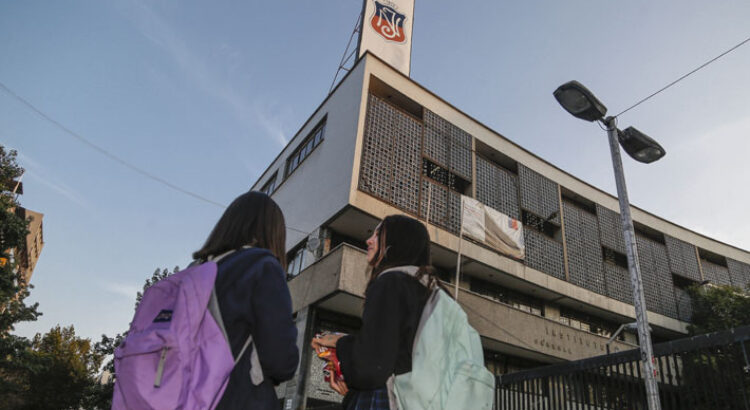
El pasado jueves 11 de marzo los titulares mostraban una noticia que sin duda marcará los libros de la historia educativa chilena:‘luego de 207 años, el Instituto Nacional recibirá estudiantes mujeres y será Plurigenérico’.Este titular representa un hito no sólo para este liceo y sus futuras estudiantes, sino para la proyección del sistema educativo chileno, o al menos esa es una de las expectativas que viene muy de la mano del deseo de la transformación social y política de la sociedad chilena en su conjunto.
Luego de un proceso lento, a veces con retrocesos y por supuesto siempre con resistencias, en las próximas semanas 250 nombres de estudiantes mujeres quedarán inscritos en una nueva página de la historia de la educación pública como la primera generación de mujeres institutanas, cumpliendo así el sueño de Marina Ascencio, una joven de 11 años que en 2016, mediante una carta pública dirigida a la presidenta Bachelet, solicitó ser aceptada en el Instituto Nacional. Hoy, 5 años después, el cuestionamiento y arrojo de Marina, que puso en jaque la tradición bicentenaria de segregación por género del llamado ‘foco de luz de la nación’ se instala con la fuerza de la sensatez y de la inclusión.
En 2018, luego del estallido de la Ola Feminista y de una serie de sucesos que desnudaron el sexismo anquilosado de la tradición del Instituto Nacional, la comunidad institutana fue tensionada a repensarse y abrir el debate no sólo en torno a la integración de estudiantes mujeres sino también respecto a la normalización de las prácticas (re) productoras de una formación machista, sexista y violenta en tal liceo. De muestra un botón: recordemos el caso del polémico polerón de cuarto medio que llevaba una frase que legitimaba la violencia sexual, y que impulsó a un grupo de estudiantes secundarias de la comuna a desarrollar la primera toma feminista del Instituto. La toma feminista del foco de luz patriarcal y androcéntrico de la nación que ‘repudió su machismo institucional’.
En este mismo año de oleada feminista, el Instituto pidió la colaboración a la Universidad de Chile para desarrollar un proceso de información y reflexión comunitaria desde la perspectiva educativa de género, y que, de cierto modo, sentara bases a la votación que se desarrollaría para aceptar o rechazar el ingreso de las niñas. A ese llamado de colaboración acudimos desde el Centro de Estudios Saberes Docentes, realizando un acompañamiento de todo aquel complejo proceso de deliberación comunitaria, en el cual se fueron develando miradas contrapuestas sobre el ingreso de las mujeres, la fuerza de los roles y estereotipos de género, el peso simbólico de la tradición, y por sobre todo, un afanoso marco de creencias que sostenía el discurso de la excelencia académica en total vinculación con la mantención de un liceo monogenérico (la comprensión de la excelencia educativa nuevamente ligada a la exclusión). Pero también hubo entre aquellas voces quienes enfatizaron la importancia de la educación como un derecho fundamental para todos, todas y todes, y que por tanto, el Instituto Nacional del Siglo XXI no puede decir sí a la discriminación y exclusión. Esas voces ganaron la votación y por eso hoy, 2 años después, estamos celebrando esta noticia.
Algunas consideraciones sobre este histórico suceso. Primero, representa una evidencia de que es posible la transformación que intenta abordar la demanda de inclusión en las escuelas segregadas, no sólo en términos de género sino en todo el espectro de la diversidad humana. Los movimientos estudiantiles y sociales han puesto con fuerza la demanda por una educación en justicia y equidad, tensionando las segregaciones y violencias cristalizadas en aquellas expresiones más ‘tradicionales’ de la educación chilena.
Segunda consideración, este hito nos pone en frente la posibilidad y desafío de construir una nueva identidad educativa en Chile, donde el modelo educativo entienda la excelencia menos ligada a estándares y buen rendimiento desde un enfoque contenidista y bancario, y más cercana al desarrollo de una formación verdaderamente integral, inclusiva y en justicia para niños, niñas, niñes y jóvenes. Sin duda, una esperanza que va de la mano de una transformación estructural de nuestro sistema escolar, y que en tiempos constituyentes, vale la pena recordar como un ámbito de disputa fundamental.
Hoy es más fuerte la comprensión de una educación de calidad como una educación inclusiva, ello implica que esa educación tiene el imperativo ético-político de garantizar el acceso (entendido como la primera barrera que produce exclusión y desigualdad), la plena participación y el aprendizaje de todos, todes y todas las estudiantes. En tal sentido, si bien es cierto que sólo un 4% de los establecimientos educacionales del país mantienen una diferenciación por género, este avance del Instituto Nacional, uno de los principales establecimientos públicos del país, emblema de la educación pública republicana chilena, resulta ser un gran paso para defender e irradiar la inclusión a todo el sistema educativo.
Pero el celebrar esta noticia y asociarla a rutas de transformación nos lleva también a indicar ciertas advertencias o caminos que hay que transitar previamente. Lo primero es enfatizar que un modelo mixto o plurigenérico no necesariamente se traduce ni garantiza una educación inclusiva y libre de sexismo. El acceso a un establecimiento no asegura en sí mismo igualdad de oportunidades ni procesos educativos libres de sesgos y violencias sexogenéricas para sus estudiantes. Esta advertencia implica un llamado a trabajar en comunidad, con convicción y participativamente, en la transformación de la cultura heteropatriarcal institutana, con foco en la reformulación de su Proyecto Educativo Institucional, pasando por la resignificación del concepto de excelencia educativa hasta una revisión crítica del modelo pedagógico que impera allí. Así, esta transformación cultural debiese pensar en clave crítica tanto la dimensión curricular como la producción cotidiana de interacciones y experiencias sociales de su comunidad, entendiendo que es tan fundamental repensar el conocimiento y su didáctica, pero también los rituales y tradiciones bicentenarias de dicha cultura escolar. Así, transitar verdaderamente hacia un modelo pedagógico inclusivo, no sexista y con perspectiva crítica de género implica por cierto resignificar también su identidad simbólica y material.
La idea a enfatizar aquí es que la educación verdaderamente inclusiva y libre de sexismo no se consigue por un acto administrativo, sino que es preciso un fuerte trabajo de toda la comunidad por primero forjar la convicción de la transformación, para luego repensar y revisar el proceso educativo que allí tiene lugar, reconfigurando las características de la formación de sujeto y de sociedad que el Instituto Nacional ha definido históricamente dentro de su Proyecto Educativo.
No cabe duda que la entrada de estudiantes mujeres es un hito, pero un hito que más bien representa la institucionalización de lo plurigenérico en el establecimiento, pues en él ya conviven varios géneros. Ahora vienen los desafíos más sustantivos que claramente no pasan por la sola resolución de la infraestructura del colegio, sino por la trasformación profunda de la cultura patriarcal y excluyente que ha caracterizado a este establecimiento durante más de 200 años de historia. Parte de este cambio cultural será la revisión de los modelos pedagógicos y prácticas educativas que reproducen un modelo de relaciones heterosexistas. En este cambio más sustantivo -y urgente- hoy trabaja con ahínco el Pilar de Equidad de Género del IN, donde en conjunto con el Centro de Estudios Saberes Docentes de la Universidad de Chile, un equipo de docentes del Instituto busca movilizar la concreción de un Proyecto Educativo No Sexista desde una perspectiva crítica y con participación comunitaria.
Finalmente, nuestro reconocimiento al estudiantado, docentes, asistentes de la educación, madres, padres, apoderades y equipos directivos que creyeron en que no sólo era posible, sino también urgente cambiar la historia y resignificar el sentido de la tradición y de la excelencia de la educación pública que busca transitar hacia la inclusión.
Según la organización, esta es la peor crisis educativa jamás vista en la región.
Latinoamérica podría perder hasta 1,7 billones de dólares por la “crisis educativa” provocada por la pandemia, que implica un impacto negativo a futuro en el capital humano, la productividad y un aumento de la “pobreza de aprendizaje”, advirtió este miércoles el Banco Mundial.
“Esta es la peor crisis educativa jamás vista en la región y nos preocupa que podría tener consecuencias graves y duraderas para toda una generación, en especial entre los sectores más vulnerables”, indicó Carlos Felipe Jaramillo, vicepresidente del Banco Mundial para América Latina y el Caribe, en un comunicado.
La entidad advirtió que a futuro “la enorme pérdida de educación, capital humano y productividad se podría traducir en una caída de ingresos agregados a nivel regional de 1,7 billones de dólares”.
De acuerdo con el informe, luego de 10 meses, equivalentes a un curso escolar sin clases, 71 % de los estudiantes de los primeros años de la escuela secundaria pueden no ser capaces de comprender adecuadamente un texto de moderada extensión. Y si el cierre se extiende por otros tres meses, el porcentaje puede ascender a 77 %.
Además, los expertos del banco advirtieron que estos efectos negativos afectan principalmente al quintil de menos ingresos, lo que podría haber ensanchado en un 12 % adicional la brecha educativa entre ricos y pobres.
A estos impactos negativos se añade la posibilidad de que las deserciones escolares se incrementen por lo menos en un 15 % debido a la pandemia y el impacto negativo en los estudiantes que se benefician de programas de alimentación en las escuelas.
“Los gobiernos deben actuar en forma urgente para recuperar el terreno perdido y aprovechar la oportunidad para mejorar los sistemas educativos”, concluyó Jaramillo.
Compromiso en Centroamérica
Los ministros de Educación de Centroamérica se comprometieron este miércoles a reabrir sus escuelas de manera “prioritaria, urgente y gradual”, sobre todo en los países donde las clases presenciales están completamente cerradas como medida de contención por la pandemia.
El compromiso fue adoptado tras una reunión virtual del Consejo de Ministros de Educación, conocido como CECC/SICA (Coordinación Educativa y Cultural Centroamericana), según un comunicado emitido en conjunto con Unicef y fechado en Ciudad de Panamá.
“Es una urgencia, una necesidad y una acción afirmativa en términos del derecho a la educación. Tenemos que continuar, los que ya estamos en ese proceso. Y los que no, dar ese paso firme”, dijo la ministra de Educación de Costa Rica y presidenta del CECC/SICA, Giselle Cruz.
“Hoy es un día de esperanza para millones de niños y niñas que todavía se encuentran fuera de las aulas”, afirmó la directora regional de Unicef para América Latina y el Caribe, Jean Gough.
“Saludamos esta postura firme que apunta a garantizar el derecho a la educación (…) en especial de los y las más vulnerables. Unicef está comprometido en apoyar y guiar su implementación”, añadió Gough.
América Latina y el Caribe es la región más afectada del mundo por el prolongado cierre de escuelas, informó Unicef.
“Tres de cada cinco niños y niñas que perdieron un año escolar completo en todo el mundo se encuentran en la región” y “el 60 % de todas las personas estudiantes de América Latina y el Caribe aún no han tenido acceso a clases presenciales”, precisó la agencia de la ONU.
No es foco de contagio
Según el comunicado del CECC/SICA y del Fondo de Naciones Unidas para la Infancia (Unicef), hay 12 millones de estudiantes centroamericanos que aún no han regresado a las aulas.
Honduras, Panamá y Belice continúan sin clases presenciales, mientras que El Salvador y República Dominicana planean abrir en abril. Guatemala, Nicaragua y Costa Rica sí retomaron las enseñanza presencial.
Pese a los reparos por la pandemia, “hemos visto que el centro educativo no es un foco necesariamente de contagio, sino que se lleva el contagio al centro educativo”, aseguró a la AFP la ministra Cruz. “Si una situación (de contagio) se da, sabemos qué hacer”, comentó.
Para Cruz, tener los protocolos de respuesta listos y bien divulgados en la ciudadanía ha generado confianza en los padres de familia.
La reapertura debe hacerse “cuidando la salud, con todos los protocolos sanitarios, cada uno desde su país”, consideró.
Costa Rica fue una de las primeras naciones de América Latina en iniciar la vacunación contra la covid-19 a finales de 2020 y en reabrir parcialmente sus escuelas en este 2021.
En el primer mes de reinicio de clases en su país, con 4.400 escuelas reabiertas, se han activado protocolos en 167. “Esto no significa contagios, sino posibles contagios”, precisó.
“Ante un caso positivo, se hace la valoración”, se aísla a las personas que fueron contacto del paciente, pero no se cierra la escuela, salvo en situación extrema. “Hasta la fecha no hemos tenido que hacer esto”, explicó la ministra.
En Costa Rica, el 8 de febrero, cuando iniciaron las clases, el promedio de casos diarios de covid en una semana era de unos 400. El 16 de marzo, esa cifra presentaba una leve variación a la baja.
Vuelven con júbilo
En Costa Rica, las clases son semipresenciales, por turnos y con distanciamiento dentro de las aulas. “Vamos poco a poco”, precisó.
Para la ministra Cruz, la reapertura es necesaria “no solo por el tema del aprendizaje, sino también por la necesidad de la convivencia en el centro educativo, de brindar la oportunidad de alimentación” y por la salud mental los estudiantes y las familias”.
“He visto como denominador común un gran júbilo en los estudiantes para la reapertura, están convencidos de que es mejor estar en el centro educativo que en la casa”, valoró Cruz, que recorrió el miércoles escuelas del noroeste de su país.
La ministra afirmó igualmente que un desafío inmediato será el reinicio de clases después de los feriados por Semana Santa, donde muchas familias saldrán de vacaciones.
Mundo/América Latina/19-03-2021/Autor(a) y Fuente: redclade.org
La iniciativa cuenta con el lanzamiento de campañas, informes y realización de eventos sobre la EPJA en América Latina y el Caribe
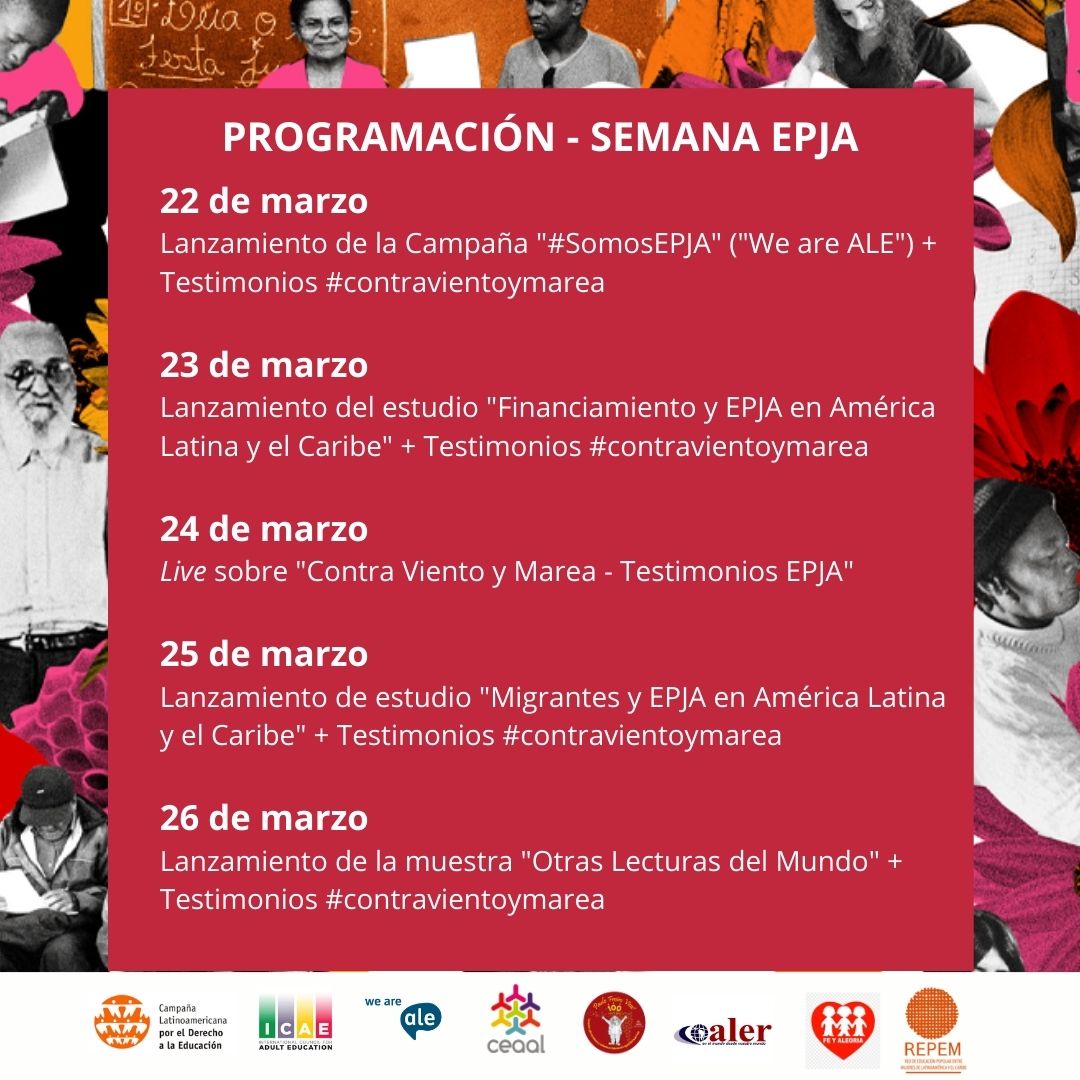
Relatos de estudiantes y educadoras/es sobre la Educación de Personas Jóvenes y Adultas (EPJA), obras artísticas, live y lanzamiento de informes son algunas de las actividades de la Semana de las Personas Jóvenes y Adultas, que se llevará a cabo del 22 al 26 de marzo.
La iniciativa es organizada por la CLADE, en alianza con ICAE, CEAAL, ALER, Fe y Alegría y REPEM, y es realizada en el marco de la Campaña Latinoamericana y Caribeña en Defensa del Legado de Paulo Freire y de la Campaña “We are Ale” (Somos EPJA).
Mira a continuación las actividades de la semana:
#somosEPJA (#weareale)
El 22 de marzo, organizaciones y redes de la sociedad civil de todo el mundo iniciarán la Campaña Mundial “Somos EPJA” (We are Ale), destinada a impulsar y promover el concepto y la práctica del aprendizaje y la educación de personas jóvenes y adultas (EPJA).
La idea de la iniciativa es reunir las organizaciones de la sociedad civil para adoptar una definición global compartida de la EPJA. Profesionales, estudiantes y representantes de la sociedad civil de los cinco continentes hablarán con una sola voz proclamando: ¡somos EPJA! (we are ale! en inglés)
El acto inaugural, un webinario el 22 de marzo a partir de 10 horas (horario de Brasil), será el comienzo de una campaña mundial de cinco años para aumentar la visibilidad del aprendizaje y la educación de personas adultas en todo el mundo, y para estimular la sociedad civil para que hable con una sola voz con miras a promover los derechos de todas las personas jóvenes y adultas a una educación de calidad y a lo largo de la vida.
El 23 y el 25 de marzo son los días dedicados al lanzamiento de dos estudios sobre la Educación de Personas Jóvenes y Adultas, elaborados por la CLADE, con el apoyo de DVV Internacional. El primer informe a ser lanzado el 23 destaca algunos de los principales rasgos del financiamiento de la EPJA en América Latina
y el Caribe, de cara a la preparación para la siguiente Conferencia Internacional de Educación de Personas Adultas (CONFINTEA VII) que tendrá lugar en el año 2021; y el otro abordará la situación y los desafíos de la EPJA y la migración en la región.
El miércoles (24/3), a las 16 horas (horario de Brasil), será la vez de conversar sobre la Campaña Contra Viento y Marea. La iniciativa difunde testimonios educomunicativos radiales desde experiencias inspiradoras de docentes y estudiantes de la EPJA en Perú, Ecuador, Colombia y Venezuela en el contexto de la pandemia.
Cuenta con 20 producciones educomunicativas que relatan experiencias, temores y alegrías del poder estudiar más allá de las dificultades en diferentes países de la región.
Este proyecto tiene como propósito valorizar la EPJA y contribuir a la inclusión educativa en América Latina y el Caribe.
La live se realizará a través del Instagram de la CLADE: @red.clade
Además, durante la Semana (22-26 de marzo), todos los días se difundirán algunos de los testimonios radiales de #ContraVientoyMarea a través de las redes sociales de la CLADE (FB,TW e Instagram) y de las otras redes regionales aliadas en la iniciativa.
Muestra “Otras lecturas del mundo: miradas de personas jóvenes y adultas”
El último día de la Semana de la EPJA (26/3) será la vez de conocer las obras inscritas en la muestra multimedia “Otras lecturas del mundo: miradas de personas jóvenes y adultas”. La convocatoria para participar en la muestra fue lanzada el 8 de septiembre de 2020 en el marco de la celebración del Día Internacional de la Alfabetización, buscando ofrecer un espacio para la presentación de experiencias que se desarrollen en este campo de la educación y que pongan de relieve, a través de expresiones artísticas, la importancia de la EPJA como derecho humano fundamental, su potencial transformador y para la promoción de los derechos humanos y de una vida digna.
El 26 de marzo, a partir de las 11 horas (horario de Brasil), se lanzará con un evento virtual la página web de la muestra multimedios, donde se presentarán todas las obras que fueron enviadas para la iniciativa, desde diferentes países y experiencias de la EPJA en América Latina y el Caribe, en variados formatos: fotos, documentales, canciones, videos, etc.
El lanzamiento, que tendrá la participación de las personas inscritas a la muestra, contará con exhibiciones artísticas, y se transmitirá en vivo a través del Facebook (@redclade) y del Youtube de la CLADE (@clade).
América Central/Puerto Rico/19-03-2021/Autor(a) y Fuente: www.metro.pr
Solo estaban permitidos los de primero a tercero, educación especial y cuarto año.
La designada secretaria del Departamento de Educación, Elba Aponte, anunció cambios sobre los grupos que se permiten a tomar clases presenciales en medio de la pandemia del coronavirus, COVID-19.
De acuerdo con la funcionaria en entrevista con WKAQ, de la próxima semana, cuando van a estar aumentando la cantidad de escuelas recibiendo estudiantes, permitirán dos grados adicionales.
“Ahora vamos a estar ampliando, si esta semana ocurre sin ningún incidente, ampliar los cuarto y quinto grados que pueden entonces entrar a esta fase”, comentó Aponte.
Según indicó la designada, actualmente hay unas 129 escuelas certificadas para ofrecer clases presenciales, y alrededor de 115 ya han comenzando o lo estarán a partir del lunes.
Desde que los estudiantes comenzaron a tener la opción de ir al plantel, Aponte dijo que están asistiendo entre unos 2 mil a 2,500 alumnos diariamente.
Cuando se anunció la reapertura de las escuelas, el Departamento informó que solo estarían asistiendo los grados de primero a tercero, cuarto año y de educación especial. Los estudiantes volvieron el pasado 10 de marzo.
Fuente e Imagen: https://www.metro.pr/pr/noticias/2021/03/18/mas-estudiantes-a-las-escuelas-educacion-amplia-grados-con-clases-presenciales.html
OtrasVocesenEducacion.org existe gracias al esfuerzo voluntario e independiente de un pequeño grupo de docentes que decidimos soñar con un espacio abierto de intercambio y debate.
¡Ayúdanos a mantener abiertas las puertas de esta aula!


 Relatos de estudiantes y educadoras/es sobre la Educación de Personas Jóvenes y Adultas (EPJA), obras artísticas, live y lanzamiento de informes son algunas de las actividades de la Semana de las Personas Jóvenes y Adultas, que se llevará a cabo del 22 al 26 de marzo.


 Users Today : 123
 Total Users : 35510933
 Views Today : 776
 Total views : 3643634