Page 21 of 22
1 19 20 21 22

Ghana’s Educational System Lacks Substance – Rawlings said

Africa/Ghana/May 2016/Autor:  Evans Osei Boakye/ Fuente: allafrica.com

Resumen:  El ex presidente Jerry John Rawlings ha descrito el sistema educativo en Ghana como carente de sustancia y esencia. Dijo que en un momento cuando el país se vio inundado con tantas universidades se ha reducido de la calidad de la educación, produciendo graduados superficiales cada año.

Former President Jerry John Rawlings has described the educational system in Ghana as lacking substance and essence.

He said at a time when the country was inundated with so many universities the quality of education has dwindled churning out superficial graduates every year.

Mr Rawlings said although the educational system in the country had transformed over the years the standard had fallen with graduates becoming a liability to the economy.

This he explained was due to the fact that students lack the political will to utilise and implement what they learn in school.

Speaking at a meeting with Cuba trained Ghanaian professionals who paid a courtesy call on him at his office in Accra on Tuesday, Mr Rawlings said Cuba was a shining example when it comes to education especially in their efforts at training medical doctors and other professionals throughout the world.

The wife of the former president, Nana Konadu Agyeman Rawlings contributing to the discussions said the personal relationship that existed between her husband and former Prime Minister of Cuba, Fidel Casto made it possible for the creation of Cuban scholarship scheme which enabled needy but brilliant Ghanaian students to be trained in Cuba.

She explained although the economy was in bad shape without an IMF and World Bank support former president Rawlings initiated and sustained the scholarship programme.

Mr Kofi Asafo Agyei , President of the Association of Cuban trained graduates in Ghana said the need to pay attention to the country’s human resource development cannot be overemphasized that is why he and his colleagues came back to Ghana to contribute their quota to national development.

He said it was only appropriate to pay a courtesy call on the former president for the bold and courageous decisions he took to send hundreds of brilliant needy Ghanaians students to Cuba on scholarship despite the criticisms and misconceptions about the programme by sections of the population.

He pointed out that former president Rawlings had exemplified visionary leadership by taking a bold decision to ensure that foreign scholarship projects could serve as a catalyst for rapid development especially for a developing country like Ghana.

He said «although it was an unpopular decision in 1983 to send some 609 young Ghanaian students to Cuba, he had envisioned the human resource needs of the country, many years down the line and made a strategic move, very few could comprehend back then.»

On behalf of his colleagues Mr Asafo Agyei expressed gratitude to former president Rawlings and the people of Ghana for the scholarship opportunity and encouraged subsequent governments to continue it.

Portions of the citations read «On behalf of all those whose lives you have touched, directly and indirectly, over the past several decades, through the Cuban Scholarship Project, we the members of the Cuban Trained Ghanaian Graduates Association (ESBECANS) would like to say a big thank you to you for making such a monumental difference in our lives.»

Fuente de la noticia: http://allafrica.com/stories/201605261169.html

Fuente de la imagen: https://www.google.co.ve/search?q=universidades+ghana&source=lnms&tbm=isch&sa=X&ved=0ahUKEwib1ZCk8__MAhVEqB4KHTEABT8Q_AUIBygB&biw=1280&bih=937

Comparte este contenido:

Cuba: A propósito de la jornada estudiantil por los 53 años de la Unión Africana

Cuba/13 de Mayo de 2016/Sierra Maestra

El 53 aniversario de la creación de la Organización de la Unidad Africana, hoy Unión Africana, a celebrarse el venidero 25 de mayo, es una fecha trascendental para los jóvenes de diversas nacionalidades que cursan estudios de educación superior en Cuba, quienes realizarán una amplia jornada conmemorativa.

Organizada por el Comité de Estudiantes Africanos en esta ciudad, la celebración comenzará hoy con la Copa Deportiva “Nelson Mandela” -que comprende futbol sala, voleibol y basquetbol- y se extenderá hasta el día 27.

Visitas a diferentes sitios de interés histórico, muestra de cine africano en la Casa del África, varias conferencias magistrales sobre oralidad e influencia de esa nación en la cultura santiaguera, y la intervención social del proyecto Esperanza en el hogar de ancianos “Corazones Contentos” conforman el programa de actividades.

Baile, poesía, trajes y platos típicos serán exhibidos en la exposición “Esta es nuestra África”, a realizarse el día 25 en el parque Serrano desde las 9:00a.m. hasta las 7:00p.m. Como cierre de la jornada está prevista una gran gala cultural el 27, dedicada al 90 cumpleaños de Fidel Castro, cuyo sitio aún no se ha definido.

“Dentro de nuestra unidad, cada país presenta su propia cultura e identidad, entonces realizamos la jornada como motivo de integración, para conocernos mejor y llevar al pueblo santiaguero una pequeña muestra de quiénes somos.”, comentó Pedro Augusto Mussole, Presidente del Comité.

Unos 370 estudiantes africanos residen en la provincia, desde la Universidad de Oriente y la Universidad de Ciencias Médicas se forman como futuros profesionales que servirán en Angola, Nigeria, Guinea, Togo, Guinea Conacri, Guinea Bisau, Namibia, Niguer, Zambia, Madagascar, Djibuti, Uganda, Ghana, Yemen, Tanzania y la República de Arabia Saudita.

Hablan más de 30 dialectos entre todos, aunque sus lenguas oficiales son el inglés, el portugués, el español y el francés indistintamente. Ellos rompen con las barreras culturales e idiomáticas para mostrar que África está aquí.

Fuente: http://www.sierramaestra.cu/index.php/titulares/7756-a-proposito-de-la-jornada-estudiantil-por-los-53-anos-de-la-union-africana

Comparte este contenido:

Africa Code Week (ACW): la lucha por la cualificación digital en África

África/ 11 de Mayo de 2016/Informativos.net

¿Cómo fomentar la alfabetización digital como una capacidad básica para la juventud africana en la economía actual? 150.000 niños y jóvenes africanos de 30 países aprenderán y se divertirán desarrollando código durante la celebración de Africa Code Week 2016, organizada por SAP y cientos de entidades colaboradoras y que se presenta hoy en Kigali (Ruanda) en el marco del Foro Económico Mundial.

África es uno de los continentes que cuenta con mayor mano de obra y más joven. Según datos del Foro Económico Mundial, el crecimiento del continente este año se situará por debajo del 5% debido a que la economía mundial sigue sufriendo. Y a pesar de ello el continente tiene el mercado de consumidores digitales que más rápido crece y la mayor población en edad de trabajar del mundo. Y sin embargo, las empresas africanas tienen dificultades para cubrir puestos de trabajo que requieren competencias digitales. Hoy, sólo el 1% de los niños africanos tiene conocimientos básicos de desarrollo de código al dejar el colegio.

En los próximos 25 años, la población de África en edad de trabajar se duplicará hasta los 1.000 millones, superando a la de China e India. Mientras tanto, la desigualdad en materia de conocimientos digitales es cada vez mayor.

Aunque la programación podría generar millones de empleos para jóvenes africanos y poner a sus países en la senda del crecimiento sostenible, las empresas en África a duras penas identifican candidatos con suficientes destrezas tecnológicas. Por tanto, la cuestión no es establecer si es necesario o no ofrecer a los jóvenes africanos un programa completo de apoyo a la formación, sino definir cuándo se debe poner en práctica. La respuesta de los participantes en Africa Code Week es: AHORA.

Según ha manifestado el ministro de Juventud y TIC del gobierno de Ruanda, Jean Philbert Nsengimana, «Hoy en día la alfabetización debe ir más allá de saber leer y escribir, incluso más allá de la alfabetización digital, es decir, de saber cómo usar los ordenadores. La formación básica para la próxima generación debe girar en torno a la programación y desarrollo de código”.

La iniciativa que ahora se presenta, se celebrará entre los días 15 y 23 de octubre de 2016, cuando se impartirán miles de talleres y formaciones gratuitas sobre desarrollo de código en las que participarán 150.000 niños y jóvenes de entre 8 a 24 años procedentes de 30 países de África –Angola, Argelia Benín, Botsuana, Camerún, Costa de Marfil, Egipto, Etiopía, Gambia, Ghana, Kenia, Lesoto, Madagascar, Malaui, Marruecos, Mozambique, Namibia, Nigeria, Ruanda, Senegal, Sudáfrica, Suazilandia, Tanzania, Togo, Túnez, Uganda, Zambia y Zimbabue-.

Los niños de 8 a 11 y 12 a 17 años participarán en workshops basados en Scratch, una plataforma de aprendizaje desarrollada por MIT Media Lab para simplificar el desarrollo de código. Los estudiantes aprenderán elementos básicos de desarrollo de código, así como a programar sus propias animaciones, concursos y juegos.

A aquellos con edades comprendidas entre los de 18 y los 24 se les invitará a un workshop denominado “Introducción a las Tecnologías Web” (para HTML, CSS, Javascript, PHP, SQL), que les proporcionará las bases para entender la arquitectura típica de un sitio web y les enseñará a crear un sitio web totalmente operativo y adaptado a dispositivos móviles.

Casi tan importante como formar a los alumnos es formar a los formadores. Por esa razón, de aquí a que empiece Africa Code Week, SAP impartirá sesiones para preparar para la iniciativa a miles de padres, profesores y educadores. Asimismo, los cursos de Africa Code Week, así como los materiales de aprendizaje estarán disponibles en la plataforma openSAP, totalmente gratuita, para todos los profesores, niños y jóvenes, independientemente de en qué parte del mundo se encuentren. Este es el multiplicador clave que permitirá que Africa Code Week pueda cumplir su ambicioso objetivo de capacitar a más de 200.000 profesores y tener un impacto positivo en la vida de 5 millones de niños y jóvenes durante de los próximos 10 años.

Fuente: http://www.informativos.net/tecnologia/africa-code-week-acw-la-lucha-por-la-cualificacion-digital-en-africa_55071.aspx#sthash.FduhsCDf.dpuf

Comparte este contenido:

Ghana: Teacher ponders suicide over unpaid salary

Ghana: Teacher ponders suicide over unpaid salary

Africa del Este /mayo de 2016/En Vibe Ghana,

Resumen: Un maestro en Gambaga, en el Este de Mumprusi, Distrito de la Región Norte, ha dicho a “Citi News” que está siendo perseguido por pensamientos de suicidio tras los retrasos en el pago de sus salarios durante casi cuatro años.

A teacher at Gambaga in the East Mumprusi District of the Northern Region, has told Citi News he is being haunted by thoughts of committing suicide following delays in the payment of his salary arrears for nearly four years.
The 35-year old teacher [name withheld] who has been working since 2012, says he has received only three months of his salary, a situation he said is making life unbearable for him and his family. “Sometimes when I think so much, things like suicide come into my mind.
“Sometimes when I think, I say that government is being unfair to us. How can someone be working for over two years and only be paid for just three months. So when I’m thinking about those things, I just conclude that life is nothing.”
Government has repeatedly claimed that it is working towards the payment of all allowances and salary arrears owed some teachers across the country.
Some institutions are currently validating hundreds of documents in a bid to rid their system of ghost names who draw salaries from the government payroll.
The validation follows threats by the teacher unions to lay down their tools. Speaking to Citi News’ Franklin Badu Jnr, one of the affected teachers said he now resorts to borrowing to keep his family going.
“They [GES officials] only come and tell us to bring our documents so that they will pay the salary arrears; we give out the documents but nothing happens. Later on they come again and requested for the same documents. Yet nothing happens and we are suffering.”
The teacher also lamented that, “it’s very difficult for me because I have a wife and at the end of the month, the salary that I will take is not enough so sometimes we have to go and borrow money from somewhere all because of the arrears.
“If the arrears were to be paid to us, we can use it for some business. I don’t have money, if I don’t have money how can I provide for my family?”
Source; citifmonline

Fuente: http://vibeghana.com/2016/04/11/teacher-ponders-suicide-over-unpaid-salary/

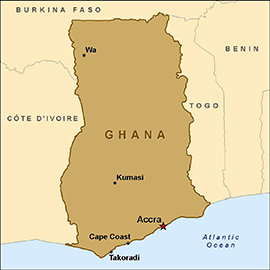
Foto: http://wwwnc.cdc.gov/travel/images/map-ghana.png

Comparte este contenido:

Ghana: La Facultad de Educación de Segovia ofrece dos cursos con prácticas en una escuela de Ghana

Ghana/29/04/2016/Fuente: el norte de castilla

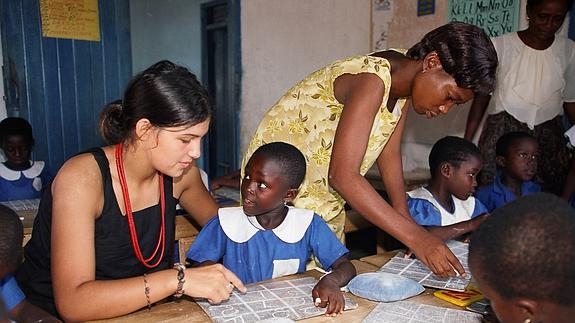
Abierto el plazo de inscripción para los cursos ‘Cooperación educativa en África’ y ‘Didáctica de las Matemáticas en un contexto de cooperación educativa.

La Facultad de Educación del Campus María Zambrano de Segovia de la Universidad de Valladolid ha organizado para este mes de mayo dos cursos semipresenciales, dirigidos a los estudiantes, que incluyen ambos una formación práctica de cooperación educativa o de voluntariado en la escuela de Larabanga (Ghana), según informó en un comunicado recogido por Ical la institución académica.

El primero ‘Cooperación educativa en Africa’ se celebra del 6 al 8 de mayo con 25 horas de duración (15 presenciales y diez no presenciales) y el segundo ‘Didáctica de las Matemáticas en un contexto de cooperación educativa’ los días 30 y 31 de mayo y tiene una duración de 12,5 horas (ocho presenciales y 4,5 horas). Tienen una modalidad semipresencial e incluyen la posibilidad de transferencia y reconocimiento académico UVa e inclusión en el Suplemento Europeo al Título.

Ambos se engloban en el Proyecto de Innovación Docente ‘El Practicum en Ghana como estrategia de aprendizaje-servicio en la formación inicial del profesorado’, en colaboración con la ONGd ADEPU y los Departamentos de Expresión Musical, Plástica y Corporal y de Didáctica de las Ciencias Experimentales, Sociales y de las Matemáticas de la UVa.

Están van dirigidos, fundamentalmente, a los estudiantes que el próximo curso académico deseen hacer sus prácticas externas en esta escuela o simplemente quieren colaborar en ella como voluntarios. También está abierta a otros estudiantes y miembros de la comunidad universitaria (personal de administración y servicios y personal docente e investigador) interesados en la cooperación educativa al desarrollo. La matrícula es gratuita.

Fuente: http://www.elnortedecastilla.es/segovia/201604/29/facultad-educacion-segovia-ofrece-20160429230656.html

Imagen: http://www.elnortedecastilla.es/noticias/201604/29/media/cortadas/ghana–575×323.jpg

Comparte este contenido:

Ghana: Nigerian Students Shine at Ghanaian University Graduation

África/Ghana/Marzo 2016/Fuente y Autor: Thisdaylive.com

Resumen:Dos estudiantes nigerianos ganaron el primer premio en la novena graduación Congregación del Instituto de Tecnología de Accra (AIT). Ghana, atrae anualmente más de  7.000 estudiantes extranjeros de cerca de 60 países para sus universidades privadas y públicas.

Two Nigerians have won the top prize at the 9th Graduation Congregation of the Accra Institute of Technology (AIT), a leading technology-focus private university in Ghana. The event held at the Ghanaian capital city over the weekend.

In a statement released by the University, Mr. Peter Hunnoho Moses, who graduated with a First Class Honours Bachelor of Science Degree in Information Technology was adjudged the overall best student of the graduation class with a cumulative GPA of 3.99. The overall best student in the Female category went to Ms. Odinaka Abel Favour, who graduated with a First Class Bachelor of Science Degree in Business Administration with a cumulative GPA of 3.90.

In his speech to the audience, which saw graduation of Bachelor’s degree holders and PhDs, Prof. Clement Dzidonu, the President of the University observed that this is a major achievement given that, AIT has the toughest and the highest grading system within the university system in Ghana. «To get an A grade in a subject at AIT you must score above 90 and to get a First Class with a cumulative GPA close to the maximum 4.2, means that a student must consistently get A grades across the board», Dzidonu noted.

The Deputy Minister for Education, responsible for Tertiary Education, Hon. Samuel Okudjeto Ablakwa, who was the Special Guest of Honour, congratulated the university for mounting mainly science, technology and engineering programmes which in his view was in line with the Ghanaian government’s determination to implement and enforce the 60:40 policy guidelines aimed at giving priority to science, mathematics and engineering programmes in the tertiary institutions.

He announced that in line with this, the Ministry of Education through the National Accreditation Board (NAB) and the National Council for Tertiary Education (NCTE) has drawn up new guidelines that would ensure that the accreditation of new universities and academic programmes meet these guidelines.

The Deputy Minister also congratulated those receiving the overall best graduating student awards and noted that, Ghana is currently attracting over 7,000 foreign students from close to 60 countries to its private and public universities annually.

He announced that the government is mindful of the internationalisation of higher education and the Ministry of Education is empowering its statutory higher education regulatory bodies to ensure that the high academic standards of a number of the Ghanaian universities including AIT are internationally benchmarked to continue to attract more foreign students.

Chairman of the AIT Board of Trustees, Prof. Francis K. Allotey, in his address to the congregation, announced the election of two eminent academics to the Board, namely: Prof. Goolam Mohamedbhai who is the former Vice Chancellor of University of Mauritius; former Secretary General of the Association of African Universities (AAU); former President of the International Association of Universities (IAU) and the former Chairman of the Association of Commonwealth Universities.

The other is Prof. Anuwar Ali, the former Vice Chancellor of the National University of Malaysia; former President and Vice Chancellor of the Open University of Malaysia and member of the Higher Education Council of Malaysia. «With this new members, the AIT Board of Trustees, now boast of five former Vice Chancellors of World-Class universities; there is no doubt that AIT has the most high-powered and academically distinguished University Board on the African continent», he observed.

Fuente de la noticia:http://www.thisdaylive.com/index.php/2016/03/27/nigerian-students-shine-at-ghanaian-university-graduation/

Fuente de la imagen:http://leadersandco.s3-eu-west-1.amazonaws.com/wp-content/uploads/2016/03/26235142/Nigerian-Students-in-Ghanaian.jpg

Socializado por: Editores África

Comparte este contenido:

Ghana: 104 Apprentices Graduate Under the Ghana Skills Development Initiative

Ghana|22 MARCH 2016 | Press release

Resumen: La noticia reseña la primera graduación del Centro de Formación técnica de Accra en Ghana, de aprendices del sector informal en los sectores pilotos de Automotor, Cosmetology, fabricación de la Ropa, Electrónica y Soldadura.

One hundred and four (104) apprentices of Trade Associations in the Greater Accra Region, trained under the Ghana Skills Development Initiative (GSDI), yesterday, received certificates in Competency-Based Training (CBT) National Proficiency level 1 at a ceremony in Accra.

The event, hosted by the Accra Technical Training Centre, was the first-ever graduation of apprentices from the informal sector for nationally-recognized qualifications and certificates in the pilot sectors of Automotive, Cosmetology, Garment-making, Electronics and Welding.

About two hundred and fifty (250) apprentices are graduating this month in the three project areas of the Northern, Volta and the Greater Accra regions.

Delivering the key note address, the Minister for Education, Prof. Naana Jane Opoku-Agyemang, described the graduation as a major milestone in the life of the Ministry of Education and Ghana’s skills development agenda.

Prof. Opoku-Agyemang urged the graduates to use their knowledge and skills for the benefit of others, especially the vulnerable.

She said government had identified the lack of a progression path for the advancement and upgrading of skills as a major challenge of the Technical and Vocational Education and Training (TVET) sector.

There was, therefore, the need, he said, to create an efficient co-ordinating unit within the state apparatus for skills development as part of measures to address the challenge.

Prof. Opoku-Agyeman commended the Council for Technical and Vocational Education and Training (COTVET) and the German Government for the successful implementation of the GSDI.

In an address, Dr Nicole Maldonado Pyschny, Head of Development Co-operation, Embassy of the Federal Republic of Germany in Ghana, noted that TVET and skills development were fundamental for economic development and tools for fighting youth unemployment.

Dr Pyschny disclosed that the Governments of Ghana and Germany had agreed in June, last year, to continue co-operation in the TVET sector as a focal area of German-Ghanaian Development Co-operation.

This, she said, meant that the GSDI programme would be upscaled to other regions of the country as well as other trades and vocations, adding that the focus would now be on the next step of Proficiency Level ll.

The Executive Director of COTVET, Mr Sebastian Deh, in a statement, said GSDI should not be seen as duplication but as an essential component of the National Apprenticeship Programme (NAP) established by Government through COTVET to ensure that the formal school graduates who could not access Senior High School (SHS) education were given employable skills through modern apprenticeship.

The Chairperson for the occasion, Mrs Grace Amey-Obeng, in her remarks, urged the graduates to put the skills and values acquired as well as the health and safety aspects of their training into practice.

Mrs Amey-Obeng called for more interventions to enrich and improve the GSDI programme.

GSDI aims to build the capacity of the informal sector–which generates 90 per cent of employment in Ghana– and to improve the quality of training of the traditional apprenticeship system which is said to be suffering from structural deficiencies such as lack of standardization of training.

The initiative started in 2012 and is being implemented on behalf of the German Government via the Deutche Gesellschaft fur Internationale Zusammenarbeit and the German Development Co-operation (GIZ GmbH), in collaboration with COTVET.

Under the initiative, which supports COTVET to upgrade the skills and qualifications in the traditional apprenticeship system, 10 Trade Associations and 17 Training Providers (private and public) are enabled to develop and organize a regular offer of CBT courses for apprentices, master craftspersons and artisans.

Source: ISD (G.D. Zaney)

Fuente de la noticia: http://allafrica.com/stories/201603231146.html

Fuente de la foto: http://www.ghana.gov.gh/images/prof_naana.jpg

Comparte este contenido:
Page 21 of 22
1 19 20 21 22