Page 145 of 621
1 143 144 145 146 147 621

“Lo más importante es empoderar a las mujeres del pueblo” Bahijjahtu Abubakar

África/21 Marzo 2019/Fuente: El país

Abubakar combate el cambio climático en Nigeria. Remadna lucha contra la radicalización en París. Ambas participan en un encuentro de grandes mujeres en Segovia

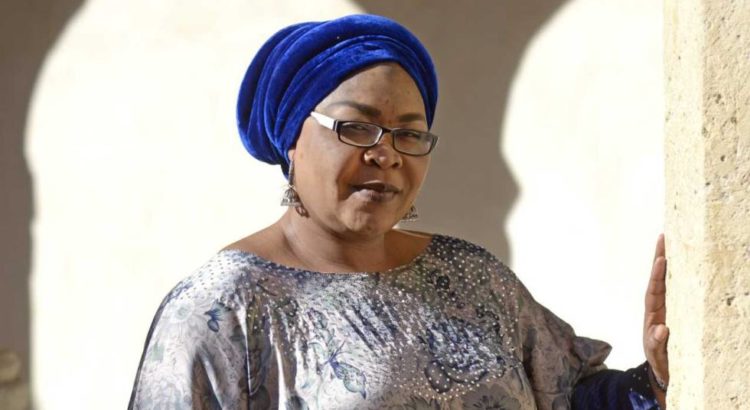
Bahijjahtu Abubakar, experta en desarrollar respuestas para mitigar los efectos del cambio climático con perspectiva de género, celebra que cientos de miles de jóvenes de todo el mundo salieran esta semana a la calle contra el cambio climático. Lo cuenta este sábado antes de intervenir en el IX Encuentro Mujeres que Transforman el Mundo, organizado por el Ayuntamiento de Segovia, donde participan activistas y defensoras de los derechos humanos, el medio ambiente o la paz.

Abubakar es la fundadora de Ruwes (Seguridad Energética de las Mujeres Rurales, en sus siglas en inglés), una iniciativa que nace de la necesidad de salvar vidas y la tierra y mejorar la economía erradicando la pobreza energética entre las mujeres de poblaciones rurales del África subsahariana. Ella considera que “hay esperanza” para frenar el cambio climático y defiende que el futuro debe estar en las manos de las mujeres. Está convencida de que los hombres africanos van a sumarse a las mujeres en esta lucha por el medioambiente. Según cuenta, los varones han visto que ellas reciben dinero e incentivos financieros que les permiten acceder a hornos ecológicos que evitan la contaminación y los problemas de salud que les provocan los humos.

Con Ruwes ha emprendido una cruzada de la que se han beneficiado ya más de 300.000 mujeres de dos millones registradas. Abubakar asegura que las nigerianas cocinan tres veces al día en un espacio cerrado. Además, la tala de árboles para obtener leña está haciendo aumentar la desertificación unos 0,6 kilómetros al año. “Estas mujeres tienen que ir cada vez más lejos a sacar leña y, cuando salen, las violan en el trayecto. No se puede decir nada, no hay costumbre en África de hablar de estas cosas, no se puede imaginar uno la vida que llevan, van a por leña, las violan y vuelven a la cocina e inhalan humo como si se fumaran 20 paquetes de cigarrillos (…) Además, cuando tienen un bebé lo atan a la espalda y el niño inhala lo mismo, también sufre el feto cuando están embarazadas, porque afecta al desarrollo del cerebro”.

Abubakar también coordina el Programa de Energías Renovables del Ministerio Federal de Medio Ambiente en Nigeria. Y empezó a promocionar la creación de centros para formar a las mujeres en el montaje de hornos ecológicos, tras acudir a India a conocer esta tecnología, que también supone una manera de economizar la madera porque se necesita quemar menos cantidad.

Luego existen otros hornos, con tecnología más avanzada, que incluso incorporan una tarjeta sim (tarjeta inteligente como la que llevan los móviles) para transmitir los datos de las horas que cocinan. Bahijjahtu Abubakar sostiene que se instalan gracias a donaciones y al acuerdo con una empresa estadounidense, aparte de beneficiarse de parte de lo recaudado con las multas que se imponen a los países desarrollados que más contaminan, como fija el Acuerdo de París. Estas instalaciones necesitan poca madera y se pueden alimentar de residuos de agricultura o de papel compactado reciclado que, en muchos casos, les facilitan las embajadas, una práctica que inició la de Estados Unidos en Abuya. Lo que no emplean en la cocina lo venden en el mercado.

Cuando se le pregunta cómo reciben en su país el trabajo que realiza, después de aclarar que como mujer ha trabajado mucho por estimular el interés sobre este problema que afecta a la salud del ser humano, afirma en tono jocoso: “Algunos quieren fusilarme”.“Las mujeres me adoran. He tenido invitaciones para salir de Nigeria y convertirme en CEO de una organización internacional, pero no quiero abandonarles, la gente confía en mi porque he entrado en sus cocinas para explicar el problema, han aprendido cómo montar los hornos, junto con sus hijas. Lo más importante es empoderar a la mujer del pueblo con información, financiación y tecnología”.

Madres contra la radicalización

Nadia Remadna es una activista de familia argelina, madre de cuatro hijos. En 2014 fundó La Brigade des Mères (La Brigada de las Madres), una asociación para proteger a jóvenes de entornos radicalizados, contra el fracaso escolar y la violencia doméstica. También ha participado en el encuentro en la antigua cárcel de Segovia convertida en centro de creación.
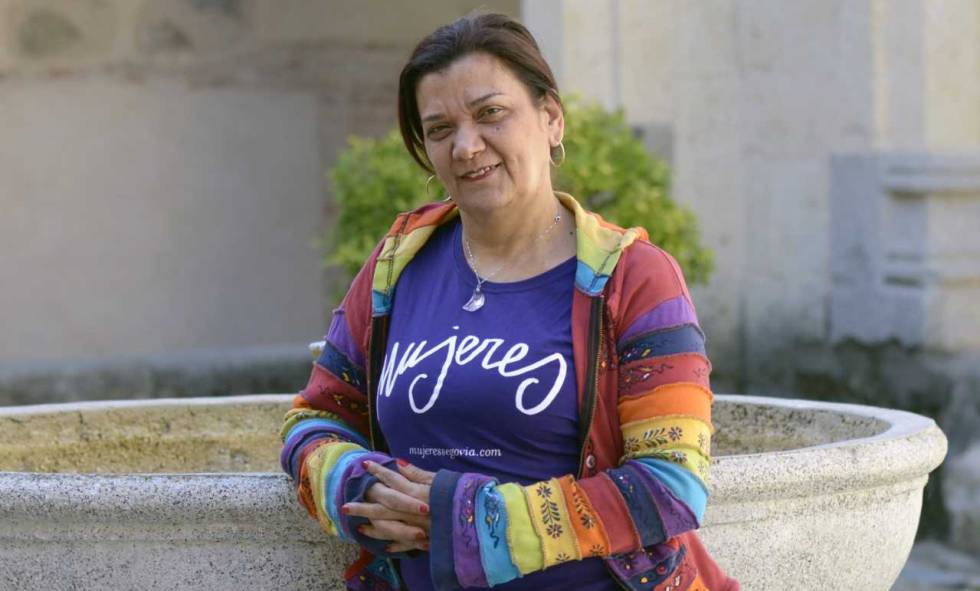
Nadia Remadna, este sábado en Segovia.
Nadia Remadna, este sábado en Segovia. AURELIO MARTÍN

Relata su experiencia en el distrito 93 de Seine-Saint Denis, de París, donde el ISIS recluta a sus miembros entre hijos de emigrantes árabes. “La situación en algunos barrios de la periferia es muy difícil, no hay que tomárselo a la ligera. Hay muchos jóvenes que se han ido a Siria, muchos convertidos, y cada vez se ven más niñas con velos. Pero los políticos no intervienen, actúan por intereses electorales y financieros. En Francia no sabemos manejar la urgencia, hay una gran cobardía política. Al principio pensaban que iban a ir unos cuantos [jóvenes] a hacer la guerra a Siria, pero ahora nos encontramos con el problema de los que quieren volver y los que se han radicalizado quedándose en Francia”.

Remadna defiende que el papel de la mujer es fundamental para evitar la radicalización “porque es la primera víctima, la protectora de sus hijos. Pero hay muchas que tienen miedo de hablar, hay una gran presión familiar y social”. Reclama que se una más gente a la causa y lamenta: “Solas no podemos, el problema es que tenemos una política enfrente que no se mueve. En Francia nos gusta mucho dar lecciones, pero no tenemos más remedio que luchar contra ello [la radicalización] porque depende el futuro de nuestros hijos y nietos”.

En el Encuentro de Mujeres que Transforman el Mundo también han intervenido la rusa Svetlana Gánnushkina, varias veces candidata al Nobel de la Paz, luchadora contra la xenofobia y la intolerancia; Carmen Avendaño, una madre coraje española que se levantó contra los narcos que robaban las vidas de sus hijos en los pasados años ochenta y noventa; Mayerlis Angarita, activista por la paz en Colombia, o las veteranas reporteras Rosa María Calaf y Carmen Sarmiento.

Imagen tomada de: https://ep01.epimg.net/sociedad/imagenes/2019/03/16/actualidad/1552761177_116342_1552766864_noticia_normal.jpg

Fuente: https://elpais.com/sociedad/2019/03/16/actualidad/1552761177_116342.html
Comparte este contenido:

Digital education boost for South Africa’s poorest pupils

Africa/ South Africa/ 20.03.2019/ Source: www.itnewsafrica.com.

In a boost for South Africa’s ailing education system, business heavyweights are backing a plan to place a fully resourced e-learning tablet in the hands of one million of the poorest pupils within the next five years.

Already MTN, Oxford University Press, Cambridge University Press, Shuter & Shooter and WIZZR Technologies have signed on with the organisation spearheading the plan, the Closed-loop Learner Network (CLN), resulting in a successful trial roll-out of the tablets – called Omang – to 1,000 pupils at no-fee schools in the Free State late last year.

Based on the trial’s success, and together with the provincial Department of Education, a further 20,000 pupils at no-fee schools will be benefitting from the initiative during 2019.

MTN provides free connectivity for the tablets, while CAPS-approved textbooks for grades 10 to 12 pupils are pre-loaded onto the devices thanks to international software developers WIZZR Technologies and the three textbook publishers. CLN in turn ensures that high school pupils receive the Omang devices, complete with textbooks, tutorials and white-listed online resources to assist them in their studies.

The initiative was celebrated at a gala dinner in Bryanston this week, where private sector heavyweights including MTN’s David Mphelo* and SAP Africa head of innovation Dr Adriana Marais – who is a candidate for the Mars One human settlement mission – addressed the audience of 150 delegates. Included in the line-up of speakers were MD Ramesh, regional head of the multi-billion dollar agri business Olam International, as well as African Industrialist of the Year**, Jendamark MD Quinton Uren.

Also in attendance were Massimo de Luca, head of trade and economics for the European Union delegation to South Africa, Danone Southern Africa MD Hendrik Born, and singer Danny K.

CLN had already begun building the infrastructure required to implement President Cyril Ramaphosa’s vision of a tablet device in every pupil’s hands within the next six years, CLN founder Ajit Gopalakrishnan told the audience. South Africa currently ranks 54 out of 63 global economies in the category of education and training, according to the latest IMD World Digital Competitiveness Rankings.

“This is not about giving tablets to kids. Our aim is to become the Facebook of education and to gain in-depth insight into the next generation. It’s about seeing the human potential – and the business opportunity – in including the masses in the economic equation,” said Gopalakrishnan, adding that dedicated social impact funding from the private sector was essential to extend the initiative’s reach across South Africa.

Mphelo said education was one of two major focus areas for the MTN Foundation and that it was vital to use the available connectivity to bridge the digital divide.

“We have the scalable ready network and infrastructure. Why aren’t we using that infrastructure to unlock the potential of all South Africans no matter where they live?” Mphelo said.

Quantum physicist Marais said connectivity had become a basic resource like water and food and that a sustainable approach to all of these resources was critical for the future. She added that it was important to support the dreams of young people but that tools such as science and technology were needed to make those dreams a reality.

“CLN’s Omang initiative is one of the crucial projects around education and connectivity that will inspire the next generation of thinkers and make us proud to be human,” said Marais.

Uren, whose company has acquired a 41% stake in Omang, said Jendamark already had the technology platform in place to support the agenda and unlock potential.

“Industry 4.0 is the perfect platform to solve specific educational problems and inspire hope. This tablet device can affect a major change in education. Here we can really change lives and the future of our country.”

Source of the notice: https://www.itnewsafrica.com/2019/03/digital-education-boost-for-south-africas-poorest-pupils/

Comparte este contenido:

Ghana necesita investigadores de calidad para abordar los problemas nacionales

Africa/Ghana/ghananewsagency.org

 Ghana necesita investigadores con recursos y con experiencia para enfrentar los desafíos nacionales a través de intervenciones políticas exhaustivas, ha dicho el profesor Yaa Ntiamoa-Baidu, director de la Universidad de Ghana (UG) Carnegie Projects.

La Corporación Carnegie de Nueva York y la Universidad de Ghana, en 2010, comenzaron un proyecto para construir una nueva generación de académicos en África para promover la excelencia en la investigación de posgrado.

El profesor Ntiamoa-Baidu, en una entrevista con la Agencia de Noticias de Ghana, dijo que el proyecto había introducido actualmente el tercer componente, que consiste en desarrollar la capacidad de los becarios postdoctorales a través del archivo adjunto.

Explicó que los primeros miembros de la Facultad de carrera se unieron a profesores con experiencia para servir como mentores, dando a los beneficiarios el tiempo y la oportunidad de exponerse a la forma en que funcionan las instituciones terciarias en otros países o cómo investigan los laboratorios.

El Prof. Ntiamoa-Baidu explicó que la idea era animar a los profesores para que realicen más investigaciones, sean más productivos, tengan la experiencia y realicen investigaciones de vanguardia.

El proyecto había apoyado a 125 candidatos a PhD y 86 MPhil y varios miembros de la facultad de carrera temprana a través de becas y becas de investigación.

Dijo que, en conjunto, la Universidad de Ghana había recibido fondos de casi 10 millones de dólares de parte de Carnegie y otros donantes.

La Sra. Deana Arsenian, Vicepresidenta (Programa Internacional) de la Corporación Carnegie de Nueva York, dijo que la corporación había registrado 1.500 becas y apoyó el fortalecimiento del sector de la educación superior en África.

Dijo que durante los últimos tres años, la estrategia de la Corporación se había centrado en las oportunidades postdoctorales a través del apoyo a las instituciones para ofrecer oportunidades para avanzar en las carreras académicas.

La Sra. Arsenian dijo que la filosofía de Carnegie era que las necesidades de la educación superior en Ghana y otros países de África occidental eran enormes y que aún se necesitaba mucho esfuerzo para desarrollar habilidades.

Dijo que dado que las facultades universitarias eran muy importantes, la contribución de Carnegie había ayudado a profundizar el grupo de intelectuales altamente capacitados en África, lo que, a su vez, había elevado el potencial de investigación de las universidades africanas.

El Dr. Kwabena Kan-Dapaah, un beneficiario, dijo que se unió a la Facultad UG como Facultad en 2011 con una maestría, luego de lo cual ganó una beca de UG-Carnegie para comenzar sus estudios de doctorado.

Dijo que la beca de tres años lo llevó a dos lugares diferentes; un curso de trabajo en una universidad en Abuja y un año en los Estados Unidos, y finalmente obtuvo su doctorado en 2015.

El Dr. Collins Badu Agyemang, profesor del Departamento de Psicología y académico de Carnegie, felicitó a Carnegie Corporation de Nueva York por su inmenso apoyo a la Universidad de Ghana.

Desafió a todos los beneficiarios de los proyectos UG Carnegie para tratar de conectar los puntos entre sus hallazgos de investigación académica y las necesidades de la industria.

«Como investigadores, ciertamente debemos deconstruir nuestros hallazgos para que los responsables de las políticas y el público puedan beneficiarse de nuestros resultados de investigación basados ​​en el contexto», dijo.

Fuente: http://www.ghananewsagency.org/education/-ghana-needs-quality-researchers-to-tackle-national-issues–146852

Comparte este contenido:

Tanzania y el tirón de la educación sexual ‘online’

África/Tanzania/20 Marzo 2019/Fuente: El país

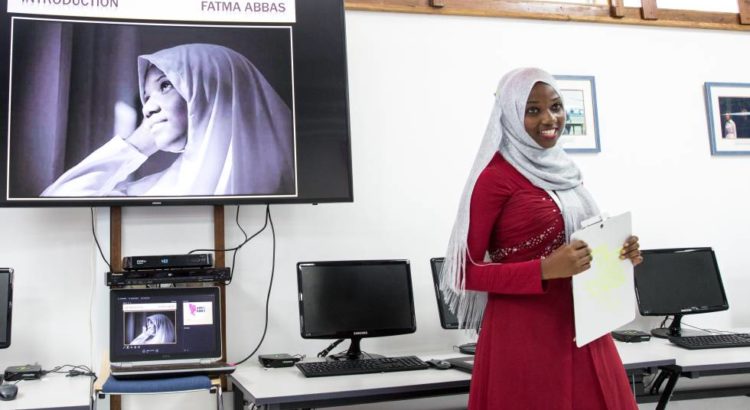
Asha y Fatma Abbas tienen 18 años y son las creadoras de Aurateen, una página web que permite a los adolescentes pedir consejos de forma anónima sobre sexo, drogas y alcohol, rompiendo algunos de los tabúes más arraigados en Tanzania

Fatma, Gloria y Grace llevan mirándose a los ojos más de una hora, esperando a encender el ordenador. Las caídas de corriente y los cortes de energía son bastante comunes en Ukonga Majumbasita, un barrio surgido de manera espontánea a los lados de la carretera que lleva desde el aeropuerto al centro de Dar es Salaam, la capital administrativa de Tanzania. Aquí los niños corren por calles sin pavimentar, en medio a casas en ruinas.

“¿Cómo puedo saber si estoy embarazada? Esta es la pregunta que hacen más a menudo”, cuenta Fatma Abbas, de 18 años y viste un hiyab maculado que destaca sus grandes ojos negros. Ella es la responsable de Aurateen, una comunidad digital donde los usuarios pueden hacer preguntas de forma anónima sobre relaciones sentimentales, sexo o el uso y abuso de alcohol y drogas. Hoy, Fatma ha quedado con otras dos voluntarias que moderarán las solicitudes que llegan a la página web. Si la electricidad no regresa rápidamente, el internauta Crespo no descubrirá qué síntomas pueden revelar un embarazo de riesgo y Empathy no sabrá qué hacer si le diagnostican el VIH.

Aurateen funciona de manera similar a los conocidos Yahoo answers o ASKfm. Cualquier usuario puede registrarse en la web y, luego, enviar una pregunta. Si uno de los trabajadores sociales que colaboran con la página está en línea, el solicitante recibirá inmediatamente su respuesta.

La idea nació de las mentes de Asha y Fatma Abbas, dos gemelas de 16 años iguales a muchas otras chicas que habitan en esta multicultural ciudad tanzana: familia musulmana, cuatro hermanos menores, amistades de todo tipo y centradas en estudiar. Su tranquila normalidad se quebró el día que una amiga confió a Asha que estaba embarazada y tenía que abandonar la escuela.

De sida y sexualidad no se habla

«¿Por qué mis compañeros tomaban ciertos riesgos?», se preguntaba Asha. “Ver qué pasa algo así a gente como yo me hizo darme cuenta de que no sabíamos cómo protegernos”. Los embarazos adolescentes no son un fenómeno aislado en el país, ya que una de cada cuatro chicas de entre 15 y 19 años ha dado a luz o está esperando un bebé. Además, las Naciones Unidas estiman que alrededor de 170,000 tanzanos de entre 15 y 24 años viven con el VIH, y la encuesta AIDS Indicator Survey revela que en 2012 más de la mitad de los adolescentes no sabía cómo prevenir el contagio.

Cuando descubrió los datos, Asha se asombró: nunca había hablado de estos temas con nadie. “Los padres deberían ser las personas más cercanas que tenemos en el mundo, pero para ellos no es apropiado abordar ciertos asuntos», dice. En una sociedad aún muy tradicional, la sexualidad, las relaciones y las drogas son tabúes absolutos. “Ni siquiera hablamos entre nosotros”.

Al mismo tiempo, Fatma convenció su hermana para que asistiera a un curso de informática dirigido específicamente a mujeres adolescentes. “Hoy en día todo es digital, y por lo tanto una mujer con estas capacidades puede ser independiente y hacer que su voz sea oída”, dice Carolyne Ekyarisiima, investigadora de tecnologías de la información y fundadora de Apps and girls, la asociación que organizó el laboratorio. La iniciativa comenzó en 2013, cuando Ekyarisiima instaló en el salón de su casa unos viejos ordenadores para sus alumnos. “Empecé a enseñar rudimentos de programación a las chicas porque me di cuenta de que a menudo me encontraba con que en clase solo había hombres.”

Hoy en día, su organización está presente en 24 escuelas de la capital para ofrecer a las estudiantes interesadas la posibilidad de desarrollar su propio proyecto de empresa emergente. Exactamente como pasó a las gemelas Abbas con Aurateen.

“Ya que los adolescentes pasamos tanto tiempo en las redes sociales, pensé en crear mi propio foro en el que pudiéramos hablar. Internet puede tener un impacto positivo para las personas», cuenta Asha.

El proyecto cambió la vida de las dos gemelas y las convenció de que la tecnología puede representar una solución efectiva a los problemas de su comunidad. Hoy Aurateen tiene 16.590 usuarios y un equipo de 15 voluntarios. Gracias a su idea, Asha ha sido incluida por la organización Internet Society (ICON) entre los 25 jóvenes menores de 25 años que están innovando en la web, y ha sido reclutada en la Academia de Liderazgo Africano en Sudáfrica. Desde entonces, Fatma se encarga de la gestión diaria de Aura Teen y de otra empresa emergente, Matokeo Live, una aplicación para el móvil que permite a los padres monitorear los resultados de sus hijos en la escuela.

La tecnología sola no es suficiente

La flecha del ratón corre rápidamente entre las preguntas que aún están pendientes de ser respondidas. Fatma ha esperado dos horas para que volviera la electricidad y ahora tiene que acabar con el trabajo pendiente. Los adolescentes tienen poca paciencia, y la página está asediada por correo basura y publicidad.

Como en cualquier red social, los usuarios pueden añadir su opinión y contestar a las consultas. “Pero yo tengo la responsabilidad de aprobar todas las respuestas,” clarifica Fatma, consciente de los peligros que el anonimato puede reservar, especialmente cuando se trata de temas de salud.

Aunque las hermanas sigan creyendo en las posibilidades de cambio ofrecidas por la tecnología, hoy se dan cuenta de que, en un país donde solo un 16% de la población accede regularmente al web, esta no puede ser la panacea para todos los males. “Tenemos que llevar Aurateen fuera de Internet”, dice Asha con firmeza. Así que volvieron en las escuelas y organizaron los primeros seminarios de formación.

El siguiente paso será recaudar fondos para hacer el proyecto económicamente sostenible y alcanzar a quienes viven fuera de las grandes ciudades. “Queremos producir y vender compresas reutilizables”, explica Asha. “Las adolescentes de áreas rurales a menudo no asisten a la escuela porque, durante la menstruación, no tienen acceso a tampones o estos son demasiado caros”. En un país donde solo poco más de la mitad de las niñas prosigue con sus estudios después de terminar la escuela primaria, la educación puede ser una tecnología aún más poderosa que Internet.

Imagen: https://elpais.com/elpais/2019/03/14/planeta_futuro/1552566029_219742.html.jpg

Fuente: https://elpais.com/elpais/2019/03/14/planeta_futuro/1552566029_219742.html

Comparte este contenido:

Helpdesk Report: K4D – Stunting, Wasting, and Education in Nigeria

Africa/ Nigeria/ 19.03.2019/ Source: reliefweb.int.

Summary

Globally, the number of primary school children with nutritional deficiencies is high. This rapid review focuses on children with such deficiencies (namely stunting and wasting), and how it affects them throughout their primary education. Although the focus is on Nigeria, other country examples and their approaches to address this issue are also included, where available.
Key points are:

  • As hungry children find it difficult to concentrate (Muiru et al., 2014; Foodbank, 2015;
    Businge, 2016), their learning needs and outcomes are different to well-nourished children.
  • Countries respond to these children in different ways: the most popular being school feeding programmes, e.g. in India, which has a high prevalence of stunting and wasting, there is the free Midday Meal Scheme, which is the largest such scheme in the world (Singh et al., 2012).
  • However, such approaches have varying impacts: positive effects on measured learning were found in Burkina Faso and Peru (World Bank Group, 2018). However, in Kenya, providing school meals took significant time away from the classroom, and so they had an ambiguous net effect (World Bank Group, 2018). Therefore, it is worth noting that although school feeding gets children to school, it does not always improve learning (FAO et al., 2018).
  • Differences were found between urban and rural areas: in Nigeria, children from rural areas are almost twice as likely to be stunted as children from urban areas.
  • In Nigeria, as part of a public private partnership, Bridge school teachers use an innovative programme designed to scale up effective new approaches to education.
    However, no evidence is available on successful approaches to teaching malnourished children, e.g. how the timetable is organised, what practices are used in the classroom, what resources are used, etc.
  • Read-Aloud (RA) story lessons in reading and maths learning outcomes in northern Nigeria were evaluated by Moussa et al. (2018). The Reading and Numeracy Activity (RANA) Programme provides training, monitoring, and support to help teachers properly use these materials in class. Maths RA lessons were relatively more effective than the language RAs in improving listening comprehension, missing number identification, and maths word problem scores- however these results are for low socio-economic status pupils, not necessarily malnourished ones.
  • Preliminary findings of the school-based component of Young Lives research found a relationship between teacher qualifications and experience, and pupil’s maths scores (Woldehanna et al., 2017).
  • In the classroom, large numbers of over-age malnourished pupils present a challenge for teachers, who must teach a more diverse group with lower levels of maturity and school preparedness.
  • Teaching malnourished children does not seem to feature in the curricula of teacher training programmes (Drury, 2102; Rampal & Mander, 2013). In 2018, the Nigerian Federal Government revealed plans to revamp the country’s basic education sector – however there is no detail regarding specific approaches to teaching malnourished children
  • The available evidence suggests the need for teacher training to be relevant to classroom reality, to maximise the chance of teachers adopting new techniques in the classroom, and to be linked to better management of teachers at the school level to maximise time on task (Vogel and Stephenson, 2012).
  • Chinyoka (2014) recommends that teachers adapt their behaviour to motivate the learners to work and co-operate with peers. This teaching methodology is supported by Snowman and Biehler (2011).
  • In South Africa, the First National Bank Fund Primary Education Programme (PEP) aims to train teachers to identify pupils affected by malnutrition, as well as assisting them in what they can do to help these learners. The end-term evaluation recommends that the programme clearly had a positive impact in most objective areas (Khulisa Management Services & Bisgard, 2017).

The main sources of evidence used for the rapid review were taken from peer reviewed journals, as well as grey literature and investigative projects. In general, nutrition status of primary schoolchildren in Africa has received relatively little attention in comparison to that of younger children (Saltzman et al., 2016). Most of the data available focuses on the causes of malnutrition, and the effect of adapting diet to improve education. There is little empirical evidence on the effect of childhood malnutrition on children’s cognitive achievements in low-income countries (Woldehanna et al., 2017). There are limited teaching approaches specifically used in Nigeria.

The evidence found was ‘gender-blind,’ as there is very little information available exploring the experiences of girls and boys who are affected by nutritional deficiencies in the early education system. Children with physical disabilities were not a focus of this rapid review.

Link of the document: https://reliefweb.int/sites/reliefweb.int/files/resources/540_Stunting_Wasting_and_Education_in_Nigeria.pdf

Source of the notice: https://reliefweb.int/report/nigeria/helpdesk-report-k4d-stunting-wasting-and-education-nigeria

Comparte este contenido:

South Africa is failing the rights of children to education and health

By: Magnus Killander.


Is South Africa regularly denying children their right to access education as well as health care on the grounds either of petty bureaucracy or by a misinterpretation of the country’s laws and international obligations?

The answer is yes.

The country places limitations on children’s access to education and affordable health care. This is particularly true of migrant children. These limitations are, in my view, unconstitutional and in violation of South Africa’s international obligations. For example, South Africa is bound by the International Covenant on Economic, Social and Cultural Rights. In the interpretation of this convention, the United Nations Committee on Economic Social and Cultural Rights has emphasised that:

all children within a state, including those with an undocumented status, have a right to receive education and access to adequate food and affordable health care.

However, South Africa isn’t living up to this promise.

What’s clear is that South Africa’s current school admission policy has a serious effect on the access to basic education of both children who are South African citizens and those who are foreign nationals or stateless.

The challenges for those who are not South African citizens and don’t have the required permits are compounded by section 39 of the Immigration Act 13 of 2002. This states that a “learning institution” may not provide “training or instruction” to an “illegal foreigner”. Principals of schools that enrol a child who is an “illegal foreigner” can be charged and may face penalties.

Children who are not South African citizens often also struggle to access affordable health care through what’s been called “medical xenophobia”.

A recent Constitutional Court ruling gives some hope that the requirements of birth certificates and study permits for children to enrol in school will eventually be relaxed. However, litigation is still ongoing and as with access to affordable health care, there’s often a discrepancy between what the law provides and the actual situation on the ground.

Denial of rights

On 10 December 2018, the Grahamstown High Court gave an order dismissing an urgent application by the Centre for Child Law that 37 children should be admitted to a public school pending final determination of a case instituted by the Centre in 2017, in which the applicants, among others, requested an order that:

no learner may be excluded from a public school on the basis that he or she does not have an identity number, permit or passport.

The 37 children were among the many children whose guardians have not managed to secure the paperwork needed to be allowed to register in a school under the 1998 Admission Policy for Ordinary Public Schools.

On 15 February 2019 the Constitutional Court granted leave of appeal against the High Court order and overturned it, ordering that the children should be admitted and enrolled in school by 1 March. However, this order does not finally decide the issue of requirements for enrolling in school as the case instituted in 2017 is still pending before the High Court.

The right to health care is provided for in article 27 of the Constitution. The National Health Act 61 of 2003 provides for free health care at public facilities for children under six years old, unless a child is covered by private medical insurance.

According to the Uniform Patient Fee Schedule all non-South African citizens – except those with permanent or temporary residence and citizens of the member states of the Southern African Development Community who “enter the (the republic) illegally” – are classified as full-paying patients. Children without the required permits who are over six years old, who lack medical insurance and are not from a Southern African Development Community member state therefore lack access to subsidised health care.

International obligations

The Global Compact for Safe, Orderly and Regular Migration was adopted in December 2018 with South Africa’s support. Among other things, the global compact calls on states to adopt child sensitive migration policies. It also promotes international legal obligations in relation to the rights of the child, and upholds the principle of the best interests of the child at all times.

The principle of the best interest of the child was first set out in an international treaty 30 years ago in the United Nations Convention on the Rights of the Child. It was reiterated in the African Charter on the Rights and Welfare of the Child. South Africa is party to both these treaties. In addition, the South African Constitution provides that:

a child’s best interests are of paramount importance in every matter concerning the child.

A child is defined as anyone below the age of 18.

The right-holder in the bill of rights in the Constitution, is with few exceptions “everyone”. Clearly this includes not only South African citizens but everyone who is in the country. Most rights are not absolute and may be limited under section 36

in terms of law of general application to the extent that the limitation is reasonable and justifiable in an open and democratic society based on human dignity, equality and freedom.

The Immigration Act is a “law of general application”. However, the child’s best interest is “of paramount importance”.

In my view, the rights of children to basic education and affordable health care in South Africa can’t be limited and “everyone” must be read to include every child, irrespective of their immigration status. When it comes to access to health care the situation is even clearer as there are no limitations set out in the country’s laws. The Uniform Patient Fee Schedule should therefore be revised to provide for subsidised health care for all children whose guardians cannot afford medical insurance.

Source of the article: https://theconversation.com/south-africa-is-failing-the-rights-of-children-to-education-and-health-112707

Comparte este contenido:

What Universities Can Do to Limit the Cybersecurity Risk of Personal Devices on Campus

What Universities Can Do to Limit the Cybersecurity Risk of Personal Devices on Campus

As the number of personal devices increases, universities will have to protect against an incoming threat to network security.

On any college campus today, there are likely at least three devices for every one student or faculty member. Laptops, smartphones, tablets, printers, watches — all are synonymous with the modern college experience.

As of 2018, 73 percent of adults in the U.S. own computers and 53 percent have tablets, according to the Pew Research Center. Among Americans ages 18-29 years old, 94 percent own a smartphone, and roughly 4 out of 10 people in this age group report they are online “almost constantly.”

Devices are everywhere and people are always online, which makes security imperative. When “bring your own device” (BYOD) is the name of the game, however, cybersecurity is a profound challenge for university campuses.

MORE–FROM–EDTECH: See how students are relying more on their mobile devices to complete coursework.

Doing More to Secure BYOD Environments

Institutions of higher learning should get ahead of potential cyber problems by educating everyone. Training alone may not solve the entire problem, but it is still critical to provide people with general cybersecurity best practices.

This includes not clicking on email links from unknown sources, which can lead to phishing attacks, and not connecting to unknown Wi-Fi accounts, which can allow nearby hackers to penetrate devices.

It is also the responsibility of university IT staffs to enforce reasonable security policies. For example, they can set limits on the types of operating systems, memory, storage and processing even while encouraging online access to network resources.

Another precaution institutions can take is requiring students and faculty to register every device on campus so any unit, whether it is a laptop, smartphone or even a gaming console, can be mapped back to its owner.

Students and faculty will bring their own devices to campus; this is a fact of campus life. Savvy universities will head off cyberthreats with a balanced program of training, security policies and technology security solutions.

Common Reasons Hackers Target University Networks

Hackers target institutions of higher learning for three common reasons: identify theft, espionage and notoriety. Because of this, campus IT departments need to be especially proactive about securing mobile and connected devices against the variety of threats BYOD presents.

  • Identity Theft: Many students are just getting their first credit cards, checking accounts and loans. Their inexperience makes them especially vulnerable. When creating or accessing accounts using unsecure, connected devices, students often expose sensitive financial data — such as Social Security numbers, ATM codes and computer passcodes — to the digital world. Because students do not have much of a transaction history, attacks can be more difficult to spot. College-aged students are three times more likely to lose money from fraud than older adults, according to a 2018 Federal Trade Commission report.
  • Espionage: When imagining espionage scenarios, we do not often think of universities. The truth is, they are becoming prime hacking targets because of personal data and valuable research that are inadequately protected. While it is nearly impossible in most cases to clearly tie such incidents to devices students and faculty bring onto campus, it is highly likely they play at least some role.
  • Notoriety: Money and information are prime draws for hackers, but one of the longest-standing drivers continues to be the thrill of undermining networks for sport. This reason has become more prevalent with so many tempting connected devices on campuses globally. Many hackers are willing to show off their skills in sanctioned places, such as sponsored hackathons or “white hat” hacking events, such as the annual DEF CON conference in Las Vegas. Still, about 11 percent of unauthorized attacks against universities are “just for fun,” according to Verizon’s “2018 Data Breach Investigations Report.”
RyanJLane/Getty images
Comparte este contenido:
Page 145 of 621
1 143 144 145 146 147 621