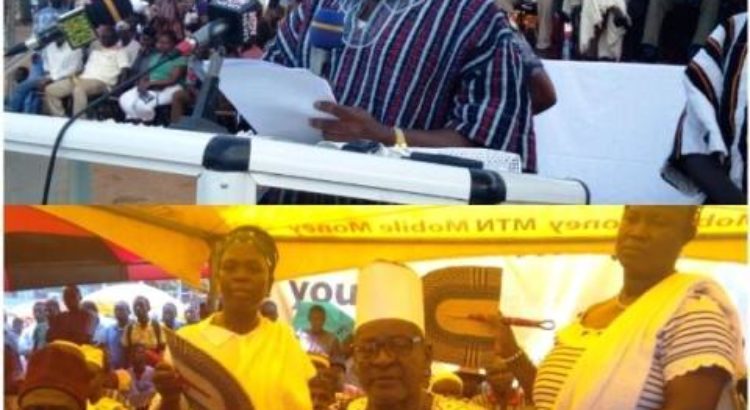
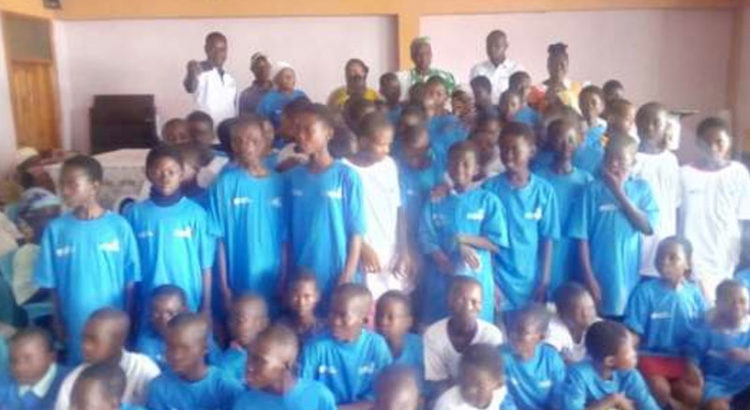
Afrikids Ghana, a Child Rights Non-Governmental Organization (NGO) has mainstreamed 98 street children in the Bolgatanga Municipality into formal Education for the current academic year.
The beneficiaries had received lessons in literacy, numeracy and life skills for a period of nine months and were given educational materials such as school uniforms, bags, exercise books, mathematical sets among others to start the process.
The NGO, which had further enrolled 10 other beneficiaries into vocational and technical skills programmes, had funding support from the Emerging Markets Foundation, another NGO based in the United States of America.
The programme was on the theme, “The School of Night Rabbits”.
Speaking at the graduation ceremony in Bolgatanga, Mr David Pwalua, the Director of Afrikids Ghana in charge of Programmes, said “these 10 beneficiaries will also be finishing their training next year, and transition, as the crop of new young entrepreneurs who will be able to earn their livelihood and live independently away from the streets”.
The Director indicated that Afrikids Ghana had over the years through the School of Nights Rabbits project trained and mainstreamed a number of such vulnerable street children into the formal schools who had completed their education and vocations and were in employment.
He stressed that his outfit viewed child protection and street children as very critical, hence, the initiation of the School of Nights Rabbits project to cater for such vulnerable children in society.
The Director admonished the beneficiaries who had been enrolled at the basic school levels to take their education seriously to enable them become responsible adults in future.
He further entreated all stakeholders including parents, teachers, traditional and religious leaders to play leading roles to help minimize “streetism” and to ensure that all children of school going age were all in school.
Mr Pwalua thanked the Ghana Private Road Transport Union, the Department of Social Welfare, the Anti-human trafficking, and Domestic Violence and Victims Support Unit both of the Ghana Police Service, the Ghana Education Service, Trade Groups such as the Weavers Association of Ghana, the Ghana Hair Dressers and Beauticians Association, and members of the Child Protection Committee established by the project, for supporting Afrikids Ghana to implement the project.
Some of the parents and caretakers of the beneficiaries thanked Afrikids Ghana and Afrikids UK as well as the Emerging Markets Foundation, for making it possible for the children who were out of school to be mainstreamed into the formal education system.
“We are very grateful for this support from Afrikids Ghana and the funding organizations. Most of these our children who have been sent to school would have ended up becoming pregnant, wayward and irresponsible in future”. Mrs Abigail Asongdekeya, a parent stressed.
Source of the notice: http://www.businessghana.com/site/news/General/173214/Afrikids-Ghana-mainstreams-98-street-children-into-formal-education
General Education Minister, David Mabumba says the 2019 national budget says the proposed 2019 national budget focuses on reforming and transforming key components in the education system.
Mr. Mabumba cited industrialization as one key component that the budget will help to transform by supporting the local production and purchase of school items such as uniforms, linen and furniture.
The Minister told ZANIS in an interview that recapitalisation of the Zambia Education and publishing House (ZEPH) is another milestone in ensuring that production of books for pupils is localised.
Mr. Mabumba further said the budget will promote the construction of new secondary schools and upgrading of some primary institutions.
He explained that the move will help to cushion on the demand for secondary education because there are more primary than secondary schools in the country.
Minister of Finance, Margaret Mwanakatwe presented the K86.8 billion 2019 National Budget under the theme ‘Delivering Fiscal Consolidation for Sustainable and Inclusive Growth’.
She proposed to spend K13.3 billion in 2019 which translates into 15.3 percent of the budget allocation on education and skills training development.
Source of the notice: https://www.lusakatimes.com/2018/10/01/the-15-3-budget-allocation-for-education-will-transform-the-sector-mabumba/
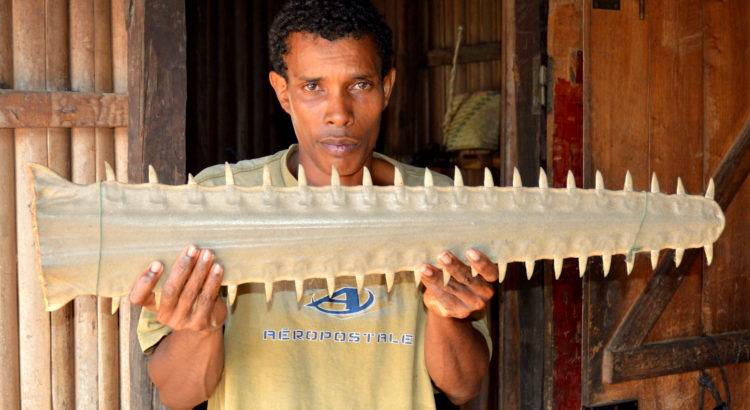
Of all sharks and rays worldwide, sawfishes – related to stingrays and manta rays – are considered to be the family at greatest risk of extinction . The long, toothed saw – which gives them their unique appearance – also makes them extremely vulnerable to entanglement in fishing nets. Their numbers have fallen because they are caught accidentally in industrial fishing nets. In addition to that, they are targeted by some fishermen because their fins can fetch high prices.
There are five species of sawfish globally. Two can reach around seven metres in total length (including the saw), making them the third largest members of the shark and ray family.
Sawfishes were formerly common along both the west and east coasts of Africa. Until a few years ago there was no knowledge of whether they still inhabited these waters, or if populations had plummeted as they have done elsewhere.
I set about addressing this gap six years ago. Since then, I have interviewed more than 500 fishers in six different African countries. I collected information on when and where people last caught sawfishes, how they used them and what their local value was. My research showed that sawfishes are now locally extinct from many parts of West Africa, but are still encountered – at least occasionally – by fishers in Madagascar and northern Mozambique .
Working in fishing communities and engaging in the lives of fishers has provided me with some insights into how sawfishes can best be protected in countries like Madagascar, as well as an understanding of the approaches that won’t work.
In the two developed countries where sizeable sawfish populations still exist – Australia and the US – an important step in preventing further declines of these endangered species is to declare them protected under national law and to prohibit activities that threaten them. So catching and killing of sawfishes is banned.
This is an effective approach in countries with the capacity and funding to enforce such laws. But in developing countries, a different approach is needed – a ‘bottom-up’ approach in which communities take the lead. And for that to happen, scientists need to convey the implications of their research to the people who rely directly on the natural resources around them, in relevant, easy-to-digest ways.
The challenge
Sawfishes are not legally protected in most African nations. And even if they were, legislation is rarely an effective approach in countries with little or no capacity to enforce species protection laws.
In addition, fishers who catch sawfishes value them as sources of income (through the sale of their fins, meat, and occasionally other parts) and food. Artisanal fishers along the coasts of Madagascar and Mozambique are some of the poorest communities in these countries; they often live in remote rural areas and have few alternatives to fishing as a way to make a living.
Unless fishers are provided with livelihood alternatives, any efforts to prevent sawfish mortality could be considered to compromise their immediate wellbeing. Fishers are unlikely to sign up to an approach which will mean more hardship for them.
What can be done
We need to reduce the number of sawfishes being caught in fisheries, and ensure that their habitats, especially coastal waters and mangroves, are protected. These two steps would have far-reaching and long-term benefits.
But in my view, the only way to achieve these goals is by encouraging communities to become caretakers of the natural resources they rely on for their own survival. And to achieve this, they first need to understand why these goals should matter to them.
The right educational tools can be used to explain that freshwater and marine ecosystems, fished responsibly, provide food and saleable goods, while mangroves protect coastal communities from storm surge and erosion. The communities themselves can then understand the trade-off between short-term, personal gain and longer-term, communal value, and can choose which path they wish to take.
My insight from working in fishing communities is that as a scientist, I have a duty to explain my findings, their implications and encourage communities to engage in developing strategies to address conservation issues. This benefits the communities as well as the species and habitats that need protection.
To this end I developed a short educational film and a story book . These both aim to convey the importance of sharks and sawfishes as part of healthy marine and freshwater ecosystems. They also point out the many ways in which communities stand to benefit from the sustainable use of sawfishes and other aquatic resources.
The film was made in multiple languages for both Mozambican and Malagasy audiences to ensure it could reach the widest possible audience. These resources have also given audiences beyond Africa insight into the lives of fisherfolk and the specific challenges facing sawfish conservation in these places.
The experience has taught me that we may be missing opportunities to use stories built around our work, to inspire interest and change where it is most needed: at community level. Armed with the right knowledge and understanding of why protecting mangroves, coastal waters and their inhabitants is important, communities can be the caretakers of these natural resources, both for their own benefit and for the planet’s.
Fuente de la noticia: https://menafn.com/1097445836/Education-can-help-protect-sawfishes-in-Mozambique-and-Madagascar
It’s noon on a windy Friday in Caledonia, a neighborhood along Harare’s eastern edge. Children roam the schoolyard at Ngodza Primary School, excited for the weekend ahead.
This for-profit school has three classrooms. Together, those classrooms accommodate 118 children, who each pay $10 per month to attend. The school is not registered with the government. It operates illegally.
Teclar Chengedzai lives in Caledonia and says her 6-year-old must learn there because there are no government schools nearby.
This is a common problem as Harare expands far beyond its original boundaries. Unregistered schools now outnumber registered schools in the city, according to government data.
There were an estimated 1.48 million Harare residents in 2012, according to census data. It’s not clear how many schools operate in the city, but locals say the government doesn’t come close to meeting their education needs.
Children attend class at Ngodza Primary School, an unregistered school in Harare, Zimbabwe.
Gamuchirai Masiyiwa, GPJ Zimbabwe
As a result, unregistered schools, both primary and secondary, are opening in areas such as Caledonia, where there are no public schools. That’s a far cry from Zimbabwe’s educational heyday in the early 1980s, when a new government under Robert Mugabe abolished a long-standing system that favored the country’s white minority with high-quality schools while black students’ education was neglected. Under Mugabe’s leadership, Zimbabwe attained a literacy rate of nearly 100 percent and the government boasted of having the best school system on the continent. But over time, those gains dissolved under a corrupt and brutal regime, leaving Zimbabwean students with few options for quality education (See a timeline of Zimbabwe’s education system here.)
Now, some areas have more unregistered schools than government ones, says Christopher Chamunorwa Kateera, director of the Harare Provincial Education Office in the Ministry of Primary and Secondary Education, but the government can’t close the illegal schools because it would leave entire neighborhoods without options for education. An amendment to the country’s Education Act obliges the government to provide students in such areas with a formal alternative.
According to government data, there are 205 registered schools and 219 unregistered schools in Harare, Kateera says.
The government has closed some unregistered schools and enrolled their students in registered schools, but in other cases, officials seek to formalize unregistered schools, Kateera says.
“Wherever we identify unregistered colleges, we call them in and have meetings with them informing them of the procedures they should follow to regularize their establishments,” he says.
Parents say unregistered schools come with their own challenges. The school that Chengedzai’s child attends doesn’t provide textbooks. It also doesn’t offer grades six or seven because, unlike registered schools, it doesn’t have access to the exams required to attend secondary school.
“They want parents to buy these books, which are expensive to get as well,” Chengedzai says.
A teacher leads students at Ngodza Primary School in the Caledonia neighborhood of Harare, Zimbabwe.
Gamuchirai Masiyiwa, GPJ Zimbabwe
Another problem is that a student must be enrolled at a registered school in order to take standardized exams, which are required for entrance into university and also for many jobs.
Godfrey Hozo, the school’s headmaster, says the school opened in 2016. It’s difficult to keep teachers, he says, because of the school’s low pay. Right now, the school has four teachers, including himself.
“We end up having composite classes, because at times you might have five students for grade three and 16 students for grade four,” he says. “The teacher then has to plan what they teach for each level, but they will be in the same room.”
The school charges $10 per month for fees, he says. About 70 percent of the enrolled children are able to pay. Those who can’t pay the fees are eventually dismissed.
A major problem, he adds, is getting information from the national education ministry about the government-approved curriculum. Hozo says he asks teachers in government schools to help him access syllabi and textbooks.
Hozo says the government should relax what he calls the “stringent conditions” for school registration, so that institutions like his can fully engage in the nation’s educational system.
There’s no indication that the government will ease those conditions. Instead, Kateera says, unregistered schools need to improve their standards and formally register with the government.
Fuente de la noticia: https://globalpressjournal.com/africa/zimbabwe/neighborhoods-without-public-schools-zimbabwes-students-rely-illegal-schools/
In this first part of a two-part report, Afeez Hanafi writes about how dearth of learning facilities compounds the plight of visually impaired persons in schools across Nigeria
With exercise books, a pen and few other materials, Kehinde Lawrence is good to make the best out of every lesson. A Junior Secondary School 3 pupil at Owo High School, Ondo State, she reads her numerous textbooks in school and at home without let or hindrance.
But such ease is a mirage for her visually impaired classmate, Godfrey Ekevre. Aside from a snippet that he takes out of every class, the 25-year-old needs more several hours – or days – to write the same note Lawrence will have completed the moment a class ends.
The Delta-born pupil has been going through the strenuous routine since 2005 when he lost his sight to glaucoma. Before then, he had enjoyed stress-free learning as Lawrence up till Primary 6.
His 13 years of academic life without sight has been both harrowing and depressing; no thanks to the dearth of facilities in the school to aid his learning.
Devices such as braille hand frame and stylus, slate and stylus, Perkins Brailler, SMART Brailler, braille embosser/braille printer and braille notetaker are writing and reading tools for visually impaired persons with the last three devices considered up-to-date but expensive for the special pupils, many of whom are from poor families, to afford.
Perkins Brailler and SMART Brailler are typewriter-like machines for producing braille texts. While the former is old-fashioned, the latter is a modern tool that displays, vocalises and produces information typed in braille.
Similarly, Job Access With Speech, a computer screen reader programme for Microsoft Windows, allows visually impaired persons to read the screen with voice notes or by braille display.
In a review, Vision Australia, a leading national provider of blindness and low vision services in Australia, describes braille hand frame and stylus as a means of writing braille introduced over a century ago. It is said to be “very time consuming,” requiring an average of 90 minutes to produce a page of braille.
Sadly, Ekevre and many of his counterparts in Owo High School, Ondo State and some other institutions across the country use either the moribund braille hand frame and stylus or the archaic slate and stylus to write notes.
Besides the rigour of using the old-fashioned tool, Ekevre is faced with the burden of getting braille paper he slots into the frame to produce notes.
“I wish I was a sighted pupil,” the 25-year-old said regrettably as he began to share his plight with our correspondent.
He continued, “The school used to provide braille paper for us (visually impaired pupils) but they stopped buying it about two years ago. They said there was no money. Since then, we have been buying the paper by ourselves. A pack of the paper is N1,200 and it contains 100 pieces. I use about three packs a term.
“It is also difficult to get sighted pupils to assist us. We call them to dictate their notes to us after classes while we use braille hand frame and stylus to write. We usually give them money for them to assist us. I give them about N500 weekly.
“I bought a fairly-used typewriter which I use during exams for N10,000. My mother cannot afford to buy a new one for me. As I speak to you, it is faulty.
“The school has a library, but it does not make provision for the visually impaired pupils. Even the braille library at the Ondo State School for the Blind where our boarding house is has a few braille materials and most of them are scriptures. Majority of the books on the shelves are in print form.
“Our textbooks are supposed to be in braille so that we can read them by ourselves but what some of my friends who have recorders do is to give textbooks to sighted pupils to dictate to them while they record. I wish I had my own midget too instead of writing notes all the time which is very stressful.”
Although pupils with visual impairment at the school enjoy free boarding and do not pay tution, the expenses they incur to make themselves relevant academically are high compared to what their sighted counterparts are required to spend.
Our correspondent gathered that a regular pupil pays less than N2,000 per term as tuition; half of what Ekevre spends in a term only on braille paper.
For the 25-year-old on whose neck poverty and parental issues hang like a noose, the stress he passes through in the course of learning comes with its attendant psychological implications.
“I don’t usually feel settled. I think of how to get braille paper once the pack I have is almost finished. My mother is a petty trader and she has been striving by all means to fund my education. My father has two wives. For three years now, I have not seen him. He is with the second wife,” he added.
Ekevre’s counterpart at the United Faith Tabernacle College, Jarawan-Kogi, Plateau State, Yohana Iliya, endures a similar gruelling experience. But unlike Ekevre, the stress is reduced for the Senior Secondary School 3 pupil with the aid of a recorder, which he bought with donations by some Good Samaritans.
“Quality braille materials are expensive. That is why most of us resort to what we can afford. We beg classmates to dictate notes to us. Last term, I sought the help of a classmate, but he refused to offer any help. From the tone of his voice, it was clear that I had become a burden to him. I felt very bad that day, but I had to bottle up my feelings.
“The school has some braille machines but they are not working. We use slate and stylus to write our notes. Since I have a recorder, I spend less on buying braille paper,” he added.
Hundreds of kilometres away, at the Government Secondary School, Kwali, Abuja, Amos Bako strives endlessly to seek education like every other ambitious person. At 27, the SS1 pupil is unwavering in his determination to become an expert in International Relations despite the many hurdles that stand in his way.
He began his tortuous academic journey in 2007 after he became blind as a result of some particles that entered his eyes at a mechanic workshop in his village in Takum, Taraba State.
Like Ekevre and Iliya, Bako does not pay school fees, but he spends a lot of money on buying learning materials which are said to be unavailable in the school.
He stated, “My parents are retired civil servants and they live on their pensions. It is my mechanic friends that sponsor the larger part of my education. Back then when I was an apprentice, I did not think of going to school. I started my primary school in 2007. I finished in 2013 and proceeded to the secondary school.
“Special pupils are facing enormous challenges. Our writing materials are too costly but they are what we need to excel. I buy a pack of braille paper N1,500 here (Abuja). Frame and stylus costs N7,000. Perkins brailler is around N250,000 but I cannot afford it. The school has three braille machines but they are not working now. They have been faulty since I got admission into the school.”
Learning appears to be more daunting for many students at higher institutions across the country. Often times, they depend on some tolerant sighted course mates to move from one lecture room to another and document their notes.
Except for a few whose families could buy them modern facilities, many visually impaired students, especially at public higher institutions, make do with outdated devices to study, too.
Bulus Chuanoemoa, a 300-level student of Special Education, Visual Handicap, at the University of Jos, Plateau State, is one of such indigent students whose studies have been fraught with frustration resulting largely from non-provision of braille facilities by the school.
He said, “We face many challenges starting from the nature of the school environment which is unfriendly to the visually impaired students. The locations of our lecture theatres and departments are difficult for the blind students to navigate. Most times, we need our sighted friends to assist us to attend classes.
“Books in the library and those recommended by lecturers are only available in print form and it is difficult to get them translated into braille. One can buy a book for N1,000 and spend N5,000 to produce it in braille. And sometimes, we have two or three books for a particular course.
“What most of us in my department do is to buy textbooks and look for people to dictate to us while we record. The recording has its own disadvantage too because some pronunciations may not be correct and you will not be able to get their right spellings. There are times when the people that assist us in dictation are unwilling to help. You have to give them money to persuade them to help at such times.
“At times, I copy notes during exam periods when I should be reading. It is very unfortunate. The school has a resource room but it does not have materials we can access. The resource masters there are the ones helping to read questions out to us during exams; the questions are not in braille and we do exams with our typewriters.”
Born to the family of peasant farmers, the 24-year-old in a recent encounter with Saturday PUNCHexplained how he had relied largely on the benevolence of churches to augment whatever his poor parents could afford.
He added, “I could not afford to buy a Perkings Brailler. Instead, I use slate and stylus to write my notes. It consumes a lot of time and energy. A good laptop or desktop computer with JAWS installed in it is much easier and more convenient for a blind student to use to take examination than using a typewriter. A standard laptop should be about N100,000 and installation of JAWS is N20,000 or more. Where will I get the money from?”
The student of Special Education had it smooth at the primary school section of Pacelli School for the Blind and Partially Sighted but while in the secondary school section, he had to wait for days to get braille textbooks because the (secondary) school reportedly had just one functioning braille machine.From his secondary school days at Pacelli School for the Blind and Partially Sighted in Lagos State up till now that he is doing a master’s degree programme at the University of Ibadan, Oyo State, 32-year-old Oyewale Oyetunji, has been dogged, defying all odds to become a scholar.
“In the 21st Century, the world has gone beyond typewriter which is prone to errors. But in Nigeria, blind students still use it,” he said in utter disappointment.
“I spent a lot of money to have textbooks in braille during my undergraduate days in UI. What I do mostly now is to scan the textbooks and read them on my computer with the aid of JAWS.
“Most of the materials in the school library are in print. In terms of accessibility for the blind, the library can be rated low – two or five per cent. What I see is the dearth of facilities and we have complained to lecturers a number of times, but they blame it on inadequate funding.”
Corroborating the lack of facilities, the Principal, Special Inclusive School, Kogi State, Dr David Matthew, lamented that all efforts to get the attention of the state government to the plight of the special pupils had proved abortive.
It was learnt that the school was established by Christian Missions in Many Lands – a United States faith-based mission – and managed by the state government.
The principal said, “Copying of notes and lack of braille machines are some of the challenges the pupils are facing. We also have shortage of special teachers.
“Our learning disability department has collapsed because the person in charge has been made the principal of his community school. He has a master’s degree in learning disability. Unfortunately, the government is not providing replacement for those who are leaving.
“Over the years, I have visited Kogi State Ministry of Education and Government House several times, but all I got were empty promises. I later decided that the best thing was to make do with our little resources. My belief is that these challenges are temporary. I believe a time for divine intervention will come.
“A blind pupil has to be active and studious and should get friends around to dictate notes to them. If they don’t have pocket money to motivate their sighted counterparts, it will be very difficult for them to catch up.
“Sadly, most of them come from poor families. That is why we don’t insist that they buy new typewriters. A fairly-used typewriter is between N6,000 and N10,000. Sometimes, foundations donate writing materials to the school. It costs visually impaired persons a lot of money to succeed academically.”
Asked whether the deficient learning tools had implications for the pupils’ performance, Matthew said, “Performance cannot be attributed directly to inadequate facilities. You may have a pupil who has all the necessary tools but may not be brilliant. And you may have a pupil who doesn’t have all and he may be brilliant.”
He recalled that learning was excitement during his school time as he was given scholarships which are hard to come by these days.
“When I was in secondary school, I was lucky to be given scholarships by the then Benue State Government. At a time, I had as many as five typewriters but today, such privilege is not common. What we need is political will. The government should be ready to carry physically challenged persons along,” he added.
Tongtonk Danlami, a special teacher at Nakam Memorial College, a mission school in Jos, also decried the rate at which inadequate funding was crippling the smooth running of the inclusive boarding school.
Danlami said, “The issue of braille books for visually impaired pupils has been a problem over the years. Even when the school could afford to change print books to braille ones, where to do it was a problem.
“We have a library where we use a computer with JAWS, but it has stopped working. We also have the problem of having examination questions in braille. It is the teachers that assist the special pupils. The school only has one braille machine and it is old.
“A number of the children come from poor families and most parents don’t pay school fees. We have been having challenges in feeding them. Also, visually impaired persons need white canes (a cane that primarily aids its user to scan their surroundings for obstacles and helps other traffic participants in identifying the user as visually impaired) so that they can move from one place to another by themselves. We need sponsorship to provide all these things for the pupils. A white cane is about N10,000.”
National Policy on Special Needs Education in Nigeria
The Federal Ministry of Education in the 2015 National Policy on Special Needs Education in Nigeria admittedly highlighted the deficient educational system for persons living with disabilities. It stated that though Nigeria was involved in the special needs education, the practice fell short of the global best practices. The report added that the special needs classroom laboratories in the country were not technology-driven.
It read in part, “Facilities and materials that enhance learning are either lacking or – where they exist – inadequate and or/obsolete. What is more, many special needs education practitioners lack the technical knowhow to operate specialised special needs education gadgets.
“….Also, professionals in the area of gifted education are few in Nigeria. Learning materials are generally inadequate. It is the general teachers that seem to be dominating the field of Special Needs Education. Graduates of Special Education in Nigeria face the challenge of relevance on graduation because the curriculum in place is not skill-relevant after school life.
“Bias, cultural archetypes and negative behaviour patterns about special needs education are endemic in Nigeria…in the National Police of Education, it is stated that services to persons with special needs should be free, but it is not stated in an imperative term for the Federal Ministry of Education to operate.”
The report recommended that federal and state governments should ensure that necessary training and facilities that would guarantee easy access and implementation of special needs education progammes were put in place. For instance, it was stated that for students with visual impairment, there should be “training in orientation and mobility, braille reading and writing, use of computer with JAWS and repair of the equipment, etc.”
The report equally pointed out that there was inadequate synergy between the Federal Ministry of Education and other government ministries, agencies, non-governmental organisations, private sectors and international development partners.
Unfortunately, little or nothing has been done to address the disturbing issues raised in the report three years after.
No provisions for blind pupils in 2017, 2018 education budgets
A look at the 2017 and 2018 budgets of the Federal Ministry of Education showed that no provisions or allocations were made for the procurement of learning facilities for the visually impaired pupils.
For example, the 2017 budget with a personnel cost of N3,236,821,170 and an overhead of N827,950,190, did not mention any provision for blind pupils. In the budget, the government made provision for Almajiris (disadvantaged school-age children in the North roaming the streets) with N5,000,000 budgeted for their education programme. However, there was no such budget for the visually impaired pupils.
The government budgeted a staggering N30,000,000 for supply of text books to primary schools in the Kankara area of Katsina State. Similar provisions were made for several schools across the country, but there was no mention of materials for the blind pupils.
Meanwhile, it was observed that the ministry budgeted N5,000,000 for the training of personnel working in centres of persons with special needs. The government also earmarked N15,000,000 for the training of 95 teachers handling persons with special needs in the northern part of the country.
Also in the ministry’s 2018 budget totalling N621,226,697,523 with capital projects of N102,907,290,833, there was no mention of any provision for the visually impaired pupils or their schools.
The Ministry of Education’s Director of Press and Public Relations, Mr. Ben Bem Goong, did not pick several calls put across to him. He had also yet to reply to a text message sent to his phone by our correspondent on the lingering challenges facing the blind pupils.
Ondo, Plateau react
The Chairman of Plateau State Universal Basic Education Board, Prof. Matthew Sule, said the agency recently conducted training for special teachers in public schools across the state.
He added, “We are providing facilities for the children that are physically challenged. We have also provided teaching resources across the 17 LGAs in Plateau State.”
The Ondo State Commissioner for Information, Mr. Yemi Olowolabi, said the government provided the necessary braille equipment for the Ondo State School for the Blind.
But Olowolabi was silent on the provisions made for the visually impaired pupils in other public schools in the state, including Owo High School, which Ekevere attends.
He said, “This administration has spent so much money on the school. Government has increased funding of the school. Its quarterly grants are regular so that all their braille equipment is adequately provided. The government has a budget for the equipment.
“The Commissioner for Education also visits the school on a regular basis and a monitoring team was set up to monitor how the equipment is utilised.”
How visually impaired pupils fare in US
Unlike in Nigeria where special needs education is in a shambles, countries such as the United States provided state-of-the-art learning aids for visually impaired pupils.
For instance, the American Printing House for the Blind annually produces braille textbooks and other educational tools in large quantities, and distributes them to visually impaired pre-college pupils across the 50 states in the US.
The 2017 fiscal year report of APH stated that $17.8m was allocated to providing accessible materials to 63,357 registered pupils with visual impairment through the Federal Quota Programme. The FQP mandates that textbooks and aids are provided free to the eligible blind pupils in educational settings throughout the federation.
Other functions of APH include conducting research to develop and improve educational materials in core curriculum areas such as science, mathematics, English language arts, and social studies and adapting testing materials related to these subject areas.
APH also undertakes research in areas such as braille reading, orientation and mobility, and assistive technology while special materials are developed for teaching.
In the report, APH President, Craig Meador, identified BrailleBlaster as one of the modern technologies produced for the visually impaired persons to further bridge the educational barrier between them and their sighted counterparts.
“This revolutionary new software tool translates text into braille more quickly, easily and accurately – giving students access to learning materials on the first day of class at the same time as their sighted peers,” Meador said.
Source of the notice: https://punchng.com/double-trouble-for-visually-impaired-pupils-in-nigerian-schools/
The Ghana Education Service (GES) has suspended the headmaster of Tempane Senior High School in the Upper East region Dominic Ndegu Amolale.
It follows a viral video of an aspiring National Organiser of the National Democratic Congress (NDC) Joshua Akamba inciting some students of the school against President Akufo-Addo over the challenges facing the implementation of the free SHS policy.
Ndegu Amolale received his suspension letter Saturday morning with an instruction to handover the management of the school to Upper East Regional GES Director to allow for investigations into the incident.
Speaking to Starr News’ Ibrahim Alhassan on this incident leading to his suspension, Ndegu Amolale said: “The letter is not asking me to any other thing but to step aside for investigations to be carried out.”
Addressing the content of the video, he said he did not of the presence of Akamba in the school, saying: “The day these people came I was not even on campus. I was in discussion with my regional director on the challenges the school is facing following the implementation of the double track system.”
“So that day I wasn’t on campus.”
The Ghana Education Service (GES) has suspended the headmaster of Tempane Senior High School in the Upper East region Dominic Ndegu Amolale.
It follows a viral video of an aspiring National Organiser of the National Democratic Congress (NDC) Joshua Akamba inciting some students of the school against President Akufo-Addo over the challenges facing the implementation of the free SHS policy.
Ndegu Amolale received his suspension letter Saturday morning with an instruction to handover the management of the school to Upper East Regional GES Director to allow for investigations into the incident.
Speaking to Starr News’ Ibrahim Alhassan on this incident leading to his suspension, Ndegu Amolale said: “The letter is not asking me to any other thing but to step aside for investigations to be carried out.”
Addressing the content of the video, he said he did not of the presence of Akamba in the school, saying: “The day these people came I was not even on campus. I was in discussion with my regional director on the challenges the school is facing following the implementation of the double track system.”
“So that day I wasn’t on campus.”
Source of the review: https://www.ghanaweb.com/GhanaHomePage/NewsArchive/GES-suspends-Tempane-SHS-Headmaster-over-Akamba-s-video-690703
a Organización de las Naciones Unidas para la Educación, la Ciencia y la Cultura (Unesco) detalló que en el África subsahariana y en el sur de Asia solo el 64 % y el 71 % de los profesores han tenido alguna formación pedagógica, respectivamente.
En un comunicado con motivo del Día Internacional del Docente, que se celebra el 4 de octubre, el organismo denunció hoy «la saturación en las aulas, la falta de formación de los docentes y su insuficiente desarrollo profesional» durante su carrera como efecto negativo en el aprendizaje de los alumnos.
«Los docentes bien formados son esenciales para una educación de calidad» pero que, en la actualidad, muchas clases son impartidas por personas que «no han recibido la formación pedagógica necesaria», agregó.
En un informe de 2017, Instituto de Estadística de la Unesco (IEU) calculó que el 85 % de los maestros de primaria a nivel global eran receptores de algún tipo de formación.
Sin embargo, la cifra esconde «importantes disparidades regionales» como en el África subsahariana, cuyo porcentaje desciende al 64 % o al 71 % en el sur de Asia.
A la falta de cualificación del profesorado se añade el problema de masificación de las aulas.
Según el organismo, en zonas como el África subsahariana y el Asia meridional, hay una proporción de 38 alumnos por maestro de escuela primaria y de 35, respectivamente.
La sede de la Unesco, ubicada en París, organizará el próximo 4 y 5 de octubre varios acontecimientos conmemorativos por el Día del Docente, que se celebra desde 1994.
Se entregará la quinta edición del Premio UNESCO-Hamdan bin Rashid Al Maktum, un galardón de 300.000 dólares estadounidenses gracias a una dotación de Emiratos Árabes Unidos y que premia las buenas prácticas docentes.
OtrasVocesenEducacion.org existe gracias al esfuerzo voluntario e independiente de un pequeño grupo de docentes que decidimos soñar con un espacio abierto de intercambio y debate.
¡Ayúdanos a mantener abiertas las puertas de esta aula!