Page 290 of 622
1 288 289 290 291 292 622

Cameroon: North West – Back to School Crusade Heightens

Cameroon/August 14, 2017/Allafrica

Resumen: La persistente crisis anglófona no está ayudando a las cosas en los esfuerzos para asegurar la reanudación efectiva de las escuelas para el año académico 2017/2018 en el Noroeste y es contra este telón de fondo que el Gobernador Adolfo Lele Lafrique ha dicho a los interesados que la posteridad los juzgará y los niños no los sostendrán responsables si no actúan responsablemente en épocas como ésta.

Governor Adolphe Lele Lafrique prescribes best practices for effective resumption of schools at Regional Administrative, security forum.

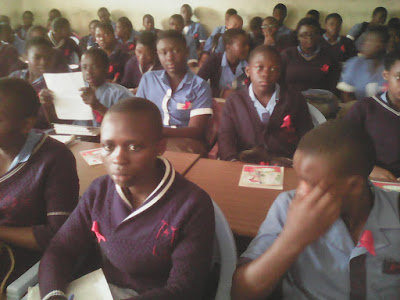
The persistent Anglophone crisis is not helping matters in efforts to ensure the effective resumption of schools for the 2017/2018 academic year in the North West and it is against this backdrop that Governor, Adolphe Lele Lafrique has told education stake holders that posterity will judge them and children will hold them responsible if they fail to act responsibly in times like this.

The event was the Regional administrative and security coordination meeting in Mbengwi, Momo Division on August 9th, 2017 where the governor; hailed religious and traditional leaders, elite and all stakeholders working to stabilize things for normalcy to give education and development a chance in the region. The forum which emerges as the most important deliberatory outfit for the advancement of the region acknowledged that President Biya has extended a hand of fellowship with some responses to concerns raised by protesting Anglophone teacher trade unions and Common Law Lawyers.

Governor Adolphe Lele Lafrique showcased special competitive examinations for candidates of English expression into the Common Law department of ENAM, the imminent reconstruction of the Babadjou- Bamenda road, special allocations to rehabilitate difficult spots of the Ring road etc. In effect, the challenges are enormous and the governor inspired stakeholders to shine and be good in the mirror of nation building in times like this. It was also a moment to recognize and show gratitude for the promotion of some sons of the region with recent Presidential Decrees that appointed Robinson Agha, Brigadier General and Awoh Ndang Denis as Inspector General in the Ministry of Public works.

Presentation’s at the event featured communication strategies to counter falsehoods about the region, measures to ensure that transporters do not heed to ghost town calls, combat measures against contraband goods, level of execution of public investment projects, registration on electoral lists etc. In the backdrop of threats by unidentified people, successes recently registered with the organization of the University and Military games in Bamenda and the 2017 National day featured prominently for praise by the governor who urged the population to ignore ghost town calls and dominate fear imposed by people from elsewhere.

Fuente: http://allafrica.com/stories/201708110909.html

Comparte este contenido:

Nigeria: Atiku Begs Rich Nigerians to Help Out-of-School Children

Nigeria/August 14, 2017/Allafrica

Resumen: El ex vicepresidente y fundador de la Universidad Americana de Nigeria Yola, Atiku Abubakar, ha hecho un apasionado pedido a los nigerianos de medios para apoyar la caridad y las causas humanitarias que ayudarán a dar educación formal a los niños que están fuera de la escuela en el país.

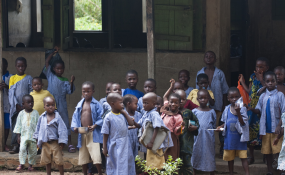
Former Vice President and founder of American University of Nigeria Yola, Atiku Abubakar, has made a passionate plea to Nigerians of means to support charity and humanitarian causes that will help in giving formal education to children who are out of school in the country.

Atiku Abubakar in a press statement released by his media office in Abuja on Friday expressed concern at the depressing statistics of Nigeria currently having the highest number of out-of-school children globally.

The former Vice President noted that given the dire situation in education, the most critical tool for transforming individuals and spurring growth and development calls for a state of emergency in the education sector.

Noting that government cannot shoulder the responsibility alone, the Waziri Adamawa said that the situation requires Nigerians with means to support education charity initiatives such as the Feed and Read initiative of the American University of Nigeria (AUN).

According to the former Vice President, the Feed and Read Programme initiated in 2015 is designed to provide a decent meal per day for the most vulnerable of children in Yola, Adamawa State and at the same time give them exposure to classroom experience where they are taught Basic English, Arithmetic and Hygiene.

The statement observed that the Feed and Read programme was a response to the effect of destruction and displacement caused by the Boko Haram menace in the North-East area of the country which further escalated a surge in the number of out-of-school children in the zone.

«I have always been bothered about the parlous state of education in the North.

When I was Vice President I called a conference of all the 19 state governors in the North to discuss how we could address the problem of lack of adequate access to formal education by a teeming number of the young population in the region.

 «Bad as the situation was, the Boko Haram destruction tore apart the little that was left of the infrastructure for formal education especially in the North-East.

The dire situation caused the AUN to champion the Read and Feed initiative which has received tremendous support from the Irish government and the Atiku Abubakar Center for Leadership, Entrepreneurship and Development.

«I personally had to intervene by giving encouragement to this initiative, ensuring that the meals meet with the standard of a balanced diet for school children.

I eat food with these children to show that the food is safe and to lure more of them into the programme. I do this every time I visit the school.

«I am happy when I see these children return a formal greeting in English language and when they solve simple arithmetic.

There remains a large swath of distance to be covered. Nothing is too much to give in providing formal education to all children who are yet to be captured by the education infrastructure that the government is trying assiduously to create.

«That is why I implore more Nigerians who can afford it, to stretch a helping hand to these children. Any amount, no matter how little, will go a long way in making a difference in providing good education for the most vulnerable children not only in the North-East but in other places in the country.»

Fuente: http://allafrica.com/stories/201708120138.html

Comparte este contenido:

Sudáfrica: SA teachers skip classes

Sudáfrica/Agosto de 2017/Fuente: News 24

Resumen:  Los alumnos pierden alrededor del 40% del tiempo de aprendizaje cada año en las escuelas sudafricanas porque los maestros suelen saltar clases, según un estudio del Consejo para el Desarrollo y la Empresa. El estudio, publicado el 1 de agosto y titulado Normas Profesionales de Profesores para Sudáfrica: El camino hacia un mejor rendimiento, desarrollo y rendición de cuentas ?, atribuyó la pérdida de tiempo de aprendizaje al fracaso del actual modelo de evaluación docente. IQMS). El informe dijo que el modelo de evaluación de maestros se había debilitado hasta tal punto que los maestros estaban obteniendo puntos de desempeño para asistir a las reuniones del personal y no para buscar ganancias tangibles para mejorar la enseñanza y el aprendizaje en las escuelas.

Pupils lose about 40% of learning time every year in South African schools because teachers habitually skip classes, according to a study by the Council for Development and Enterprise.

The study, released on August 1 and titled Teacher Professional Standards for South Africa: The Road to Better Performance, Development and Accountability?, attributed the loss of learning time to the failure of the current model of teacher assessment – the Integrated Quality Management System (IQMS).

The report said the teacher-assessment model had been weakened to such a degree that teachers were getting performance points for attending staff meetings and not for targeting tangible gains to improve teaching and learning in schools.

“Teachers go shopping on paydays. They are doing extra jobs while they are full-time teachers,” an education expert who has knowledge of the report, but who has asked not to be named, told City Press.

The SA Democratic Teachers’ Union (Sadtu) in 2013 proposed that the Quality Management System (QMS) replace IQMS. “Until Sadtu has signed it off, it cannot be implemented. It has been watered down by government because of politics,” the expert said.

Accountability and leadership essential

The Council for Development and Enterprise commissioned researchers from the Joint Education Trust to look at the development of teacher professional standards in developed and developing countries. The study assessed the potential of teacher professional standards to improve teacher quality in South Africa.

The study proposed that government review IQMS and introduce teacher professional standards that have been implemented in a number of countries.

“Teacher evaluation in South Africa should be both formative [aimed at personal growth of a teacher] and summative [undertaken as part of performance review focusing on teacher accountability],” it proposed.

It said the evaluation should “appraise teacher performance, strengthen accountability and support professional development”.

It questioned QMS, saying it arguably suffered from a fundamental design fault. It recommended that the department of basic education (DBE) and provinces hold teachers accountable by maintaining a strict school timetable to avoid frequent skipping of classes.

It should institute a high level of managerial accountability and require teachers to be in class when they should to reduce the loss of learning time.

Although such moves were likely to be met with union resistance in forums such as the Education Labour Relations Council, the report said government should move from rhetoric to action on this matter using the deadlock-breaking mechanism provided for by law.

Commenting on the report, Rhodes University-based public service monitor head Zukiswa Kota said accountability and leadership were essential.

“The overall accountability and administration of schools, districts and the sector as a whole must see parallel changes to support the development of enhanced teacher-assessment practices in a sustained way.”

Sadtu general secretary Mugwena Maluleke said allegations that the union had not signed the IQMS were not only false, but malicious.

“The IQMS was signed and … Sadtu proposed a review of the IQMS in order to deal with its weaknesses. Sadtu proposed QMS to strengthen the role of the principal or deputy principal, which was overlooked by IQMS.”

DBE spokesperson Elijah Mhlanga said: “The department supports processes that have the potential of raising the bar of teacher performance, encourage professional development and enhance accountability. The recommendation in the report requires further consultation with the relevant stakeholders in education.”

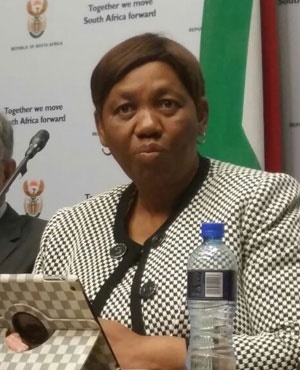
A dialogue on strengthening teacher professionalism was addressed by Basic Education Minister Angie Motshekga last week and parts of the report were discussed.

Fuente: http://www.news24.com/SouthAfrica/News/sa-teachers-skip-classes-20170812

Comparte este contenido:

Tanzania: Chadema Wants Govt to Scrap Criteria for Higher Education Loans

África/Tanzania, August 12, 2017. By: allafrica.com

Opposition party Chadema has challenged the government to remove some of the criteria set by the Higher Education Students’ Loans Board (HESLB) to enable more applicants to access the facility.

The challenge was made in the city yesterday by the shadow minister for Education, Science and Technology, Ms Susan Lyimo, adding that the set criteria should be reviewed to make the selection fair for all citizens to get education.

She cited the Article 13 (2) of the Constitution of Tanzania which states: «No law enacted by any authority in the United Republic shall make any provision that is discriminatory either of itself or in its effect».

The Special Seats MP insisted that Section 4 of the Constitution also provides that «No person shall be discriminated against by any person or any authority acting under any law or in the discharge of the functions or business of any state office».

According to her, the criteria to be removed include the seventh, which requires the applicants to have completed Advanced Certificate of Secondary Education (ACSEE), or equivalent qualifications not earlier than 2015/16, and the eighth which limits applicants to be no older than 30 years.

She also named criteria number nine and ten which prohibit applicants whose parents are directors and senior managers in public or private companies recognised by the Revenue and Registration authorities from applying.

Responding to the concerns, HESLB executive director Abdul-Razaq Badru said the criteria were set to enable beneficiaries repay their loans on time.

According to him, even the Education Policy states that no student shall be allowed to join secondary education after the age 25, so the two instructions go together.

Speaking about applicants whose parents are directors and senior managers in various institutions, Mr Badru said the aim was to serve students from poor families first.

«Various stakeholders were involved in the preparation of these criteria. In this year, we are aiming to issue loans to 30,000 students,» he said.

Ms Lyimo also extended her call to the government to amend the Education Policy saying that it has failed to prepare competent experts to serve in various sectors.

She pointed out other challenges facing the education sector in the country as including the use of poorly authored textbooks in public schools, insisting that the material must be removed from the learning system.

In her views, there was a need to form a special commission that would be supervising the sector and immediately act on challenges that would rise.

«If we need to have better education, then it is a must for the whole system to be changed. We need to have quality books, a reflective philosophy and supportive infrastructure,» she argued.

The shadow minister also maintained the stand that teenage mothers should be allowed to resume studies after giving birth, as it has been stipulated in the Constitution which guarantees right to education for everyone.

From: http://allafrica.com/stories/201708120046.html

Comparte este contenido:

Medio millón de niños libios necesitan ayuda, Unicef

África/Libia/12 Agosto 2017/Fuente: Prensa Latina
El Fondo de Naciones Unidas para la Infancia (Unicef) lamentó hoy que al menos medio millón de niños necesiten en Libia ayuda humanitaria, a partir del impacto del conflicto interno en su desarrollo.
La agencia especializada precisó en un comunicado que la violencia imperante en varias zonas del país petrolero del Norte de África provoca el desplazamiento forzado de muchas familias, lastrando el futuro de los pequeños.

Según el Fondo, más de 80 mil niños estarían en la actualidad desplazados, una situación muy delicada para su salud, educación y bienestar.

Libia sufre un complejo conflicto, que incluye luchas sectarias por el poder y proliferación de milicias, desde 2011, cuando una intervención militar de la OTAN ayudó a derrocar a Muamar Gadafi, quien fue asesinado.

Unicef aseguró que ha incrementado su presencia en el terreno, con el objetivo de apoyar a los menores de edad.

Tras una reciente visita a la nación norafricana, el director regional del Fondo, Geert Cappelaere, destacó entre las acciones la vacunación masiva contra la poliomielitis, efectuada el año pasado, y una campaña en más de 20 municipios libios para promover los derechos elementales de los niños.

Fuente: http://www.prensa-latina.cu/index.php?o=rn&id=107027&SEO=medio-millon-de-ninos-libios-necesitan-ayuda-unicef
Comparte este contenido:

Scholas Ciudadanía reúne a 180 jóvenes en Mozambique para trabajar sobre problemas que les preocupan como drogas y acoso

África/Mozambique/12 Agosto 2017/Fuente: Telecinco

La primera experiencia de Scholas Ciudadanía ha concluido Missao Mangunze (Mozambique) donde 180 jóvenes provenientes de diversas escuelas de las comunidades de Mangunze, Manjacaze, Chongoene y Xai Xai que se han reunido durante una semana para trabajar de forma conjunta las problemáticas que más les preocupan.
Así lo ha dado a conocer este jueves 10 de agosto la organización internacional de Derecho Pontificio presente en 190 países, que ha detallado que, entre las cuestiones que más preocupan a estos jóvenes se hallan el consumo de drogas, la falta de transporte público para llegar a las escuelas (muchos caminan a diario entre 5 y 10 kilómetros), el acoso sexual y el ausentismo docente.
En este sentido, la organización ha explicado que, acompañados por el equipo internacional de Scholas junto a 30 voluntarios locales que fueron previamente formados en la Argentina en esta metodología durante los meses previos, los estudiantes presentaron sus propuestas y conclusiones de trabajo frente a sus autoridades.
Así, han sido escuchados por el representante de la gobernadora, Alberto Zeca; el administrador del Distrito de Chongoene, Carlos Buchili; el inspector de educación de la provincia, Francisco Machava; el comandante distrital de Chongoene, José Ernesto Divis; el jefe de Posto de Conceicao, Samuel Jose Chitambo; y el párroco del lugar, el padre Juan Gabriel Arias.
Como conclusión del proyecto, los jóvenes han solicitado contar con un transporte escolar para todos, mayor calidad en la enseñanza y formación de los docentes, la no discriminación por parte de estos últimos y mejoras en infraestructura y equipamiento. Además, han pedido el cumplimiento de la Ley que prohíbe la construcción de carpas ilegales que venden alcohol y drogas a menores de edad.
«Scholas es buenísimo para que haya más encuentro. Tenemos la posibilidad de debatir y discutir sobre aquellos problemas que nos afectan y preocupan en nuestra comunidad, en nuestra escuela, en nuestra familia. Es increíble como podemos nosotros mismos, desde la cotidianeidad de nuestras vidas, mejorar nuestra comunidad. Trabajar para acabar con lastres como el alcohol, las drogas o la violencia, especialmente la de género», ha declarado J.Manuel, un estudiante de 17 años de la Escuela Secundaria Dambine 2000.
Según ha explicado Scholas, el objetivo de estos programas es fomentar el encuentro entre los chicos, pero también darles voz y que tengan la oportunidad de exponer sus inquietudes y propuestas de mejora ante los adultos que, dada su posición en la comunidad, podrán garantizar la continuidad y puesta en marcha de las mismas.
«Agradezco la oportunidad de poder participar en este programa de Ciudadanía. Estamos reunidos, todos concentrados trabajando juntos y aprendiendo muchas cosas sobre educación y salud. Una de las cosas que más nos preocupa es nuestro sistema educativo y sobre ello precisamente vamos a plantear nuestras cuestiones y propuestas», ha dicho Rami, un alumno de 16 años de la escuela Samora Machel de Majacaze.
Fuente: http://www.telecinco.es/informativos/sociedad/Scholas-Ciudadania-Mozambique-problemas-preocupan_0_2417100473.html
Comparte este contenido:

Directo al estómago: golpes bajos de Monsanto y compañía

Por: Silvia Ribeiro


Por la salud de todas y todos y la del medioambiente del que dependemos, por las economías campesinas que nos dan alimentos sanos, se deben prohibir estos cultivos de alto riesgo, que además sólo benefician a las trasnacionales.»

Monsanto está bajo una ola de juicios en Estados Unidos, acusado de haber causado cáncer a los demandantes con glifosato, sabiendo que era dañino, incluso potencialmente cancerígeno.  

A esto se suman nuevas acusaciones contra la trasnacional y el glifosato: la destrucción de bacterias presentes en el intestino humano, esenciales para la buena salud digestiva, del sistema inmunológico e incluso para el funcionamiento del cerebro. Parece nimio, porque no solemos reconocer la importancia vital de los billones de bacterias que forman nuestro microbioma, pero lo cierto es que son cruciales para la salud y el buen funcionamiento de muchos órganos, incluso del sistema general que es nuestro organismo. Mientras que la ciencia avanza en reconocer la importancia del microbioma, Monsanto ha estado incisivamente destruyéndolo por décadas.

Este es el núcleo de la acción legal contra Monsanto que seis consumidores de Missouri iniciaron en junio 2017, por difundir información falsa sobre los daños del glifosato. El glifosato actúa como herbicida inhibiendo la acción de la enzima EPSP sintetasa, indispensable para la síntesis de varios aminoácidos importantes, que a su vez construyen proteínas.

En lenguaje sencillo, cuando esa enzima no actúa, la hierba no se puede desarrollar y muere. Monsanto ha afirmado repetidamente que cómo esta enzima solo existe en plantas y no en animales y humanos, el glifosato es seguro para nosotros y nuestras mascotas. (aquí).
Pero la enzima sí existe en las bacterias que están en nuestros órganos digestivos y, por tanto, la ingestión continua de glifosato las va matando, inhibiendo no solo su función benéfica, sino produciendo adicionalmente un desequilibrio que permite que otros microorganismos dañinos se expandan.

Monsanto inventó el glifosato en 1974 y lo vende desde entonces, es una de sus principales fuentes de ganancias. Pero lo que realmente provocó el aumento exponencial de su uso fueron los transgénicos tolerantes a glifosato, como soya, maíz y algodón transgénico. Antes de los transgénicos, el glifosato dañaba también al cultivo, por lo que su uso era menor y limitado a ciertos momentos de la siembra. Con los transgénicos, el uso se multiplicó hasta 2000 por ciento en Estados Unidos, matando todo lo que hay alrededor del cultivo, pero también generando rápidamente resistencia en esas hierbas, que pasaron a ser llamadas supermalezas, porque resisten glifosato y otros herbicidas.
Más de la mitad de los campos de cultivo en Estados Unidos tienen supermalezas y en los estados del sur, por ejemplo Georgia, más de 90 por ciento de las fincas tienen una o más hierbas invasoras resistentes. Situaciones similares se repiten en Argentina y Brasil, que con Estados Unidos son los tres países con mayor extensión de cultivos transgénicos.

Ante esta situación, los agricultores comenzaron a usar dosis cada vez más altas y repetidas de glifosato y a su vez Monsanto y otras trasnacionales de transgénicos aumentaron la concentración y los surfactantes presentes en los agrotóxicos, aumentando su toxicidad.
Actualmente, sufrimos una epidemia silenciosa de glifosato –sea por inhalación directa en campos, por ser vecinos a zonas de fumigación o por los muy extendidos y cada vez más altos residuos en alimentos, principalmente los productos industriales que contienen soya y maíz transgénico.

A la sombra de esta amenaza, se ha desatado otra, directamente relacionada. Ante las hierbas resistentes, las trasnacionales de agrotóxicos y transgénicos comenzaron a hacer cultivos transgénicos tolerantes a varios herbicidas al mismo tiempo, aún más tóxicos y peligrosos. Una de ellas es la soya RR2 XTend de Monsanto, que tolera glifosato y dicamba, otro agrotóxico de alto riesgo.
Esta soya y el cóctel tóxico que la acompaña, comenzó a usarse en Estados Unidos en 2016 y ya es motivo de fuertes conflictos, porque dicamba mata o daña mucho más que las hierbas del campo donde se aplica: por deriva, ha dañado también los cultivos de otros campos, incluso los de agricultores que plantan soja transgénica de versiones anteriores, no tolerante a dicamba. Dicamba es un potente agrotóxico, que puede matar siembras de hortalizas, frutales, ornamentales y hasta árboles. Además de su toxicidad, tiene alta volatilidad, pero según Monsanto, la formulación para soya Xtend es de baja volatilidad.

No obstante, los daños de siembras por usar esta soya con dicamba se han desatado en Arkansas, Missouri, Tennessee, Iowa y todo el tiempo salen nuevos reportes en más estados, lo que ha generado desde conflictos graves entre agricultores –incluso un muerto– hasta demandas legales y contra seguros, que a su vez, no quieren asumir los daños.
Arkansas prohibió en julio el uso de dicamba y varios otros estados han cambiado a regulación más estricta, según los agricultores casi imposible de cumplir. Seis granjas industriales de Arkansas iniciaron a fines de julio 2017 acciones legales contra Monsanto, Basf y DuPont Pioneer, que son quienes venden los agrotóxicos que requiere la soya Xtend.

Brasil y Paraguay ya han aprobado la siembra de soya tolerante a dicamba. En México, se aprobó la siembra de algodón transgénico tolerante a glifosato, dicamba, glufosinato e insecticida en una misma planta, muestra clara de la evolución de los transgénicos: cada vez necesitan más tóxicos.
Por la salud de todas y todos y la del medioambiente del que dependemos, por las economías campesinas que nos dan alimentos sanos, se deben prohibir estos cultivos de alto riesgo, que además sólo benefician a las trasnacionales.

Fuente:http://www.ecoportal.net/Temas-Especiales/Salud/Directo-al-estomago-golpes-bajos-de-Monsanto-y-compania

Fuente: https://lh3.googleusercontent.com/U2PRCJll9oHOxch9UentlV_KvSxTNIpvOQbJt6dMtnSvtTK49NPCT59FqLp_0pKY6MrXlA=s85

Comparte este contenido:
Page 290 of 622
1 288 289 290 291 292 622