Page 289 of 622
1 287 288 289 290 291 622

KZN Education: School failed to properly deal with brutal school attack

 South Africa/August 15, 2017/ By: Ziyanda Ngcobo/Source: http://ewn.co.za

The KwaZulu-Natal Education Department says it’s established that the brutal attack on a pupil happened last November but the school failed to properly deal with the issue at the time.

In a video of the incident currently circulating on social media, a schoolboy can be seen pinning the girl against a wall before tripping her and then kicking her in the head and back several times.

Provincial education officials visited the Siyathuthuka School in Inanda on Friday.

KZN Education’s Muzi Mahlambi says the school did not investigate the matter properly last year and the department has now launched its own probe.

“Based on the findings of our investigation, we will then take appropriate and relevant action that needs to be taken. Obviously, with the perpetrator … he needs to be disciplined.”

Relatives of the victim, who was in grade 10 at the time of the incident, say they’re disappointed in police whom they claim failed to take action against the boy.

The family says this forced them to move the girl to another school.

The perpetrator has also changed schools since the incident but his whereabouts still need to be confirmed by the department.

Mahlambi says the person who took the video will be key in tracking down the boy.

“The one who’s laughing still goes to that school but when we went to his class, he jumped out of the window. That’s the boy we’re going to use to lead us to the other perpetrators.

The provincial Education Department says it will begin a new investigation on Monday.

Source:

http://ewn.co.za/2017/08/11/kzn-education-school-failed-to-properly-deal-with-brutal-school-attack

Comparte este contenido:

Free SHS A Challenge To Bridging Gap In Education Between Northern And Southern Ghana

Ghana, August 15, 2017/By ANANPANSAH,B ABRAHAM/Source: https://www.modernghana.com

The razzmatazz that heralded the 2012 and 2016 general election can still be recollected fresh.Free education. Free education. Free education.Now it’s here…Indeed,if government says yes,who can say no(apart from God).Thank you your Excellency Nana Addo.Thank you sedulously tax payer.

The handwriting is bold enough.Free Senior High School (SHS) is here to stay despite your right to say.This is a fact all «priviledged person’s» must accept or feel free to to burn the sea!»Chai, I feel you well well Mr . Education Minister like Don Jazzy feel Omotolla.Hard talk be what?

The baseline remains September 2017.(Ghc400 million cool and we’ve started).This is albeit the gritting concerns on the table yet to be addressed.

Infact,I should say that government’s decision to expand access by redefining basic education to include secondary education is commendable.It’s a constitutional must-have.Financially distressed parents can now sleep with all two eyes closed.The ‘School Fees BP’ of poor parents will reduce.I celebrate government for this effort.

Yes,the policy is laudable.But no matter how letter-perfect the policy on Fee Free Education may appear to be,in the absence of clear information and a government white paper on the implementation of the policy,the genuine concerns of critics should well be understood.It’s therefore,very important we hasten slowly in our attempt to render every dissenting view nugatory.Dissenters may not necessarily be ‘priviledged persons’ or ‘antagonist’, but citizens who care for the system.

Hiding in my little ‘somewhere’ as a village blogger fully raised in the ‘village situation’,I smile miserably at every mention of free education.I have always had genuine issues to raise about the policy.I see a good policy on one hand, and on the other hand,I prevision challenges for that ‘village student’.(My previous articles on the subject matter speaks volumes).As I’ve always maintained,the policy in itself is good.But a good thing may be done wrongly defeating its intended purpose.

We’ve also heard it all.The voice of the Minister of Education is loud enough…»You don’t need to be brilliant to enjoy free SHS…;Sit the BECE,pass, get placed in a public SHS,and you benefit from Free SHS».Two sides of the same argument,I guess!And this position seem to provoke my curiosity.

The emphasis is the usual «grade producing educational system».Pass.Pass.Pass.Well!

The ‘Cut off pass mantra’ is the clear reason why most people are classifying the policy as a scholarship package.Thus, you must meet a pass condition(Cut off grade) before you can enjoy the policy package.If you don’t meet the condition,count yourself out.

Expanding the argument by taking a closer look at the wisdom contained in article 25 (1) of the 1992 constitution,the very basis of this policy,which says «All persons shall have the right to equal educational opportunities and facilities….», I ask myself:Do we all have equal educational opportunities and facilities in this country?Article 17 (4 )(a) makes it beautiful by empowering parliament to enact laws that are reasonably necessary to provide «for the implementation of policies and programmes aimed at redressing social,economic or educational imbalances in the Ghanaian society.»

In an attempt to create such equal opportunities and redress the imbalances in our educational system as a country,particularly between the North and South,the Northern Scholarship was instituted in 1957 by Ghana’s first president Dr.Kwame Nkrumah as a gap bridging mechanism.Feeding grants and examination registration fees are covered under the scholarship.The policy, distributive as it’s, aims at addressing equity challenges and ensuring social justice.

But it appears we have now grown pass the stone age of «so-called Northern Scholarship to negotiating Free SHS policy that is going to be universally proportional in nature regardless of the existing systemic imbalances.The playing field will be levelled irrespective of environmental,socioeconomic and existing conditions.The policy is going to treat unequals as equals.The benchmark is simple,»pass your BECE and enjoy».

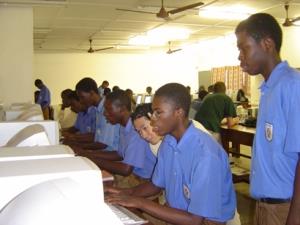
In effect,students who use stones as computer mouse are expected to score the same grade in ICT as those who enjoy ultramodern ICT facilities in the cities.Children from underserved communities and deprived backgrounds must compete in the imbalanced system with their affluent counterparts and obtain the same grades if not better…No more preferential treatment.Whether in «King’s or Queen’s JHS or Kotito Number 10 JHS»,you must pass the same exams with or without the needed TLM’s, facilities or learning support.That is now the system.

And it’s or should be said that,in such a system,I envision a deliberate attempt to further widen the already widened inequality gap in education between Northern and Southern Ghana.The existing gap in education between the two halves of our country may not be plucked any sooner.

Educational standard in the three Regions of the North and some deprived communities in Ghana is generally accepted to be low.Not because children from these parts of the country are born ‘stupid’,but the clear established gap in resources and facilities «cause am».

Taking the 2014 BECE results as an example,only 60% of students who sat for the examination qualified to enter SHS.In the three Regions of the North particularly,22% qualified from Northern Region,11% from Upper West and Upper East Regions.In the same year under review,80% of students qualified from Greater Accra and Ashanti Region to enter SHS.So you see the clear disparity?

Students from the north who hitherto didn’t patronise the ‘big public SHS’s» in the south for fear of the fees would now want to ‘dare there’.The requirements and the challenge of competing with students exposed to improved learning environments for limited space in such schools may,however, limit their chances.We are gradually going to have a system where students from advanced Junior High Schools get not only the best of the policy but the most out of it.The poor and disadvantaged students can’t catch up with the system.The very people for whose reason the policy is being implemented.

A good policy among other things,must aim at increasing the equity and fairness of all members and sectors of society by balancing the existing conditions.

The policy if not prioritised will create undue added advantage for our brothers in the south,whilst creating added disadvantage for those down north.

It’s on this note that I wish to call on the Northern Caucaus of Members of Parliament to seek clear answers and demand for a fair implementation of the policy along the existing imbalanced conditions.A wise man once said there no greater inequality than the equal treatment of unequals.The gap between the north and south is already wide enough.Any any attempt to widen it the more can only spell doom for our common good .It’s not for nothing that nations usually rise against nations.

Let’s beware!
May God bless our homeland Ghana.
The writer of this article is a teacher by profession,a freelance journalist,youth/community advocate,blogger/writer and a student.

Read more of his works on ( ananpansah-ab.blogspot.com ).

By ANANPANSAH,B ABRAHAM(AB)
(The Village Writer)
0241129910/0200704844

Source:

https://www.modernghana.com/news/795199/free-shs-a-challenge-to-bridging-gap-in-education-between-no.html

Comparte este contenido:

Niños son víctimas de violencia en el Congo, denuncia Unicef

El Congo/14 agosto 2017/Fuente: El Economista

“Los niños y las mujeres de la región de Kasai nos hablan de terribles abusos. Muchos niños han sido reclutados por las fuerzas armadas, drogados y atrapados en la violencia. Nada puede justificar estas acciones”, expresó Marie-Pierre Poirier, directora de Unicef para África Occidental y Central.

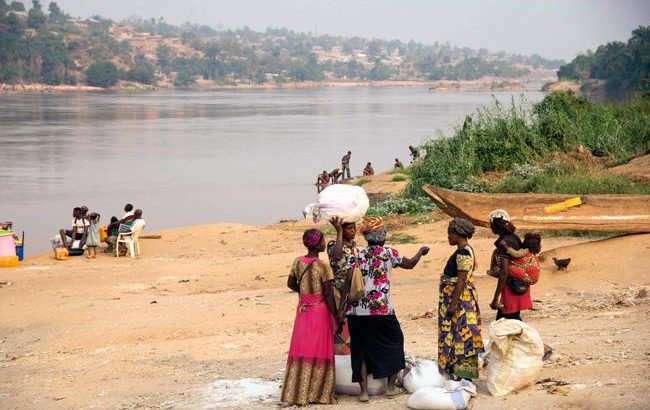
Cientos de miles de mujeres y niños han sufrido “actos terribles de abuso” en la región de Kasai, envuelta en el conflicto que se desarrolla en la República Democrática del Congo, alertó el Fondo de Naciones Unidas para la Infancia (Unicef).

En un comunicado, Unicef indicó que la violencia en la región de Kasai en los últimos 12 meses ha forzado el desplazamiento de más de 1.4 millones de personas, incluidos 850,000 menores de edad, cuyas vidas han sido trastornadas por “los extendidos actos de violencia extrema”.

“Los niños y las mujeres de la región de Kasai nos hablan de terribles abusos. Muchos niños han sido reclutados por las fuerzas armadas, drogados y atrapados en la violencia. Nada puede justificar estas acciones”, expresó Marie-Pierre Poirier, directora de Unicef para África Occidental y Central.

Poirier destacó que la situación de los niños en la región de Kasai empeora, y que las familias desplazadas por el conflicto no pueden acceder a los servicios más básicos.

Más de 200 centros de salud han sido destruidos y uno de cada cuatro centros de salud ya no funciona normalmente. Asimismo, un estimado de 400,000 niños están en riesgo de desnutrición aguda severa.

“Los niños han perdido un año de educación, ya que cientos de escuelas han sido víctimas de ataques y saqueos, los maestros han muerto o huido por razones de seguridad”, señaló la representante.

Añadió que el miedo a la violencia significa que los maestros no pueden ir a trabajar, mientras que los padres tienen miedo de enviar a sus hijos a la escuela.

Poirier llamó por ello a las partes en el conflicto a proteger a los menores, poner fin a graves violaciones en su contra y preservar las escuelas y los servicios de salud. Pidió también acceso irrestricto de la ayuda humanitaria para las poblaciones afectadas.

Fuente: http://eleconomista.com.mx/internacional/2017/08/07/ninos-son-victimas-violencia-congo-denuncia-unicef


Comparte este contenido:

Uganda: UNEB Boss Elected President of African Examinations Body

Uganda/ August 14, 2017/Allafrica

Resumen: El director ejecutivo del Consejo Nacional de Exámenes de Uganda: Dan Odongo, ha asumido la presidencia de la Asociación para la Evaluación Educativa en África (AEAA), estableciendo la integración de los países francófonos y árabes como su principal objetivo

The executive director of Uganda National Examinations Board Dan Odongo has assumed the presidency of the Association for Educational Assessment in Africa (AEAA), setting the integration of Francophone and Arab countries as his primary target.

Odongo today assumed office at the closure of a five-day AEAA conference at Speke Resort Munyonyo under the theme Enhancing efficiency and effectiveness in educational assessment in an era of educational change.

In his acceptance speech, Odongo said it was unfortunate that of all the 23 countries that were represented, none of the assessment bodies was from a French-speaking country. He also wants countries from Arab North and Portuguese-speaking nations to participate to ensure that AEAA is wholly continental.

«We learnt that part of the reason for their absence was the fact that the conference language, which has been majorly English, did not favour their attendance due to lack of translation facilities,» Odongo said.

However, The Observer has learnt that AEAA conference organisers had procured translation devices but they lay idle for the entire five days since Francophone members had not been informed in advance about their existence of the devices.

Meanwhile, Odongo said becoming president was a personal honor as well as a show of trust in the institution of Uneb and Uganda in general.

«I have a strong belief, and I know that within our institutions, there exists an abundance of expertise in various aspects of assessment which we can share for our mutual benefits through regular benchmarking.»

PROMOTE SOFT SKILLS

The conference was closed by state minister for higher education, Dr John C Muyingo, who agreed with the delegates that public examinations should integrate practical and soft skills.

Muyingo said acquisition of generic skills by learners will make them become globally-competitive in line with the ongoing Skilling Uganda programme that equips learners with technological and science skills.

«We have decided to accommodate soft skills in our current review of the lower secondary school curriculum,» Muyingo said. «The idea behind it is to ensure that at whatever level somebody leaves our education system, they are able to easily join the employment world.»

Muyingo added that the education ministry has started regional consultation workshops for the curriculum that is expected to be piloted in schools next year, and later implemented in 2019.

AEAA executive secretary Dr Edmund Mazibuko said the week-long deliberations would help improve the efficiency and effectiveness of respective examination bodies.

Mazibuko said integrating soft skills was still a challenge in many education systems due to its complexity exacerbated by the low levels of assessment literacy among the would-be key stakeholders in soft skills assessment.

 «It was noted that contemporary employers required more competence in soft skills than ever before, thus calling upon examining bodies to consider assessment of soft skills,» Dr Mazibuko said.

He explained that all assessment practitioners have been tasked to think of demand-driven soft skills assessment frameworks developed with synergies of employers, communities and assessment professionals.

The conference also encouraged examination bodies to conduct frequent reviews of their assessment procedure as well as institute prohibitive penalties to contain examination malpractice.

Muyingo commended the outgoing AEAA president Esau Nhandara, also the director of Zimbabwe Schools Examination Council, for steering the association as well as ‘peacefully’ handing over office to Dan N Odongo, the Uneb executive secretary.

The conference attracted delegates from Botswana, Cameroon, Ethiopia, France, Ghana, India, Kenya, Lesotho, Liberia, Malawi, The Netherlands and Nigeria. Others are Sierra Leone, South America, South Sudan, Swaziland, Tanzania, The Gambia, Uganda, UK, USA, Zambia and Zimbabwe.

Fuente: http://allafrica.com/stories/201708120035.html

Comparte este contenido:

La propuesta de Scholas llegó a África

Mozambique/14 de Agosto de 2017/El Economista

Por primera vez se llevó a cabo el programa Scholas Ciudadanía en África con la participación de 200 jóvenes mozambiqueños

Acaba de finalizar en Missao Mangunze (Mozambique) la primera experiencia de Scholas Ciudadanía. Durante una semana 180 jóvenes provenientes de diversas escuelas de las comunidades de Mangunze, Manjacaze, Chongoene y Xai Xai que se han reunido para trabajar de forma conjunta las problemáticas que más les preocupan: consumo de drogas, falta de transporte público para llegar a las escuelas, acoso sexual y el ausentismo docente. Estuvieron acompañados por el equipo internacional de Scholas junto a 30 voluntarios locales que fueron previamente formados en la Argentina en esta metodología durante los meses previos.

Los estudiantes presentaron sus propuestas y conclusiones de trabajo frente a sus autoridades. Los escucharon: en representación de la gobernadora, Alberto Zeca, el administrador del Distrito de Chongoene, Carlos Buchili, el inspector de educación de la provincia, Francisco Machava, el comandante distrital de Chongoene, José Ernesto Divis, el jefe de Posto de Conceicao el Samuel Jose Chitambo y el párroco del lugar, el padre Juan Gabriel Arias.

Como parte de las problemáticas abordadas, los estudiantes relataron las enormes barreras que tienen que superar día a día ya que muchos de ellos deben caminar a diario entre 5 y 10 km de ida (y otros tantos de vuelta) para poder llegar a sus centros educativos desde las zonas rurales y los barrios de los que provienen. Es por eso que como conclusión de su trabajo, los chicos pidieron contar con un transporte escolar para todos, mayor calidad en la enseñanza y formación de los docentes, la no discriminación por parte de estos últimos y mejoras en infraestructura y equipamiento.

A su vez los jóvenes han detectado en las cercanías a las escuelas la presencia de carpas ilegales que venden alcohol y drogas a menores de edad. En este sentido, solicitaron a las autoridades presentes en el cierre del Programa, el cumplimiento de la Ley que prohíbe la construcción de estas carpas.

J.Manuel, un estudiante de 17 años de la Escuela Secundaria Dambine 2000 contó con entusiasmo: «Scholas es buenísimo para que haya más encuentro. Tenemos la posibilidad de debatir y discutir sobre aquellos problemas que nos afectan y preocupan en nuestra comunidad, en nuestra escuela, en nuestra familia. Es increíble como podemos nosotros mismos, desde la cotidianeidad de nuestras vidas, mejorar nuestra comunidad. Trabajar para acabar con lastres como el alcohol, las drogas o la violencia, especialmente la de género»

Durante una intensa semana de trabajo, los jóvenes consultaron a expertos y referentes de sus comunidades. La intervención de estos docentes y profesionales es muy importante ya que el objetivo de estos programas es fomentar el encuentro entre los chicos, pero también darles voz, que tengan la oportunidad de exponer sus inquietudes y propuestas de mejora ante esos adultos que, dada su posición en la comunidad, podrán garantizar la continuidad y puesta en marcha de las mismas.

«Agradezco la oportunidad de poder participar en este programa de Ciudadanía. Estamos reunidos, todos concentrados trabajando juntos y aprendiendo muchas cosas sobre educación y salud. Una de las cosas que más nos preocupa es nuestro sistema educativo y sobre ello precisamente vamos a plantear nuestras cuestiones y propuestas» cuenta Rami, un alumno de 16 años de la escuela Samora Machel de Majacaze.

Los docentes coincidieron que este tipo de ayuda sí es valiosa y necesaria. Una vez más se hizo evidente lo que dice el Papa Francisco de que si queremos cambiar la realidad, debemos empezar por cambiar la educación. El equipo de Scholas internacional en pocas horas más dejará Mozambique pero habrán quedado 180 esperanzas sembradas que transformarán sus respectivas comunidades.

Fuente: http://ecoaula.eleconomista.es/campus/noticias/8547152/08/17/La-propuesta-de-Scholas-llego-a-Africa.html


Comparte este contenido:

Cameroon: North West – Back to School Crusade Heightens

Cameroon/August 14, 2017/Allafrica

Resumen: La persistente crisis anglófona no está ayudando a las cosas en los esfuerzos para asegurar la reanudación efectiva de las escuelas para el año académico 2017/2018 en el Noroeste y es contra este telón de fondo que el Gobernador Adolfo Lele Lafrique ha dicho a los interesados que la posteridad los juzgará y los niños no los sostendrán responsables si no actúan responsablemente en épocas como ésta.

Governor Adolphe Lele Lafrique prescribes best practices for effective resumption of schools at Regional Administrative, security forum.

The persistent Anglophone crisis is not helping matters in efforts to ensure the effective resumption of schools for the 2017/2018 academic year in the North West and it is against this backdrop that Governor, Adolphe Lele Lafrique has told education stake holders that posterity will judge them and children will hold them responsible if they fail to act responsibly in times like this.

The event was the Regional administrative and security coordination meeting in Mbengwi, Momo Division on August 9th, 2017 where the governor; hailed religious and traditional leaders, elite and all stakeholders working to stabilize things for normalcy to give education and development a chance in the region. The forum which emerges as the most important deliberatory outfit for the advancement of the region acknowledged that President Biya has extended a hand of fellowship with some responses to concerns raised by protesting Anglophone teacher trade unions and Common Law Lawyers.

Governor Adolphe Lele Lafrique showcased special competitive examinations for candidates of English expression into the Common Law department of ENAM, the imminent reconstruction of the Babadjou- Bamenda road, special allocations to rehabilitate difficult spots of the Ring road etc. In effect, the challenges are enormous and the governor inspired stakeholders to shine and be good in the mirror of nation building in times like this. It was also a moment to recognize and show gratitude for the promotion of some sons of the region with recent Presidential Decrees that appointed Robinson Agha, Brigadier General and Awoh Ndang Denis as Inspector General in the Ministry of Public works.

Presentation’s at the event featured communication strategies to counter falsehoods about the region, measures to ensure that transporters do not heed to ghost town calls, combat measures against contraband goods, level of execution of public investment projects, registration on electoral lists etc. In the backdrop of threats by unidentified people, successes recently registered with the organization of the University and Military games in Bamenda and the 2017 National day featured prominently for praise by the governor who urged the population to ignore ghost town calls and dominate fear imposed by people from elsewhere.

Fuente: http://allafrica.com/stories/201708110909.html

Comparte este contenido:

Nigeria: Atiku Begs Rich Nigerians to Help Out-of-School Children

Nigeria/August 14, 2017/Allafrica

Resumen: El ex vicepresidente y fundador de la Universidad Americana de Nigeria Yola, Atiku Abubakar, ha hecho un apasionado pedido a los nigerianos de medios para apoyar la caridad y las causas humanitarias que ayudarán a dar educación formal a los niños que están fuera de la escuela en el país.

Former Vice President and founder of American University of Nigeria Yola, Atiku Abubakar, has made a passionate plea to Nigerians of means to support charity and humanitarian causes that will help in giving formal education to children who are out of school in the country.

Atiku Abubakar in a press statement released by his media office in Abuja on Friday expressed concern at the depressing statistics of Nigeria currently having the highest number of out-of-school children globally.

The former Vice President noted that given the dire situation in education, the most critical tool for transforming individuals and spurring growth and development calls for a state of emergency in the education sector.

Noting that government cannot shoulder the responsibility alone, the Waziri Adamawa said that the situation requires Nigerians with means to support education charity initiatives such as the Feed and Read initiative of the American University of Nigeria (AUN).

According to the former Vice President, the Feed and Read Programme initiated in 2015 is designed to provide a decent meal per day for the most vulnerable of children in Yola, Adamawa State and at the same time give them exposure to classroom experience where they are taught Basic English, Arithmetic and Hygiene.

The statement observed that the Feed and Read programme was a response to the effect of destruction and displacement caused by the Boko Haram menace in the North-East area of the country which further escalated a surge in the number of out-of-school children in the zone.

«I have always been bothered about the parlous state of education in the North.

When I was Vice President I called a conference of all the 19 state governors in the North to discuss how we could address the problem of lack of adequate access to formal education by a teeming number of the young population in the region.

 «Bad as the situation was, the Boko Haram destruction tore apart the little that was left of the infrastructure for formal education especially in the North-East.

The dire situation caused the AUN to champion the Read and Feed initiative which has received tremendous support from the Irish government and the Atiku Abubakar Center for Leadership, Entrepreneurship and Development.

«I personally had to intervene by giving encouragement to this initiative, ensuring that the meals meet with the standard of a balanced diet for school children.

I eat food with these children to show that the food is safe and to lure more of them into the programme. I do this every time I visit the school.

«I am happy when I see these children return a formal greeting in English language and when they solve simple arithmetic.

There remains a large swath of distance to be covered. Nothing is too much to give in providing formal education to all children who are yet to be captured by the education infrastructure that the government is trying assiduously to create.

«That is why I implore more Nigerians who can afford it, to stretch a helping hand to these children. Any amount, no matter how little, will go a long way in making a difference in providing good education for the most vulnerable children not only in the North-East but in other places in the country.»

Fuente: http://allafrica.com/stories/201708120138.html

Comparte este contenido:
Page 289 of 622
1 287 288 289 290 291 622