Page 315 of 622
1 313 314 315 316 317 622

Donate! and Helps the OVE team to continue its work.

This portal is the result of the work of a team of volunteers for world education of inclusive quality. Your Donation will help us continue to do so.

To donate click on the following link that is on the main page of the portal.

We really appreciate what you can do for the OVE team.

Knowing Other Voices in Education:

It is a web portal of educational communication worldwide. OVE is conceived as a workshop-school where a group of volunteer teachers and volunteers from the five continents report, communicate and process information related to education as an emancipatory cultural process and as a human right.

Other voices in Education is an initiative independent of any government, national or international economic body, religious cult or political grouping. In OVE different perspectives converge on the educational fact that are expressed with freedom and responsibility.

Other Voices in Education is a communication effort of the International Observatory of Educational Reforms and Educational Policies (REPOD-OI) and the Global / Glocal Network for the Educational Quality that seeks to democratize information that teachers, ) And educational researchers interested in learning about the course of educational reforms and counter-reforms on a global scale. But fundamentally it is a space for teachers from all over the world to express their ideas, opinions and information associated with the educational fact seen in an integral way.

Comparte este contenido:

Ghana: Let’s be deliberate about education

Ghana/ June 20, 2017/Source: https://www.ghanamma.com

The just ended Basic Education Certificate Examinations (BECE) brings me a lot of fond memories. For me, like most people of my age, the examinations marked the end of a chapter.

I remember the late night studies. I remember the revision classes. I remember the group discussions. I remember the anxiety and uncertainty that underlay the preparations for the exam. We all understood that in a way, it marked a decisive moment in our lives.

The BECE determines whether you would get the school of your choice. And it also determines your career choice as well.

Those who ended up doing science and technical courses (with few exceptions) ended up in the university pursuing science related courses. Those who choose the arts ended up as humanities students at the various universities across the country.

But most importantly, the BECE marks the moment when the intellects of young ones are tested externally. This may be a source of joy and sadness.

But here is the letdown. Up until this moment, there is no deliberate attempt at infusing in the student any philosophy related to education. Ask a student at that age what he or she intends to do with education; and the answer will barely surprise you. They would definitely say “I want to be a doctor”; “I want to be a lawyer”, “I want to be a President” and so on.

Up until this stage, the essence of education is limited to the individual and his well-being. It does not go beyond that. Very few children will connect the essence of education to nation building. Therefore, the focus of education is itself not razor-sharp. It is just blunt and left to chance.

Let me put in my point in another way. The policy rationale for education may simply be resting easy in the minds of some director of education or official of the Ghana Education Service. Even in those cases, the reasons given for education are as blunt and vague as an unsharpened cutlass. You can hazard a guess.

The reasons may include reducing the literacy rate and poverty as well as to make persons employable and so on. That is where it ends. In fact, in the larger scheme of things it is level one thinking.

No deliberate attempt has been made to consider the labour needs of the country. We are not sure of how many more doctors we need. We are not sure of how many nurses we need. We are not sure of how many engineers we need. We are all locked up in some narrow capsule minding our own business.

Thought formation and conditioning is also on autopilot in this country. There is no deliberate effort to harness the hearts and minds of young people to fill in particular gaps in the economy.

There is absolutely no plan.  We just stand and hope that people will make good choices along the way; and if we are lucky, they would play some crucial role.

We can’t be lucky forever. At some point in time we must take the bull by the horn and move quickly. There are so many professions and expertise that we do not have in this country.

This means that there are so many opportunities that can be harnessed. This also means that there is a lot more to be done in terms of becoming better versions of our selves.

What are we doing about it? Nothing! If natural resources alone developed a nation, then certainly we would have been miles ahead of our neighbours and contemporaries at independence.

The reality however is that natural resources don’t grow nations. It is intellect that makes all the difference.

I read in a recent article in the Financial Times about how children in Singapore become so good at Mathematics. The answer was simple. There was a deliberate attempt at making them that good. They filled in the gaps where they needed to.

We are not hungry as a nation. We are almost directionless.  We have so much in terms of natural resources that we barely pay attention to the intellectual and mental resources that we have.

Who needs brains when we have cocoa, coffee and other export crops? That seems to be the line of thinking on which we have long been operating.

It is about time we considered our ways regarding education. We have to be thoughtful and deliberate in executing a strategy as to what we want to achieve with our mental faculties. It is not just going to happen. It would take a lot of time and effort.

We can’t continue any longer in our drunken stupor. We must stay alive to the challenges that confronts us as a nation and also the trends taking place in other countries.

Source:

https://www.ghanamma.com/2017/06/16/lets-be-deliberate-about-education/

Comparte este contenido:

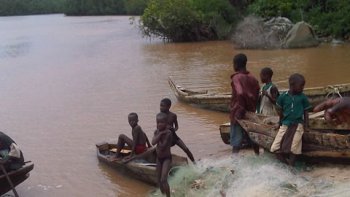
Trabajo infantil: prefieren a la niñas que a los niños en la industria pesquera de la región del lago Volta en Ghana

Ghana/19 junio 2017/Fuente: Africa Fundacion

Las niñas de tan sólo tres a seis años se han convertido en favoritas de las mujeres traficantes de menores , ya que no se quedan embarazadas .

Esto es parte de los puntos más destacados de un estudio de la International Justice Mission (IJM) sobre el tráfico de personas para el trabajo en la pesca en comunidades empobrecidas en Ghana.

Una investigación de Joy News Kwetey Nartey ha encontrado que la contratación de niñas se está volviendo atractiva en las comunidades pesqueras.

Aunque los niños son la opción preferida de los traficantes de menores porque se utilizan para actividades pesqueras en el Lago Volta, la demanda de niñas está aumentando en las comunidades costeras.

Según el estudio, las niñas comienzan a trabajar en la industria pesquera a edades similares a las de los niños.

Algunas de las mujeres que eligen a las muchachas sobre los muchachos dicen que las niñas más mayores probablemente les quitarán a sus maridos y pueden quedar embarazadas a los 12 o 14 años.

Una abogada de IJM, Ama Amankwah declaró que los niños son contratados para realizar trabajos

«Contactamos a casi 800 niños en el lago Volta en el curso de la investigación y descubrimos que un poco más del 57 por ciento de esos niños habían sido enviados a esa área, para trabajar «,

El estudio de 2015 también encontró que tanto los niños como las niñas tienen papeles físicamente exigentes y a veces peligrosos en la industria pesquera del Lago Volta.

Trabajan muchas , horas a menudo dormir poco y trabajan durante la noche.
Según el estudio, los servicios de las muchachas se requieren para tareas como proceso, preservando y venta de pescado.

Sin embargo, las niñas trabajan en el lago cuando los pescadores no cuentan con suficiente personal.

La Sra. Amankwah quiere que esto se detenga y que l gobierno intensifique sus esfuerzos para procesar a las personas que están detrás del tráfico de menores

Al comentar sobre este fenómeno, el Ministro de Empleo y Relaciones Laborales Bright Wireko-Brobbey aseguró que el plan de acción nacional del gobierno que a ser implementado ayudará a lidiar con la situación.

Aseguró que el Ministerio colaborará plenamente con todos los interesados ​​pertinentes, organizaciones internacionales, el sector privado y las organizaciones civiles, y los gobernantes tradicionales, entre otros.

Fuente: http://www.africafundacion.org/spip.php?article27826

Comparte este contenido:

20.000 niños reciben vacunas contra el sarampión en el condado de Twic East en Sudán del Sur

Sudán del Sur/19 junio 2017/Fuente:africafundacion.org

Al menos 20.000 niños han sido vacunados en Twic East en el estado sursudanés de Jonglei, a pesar de los informes anteriores en los que se consideraba que la vacuna era una toxina asesina para los niños.

El comisionado del condado de Twic Central, Dau Akoi Jurkuch, declaró que la campaña de vacunación tuvo éxito en los tres condados que conforman el antiguo condado de Twic East.

A principios de este mes, se informó que 15 niños murieron después de recibir la vacuna contra el sarampión en el estado de Kapoeta en Sudán del Sur .

«La gente estaba preocupada por si la campaña de este año para el sarampión pudiera ser problemática, como se vio en uno de los estados. Ahora tenemos la seguridad de que ha funcionado con éxito, no hay informes que impidan la campaña, los niños han sido vacunados «, dijo Akoi al Sudan Tribune .

El sarampión es una enfermedad mortal y altamente contagiosa causada por un virus. La enfermedad se caracteriza por fiebre, tos, erupciones cutáneas y gripe y secreción nasal. El período aproximado de incubación es de hasta 10 días a partir del día en que la persona está expuesta al virus.

La campaña comenzó el 5 de junio y duró siete días. La Organización Mundial de la Salud (OMS) patrocinó la campaña, realizada en colaboración con el Ministerio de Salud y el Fondo de las Naciones Unidas para la Infancia (UNICEF).

Fuente noticia: http://www.africafundacion.org/spip.php?article27857

Fuente imagen: http://msf.periodismohumano.com/files/2015/02/Sudan-del-Sur_campaña-vacunacion.jpg

Comparte este contenido:

Congo-Kinshasa: Conflict in Central Congo Forces 150,000 Children Out of School – UN

Congo/19 de Junio de 2017/Allafrica

Reseña:  Más de 600 escuelas primarias y secundarias han sido dañadas por ataques.

En el centro de la República Democrática del Congo, decenas de miles de niños faltan a la escuela en medio de la violencia entre milicianos y fuerzas de seguridad y ataques contra civiles, dijo el viernes el Fondo de las Naciones Unidas para la Infancia (UNICEF). 

More than 600 primary and secondary schools have been damaged by attacks

Tens of thousands of children in central Democratic Republic of Congo are missing out on school amid violence between militia fighters and security forces and attacks against civilians, the United Nations children’s fund (UNICEF) said on Friday.

Hundreds of people have been killed and more than a million displaced in Congo’s Greater Kasai region since fighting broke out last August between a local militia and government forces.

The violence has kept at least 150,000 children in the region out of the classroom, while more than 600 primary and secondary schools have been damaged by attacks, UNICEF said.

Some schools have been occupied by fighters, leaving pupils and teachers unwilling or unable to return, and others are being used as emergency shelter for families uprooted by the violence.

«Schools should be safe places where children can learn and begin to recover from the stress of the displacement or the memories of what they might have seen,» said Tajudeen Oyewale, UNICEF’s acting representative in Congo.

 «Returning to the classroom can give children a small sense of normality in troubled times,» he said in a statement.
 More than one in 10 children of primary school age in Greater Kasai have seen their education disrupted by violence, and many schools have been shut for several months, UNICEF said.

Ethnic violence in Congo, Africa’s second-largest country, has spread and worsened since December when President Joseph Kabila refused to step down at the end of his mandate.

The total number of displaced throughout Congo has more than doubled to 3.7 million since August 2016, with 1.3 million of them uprooted within the Kasai region, according to the U.N. Office for Humanitarian Affairs (OCHA).

 The U.N.’s human rights chief called on Friday for an international investigation into massacres and other crimes committed in Kasai, where at least 42 mass graves were found.

The government had said it would accept U.N. assistance but wanted to retain control of the inquiry in response to a Thursday deadline by U.N. High Commissioner for Human Rights Zeid Ra’ad al-Hussein for Congo to agree to a joint probe.

But in his statement on Friday, Zeid said the government «response to date falls short» and urged the U.N. Human Rights Council, which is holding a session until June 23, to act.

Fuente: http://allafrica.com/stories/201706160585.html

Comparte este contenido:

Parlamento sudafricano elimina el apartheid o segregación racial

Por: Telesur

Las leyes segregacionistas aprobaban la discriminación salarial por color de piel y prohibían la convivencia de blancos y afrodescendientes en lugares públicos.
Un 17 de junio pero de 1991 el apartheid o sistema de segregación racial en Sudáfrica y Namibia llegó a su fin luego de que las cámaras blanca, mestiza e india del Parlamento sudafricano suprimieran el sistema con una mínima oposición de 38 legisladores de extrema derecha.

El sistema legal sobre el que descansaba el apartheid (separación) fue desmantelado poco a poco entre el 1990 y 1991, las leyes que habían dispuesto la discriminación hacia la población afrodescendiente desde 1948 fueron derogandose paulatinamente.

El sistema separatista prohibía que millones de negros sudafricanos pudieran integrarse a la economía nacional más que como mano de obra barata, esto privó a las empresas sudafricanas de un gran mercado interno potencial.

Fuente: Archivo

Incluso la expansión de la industria se veía frenada por la escasez de trabajadores calificados, en tanto el acceso a la educación especializada sólo era permitida a los sudafricanos blancos.

Frederik de Klerk (1936) asumió la presidencia del país en 1989, comprendió rápidamente las presiones de instancias internacionales como la Organización de las Naciones Unidas (ONU) que pedían poner fin al apartheid e inició entonces negociaciones con políticos blancos para poner fin a este sistema, trabajó primero para suprimir la legislación racista que había estado en vigor durante los último 40 años.

De Klerk contribuyo con el activista y líder sudafricano Nelson Mandela (1918-2013), para eliminar las leyes discriminatorias y levantar la prohibición contra los partidos políticos de oposición de mayoría afrodescendiente como el African National Congress (Congreso Nacional Africano), declarado ilegal 30 años antes.

Mandela fundó en 1944 la Liga de la Juventud del Congreso Nacional Africano (ANC), el principal partido opositor de Sudáfrica.

Desde principios de los años 50 la Liga de la Juventud llevó a cabo diversos actos de desobediencia civil contra las leyes segregacionistas que prohibían, entre otras cosas,las bodas mixtas, el voto a los afrodescendientes, la convivencia de ambas razas en las mismas playas o aceras y aprobaban la discriminación salarial contra los afrodescencientes.

Fuente: http://www.telesurtv.net/news/Parlamento-sudafricano-elimina-el-apartheid-o-segregacion-racial-20170615-0071.html

Comparte este contenido:

South Africa: President Zuma Tells Young People – Education Is Your Future

South Africa/19 de junio de 2017/Allafrica

Resumen: Los jóvenes de Sudáfrica que se reunieron este viernes en la provincia del Noroeste para las celebraciones del mes de la juventud de este año y  han apoyado la convocatoria del presidente Jacob Zuma para situar a la educación en la vanguardia de sus vidas.

South Africa’s youth who gathered in the North West province for this year’s Youth Month celebrations on Friday have supported the call by President Jacob Zuma to place education at the forefront of their lives.

«No matter your age, colour or your background, education is a tool that we can use to empower ourselves. Education is for us all,» youngster Shaun Rakate said.

Rakate’s comments came after President Zuma’s call for the youth to use education to advance their lives.

«Education is the key to a brighter future. Our message to the youth [is that they must] study, read and be knowledgeable,» the President told those attending the main Youth Day commemoration in Tshing Extension 2 in Ventersdorp, North West.

President Zuma said government wants to see young people being able to go to universities and colleges.

«Education is the most powerful weapon towards economic freedom,» he said adding that through the Education Infrastructure Grant and the Accelerated Schools Infrastructure Delivery Initiative, more schools have been built around the country. To date, government has allocated R12 billion to improve school infrastructure needs.

South Africa on Friday marked 41 years since the June 16, 1976 Soweto student uprisings that saw students march against the Bantu education system.

Paying tribute to those who fought for South Africa’s political freedom under the apartheid regime, President Zuma noted that the youth of today is fighting a different struggle. They are fighting to be freed from poverty, inequality and unemployment.

The President said a democratic South Africa calls upon young people to work with government to ensure that the youth have access to decent houses, roads, electricity and recreation facilities among others.

Rakate called on the youth to study so that they can reach their goals of a better life for themselves as well as the communities from which they come from.

This was emphasised by President Zuma, who told a packed white marquee that government is appreciative of improvements in the country’s matric pass rates annually.

In addition, government is also introducing the incremental use of African languages in schools on a compulsory basis.

«Beyond matric, government wants our youth to access higher education regardless of the economic status of their families,» said the President.

Since its inception, the National Student Financial Aid Scheme (NSFAS) has disbursed over R72 billion in loans and bursaries to students from poor households while over 2 million students are currently receiving NSFAS funding.

 Youth unemployment

Meanwhile, President Zuma said South Africa’s National Development Plan (NDP) outlines the vision of a growing economy that must create jobs for all.

 He said a growing economy is the most potent solution against youth unemployment. This as Statistics South Africa (Stats SA) data showed that South Africa’s unemployment rate has increased to 27.7% in the first quarter of 2017.

National Youth Development Agency (NYDA) board chair Sifiso Mtsweni said youth unemployment is unacceptable.

«The time has come that companies and government reflect 40% of youth in their operations,» said Mtsweni.

The President acknowledged that the South African economy is growing sluggishly in addition to sovereign rating downgrades.

To mitigate the challenges, he said, government will meet with business before the end of June. The meeting would be about how to ignite confidence in the economy.

However, government has made progress towards empowering the youth.

Since the launch of the Expanded Public Works Programme (EPWP) Phase 3 in April 2014, over 1.2 million work opportunities have been taken up by the youth out of the total 2.6 million work opportunities created by the programme.

In the current financial year, the EPWP aims to create more than 700 000 work opportunities for the youth through the four sectors of infrastructure, social sector, non-state as well as environmental and cultural sectors.

As part of efforts to create work opportunities for the youth, the Department of Communications will train over 2000 youth to help install set top boxes to enable digital migration.

In addition, through the Department of Human Settlements, over 500 host employers in the real estate sector will absorb over 8000 unemployed youth and graduates.

In addition other government departments such as the Department of Water and Sanitation will continue to train young people as plumbers and artisan.

NYDA interventions

In the current financial year, the NYDA will invest R72 million in economic participation programmes. A total 18 000 young aspirant entrepreneurs will receive business support services like vouchers and mentorship among others.

The agency will also open four new branches over the next two years in Ekurhuleni in Gauteng, Richards Bay, OR Tambo region in the Eastern Cape and Newcastle in KwaZulu-Natal.

The agency will also continue to prioritise education as well as the Solomon Mahlangu Scholarship Fund. The fund supports 500 students annually.

President Zuma was accompanied to the main environment by several Ministers including Arts and Culture Minister Nathi Mthethwa and Minister in the Presidency Buti Manamela.

Fuente: http://allafrica.com/stories/201706170052.html

Comparte este contenido:
Page 315 of 622
1 313 314 315 316 317 622