Page 350 of 621
1 348 349 350 351 352 621

Low-Key Ceremony Marks Second Anniversary of Kenya’s Garissa Raid

Kenya/4th april 2017/By: / Source: All Africa

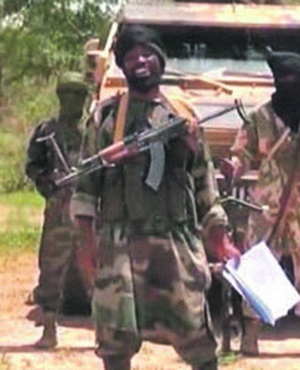
Garissa University College on Sunday marked two years since the deadly Al-Shabaab raid that claimed 147 lives among them security officers, with calls for a resolve to fight terrorism in the country.

In a low key ceremony attended by Garissa County commissioner James Kianda and other security officials, the university and Athletics Kenya organised a 5km marathon in memory of the victims.

On the fateful day, on April 2, 2015, four terrorists stormed the institution which is a constituent college of Moi University in a shooting spree.

In an interview with the Nation at the university on Sunday, Mr Kianda said the country had learnt a lot from the attack, adding that a multi-agency approach towards fighting terrorism had been adopted.

This, he said, had reduced terrorism since the attack. He, however, said the terror threat was still there because of the porous Kenya-Somalia border.

«There have been multi-agency approaches where all security organs including the National Police Service, regular police, General Service Unit, Kenya Defence Forces and other security organs work together in the fight against terror,» said the administrator.

GAP REDUCED

Mr Kianda said they also ensure that the gap between the security officers and the public is reduced so as to build confidence among the public and encourage sharing of information without fear.
He said security officials had also been working on intelligence-led operations as the public had been helpful in making sure terror threats were reduced.

Security was tight in and around the university during the second anniversary, with armed security officers manning the institution.

«Police officers are working to ensure lives and property are protected in all institutions, such as service delivery and learning bodies. Currently, there are police officers at Garissa Teachers College, NEP Polytechnic and Garissa Medical Training College among others,» he said.

«We understand terror threats still exist and we have deployed enough officers at the border to deter any threats within the country and we have also increased patrols to ensure the menace is completely wiped out,» he added.

Athletics Kenya’s vice-president Paul Mutui, who flagged off the marathon, said nothing justified the killings, adding that the purpose of the race was to remember those who were killed in cold blood by terrorists.

«Whether it is hatred, political, religious, and cultural differences or anything else, human beings must learn to co-exist and nothing can justify the killing of another for whatever reason,» he said. Adding that more than 200 athletes have participated in the marathon.

Garissa University College Principal Ahmed Warfa said the institution will never forget the students who lost their lives at a time when they were out to make a better future for themselves.

Source:

http://allafrica.com/stories/201704030126.html
Comparte este contenido:

Electronic Registration for Nigeria’s Matric Exam Goes Ahead

Nigeria/4th april 2017/ Source: All Africa

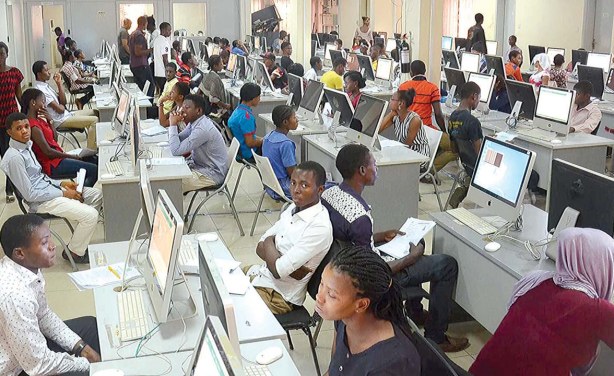
The Joint Admission and Matriculation Board (JAMB), has so far registered 600, 000 candidates for the 2017 Unified Tertiary Matriculation Examination (UTME) across the country.

Fabian Benjamin, Head of Public Relations JAMB, made this known on Monday in an interview with the News Agency of Nigeria (NAN) in Bwari, FCT.

He said that JAMB was not going to extend the registration period, saying that before deadline every candidate will register.

The spokesman said that measures were on ground to ensure the regulated platform could help candidates to get registered before the end of the month and to prevent irregularities in registration.

Mr. Benjamin said some applicants were seeking extension of the UTME registration deadline due to irregularities in the ongoing registration process.

According to him, it is wrong for any person to also think that there is inadequacy in the number of centres stipulated to register candidates for the UTME.

«We have already registered 600, 000 candidates since sales of form began March 20, how can there be inadequate centres or lack of manpower, when we have more than 400 centres.
 «There is no such delay as alleged by some candidates, the issue here is that plenty people are registering for the UTME at the same time.

«The internet is working, if it is not working how then we arrived at the total of 600, 000 that have so far been duly registered.

«Large numbers of applicants seeking to register for UTME go to the Banks allocated for the exercise that is why there seem to be some form of delays and irregularities.

«Before we used three banks and now it is 15 banks because the period is short, but we are not going to extend the registration period, before deadline every candidate will register,» he said.

Source of the news:

http://allafrica.com/stories/201704030489.html

Comparte este contenido:

África, rica en recursos naturales y con la mayor hambruna del siglo

África/03 abril 2017/Fuente: Diario Siglo XXI

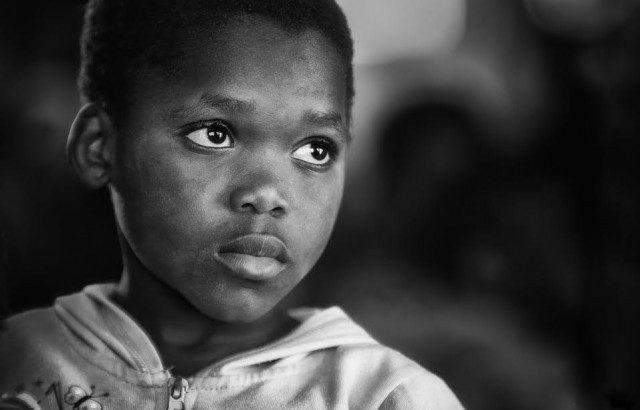
Casi el 50% de la población africana está formada por niños y niñas que deberían ser el futuro.

África es un territorio con una riqueza natural inmensa. Se trata de uno de los continentes más ricos del mundo en recursos naturales y donde habita la población más pobre del planeta. África tiene oro, cobre, uranio, diamantes… y, aun así, está sufriendo la mayor hambruna del siglo declarada por Naciones Unidas. Está claro que esto se debe a un mal reparto de los recursos porque, si en origen son suyos, ¿cómo es que ellos no se benefician? La respuesta es sencilla. Porque los países más desarrollados obtienen de ellos lo que les interesa y después no echan la vista atrás. Por suerte existen ONG en África que pretenden acabar con ese círculo vicioso para que los africanos tengan oportunidades de prosperar, decidir y acceder a un futuro.

Se considera pobreza extrema aquella que lleva a tener que vivir en la indigencia. Es decir, no se trata de una vida como tal sino, más bien, un esfuerzo diario por tratar de sobrevivir cuando se carece de las necesidades más básicas, tales como agua, techo y comida. En la región subsahariana de África cerca de la mitad de la población vive en esas condiciones.

Algunos de los datos que nos llegan desde este continente deberían hacernos reflexionar acerca de la situación que tienen. En África casi el 50% de la población está formada por niños y niñas que deberían ser el futuro. Esto es así porque ocurre como en los países desarrollados años atrás, en época de guerras y enfermedades básicas para las que no se tenían cura: se tienen más niños con la esperanza de que alguno sobreviva, pero su esperanza de vida es muy corta. De hecho, cerca del 20% de estos niños y niñas presenta alguna discapacidad por sufrir de desnutrición. La malaria se cobra la vida de 3.000 niños y niñas africanos al día y se trata de una enfermedad para la que existe cura, pero es costosa y no tienen acceso a ella. Otras enfermedades como el VIH se extienden rápidamente porque carecen de información y acceso a medidas preventivas.

Las condiciones en las que viven los africanos les hacen muy difícil su supervivencia dado que gran parte de la población no tiene acceso a agua y saneamiento lo que, como es lógico, lleva a contraer más enfermedades y más de 589 millones de africanos viven sin electricidad. Por no hablar de falta de infraestructuras como hospitales o escuelas.

Cabe preguntarse, ¿ante todo esto qué se puede hacer? La solución es dotarles de educación y herramientas para que puedan acceder a un futuro. Esto es un problema y una responsabilidad de todos. ¿Y tú qué puedes hacer? Apradinando a un niño o una niña les están dando la oportunidad de tener educación y, por tanto, un futuro. Apadrinar (que cuesta menos de 60 céntimos al día) supone un cambio radical, no sólo para el niño o niña que se apadrina, sino para sus familias y la comunidad en la que vive, puesto que se invierte en mejorar las condiciones de vida de todos ellos.

Fuente: http://www.diariosigloxxi.com/texto-diario/mostrar/707835/africa-rica-recursos-naturales-mayor-hambruna-siglo

Comparte este contenido:

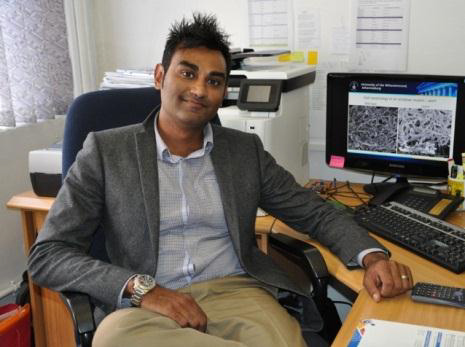
Entrevista a Bavesh Kana. África: New Study Helps Crack the Problem of Diagnosing TB in People With HIV

Entrevista a: Bavesh Kana

Resumen: Diagnosticar la tuberculosis en personas que tienen VIH ha sido un desafío porque a menudo tienen niveles bajos de bacterias en su sistema. Esto ha sido un serio problema para un país como Sudáfrica donde 454.000 personas están infectadas con tuberculosis cada año, la mitad de las cuales son seropositivas. La editora de Salud y Medicina de Conversation Africa, Candice Bailey, habló con el profesor Bavesh Kana sobre un estudio histórico que proporciona una solución para abordar este problema de diagnóstico.

Diagnosing TB in people who have HIV has been a challenge because they often have low levels of the bacteria in their system. This has been a serious problem for a country like South Africa where 454,000 people are infected with TB each year, half of whom are HIV positive. The Conversation Africa’s Health and Medicine Editor Candice Bailey spoke to Professor Bavesh Kana about a landmark study that provides a solution to tackling this diagnostic problem.

What has the traditional thinking been on TB bacteria and how it grows?

The diagnosis of people infected with the tuberculosis bacteria can show either that they are «active» or «latent» carriers of the disease. People with «active» disease display well known symptoms such as persistent coughing, fever, night sweats and weight loss.

«Latent» infection on the other hand is not associated with any clinical symptoms. People who have latent infection carry a 10% lifetime risk of developing active disease through a process called reactivation. This risk is increased when a person’s immune system is compromised by an HIV-infection or advancing age, for example.

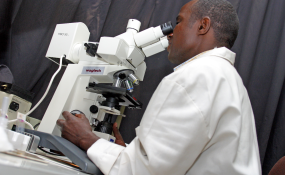
 To diagnose TB, one has to identify the bacteria from a sample of sputum. For this, it must be replicated by culturing them in a laboratory. Replicating bacteria are important because they aid the diagnostic process and without them, it’s difficult to diagnose TB.

Traditionally, it was thought that people who had active TB harboured bacteria that were easy to replicate through culturing. The thinking was that people with latent infection had dormant bacteria that could not replicate, which are difficult to culture.

To a great extent, this dogma wasn’t underpinned by extensive experimental evidence. This is mainly because its been difficult to model TB disease in small animals or in a laboratory.

Our research shows that these initial views were somewhat simplistic.

What did your research find?

Our research opens a new door to cracking the very difficult problem of diagnosing people who have low levels of TB bacteria, for example people who are HIV positive.

Our findings challenge the conventional thinking because we discovered that patients with active TB in reality harbour mixtures of both replicating and non-replicating organisms. This finding is significant because it will now be possible to diagnose people who previously would have gone undetected. It’s important to emphasise though, that a single TB diagnostic test will unlikely be enough to diagnose all TB disease profiles.

In our study, we explore the presence of non-replicating bacteria that are unable to grow under standard laboratory conditions. We term these as Differentially Culturable Tubercle Bacteria (DCTB).

We analysed the sputum from TB diseased people who had not started treatment and were able to detect varying combinations of up to five operationally distinct categories of Differentially Culturable Tubercle Bacteria.

We expect that detection of differentially culturable bacteria will now make it possible to diagnose people who have low levels of bacteria, for example older people, children and those who are HIV-positive.

How was the research done?

We approached various clinics in Soweto and identified a cohort of TB patients who had drug sensitive TB disease but had not started extensive TB treatment. Many had HIV.

Their sputum samples were subjected to the standard TB tests which includes laboratory culturing. We also applied a growth stimulating technique to the specimen to see if it could be cultured under different circumstances. We were surprised when we uncovered new populations of bacteria that were not detected using standard laboratory culturing.

We compared the results of the different tests with and without growth stimulatory factors to quantify the proportions of replicating and non-replicating bacteria in each sample. We found that using our specialist growth technique, we could more accurately predict the presence of TB disease.

Why is it significant?

This study has highlighted a previously unknown complexity in the bacterial populations linked to active TB disease. Our research opens new avenues to explore alternate mechanisms for diagnosing and detecting TB bacteria.

More importantly, these findings can be used to develop new ways of understanding how patients respond to treatment. Related to this, is the ability to better assess the efficacy of new TB drugs using the methods employed in our study.

Bavesh Kana receives funding from: The South African Department of Science and Technology The National Research Foundation The South African Medical Research Council The National Health Laboratory Service The Howard Hughes Medical Institute The Bill and Melinda Gates Foundation The Division of Aids (DAIDS) and the National Institutes of Health (USA) The Centre for Aids Prevention Research in South Africa He is affiliated with: The University of the Witwatersrand The National Health Laboratory Service The Centre for Aids Prevention Research in South Africa

Found this article useful? A tax-deductible gift of $30/month helps deliver knowledge-based, ethical journalism.

Fuente: http://allafrica.com/stories/201704010014.html

Comparte este contenido:

‘Los tambores hablan’: disco solidario para mejorar la educación en África

África/03 de Abril de 2017/20 Minutos

Una veintena de artistas se han unido para elaborar ‘Los tambores hablan’, un Libro CD que apoya la escolarización en África. La ONGD SED lleva 25 años trabajando en los países más desfavorecidos. Las ganancias íntegras del disco irán destinados a proyectos educativos.

Un total de 21 artistas españoles han decidido reunirse al amparo de la ONGD SED y poner voz a quien, desgraciadamente, no la tiene. El resultado ha sido Los tambores hablan, un Libro CD grabado desde el corazón para ayudar a mejorar las condiciones de los niños en África. Otras imágenes 2 Fotos La OND SED (Solidaridad, Educación y Desarrollo) acaba de cumplir 25 años trabajando sobre el terreno del continente para llevar la escolarización a las áreas con menos recursos en países como Ghana, donde han centrado parte de su actividad. En Los tambores hablan participan cantautores como Víctor Manuel, Rozalén, Inma Serrano, Pasión Vega o Pedro Guerra, que cuentan en 11 canciones la cara más divertida del continente más antiguo del mundo. Con este disco se pretende «romper con los estereotipos» que se han dado a África en los últimos años, según la ONG. El Libro CD -que incluye las leras de todas las canciones, fotos y texto sobre la vida en las comunidades africanas- se puede adquirir a través de la página web de la ONG a un precio de 15 euros. todos los fondos recaudados con este proyecto irán destinados a los proyectos de cooperación que SED desarrolla en el continente. Síguenos en Facebook para estar informado de la última hora:

Fuente: http://www.20minutos.es/noticia/2995834/0/los-tambores-hablan-libro-cd-solidario/

Comparte este contenido:

Ghana: Only 2% of class two pupils can read – Report

Ghana/Abril de 2017/Fuente: Pulse.org

RESUMEN: El tamaño de las clases en las escuelas públicas de Ghana suele ser muy alto, lo que hace que sea difícil para los maestros supervisar a sus estudiantes sobre una base individual. Se ha revelado que sólo dos por ciento de los alumnos de la Clase Dos de Ghana pueden leer con fluidez en inglés e idiomas indígenas. El porcentaje es ligeramente mejor con alumnos de Clase Tres, con un 20 por ciento de ellos pudiendo leer en inglés con un mínimo de competencia y capacidad. Esto fue revelado por Guitele Nicoleau, Jefe del Partido-Aprendizaje de Ghana, en un taller de educación en Tamale en la Región Norte. El taller es parte de un proyecto financiado por la agencia de desarrollo internacional, USAID, que vería a unos 23.000 maestros beneficiarse de un plan de capacitación. Según Nicoleau, un adicional de 1.700 supervisores de circuito y expertos en idiomas en los distritos del país se beneficiarían de los nuevos materiales de enseñanza y aprendizaje.

Class sizes in Ghana’s public schools are usually very high which makes it difficult for teachers to supervisor their students on an individual basis.

It has been revealed that only two percent of Ghanaian Class Two pupils can read fluently in English and indigenous languages.

The percentage is slightly better with Class Three pupils with about 20 percent of them being able to read in English with minimum proficiency and capacity.

This was disclosed by Guitele Nicoleau, the Chief of Party-Ghana Learning, at an education workshop in Tamale in the Northern Region.

The workshop is part of a project funded by the international development agency, USAID, that would see about 23,000 teachers benefiting from a training scheme.

According Nicoleau, an additional 1,700 circuit supervisors and language experts across the country’s districts would benefit from the new teaching and learning materials.

The Ghana News Agency reports that “Mrs Cynthia Bosumtwi-Sam, the Acting Deputy Director of Ghana Education Service, said the project would solve the national challenges of less reading of children in the country. She urged the teachers and directors of the schools to make use of the learning materials provided to them to enhance quality education in the country.”

Analysis

Class sizes in Ghana’s public schools are usually very high which makes it difficult for teachers to supervisor their students on an individual basis. The probably is compounded by the lack of reading materials leaving pupils with no option but to share one text book with many other classmates.

Fuente: http://pulse.com.gh/newsletter/education-in-ghana-only-2-of-class-two-pupils-can-read-report-id6465882.html

Comparte este contenido:

Young people could destabilise Africa

Africa/Abril de 2017/Fuente: News 24

RESUMEN: La falta de puestos de trabajo y la desilusión con los líderes políticos pueden formar una «cerveza tóxica», que empuja a más jóvenes africanos a emigrar oa unirse a grupos extremistas violentos, dijo el viernes la fundación del multimillonario filántropo Mo Ibrahim. La creciente población joven de África podría desestabilizar a los países de todo el continente y desafiar el crecimiento económico si los jóvenes no tienen educación y oportunidades de empleo, dijo el informe publicado esta semana. La población joven del continente casi duplicará a 452 millones en 2050, de 230 millones en 2015, y uno de cada dos africanos tendrá menos de 25 años, según el informe. Muchos jóvenes podrían ser atraídos hacia la escalada de la violencia militante en África y el aumento de la migración a Europa a través del Mediterráneo, dijo Richard Murray de la fundación.

A lack of jobs and disillusion with political leaders may form a “toxic brew”, driving more young Africans to migrate or join violent extremist groups, billionaire philanthropist Mo Ibrahim’s foundation said on Friday.

Africa’s booming young population could destabilise countries throughout the continent and challenge economic growth if young people are not provided with education and job opportunities, said the report published this week.

The continent’s young population will almost double to 452 million by 2050, from 230 million in 2015, and one in two Africans will be under the age of 25, according to the report.

Many young people could be drawn towards escalating militant violence in Africa and rising migration to Europe via the Mediterranean, said Richard Murray of the foundation.

“The most striking aspect of this research is the importance of the choice facing African young people on a continent where terrorist attacks have grown by 1 000% over the past decade,” said Murray, acting head of research at the foundation.

“Engaging young people will determine the future of the more than 2.4 billion people who will live on the continent in 2050.”

Observers from investment bankers to management consultants say Africa will reap a “demographic dividend” in the future as its bulging youth population drives innovation and consumer markets, as happened in Asia in decades past.

Yet, while Africa’s commodity boom over the past decade has seen the continent’s real gross domestic product grow at an annual average of 4.5%, few jobs have been created and youth unemployment levels have remained high, the report said.

Frustration is also growing among young people when it comes to politics, with youth voter turnout declining and scepticism about politicians growing, despite an increase in free and fair elections throughout Africa, according to the foundation. “Africa stands at a tipping point.”

Fuente: http://www.news24.com/SouthAfrica/News/young-people-could-destabilise-africa-20170401

Comparte este contenido:
Page 350 of 621
1 348 349 350 351 352 621