Page 380 of 622
1 378 379 380 381 382 622

En Somalia, Kenia y Etiopía hay medio millón de niños con desnutrición

África/02 febrero 2017/Fuente: Madridpress

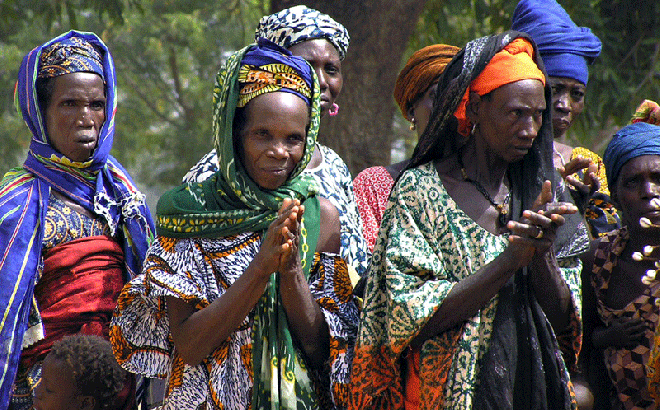
Save the Children ha advertido de que 6,5 millones de niños podrían estar en riesgo de morir de hambre como consecuencia de las sequías que viven Somalia, Etiopía y Kenia, en el Cuerno de África, por lo que ha llamado a incrementar los esfuerzos para ayudar a los menores y sus familias.

Según ha explicado la ONG, varias estaciones de lluvias escasas han provocado graves problemas de falta de agua y la muerte del ganado, dejando en los tres países a casi 15 millones de personas con necesidad urgente de asistencia y a casi medio millón de niños en situación de desnutrición aguda severa.

«Se espera que la próxima temporada de lluvias traiga precipitaciones por debajo de la media en toda la región, con lo que la ya desesperada situación de niños y familias en Somalia, Etiopía y Kenia no hará sino empeorar, dejando a millones de ellos en riesgo de hambre e incluso de muerte», ha explicado el director de Save the Children en Etiopía, John Graham, quien acudirá este fin de semana a la cumbra de la UA en Adís Abeba.

«Instamos a los donantes, a los líderes políticos y al secretario general de Naciones Unidas que se preparan para reunirse en Adís Abeba, a no olvidar la difícil situación de estos niños y familias incrementando sus esfuerzos para financiar esta respuesta», ha reclamado Graham.

El responsable de Save the Children ha advertido de que «la vida de millones de personas está en juego». «No debemos permitir que se repitan muchos de los errores que se cometieron en el pasado y que propiciaron la muerte de 130.000 niños menores de cinco años en la última hambruna que padeció Somalia», ha denunciado.

SITUACIÓN

Según la ONG, la mitad de la población de Somalia se enfrenta a la posibilidad de morir de hambre por la grave escasez de alimentos y agua que sufre el país, donde las tasas de desnutrición ya han alcanzado niveles críticos y se espera que empeoren en las próximas semanas.

Miles de familias están desplazándose en busca de alimentos y agua, y muchas de ellas buscan ayuda cruzando la frontera hacia Etiopía, país que también está sufriendo los efectos de la sequía. El 93 por ciento de los niños que son examinados por Save the Children, cuando llegan al campamento de Dollo Ado, en Etiopía, presentan signos de desnutrición.

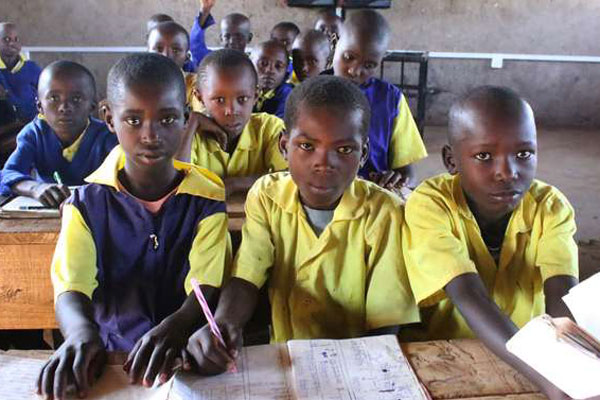
En Etiopía, la sequía está obligando a muchos niños a abandonar el colegio, lo que aumenta el riesgo de que se vean expuestos al matrimonio infantil y la emigración forzosa. El Gobierno de Etiopía está solicitando financiación por valor de 948 millones de dólares, de los cuales ya se han comprometido más de 47, para ayudar a 5,6 millones de personas necesitadas.

En el caso de Kenia, más de 1,25 millones de personas necesitan alimentos de manera urgente, y se espera que los niveles de hambre empeoren en los próximos meses.

Save the Children trabaja para paliar los efectos de la sequía en Somalia, Etiopía y Kenia, y ayuda a los refugiados somalíes que llegan al campamento de Dollo Ado. Para ello, proporciona transferencias de efectivo, cupones de comida, camiones cisterna para distribuir agua y clínicas móviles, además de proporcioniar ayuda nutricional, educación y protección a la infancia.

Fuente:http://madridpress.com/not/216622/en-somalia-kenia-y-etiopia-medio-millon-de-ninos-con-desnutricion/

Comparte este contenido:

Kenia: National exams to be scrapped under new education plan

Kenia / 01 de febrero de 2017 / Por: OUMA WANZALA / Fuente: http://www.nation.co.ke

A new education system that will replace the 8-4-4 was unveiled Monday and will phase out the national examinations currently done at the end of primary and secondary school cycles.

Unlike the current system that is heavily focused on examinations, the new one will be competency-based and will give more emphasis on identification of talents and nurturing them.

The new system puts emphasis on continuous assessment tests rather than end of cycle tests.

The focus is to equip learners with skills rather than having them cram and reproduce facts.

Learners will take two years in early childhood education, three in lower primary, three in upper primary, three in lower secondary and three in senior secondary.

The National Basic Education Curriculum Framework that has been working on the system has not, however, indicated how many years will be spent in tertiary institutions.

According to the new framework, the new system will give every child a chance to succeed in life by carving out pathways that develop their interests and allow them to live and work locally, nationally and globally.

Initially, it had been planned that the new curriculum would be piloted in May and rolled out in January next year, but that is not conclusive yet.

This is because the syllabuses as well as teaching and learning materials have not been produced.

Neither has training been done for teachers nor the modules for teacher training been concluded.

CONSULT MORE
Education Cabinet Secretary Fred Matiang’i, who launched the system at the Kenyatta International Convention Centre in Nairobi, asked Kenyans to continue making suggestions on it with a view of improving it.

“We should make it better and avoid negative views,” he said and directed the Kenya Institute of Curriculum development to hold quarterly meetings with stakeholders to enrich the system, adding that the government had a specific budget for the review.

The new system is crafted around three levels — early, middle and senior schools — with a focus on continuous assessment tests as opposed to the summative evaluation that defines the 8-4-4.

In the initial plan, the curriculum should have been rolled out next year in pre-primary and lower primary schools. But this has not been concluded.

In the framework, the curriculum provides that pupils join pre-primary at the ages of four and five followed by lower primary at between six and nine years.

Middle school will comprise upper primary and junior school while graduates of junior school will branch out to either senior school, tertiary or higher education depending on their competencies.

They will also have the option of joining talent schools, general education on technical and vocational skills or basic education and training.

Under the new structure, pupils will progress from Grade 1 to Grade 12.

However, experts and teachers union leaders who attended yesterday’s national conference asked the government to allow for more consultations for the system to become acceptable and successful.

Religious leaders, led by National Council of Churches (NCCK) General-Secretary Peter Karanja said they supported the review.

Education scholar Gilbert Oluoch said the new system will be expensive because it will require re-training of teachers and the construction of more facilities to accommodate a higher transition rate.

TRAIN TEACHERS
The Kenya Union of Post Primary Education Teachers (Kuppet) and Kenya National Union of Teachers (Knut) cautioned the government against rushing the process without having re-trained the teachers who will implement it.

“At this time, observing the progress made, we feel that the process is being rushed because of signs that we are reading,” said Knut Secretary-General Wilson Sossion, warning that since the review was not a political flagship project, politics should be kept out of it.

“It is the teacher who needs to understand these reforms more than the curriculum developers who will never implement it,” Mr Sossion told the forum.

He also demanded that more time be allocated to testing the curriculum.

“In this case, considering the timelines given, 2018 school year may be the best timing for this pilot.

«We should create space for a good evaluation of the pilot outcomes, both internal and external and measure the results of the proposed changes.

«A rushed process, and one that is both implemented and measured by insiders may miss the target,” said Mr Sossion.

He added: “We need to carefully define the outcome levels that will measure success and carefully introduce sound measures that will inform the review.

«While it is important that KICD evaluates the process, we need to invest also in a external evaluator.

«This way we can guarantee that we shall deliver to Kenyans valuable reforms.”

Kuppet Secretary-General Akelo Misori asked stakeholders to study the system keenly.

“Both angels and devils are in the details of the curriculum review process and therefore we must provide 21st century facilities for effective learning to take place,” he said.

Catholic Bishop Alfred Rotich asked stakeholders and the government to be open on the review and not to introduce contentious issues such as sex education.

LEARNING AREAS
The system gives students in secondary school a chance to specialise in the subjects they wish to pursue in tertiary institutions and learning areas have been divided into three categories: arts and sports, social sciences and science and technology, engineering and mathematics.

Under sports, students will pursue games, performing arts and visual arts while social science options will be languages and literature, humanities and business studies.

The third option will have pure and applied sciences, engineering and technical studies.

Subjects to be taught in lower primary will include literacy, Kiswahili, English and indigenous languages, as well as mathematical and environmental activities (science, social and agriculture activities).

In upper primary, pupils will be taught Kiswahili, English, home science, agriculture, science and technology, mathematics, religious studies, moral and life skills, creative arts (art, craft and music), physical and health education, social studies (citizenship, geography and history) with an option of foreign languages (Arabic, French, German, Chinese) and indigenous languages.

At junior secondary, a learner will be required to take the 12 core subjects — including English, Kiswahili, mathematics, integrated science, health education, pre-technical and pre-vocational education, social studies, religious education, business studies, agriculture, life skills education, sports and physical education.

They will also take a minimum of one and a maximum of two subjects according to personalities, abilities, interests and career choices.

The optional subjects are home science, computer science, performing arts, foreign languages, Kenya Sign Language, indigenous languages and visual arts.

In senior secondary, a student will take two core subjects irrespective of the pathway identified.

They include community service learning (life skills, citizenship, entrepreneurship, financial literacy and research) and physical education.

Fuente noticia: http://www.nation.co.ke/news/-new-education-plan/1056-3793590-1st56i/index.html
Comparte este contenido:

Tema de universidades capta atención de prensa en semana sudafricana.

África/Sudáfrica/31.01.2017/Autor y Fuente: http://www.prensa-latina.cu/
Enseñanza superior, sequía, exitosa operación de siamesas y el último adiós a Thandi Klaasen, leyenda del Jazz, son algunos de los temas más abordados por la prensa en Sudáfrica durante la semana que concluye hoy.

El canal SABC reportó que más de un millón 700 mil jóvenes sudafricanos recibieron desde 1994 subvenciones del gobierno mediante el Plan Nacional de Ayuda Financiera Estudiantil (Nsfas) para acceder a la Educación Superior.

Las estadísticas muestran que existen progresos significativos en la ampliación del acceso a ese nivel de enseñanza, según dijo a los periodistas el ministro de Educación Superior, Blade Nzimande.

Solamente el año pasado el Nsfas apoyó a unos 480 mil alumnos de familias pobres para que pudiesen entrar a los altos centros docentes y escuelas técnicas.

Varias universidades fueron sacudidas desde 2015 por las protestas del movimiento #Fees Must Fall (contra los impuestos de matrícula), las cuales, en la mayoría de los casos derivaron en hechos violentos como la destrucción y quema de edificios universitarios.

Por otra parte, los medios informaron que pese al registro reciente de buenas lluvias, el país continúa bajo la sequía, sin recuperarse lo suficiente como para eliminar las restricciones al uso del vital líquido, advirtió la ministra de Agua y Saneamiento, Nomvula Mokonyane.

Se experimentan ligeros aumentos en los embalses en ocho de las nueve provincias; sin embargo, la ministra insistió en que esto no se traduce en señal de una recuperación, reseñó la agencia gubernamental SANews.

Los niveles promedio en las presas -de las 211 de todo el país monitoreadas por el Departamento de Agua y Saneamiento- están en apenas 58,9 por ciento.

Entretanto, a inicios de esta semana impactó la noticia de la exitosa separación en un hospital sudafricano de unas niñas siamesas de Swazilandia, unidas por su abdomen.

El nacimiento de siameses suele ocurrir en uno de cada 200 mil partos, de acuerdo a los registros médicos, mientras en algunos lugares de África esta incidencia es de uno entre 14 mil alumbramientos.

Otro tema de amplia divulgación fue el tributo póstumo a la cantante Thandi Klaasen, considerada una leyenda del Jazz, quien falleció el 15 de enero, pero sus restos fueron inhumados la víspera en el cementerio Thomas Nkobi, de Germiston, aquí en la provincia de Gauteng.

Klaasen murió a la edad de 86 años, víctima de cáncer de páncreas. Al funeral, efectuado en Alberton, municipalidad de Ekhuruleni, asistieron el expresidente de Sudáfrica Thabo Mbeki, el ministro de Artes y Cultura, Nathi Mthethwa, y otras personalidades.

Fuente: http://www.prensa-latina.cu/index.php?o=rn&id=60123&SEO=tema-de-universidades-capta-atencion-de-prensa-en-semana-sudafricana

Imagen: http://prensa-latina.cu/images/Manuel-Vicente.jpg

Comparte este contenido:

Sudáfrica: Colaboración sindical para mejorar la calidad de la enseñanza

África/31 de enero de 2017/Fuente: /www.ei-ie.org

El sindicato sudafricano de docentes South African Democratic Teachers’ Union (SADTU) es el primero en concluir un acuerdo de asociación con la National Education Collaboration Trust (NECT), una organización pública creada para encontrar soluciones que permitan mejorar la calidad de la educación.


La primera fase de esta asociación entre NECT y SADTU se llevará a cabo en el distrito de Butterworth, Provincia Oriental del Cabo y en el distrito de Sekhukhune, en Limpopo.

La colaboración se dirige a 348 escuelas de primaria y secundaria del distrito de Butterworth y a 473 escuelas primarias y combinadas de Sekhukhune.

El Director Ejecutivo de NECT, Godwin Khosa, afirma que la colaboración comenzará de manera modesta y, gradualmente, se introducirán innovaciones factibles, asequibles y sustentables.

Mejorar la profesionalidad de los docentes

El Secretario General de SADTU, Mugwena Maluleke, explica que “esta iniciativa permitirá aumentar la base de docentes que lideren a escala local la profesionalización de los docentes, para poder reducir la dependencia de asesores temáticos, cuyo número es ya muy reducido”.

Maluleke explica que esta iniciativa se basa en unos principios de colaboración que pretenden, entre otros objetivos, promover la co-creación para mejorar los resultados académicos y avanzar hacia la consecución de los objetivos fijados por el Plan Nacional de Desarrollo (PND).

Enlace con las políticas y estrategias de SADTU

De acuerdo con una de las estrategias de los Pilares de la Visión 2030 de SADTU, que pretende crear una nación que aprende, en la iniciativa participarán 700 docentes —390 de Limpopo y el resto de la Provincia Oriental del Cabo—. También promoverá uno de los objetivos del PND, que el 90 % de los alumnos supere al menos el 50 % de las materias básicas de aquí a 2030, y lograr un mejor equilibrio entre sindicalismo y profesionalidad.

SADTU empleará sus propios criterios para identificar a los docentes y directores de centros líderes, que encabezarán la iniciativa. Una vez finalizado este proceso, comenzará la participación de NECT, que llevará a cabo el primer nivel de capacitación de los docentes y directores de centros líderes y suministrará los materiales necesarios.

Fuente: https://www.ei-ie.org/spa/news/news_details/4264

Imagen: https://worldsofeducation.org/new/kroppr/eikropped/reporters1_145465081714546508171893.jpg

Comparte este contenido:

5 Herramientas para Identificar el Plagio de Trabajos en el Aula

Por: Patricia Mármol. Educación 3.0. 30/01/2017

Internet se ha convertido en una herramienta imprescindible para la educación, sobre todo a la hora de buscar información acerca de trabajos para clase. Sin embargo, no siempre se utiliza con un buen fin. Para ayudar a los docentes a detectar si el alumno ha copiado su tarea, os traemos un listado de programas que permiten la identificación de plagios.

1. Viper

plagioSe trata de un software que coteja más de 14 billones de páginas web, artículos, libros de texto, periódicos o revistas para detectar un plagio. Con simplemente escanear el documento, la aplicación muestra si se ha copiado o no, destacando incluso las partes del contenido que han sido reproducidas tal cual.

2. Antiplagiarism

plagioEsta herramienta utiliza diversos buscadores de Internet como Google o Bing, lo que ofrece una gran base de datos para encontrar si existe plagio o no. Cuando la aplicación detecta que el trabajo no es original muestra las partes copiadas en diferente color, calcula el porcentaje de plagio del texto y ofrece los links de las páginas de las que se han sustraído la información.

3. Plagium

plagioEsta aplicación dispone de varios niveles de búsqueda en la web. El más sencillo y superficial, se puede utilizar de manera gratuita, tan solo copiando el texto que se desea revisar. Para análisis más exhaustivos, cuenta con varias opciones de pago, ofreciendo la posibilidad de tener una cuenta común para varios docentes, lo que permitiría un ahorro de costes.

4. Copyscape

plagioEsta herramienta tiene dos funciones. Por un lado, permite comprobar la originalidad de un texto y averiguar, en caso de plagio, de dónde se ha sustraído la información. Y por otro, ofrece la posibilidad de recibir notificaciones cuando un texto propio ha sido copiado por otros usuarios. Cuenta con una opción gratuita y otras dos de pago para un análisis más en profundidad.

5. Crosscheck

plagioEste programa fue creado por Crossref, una organización sin ánimo de lucro que busca hacer más accesible el contenido de las publicaciones académicas. Para evitar plagios, crearon Crosscheck, una herramienta que examina las copias en trabajos científicos.

Fuente: http://www.educaciontrespuntocero.com/recursos/5-herramientas-identificar-plagio-trabajos-aula/34479.html

Fotografía: Educación 3.0

Comparte este contenido:

Innovative Recycle Contest Rewards Nigerian Students with Laptops

Nigeria/30 de Enero de 2017/Allafrica

Resumen: Recientemente, algunos voluntarios de GE, el grupo One GE en Nigeria, se asociaron con el Clúster Eyinmba para un Mes Mundial de Servicios para iniciar una competencia «Reciclar y Ganar» dirigida a educar a los estudiantes de secundaria y, Las instalaciones disponibles para el reciclaje en Nigeria.

Since 2005, GE Volunteers (GEV) has spent more than 12-million hours with external organisations on 52,000 volunteer projects across 61 countries, all for the greater good. GE’s focus on volunteerism started in 1981 and evolved 11 years ago to encourage broader participation through community organisations around the world. The company now has 262 GEV Councils encouraging the spirit of volunteerism in the  environment, education, community-building and health sectors.

Recently, the One GE group in Nigeria teamed up with the Eyinmba Cluster for a Global Month of Service with a Recycle and Win competition that aimed to educate secondary school students and, by extension, their communities about recycling and the facilities available in Nigeria.

The campaign to educate the community through learners was set up as a competition which involved 12 schools (six in Lagos, five in Port Harcourt and one in Abuja). The students who brought in the highest number of recyclables in each of the schools would win a tablet sponsored by GE, which was preloaded with educational material and apps.

The school with the highest  average number of recyclables would get 20 laptops donated by GE’s IT for  Charity division. At GE’s Nigeria office, 12 teams were set up and one team was assigned to each of the 12 schools to help with their recycling efforts.

The total student population that was estimated to have been engaged as a result of this project was 10,000 to 12,000 with a total number of 24,000 people having been reached by extension.

Each of the GE team members also contributed $3 towards the prizes for the schools. «We feel it’s vitally important  to get involved in community initiatives and to share our knowledge, and expertise with the public,» said Jay Ireland, GE Africa CEO and President.

«GE has a long history of volunteering and giving back to communities and this year, we felt it would be great to do something with school learners who could share their knowledge with other community members too. The Recycle and Win competition was a great  success,» said Ireland.

Fuente: http://allafrica.com/stories/201701130561.html

Comparte este contenido:

Ghana’s prisoners to have university education behind bars

Ghana/Enero de 2017/Autor: Ismail Akwei /Fuente: Africa News

RESUMEN: El Servicio Penitenciario de Ghana está a punto de introducir programas de educación universitaria a reclusos calificados que quieran mejorar académicamente. Según el jefe de relaciones públicas para el servicio penitenciario, el superintendente Vitalis Ayeh, tres universidades ghanesas han sido invitadas a extender sus programas de educación a distancia a los reclusos, informó el portal de noticias ghanés GhanaWeb. «Estamos en conversaciones con las Universidades de Ghana, Cape Coast y [Educación], Winneba para extender sus servicios al Servicio de Prisiones de Ghana para que estos internos que han calificado para ingresar a la universidad pero porque están sirviendo en la prisión y no pueden Ir a la universidad [puede beneficiarse] «, dijo el superintendente Vitalis Ayeh.

The Ghana Prisons Service is on the verge of introducing university education programmes to qualified inmates who want to improve academically.

According to the head of public relations for the prison service, Superintendent Vitalis Ayeh, three Ghanaian universities have been invited to extend their distance learning programmes to inmates, local Ghanaian news portal GhanaWeb reported.

“We are in talks with the Universities of Ghana, Cape Coast, and [Education], Winneba to extend their services to the Prisons Service of Ghana so that these inmates who have qualified to enter university but because they are serving in the prison and cannot go to the university [can profit],” Superintendent Vitalis Ayeh said.

“They can benefit from the distance education system and they can come out better off,” he added, saying the talks with the universities are at an advanced stage.

They can benefit from the distance education system and they can come out better off.

The prisons in Ghana have ongoing educational programmes including technical and vocational training, Information and Communication Technology as well as primary and secondary school education.

If an agreement is reached, it will be the first university education programme at the overcrowded prisons in Ghana.

According to a 2016 Ghana Prisons Service statistics, the country has a total inmate population of 13,685, filling 43 prisons built to hold 9,875 inmates.

Last year, the Chairman of the Ghana Prisons Service Council, Rev Dr Stephen Yenusom Wengam, called for both state and private support to transform the state of prisons in the country.

Fuente: http://www.africanews.com/2017/01/26/ghana-s-prisoners-to-have-university-education-behind-bars/

Comparte este contenido:
Page 380 of 622
1 378 379 380 381 382 622