Page 463 of 621
1 461 462 463 464 465 621

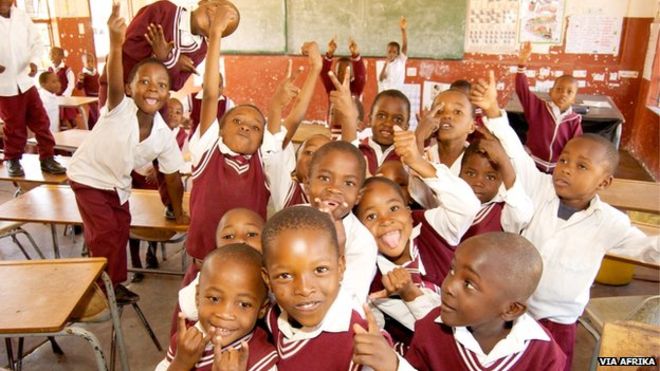
Sudáfrica: The Education System Is Leaving Children With Disabilities Behind

África/Sudáfrica/26 de Agosto de 2016/Autor: Nyiko Shikwambane

RESUMEN: El 17 de agosto, la justicia social ONG Sección 27 publicó un informe titulado «Demasiados niños que quedan atrás: La inclusión en el sistema de educación inclusivo de Sudáfrica». El informe es el resultado del trabajo de investigación llevado a cabo por Tim Fish Hodgson y Silomo Khumalo en el norte de KwaZulu Natal, en colaboración con la Fundación Philisa Isizwe para las personas que viven con discapacidades. La investigación siguió la vida de 55 cuidadores de niños con discapacidad que se encuentren en centros de educación especial o que no pueden acceder a ningún tipo de escolarización. Sección 27 se reunió con los padres y cuidadores para identificar los problemas en el Distrito Umkhanyakude en KwaZulu Natal.«Nos encontramos cerca de 50 padres que consideramos como nuestros clientes. Cuando nos encontramos con esos padres, nos dimos cuenta de que había varios problemas con el acceso de los niños con discapacidades. Los padres se quejaron de que las tasas eran demasiado caros, las escuelas estaban lejos de casa y que los niños fueron abusados en sus albergues «, dijo Silomo Khumalo, uno de los autores del informe.

On 17 August, social justice NGO Section 27 released a report entitled «Too Many Children Left Behind: Inclusion in the South African Inclusive Education System». The report is a result of research work conducted by Tim Fish Hodgson and Silomo Khumalo in northern KwaZulu Natal in partnership with the Philisa Isizwe Foundation for persons living with disabilities.

The research followed the lives of 55 caregivers for children with disabilities who are either in special schools or are unable to access any kind of schooling. Section 27 met with parents and caregivers to identify the issues in the Umkhanyakude District in KwaZulu Natal.

«We met about 50 parents who we regard as our clients. When we met those parents, we found out that there were various issues with access for children with disabilities. Parents complained that the fees were too expensive, the schools were far from home and that the children were abused in their hostels,» said Silomo Khumalo, one of the authors of the report.

After looking at those who were not in any kind of schooling, they investigated further and considered the inclusive education legislative and policy framework in relation to the Constitution. Section 29 of the Constitution says every child has the right to basic education, which includes children with disabilities.

The Schools Act does not exclude children with disabilities: section 12(4) of the Act says that children with disabilities have the choice between attending a mainstream school or a special needs school. However, this choice is meaningless if mainstream schools lack the necessary resources to accommodate learners with disabilities. Mainstream schools often deny access to children with disabilities or monitor their behaviour like a daycare centre. Either way, no effective learning is done and these children should be considered among those who are «out of school».

The Sisizakele Special School is one of the only schools in the district that has the capacity to educate disabled children. Unfortunately, there is a long waiting list to get access to this school because it does not have the capacity to deal with the number of learners who need access. Those who cannot be accommodated at Sisizakele will have to spend their days at crèche without furthering their education.

«She now goes to a crèche near Manguzi Hospital. She is excited to be there, and was quite lonely at home by herself without other children. I want her to have a skill that she will be able to do well, so that if I pass away, my child will be able to have some way of making a living for herself,» said a parent of a child with physical and intellectual disabilities in Manguzi.

«In order for us to assist these parents we had to understand the issues faced by teachers and house care in special schools schools. We received complaints about most teachers not having the adequate amount of training to teach learners with disabilities. That is why we have cases of full service schools treating children with disabilities like clients of a day care centre,» said Khumalo.

Children are admitted into mainstream schools which lack the capacity to teach them. Similarly, the report suggests that special schools are understaffed and lacking capacitated employees. The abuse in hostels is prevalent in special schools because the house parents are merely volunteers in the space who earn a stipend of R1, 000 per month.

«We have begun looking at the education system before the current democratic state. We found that black learners with disabilities suffer from a kind of ‘double discrimination’. They are excluded out of the education system by virtue of their disabilities. They are excluded because schools in rural areas don’t have the adequate resources or skills to accommodate children living with disabilities,» says Khumalo.

The report recommends that the National Department of Education reimagine the implementation of the inclusive education system. It has been 15 years since the inclusive education policy was passed in 2001, but no apparent implementation to date. «Section 27 wants to sit with the department to discuss how we can better implement the policy in rural communities. There is a big gap between the South African education policy and the reality,» said Khumalo. The report includes recommendations for funding, school support schemes, skills and vacancies to create a more efficient inclusive education system.

Fuente: http://allafrica.com/stories/201608241101.html

Fuente de la imagen: http://www.bbc.com/news/business-28191371
Comparte este contenido:

Liberia: Ministry of Education Must Design Strategies to Attract Students

África/Liberia/26 de Agosto de 2016/Fuente: Front Page Africa

RESUMEN: El Director Ejecutivo de Educación para Liberia, Inc. Dr. Emmanuel Daykeay hizo una mueca ante el Ministerio de Educación, y se desalienta en cuanto a cómo el Ministerio de Educación en Liberia es de bajo rendimiento, y sus actuaciones están causando explotaciones y marginación de los alumnos de las diferentes escuelas. Las Estadísticas recientes del Consejo de Exámenes de África Occidental (CEAO) 2016  muestra resultados de manifiesto que el Ministerio de Educación dormita sobre el futuro de los niños y jóvenes.  A partir del jueves, 26  de agosto, vamos a empezar a desafiar al Ministerio de Educación en nuestro país para llegar a los estudiantes y padres y empezar a educarlos acerca de las estrategias relativas a la educación, el desarrollo de políticas y filosofías. El Ministerio de Educación de Liberia se abstiene repetidamente sin ningún tipo de veneración a los que se ven afectados. Se tiene que cambiar por el bien del país. Escuelas en Liberia tienen una educación deficiente. El gobierno ha vuelto a ser el más alto empleador del país. ¿Cuál ha sido el gobierno, los partidos políticos y las contribuciones de los ciudadanos a la mejora de la escuela dentro del país?

Education for Liberia, Inc. Executive Director, Dr. Emmanuel Daykeay grimaced at the Ministry of Education, and is discouraged as to how the Education Ministry in Liberia is underperforming, and their performances are causing exploitations and marginalization of pupils in different schools. It all has to change!

Also, it is important to state that the bulks halt with the Ministry of Education and it is time to take responsibility for their actions. It is indeed time to stop talking and act to rescue our Education System.

Recent Statistics of the West African Examination Council (WAEC) 2016 Results illustrates that the Ministry of Education is slumbering over our children’s future.

Senior High Division:

Total number of registered candidates: 46,927
Total number of candidates who sit the test: 46,613
Total number of Males: 24,966
Total number of Females: 21,961
Total number candidates that sit and passed: 16,072
Total number of Males: 8,872 or 55.20%
Total number of Females: 7,200 or 44.80%
Total number of candidates that failed: 22,651 or 52.56%
Total number of Males: 11,915 or 52.56%
Total number of Females: 10,756 or 47.44%
Total number of candidates that went division#2: 10

Junior High Division:

Total number of registered candidates: 53,213
Total number of Males: 27,953 or 52.53%
Total number of Females: 25,260 or 47.47%
Total number of candidates that passed: 30,824
Total number of Males: 16,809
Total number of Females: 14,015

A total of ten (28) schools made 100% successful passed.

Beginning Thursday, August 26, 2016, we will start to challenge the Ministry of Education in our country to reach out to students and parents and start educating them about strategies concerning education development, policies, and philosophies.

The Education Ministry of Liberia is repeatedly failing without any veneration to those who are affected. It has to change for the good of the country.

Using the perceptions of the students to your advantage is wrong. Schools in Liberia have a deficient education which leads everyone running after government jobs.

The government has turned to be the highest employer in the country. What has been the government, political parties’ and citizen’s contributions to school’s enhancement within the Country?

Fuente: http://frontpageafricaonline.com/index.php/news/1811-ministry-of-education-must-design-strategies-to-attract-students

Comparte este contenido:

Joint UN programme aims to empower over 1 million girls in Mozambique

África/Mozambique/26 de Agosto de 2016/Fuente: Fondo de Población de las Naciones Unidas

RESUMEN: Las niñas en Mozambique se enfrentan a una amplia gama de desafíos, incluyendo la discriminación de género arraigada, las prácticas nocivas como el matrimonio infantil, la violencia generalizada basada en el género y las altas tasas de embarazo adolescente. De acuerdo con una encuesta de 2015 por el Ministerio de Salud, el 46 por ciento de los adolescentes de 15 a 19 años han estado embarazadas al menos una vez. El matrimonio infantil y el embarazo precoz  multiplican los riesgos para la salud de las niñas, lo que aumenta la probabilidad de que van a experimentar complicaciones del embarazo como la fístula obstétrica, o incluso morir por causas relacionadas con el embarazo. El embarazo también puede obligar a las niñas a abandonar la escuela, lo que limita su potencial futuro. En Mozambique, la matrícula escolar primaria de las niñas se sitúa en el 85 por ciento, pero en la escuela secundaria, la matrícula se reduce a 18 por ciento, según el informe de 2015 del Estado de la Población Mundial. El primer programa conjunto de Naciones Unidas sobre las adolescentes, llamado «Acción para las niñas y las mujeres jóvenes de Salud Sexual y Reproductiva y Derechos», aborda estos problemas a nivel individual, comunitario y políticas. Con US $ 14 millones del Gobierno de Suecia, este programa de cuatro años se basará en Acción del UNFPA para la iniciativa de las adolescentes, con lo que en la participación de UNICEF, ONU Mujeres y la UNESCO. Dirigido por el Gobierno de Mozambique, el programa contará con la participación de la sociedad civil, las organizaciones de jóvenes, la comunidad y las redes religiosas y los medios de comunicación.

Before I entered the safe space, I was shy, and it was difficult for me to express myself. I spent my free time after school with vulnerable girlfriends my age who had left school to marry, and some were even pregnant,” 16-year-old Amelia Abadala Salimo told UNFPA. “I felt afraid to become one of them.”

Then last year, she joined UNFPA’s Action for Adolescent Girls initiative. At a safe space, she and other girls learned about life skills, entrepreneurship, leadership and human rights – including the right to live free of violence and child marriage. The girls also learned about sexual and reproductive health, and how their bodies and lives could be affected by early pregnancy.

In the safe space, I felt empowered and understood, and I learned to express myself, and suddenly new doors opened,” Amelia said.

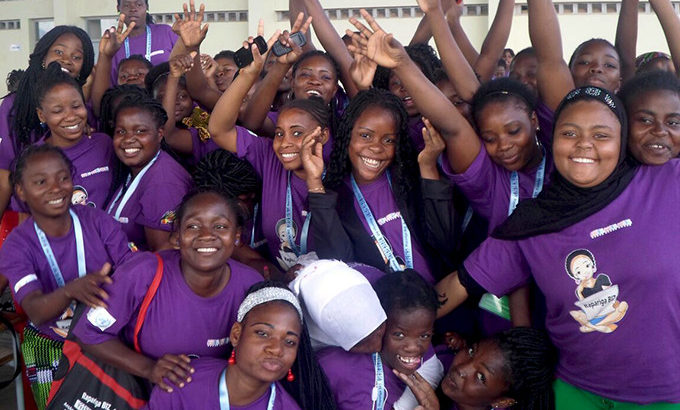
Today, she will be playing a key role in guiding other girls through similar sessions as part of the first joint UN programme to empower girls in Mozambique.

“Now,” she said, “I will be a mentor myself.”
Turning girls into leaders

Girls in Mozambique face a wide range of challenges, including entrenched gender discrimination, harmful practices such as child marriage, widespread gender-based violence and high rates of adolescent pregnancy.

According to a 2015 survey by the health ministry, 46 per cent of girls aged 15 to 19 have been pregnant at least once . Child marriage and early pregnancy multiply the risks to girls’ health, increasing the likelihood that they will experience pregnancy complications such as obstetric fistula, or even die from pregnancy-related causes.

Pregnancy can also force girls to drop out of school, limiting their future potential. In Mozambique, girls’ primary school enrolment stands at 85 per cent, but by secondary school, their enrolment drops to 18 per cent, according to the 2015 State of World Population report.

The first joint UN programme on adolescent girls, called “Action for Girls and Young Women’s Sexual and Reproductive Health and Rights,” addresses these problems at the individual, community and policy levels.

With $14 million from the Government of Sweden, this four-year programme will build on UNFPA’s Action for Adolescent Girls initiative, bringing in the involvement of UNICEF, UN Women and UNESCO. Led by Government of Mozambique, the program will include the participation of civil society, youth organizations, community and religious networks, and the media.

“The programme is a significant milestone towards more collective efforts towards the empowerment of Mozambique’s most vulnerable adolescent girls,” said Bettina Maas, UNFPA’s Representative in the country.
Reaching 1 million girls

The programme aims to reach more than 1 million girls in Zambezia and Nampula provinces, which have some of the country’s highest adolescent pregnancy rates, according to the 2015 government survey.

The launch, on 15 August in Nampula City, was attended by 830 mentors, who were carefully selected and trained to guide girls in sessions on life skills, human rights and other topics. The mentors are young, from 15 and 24, and live in the communities they serve, making them more effective role models and counsellors.

“I want to be a part of the change in my community – and also to break the silence of the harms happening to adolescent girls next door,” said Nilza Armando, a 19-year-old mentor, at the launch event.

Each mentor will reach 60 girls a year through the safe spaces. The campaign will be rapidly expanded, with more mentors trained throughout the year. Girls will also be reached through radio and television.
Working on every level

The programme additionally works with communities to keep girls in school and to return out-of-school girls to the classroom. And it holds dialogues with parents, men and boys, helping whole communities to collectively embrace the importance of girls’ education and rights.

Forums will also be created at the local, provincial and national level, enabling girls to advocate on issues affecting them.

“I want to demonstrate to the most vulnerable adolescent girls in my community that a different path exists,” said Idris Jamal, a 13-year-old member of Mozambique’s Children’s Parliament. She will be a mentor to younger girls and will also spread her message of girls’ empowerment on the radio.

“Adolescent girls can be in school, pursue dreams, engage in sports, dance or play an instrument,” she said, “instead of marrying when still a child or becoming young mothers.”

Fuente: http://www.unfpa.org/news/joint-un-programme-aims-empower-over-1-million-girls-mozambique

Comparte este contenido:

Chad: UNICEF alerta del desplazamiento de millones de niños por la violencia de Boko Haram

África/Chad/26 de Agosto de 2016/Fuente: ONU

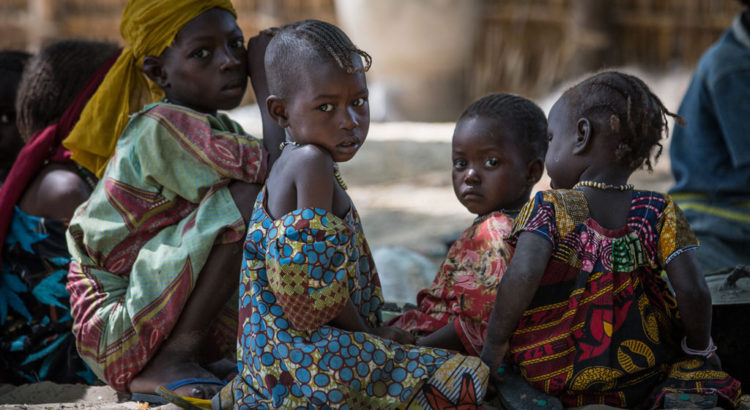
La crisis del Lago Chad tiene graves efectos sobre los niños y ha desplazado a más de un millón de ellos, afirmó el director regional del Fondo de la ONU para la Infancia (UNICEF) para África Occidental y Central, Manuel Fontaine.

Al comentar hoy el informe “Niños en movimiento, niños que quedan atrás”, Fontaine subrayó que cerca de 1,5 millones de menores se han visto obligados a abandonar sus hogares por la violencia que ejerce el grupo yihadista Boko Haram en los países de la cuenca de ese lago.

Además, otro millón de niños se encuentra atrapado en zonas de difícil acceso.

Por otro lado, Fontaine destacó que 38 menores han sido utilizados para llevar a cabo ataques suicidas en la cuenca del Chad en lo que va del año, elevando a 86 el número total de chicos forzados a ese tipo de atentados desde 2014.

El funcionario sostuvo que las necesidades humanitarias sobrepasan los niveles de respuesta, especialmente ahora que se puede llegar a áreas del noreste de Nigeria anteriormente inaccesibles.

Añadió que UNICEF sólo ha recibido el 13% de los 308 millones de dólares que solicitó para asistir a las familias afectadas por la violencia de Boko Haran en Nigeria, Níger, Chad y Camerún.

La mayoría de la población desplazada –unas 8 de cada 10 personas– se aloja con las familias y vecinos, lo que implica una presión adicional sobre algunas de las comunidades más pobres del mundo, subraya el documento.

Fuente: http://www.un.org/spanish/News/story.asp?newsID=35693#.V7-athJGT_s

Comparte este contenido:

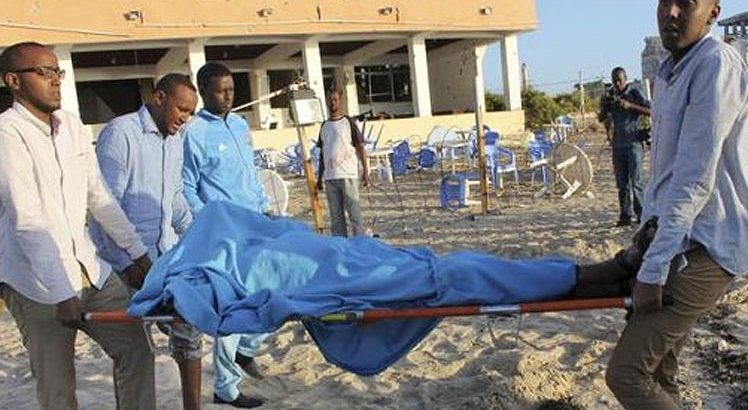
África: Una decena de muertos en ataque a restaurante somalí

Tomado de: http://www.prensa-latina.cu/index.php?o=rn&id=22219&SEO=una-decena-de-muertos-en-ataque-a-restaurante-somali
Comparte este contenido:

Kenya: Airtel, GPF Reach Out to Students With Innovation Camp

Kenia/Agosto de 2016/Alláfrica

Resumen: Kenia: Airtel ,  Fundación para la Paz Global (GPF) llega a los estudiantes con Innovación Campo.

Un proveedor líder de servicios móviles en Kenia y la Fundación para la Paz Global (GPF ) es el anfitrión del LEAP Hub innovadores Boot Camp apodado. El aumento de los sadvipras e innovadores para el crecimiento económico llego entre el 16 agosto a 17 agosto 2016 en la Alianza de secundaria, Kiambu Condado .

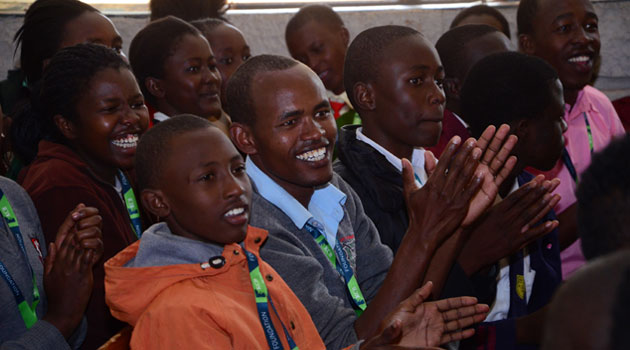
Nairobi — Airtel, a leading mobile service provider in Kenya and the Global Peace Foundation (GPF) is hosting the LEAP Hub Innovators Boot Camp dubbed ‘Raising Moral and Innovative Leaders for Economic Growth’ between 16th August-17th August 2016 at Alliance High School, Kiambu County.

The camp will expose up to 60 Leadership and Entrepreneurship (LEAP) Hubs Students from 12 schools from five counties to mentorship and constructive criticism which will nurture their best ideas for investment opportunity. The boot camp will feature expert presentations on fundamental entrepreneurship skills including opportunity identification, business plan basics, and funding start-ups.

Airtel Kenya CEO Adil El Youssefi said «We value the role that the youth play and we are committed as a private sector to support and help our youth reach their full potential. Through our Leadership and Entrepreneurship (LEAP) Hub program in partnership with Chandaria Foundation and Global Peace Foundation, we are providing avenues for young entrepreneurs to harness the power of the internet and digital tools and use it to build small businesses and make their businesses more efficient.»

«Technology is one tool that we are using to strengthen characters of these entrepreneurs by allowing them to challenge themselves to seek more knowledge and expertise online thus giving them leverage to the information, access and content that the internet provides.»

Speaking during the opening ceremony of the innovators boot camp, the Executive Director, Global Peace Foundation Kenya Daniel Juma challenged the youth to embrace the use of technology to solve challenges in our society today. He said that youth today have everything they need to succeed at their disposal and through the Youth Innovators Boot Camp, GPF envisions to nurture the creativity and innovation of students whom he believes are a solution to the global unemployment menace.

Fuente: http://allafrica.com/stories/201608170520.html

Imagen: https://www.google.com/search?q=Airtel,+GPF+Reach+Out+to+Students+With+Innovation+Camp&source=lnms&tbm=isch&sa=X&ved=0ahUKEwjd8LrYid7OAhXC0h4KHfcqB0wQ_AUICigD&biw=1366&bih=623#imgrc=uQBt-P20U8h7hM%3A

Comparte este contenido:

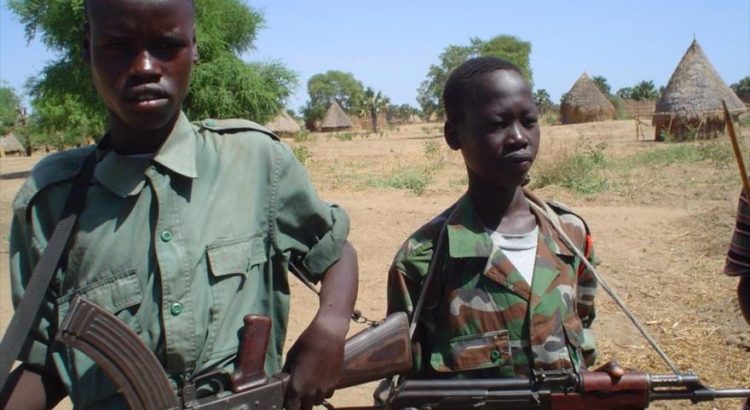
África: Gobierno sursudanés recluta 650 niños soldado en ocho meses

Sudán/26 de agosto de 2016/www.hispantv.com

El Gobierno sursudanés ha reclutado un número indeterminado de niños soldado en la última semana de cara a un nuevo conflicto, advierte las Naciones Unidas.

Según un informe publicado este viernes, un político de alto rango designado por el presidente de Sudán del Sur, Salva Kiir, se encargó del reclutamiento forzoso de menores, incluidos varios de 12 años de edad, que pertenecían todos a una misma aldea. El documento no ha ofrecido una cifra exacta del número de los reclutados.

Por su parte, un informe del Fondo de Naciones Unidas para la Infancia (Unicef, por sus siglas en inglés), publicado la jornada de hoy, indica que, en lo que va de año, al menos 650 niños han sido forzados a unirse a las fuerzas armadas de Sudán del Sur, país que vive un conflicto político-étnico, nutrido por rivalidades entre Kiir y su exvicepresidente, Riek Machar.

Unicef cifra en unos 16.000 menores que han sido reclutados como soldados desde 2013, cuando estalló una guerra civil en este país africano.

Tomado de: http://www.hispantv.com/noticias/sudan/285313/onu-sudan-del-sur-recluta-ninos-soldado-unicef-650

Comparte este contenido:
Page 463 of 621
1 461 462 463 464 465 621