Page 471 of 622
1 469 470 471 472 473 622

Kenia: Future of innovation in varsities lies in cooperation with business

Kenia / 17 de agosto de 2016 / Por: Beatrice Muganda / Fuente: http://www.nation.co.ke/

The increasing demand for university education in Africa and the huge intersecting challenges remain unparalleled, giving new impetus to the search for solutions.

First, enrolment is rising without universities increasing their capacities to deliver quality education aligned to the continent’s needs.

Second, raising revenue through fees clearly is not the answer to funding shortfalls, particularly in public universities.

This policy has continued to lock out poor students who cannot pay.

Universities would be better able to make meaningful contributions to society if they worked with the private sector to develop innovations that people need.

One trick that policy makers are missing is involving the informal business, which is growing across the continent.

According to the African Development Bank, the sector employs around 80 per cent of the workforce and accounts for 40 per cent of the overall gross domestic product.

A more imaginative and engaged approach to informal business would spur its growth, position universities as socially relevant, and help galvanise new sources of funding.

For example, many African countries have embraced the use of motorcycle taxis, or boda boda in Kenya.

With enough support for engineering departments, African states can produce motorcycles and their spare parts locally rather than rely on expensive imports.

The booming music industry is another space where university art studios can establish commercial units that support the digital distribution of music products.

HIGH-QUALITY RESEARCH

In fact, universities should have originated ideas for the M-Pesa money transfer system, an innovation that has become a game changer in technology and business.

Universities are failing to engage properly with businesses in the formal sector and indeed, African academics and international organisations have expressed concern about this.

They cite factors such as businesses’ lack of confidence in the universities to undertake sophisticated research and innovation, small size of industry and business, and the mismatch between university research strength and regional industry.

To reverse this trend, a large proportion of public financing for universities should go to high quality research to attract private investment in science parks along with technology and business incubators in academic institutions.

These initiatives may be modest, only involving small- and medium-sized enterprises, but they could expand and become business enterprises that generate revenue for universities.

An example is the Taifa laptop, developed by a joint project of the government and the Jomo Kenyatta University of Agriculture and Technology for primary schools.

The returns from commercialised research can make additional resources available to fund other university programmes such as scholarships, basic research infrastructure, and researchers’ allowances.

However, for universities to move into the innovation sector, governments should provide seed funds.

And yet few African countries have honoured their commitment to invest at least one per cent of their GDP in research by 2010.

Another challenge is that university researchers and innovators rarely meet with entrepreneurs and their counterparts in the private sector.

Universities can change this by establishing or revamping offices that foster partnerships and increasing the number of joint activities with partners.

It is obvious that industry players can only work with universities if they are sure that their interests are protected and a return on their investment is guaranteed.

Effective university leadership is, therefore, critical to honour commitments in an atmosphere of trust and mutual respect so as to manage partnerships effectively.

The leadership wrangles in a number of Kenyan universities should be resolved to allow the focus to turn to reforms and initiatives that promote the growth of the institutions.

Dr Muganda is director of higher education at the Partnership for African Social and Governance Research, Nairobi. Kenya@pasgr.

Fuente noticia: http://www.nation.co.ke/oped/Opinion/Future-of-innovation-lies-with-varsity-business-cooperation/440808-3348268-ws026f/index.html

Comparte este contenido:

Botsuana: un helicóptero se estrella después de disparar a bosquimanos

África/19 de agosto de 2016/www.survival.es

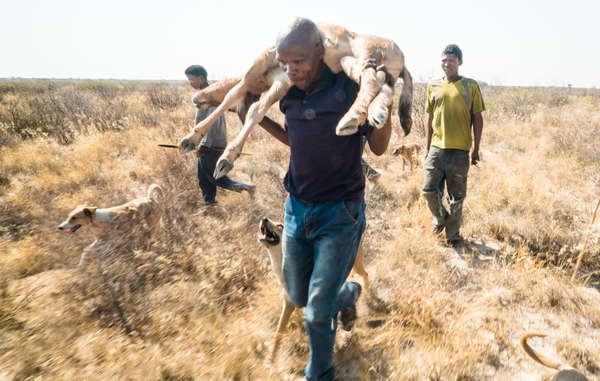
Un grupo de bosquimanos que cazaba antílope para alimentar a sus familias fue disparado desde un helicóptero policial, que implementaba la prohibición de caza de Botsuana. El aparato se estrelló más tarde dejando a seis agentes heridos. Nueve bosquimanos fueron detenidos, y mientras permanecían en custodia se les desnudó y golpeó.

El derecho de los bosquimanos a vivir y a cazar en busca de alimento en su tierra ancestral en la Reserva de Caza del Kalahari Central ha sido reconocido por el Tribunal Supremo de Botsuana.

A pesar de ello, el Gobierno sigue calificándolos como “cazadores furtivos” y utiliza ahora tecnología militar avanzada para perseguirles y asediar su modo de vida. Estos esfuerzos por militarizar la conservación de la naturaleza reflejan una tendencia global que preocupa a gran número de activistas de derechos humanos.

En el caso de los bosquimanos ha derivado en una situación por la que se les acusa de “furtivos” porque cazan para alimentar a sus familias y se enfrentan a arrestos y palizas, tortura y muerte, mientras se fomenta la caza mayor (o caza de trofeos) entre los que pagan por ella.

Además de helicópteros Botsuana también ha utilizado avionetas, equipadas con sensores avanzados de calor, comunicadas con guardas armados sobre terreno. Afirman que con todo esto pretenden acabar con los cazadores furtivos. Pero las tierras de los bosquimanos no están despobladas y en la reserva no habitan elefantes, ni rinocerontes; de hecho esta fue originalmente creada para permitir que los bosquimanos pudieran seguir cazando.

Según el experto en conservación Phil Marshall: “No hay vida salvaje de especial rareza o valor particular en el sur [parte de la reserva]”. Sin embargo, el Gobierno insiste en introducir tácticas conservacionistas de mano dura para “proteger” las tierras que los bosquimanos han cuidado durante miles de años.

En 2014 Botsuana anunció una “prohibición nacional de caza”. Pero mientras que ha adoptado medidas drásticas contra la caza de subsistencia de los bosquimanos, a los turistas ricos todavía se les permite practicar la caza mayor.

"Los bosquimanos han vivido en el Kalahari durante milenios de la caza y la recogida de alimentos."

«Los bosquimanos han vivido en el Kalahari durante milenios de la caza y la recogida de alimentos.»

El portavoz bosquimano Jumanda Gakelebone, declaró: “Ahora que están utilizando avionetas es difícil que alguien pueda sobrevivir”.

Según otro bosquimano, que prefiere mantener su identidad en el anonimato: “La gente está muy enfadada con el Gobierno. La gente ha decidido que hará ahora lo que pueda para ir a los tribunales. No confiamos en el Gobierno (…) Condenamos enérgicamente este último incidente y pedimos a la comunidad internacional que intervenga. El Gobierno todavía está luchando contra los bosquimanos a pesar de lo que afirma”.

Estas nuevas tácticas se asemejan a las vistas en el Parque Nacional de Kaziranga (India) donde 62 personas han sido asesinadas extrajudicialmente en nueve años, y donde guardaparques dispararon recientemente a un niño.

Survival ha documentado docenas de abusos de derechos humanos contra los bosquimanos por parte de funcionarios de la vida salvaje en el Kalahari. Las investigaciones sugieren que perseguir a los cazadores indígenas desvía la atención y evita que se actúe contra los verdaderos furtivos: criminales que conspiran junto a funcionarios corruptos.

A principios de 2016, Survival lanzó su campaña “Bot50” que pide que se permita a los bosquimanos regresar a sus tierras a tiempo de la celebración del 50 aniversario del país en septiembre, en vez de seguir negándoles el acceso a ella en nombre de la conservación de la vida salvaje. Las pruebas demuestran que los pueblos indígenas y tribales cuidan su medioambiente mejor que nadie. Son los mejores conservacionistas y guardianes de la naturaleza.

Personas relevantes como los actores Dominic West, Gillian Anderson, Sophie Okonedo y Mark Rylance, el músico Julian Lennon o el ilustrador Quentin Blake se han sumado a la campaña.

“Como si los bosquimanos no hubieran sufrido bastante, ahora tienen que enfrentarse a la perspectiva de que la policía les dispare en el acto desde helicópteros”, declara Stephen Corry, director de Survival International, y agrega: “El General Khama y su Gobierno deberían avergonzarse de sí mismos por implementar este tipo de brutalidad por encima de la ley, e igualmente las grandes organizaciones conservacionistas que han fracasado a la hora de pronunciarse contra estas tácticas. ‘Disparar en el acto’ es inmoral, es un engaño y está perjudicando la conservación. Perseguir a los cazadores indígenas daña la conservación de la naturaleza. ¿Cuántas personas más tienen que morir antes de que los conservacionistas se den cuenta de esto?”.

Tomado de: http://www.survival.es/noticias/11387

Comparte este contenido:

Tanzania: Minister Declares Science Subjects Now Compulsory

Tanzania/19 de agosto de 2016/allafrica.com/Por: Nestory Ngwega

Resumen: Los estudiantes que no gustan de las materias científicas, ahora no tienen forma de escapar de ellas, según la declaración del gobierno de que de ahora en adelante, las materias científicas son obligatorios para todos los estudiantes. Actualmente, de acuerdo con la política de educación, estudiantes de la escuela secundaria pueden optar ya sea para dejar de materias científicas o continuar con otras dos asignaturas en el Formulario de tres. El anuncio del gobierno se hizo ayer por el Ministerio de Educación, Ciencia y Formación Profesional, Prof. Joyce Ndalichako, al dirigirse a cientos de maestros de escuelas primarias en un servicio en curso corto, en el nuevo plan de estudios para los alumnos de Standard tres y cuatro. Dijo que el gobierno está decidido a ir al nivel económico medio con la industrialización, la cuestión de la ciencia era inevitable con el fin de conseguir más expertos de la ciencia para satisfacer la demanda en el sector industrial. Dijo que tras el déficit de expertos científicos en muchos campos, el ministerio ha decidido obligar a los estudiantes toman estos temas hasta que queden para formar cuatro exámenes nacionales, entonces pueden optar entre seguir con ellos o no después de ese nivel. Esta medida debe, por supuesto, obligar a los estudiantes para tirar de sus calcetines y estudiar los temas, a pesar del hecho de que en la situación actual de muchos estudiantes consideran como sujetos muy difícil. Por lo tanto, la mayoría de ellos optan por las corrientes de las artes.

Tanga — Students who dislike science subjects, now have no way to escape them following the government’s declaration that from now on, science subjects are compulsory to all students from Form One up to Form Four.

Currently, according to the education policy, secondary school students may opt either to quit science subjects or continue with other subjects at Form Three level.

The government announcement was made here yesterday by the Minister of Education, Science and Vocational Training, Prof Joyce Ndalichako, when addressing hundreds of primary school teachers at an in-service short course, on the new teaching curriculum for pupils of Standard Three and Four.

She said as the government is determined to go to the medium economic level with industrialisation, the question of science was inevitable so as to get more science experts to meet the demand in industrial sector.

She said following the deficit of science experts in many fields, the ministry has decided to force students take such subjects until they sit for Form Four national exams, then they may opt either to continue with them or not after that level.

This measure should, of course, force students to pull up their socks and study the subjects, despite the fact that in the current situation many students consider subjects as very difficult. So, most of them opt for the arts streams.

She further said that in order to make the move successful, the ministry has allocated about 12bn/- in this fiscal year’s budget that will be spent on laboratory apparatus so that laboratories in all government secondary schools could have the necessary equipment for science practical work.

«There will be no more of what is termed as ‘alternative practical.’ What does it mean? We want students to undergo complete science practical work and not otherwise so that we can produce competent students who will later serve the nation at various capacities and deliver,» she said.

She further said that the Fifth Phase Government is determined to see that the education offered in the country meets the required standards so that Tanzanians could compete with other people from other nations in terms of delivery at work whether one is employed or is self-employed.

She urged the primary school teachers who attended the in-service training to be committed and work hard in accordance with professional ethics, so that they could cement the foundation of education to their children from the initial level.

«If the foundation of the house is weak even the whole building will be unstable. Likewise, in the education arena, if the primary level education is weak, therefore, the higher education will also be sub-standard because it takes in dull students.

Thus, the government is determined to establish the foundation through empowering teachers by equipping them with modern teaching skills,» she added. On their side, the teachers thanked the government for organising the training which they said could boost their working morale.

However, they requested the minister to consider the teachers’ allowances as some of work in remote areas in harsh environment without even getting motivation. The training was attended by 480 teachers from three districts of Bumbuli, Handeni township and Handeni rural.

Meanwhile, MAUREEN ODUNGA reports that following the minister’s announcement, stakeholders in the education sector have applauded the government’s move to make science subjects compulsory to all students from Form One up to Form Four, calling for intervention on the various challenges.

In a telephone interview with the ‘Sunday News’, the Secretary of Tanzania Association of Managers and Owners of Non-Government Schools and Colleges (TAMONGSCO), Mr Benjamin Nkonya, said the move should have come a bit earlier but it was indeed a good way to go.

«The way to go about this is to undergo major improvements in the availability of proper teaching and learning materials such as textbooks and infrastructure like laboratories and libraries. The situation also calls for enough science teachers,» said Mr Nkonya.

Another way to go about it is to direct available resources in the proper channels and this is through revoking the licence of both government and private schools lacking necessary resources as per the requirements of the National Education Act, 1978.

«What is happening now is preparing people whose skills are not conducive to the labour market. Most of the graduates have ventured into arts, while the current demand is keen on scientists,» he noted.

The Chairman of the Association of Private Investors of Education (TAPIE), Mr Mahamoud Mringo, pointed out that the government should seriously invest in science subjects by making available all the necessary resources to be able to succeed in the plan.

«We have not prepared for this because the country was facing a shortage of science instructors and teachers. For the plan to succeed we have to bring foreign teachers and this can be achieved by creating appropriate environments like issues of permits and giving them bonuses,» stressed Mr Mringo.

A parent, Ms Esther Ziara, extended recognition to the government saying that this will give room for children to have an extensive choice in the upper level of education.

Tomado de: http://allafrica.com/stories/201608080145.html

Imagen: https://www.google.com/search?q=materias+cientificas&source=lnms&tbm=isch&sa=X&ved=0ahUKEwjj-ZjN3cvOAhVCKB4KHW_7BTAQ_AUICCgB&biw=1366&bih=623#imgrc=UVy5fOzGLx0q-M%3A

Comparte este contenido:

Nigeria: 54 Tertiary Students Renounce Cultism in Benue

Nigeria/19 de agosto de 2016/allafrica.com

Resumen: Al menos 54 estudiantes de diferentes instituciones terciarias en el estado de Benue ayer renunciaron al cultismo. Los cultistas arrepentidos fueron presentados al Comisionado de la Policía del estado, Bashir Makama, durante su interacción doncella con los jefes de las instituciones terciarias y los estudiantes por una organización no gubernamental conocida como Fundación Campus Cult Erradicación. Dos de los miembros del culto arrepentidos que hablaron en nombre de sus colegas masculinos y femeninos, dijeron que estaban cansados de hacer las cosas mal y querían llegar a ser mejores personas. Hicieron un llamamiento a la policía para garantizar la seguridad de sus antiguas fraternidades. Coordinador de la Fundación, Samuel Ejembi, dijo que la organización tenía que cargar con la garantía de que los estudiantes que participan en el cultismo renunciaron a sus actividades ilegales y ser rehabilitados. En respuesta, el comisario de la Policía dijo que el foro interactivo estaba destinado a identificar los problemas y proferir soluciones para comprobar cultismo. Aseguró a los estudiantes arrepentidos con protección policial.

 Noticia original:

Makurdi — At least 54 students from different tertiary institutions in Benue State yesterday renounced cultism.

The repentant cultists were presented to the state Commissioner of Police, Bashir Makama, during his maiden interaction with heads of tertiary institutions and students by a non-governmental organisation known as Campus Cult Eradication Foundation.

Two of the repentant cultists who spoke on behalf of their male and female colleagues, said they were tired of doing the wrong things and wanted to become better people.

They appealed to the police to guarantee their safety from their former fraternities such as the Vikings and Red bra that might come after them for a pound of flesh.

Coordinator of the Foundation, Samuel Ejembi, said that the organisation was saddled with ensuring that students involved in cultism renounced their illegal activities and be rehabilitated.

Responding, the Police commissioner said the interactive forum was meant to identify problems and proffer solutions to check cultism. He assured the repentant undergraduates of police protection.

Tomado de: http://allafrica.com/stories/201608100577.html

Imagen: https://www.google.com/search?q=Students+Renounce+Cultism+in+Benue&source=lnms&tbm=isch&sa=X&ved=0ahUKEwitxoiN2MvOAhVCYyYKHe5QALsQ_AUICSgC&biw=1366&bih=667#imgrc=ouU5-mdu-usHmM%3A

Comparte este contenido:

Rwanda and Switzerland to Construct a VTC School

Ruanda-Suiza/19 de agosto de 2016/allafrica.com

Resumen:

El Gobierno de Ruanda, representado por el Ministerio de Educación, y Suiza, representado por la Agencia Suiza para el Desarrollo y la Cooperación (COSUDE), firmaron un memorando de entendimiento sobre el proyecto de la FTP: Promoción orientada al mercado La formación y la creación de empleo en los Grandes Lagos Región. El memorando de entendimiento fue firmado por el Ministro de Educación Dr. Papías Musafiri Malimba en nombre del Gobierno de Rwanda y el embajador en Ruanda RALF Heckner en nombre de Suiza. El apoyo de Suiza en la FTP, es un programa de 12 años de Promoción del Mercado Orientada La formación y la creación de empleo en la región de los Grandes Lagos con el objetivo de apoyar los esfuerzos de la Ruanda de mejorar el acceso, la calidad y la pertinencia del sistema de formación profesional. La atención se centra en la mejora cualitativa de la prestación de la FTP, una mayor accesibilidad para los segmentos más socio-económicamente desfavorecidos y vulnerables de la población rural en la Provincia Occidental, y el acceso a oportunidades de formación más diversificados. El programa se inició en 2012 y está siendo implementado en la Provincia Occidental por Swisscontact; una ONG suiza especializada en la formación profesional. primera fase de tres años terminados en 2015. En el nuevo acuerdo fase del Programa, Suiza financiará la construcción de un VTC en Nyabihu Distrito lo que hace un total de 6 CFPs en la provincia occidental y también continuar el apoyo y fortalecer la calidad de los centros construidos en la fase uno.

Kigali — The Government of Rwanda, represented by the Ministry of Education, and Switzerland, represented by the Swiss Agency for Development and Cooperation ( SDC) signed a Memorandum of Understanding on TVET project : Promoting Market Oriented Skills Training and employment creation in the Great Lakes Region.

The Mou was signed by the Minister of Education Dr. Papias Musafiri Malimba on behalf of the Government of Rwanda and the Ambassador to Rwanda RALF Heckner on behalf of Switzerland.

The Switzerland support in TVET, is a 12-year program of Promoting Market Oriented Skills Training and Employment Creation in the Great Lakes Region aiming at supporting the Rwanda’s efforts to improve access, quality and relevance of the TVET system. The main focus is on qualitative improvement of TVET provision, enhanced accessibility for the most socio-economically disadvantaged and vulnerable segments of the rural population in Western Province, and access to more diversified training opportunities.

The program started in 2012 and is being implemented in the Western Province by Swisscontact; a Swiss NGO specialized in vocational training. The Program’s first phase of three years ended in 2015. In the new phase agreement, Switzerland will finance the construction of one VTC in Nyabihu District thus making a total of 6 VTCs in western province and also continue support and strengthen the quality of the centres constructed in phase one.

Tomado de: http://allafrica.com/stories/201608080571.html

Imagen: https://www.google.com/search?q=Ruanda+y+Suiza+para+la+construcci%C3%B3n+de+una+Escuela+VTC&source=lnms&tbm=isch&sa=X&ved=0ahUKEwi-y7HH1MvOAhWL1x4KHdYzAkYQ_AUICCgB&biw=1366&bih=667#tbm=isch&q=Ruanda+y+Suiza+construcci%C3%B3n+de+una+Escuela+&imgrc=c1EbluLA-o9xiM%3A

Comparte este contenido:

Nigeria: Unity Schools – Govt Bans PTA Levies

Nigeria/19 de agosto de 2016/allafrica.com

Resumen:

El Gobierno Federal ha prohibido la recaudación de la tasa de desarrollo por las Asociaciones de Padres y Maestros (PTA), en los 104 colegios de la unidad de todo el país, el Ministerio Federal de Educación dice. El Ministerio en un comunicado en Abuja el martes, dijo que la prohibición, destinada a aliviar el sufrimiento de los padres, entraría en vigor inmediatamente. La declaración fue firmada por Bem Goong, subdirector, prensa, en el ministerio. «No se permite el PTA de cualquier universidad unidad para iniciar cualquier proyecto de desarrollo en cualquiera de los colegios de la unidad sin la autorización expresa o por escrito del Ministerio Federal de Educación.

«Las nuevas medidas están destinadas a detener la tendencia impactante donde gravámenes de desarrollo impuestas a los padres por los ACP son cada vez más altos que los gastos de escolaridad exigidos por el gobierno que estableció las escuelas de la unidad», dijo el ministerio. El ministerio dijo que el Ministro, Adamu Adamu, había tomado nota de gravámenes excesivos PTA en Kings College, Lagos, y Federal de Ciencia y universidad técnica, Yaba, Lagos. Se dice que en las dos escuelas, tasas cobradas por JSS1 en primer término fue N69, 400 mientras que la colección era PTA N70, 000 en reyes y N74, 000 en Yaba.»Con esto, el total pagado por los padres en estas dos escuelas a N139, N143 y 400, 400 respectivamente. Con la reducción de los gravámenes de desarrollo y prohibición de cargos para nuevos proyectos, así como vinculación de la tasa de desarrollo hasta un máximo de N5, 000, los padres de JSS1 en estas dos escuelas pagarán ahora N88, 000. «Reconozco los papeles complementarios desempeñados por los padres y el apoyo proporcionado por el PTA a los colegios, pero no voy a permitir que los PTA se constituyen en un gobierno dentro de un gobierno a nivel de las escuelas de la unidad y, a expensas de los padres,» el ministerio citado Adamu por el diario. Se dice que Adamu expresó preocupación de que los ACP en los colegios unidad habían formado en asociaciones nacionales y dijo que la ejecución de otras organizaciones, como la Asociación Nacional de Padres y Maestros de Escuelas del Gobierno Federal (NAPTAFEGC), el aumento de la carga de los padres.

Noticia original:

The Federal Government has banned the collection of development levies by Parent-Teacher Associations (PTA) in the 104 unity colleges across the country, the Federal Ministry of Education says.

The ministry in a statement in Abuja on Tuesday, said the ban, aimed at alleviating the sufferings of parents, would take effect immediately.

The statement was signed by Bem Goong, deputy director, press, in the ministry.

«No PTA of any unity college is allowed to initiate any development project in any of the unity colleges without the express or written authorisation of the Federal Ministry of Education.

«The new measures are aimed at arresting the shocking trend where development levies imposed on parents by PTAs are becoming higher than the school fees charged by government which established the unity schools,» the ministry said.

The ministry said that the Minister, Adamu Adamu, had noted excessive PTA levies in Kings College, Lagos, and Federal Science and Technical College, Yaba, Lagos.

It said that in the two schools, fees charged for JSS1 in the first term was N69, 400 while the PTA collection was N70, 000 at Kings and N74, 000 at Yaba.

«This brings the total paid by parents in these two schools to N139, 400 and N143, 400 respectively.

«With the reduction on development levies and ban on charges for new projects as well as pegging of the development levy to a maximum of N5, 000, parents of JSS1 in these two schools will now pay N88, 000.

«I acknowledge the complementary roles played by parents and the support provided by the PTA to the colleges but I will not allow the PTAs to constitute themselves into a government within a government at the level of unity schools and at the expense of parents,» the ministry quoted Adamu as saying.

It said that Adamu expressed concern that PTAs in unity colleges had formed themselves into national associations and said that running additional organisations, such as National Parents and Teachers Association of Federal Government Colleges (NAPTAFEGC), increased the burden on parents.

The News Agency of Nigeria (NAN) recalls that NAPTAFEGC recently rejected an alleged 300 per cent increase in school fees of unity schools.

Gabriel Nnaji, National President of NAPTAFEGC, had told journalists that the alleged increase from N20, 000 to N75, 000, was unacceptable to parents.

He said that an average parent with more than a child in unity schools would not be able to afford the cost.

However, Adamu on Tuesday denied knowledge of the increment in fees.

Tomado de: http://allafrica.com/stories/201608100587.html

Imagen: https://www.google.com/search?q=Nigeria:+Unity+Schools+-+Govt+Bans+PTA+Levies&source=lnms&tbm=isch&sa=X&ved=0ahUKEwj83syU0MvOAhWRsh4KHXI2AIUQ_AUICSgC&biw=1366&bih=667#imgrc=LYtVVB-OlYrz2M%3A

Comparte este contenido:

El ACNUR trabaja con el Gobierno y socios de atención de emergencias para contener un brote de cólera entre los refugiados sur sudaneses recién llegados en el Distrito de Adjumani, Uganda

África/Uganda/18 de agosto de 2016/ Fuente: ACNUR

El Gobierno de Uganda y el ACNUR implementan medidas de contención tras la confirmación de un brote de cólera en el asentamiento de Pagirinya, abierto recientemente en el distrito de Adjumani.

El Gobierno de Uganda y el ACNUR implementan medidas de contención tras la confirmación de un brote de cólera en el asentamiento de Pagirinya, abierto recientemente en el distrito de Adjumani.

Se ha confirmado que 49 sur sudaneses y un ugandés han contraído la enfermedad. 44 de estas personas han recibido el alta tras recibir tratamiento médico en instalaciones sanitarias, mientras que dos han sido puestas en cuarentena.

Se están tomando medidas adicionales para evitar una mayor expansión del brote, como la desinfección de las casas de quienes contrajeron la enfermedad y el drenaje de su depósito de agua, así como una campaña de concientización puerta a puerta. Se ha restringido la venta de productos frescos en mercados y en los caminos. También se han intensificado las medidas sanitarias, como la cloratización de fuentes de agua, retirada de basura, refuerzo de instalaciones de lavado a mano, y distribución de pastillas potabilizadoras. Como resultado, el número de nuevos casos es reducido; no obstante, los equipos médicos continúan en observación para detectar a individuos que presenten potenciales síntomas.

El cólera es una enfermedad infecciosa aguda, que se contagia habitualmente por el consumo de alimentos y agua contaminados, y que puede resultar mortal. Los afectados presentan síntomas tales como diarrea acuosa aguda y vómitos.

La mayor parte de los afectados por el brote se encuentran en centros de recepción del asentamiento de Pagirinya, y de forma más reducida en el asentamiento en sí mismo y en el punto de recogida de Elegu. Pagirinya cobija en esto momentos a más de 30.000 refugiados sursudaneses, la mayoría de los cuales han llegado en las últimas seis semanas.

“Durante el último mes hemos recibido a un gran número de niños refugiados, que son particularmente vulnerables a esta enfermedad potencialmente letal”,  dijo el representante en funciones de Uganda, Bornwell Kantande. “Junto al Ministerio de Sanidad y a nuestras organizaciones socias, hemos implementado rápidamente medidas para contener el contagio. Seguimos haciendo lo máximo para reducir el número de personas que albergan los centros de recepción, no sólo para prevenir brotes epidémicos, sino también para que estas personas puedan comenzar a reconstruir sus vidas lo antes posible”.

La descongestión de los centros de tránsito y recepción es una de las principales prioridades. Los refugiados están siendo reubicados al asentamiento de Bidoibidi, en el distrito de Yumbe, de reciente apertura. En sintonía con la generosa política de Uganda en esta materia, se les proporcionará de parcelas de tierra para construir casas y sembrar cosechas agrícolas.

Más de 80.000 refugiados sursudaneses han huido a Uganda tras el estallido de violencia del 8 de julio en Yuba (capital de Sudán del Sur). Más del 85% de los recién llegados corresponde a mujeres y niños, siendo el 64% el porcentaje de llegadas de niños sobre el total de entradas. Los recién llegados informan que grupos armados atacan los pueblos, asesinando civiles, asaltan sexualmente a las mujeres y reclutando forzosamente a jóvenes y niños para engrosar sus filas.

Fuente:http://www.acnur.org/noticias/noticia/el-acnur-trabaja-con-el-gobierno-y-socios-de-atencion-de-emergencias-para-contener-un-brote-de-colera-entre-los-refugiados-sur-sudaneses-recien-lle/

Imagen: http://img2.europapress.net/fotoweb/fotonoticia_20160724084453-931439_9999.jpg

Comparte este contenido:
Page 471 of 622
1 469 470 471 472 473 622