Page 480 of 621
1 478 479 480 481 482 621

Zimbabwe: 13 000 Technical Teachers Wanted

Africa/Zimbabwe/07 de Agosto de 2016/Autora: Samantha Chigogo

RESUMEN: Zimbabwe tiene 13 000 vacantes para profesores de materias técnicas.  Durante una ceremonia de graduación en Belvedere Técnica Colegio de Maestros (BTTC) en Harare ayer, el ministro de Educación Superior Ciencia y Tecnología Superior y el profesor Jonathan Moyo dijo que los maestros de los estudiantes deben tomar ventaja de las oportunidades disponibles y formarse en temas técnicos. Dijo que el Gobierno está trabajando en iniciativas para mejorar la disponibilidad de puestos de trabajo de los maestros en el país.

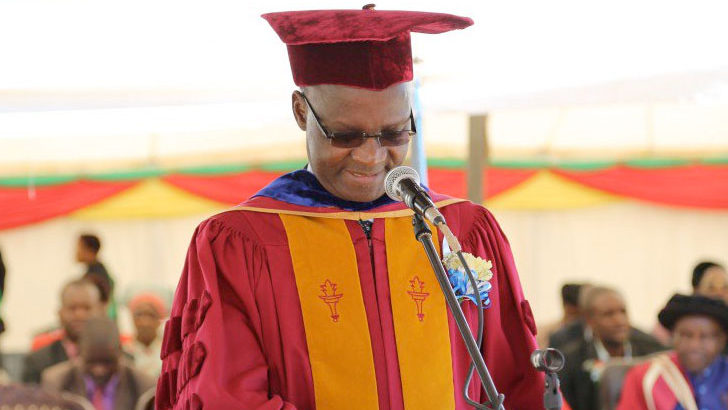
Zimbabwe has 13 000 vacancies for technical subject teachers and students were encouraged to train in such programmes in order to promote the country’s economic blueprint Zim-Asset. Speaking during a graduation ceremony at Belvedere Technical Teachers College (BTTC) in Harare yesterday, Higher and Tertiary Education Science and Technology Minister Professor Jonathan Moyo said student teachers should take advantage of the available opportunities and train in technical subjects.»Zimbabwe has 13 000 vacancies for technical subject teachers,» he said.

«Today’s graduating class of 951 has only 376 technical and vocational subject teachers, and this leaves the vacancy for technical subject teachers at 12 624.»

He said the Government was working on initiatives to improve the availability of teachers’ jobs in the country.

Prof Moyo said the plan to build 2 000 primary, secondary schools and tertiary institutions across the country was still being pursued vigorously.

«For Belvedere College to realise its objective of developing and training properly grounded techvoc teachers, the time has come for the college to review its mandate,» he said, «in order to align it with the policy of one state university, one teachers’ college, one polytechnic and one industrial training centre in each province.»

He said to achieve their industrialisation and modernisation quest, institutions had to train skills capable of producing technological and engineering solutions to challenges, which exploit opportunities for the country’s economy.

Prof Moyo called on colleges to refrain from dual systems of higher and tertiary education where polytechnic and teacher education programmes exist under one roof.

«The management and responsibility structure of a dual system is problematic and unworkable,» he said.

«It is difficult to achieve equitable distribution of human, financial and material resources when institutions offering technical and teacher education are operating together as currently prevailing at Belvedere and J M Nkomo colleges.»

He said doing away with dual systems would reduce duration of programmes from five to four years as well as enhance the efficiency and effectiveness of the teaching and learning activities.

«We expect Belvedere to redesign its curriculum for technical teacher education programmes and the new curriculum should therefore infuse industrial attachment as well as teaching practice,» Prof Moyo said.

College principal Ms Ruramai Mbofana called on graduates to reinforce the teaching of technical subjects across the country.

«With this ceremony, graduates must take note that the skills and knowledge gained from this college are critically important for national development and, I evoke you to be good examples in nation building,’ she said.

The graduation ceremony was celebrated under the theme: «Promoting Science, Technology, Engineering and Mathematics (STEM) through Education and Training.»

Since 1982, a total of 12 961 skilled persons have graduated from the college with 162 technicians graduating with a Higher Education Examinations Council qualification.

Fuente: http://allafrica.com/stories/201608060056.html

Fuente de la imagen: http://bulawayo24.com/index-id-news-sc-education-byo-93762.html

Comparte este contenido:

Uganda will be technology hub for Africa by 2030′

Africa/Uganda/07 de agosto de 2016/Autor: John Agaba/Fuente: NewVision

RESUMEN: El Ministro de Ciencia, Tecnología e Innovación, Elioda Tumwesigye dijo que Uganda será un centro para la ciencia y la tecnología en todo el continente africano en 2030, asi lo afirmo durante el evento,  «Technovation» en la Escuela de Salud Pública impulsado por la Red ResilientAfrica Universidad de Makerere. Durante el desafío Technovation que atrajo a equipos de escuelas secundarias de toda Uganda, el nuevo ministro reiteró la necesidad de la ciencia y la innovación y como tal  promete el apoyo a la red. Diferentes equipos tenían diferentes ideas de cómo pueden resolver los retos como problemas de la pobreza y el cambio climático en Uganda.

The Minister for Science, Technology and Innovation, Elioda Tumwesigye said Uganda will be a hub for science and technology in whole of Africa by 2030 during a technovation challenge at the Makerere University School of Public Health-powered ResilientAfrica Network.

It was Tumwesigye’s first day out in the field after he was appointed to the office as inaugural minister by President Yoweri Museveni late June.

During the technovation challenge that attracted teams from over 15 girl secondary schools from across Uganda, the new minister reiterated the need for science and innovations, pledging support to the network.

“Science and technology move the world today. Uganda cannot be left behind. By 2030 we should be a (science and technology) hub for Africa,” the minister said.

He joked that it was the first time he was hearing the word “pitching”, alluding to the innovation ideas teams at the challenge came up with.

Different teams had different ideas how they can solve maternal challenges and poverty and climate change issues in Uganda. They presented these before a panel of judges, who assessed the most feasible and relevant innovation idea. At the end of a day’s work, the team from Maryhill Girls in Mbarara district convinced the judges the most.

Prof. William Bazeyo, the dean at the Makerere University School of Public Health and RAN Chief of Party, said innovation and creation and development of new ideas was necessary counter emerging and re-emerging challenges.

“We need solutions to prolonging dry spells. We need solutions to flooding and to poverty and our maternal health challenges,” the professor said.

Director of innovations Dr. Dorothy Okello said they will keep trying to incubate and mentor young persons to develop their ideas.

The challenge coincided with a GIS Hackathon, also hosted at the same lab, to ‘hack-a-climate-change-thorn’. The collaboration with the AidData Center for Development Policy, a partner lab under the Higher Education Solutions Network (HESN), attracted 108 participants and the National Information Technology Authority Uganda (NITA – U).

Minister Tumwesigye said that he will “support” the young scientists and help them to develop their ideas into prototypes. He said he would also “look” for partners to help advance the young scientists’ innovations.

The theme for the Hackathon was focused on sustainable development goal 13 and specifically at “taking urgent action to combat Climate Change and its impacts through Innovation & utilization of open data”.

Fuente: http://www.newvision.co.ug/new_vision/news/1431859/uganda-technology-hub-africa-2030
Comparte este contenido:

Unesco podría ingresar a su lista de patrimonio a alta mar

UNESCO / Alta Mar / 07 de agosto de 2016 / Por: Telesur
Con un informe titulado «Patrimonio mundial de alta mar: una idea que se abre camino», el Centro del Patrimonio Mundial de la UNESCO y la Unión Internacional para la Conservación de la Naturaleza (UICN), estudian la posibilidad de aplicar la Convención para la protección del patrimonio mundial a maravillas de alta mar.

La Organización de las Naciones Unidas para la Educación, la Ciencia y la Cultura (Unesco), informó este miércoles que estudia la posibilidad de que maravillas ubicadas en alta mar se incorporen a su lista del patrimonio de la humanidad, a la que hasta ahora no tenían acceso por estar fuera de la jurisdicción de algún Estado.

El informe «Patrimonio mundial de alta mar: una idea que se abre camino», presentado este miércoles por la Unesco, concluye que incluir estos lugares en el listado contribuiría a su protección.

«Como en tierra firme, las profundidades y las zonas más apartadas de los océanos albergan lugares únicos que merecen un reconocimiento igual al concedido al Parque Nacional del Gran Cañón en Estados Unidos o las islas Galápagos de Ecuador», subrayó Mechtild Rossler, la directora del Centro del Patrimonio Mundial de la Unesco, por medio de un documento.

Ver imagen en Twitter

Para ilustrar los sitios que entrarían dentro del paraguas de la lista, la organización señaló cinco, entre ellos el Como Térmico, situado cerca de Costa Rica, «un oasis oceánico que sirve de hábitat y lugar de reproducción de numerosas especies amenazadas».

Islas coralíferas, bosques tropicales flotantes, volcanes submarinos o torres rocosas con aspecto de ciudades sumergidas son otros tantos sitios que no pueden aspirar a formar parte de la Lista del Patrimonio Mundial porque están situados en alta mar, lejos de cualquier jurisdicción nacional. 

También figuran el Café de los Tiburones blancos, «único lugar en el que se reúnen tiburones blancos en todo el Pacífico Norte», y el Atlantis Bank, «una isla fósil sumergida en aguas subtropicales del océano Indico».

Completan los ejemplos dos sitios del Atlántico, el mar de los Sargazos, que «alberga un ecosistema en torno a una concentración de algas flotantes», y el Campo hidrotermal de la Ciudad Perdida, «un lugar situado a 800 metros de profundidad dominado por monolitos de carbonatos que pueden alcanzar 60 metros de altura».

Fuente: http://www.telesurtv.net/news/Unesco-podria-ingresar-a-su-lista-de-patrimonio-a-alta-mar-20160803-0036.html

Comparte este contenido:

Ghana: Six polytechnics to be upgraded to technical University status

África/Ghana/07 Agosto 2016/Fuente:buzzghana /Autor: Evans Osei Boakye

Resumen: Seis politécnicos públicos destinados a la coonvertirse en universidades técnicas han cumplido con los criterios de elegibilidad, según un informe de la Comisión de Educación del Parlamento. Son los politécnicos Accra, Ho, Koforidua, Sunyani, Kumasi y Takoradi. Los criterios de elegibilidad son  las necesidades de personal académico y la evidencia de la colaboración con la industria y los empleadores en la entrega de programas, según el informe.

Six public polytechnics earmarked for conversion into technical universities have met the eligibility criteria, a report of the Education Committee of Parliament has said.  They are the Accra, Ho, Koforidua, Sunyani, Kumasi and Takoradi polytechnics.

The eligibility criteria hinged on institutional standing, academic staff requirements and evidence of collaboration with industry and employers in the delivery of programmes, the report said.

Meanwhile, the report, which was on the Technical Universities Bill 2016, said: «It came to the attention of the Committee that the Government is committed to ensuring that the four remaining polytechnics are encouraged and supported to meet the conversion criteria.»

On the issue of appropriate designation for the head of a technical university, the Committee was of the view that since almost all heads of traditional universities are referred to as â€~Vice Chancellors’ it is appropriate to adopt the same title for the heads of the technical universities.

«This, the Committee observed, was fundamental to rebranding and improving public image about Technical Universities, and putting them on a parity of esteem with the traditional public universities,» the report said.

According to the report, the Ministry of Education strongly opined that the title ‘Rector’ should be maintained as a mark of differentiation between traditional universities and technical universities which have their orientation largely grounded on vocational skills and development and the application of science and technology.

The committee suggested that «it is important to maintain the nomenclature ‘Rector’ to give Technical Universities a unique identity». Addressing the House, Professor Naana Jane Opoku Agyemang, the Minister of Education, who highlighted key strengths of the education policy, said: «It was in the 2013 State of the Nation address that the announcement was made and a lot of work has been done to advance this announcement and to translate it into practical reality.»

Contributions from both sides of the House underscored the need for stakeholders, especially the Government, to commit adequate resources to the institutions to really manifest as technical universities which have the right teaching and managerial personnel, and proper linkages with both local and foreign technical institutions and industries.

Members also stressed that it was necessary to strengthen the base of technical education through adequate resource and appropriate curriculum at the basic level. The conversion of polytechnic into technical universities was one of President John Mahama’s manifesto promises ahead of the general election in 2012.

The purpose of the transformation of all polytechnics into technical universities, government explains, is to bridge the gap between academia and industry. It is also geared towards training students with employable skills for economic transformation in the country.

A Technical Committee on the conversion of polytechnics to technical universities announced its decision to convert all polytechnics into technical universities beginning 2016 in phases.

Fuente de la noticia: http://buzzghana.com/6-polytechnics-to-be-converted-to-universities-by-september/

Fuente de la imagen: http://www.gosunyani.com/images/News/Education/First_Six_Ploy_Converted_To_Techincal_University.jpg

Comparte este contenido:

South Africa: Angry parents close primary school

África/SouthAfrica/07 Agosto 2016/Fuente:groundup /Autor: Joseph Chirume

Resumen: Escuela Primaria Astra en Bethelsdorp cerca de Port Elizabeth cerró la semana pasada debido a que los  padres y representantes decidieron cerrarla por encontrarse inconformes en cuanto a la cantidad de maestros. Los padres enojados cerraron las puertas de la escuela, colocaron piquetes y quemaron neumáticos, exigiendo la provisión de diez profesores más. En la actualidad, la escuela cuenta con 1.128 estudiantes y 22 profesores, una proporción de más de 50 a una clase, asumiendo cada maestro enseña en cada período.

Far too few teachers for number of students

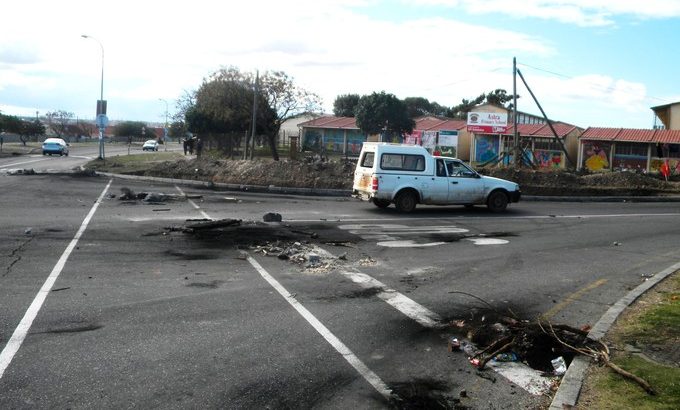
Astra Primary School in Bethelsdorp near Port Elizabeth was closed last week by angry parents who shut the school gates, picketed and burned tyres. They are demanding the provision of ten more teachers.

Currently, the school has 1,128 students and 22 teachers, a ratio of more than 50 to a class, assuming every teacher teaches in every period.

Acting principal Desmond Lewis said the school held a meeting with parents on 19 July to tell them they needed ten more teachers. «The parents then decided to close down the school until the situation is resolved … We had hired four teachers last year because as a school we felt we needed more teachers for slow learners. These were being paid [for] by the parents from donations and fundraising.»

Astra Primary has more than 50 students per class, assuming every teacher teaches in every period.

Astra Primary is a no-fees school. Lewis explained that because staff members retire and others go on maternity and sick leave, the school had six more vacancies that the department had approved.

«The school was paying for ten teachers. It was very painful to explain this to the parents. Now the school can no longer afford to pay these teachers. Our coffers are dry.

«The crisis started years ago, but this time it’s unfortunate that our funds got dry. We informed the concerned teachers in June that their contracts wouldn’t be renewed as the school had no money to pay them.»

A spokesperson for the Eastern Cape education department, Malibongwe Mtima, said the department was aware of the situation, but differed on the number of teachers needed.

«We are busy sorting out the problem at the school. There is a shortage of six teachers not ten. The school should have approached the department on time. Because of maternity leave, sick leave and retirement, schools always face such teacher crises.

«We have approved a grade R foundation phase teacher for the school. The outstanding salary for one teacher has been paid this week. We are in the process of finalising the post of head of department, and that of the deputy principal posts. We even gave the school the go-ahead to fill in the[se] vacancies. The problem is the school delayed to apply for substitute teachers.»

But Lewis says the department knew long ago about the critical staff shortage.

One parent, Alphus Wolmarans, said, «I have two stepchildren attending school there. We have had several meetings concerning this issue. The only thing is to close the school down. I don’t like that route, but there’s no option.»

On Monday morning, at a meeting between the principal and the parents, it was decided to keep the school shut.

Fuente de la noticia: http://www.groundup.org.za/article/angry-parents-close-primary-school/

Fuente de la imagen: http://www.groundup.org.za/media/_versions/images/photographers/Joseph%20Chirume/Astra-20160725-JosephChirume_large.JPG

Comparte este contenido:

Nigeria: Accelerating technical education in Delta State

África/Nigeria/07 Agosto 2016/Fuente:Thisdaylive/Autor: Omon-Julius Onabu

Resumen: A la luz de los retos cada vez más complejos en el mundo de hoy, incluidos los problemas de empleo, el papel del capital humano bien cuidado consistentemente ha puesto de relieve a nivel mundial. Uno de los líderes de Nigeria que no tiene pelos en la lengua, alerto sobre la necesidad de revisar los planes de estudio para que sean más funcionales para el desarrollo sostenible en el país es el gobernador del estado de Delta, el Dr. Ifeanyi Okowa.


Warri — In light of the increasingly complex challenges in today’s world, including employment challenges, the role of well-groomed human capital has consistently been stressed globally.

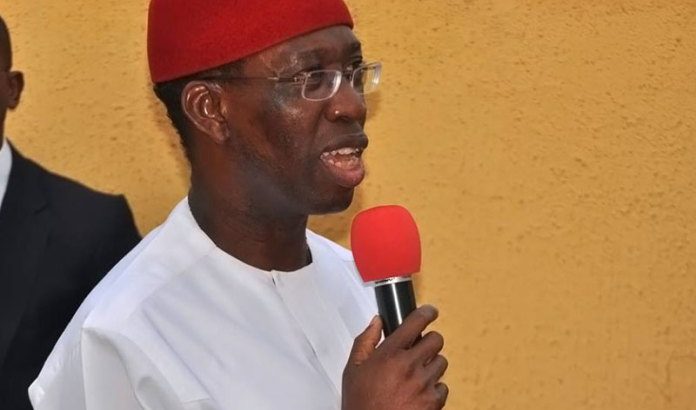
One Nigerian leader who has not minced words on the need to review the curricula to make them more functional towards sustainable development in the country is the Governor of Delta State, Dr. Ifeanyi Okowa.

He has maintained the desire to build a functional, result-oriented technical education system as a dependable human capital base for middle level manpower needs of the state. The recent inauguration of upgraded facilities at the Ofagbe Technical College, Isoko North Local Government Area of the state has further given credence to the commitment of the administration to restore not only the glorious days of technical education in the state, but to raise the standards to compete globally.

The governor had, shortly after his inauguration last year, identified six state-owned technical colleges for infrastructural and academic upgrading. He immediately awarded the contract for the reconstruction of three of the schools, Ofagbe Technical College, Sapele Technical College and Agbor Technical College. The other colleges are Uta-Gbogbe Technical College, Ogor Technical College and Issele-Uku Technical College.

Speaking at the ceremony, the Commissioner for Basic and Secondary Education, Mr. Chiedu Ebie, said the completion of the first and second phases of the infrastructure and other resource bases of the college was a promise religiously kept by the governor.

According to him, Ofagbe Technical College had been practically abandoned for over 20 years before the inception of the Okowa administration; he recalled what the governor said while inspecting renovation work at the school late last year, saying, «we will take technical schools in the state to greater heights and it will impact positively, not only on the lives of the students, but also on their host communities. I am satisfied with the progress of work and I assure the people that the project will not be abandoned as we will manage the resources and funds we have to complete the work.»

While highlighting developments in the chequered history of the school since its establishment by Pilgrim Baptist Mission- Pilgrim Baptist Trades School on February 15, 1966, exactly one month after the first military coup in Nigeria, Ebie said it was heartwarming that the governor ensured that the first and second sets of projects were duly completed within 10 months «despite the economic downturn in the country.»

He said the gesture was a testimony to Okowa’s commitment to technical and vocational education, «which is timely, visionary, legendary, second-to-none and worthy of commendation.»

The school, which took off with just 47 students at its inception, currently has an enrollment figure of 188, made up of 137 male and 51 female students.

While providing details of the turn-around work done so far at the college, Ebie announced the state’s plans to do more. The projects include the construction of the internal roads by the state’s Direct Labour Agency (DLA), the contracts awarded in two phases for the construction of staff quarters, male.

The completed aspects include the reconstruction and upgrading of the staff quarters, male hostel block, library, examination hall, administrative and science blocks, mechanical, auto mechanical and electrical workshops.

«This phase also included the procurement contract for the supply of various machines and equipment required for the workshops to enhance teaching and learning as well as the supply of computers and students’ furniture.»

After the governor’s visit to Ofagbe last year, additional contracts under the second phase were awarded, including the construction of a perimeter fence, a gatehouse and an electrical block of four classrooms with an office, all of which have been completed.

Ebie urged the students and members of the community to justify the huge investment of the government by ensuring that the infrastructure and amenities are maintained and not vandalised. «Now that Ofagbe Technical College has been repositioned as a world-class institution, there comes the need for the entire Ofagbe community to reciprocate this kind gesture through community participation to secure and protect the school from vandalism and theft.»

Indications that the revamping of technical education in the state will be prioritised by the government came to the fore during the maiden Delta State Education Summit in January. It is noteworthy that the government is looking beyond the construction of beautiful buildings without the provision of the basic tools and distinct policy framework for serious technical training.

According to the commissioner, restructuring of the colleges involves not just a programme for training and retraining of teachers but also partnership with competent organisations for necessary in-depth technical assistance. He disclosed that schools’ curricula are being reviewed to sharpen the functionality and contemporary market relevance.

«With the refocusing of technical and vocational education in the state, the upgrade and equipping of this institution, enrollment is expected to significantly increase in the near future. To guarantee focused attention in this sub-sector of education, the Technical and Vocational Education Board (TVEB) has been established with a full complement of institutional framework, funding and personnel. Effort is currently being made to review and enrich the technical education curricula to make it responsive to extant challenges.»

Aside the traditional cutting of the tape to formally open the school, the highpoint of the event was perhaps the hint by Okowa that his administration is favorably disposed towards the reintroduction of boarding schools at the secondary level. He said the desired quality of technical education in the state would be enhanced by the move, stressing that there would be no compromising his government’s firm policy on technical education.

The excitement of the people of not just Ofagbe town but the entire Isoko ethnic nation was palpable as traditional rulers, local, state and national political representatives of the people, cultural associations, women and youth groups expressed their joy at what they termed the governor’s rescue mission at Ofagbe College.

The President-General of Isoko Development Union (IDU), Chief Iduh Amadhe, aptly captured the people’s sense of appreciation at the occasion thus: «Your excellency, we express our appreciation for your magnanimity towards the Isoko nation.

«We will remember you for making the best out of a difficult situation by completing the DELSU, Oleh Campus access road, completion and commissioning of the DELSU, Oleh Campus Law Faculty Complex and on-going efforts by your administration at ensuring the accreditation of courses for Law and Engineering Faculties at the campus; upgrading and improvement of physical structures of the Ofagbe Technical College.»

Fuente de la noticia: http://www.thisdaylive.com/index.php/2016/07/13/accelerating-technical-education-in-delta-state/

Fuente de la imagen: http://i1.wp.com/leadersandco.s3-eu-west-1.amazonaws.com/wp-content/uploads/2016/07/01185234/Ifeanyi-Okowa.jpg?fit=800%2C600

Comparte este contenido:

El acopio masivo de agua de lluvia alivia la escasez en Kenia

Kenia/06 agosto 2016/Fuente: IPS Agencia de Noticias

En Kenia, al igual que en otros lugares, no es nada nuevo cosechar agua de lluvia. Pero en este país caracterizado por el déficit hídrico y donde las dos terceras partes de su territorio son áridas y semiáridas, la búsqueda de una solución duradera a la escasez permitió innovar en esta práctica antiquísima.

El no gubernamental Banco de Agua de África (AWB) se comprometió a suministrar agua potable mediante un método mucho más eficiente.

El eje de la tecnología es cosechar y almacenar grandes cantidades de líquido mediante métodos como una área de recolección mejorada, un sistema de canalones y de almacenamiento, además de filtros, medidores de nivel de agua y aparatos para descargarla.

Un sistema de recolección típico almacena entre 400.000 y 450.000 litros de agua en dos a tres horas de lluvia intensa. Tiene un techo artificial de entre 900 y 1.600 metros cuadrados y tanques de almacenamientos.

El tanque más grande construido en este condado keniata de Narok tiene una capacidad de 600.000 litros. Todas las unidades pueden ampliarse según las necesidades de sus propietarios.

Con ese volumen se cubren las necesidades de una comunidad de unas 400 personas durante unos 24 meses sin lluvias adicionales. Se puede aumentar su capacidad a unos 220.000 litros al año. El sistema es de bajo costo y se mantiene totalmente con insumos locales. También usa capacidades, trabajo, materiales y tecnología locales.

Chip Morgan, director ejecutivo de AWB, explicó que el sistema “equivale a ganar dinero y ahorrarlo en un banco, por eso nos llamamos Banco de Agua”.

El tamaño que se instala en cada hogar depende de sus necesidades, precisó Morgan, quien trabajó durante décadas en cuestiones de desarrollo en su Australia natal, donde la escasez hídrica es un gran desafío para muchas comunidades de las zonas áridas.

AWB trabaja actualmente en este condado de la región del Valle del Rift, habitada principalmente por la comunidad pastoril maasai.

Pero la tecnología también se instaló en los condados semiáridos de Pokot, Machakos, Samburu y Kajiado, en Kenia, así como en el distrito de Chavuma, en Zambia. La mayoría de los clientes son domicilios particulares e instituciones como hospitales y escuelas.

La construcción de los tanques se financia con fondos de las comunidades, donantes e individuos que cubren 50 por ciento del costo antes del inicio de las obras.

Hay una gran demanda, indicó Morgan, pero todavía están en la etapa en que la gente se interioriza de sus enormes beneficios. “Este año estamos totalmente ocupados. Nuestro objetivo es construir 50 unidades al año”, acotó.

Según un informe del Programa de Monitoreo Conjunto de 2012, el acceso seguro a fuentes de agua potable en Kenia es de 59 por ciento, mientras que a sistemas de saneamiento es de 32 por ciento.

La situación puede haber mejorado desde entonces, pero el desafío de facilitar la disponibilidad de agua sigue siendo grande tanto en el campo como en las ciudades.

La falta de sistemas adecuados de agua y saneamiento propicia las enfermedades derivadas de las malas condiciones de higiene en menores de cinco año.

Además, un tanque pequeño permite regar un invernadero de unos 1.300 metros cuadrados y así mejorar la seguridad alimentaria.

Además, las mejores condiciones de agua y saneamiento ayudan a aliviar la carga de trabajo de las mujeres, encargadas de buscarla, lo que les permite dedicar ese tiempo a otras actividades formativas y laborales.

Morgan precisó que emplean trabajadores locales capacitados y no capacitados y continuamente mejoran la formación de sus técnicos. Esto es fundamental porque el surgimiento de los tanques de plástico eliminó la demanda de obreros, con lo que disminuyó el número de especialistas en la materia.

Los tanques de material pueden durar toda la vida, arguyó.

AWB cuenta con dos ingenieros que forman técnicos que vienen del extranjero a capacitarse. Cuatro organizaciones de Uganda aprovecharon su programa de transferencia de capacidades y enviaron a sus empleados a formarse en la tecnología de acopio de agua de lluvia.

Fuente: http://www.ipsnoticias.net/2016/08/el-acopio-masivo-de-agua-de-lluvia-alivia-la-escasez-en-kenia/

Comparte este contenido:
Page 480 of 621
1 478 479 480 481 482 621