Page 521 of 622
1 519 520 521 522 523 622

Ethiopia: Ministry to distribute tablet computers to medical students

África/Ethiopia/19 Junio 2016/Fuente:Eslwatch /Autor: Tewodros Kassa

Resumen: El Ministerio de Salud anunció que distribuirá 20.000 tablets por valor de 18,5 millones de dólares para los estudiantes de medicina en 28 universidades públicas. Las tabletas podrían ayudar a proporcionar educación médica de calidad en las universidades. Al informar a las universidades sobre las tabletas Ministro de Estado de Salud, Dr. Amir Aman dijo que el gobierno se ha comprometido a producir profesionales médicos calificados y bien entrenados. La distribución de las tabletas es una parte de ese compromiso para avanzar en el sistema de educación médica con las tecnologías modernas.

The Ministry of Health yesterday announced that it will distribute 20,000 tablet computers worth 18.5 million USD to medical students in 28 public universities. The tablets would help provide quality medical education in the universities.

While briefing the universities about the tablets Health State Minister Dr. Amir Aman said the government is committed to produce qualified and well-trained medical professionals. The distribution of the tablets is a part of that commitment to advance the medical education system with modern technologies.

According to Dr.Amir, tablets would encourage medical students to upgrade their knowledge and pursue advanced education.

The State Minister said the tablets would help give coordinated lecture system nationwide.

The latest tablets are helpful to students to access plenty of data in the form of audio-video, animation, photographs as well as texts and download them easily, he said.

Gondar University Vice President Solomon Abreha said that the tablet computers would help students to access latest information from webs and promote their communication with teachers.

Wollo University Medical School Dean Tseganew Addisu on his part said that supplying the tablets is a milestone to medical universities and students to make the teaching-learning process effective.

According to the ministry, every medical student will get the tablet until June 18, 2016.

Fuente de la noticia: http://eslwatch.info/articles/education-news/africa-news/ethiopia-ministry-to-distribute-tablet-computers-to-medical-students.html

Fuente de la imagen: http://www.ethpress.gov.et/herald/index.php/news/national-news/item/4962-ministry-to-distribute-tablet-computers-to-medical-students

Comparte este contenido:

Kenya: Students shun Garissa University in september intake

África/Kenya/19 Junio 2016/Fuente:Nation /Autor:Ouma Wanzala

Resumen: Los estudiantes que ingresarán en septiembre a las universidades han evitado postularse en la Garissa University College, dando un golpe a los esfuerzos del gobierno para reactivar la institución de un año después de un ataque terrorista que mató a docenas de estudiantes, hasta la fecha sólo 23 estudiantes han seleccionado para unirse a ella.

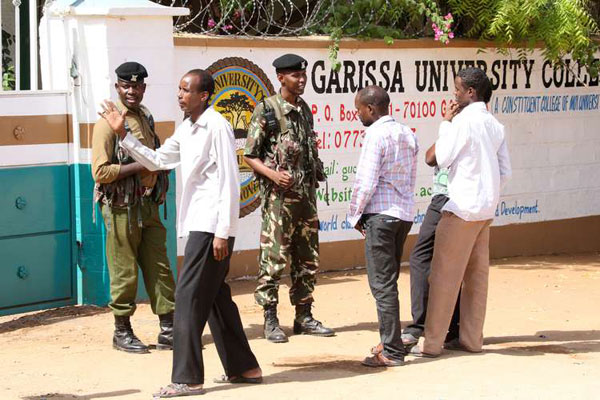
Students set to join universities in September have shunned Garissa University College, dealing a blow to government efforts to revive the institution a year after a terrorist attack there killed dozens.

Out of a declared capacity of 710 at Garissa, a constituent college of Moi University, only 23 students have selected to join it.

Statistics from the Kenya Universities and Colleges Central Placement Service (KUCCPS) — the body that processes admissions to public universities — indicate that there are 687 unfilled capacities.

Last year, the college did not admit any students following the April 2015 attack that left more than 142 students dead.

Bachelor of Education (Arts) has the highest number of unfilled slots at 149, followed by Bachelor of Education (Science) at 95 among others.

KUCCPS has since announced the second and final revision of course choices ahead of the September admission date.

This is after more than 19,209 candidates failed to get their first degree course choices.

Chief executive officer John Muraguri said the unplaced students have until June 18 to select new courses that they wish to undertake.

«This application is open for all candidates who, on competitive selection, have not been placed for any of their Degree or Diploma course choices after the first revision,» said Mr Muraguri.

He went on: «Successful candidates will be informed at the end of June after the selection process is completed.»

A total of 74,389, candidates will join the 32 public Universities in September.

The cut-off point for placement to degree programmes has been put at B of 60 points for male candidates and B- of 58 points for female candidates.

A total of 165,766 candidates attained the minimum university entry qualification of C+ and above in last year’s examination.

Fuente de la noticia: http://www.nation.co.ke/news/Students-shun-Garissa-University-in-September-intake/-/1056/3243640/-/7kup3sz/-/index.html

Fuente de la imagen:http://www.nation.co.ke/image/view/-/3143040/highRes/1294464/-/maxw/600/-/c20pl8/-/DnGarissaUni2403ads.jpg

Comparte este contenido:

Tanzania: 22,460 teachers now required for science subjects in public schools

África/Tanzania/19 Junio 2016/Fuente:Dailynews /Autor:Reporters in Dodoma

Resumen: A medida que el gobierno se esfuerza por mejorar la calidad de la educación, el país se enfrenta a una escasez de 22,460 maestros en el area de ciencias y matemáticas en las escuelas primarias y secundarias públicas de todo el país. El Ministro de Educación, Ciencia y Tecnología, profesor Joyce Ndalichako, señalo que hay 7.988 maestros adicionales para las artes, las lenguas y los estudios de negocios.

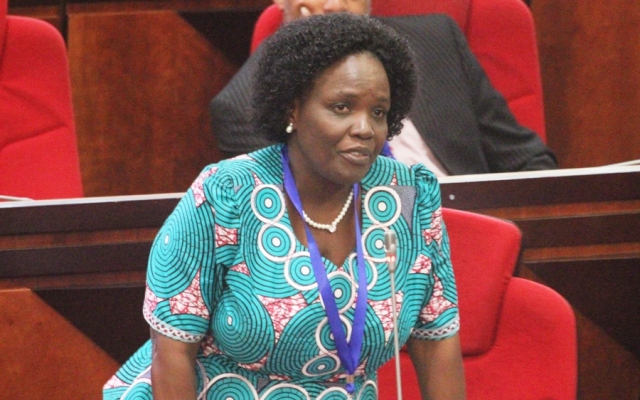
As the government strives to improve the quality of education, it has come to light that the country faces a shortage of 22,460 teachers for science and mathematics in public primary and secondary schools countrywide.

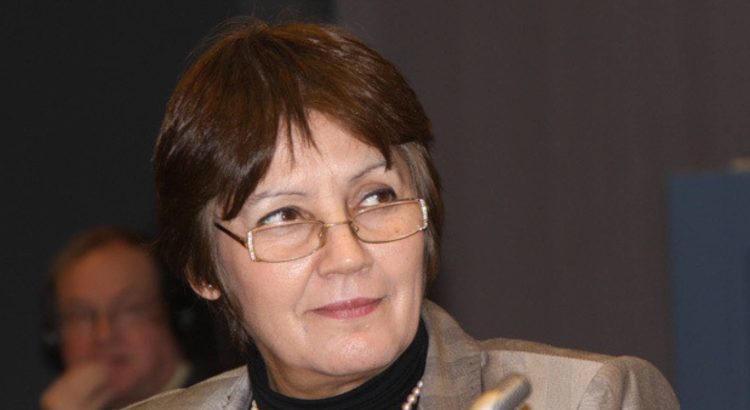
Minister for Education, Science and Technology, Prof Joyce Ndalichako, said, on the other hand, that there are additional 7,988 teachers for arts, languages and business studies.

During the current financial year, Prof Ndalichako said the government planned to employ 35,411 teachers for primary and secondary schools to curb the shortage of teachers.

«At present, there are a total of 88,999 teachers for public secondary schools including 18,545 for science and mathematics as well as 70,454 for arts, languages and business studies,» she told the National Assembly.

Daily News Reporters in The minister was responding to a basic question by Buyungu MP, Kasuku Bilago, (Chadema) who had tasked the government to explain how many teachers were required to implement the Education and Vocational Training Policy of 2014.

Mafinga Urban MP Cosato Chumi (CCM) asked the question on behalf of Bilago, tasking the government to explain when the policy would be implemented. Prof Ndalichako explained that the policy will come into implementation after the amendments of Chapter 353 of the Education Act of 1978. The policy was officially launched by former President Jakaya Kikwete on February 13, last year.

Through the new arrangement pupils will study for ten years from primary up to secondary education Form (IV), the minister explained. In another development, the minister said the government through local government authorities has set aside funds to rehabilitate learning and teaching environment at public schools countrywide.

She said a total of 48.3bn/- has been allocated for the next financial year to renovate infrastructure at schools as well as installation of electricity at 528 secondary schools. In the current fiscal year, a total of 67.83bn/- was disbursed to local authorities to uplift learning and teaching environment in the schools.

Fuente de la noticia:http://dailynews.co.tz/index.php/home-news/50432-22-460-teachers-now-required-for-science-subjects-in-public-schools

Fuente de la imagen:http://dailynews.co.tz/images/NDALIBUNGE.JPG

Comparte este contenido:

VII Congreso Latinoamericano JUNJI-OMEP: Nuevos ambientes de aprendizaje en educación parvularia de 0 a 3 años

América del Sur/Chile/junji.cl
La Junta Nacional de Jardines Infantiles (JUNJI) y la Organización Mundial para la Educación Preescolar (OMEP) – Región América Latina –  organizan el VII Congreso Latinoamericano JUNJI-OMEP: Nuevos ambientes de aprendizaje en educación parvularia de 0 a 3 años del 22 al 24 de junio de 2016 en el Centro de Extensión de la UC, ubicado en Av. Libertador Bernardo O’Higgins 390, Santiago Centro.
Este congreso está dirigido a directivos y docentes de jardines infantiles e instituciones que atienden niños y niñas menores de 3 años; autoridades de educación y formación, docentes y estudiantes de carreras de formación docente y especializaciones en educación inicial; e investigadores en educación infantil, locales e internacionales.
Su objetivo es generar una instancia de diálogo, reflexión e intercambio de conocimientos y experiencias con respecto a prácticas educativas innovadoras en niños y niñas de 0 a 3 años en el ámbito local e internacional, y sobre posibles estrategias, buenas prácticas y lecciones aprendidas para el avance de la calidad de la educación parvularia en la región.
La metodología del congreso considera visitas guiadas a jardines infantiles de Santiago (requiere inscripción, prioridad para público extranjero); la realización de una feria académica en la que se presenten experiencias e investigaciones desarrolladas en Latinoamérica a través de stands y pósteres (abierta al público sin previa inscripción); y conferencias y conversatorios con la participación de destacados expertos tanto de Chile como de Latinoamérica.
Información General

Fuente: http://www.junji.cl/Junji/Paginas/Congreso-OMEP-2016.aspx

Comparte este contenido:

Millones de niños exentos de pagar cuotas escolares en Sudáfrica

Africa/Sudafrica/Pretoria (PL)

Unos nueve millones de niños sudafricanos están exentos hoy de pagar cuotas escolares, como parte de los esfuerzos del gobierno del Congreso Nacional Africano (ANC) por mejorar el nivel de acceso a la educación. (PLRadio)

De esta manera, el país está avanzando en lo que respecta a la educación básica gratuita para los pobres y la clase trabajadora, afirmó el presidente Jacob Zuma en el acto en Soweto por el Día de la Juventud, el cual reseñan medios locales.

La pobreza no debe impedir que un niño reciba educación, advirtió el mandatario, al informar que solo desde 2009 a la fecha se construyeron 795 escuelas a un costo aproximado de 23 mil millones de rand (más de mil millones de dólares estadounidenses).

También se edificaron 78 nuevas bibliotecas y se repararon otras 304 de estas instituciones.

Zuma recordó además que nueve millones de niños reciben comidas gratis en los centros escolares, mientras se trabaja en la construcción de tres nuevas universidades y 12 colegios de educación técnica para ampliar las facilidades a la educación superior.

Al rendir homenaje a la generación de 1976, instamos a nuestros jóvenes para que la educación sea su prioridad también. Nada los debe distraer de ese objetivo, recomendó Zuma.

El 16 de junio de 1976 miles de estudiantes realizaron una marcha antiapartheid pacífica hasta el estadio Orlando, de Soweto. Policías fuertemente armados abrieron fuego contra ellos cuando se negaron a dispersarse.

Hector Pieterson, de apenas 12 años, y Hastings Ndlovu, de 15, fueron las primeras víctimas mortales de ese fatídico día que dejó casi 600 muertos.

Fuente: http://www.prensa-latina.cu/index.php?option=com_content&task=view&idioma=1&id=4982701&Itemid=1

Imagen tomada de: http://cdn.20m.es/img2/recortes/2016/01/22/257512-600-400.jpg?v=20160122155305

Comparte este contenido:

Strategic lessons South Africa’s students can learn from the leaders of 1976

Africa/Sudafrica/Junio 2016/Autor: Editor / Fuente: theconversation.com

Resumen:  Hace cuarenta años, miles de niños de las escuelas de Soweto salieron a las calles para protestar contra el racismo y la insuficiencia de la educación bantú. Ese momento ha llegado a simbolizar el papel que los jóvenes han desempeñado y pueden desempeñar en la configuración del discurso político de Sudáfrica. Sigue siendo un punto de contacto para los estudiantes activistas de hoy.

This month forty years ago, thousands of Soweto school children took to the streets to protest the racism and inadequacy of Bantu Education. That moment has come to symbolise the role that young people have played and can play in shaping South Africa’s political discourse. It remains a touch point for student activists today.

The marches in June 1976 took shape around a unifying issue of immediate importance to the students: the imposition of Afrikaans as a teaching medium in black classrooms, whose curriculum was dictated by the then Department of Bantu Education.

Images from the march are filled with posters proclaiming “To Hell With Afrikaans” and “Vorster and Kruger are rubbish”. This refers to John Vorster, the prime minister of South Africa and one of apartheid’s architects, and his police minister Jimmy Kruger.

The juxtaposition of these claims is an important one. It speaks to how Soweto children began to straddle the space between local and immediate concerns and a national political agenda. This enabled them to transcend the issues of their classrooms and rejuvenate the struggle against apartheid on a national, and indeed international, scale.

Forty years later South Africa is again in the midst of a political movement led by students – this time on university campuses across the country. Today’s student activists are often compared to the generation of 1976. In mass marches through Johannesburg and Pretoria the form of their protest has prompted the comparison.

In their articulation of ideologies like Black Consciousness they echo some of the key thinkers of that period. But their protests remain largely constrained by the campuses on which they happen. In light of these struggles, it is useful to consider how the students of 1976 tackled similar problems.
The Afrikaans issue

The Afrikaans Medium Decree of 1974 declared that in black schools across South Africa Afrikaans must be used equally with English as a medium for teaching non-language subjects like mathematics and social sciences.

Students and teachers alike struggled to teach and learn in a language for which they were ill-trained and ill-equipped with textbooks and other materials.

Historian Helena Pohlandt-McCormick has written that the Afrikaans medium policy “embodied everything that was wrong with Bantu Education”. She points to its disregard of sound pedagogy, and, more importantly, of the voices of the parents, teachers, and learners on whom it was imposed.

By the middle of the 1976 school year, students had organised themselves in individual protests. Many focused on the imposition of Afrikaans, others addressed student-teacher relations and corporal punishment at individual schools.

They were inspired and encouraged to connect these issues to the broader political system by a range of influences in their homes, communities, and classrooms. Among these were university students who had been “conscientised” through the Black Consciousness Movement and expelled from rural “bush” universities during waves of protest in 1972 and 1974. The most prominent of these was Ongkopotse Tiro.

After Tiro was expelled from the University of the North (today the University of Limpopo, outside Polokwane), where he was a prominent student leader and Black Consciousness proponent, he took up a job teaching history at Morris Isaacson High School in Soweto.

Though he was fired in 1973 and killed in exile in Botswana in 1974, some of his students, including Tsietsi Mashinini, became key leaders in the 1976 uprising.

Addressing structural oppression

Tiro and other young teachers encouraged their students to connect the particular grievances of their own situation – the inequities and injustices of Bantu Education – to the structural oppression meted out by the apartheid state.

This was a lesson students brought to their organisation of the protests on 16 June, and one that played an increasingly important role in the weeks and months that followed. Students in the Soweto Students Representative Council (which compromised many of the student leaders who had organised the June 16 march) called for their parents to stay away from work, and to boycott white-owned shops and products. By August the committee focused its energies on organising a student and worker stay away for the end of the month. According to Sibongile Mkhabela, a member of the SSRC, this was intended to achieve

A few months later students rallied their families to participate in a Black Christmas to mourn those who had been killed by police since June.

June 16 forty years later

University students of 2015-16 have some key things in common with their 1976 predecessors. They have changed the tenor and shape of political discussion around education in South Africa, more effectively than any other single movement since 1994.

They have re-interrogated the ideologies that animated students in 1976. Their engagement with Black Consciousness and Biko, with Fanon and with pan-Africanism has led to a movement to decolonise universities’ faculty and curricula.

But today’s students have struggled to move their activism beyond universities. Not withstanding significant gains in the movement to end the exploitative practice of outsourcing jobs on campuses, for which the Fallist movements of 2015-16 deserve a great deal of credit, student movements today have yet to create enduring alliances with workers outside the university, or with school students.

Beyond shared ideology, the 1976 generation, and, perhaps even more so, the university students of the early 1970s who taught and inspired them, may offer some strategic lessons.

Fuente de la noticia: https://theconversation.com/strategic-lessons-south-africas-students-can-learn-from-the-leaders-of-1976-60976?utm_medium=email&utm_campaign=Latest%20from%20The%20Conversation%20for%20June%2016%202016%20-%205046&utm_content=Latest%20from%20The%20Conversation%20for%20June%2016%202016%20-%205046+CID_b1041287879346882e9701d45128fdd1&utm_source=campaign_monitor_us&utm_term=Strategic%20lessons%20South%20Africas%20students%20can%20learn%20from%20the%20leaders%20of%201976

Fuente de la imagen: https://62e528761d0685343e1c-f3d1b99a743ffa4142d9d7f1978d9686.ssl.cf2.rackcdn.com/files/126544/width926/image-20160614-22383-bci5v9.jpg

Comparte este contenido:

Informe OIT: La Iniciativa para poner fin a la pobreza

Por Entreagentes

wcms_486614Cuando el mundo se congregó en la Asamblea General de las Naciones Unidas en septiembre de 2015 para adoptar la Agenda 2030 para el Desarrollo Sostenible, resolvió «…poner fin a la pobreza y el hambre en todo el mundo de aquí a 2030, […] combatir las desigualdades dentro de los países y entre ellos, […]construir sociedades pacíficas, justas e inclusivas,  […] proteger los derechos humanos y promover la igualdad entre los géneros y el empoderamiento de las mujeres y las niñas, y […]garantizar una protección duradera del planeta y sus recursos naturales.».

Asimismo, resolvió «…crear las condiciones necesarias para un crecimiento económico sostenible, inclusivo y sostenido, una prosperidad compartida y el trabajo decente para todos, teniendo en cuenta los diferentes niveles nacionales de desarrollo y capacidad.».

 Enlace para descargar el Informe: finalapobreza

Fuente: http://divulgaciondinamica.blogspot.mx/2016/06/informe-oit-la-iniciativa-para-poner.html

Imagen tomada de: http://www.un.org/sustainabledevelopment/es/wp-content/uploads/sites/3/2015/06/Goal-1.jpg

Comparte este contenido:
Page 521 of 622
1 519 520 521 522 523 622