Page 562 of 621
1 560 561 562 563 564 621

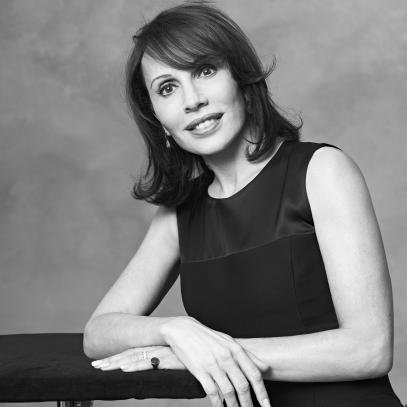
First Lady of Gabon: Education Should Create Leaders Who Love the Environment

Africa/Gabón/Mayo 2016/Autor: Editor/ Fuente: time.com

Resumen: Tanto en el mundo desarrollado como en el desarrollo, la educación es la herramienta más poderosa que tenemos para dar forma a nuestro futuro. Sin embargo, el tipo de educación, a quién va dirigido, y lo que debe conducir hacia, sigue siendo un tema de debate.

In both the developed and developing world, education is the most powerful tool we have to shape our future. However, the type of education, who it is for, and what it should lead towards, is still a matter of debate.

Unfortunately, in the last 50 years, the educational systems in most sub-Saharan countries have been a mix of hybrid curricula copied on a Eurocentric approach not adapted to the realities of the indigenous pupils, their strengths and their weaknesses. So most systems used a one-size fits all approach. Neither the student’s environment nor their origins were taken into account. The one-size-fits all model I believe is now antiquated, and to create tomorrow’s active citizens, the entire philosophy of the educational system should be aligned to the future vision and needs of a country.

My home country of Gabon is at a turning point. Indeed, it has embarked on a bold strategy, that of becoming by 2025 an emerging-diversified economy. Our growth will be based on sustainable forestry, agriculture, plus higher value mining and extraction industries, and this requires a new kind of education that will create a generation that has the skills to lead Gabon.

While the national education reform is underway, I wanted to test a few new ideas. One of those ideas was the creation of a school of excellence that would be an example to the rest of the continent. For years, I dreamed of creating a significant full-time education project that would help shape the future of the country. Yet, testing new ideas in Africa is difficult. Often the old does not bode well when new thinking has to take place. Yet, thanks to my supporting team—of course I didn’t do it by myself, I enlisted partners—in 2013, we succeeded in opening the Ecole Ruban Vert on a seven-hectare campus in the heart of Libreville.

Ecole Ruban Vert was founded to create this new standard of education for Gabon; an education tied to international standards and rooted in sustainability to create the types of leaders that fit with the vision of the country.

So what we created would not be a replacement for our national schools, but something complementary and different—an incubator for new ways of teaching and learning, that could adapt quickly to the challenges we face, and create leaders equipped with the right skills for the future. An incubator also, that took into account our ever fast-paced-changing-world. As most education specialist will tell you, what you haven’t learned in your early years, you will never learn later.

It would probably have been more straightforward for us to staff it with well-qualified teachers, tie our curriculum to international standards and create a standard international school, but we wanted to make a difference and to push further. The core question was: how could the school help shape the country and the region’s future?

We decided to become the first school in the region to create a generation whose education was based on sustainability.

Indeed, a central pillar of the government’s vision for the future of Gabon is sustainable development, and building a green Gabon. The country is 80% covered in rainforest that act as a “green lung” of the continent. About 11% of this area is dedicated national parks and this World Heritage has to be preserved at all cost.

Our students learn about environmental protection and preservation, climate change, energy, recycling and upcycling, green business practice and acting responsibly; this guides and develops them into environmentally aware and active leaders. We focus on local ideas and examples, using Gabon as our inspiration, but we consider our community action in a global context, making positive changes for our school and our local area. To date, the school counts over 23 nationalities, a third of which being Gabonese, and an ever growing number of students, of all age groups.

Ecole Ruban Vert is unique in that it is a school encouraging excellence and aiming at creating tomorrow’s leaders. It is attainable by the best students, and because we strongly believe in equal opportunity and excellence, 20% of our Gabonese students, coming from marginalized backgrounds, have received full scholarship. They are fully integrated in the school and its diverse and rich activities.

My hope is that one day Ecole Ruban Vert can inspire other nations to adopt similar approaches and create a generation of sustainably minded leaders. For too long education in Africa has been viewed as needing to ‘catch-up’ with the West, but through projects like this we can show how Africa can lead as well.

Fuente de la noticia: http://time.com/4318534/first-lady-of-gabon-education/

Fuente de la imagen: https://timedotcom.files.wordpress.com/2016/02/sbo.jpg?quality=75&strip=color&w=407
Comparte este contenido:

South Africa: Basic Education Condemns Burning of Schools in Limpopo

Africa/Sudáfrica/Mayo 2016/Autor: Parliament of South Africa/ Fuente: allafrica.com

Resumen: «The Portfolio Committee on Basic Education» ha expresado su preocupación y condena en los términos más enérgicos posibles por la quema de escuelas e infraestructuras en Vuwani, Limpopo, durante la reciente acción de protesta .

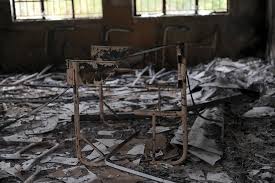
The Portfolio Committee on Basic Education has expressed its concern and condemns in the strongest possible terms the burning of schools and infrastructure in Vuwani, Limpopo, during recent protest action.

Committee Chairperson Ms Nomalungelo Gina said the community needs to take cognisance of the education of the learners. «The destruction and burning of state property will not resolve the issue. The only parties that are disadvantaged are the learners who are not receiving teaching at the moment.»

She said the community has every right to protest, but this should not include the destruction of infrastructure. «This is a school term in which all learners will be writing exams and learners need the educational support and teaching they can get. Protesters should be mindful of the effect this will have on Grade 12 learners, who in the next few months will have to sit for their final examinations. Protesters should remember it is their children, cousins and neighbours who will be negatively affected by this action.»

The Committee has urged all interested parties, traditional leaders, community leaders, education officials and law enforcement authorities to speedily reach a solution to address the matter so that the education of these learners can continue.

Fuente de la noticia: http://allafrica.com/stories/201605061534.html

Fuente de la imagen: https://www.google.co.ve/search?q=school+in+Vuwani,+Limpopo&source=lnms&tbm=isch&sa=X&ved=0ahUKEwja18DmrcjMAhUElx4KHe5IB1QQ_AUIBygB&biw=1280&bih=893

Comparte este contenido:

Dos posibles caminos del Big Data en educación

Graduate XXI

La Inteligencia Artificial está llegando a la educación. Ya no es ciencia ficción. El uso de grandes cantidades de datos (Big Data) para dirigir el aprendizaje de los alumnos ya está siendo parte de nuevos experimentos reales. Es un momento central en la historia de la educación: ¿quién controlará los datos? ¿Qué usos tendrán? ¿Qué beneficios y qué riesgos traerán? ¿Quiénes serán los ganadores y perdedores? Muchas preguntas cruciales se están abriendo. Aquí veremos dos casos que ayudan a formular estas preguntas y aventurar posibles respuestas.

El primer camino del Big Data es el modelo de las AltSchool, ya reseñadas en este blog. Las AltSchool son un furor en el mundo de EdTech. Su creador es Max Ventilla, cuyos años previos en Google lo llevaron a una visión de frontera en el uso de algoritmos predictivos.

Las AltSchool son micro-escuelas, muy pequeñas, de menos de 150 alumnos. Su propósito central es convertirse en la mayor revolución educativa del siglo XXI. Por eso invierten el 10% de su presupuesto (que se agigantó con U$S 133 millones de capital recolectado recientemente, con Mark Zuckemberg de Facebook como principal inversor) en investigación y desarrollo.

Lo que hacen las AltSchool hoy es un laboratorio de lo que, según Ventilla, será un nuevo modelo de escuelas y de sistema educativo en los próximos 30 años.

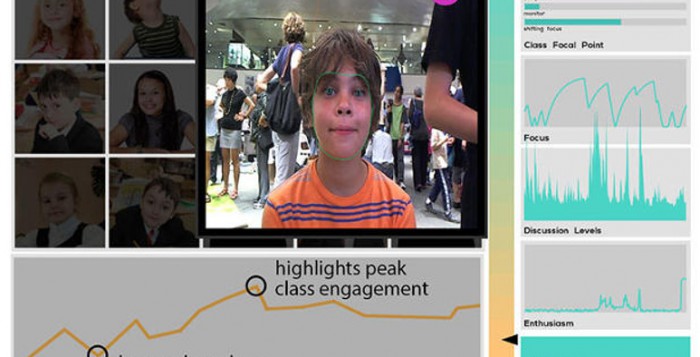
En las AltSchool se está experimentando es el modelo más extremo de observación de los alumnos para personalizar la enseñanza. Esto incluye el seguimiento con cámaras y micrófonos de todas las interacciones de los alumnos dentro de las escuelas con un software de seguimiento de los movimientos corporales y faciales y de reconocimiento de voz.

El seguimiento de las expresiones en el rostro de los alumnos permite realizar una analítica de cada clase: la iluminación del aula cambia automáticamente dando una señal cuando el ruido de los alumnos se hace demasiado alto. El docente es asistido por las máquinas para controlar el curso y es evaluado por el nivel de atención e interés de sus alumnos.

En paralelo, las AltSchool tienen un “playlist” de aprendizaje para cada alumno, con diversas actividades digitales personalizadas.

El reconocimiento facial basado en la filmación de los alumnos (véase aquí el sistema EngageSense, su prototipo más avanzado) brinda datos a una computadora que utiliza algoritmos para medir el nivel de compromiso con la tarea y sugerir a los docentes actividades. Para resumirlo (y simplificarlo): si los alumnos no prestan atención una computadora le avisará al docente.

Este primer modelo de uso experimental del Big Data en educación abre dos grandes preguntas éticas: ¿qué ocurre con la privacidad de los alumnos? ¿Quiénes pueden acceder a esta tecnología de frontera?

La primera cuestión se enfrenta con grandes vacíos legales, como lo analiza esta nota. El Big Data está casi completamente desregulado en todo el mundo. ¿Quién tiene derecho a filmar y analizar las expresiones faciales de nuestros hijos? ¿Cuáles son las consecuencias de saber que uno está siendo filmado todo el tiempo? ¿No es este modelo educativo una amenaza de panóptico estilo Big Brother, de vigilancia absoluta que puede cambiar la personalidad de los alumnos, sus relaciones y amenazar su intimidad?

La segunda cuestión refiere a la equidad. Las AltSchool son escuelas de elite que nacieron en Silicon Valley: cuestan aproximadamente 30 mil dólares por año para quienes quieren asistir a ellas. Si realmente tienen resultados, si logran la personalización de la enseñanza por vía de las máquinas, ¿no estarán ampliando la brecha social mediante cambios educativos exponenciales que benefician a los privilegiados?

El otro camino del Big Data en educación tiene una orientación muy distinta, pero comparte el componente de innovación radical que permiten los avances de la Inteligencia Artificial basada en algoritmos. Se trata del uso de grandes cantidades de datos para analizar el funcionamiento de un sistema educativo, detectar desigualdades y actuar para reducirlas.

Un ejemplo revelador de estas posibilidades fue sistematizado por distintos investigadores chilenos que resultaron ganadores del concurso “Nuevos debates, Datos para el desarrollo” del BID. El estudio se tituló: “Apoyando la formulación de políticas públicas y toma de decisiones en educación utilizando técnicas de análisis de datos masivos: el caso de Chile”.

Utilizando técnicas de la ciencia de los datos, los investigadores analizaron datos abiertos publicados por el gobierno chileno sobre la oferta educativa, los contextos sociales y diversos indicadores de rendimiento educativo. Uno de los ejes del análisis fue estudiar dónde vivían los alumnos según la escuela a la que asisten, e incluso medir el tiempo que demoraban en llegar a la escuela por distintas vías de transporte.

Un mapa de estas características es un poderoso predictor de la deserción escolar, dado que permite localizar personalizadamente la distancia entre los alumnos y las escuelas. Con estos datos se podría planificar la creación detallada de nuevas escuelas (o sistemas de transporte) para cubrir demandas e injusticias imposibles de divisar sin este nivel de desagregación de la información.

El estudio construyó un modelo para predecir la deserción escolar que inicialmente usó 127 atributos de los estudiantes, establecimientos y las manzanas donde viven o se ubican, para alimentar un algoritmo de aprendizaje automático. Estos atributos se redujeron a 31, entre los cuales aparecen como significativos variables como la vulnerabilidad del colegio, la convivencia, participación, autoestima y motivación de los estudiantes.

El estudio creó una “geografía de las oportunidades educativas”, analizando también la equidad en los resultados de aprendizaje. El uso de los datos desagregados permitió mapear con exactitud la segregación educativa, que concentra a los alumnos de mejor nivel socioeconómico en escuelas más cercanas, de más fácil acceso y de mejores resultados de aprendizaje.

En suma, esta nueva generación de uso de los datos tiene un inmenso potencial tanto para personalizar la enseñanza como para mapear desigualdades de manera tan detallada que faciliten la acción del Estado y ataquen directamente los factores que promueven la deserción escolar. Los riesgos del primer modelo no deben ser subestimados: borrar la intimidad de los alumnos, controlar la vida privada desde grandes corporaciones o desde el mismo Estado, agigantar las brechas sociales por medio de las brechas tecnológicas. Pero también sus posibilidades de personalización de la enseñanza deberán ser estudiadas con rigor en los próximos años.

Es tiempo de abrir las preguntas, los debates, las experiencias y crear una nueva discusión educativa: el uso del Big Data para promover la equidad y la pasión por el aprendizaje. Los gobiernos de América Latina no pueden dejar estas discusiones para atender las urgencias: aquí mismo pueden estar ocultas algunas de las respuestas a esas mismas urgencias.

Fuente del artículo: http://futuroeducativo.com/esta-llegando-dos-posibles-caminos-del-big-data-en-educacion/

Comparte este contenido:

UNRISD 13 de Mayo: Informality and Income Insecurity: Is Basic Income a Universal Solution?

Fuente UNRISD / 7 de Mayo de 2016

Is a universal or unconditional basic income (UBI) an effective way for states to meet the social protection commitments outlined in the 2030 Agenda for Sustainable Development? This UNRISD Seminar will explore the benefits and disadvantages of a universal income in countries in the Global North and the Global South.

Context

On 5 June, Switzerland will hold the world’s first popular vote on universal basic income. The vote, which was put forward by a group of citizens rather than a political party, has been the subject of recent public debate.

Within Switzerland, advocates argue that a UBI would allow people to meet their basic needs and live life in dignity, provide protection from fluctuations in the employment market, especially with rapid technological changes making certain types of work obsolete, remove the stigma often associated with social assistance, and promote gender equality by providing women, who are disproportionately responsible for performing unpaid care work, with an independent income. Opponents argue that such an initiative would have negative impacts on Switzerland’s already existing social protection schemes, is financially unsustainable, would disincentivize people from working and result in increased immigration.

But UBI schemes are not only an option for developed countries like Switzerland and Finland, which is also exploring the idea. A range of schemes have in fact been piloted in developing countries. In 2010-2012 Mongolia funded a universal citizenship grant out of mining revenues, which subsequently was scaled back to a universal child grant in the Child Money Programme(CMP). In 2008-2009, Namibia piloted the Basic Income Grant (BIG) project with positive social and economic impacts reported in the short term, although sustaining such results has been difficult. A basic income pilot scheme in India was the subject of an UNRISD seminar in 2013. Some middle-income countries even stipulate basic income guarantees in their constitutions or laws.

At first sight, the motivation for UBI schemes in low or middle-income countries would appear to be quite different from developed countries: In addition to contributing to social justice, they are often introduced to fill a significant social protection gap and as a way of reducing poverty. However, as Northern labour markets show signs of becoming more informal, the need for new approaches to social protection becomes more pressing in these countries as well.

Could UBI be a way to cover social protection needs in both Northern and Southern countries? The human rights-based approach inherent in a universal scheme and the resulting empowerment, held up as benefits for developing countries, are equally important in developed countries, particularly with the recently adopted Agenda 2030, which reinforces global human rights commitments and applies to all countries, rich or poor.

The imminent Swiss vote gives UNRISD the opportunity to explore these issues with a diverse panel of experts familiar with key experiences from both Northern and Southern countries. The panellists will discuss where and under what circumstances a UBI can be an effective way for states to meet their human rights obligations and achieve some of the major aims set out in the Sustainable Development Goals, namely reducing inequality, eradicating poverty and achieving gender equality. Panellists will also consider the challenges of creating such schemes, such as the availability of resources, issues of long-term sustainability and their adaptability in developing and developed country contexts.

Speakers

Päivi Kairamo, Finnish Ambassador to the UN

Thomas Vollmer, Head of Section for Old-Age, Generations and Society; Federal Social Insurance Office (OFAS); Federal Department of Home Affairs, Switzerland

Guy Standing, Professor, School of Oriental and African Studies and Co-President, Basic Income Earth Network (BIEN)

Patricia Schulz, Member, UN Committee on the Elimination of Discrimination against Women

Ralph Kundig, President, BIEN (CH)

Regina Maria Cordeiro Dunlop, Brazilian Ambassador to the UN (TBC)

Moderator

Paul Ladd, Director, UNRISD

Registration

Invitees not in possession of a UN badge should register online, bring valid ID and a copy of this invitation on the day of the event to the Pregny Gate, located at 8 – 14 Avenue de la Paix, 1211 Geneva 10.

Languages

Speakers at this event may use French or English; interpretation will not be provided.

Remote Access to the Seminar

We will be tweeting key messages live from the seminar and welcome your comments and questions, which, time permitting, we may be able to put directly to the speaker. Follow us on@UNRISD and use the hashtags #UNRISDseminar

This event will be video and audio recorded. If you would like to be notified when the video and the podcast are online, please send an email with «Audio/video notification: UBI” in the subject line to sandoval@unrisd.org.

Learn more about UBI:

Newspaper articles

It’s Payback Time for Women, article at The New York Times
Let’s Be Done with Subsidies Already, article at Business Standard
What Would Society Look Like with Universal Basic Income? article at New Statesman

Podcast
Is the World Ready for a Guaranteed Basic Income? Freakonomics Radio

Video
Revenu de base, une impulsion culturelle, Initiative Revenue de Base (Suisse) documentary

Attribution: Icon by Gregor Črešnar (CC BY 2.0 via The Noun Project)

Comparte este contenido:

PNUMA: Guía para el desarrollo sostenible y la erradicación de la pobreza (Síntesis para los encargados de la formulación de políticas)

Fuente PNUMA / 7 de Mayo de 2016

A lo largo de los dos últimos años, la idea de una “economía verde” ha abandonado el reducto especializado de la economía ambiental para penetrar en el discurso político dominante. Con cada vez mayor frecuencia, este concepto forma parte del vocabulario de Jefes de Estado y Ministros de Economía, aparece en los comunicados del G20 y se debate en el contexto del desarrollo sostenible y de la erradicación de la pobreza

El auge reciente del concepto de economía verde se ha visto favorecido, indudablemente, por el desencanto general con relación al paradigma económico dominante, una sensación de cansancio que se desprende de las numerosas crisis y fracasos del mercado que se han producido durante la primera década del nuevo milenio, en particular la crisis financiera y económica de 2008. Sin embargo, al mismo tiempo se tiene cada vez mayor evidencia de un camino a seguir, de un nuevo paradigma económico en el que la riqueza material no se ha de obtener forzosamente a expensas del incremento de los riesgos ambientales, las escaseces ecológicas o las disparidades sociales.

Además, cada vez existen más pruebas que justifican, desde el punto de vista económico y social, la transición a una economía verde. Existen, pues, fundamentos sólidos para que tanto los gobiernos como el sector privado intensifiquen sus esfuerzos para llevar a cabo tal transformación económica. Los gobiernos deben permitir que los productos más verdes compitan en igualdad de condiciones, retirando progresivamente los subsidios que se hayan quedado anticuados, reformando sus políticas y ofreciendo nuevos incentivos, fortaleciendo la infraestructura comercial y los mecanismos del mercado, reorientando la inversión pública y adoptando una política de compras públicas más verde. El sector privado, por su parte, ha de comprender y calibrar la verdadera oportunidad que supone para una serie de sectores fundamentales la transición hacia una economía verde, y debe responder a las reformas políticas y a las señales de precios aumentando el financiamiento y la inversión.

En el Informe sobre Economía Verde del PNUMA, de próxima aparición, así como en esta Síntesis para los encargados de la formulación de políticas, sostenemos que la aplicación de consideraciones ambientales en las economías del mundo ofrece recompensas tangibles y considerables, que tanto los gobiernos como el sector privado disponen de los medios necesarios para ello, y que el momento de afrontar el reto es ahora.


Economía verde

Comparte este contenido:

UNICEF: Más de 60 millones de mujeres en el mundo contrajeron matrimonio siendo niñas

etcétera/06 de mayo 2016

El matrimonio infantil no es cosa nueva, inclusive en muchos países del mundo es una tradición arraigada desde hace siglos. La Unicef lanzó en el pasado mes de marzo la campaña “La boda perfecta…salvo por un pequeño detalle”, para concientizar sobre esta realidad que se ha extendido en muchos países, y que de acuerdo con Unicef, alrededor de 15 millones de niñas se casaran en 2016.

Según las estadísticas del Fondo de las Naciones Unidas para la Infancia (Unicef por sus siglas en inglés) en los países en desarrollo más de 60 millones de mujeres contrajeron matrimonio o viven en pareja desde antes de cumplir los 18 años.

Independientemente de que en algunas culturas está permitido el matrimonio con mujeres menores de edad, la Unicef informa que la falta de educación en las niñas es un factor que determina estas uniones. Las mujeres que cuentan con educación primaria son notablemente menos propensas a contraer matrimonio o vivir en pareja, en comparación con las niñas que no han recibido ninguna instrucción. Por ejemplo: en Zimbabwe, el 48% de las mujeres que habían asistido a la escuela primaria estaban casadas al cumplir 18 años, en comparación con el 87% de las mujeres que no habían asistido a la escuela.

Los padres optan por casar a sus hijas a edades tempranas por varios motivos. Las familias pobres consideran que las niñas son una carga económica, por lo que casarlas es una medida de supervivencia necesaria para la familia. Algunos piensan, además, que el matrimonio a una edad temprana protege a la niña frente al peligro de sufrir agresiones sexuales o, con carácter más general, le procura la protección de un tutor varón.

Fuente: http://www.etcetera.com.mx/articulo/M%C3%A1s+de+60+millones+de+mujeres+en+el+mundo+contrajeron+matrimonio+siendo+ni%C3%B1as%3A+Unicef/45531

Fuente de la imagen de cabecera: http://img1.measombro.lavozdegalicia.es/wp-content/uploads/2016/03/Boda-ni%C3%B1a.jpg

Comparte este contenido:

Tanzania: Inspiration for Students to Fight Child Marriages

Resumen: Alrededor de 60 jóvenes  de Tanzania se han comprometido a luchar contra el matrimonio infantil, la mutilación genital femenina (MGF) en cinco salas de Tarime Distrito en la región de Mara. Los estudiantes y adolescentes participaron en un entrenamiento intensivo sobre salud reproductiva, organizado por el Foro de la dignidad de los niños (CDF) en colaboración con el Plan Internacional de Tanzania recientemente.

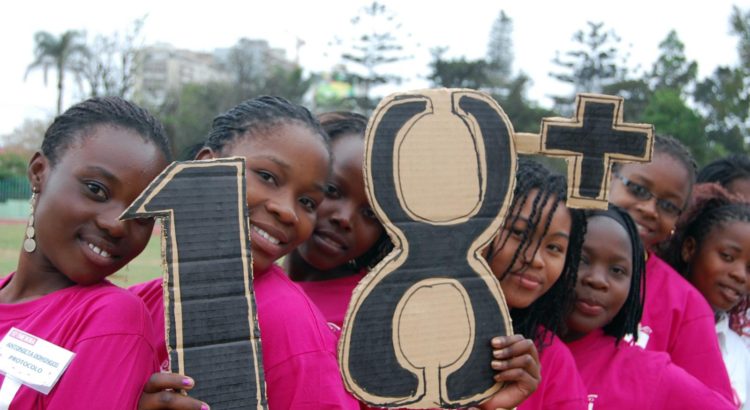
About 60 youths have vowed to combat child marriage, female genital mutilation (FGM) in five wards of Tarime District in Mara Region.

The students and out -of-school teenagers made the promise shortly after attending an intensive training on reproductive health, organized by Children’s Dignity Forum (CDF) in collaboration with Plan International Tanzania recently.

They hailed the training, expressing hope that it will help to save many girls from FGM and child marriage, thanks to the European Union (EU) for funding the initiative under an ambitious project designed to end child marriage and FGM in the region.

«I am now going to take the responsibility of educating my colleagues on the effects of FGM, child marriage and teenage pregnancies», said Elizabeth Daniel (16). Elizabeth, a Form three student at Bomani Secondary School where she is the head girl says she will take the advantage of her position to advance anti-FGM and child marriage campaign at the public school and beyond.

The school which is located in Tarime Town Council, has about 800 students most of them girls hailing from communities prone to FGM and child marriage. «I will make good use of my position as the head girl to provide reproductive health education.

Since our school has a large number of girls, I believe I will save many of them,» Elizabeth told the ‘Daily News’ shortly after successfully attending the training held at a hotel in Tarime town last week.

Elizabeth says her dream is to become a doctor after her studies and that the training had added value on her life. She further stressed the importance of every child to be assisted in achieving her or his educational dreams instead of allowing such dreams to be cut short by harmful cultural practices.

«I would like to become a nurse or doctor and the training I have got here will enable me to realise my dream» Elizabeth pointed. Tatu Tatu( 17) another beneficiary of the training shared with this reporter a sad story about her young sister who was made pregnant at the age of 13 and promised to dedicate part of her time in fighting child marriage and teenage pregnancies.

«I have a young sister who was married at the age 14 after she become pregnant when she was only 13. She was studying at a primary school in neighbouring Kenya.

Thanks God that I have attended this training for the first time and I will now go around providing education to many young girls», Tatu who lives in the small town of Sirari, said.

On his side Joseph Mwita (16) says the training had made them understand that child marriage and FGM are illegal acts, thus he will now join the battle against the practices in the area.

«I will provide education to my family and neighbouring homes and that is what Iam going to do» Joseph who completed his ordinary secondary education (Form IV) in 2014 at Inchugu Secondary School said.

Facilitators of the training were medical and social welfare government experts from Tarime District Council. Mr Abel Gichaine, a Social Welfare Officer of Tarime District said the target was to train 60 peer educators on adolescent and health reproductive as part of fresh strategies aimed at curbing FGM and child marriage in the area under the EU funded project.

The project is jointly implemented by Plan International Tanzania and CDF, a local non-government organization currently leading anti- FGM campaign in Mara Region with Tarime District being the most targeted area.

«FGM has close effects on health reproductive and we are expecting the number of girls line up to undergo FGM in December this year to go down. After FGM many girls have been practicing unsafe sex and others becoming victims of child marriage.

These are other things that we want to end «, Mr Gichaine told the ‘Daily News’. The trained peer educators are expected to reach nearly 2,000 teenagers between May and November something which is expected to reduce the number of girls line up to undergo FGM in the five targeted wards in December .

The wards are; Sirari, Sabasaba, Susuni, Matongo and Nyamwaga, according to the official. » We are going to make close monitoring and evaluation in order to ensure that the set target is achieved «, he said.

Mr Gichaine said the government takes the EU, CDF and Plan International Tanzania as important partners supporting on-going efforts made to end FGM and child marriage in Tarime.

The Project Officer from CDF, Ms Kambibi Kamugisha said adolescent and sexual reproductive health education is keenly designed to reduce child marriage, teenager pregnancies and FGM cases in the area.

Fuente de la noticia: http://allafrica.com/stories/201605061141.html

Fuente de la imagen: https://plan-international.org/sites/files/plan/styles/xl__original/public/field/field_image_listing/201210-moz-16.jpg?itok=maFxuhJy

Comparte este contenido:
Page 562 of 621
1 560 561 562 563 564 621