Page 597 of 622
1 595 596 597 598 599 622

España: El IES El Chapatal conoce las oportunidades que ofrece Senegal

Acción Exterior y la Red Canaria de Escuelas Solidarias celebraron una jornada de intercambio educativo entre la Isla y este país africano

España/05 de Abril de 2016/La Opinión/16:39

tenerife-senegal-el-chapatal

El Cabildo de Tenerife, a través del Área de Acción Exterior, quiere mostrar a los estudiantes de la Isla una imagen positiva de África, mostrando no sólo las características culturales de este continente, sino también las oportunidades laborales que ofrece. En esta línea, la consejera de Acción Exterior, Delia Herrera, participó en una jornada de difusión e intercambio educativo entre Tenerife y Senegal en el IES El Chapatal, en la capital tinerfeña, una iniciativa que apoya el Cabildo de Tenerife en colaboración con la Red Canaria de Escuelas Solidarias.

La jornada, que contó con la participaron de unos 200 alumnos del centro, comenzó con palabras de bienvenida por parte de Juana Huguet, representante de la Red Canaria de Escuelas Solidarias, así como de la consejera de Acción Exterior. Los estudiantes participaron activamente en el encuentro planteando diversas cuestiones sobre Senegal, interpretando piezas musicales, con la lectura de un poema del poeta senegalés Ibrahim Sall por parte de un estudiante oriundo de este país, así como con la proyección de varios videos, entre los que destaca el elaborado por el alumnado del Comité de Solidaridad del IES El Chapatal con materiales enviados desde Senegal.

A petición de este centro educativo, Delia Herrera celebró una tertulia con los estudiantes, quienes le plantearon sus dudas sobre Senegal. En su alocución, Herrera puso especial énfasis en el «carácter abierto y solidario de los senegaleses», así como en los valores que más caracterizan a este pueblo, como la defensa de la familia. Indicó que este país africano ofrece interesantes oportunidades laborales en sectores económicos como ingeniería, medicina y energías renovables y animó a los jóvenes a formarse en idiomas, en referencia al francés, con especial presencia en África.

Once centros de Secundaria de la Isla

El proyecto de intercambio educativo para el desarrollo entre Tenerife y Senegal, en colaboración con la Red Canaria de Escuelas Solidarias, se gestó en 2004 y forma parte del proyecto Isla Forum. Se dirige al alumnado de Secundaria con el fin de difundir una mirada positiva sobre el continente africano. En concreto, y gracias a este proyecto, durante el presente curso escolar 2015-2016, además de once centros de Secundaria de la Isla, participan otros centros de varias localidades senegalesas.

Este proyecto educativo sigue la filosofía del programa del Cabildo Tenerife 2030 pensado para los jóvenes de la Isla y su futuro, en la necesidad de reforzar sus capacidades, talento y formación; en este caso, a través de su apertura al exterior. Esa es la apuesta del Cabildo, la más valiosa inversión. Con ello se trata de educar a mejores ciudadanos para que entre todos hagan un mundo mejor con un horizonte marcado en el año 2030.

Fuente: http://www.laopinion.es/cabildo-tenerife/2016/04/05/ies-chapatal-conoce-oportunidades-ofrece/666459.html

Comparte este contenido:

Namibia: Africa house hopes to ‘Educate a Million to Educate a Billion’

África/Namibia/Abril 2016/Fuente:Namibian/Autor:Hildegard Titus

Resumen: La casa de África (Africa house) es una nueva organización social creada por un grupo de jóvenes creativos e innovadores con la esperanza de hacer una diferencia en África y en el mundo.  El objetivo es crear un espacio en el que, en lugar de esperar ayuda externa, los africanos establecieron su propia organización para hacer frente a los problemas africanos y fomentar la unidad y el panafricanismo que trasciende las fronteras raciales y se centra en la redefinición de lo que significa ser africano, además de inculcar un sentido de orgullo en un mundo que margina, desprecia y subestima la capacidad de los africanos mediante el fomento y la promoción de las artes y la reeducación de los africanos sobre su historia.

Africa House is a new social enterprise created by a group of young creatives and innovators hoping to make a difference in Africa and the world.

Their aim is to create a space where, instead of waiting for outside help, Africans set up their own organisation to deal with African problems and to encourage unity and pan-Africanism which transcends racial boundaries and focuses on redefining what it means to be African.

They also aim to instil a sense of pride in a world that marginalises, belittles and underestimates the capacities of Africans by encouraging and promoting the arts and re-educating Africans about their history.

Africa House hopes to address the struggles and hardships that Africans face on a daily basis.

With education being their main focus, they hope to address the factors that hinder childhood education, be it a lack of resources, learning materials or even harmful practices like child marriages and aim to create awareness campaigns to let their communities know how harmful these practices are.

Amani Exchange is their current flagship campaign, created to help local schools by providing them with the materials that they need, for example textbooks, stationery and other school supplies.

By selling T-shirts designed by local designer Ndapcee Kashunu at N$200 a piece, which can be purchased directly from them, Africa House is hoping to «educate a million to educate a billion».

Fuente de la noticia: http://www.namibian.com.na/Africa-House-hopes-to-%E2%80%98educate-a-million-to-educate-a-billion%E2%80%99/38569/read

Fuente de la imagen: http://www.namibian.com.na/public/uploads/images/56f0cad41acd2/Amani10.jpg

Comparte este contenido:

Gambia college seeks bailout from Alumni

África/Gambia/Abril 2016/Fuente: The Point /Autor:Ebrima Bah

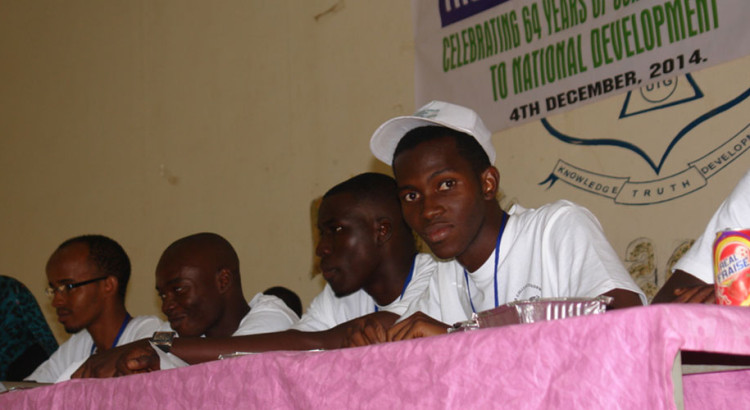
Resumen: El Colegio Gambia y su consejo de administración recibieron donaciones a raíz de una convocatoria abierta de apoyo a la universidad por el director. La necesidad de la universidad para el apoyo se acentuó por la falta de suficientes materiales de enseñanza y de aprendizaje, aulas y mobiliario, además de contar con una infraestructura deficiente.

The Gambia College and its governing council received about D10, 000 on the spot at the 2014/2015 graduation ceremony, from personalities and ex-students of the college at the Brikama campus on Saturday.

The cash-gifts began to rain in the hands of the master of ceremony, following an open call for support to the college by the principal.

The college’s need for support was heightened by the lack of sufficient teaching and learning materials, classroom space and furniture in addition to poor infrastructure.

Students say the scramble for classroom space and furniture before lectures has been the order of the day, since they began to share the facilities at the Brikama campus with students of the University of The Gambia.

The conduct of a whole lecture under the shade of trees with two students sharing a single seat and some others on their toes or on roots of the tree became the norm and culture.

Rex Bojang, a senior lecturer at the Gambia College, translated his lessons of «using locally available resources» to teach by creating a classroom niche under the big tree supposedly car park for his Education technology course, for many years now.

The college administration has for the past seven years been entrusted to the management of the University of The Gambia, limiting chances of the college staff to speak on its behalf at the previous three graduation ceremonies.

In his address to over four thousand graduands and invited guests, principal of the Gambia College Aboubacarr Jallow explained that he was appointed by the President of The Gambia to move the college to academic excellence.

Dr Cherno Omar Barry, permanent secretary for the Ministry of Higher Education, Research, Science and Technology (MoHERST), who was the guest speaker at the graduation, pointed out that the Gambia College is the longest surviving tertiary institution, established since before independence to date.

«It has evolved from 1946 as the Georgetown Teacher Training Institute to Yundum College in 1952, and gradually to what it is today which started in 1982, expanding its functions from education to health and agriculture.»

In his report, after one year in service as principal of the college, Mr Jallow noted that the college relies heavily on the government subvention. He said students are aware of the struggle, especially during lectures.

Declaring that «furniture is a big problem in the college», he called on the outgoing students to form an alumni association to raise funds for the college.

He reminded them further that «every dalasi matters», while extending the appeal to all former students and friends of the college.

Consequently, the Minister of Higher Education proposed a contribution of D100 from every ex-student. His suggestion was announced by the master of the ceremony amidst thunderous applause.

The newly-appointed chairman of the Gambia College Governing Council, Ebrahim Tas Dondeh, said the college should be allowed to compete with other similar institutions and demand for compensation for the services it offers. He pointed out that the college may not do well, if they continue to advocate for business as usual without the necessary changes in the modus operandi, in the face of financial shortages that have shown no sign of abating.

«If we don’t, we will be unconsciously undermining or curtailing the potentials and ability of this great institution of its well-being and its economic and social development goal.»

Mr Dondeh believes that the beacon of hope, bastion and citadel of intelligence which captured conscience of the nation, and created by the college decades ago, should not be forgotten.

The permanent secretary of MOHERST, who pledged the sum of D3000 to the college’s coffers, urged every other former student of the institution to emulate him or do much more than what he has done. To him, the words of Nelson Mandela are enough to justify dipping hands into his pocket for supporting the college.

«Education is the great engine of personal development. It is through education that the daughter of a peasant can become a doctor, that the son of a mine worker can become the head of the mine, that a child of a farm worker can become the president of a great nation. It is what we make out of what we have, not what we are given that separates one person from another.»

According to Katim Touray, history lecturer at the Gambia College, the trend at which the new administration is striving to govern the college will earn the institution a greater reputation on the production and delivery of its services. He pointed out that the areas of concern are many, but hopes are brighter.

According to analysts, the large turnout of graduands at the ceremony was an indication of students’ long-awaited wish to see the college assert its independence. Many of them have arguably failed to show up at the grounds of the last three graduation ceremonies, based on the fear that the «marriage» with the University of The Gambia was meant to overshadow them.


Fuente de la noticia:http://thepoint.gm/africa/gambia/article/gambia-college-seeks-bailout-from-alumni

Fuente de la imagen:http://www.gambiacollege.edu.gm/public/media/img/collegeat641.jpg

 

Comparte este contenido:

Kenya: Teachers want new curriculum to have lessons in drug abuse and integrity

África/Kenya/Abril 2016/Fuente: Daily Nation/Autor: Ouma Wanzala

Resumen: Los maestros quieren que el nuevo plan de estudios incluya elementos sobre los derechos del niño, abuso de drogas, la integridad y la seguridad. De acuerdo a un informe de evalución de necesidades realizado recientemente, surgieron los temas de problemas ambientales, tecnología,  género y la educación financiera.

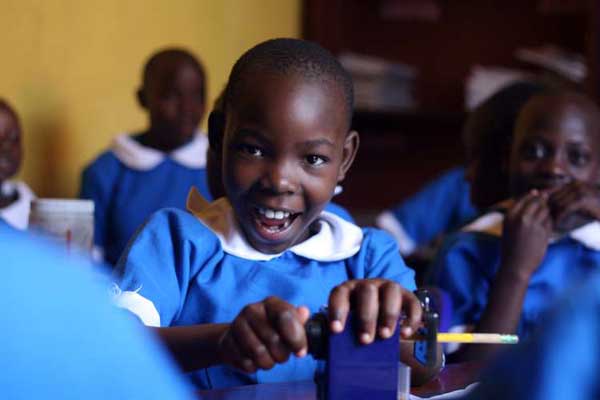
Teachers want the new school curriculum to address child rights, drug abuse, integrity and security.

According to a needs assessment report released last week, teachers also want environmental issues, technology, gender issues and financial literacy be part of the syllabus.

In addition, the teachers are rooting for the introduction of continuous assessment tests as opposed to end of term examinations.

«Parents, learners and other stakeholders have emphasised the need for provision of basics – classrooms, course books, toilets, teaching aids and playing, games, music and drama materials that enable learners to relax.

«They have also emphasised equal distribution of resources that would facilitate a more practical approach to learning, especially for special needs education learners,» says the report compiled by the Kenya Kenya Institute of Curriculum Development (KICD).

Modern teaching approaches

Teachers in secondary schools prefer modern teaching approaches that include; discussions, experiments, brainstorming and demonstrations.

They have also called for the introduction of practical subjects such as Home Science, Art and Craft, Agriculture and Woodwork, early specialisation and the separation of English Language from Literature in English.

«At tertiary level, teacher trainees want more time spent on teaching methods instead of theory, time for teaching practice to be increased and enough time for preparation and making of teaching resources,» the report adds.

In primary schools, respondents emphasise practical-oriented learning areas citing Home Science, Art and Craft, Music, Drama, Agriculture, foreign languages like French, German, Chinese and Spanish.

Those in the special needs category are calling for more vocational institutions to give skills such as beadwork, hairdressing, beauty therapy and agriculture for learners who may not be good in academic subjects.

«Kenyans have proposed a curriculum that considers the ages and developmental stages of learners at all levels, that allows transition of all pupils from primary to secondary, and that offers several pathways to learners after secondary school,» states the report, which generated data using questionnaires, interviews, focused group discussions, memoranda and analysis of other relevant documents.

Fuente de la noticia: http://www.nation.co.ke/news/education/Teachers-want-new-subjects-for-schools/-/2643604/3145620/-/ru7jec/-/index.html

Fuente de la imagen: http://www.nation.co.ke/image/view/-/3145630/highRes/1295963/-/maxw/600/-/8cxtusz/-/class-pic.jpg

Comparte este contenido:

PNUMA presentó guía para aplicación del Principio 10

PNUMA prensa/ Abril 2016/ El Programa de las Naciones Unidas para el Medio Ambiente, PNUMA, presentó en Montevideo una guía sobre cómo poner en práctica el Principio 10 de la Declaración de Río sobre el Medio Ambiente y el Desarrollo, así como las Directrices de Bali, adoptadas en 2010.

La guía pretende ser una herramienta para ayudar a los países a formular legislación nacional sobre el acceso a la información, participación pública en la toma de decisiones y acceso a la justicia en materia de medio ambiente.

La guía fue presentada por Andrea Brusco, coordinadora regional de gobernanza ambiental del PNUMA, y  recopila ejemplos de la legislación y la acción de los países en varios estadios de desarrollo, por lo que será útil tanto para legisladores, políticos y funcionarios, así como para las organizaciones de la sociedad civil y el público en general.

La presentación tuvo lugar durante una sesión informativa en el marco de la Tercera Reunión del Comité de Negociación del Acuerdo Regional sobre el Acceso a la Información, la Participación Pública y el Acceso a la Justicia en Asuntos Ambientales en América Latina y el Caribe

La reunión, que se prolongará hasta el viernes 8 de abril, es organizada por el gobierno de Uruguay y la Comisión Económica para América Latina y el Caribe, CEPAL.

En esta cita, los países firmantes de la declaración sobre la aplicación del Principio 10 continúan con las negociaciones para contar con un acuerdo regional, que se espera concluir en diciembre de 2016.
Más información: www.unep.org

Comparte este contenido:

Tanzania: School of nursing, midwifery launched at Aga Khan varsity

África/Tanzania/Abril 2016/Fuente:The Citizen /Autor: Syriacus Buguzi

Resumen: La universidad Aga Khan (AKU) abrio una nueva instalacion para preparar las enfermeras como parte de las iniciativas de la universidad para superar la falta de recursos humanos del sector de salud en Tanzania, en este pais la escasez de personal calificado llega al 51% de acuerdo a lo señalado por el Vice-Ministro de Salud el  Dr Hamisi Kigwangala, quien asistió al evento.

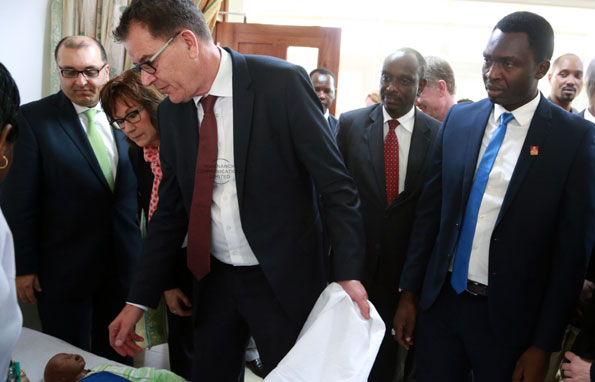
Dar es Salaam — The Aga Khan University (AKU) yesterday opened a new state-of-the art facility to groom nurses and midwives at degree level as part of the university’s major plans to bridge the human resource gaps in Tanzania’s health sector.

The nursing school project, worth Sh2.95 billion, was officially launched yesterday in Dar es Salaam at a colourful event graced by the German Federal Minister for Economic Cooperation and Development, Dr Gerd Muller.

The presence of Dr Muller and other dignitaries, including the outgoing East African Community (EAC) Secretary General, Dr Riachrd Sezibera, signaled the wider support that the AKU has received from Germany and the EAC, to fund health care projects.

AKU will now provide high quality training to nurses, midwives and improve healthcare in the region through a Sh42 billion grant it received from the Federal Republic of Germany.

According to Dr Muller, the funding would help to boost the health workforce across the region and help the EAC to achieve Sustainable Development Goal (SDG) number-3, which states, «Good health and wellbeing for all.»

He said, «Despite all efforts, maternal and newborn mortality are still unacceptably high in East Africa. Reducing the deaths requires well-functioning health systems, including skilled workforce.»

For his part, Dr Sezibera lauded the Aga Khan University for playing a leading role in modernising the carriculum for nursing education in the region.

«This facility is another example of AKU’s longstanding commitment to educating the much-needed nurses and midwives to improve the quality of healthcare for East Africans,» he said.Since 2014, more than 2100 nurses in East Africa have graduated from AKU–600 of them from Tanzania. One of the notable alumni is Dr Khadija Malima–the director of the Division of Nursing and Midwifery Services in the Health Ministry, who doubles as the chairperson of the Tanzania Nursing and Midwifery Council.

Currently, Tanzania is facing shortage of qualified nurses by 51 per cent, according to the Deputy Minister for Health, Community Development, Gender, Children and the Elderly, Dr Hamisi Kigwangala, who also attended the event.

Fuente de la noticia: http://www.thecitizen.co.tz/News/School-of-nursing–midwifery-launched-at-Aga-Khan-varsity/-/1840340/3142030/-/15dlclsz/-/index.html

Fuente de la imagen: http://www.thecitizen.co.tz/image/view/-/3142036/highRes/1293911/-/maxw/600/-/beko7qz/-/school.jpg

Comparte este contenido:

Venezuela y Guinea-Bissau firman acuerdo de cooperación mixta

Venezuela / Abril de 2016 / Por: Telesur / Fuente: http://www.telesurtv.net/

Los convenios suscritos por Venezuela y Guinea-Bissau consisten en fortalecer la educación y el intercambio cultural entre ambos pueblos.

El presidente de Venezuela, Nicolás Maduro y el primer ministro de Guinea-Bissau, Carlos Correia suscribieron este lunes un acuerdo de cooperación mixta en materia de educación, comunicación, defensa, salud y deporte.

Desde el Palacio de Miraflores (sede de Gobierno), el mandatario venezolano destacó el esfuerzo que realiza Guinea-Bissau para brindar la mayor suma de felicidad a su pueblo. «Los pueblos de África son nuestros hermanos, aquí siempre tendrán a un amigo», expresó Maduro.

Sostuvo que la unión es fundamental para derrotar las pretensiones de dominación que promueve el Gobierno de Estados Unidos en naciones libres y soberanas. «Ahora nos tiene que unir la esperanza y construir la unión sobre la base de la esperanza», dijo.

Agradeció las manifestaciones de apoyo de Guinea-Bissau y de todos los pueblos africanos para Venezuela. «El apoyo de África a Venezuela ha sido unánime, en la ONU y por parte de los países No Alineados», aseveró el jefe de Estado.

Por su parte, el primer ministro de Guinea-Bissau, Carlos Correia, ratificó su apoyo al pueblo venezolano frente al decreto del presidente Barack Obama de calificar a Venezuela una amenaza para la seguridad de su país.

Dio a conocer que la cooperación de su país con Venezuela surgió en el año 2006 gracias al trabajo de integración que promovió el líder de la Revolución Bolivariana, Hugo Chávez, en los pueblos de África.

Entre los pueblos del continente africano y Venezuela se han establecido lazos de hermandad y cooperación, lo cual ha contribuido al fortalecimiento de las relaciones Sur-Sur, con el objetivo de establecer una nueva dinámica multipolar en la política internacional.

«Vamos a avanzar en la sistematización de la cooperación», afirmó Correia durante una entrevista especial en teleSUR, en la que detalló que esta colaboración «ya comenzó», por lo que actualmente se están formando en el país suramericano unos 29 médicos.

https://youtu.be/XTexyjySLws
Venezuela y Guinea-Bissau firman acuerdo de cooperación mixta

Fuente de noticia:
http://www.telesurtv.net/news/Venezuela-y-Guinea-Bissau-firman-acuerdo-de-cooperacion-mixta-20160404-0061.html.

Foto: Prensa Presidencial

Comparte este contenido:
Page 597 of 622
1 595 596 597 598 599 622