Page 603 of 622
1 601 602 603 604 605 622

Rwanda: Imbuto Foundation rewards best female students


África/Rwanda/Marzo 2016/Fuente: /Autor: Samantha Teta

Resumen: La fundación Imbuto concedió treinta y ocho premios a las mejores estudiantes de los exámenes nacionales, en las escuelas primarias y secundarias. En su campaña para promover la educación de las niñas, como parte de las diversas celebraciones en virtud de su 15 aniversario.

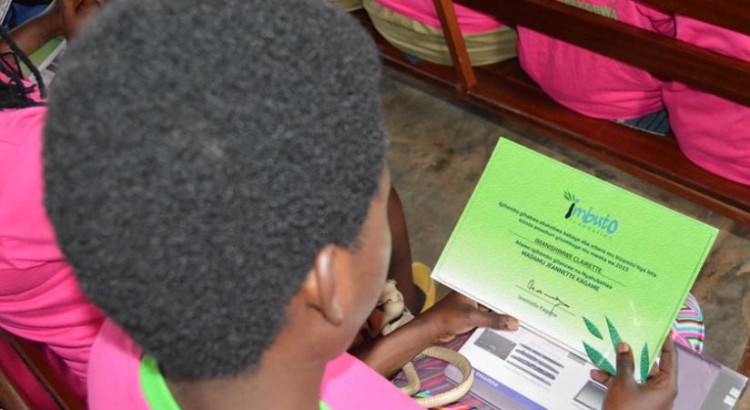
Imbuto Foundation yesterday awarded thirty-eight Best Performing Girls (BPGs) in primary and secondary schools in 2015s national examinations, in its ongoing campaign to promote girl’s education, as part of the various celebrations under its 15th anniversary.

This year’s campaign to award best performing girls was launched in Rulindo District -Shyorongi Sector, where 17 girls at Primary and Advanced levels were awarded.

Best performing girls from Gicumbi, Bugesera, Kamonyi and Kigali City, were awarded yesterday by Imbuto Foundation.

The Minister for Sports and Culture, Julienne Uwacu, was the guest of honour on behalf of the First Lady Jeannette Kagame. She congratulated the girls and challenged them to grab the academic opportunities they were presented to further upgrade their performance.

«We encourage girls to be vigilant, set goals and objectives to achieve and formulate a way forward, devising ways to make their dreams a reality. It is also paramount that they find positive role models to look up to who have already registered significant achievements in their field of interest,» she said.

She went on to highlight some of the issues limiting girls’ education as heeding distractions, approaching education without zeal and most importantly, early and unplanned pregnancies.

«Early pregnancies are a big hindrance in a girl’s education. The consequences are often too heavy for young girls and this is an issue that concerns all of us as a community. We need to work together to discourage these early and unplanned pregnancies,because of their negative impact on not only the communities, but on the country as a whole,» she said.

«Despite the fact that we are happy with the progress registered in promoting girl’s education, there are still sectors which don’t register girls excelling, which clearly illustrates a need for more efforts to empower these young girls,» Uwacu added.

The minister emphasized that parents’ efforts,and the education received at home,form the foundation that should provide the proper moral compass to help girls achieve academic, and overall success. She went on to encourage girls to aspire to achieve more for themselves, and the country, by utilizing the resources at their disposal.

 The Governor of the Northern Province, Aime Bosenibamwe, also highlighted that early pregnancies can negatively interfere with girls aiming for academic growth and achievement.

«There are many distractions which girls must train themselves to outsmart and overcome, being well aware that an unplanned pregnancy may push their academic life, and stability, back by several steps,» he said.

He further requested young girls to not take organisations like Imbuto Foundation for granted, when it comes to the efforts that support their education. He also advised them to dream big, work with dignity and fight for self-reliance.

The girls were awarded certificates of merit, school bags that contained a dictionary, textbooks, calculators, mathematical sets and Rwf20,000 for their transport.

Best performing girls at advanced level were awarded laptops and are set to receive computer training before joining university.

Fuente de la noticia: http://www.newtimes.co.rw/section/article/2016-03-29/198464/

Fuente de la imagen: http://www.newtimes.co.rw/files/photos/1459201292DSC_0139.jpg
 

Comparte este contenido:

Uganda: Kampala University gets charter, as 2,500 graduate


África/Uganda/Marzo 2016/Fuente: TheObserver/Autor:Alfred Ochwo

Resumen: Un total de 2.546 estudiantes recibieron sus títulos, diplomas y certificados, la semana pasada. Fue una ocasión para celebrar como el vicecanciller, profesor Badru Ddungu Kateregga, anunció que la institución había asegurado una carta del Consejo Nacional de Educación Superior (NCHE), lo que les permite ejecutar programas de postgrado.

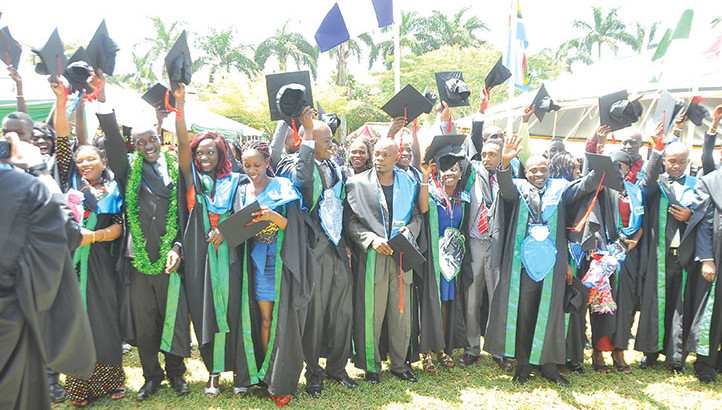
Some 2,546 students are still smiling after they received their degrees, diplomas and certificates, last week. It was an occasion to celebrate as the vice chancellor, Prof Badru Ddungu Kateregga, announced that the institution had secured a charter from the National Council for Higher Education (NCHE), enabling them to run postgraduate programmes.

Consequently, nearly 300 of the day’s graduands received postgraduate degrees and diplomas.

While the over 2,500 graduands were celebrating, 300 others who had been scheduled to graduate were unable to clear their dues in time and Prof Kateregga spared a thought for them in his speech.

«It was unfortunate that many of our would-be graduands chose not to go through the clearing process in time although they were given enough time,» he said.

Prof Kateregga added that the university had grown from a regional to global institution, accommodating students from across the continent, seeing 20 graduands obtain first-class degrees.

These included Said Kirya (the best male) and Christine Nassiwa who was the overall best student with a CGPA of 4.72, in Bsc with Education. The university had more male graduands; 1,509 (59.19 per cent) than females at 1,037 (40.81 per cent).

The head of the Anglican Church in Uganda, Archbishop Stanley Ntagali, was the chief guest and received an award for promoting social and moral unity.

The chancellor, Prof Edward Rugumayo, commended the graduands and tasked them to go and make their university proud by working with the utmost integrity.

Fuente de la noticia:http://www.observer.ug/education/43342-kampala-university-gets-charter-as-2-500-graduate

Fuente de la imagen:http://www.observer.ug/images/Kampala-University-graduands.jpg

Comparte este contenido:

Liberia. Center Songhai graduates 96 youths in vocational skills

Liberia. Centro Songhai gradúa 96 jóvenes de las competencias profesionales

Liberia/22 marzo 2016/Autor: PNUD en Liberia/ Fuente: http://www.lr.undp.org/

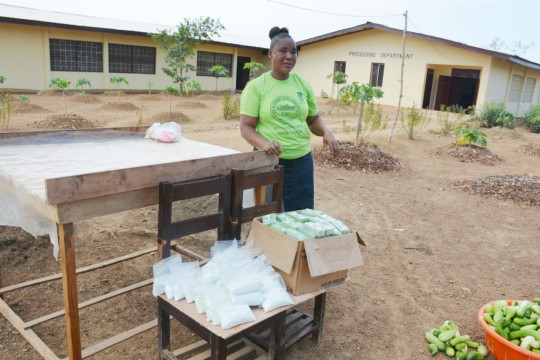
At least 96 young Liberians have acquired specialized vocational skills in general agriculture, electronic/repairs and food processing from the Center Songhai Liberia (CSL).

The CSL was supported by the United Nations Development Programme (UNDP) under its project titled: «Support to the Designed and Roll Out of a Youth-Focused Vocational/Life Skills Training Project».

CSL National Programme Director and Team Leader Christopher Fayia said the graduates have now joined the network as foot soldiers, to work in their local communities to develop themselves and society.

The trainees acquired specialized vocational skills following four months of intensive training in the following areas; general agriculture -54 (47 males 7 females); 21 in electronics and repairs; and 21 in food processing (2 males and 19 females).

——————————————————————————————————————————————————————–

Al menos 96 jóvenes liberianos han adquirido conocimientos profesionales especializados en la agricultura en general, electrónicos / reparaciones y procesamiento de alimentos desde el Centro Songhai Liberia (CSL).

El CSL fue apoyada por el Programa de Desarrollo de las Naciones Unidas (PNUD) en su proyecto titulado: «Apoyo al Diseño y despliegue de una Vida Habilidades Proyecto Juvenil-Focused Formación / Formación».

CSL director del Programa Nacional y Jefe de Equipo Christopher Fayia dijo que los graduados se han unido a la red como soldados de a pie, para trabajar en sus comunidades locales para desarrollar ellos mismos y la sociedad.

Los participantes adquirieron conocimientos profesionales especializados siguientes cuatro meses de entrenamiento intensivo en las siguientes áreas; agricultura general -54 (47 hombres 7 mujeres); 21 en la electrónica y las reparaciones; y 21 en el procesamiento de alimentos (2 machos y 19 hembras).

————————————————————————————————————————————————————————


Mr. Fayia said given the high number of young people in the country with less number of small scale agribusinesses and the drive to meet the ever growing market demands, there is a serious need for rehabilitation and construction of additional structures at the CSL to respond and correspond to this challenge.

The CSL Director of Programme disclosed that UNDP has already approved the renovation of one of the female dormitories that will accommodate at least 75 to 100 females.

“This renovation will be carried out as another training project where at least 20 young men and women will be recruited under the supervision of mentors in electricity, carpentry, masonry and plumbing” Mr. Fayia said.

He commended UNDP for tremendous support towards the project. He explained that the project is a five -year agro-business and Technical Vocational Education Training (TVET) program.

Mr. Fayia further noted that they are encouraging partners to support the program which will enable the center enroll over 500 students during a full cycle training and take the program nationwide.

Speaking at the program, UNDP Resident Representative Mr. Antonio Vigilante urged the graduates to make the best out of what they have learned.

“You are now graduates with life skills training that you can survive on” Mr. Vigilante said.

He also challenged the students to empower themselves as entrepreneurs by engaging in business instead of waiting for employment.

Serving as Keynote Speaker, Youth and Sports Minister Saah N’toh thanked the graduates for taking a great step in improving their lives by gaining such training.

Minister N’toh called on the graduates to see the day as a day of reflection while they celebrate.

The Center Songhai Liberia (CSL) is a non-governmental organization operating as an integrated agricultural program that is modeled after the Songhai Regional Center (SRC) in Benin.

The principal business of CSL is the training of men and women and equipping them with the skills to manage small and medium scale, commercially viable and environmentally sustainable agricultural production and agro-based enterprises.

Fuente de la Noticia y Fotografía:

http://www.lr.undp.org/content/liberia/en/home/presscenter/articles/2016/03/22/center-songhai-liberia-csl-graduates-96/

Comparte este contenido:

South-South Cooperation: Ethiopia, South Korea and China exchange lessons on sustainable forest management

Cooperación Sur-Sur : Etiopía, intercambiar lecciones de Corea del Sur y China sobre la gestión sostenible de los bosques

Etiopía- Corea del Sur – China/25 marzo 2016/Autor: PNUD en Etiopía/ Fuente: http://www.et.undp.org/

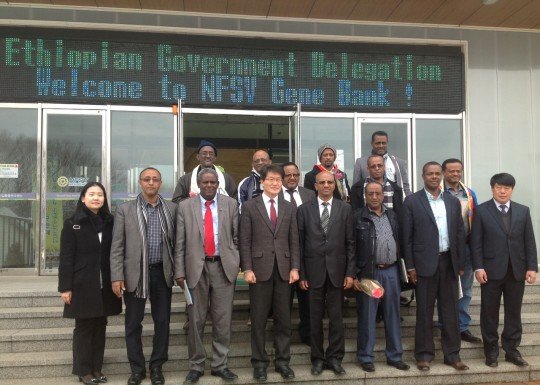
A high level Ethiopian government delegation is now back in the country following a successful experience and knowledge sharing visit to South Korea and China.

The United Nations Development Programme (UNDP) and UNREDD facilitated the visit by the high level delegation, which was led by the Minister of Environment, Forest and Climate Change Dr. Shiferaw Teklemariam and included regional presidents from Afar, Tigray and Southern Nations and Nationalities People’s regions.

Forestry is one of the four pillars in Ethiopia’s Climate Resilient Green Economy (CRGE) strategy and is identified as having the largest potential in reducing emissions and increasing the country’s climate resilience.

Ethiopia’s fast growing population, currently placing the country as the second most populous African nation, is  feared to increasingly become a major burden on resources, particularly natural resources.

According to the strategy, Ethiopia will need to reverse its deforestation and degradation if the country can be expected to meet its development goal.
The official forest coverage figure stands at only 15% showing a 50% decrease from 30 years ago.

Whereas in just 50 years South Korea has managed to tackle deforestation and degradation to transform its forest coverage mass to 64%.

The south-south knowledge exchange is hoped to lead to further cooperation around strengthening Ethiopia’s institutional capacity for sustainable forest management and facilitate the country’s access to appropriate technology, technical expertise and latest tools.

UNDP is currently partnering with Norway to enhance Ethiopia’s capacity to sustainably manage its forest resources.

—————————————————————————————————————————————————-

Una delegación de alto nivel del gobierno etíope participó en una visita exitosa a Corea del Sur y China para compartir experiencia y conocimientos.

El Programa de las Naciones Unidas para el Desarrollo (PNUD) y UNREDD facilitaron la visita de la delegación de alto nivel, que fue dirigido por el Ministro de Medio Ambiente, Bosques y Cambio Climático Dr. Shiferaw Teklemariam e incluidos presidentes regionales de Afar, Tigray y Southern Nations y Nacionalidades Personas de regiones.

La silvicultura es uno de los cuatro pilares de la estrategia de Resiliencia Climática de Etiopía Economía Verde (CRGE) y se identifica por tener el mayor potencial para reducir las emisiones y aumentar la resistencia al clima del país.

Población en rápido crecimiento de Etiopía, en la actualidad que sitúa al país como el segundo país más poblado de África, se teme a ser cada vez más una carga importante en los recursos, en particular de los recursos naturales. De acuerdo con la estrategia, Etiopía tendrá que invertir su deforestación y la degradación si el país puede esperar para cumplir con su objetivo de desarrollo. La cifra oficial de cobertura forestal es de sólo un 15% que muestra una disminución del 50% de hace 30 años.

Mientras que en tan sólo 50 años Corea del Sur ha logrado frente a la deforestación y la degradación de transformar su masa forestal cobertura al 64%.

El intercambio de conocimientos Sur-Sur se espera que conduzca a una mayor cooperación en el fortalecimiento de la capacidad institucional de Etiopía para el manejo forestal sostenible y facilitar el acceso del país a la tecnología apropiada, la experiencia técnica y las herramientas más recientes.

Actualmente el PNUD está asociado con Noruega para mejorar la capacidad de Etiopía para el manejo sostenible de sus recursos forestales

Fuente de la Noticia y la Fotografía:

http://www.et.undp.org/content/ethiopia/en/home/presscenter/articles/2016/03/25/south-south-cooperation-ethiopia-south-korea-and-china-exchange-lessons-on-sustainable-forest-management/

Comparte este contenido:

String Figures and How to Make Them

A Study of Cat’s Cradle in Many Lands

by Caroline Furness Jayne


Las figuras de cordel tienen un amplio repertorio de formas, usos y expresiones socio culturales alrededor del mundo. En este trabajo de etnología y antropologìa cultural de Carolyne Furness Jayne se refleja una ardua y paciente investigación al respecto.  Recomendamos su lectura Pueden hacerlo a través del siguiente enlace

Las Figuras de Cordel


Comparte este contenido:

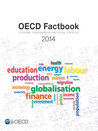
OECD Factbook

OECD’s dynamic and comprehensive statistical annual showing a wide range of key statistics for its member countries and major additional countries. For each indicator presented, there is explanatory text including a definition, explanation of long-term trends, and references; a table showing the indicator over a significant time span for all countries covered, and graphics showing the key messages contained in the data. Under each table is a link to an Excel spreadsheet enabling the user to access the data. This publication is available in print form, as an iPhone app, and in html form.

OECD Countries covered include Australia, Austria, Belgium, Canada, Chile,Czech Republic, Denmark, Estonia, Finland, France, Germany, Greece, Hungary, Iceland, Ireland, Israel, Italy, Japan, Korea, Luxembourg, Mexico, Netherlands, New Zealand, Poland, Portugal, Slovak Republic, Slovenia, Spain, Sweden, Switzerland, Turkey, the United Kingdom, and the United States. Non-OECD countries covered include Brazil, China, India, Indonesia, Russia, and South Africa.

Topics covered include population and migration; production and productivity; household income, wealth and debt; globalisation, trade and foreign direct investment (FDI); prices, interest rates and exchange rates; energy and transportation; labour, employment and unemployment; science and technology including research and development (R&D) and the Information and Communications Technology (ICT) sector; environment including natural resoures, water,and air and climate; education resources and outcomes; government expenditures, debt, revenues, taxes, agricultural support and foreign aid; and health status, risk and resources.

http://www.oecd-ilibrary.org/economics/oecd-factbook_18147364

OECD Factbook


Comparte este contenido:

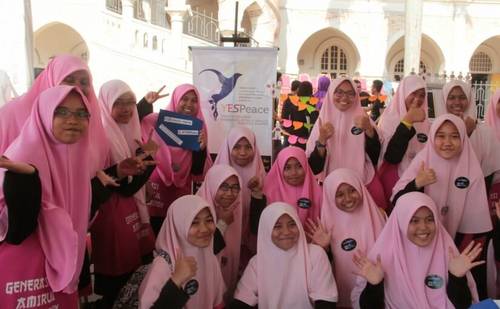
La Red YESPeace de la UNESCO aprovecha la capacidad de los jóvenes del mundo para cambiar el futuro

UNESCO/Marzo 2016

“Tenemos que reincorporar a los jóvenes en la sociedad y lo que ellos necesitan es identidad y sentido”, dijo el Dr. Anantha Kumar Duraiappah, Director del Instituto Mahatma Gandhi de Educación para la Paz y el Desarrollo Sostenible (MGIEP por sus siglas en inglés) en Nueva Delhi (India).

“Tenemos que reincorporar a los jóvenes en la sociedad y lo que ellos necesitan es identidad y sentido”, dijo el Dr. Anantha Kumar Duraiappah, Director del Instituto Mahatma Gandhi de Educación para la Paz y el Desarrollo Sostenible (MGIEP por sus siglas en inglés) en Nueva Delhi (India).

El MGIEP es el instituto de la UNESCO especializado en educación para la paz y el desarrollo sostenible y lleva su nombre en tributo a los principios de no violencia y vida sostenible de Mahatma Gandhi.

Entrevistado tras participar en una consulta de expertos de la UNESCO sobre la prevención del extremismo violento mediante la educación, el Dr. Duraiappah afirmó que la Red YESPeace es parte de la respuesta del instituto a estos desafíos.

Unir a los jóvenes en torno a la paz y el desarrollo sostenible

“Los jóvenes quieren que se les escuche y quieren dignidad”, dijo el Dr. Duraiappah. “Viven en un mundo interconectado que es cada vez más pequeño y están inmersos en las conversaciones de las redes sociales. Queremos elaborar una plataforma que los una en torno a nuestro mandato de paz, desarrollo sostenible y ciudadanía mundial”.

La red es un elemento del programa para jóvenes del Instituto, que se ha propuesto empoderar a la juventud mediante la educación para construir un futuro pacífico y sostenible. La red congrega a los jóvenes para que se centren en los Objetivos de Desarrollo Sostenible, y en particular en la Meta 4.7 de los ODS, relativa a la educación para el desarrollo sostenible (EDS), que el MGIEP ha hecho suya.

“Hablamos con los jóvenes acerca de esa meta y nos dijeron que era borrosa y que no significaba gran cosa para ellos, mientras que las cuestiones concretas, tales como la pobreza, el agua potable, el acceso equitativo a la educación y la salud, sí eran significativas, de modo que incorporamos esa idea”, dijo el Dr. Duraiappah.

En respuesta a la cuestión, el MGIEP elabora actualmente un banco de datos con aportes de jóvenes que han dado seguimiento a la Meta 4.7 y que comprende una aplicación de telefonía móvil para que puedan cargar directamente ejemplos de cambios de conducta de la comunidad en la vida real, en lo tocante a la EDS.

“Queremos que los jóvenes lleven la iniciativa en la aplicación y el seguimiento de los ODS”, afirmó.

No existe una solución única para todos los problemas

El Dr. Duraiappah asegura que los jóvenes tratan de hallar algo en que creer y, como resultado de esa búsqueda, algunos caen bajo la influencia de los extremistas, pero advierte que no existe una sola solución para todos los casos.

“Debemos recordar que las motivaciones de un joven en Siria o Afganistán son muy diferentes de las de otro en Canadá o en cualquier otro país”, señaló.

“Queremos enseñarles a los jóvenes de qué manera pueden llegar a ser ciudadanos del mundo, que pueden asumir identidades múltiples dentro de cada sociedad y que dudar de uno mismo no es un síntoma de debilidad, sino de fortaleza”.

Una campaña sobre ciudadanía mundial coordinada por los jóvenes

Además de la Red YESPeace, el MGIEP dirige el Programa Embajadores de la Universidad, que promueve el diálogo intercultural, y elabora actualmente el Programa Agentes del Cambio, que se centra en la capacitación y el liderazgo, sobre la base de los valores del humanismo y la compasión.

Cada año, el Instituto celebra el evento Talking Across Generations [Diálogo intergeneracional], que en 2016 estuvo dedicado al extremismo violento y la educación, y que contó, como primicia, con un concierto mixto de la banda pakistaní Junoon y la banda india Indian Ocean. En la actualidad se está programando una segunda actuación conjunta de ambas formaciones musicales, que tendrá lugar el 2 de octubre, Día Internacional de la No Violencia y aniversario del nacimiento de Mahatma Gandhi.

Comparte este contenido:
Page 603 of 622
1 601 602 603 604 605 622