Page 604 of 622
1 602 603 604 605 606 622

87 millones de niños menores de 7 años han conocido solamente el conflicto, según UNICEF

Nuevos datos revelan el número de niños que están expuestos a un conflicto durante el periodo más importante para el desarrollo del cerebro

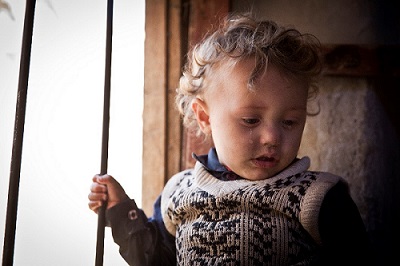
UNICEF/Nueva York/ Más de 86,7 millones de niños menores de siete años han pasado toda su vida en una zona asediada por un conflicto, un factor que representa un riesgo para el desarrollo de su cerebro, según ha afirmado hoy UNICEF.

Durante los siete primeros años de su vida, el cerebro del niño tiene la posibilidad de activar 1.000 células cerebrales por segundo. Cada una de estas células, llamadas neuronas, tiene la facultad de conectarse con otras 10.000 neuronas a una velocidad de miles de veces por segundo. Las conexiones del cerebro son elementos básicos para el futuro del niño, ya que definen cómo será su salud, su bienestar emocional y su capacidad de aprendizaje.

Los niños que viven en zonas de conflicto están a menudo expuestos a traumas extremos que les exponen al peligro de vivir en una situación de estrés tóxico, un estado que inhibe la conexión de las células del cerebro y que tiene importantes repercusiones que afectarán su desarrollo cognoscitivo, social y físico para el resto de su vida.

“Además de las amenazas físicas inmediatas a las que se tienen que enfrentar los niños durante estas crisis, corren igualmente el riesgo de sufrir secuelas emocionales enraizadas en lo más profundo de ellos mismos”, dijo la responsable de UNICEF para el desarrollo de la primera infancia, Pia Britto.

Las cifras de UNICEF indican que, en todo el mundo, 1 de cada 11 niños de 6 años o menos ha pasado en una situación de conflicto la época de su vida más importante para el desarrollo de su cerebro.

“Los conflictos privan a los niños de su seguridad, de su familia y de sus amigos, del juego y de la rutina. Y, sin embargo, todos ellos son los elementos de la infancia que ofrecen a los niños las mejores oportunidades posibles de desarrollarse completamente y de aprender de manera eficaz, lo que les permitirá participar en la economía y en la sociedad, y crear comunidades sólidas y seguras”, dijo Pia Britto.

“Esta es la razón por la cual debemos invertir aún más para proporcionar a los niños y a los cuidadores suministros y servicios indispensables, como materiales pedagógicos, apoyo psicosocial y espacios protegidos amigos de la infancia; todo ello puede contribuir a restablecer en pleno conflicto el sentimiento de ser un niño”.

Un niño nace con 223 millones de neuronas activas, pero para que el cerebro alcance su plena capacidad de funcionamiento en la edad adulta, con alrededor de 1.000 millones de neuronas capaces de conectarse entre ellas mismas, es muy importante el desarrollo en la primera infancia. Esto comprende la lactancia materna y la nutrición temprana, la estimulación precoz por parte de los cuidadores, la posibilidad de aprender a una edad temprana y la oportunidad de crecer y de jugar en un entorno seguro y sano.

Como parte de sus intervenciones en las situaciones de emergencia humanitaria y las crisis prolongadas, UNICEF trata de mantener a los niños en entornos amigos de la infancia ofreciéndoles kits de emergencia con materiales pedagógicos y recreativos. Solamente el año pasado, los kits de emergencia han ayudado a más de 800.000 niños que se encontraban en situaciones de emergencia.


Comparte este contenido:

Para Greenpeace Colgate, Pepsi y Johnson & Johnson, cómplices del mayor desastre ambiental de 2015


Ayúdanos a proteger los bosques de Indonesia
El hábitat de especies amenazadas como el orangután o el tigre de Sumatra se consume. Exige a las grandes marcas que no sean cómplices de la deforestación.
Actúa!

El pasado año, entre los meses de agosto y octubre, las selvas de Indonesia vivieron el mayor desastre ambiental del planeta de 2015. Más de 130.000 focos, detectados desde los satélites, provocaron cientos de miles de incendios en las selvas y turberas de las islas de Sumatra y Borneo, en el hábitat de especies amenazadas como el orangután o el tigre de Sumatra.

Tras la ola de incendios se encuentra la industria del aceite de palma, junto con el sector papelero. Fuegos alimentados por la expansión masiva de los cultivos de aceite de palma, en el que se basan los productos de las grandes marcas del mundo de la alimentación (desde sopas a chocolates, pasando por bollería y conservas), la cosmética (champús, jabones, detergentes) o algunos mal llamados biocarburantes.

Hay que seguir insistiendo en especial a las grandes multinacionales que consumen aceite de palma, responsables de lo que está pasando. PepsiCo, Colgate-Palmolive y Johnson & Johnson dicen que tienen políticas activas para evitar que el aceite de palma procedente de la deforestación entre en su cadena de suministro. Pero los hechos no les respaldan. Descubre en este vídeo las consecuencias de la política irresponsable de las marcas.

Este año, ya se han dado los primeros incendios. No podemos permitir que se vuelva a repetir un desastre así. Gracias a las grandes campañas de presión y movilización ciudadana hemos visto ya grandes avances en la protección de las selvas indonesia. En el pasado, campañas exitosas contra Nestlé, Mattel, Asia Pulp and Paper o el Banco de Santander ya mostraron el poder de la gente para forzar a las empresas a adoptar cambios en sus políticas. En esta ocasión, tras apenas un mes de campaña, a la que se han sumado más de 360.000 personas de todo el mundo, recibíamos ayer mismo la noticia de que Colgate-Palmolive, PepsiCo y Johnson & Johnson han acordado reunirse con Greenpeace.

Son noticias esperanzadoras. Pero hasta que se produzcan esas reuniones seguiremosexigiéndoles un compromiso real y efectivo contra la deforestación. No valen solo palabras. Nos jugamos mucho. Ayúdanos a proteger los bosques de Indonesia.

Actúa!

Comparte este contenido:

Brasil: en defensa de la democracia y del estado democrático de derecho

Declaración del Comité Directivo y de la Secretaría Ejecutiva de CLACSO

El país que superó la larga dictadura militar y aprobó la Constitución Ciudadana de 1988, no puede sufrir un atentado tan grave a su estado democrático de derecho. Debemos preservar las libertades individuales y colectivas, garantizando una democracia efectiva para todos.

América Latina tiene una larga historia de dictaduras militares que acentuaron la represión política y la violación a los derechos humanos, la concentración de la propiedad de la tierra y la desigualdad social, generando siempre el aumento del poder económico de las élites.

El combate a la corrupción constituye un deber de las instituciones públicas y privadas, pero no justifica el uso de actos mediáticos que ofenden y atacan la normalidad del estado de derecho. Toda acción de combate a la corrupción debe ser realizada dentro de los límites legales y como parte del proceso de perfeccionamiento de las instituciones democráticas, no de su mayor deterioro. Hoy, en Brasil, los principios que deben guiar el ejercicio de la justicia en una democracia republicana han sido maculados por recursos arbitrarios y selectivos producto de discrecionales actos de la autoridad judicial, los que se expresan en filtraciones periodísticas y operaciones policiales divulgadas por algunos medios de comunicación como despreciable recurso de linchamiento mediático, creando factoides políticos dirigidos exclusivamente al Partido de los Trabajadores y al gobierno de la presidenta Dilma Rousseff.

Por otro lado, la presidenta de la república ha sido atacada con acciones judiciales arbitrarias y acuerdos políticos revanchistas, que sólo buscan, por los medios y las formas que sean posibles, impedir que Dilma Rousseff concluya el mandato que le fuera investido por el pueblo brasileño.

Exigimos que se garanticen los procedimientos democráticos básicos, la presunción de inocencia, la igualdad ante la ley, el derecho a una amplia defensa, sin ceder a la voluntad de un sector del Ministerio Público o de un Poder Judicial que carece de control social. Es urgente que el Consejo Nacional de Justicia asuma sus responsabilidades, preservando el orden jurídico.

Nuestras democracias, duramente conquistadas gracias a la movilización y las luchas populares, no pueden subordinarse a intereses autoritarios que surgen y se perpetran a la sombra de un creciente fascismo social. El riesgo de ruptura de la legalidad y la institucionalidad democrática por una asociación entre políticos derrotados en las últimas elecciones, sectores del Poder Judicial y los grupos monopólicos que controlan la prensa nacional, no pueden comprometer el futuro de Brasil.

Hacemos aquí un llamado a la solidaridad y al apoyo de la comunidad latinoamericana para garantizar en Brasil la democracia y el estado democrático de derecho, conquistados en las últimas décadas. El pueblo brasileño desea y busca construir un modelo de desarrollo sustentable; una democracia fuerte con inclusión y justicia social; busca y lucha por el reconocimiento de sus derechos y libertades fundamentales. Es esa soberanía del pueblo brasileño la que debe ser preservada de las arbitrariedades, autoritarismos y oportunismos políticos que hoy se están apoderando de Brasil.


Buenos Aires, 28 de marzo de 2016


Comité Directivo
Secretaría Ejecutiva
Consejo Latinoamericano de Ciencias Sociales – CLACSO

Comparte este contenido:

África: Educational Attainment Data Release 

The UNESCO Institute for Statistics (UIS) has released new national data on educational attainment and mean years of schooling for the population aged 25 years and older.


Attainment data are now available for 147 countries, 9 more than in the previous release. The data are available in the form of 2 indicators: the highest completed level of education and the minimum completed level of education.


The new educational attainment data follow the levels of education defined in the International Standard Classification of Education (ISCED) 2011. Compared to ISCED 1997, ISCED 2011 makes it possible to present more disaggregated data for persons who have completed tertiary education.


In addition, this is the first UIS release to present time series with attainment data. Data on the highest and minimum completed levels of education are available for the period of 1995 to 2015, allowing analysis of national trends in attainment over time.


The UIS is also releasing an expanded dataset with estimates of mean years of schooling. This indicator measures the average number of years of education completed by a country’s adult population (25 years and older), excluding years spent repeating grades. Mean years of schooling are available for 149 countries, covering the period 1970 to 2014.


To access the new data go to the UIS Data Centre and click on Education – Educational attainment. The tables with attainment data can also be accessed directly from the links below:


• Population by highest completed level of education
• Population by minimum completed level of education (cumulative)
• Mean years of schooling

– See more at: http://www.uis.unesco.org/Education/Pages/education-attainment-data-release-2016.aspx#sthash.rOfGIUeH.dpuf

Comparte este contenido:

Kenya: Kenyatta Pledges Reform in Education for People With Disabilities

África/Kenya/Marzo 2016/Fuente: CapitalNews /Autor: PSCU

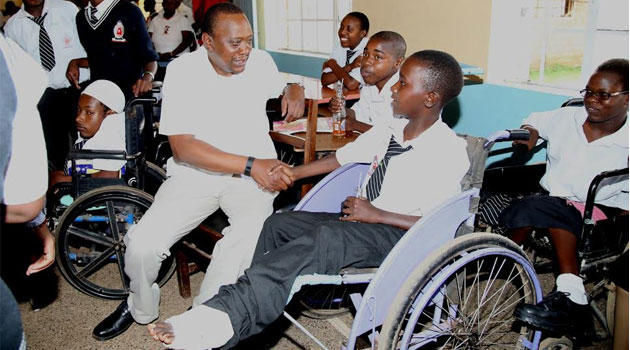
Resumen: El presidente Uhuru Kenyatta realizo una visita sorpresa a Joytown la escuela secundaria para los discapacitados físicos donde reiteró que el gobierno va a buscar la manera de reformar el sector de la educación para atender las necesidades de los estudiantes con discapacidad.

President Kenyatta said the government will ensure that the reforms to be undertaken in the education sector will streamline remuneration of teachers in schools and institution taking care of the disabled.

He was fulfilling a pledge he had made a week ago to some students from the school who participated in the Seeing is Believing Initiative of the Duke of Edinburgh’s International Awards and President’s Award – Kenya held at the slopes of Mount Kenya.

President Kenyatta said the government will ensure all Kenyans get equal opportunities saying it is not fair for disabled pupils some of whom are suffering from cerebral palsy to undertake same exam with those who don’t suffer from any disability.

Two students in the school, Purity Wangare of Form 3 and Gabriel Mutua suffering from cerebral palsy recited moving poems in English and Kiswahili on why the government needs to consider giving special national exam to students with disabilities.

Students who suffer from the disease have challenges writing fast, drawing graphs and are also slow in oral communication.

They said that physically disabled students are forced to do exams in the same format, specifically writing on paper, like other students even though they are limited by their physical state.

The President said his government takes keen interests to the needs of the disabled and that is why he appointed a Principal Secretary in charge of special programmes to ensure they are fully catered for.

«There are many people outside doing wonderful jobs, in fact I have a disabled PS who is doing a fantastic job,» said the President.

Further adding, «We will do everything possible to support this institution and also you as an individual to gain employment or self-employment.»

He pledged to work in partnership with the school to expand its facilities and improve on its infrastructure.

In the spirit of Easter celebrations, the President who was accompanied by the First Lady Margaret Kenyatta and other first family members gave various gifts to the school and also cut a cake with the students and teachers who expressed gratitude to the Head of State for his surprise visit.

The School’s principal Leah Kamunye thanked the President and his family for the surprise visit saying ‘it’s a good Easter surprise.»

The school which was started in 1980 with a population of 30 students has expanded and currently hosts a population of 250 students.

Fuente de la noticia:http://www.capitalfm.co.ke/news/2016/03/uhuru-pledges-reform-education-people-disabilities/

Fuente de la imagen:http://www.capitalfm.co.ke/news/files/2016/03/UHURU-JOYTOWN.jpg

Socializado por: Editores África

Comparte este contenido:

UNESCO Institute for Statistics (UIS): Measuring inclusive and equitable quality education and lifelong learning for all

 Education 2030

Measuring inclusive and equitable quality education and lifelong learning for all 

The Sustainable Development Goals (SDGs) will remain just that – a set of goals – without accurate data that countries can use to monitor progress and develop evidence-based policies. In response, the UNESCO Institute for Statistics (UIS) is leading the development and production of the frameworks and indicators needed to monitor SDG 4 to ensure equitable and inclusive quality education and lifelong learning for all by 2030.

To guide this work, the UIS is chairing the Technical Advisory Group (TAG) on post-2015 indicators, which includes technical experts from UNESCO, the EFA Global Monitoring Report, UNICEF, the World Bank and the OECD, as well as representatives of different Member States and civil society organizations. The TAG has released a new proposal presenting a framework for thematic monitoring of SDG 4 (including 43 indicators) based on extensive consultations with Member States, experts and the public. These indicators are included in the Education 2030 Framework for Action, which was adopted by Member States at UNESCO’s General Conference in November 2015. 


At the same time, the UIS is working with partners to develop the initiatives needed to produce a range of new indicators especially in priority areas, such as learning, equity and education finance.

– See more at: http://www.uis.unesco.org/Education/Pages/Education-2030.aspx#sthash.IVEtwgRp.dpuf

Comparte este contenido:

Ghana: Nigerian Students Shine at Ghanaian University Graduation

África/Ghana/Marzo 2016/Fuente y Autor: Thisdaylive.com

Resumen:Dos estudiantes nigerianos ganaron el primer premio en la novena graduación Congregación del Instituto de Tecnología de Accra (AIT). Ghana, atrae anualmente más de  7.000 estudiantes extranjeros de cerca de 60 países para sus universidades privadas y públicas.

Two Nigerians have won the top prize at the 9th Graduation Congregation of the Accra Institute of Technology (AIT), a leading technology-focus private university in Ghana. The event held at the Ghanaian capital city over the weekend.

In a statement released by the University, Mr. Peter Hunnoho Moses, who graduated with a First Class Honours Bachelor of Science Degree in Information Technology was adjudged the overall best student of the graduation class with a cumulative GPA of 3.99. The overall best student in the Female category went to Ms. Odinaka Abel Favour, who graduated with a First Class Bachelor of Science Degree in Business Administration with a cumulative GPA of 3.90.

In his speech to the audience, which saw graduation of Bachelor’s degree holders and PhDs, Prof. Clement Dzidonu, the President of the University observed that this is a major achievement given that, AIT has the toughest and the highest grading system within the university system in Ghana. «To get an A grade in a subject at AIT you must score above 90 and to get a First Class with a cumulative GPA close to the maximum 4.2, means that a student must consistently get A grades across the board», Dzidonu noted.

The Deputy Minister for Education, responsible for Tertiary Education, Hon. Samuel Okudjeto Ablakwa, who was the Special Guest of Honour, congratulated the university for mounting mainly science, technology and engineering programmes which in his view was in line with the Ghanaian government’s determination to implement and enforce the 60:40 policy guidelines aimed at giving priority to science, mathematics and engineering programmes in the tertiary institutions.

He announced that in line with this, the Ministry of Education through the National Accreditation Board (NAB) and the National Council for Tertiary Education (NCTE) has drawn up new guidelines that would ensure that the accreditation of new universities and academic programmes meet these guidelines.

The Deputy Minister also congratulated those receiving the overall best graduating student awards and noted that, Ghana is currently attracting over 7,000 foreign students from close to 60 countries to its private and public universities annually.

He announced that the government is mindful of the internationalisation of higher education and the Ministry of Education is empowering its statutory higher education regulatory bodies to ensure that the high academic standards of a number of the Ghanaian universities including AIT are internationally benchmarked to continue to attract more foreign students.

Chairman of the AIT Board of Trustees, Prof. Francis K. Allotey, in his address to the congregation, announced the election of two eminent academics to the Board, namely: Prof. Goolam Mohamedbhai who is the former Vice Chancellor of University of Mauritius; former Secretary General of the Association of African Universities (AAU); former President of the International Association of Universities (IAU) and the former Chairman of the Association of Commonwealth Universities.

The other is Prof. Anuwar Ali, the former Vice Chancellor of the National University of Malaysia; former President and Vice Chancellor of the Open University of Malaysia and member of the Higher Education Council of Malaysia. «With this new members, the AIT Board of Trustees, now boast of five former Vice Chancellors of World-Class universities; there is no doubt that AIT has the most high-powered and academically distinguished University Board on the African continent», he observed.

Fuente de la noticia:http://www.thisdaylive.com/index.php/2016/03/27/nigerian-students-shine-at-ghanaian-university-graduation/

Fuente de la imagen:http://leadersandco.s3-eu-west-1.amazonaws.com/wp-content/uploads/2016/03/26235142/Nigerian-Students-in-Ghanaian.jpg

Socializado por: Editores África

Comparte este contenido:
Page 604 of 622
1 602 603 604 605 606 622