Page 157 of 400
1 155 156 157 158 159 400

EEUU: These Teens Are Taking A Class On Drugs That Is Definitely Not What Trump Had In Mind

Mr. Miller doesn’t say “just say no.”

Resumen: El presidente Donald Trump estuvo en New Hampshire el 19 de marzo cuando promovió la ejecución de los grandes narcotraficantes y realizó un bombardeo de avisos publicitarios que «asustan» a los adolescentes de «ir a las drogas de cualquier tipo». Dieciocho horas después de la presentación de Trump, 14 estudiantes de primer año se filtraron a un aula en Bard High School Early College en el Lower East Side de Manhattan, donde Drew Miller, un profesor de salud con antecedentes en educación sexual, les dirigió en una charla totalmente diferente sobre el consumo de drogas. «Si elige usarlo, asegúrese de estar en un buen lugar, y con personas de confianza y un lugar seguro», dijo Miller a los jóvenes de 14 y 15 años, que están inscriptos en un curso de prototipos de medicamentos. se centró en tomar decisiones más seguras y reducir el daño. «Si lo estás tomando, comienza con una dosis pequeña». Gran parte de lo que se enseña en las 14 sesiones, que duran 50 minutos cada una, puede parecer de sentido común. Pero un dicho que no exige abstinencia es un acto bastante revolucionario en las escuelas públicas estadounidenses, donde los programas antidrogas como DARE les han dicho a los niños durante décadas que «simplemente digan que no». «¿Por qué practicar la reducción de daños?», Preguntó Miller, refiriéndose a un principio central del curso. Se basa en la idea de que los medicamentos no se pueden erradicar por completo, y que la mejor manera de minimizar el riesgo es a través de los servicios de salud y la educación. «Los adolescentes a menudo se encuentran en lugares donde las drogas están sucediendo», ofreció una niña. Varios estudiantes gritaron sus ideas para reducir el riesgo: no tomar ningún medicamento, tomar dosis más pequeñas y no mezclar sustancias. El Departamento de Educación de la Ciudad de Nueva York ejecuta el curso, pero el plan de estudios fue creado por Drug Policy Alliance, un grupo de defensa que apoya el tratamiento médico sobre las sanciones penales por drogas y la legalización de la marihuana. La retórica de Trump sobre la guerra contra las drogas no es nada nuevo: tratar de petrificar a los niños en la sobriedad es una táctica que se ha usado durante décadas. Pero hay poca evidencia científica que enseñe la abstinencia completa de las drogas. La Drug Policy Alliance espera que este tipo de clase de drogas se pueda expandir, y que en realidad podría funcionar.

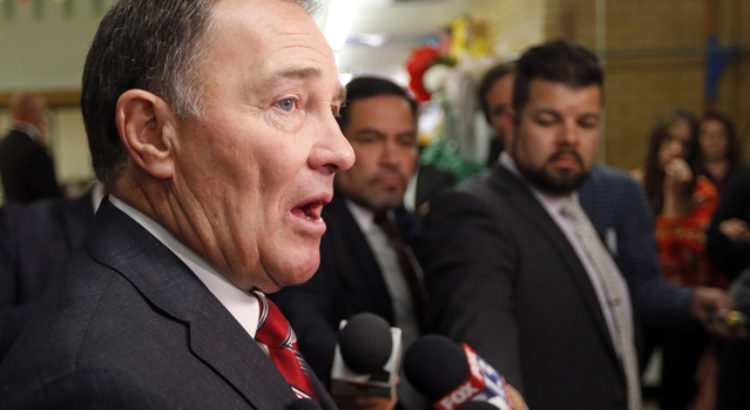
President Donald Trump was in New Hampshire on March 19 when he promoted executing big-time drug dealers and running a blitz of ads that “scare” teens from “going to drugs of any kind.”

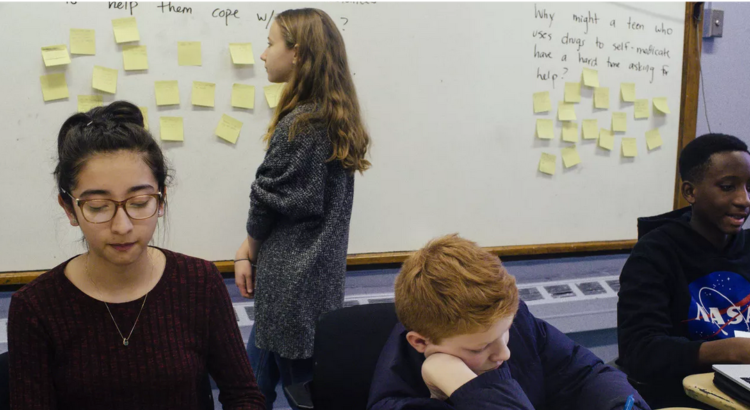
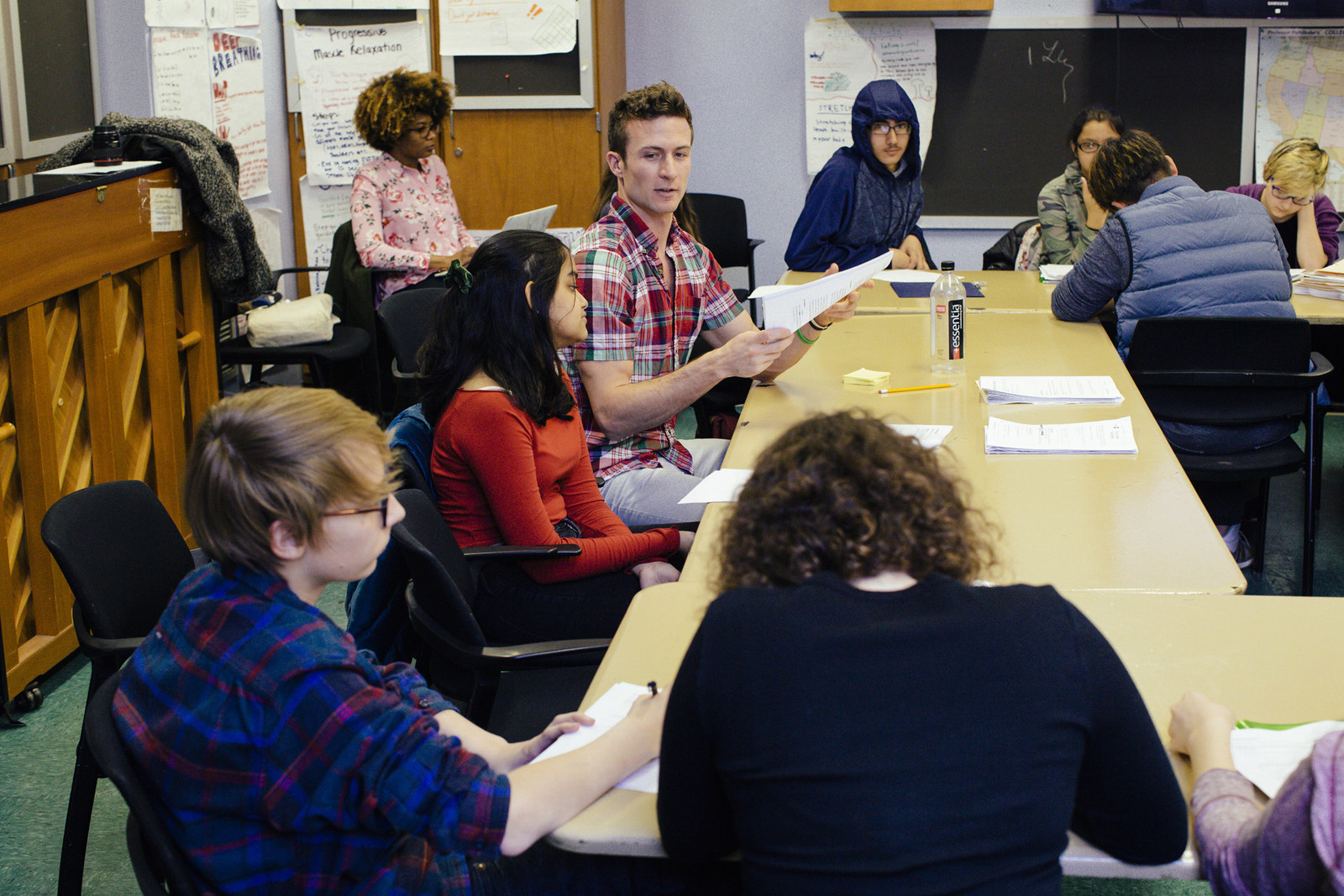
Eighteen hours after Trump’s talk, 14 public school freshmen filtered into a classroom at Bard High School Early College on Manhattan’s Lower East Side, where Drew Miller, a health teacher with a sex ed background, led them in totally different talk about drug use.

“If you’re choosing to use, make sure you’re in a good place, and with people you trust and a safe location,” Miller told the 14- and 15-year-olds, who are enrolled in a prototype drug course focused on making safer choices and reducing harm. “If you’re taking it, start with a small dose.”

Much of what is taught in the 14 sessions, which run 50 minutes each, may seem like common sense. But a dictum that doesn’t demand abstinence is a fairly revolutionary act in American public schools, where anti-drug programs like D.A.R.E. have told kids for decades to «just say no.»

“Why practice harm reduction?” Miller asked, referring to a central tenet of the course. It’s anchored on the idea that drugs cannot be eradicated completely, and that minimizing risk is best done through health services and education.

“Teens often find themselves in places where drugs are happening,” one girl offered. Several students yelled their ideas to cut risk: not taking any drugs, taking smaller doses, and not mixing substances.

The New York City Department of Education runs the course, but the curriculum was created by the Drug Policy Alliance, an advocacy group that supports medical treatment over criminal penalties for drugs and the legalization of marijuana. Trump’s war-on-drugs rhetoric is nothing new — trying to petrify kids into sobriety is a tactic that’s been used for decades. But there’s little scientific evidence teaching full abstinence from drugs works. The Drug Policy Alliance hopes this sort of drug class can be expanded, and that it could actually work.

New York state lawmakers in 2015 required schools to start providing “the most up-to-date, age appropriate information available regarding the misuse and abuse.” The Drug Policy Alliance responded by developing the class, “Safety First: Real Drug Education for Teens,” based on a pamphlet that the group wrote for parents. For schools, it combined instructional videos, homework, and free-wheeling conversations, all designed to meet the federal government’s National Health Education Standards.

Sasha Simon, who sits in on the classes to monitor their trial run, worked in sexual health education before starting at Drug Policy Alliance last year to launch the new classes.

“For once, somebody did it right,” she said after one of the sessions. “And I thought, I will push this as much as I can.”
 Sara Naomi Lewkowicz for BuzzFeed News

Trump may actually like one aspect of the class — it does scare the kids.

Miller played a video about fentanyl and similar potent synthetic opioids, which are sometimes mixed into other drugs with fatal consequences. “It’s very easy to overdose,” a narrator in the video warned. “Carfentanyl is 10 times more powerful than morphine.”

 “Oh my god,” a girl in class gasped. Two others clasped their hands over their mouths.

“I’d say you could die,” another student said about the advice she would give anyone considering opioids. “I’d say don’t do t — the harms can overtake the pleasure you get out of it.”

“If you give them the facts, they’re scary enough. You don’t need to say, ‘Don’t do it.’”
Simon reflected in the teachers lounge, “If you give them the facts, they’re scary enough. You don’t need to say, ‘Don’t do it.’”

But Trump has a different scare tactic in mind. As he said in New Hampshire, he wants to depict addicts in a state of depravity in order to “scare [kids] from ending up like the people in the commercials.”

Lewis Nelson, chair of the department of emergency medicine at Rutgers New Jersey Medical School, told BuzzFeed News that simply trying to scare kids into abstinence can have mixed results.

“Some children respond to scare tactics, but these can compel others to use,” he said. “Most people who hear that drugs can cause you to lose control, or even die, will avoid them. But some thrill seekers, or even just teens who believe they are invincible, may crave that sort of risk.”

“There is no magic bullet,” he added. “Although abstinence is optimal, we have learned in public health that this endpoint is only partially achievable. For those who use, harm reduction is essential.”

Harm reduction stands apart from Drug Abuse Resistance Education, D.A.R.E., a federally endorsed class that began in 1983. D.A.R.E. used to warn that pot would lead to crack, and still, it tells students to never try a drug. The medium is also the message: D.A.R.E. is taught by a cop. According to a 1998 study produced for the National Institute of Justice and presented to Congress, “D.A.R.E. does not work to reduce substance use.”

It remains the most prevalent drug education program in the US, reporting a budget of $10.3 million from private and public backers, with programs in all 50 states, reaching 75% of the country’s school districts. As criticism has mounted, D.A.R.E. has tried to adapt, and it reports that a new program for elementary schools, keepin’ it REAL, reduced marijuana, tobacco, and alcohol use by 32% to 44%.

Nelson isn’t opposed to D.A.R.E. and programs like it, he said. “They may work for certain students, but they need to be paired with harm reduction efforts for those who do not respond to abstinence education.”

D.A.R.E. has taken a hard-line stance against marijuana legalization, warning that it leads to more use of marijuana and suggesting that, in turn, leads to hard drugs.

Richard Mahan, D.A.R.E.’s chief operating officer, told BuzzFeed News his program does not teach complete abstinence, per se.

However, Mahan declined to share any current D.A.R.E. curriculum with BuzzFeed News, instead describing it as “state-of-the-art prevention science that focuses on providing students skills for safe and healthy decision making.”

If students were to ask, he wrote by email, “We respond by stating directly that students should never use illicit/illegal drugs of any kind.
Sara Naomi Lewkowicz for BuzzFeed News

It’s difficult for Americans to agree on what “works” in drug education, partly because they have different ideas about what qualifies as “working.”

The federal government’s Monitoring the Future Survey, which asks students in 8th, 10th, and 12th grades questions about their habits, has become the standard model to measure teen drug behavior. It asks when students try drugs for the first time and how often they use them. If officials say the results look good, they generally mean kids are avoiding new drugs and using them less often.

It’s difficult to agree on what “works” in drug  education because Americans have different ideas about what qualifies as “working.”

The 1998 study for Congress about D.A.R.E. used metrics like these. It concluded classes that provide information, arouse fear, make a moral appeal, or build self-esteem, are all “largely ineffective for reducing substance use.” Rather, it found that teaching skills to resist social pressure “do reduce substance use. But the effects of even these programs are small and short-lived in the absence of continued instruction.”

Not surprisingly, researchers have different ideas about how to measure the success of the program at Bard High School.

Simon believes that asking about how behaviors changed during the course is “not important,” she said. “I think that what’s most important is that we are making sure young people are safe, not that we are preventing their use.”

Better metrics are whether students understand concepts like dose and dosage, considering their mindset and setting, and ability to keep each other safe, Simon added. She was also interested in the longer-term outcomes of creating adults who know how to avoid abusive habits.

“I don’t need to ask a teenager and make them feel uncomfortable,” she said. “I don’t need to ask a teacher to ask their student what drugs are you taking and how often.”

Indeed, at one point, Miller asked the students to not turn in a drug questionnaire they’d been given.

“You don’t have to do that,” he said as a class wrapped up. “It’s asking about your habits. If I collect it, and you report that you are doing something, I would have to — I would be concerned and have to talk to you.”

But Nina Rose Fischer, an assistant professor at City University of New York who is studying the class, thinks questions about drug use serve to understand the class’s impact. She’s comparing the cohort in at Bard in Manhattan to a control group at another public high school in Queens, where students are taking a more standardized health class. Her survey asks about drug use patterns before and after the class.

“We say how many times per day do you smoke weed, when do you smoke weed during the week?” said Fischer, whose research, which is also being funded by the Drug Policy Alliance, will be synthesized in a report.

She said students may divulge that they smoked pot during school before the course, but after the curriculum, they may report they’re only using it over the weekend. “And that,” she said, “would be seen as a harm reduction achievement.”
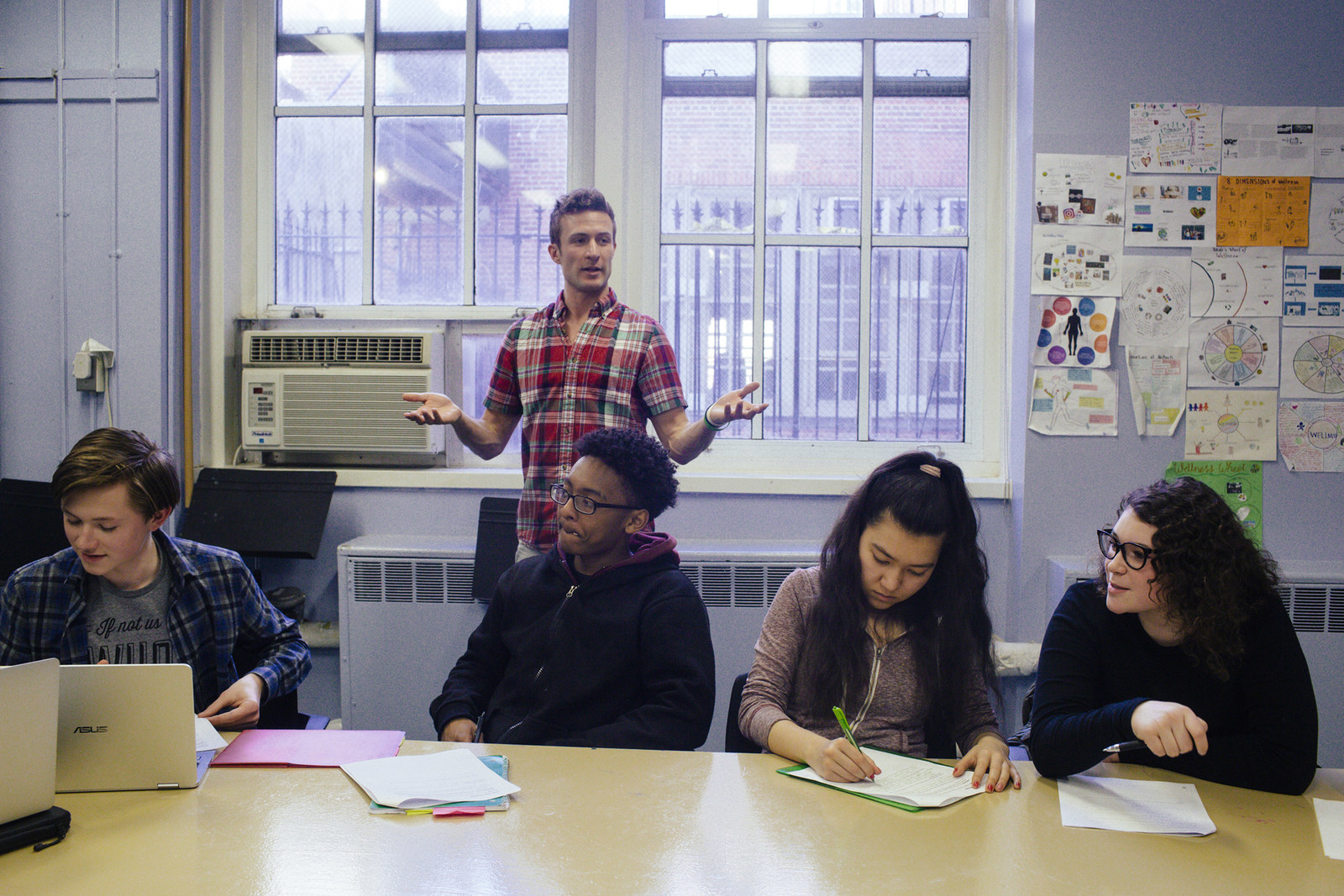
Sara Naomi Lewkowicz for BuzzFeed News

Some parents were alarmed by the Drug Policy Alliance’s stance on pot laws, Simon said. “I’ve gotten pushback from parents who are like, ‘What are you talking about with my kids? I know you are trying to legalize this. Are you trying to influence our kids to do that?’”

“We would not encourage drug use — we would never teach them to use a drug,” she said. “We give them tools to figure things out for themselves, which is much more important than to ‘just say no.’”

But the legality of drugs — the risk of punishment, both under school rules and criminal law in particular — comes up regularly.

“If we were to legalize marijuana,” one of the girls volunteered, “it would be safer because people would know what’s in it. With legalization, people are less likely to put something into your body that you’re not aware of.”

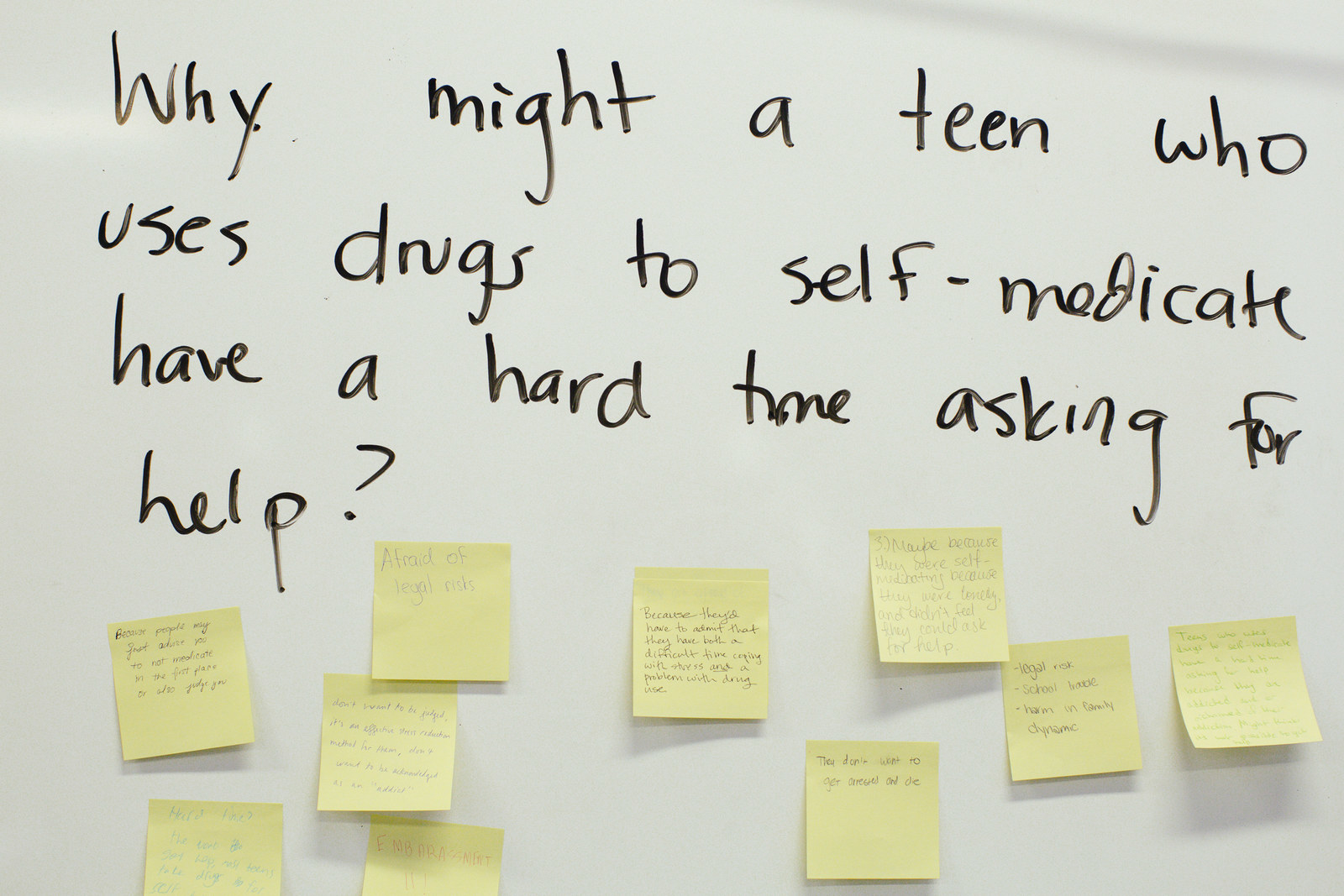
On Friday, March 23, the class talked about why people use drugs in the first place, and they debated the idea of “self-medicating” — that drugs can be used to relieve stress.

The conversation among the students straddled the line between possible benefits of drugs and alcohol — they can be fun and relieve stress — and the harms that can come of them. Rather than focusing overdoses and addiction, this particular discussion was about issues like a hangover or avoiding your problems.

“People might feel better in the moment, but it’s not long-term effective,” Miller warned.

Fuente: https://www.buzzfeed.com/dominicholden/these-teens-are-taking-a-class-on-drugs-that-is-definitely?utm_term=.gna1PA2Bkn#.ewGXv8YBxP

Comparte este contenido:

Maestros de Colorado protestan inspirados en otros docentes de EE.UU.

América del norte/Estados Unidos/19 Abril 2018/Fuente: Prensa Latina

Los maestros de Colorado marcharon hoy frente al capitolio de ese territorio estadounidense con el fin de exigir más fondos para la educación, inspirados en protestas similares en otros lugares del país.
De acuerdo con la Asociación de Educación del estado (CEA), el poco financiamiento y el bajo salario provocan que el trabajo sea menos atractivo para los graduados universitarios, por lo que muchos abandonan la profesión antes de lo previsto y hay una escasez de docentes calificados.

Cientos de profesores, que vistieron camisetas rojas como parte de una campaña iniciada en Arizona que lleva por nombre Red for Ed (Rojo por la Educación), se concentraron frente al legislativo en Denver, ciudad donde cerró un distrito escolar debido al alto número de maestros que decidió movilizarse esta jornada.

Jessica Tarkanian, una de las manifestantes, declaró a CNN que fue a la protesta para ‘apoyar nuestra jubilación, financiar nuestras escuelas y garantizar que obtengamos lo que necesitamos para nuestros hijos’.

Como maestra en la Escuela Primaria Cherrelyn, Tarkanian dijo que recientemente se mudó con otra familia para ahorrar dinero y llegar a fin de mes, y que aunque ha enseñado durante una década, gana lo mismo que una docente con tres años de experiencia.

La presidenta de la CEA, Kerrie Dallman, dijo a la televisora que los educadores de Colorado se vieron animados a movilizarse tras las manifestaciones en Virginia Occidental, Oklahoma, Kentucky y Arizona, donde los profesores exigieron mejoras salariales y mayor financiación para la enseñanza pública.

‘Nuestros miembros están llenos de energía y cansados por la constante falta de fondos crónicos de nuestras escuelas públicas año tras año’, manifestó la líder gremial.

Según la agrupación de docentes, el salario promedio de los educadores de Colorado ha disminuido en más de un 17 por ciento al ajustarse a la inflación en los últimos 15 años.

En 2016, el estado se ubicó en el lugar 46 en el país en cuanto al sueldo de los profesores, de acuerdo con un informe de la Asociación Nacional de Educación.

Al mismo tiempo, la CEA denuncia que Colorado ha subfinanciado sus escuelas en 828 millones de dólares, porque no ha cumplido con un mandato constitucional aprobado en la última década para aumentar los fondos cada año, al menos en correspondencia con la tasa de inflación.

Las acciones en ese territorio se dieron la misma jornada en que los maestros de Oklahoma regresaron a las aulas después de un paro de nueve días.

Esa huelga incitó a los legisladores a subir los fondos educativos en 479 millones de dólares e incrementar el salario de los profesores en seis mil 100 dólares al año como promedio, el mayor aumento en la historia del estado, indicó a Asociación de Educación estatal.

Fuente: http://www.prensa-latina.cu/index.php?o=rn&id=170822&SEO=maestros-de-colorado-protestan-inspirados-en-otros-docentes-de-ee.uu.
Comparte este contenido:

Cuando los estudiantes tienen una estructura para el pensamiento, surge un mejor aprendizaje

Estados Unidos / Autor: Katrina Schwartz / Fuente: Compartir Palabra Maestra

Siempre ha sido un reto enseñar para que haya entendimiento, por lo cual el Proyecto Cero de Harvard ha intentado descubrir cómo lo hacen los mejores maestros.

En medio de las discusiones sobre estándares de contenido y currículos y estrategias de enseñanza, es fácil perder de vista las metas más importantes de la educación, como son el dar a los estudiantes herramientas para profundizar su entendimiento cuantitativo y cualitativo del mundo. Siempre ha sido un reto enseñar para que haya entendimiento, por lo cual el Proyecto Cero de Harvard ha intentado descubrir cómo lo hacen los mejores maestros.

Algunos maestros hablan de la metacognición con sus estudiantes, pero a menudo simplifican el concepto describiendo solo una de sus partes: pensar sobre el pensamiento. Los maestros buscan que los estudiantes hagan una pausa y se den cuenta cómo y por qué están pensando y vean el pensar como una acción que están realizando. Pero en estas discusiones a menudo se quedan por fuera otros dos componentes esenciales de la metacognición: monitorear el pensamiento y dirigir el pensamiento. Monitorear es cuando un estudiante está leyendo y se detiene al darse cuenta que realmente no está entendiendo el significado de las palabras. Más importante, dirigir el pensamiento es cuando un estudiante puede recurrir a estrategias de pensamiento específicas para reorientar o cuestionar su propio pensamiento.

“Tener una rica base metaestratégica para el pensamiento nos ayuda a aprender en forma más autónoma, dijo Ron Ritchhart, investigador asociado senior de Proyecto Cero, durante una conferencia de Learning and the Brain. «Si no tenemos esas estrategias, si no somos conscientes de ellas, estamos esperando que otra persona dirija nuestro pensamiento».

Ayudar a los estudiantes a ‘aprender a aprender’ o, en los términos de Ritchhart, a convertirse en ‘pensadores metaestratégicos’ es crucial para el entendimiento y para volverse estudiantes de por vida. Para descubrir qué tan conscientes son los estudiantes de su pensamiento a diferentes edades, Ritchhart ha trabajado con escuelas en el desarrollo de ‘culturas del pensamiento’. Su teoría es que si los educadores pueden hacer más visible el pensamiento y ayudar a los estudiantes a desarrollar rutinas sobre el pensamiento, entonces se profundizará lo que piensan sobre todas las cosas.

Su investigación demuestra que cuando a los estudiantes de cuarto grado se les pide desarrollar un mapa conceptual sobre el pensamiento, la mayor parte de su lluvia de ideas se centra en lo que piensan y dónde lo piensan. «Cuando los estudiantes no tienen estrategias para el pensamiento, así es como responden – qué piensan y dónde piensan», dice Ritchhart. Muchos estudiantes de quinto grado empiezan a incluir en sus mapas conceptuales categorías generales de pensamiento tales como ‘resolución de problemas’ o ‘entendimiento’. Son cosas asociadas con el pensamiento, pero muchos estudiantes de quinto aún no mencionan el proceso de pensar.

En sexto, algunos estudiantes empiezan a incluir en sus mapas estrategias de pensamiento tales como ‘concentrarse’ o ‘no dejarse enredar por cosas irrelevantes’. Pero en noveno, muchos estudiantes incluyen en sus mapas conceptuales estrategias específicas para el pensamiento tales como ‘hacer conexiones’, ‘comparar’ y ‘descomponer las cosas’.

Ritchhart analizó a 400 estudiantes de una escuela y se concentró en cultivar una cultura del pensamiento. El estudio no tenía grupo de control, pero Ritchhart logró registrar el desarrollo de la metacognición desde el grado cuarto al 11.

«En esencia, los estudiantes lograron un avance de dos años y medio respecto a lo que podría esperarse solo de maestros intentando crear esa cultura del pensamiento», afirma Ritchhart. Él admite que el estudio no es definitivo pero a su modo de ver, es una prueba de que cuando los maestros se concentran en estas ideas, observan mejoras.

¿CÓMO PUEDEN AYUDAR LOS EDUCADORES?

En una cultura del pensamiento, el estudiante reconoce que el pensamiento colectivo e individual es valorado, visible y activamente promovido como parte de la experiencia diaria habitual de todos los miembros del grupo. Este tipo de cultura puede existir en cualquier lugar en que aprender sea parte de la experiencia, como la escuela, las actividades después de clase o los programas de los museos.

Para ayudar a concretar más estas ideas, Ritchhart y sus colegas han estado trabajando en la creación de una lista corta de ‘jugadas del pensamiento’ relacionadas con el entendimiento. Para probar si estas jugadas eran realmente cruciales, los investigadores se preguntaron si un estudiante podría decir que realmente entendía algo si no se había involucrado en la actividad. Consideran que las ‘jugadas del pensamiento’ claves que llevan al entendimiento son:

  • Nombrar: ser capaz de identificar las partes y piezas de una cosa
  • Indagar: las preguntas deberían impulsar todo el proceso
  • Examinar diferentes perspectivas y puntos de vista
  • Razonar con base en evidencia
  • Hacer conexiones con el conocimiento previo a través de áreas temáticas, incluso con la vida personal
  • Destapar la complejidad
  • Captar el corazón y llegar a conclusiones sólidas
  • Desarrollar explicaciones, interpretaciones y teorías.

Todas estas jugadas del pensamiento permiten concluir que el aprendizaje no se da simplemente con la entrega de información. «El aprendizaje ocurre solo cuando quien aprende hace algo con la información», dice Ritchhart. «Por lo tanto, como maestros debemos pensar no solo en cómo transmitir el contenido, sino también en qué le pediremos a los estudiantes que hagan con dicho contenido».

Una forma sencilla de empezar a pedir a los estudiantes que sean más metacognitivos es reservar tiempo para reflexionar sobre el pensamiento. Pedirles que piensen sobre la clase e identifiquen los tipos de pensamiento que usaron a lo largo de ella. Así, no solo se desarrolla el vocabulario sobre el pensamiento, sino que a menudo se da a los estudiantes la confianza de nombrar estrategias de pensamiento específicas que usaron. Tomarse este tiempo para reflexionar también recuerda a los estudiantes que hicieron un trabajo real durante la clase.

RUTINAS DE PENSAMIENTO

Para entender cómo los maestros hacen visible el pensamiento, Ritchhart analizó a maestros que eran muy eficaces ayudando a los estudiantes a adentrarse más allá de la retención superficial de información, en la verdadera comprensión del material, en cuanto a la relación de este con sus demás estudios y con su vida. Se dio cuenta de que ninguno de ellos daba una clase sobre el pensamiento.

«Tenían rutinas y estructuras que sostenían y apoyaban el pensamiento de los estudiantes», dice Ritchhart. El hallazgo llevó a que él y a sus colegas de Proyecto Cero crearan «rutinas de pensamiento» que todos los maestros pueden usar para ayudar a los estudiantes a desarrollar hábitos de la mente que generen más entendimiento.

Una forma de desarrollar una cultura del pensamiento es tomar una de las rutinas de pensamiento diseñadas por Proyecto Cero y usarla repetidamente en diversos contextos. En lugar de probar cada rutina una vez, aplicar una rutina en numerosas formas ayudará a que se vuelva más habitual el pensar de cierta manera. Al igual que otras normas, se convierte casi en una expectativa en el aula.

Un ejemplo que va más allá del aula K-12 viene de la Escuela de Medicina de Harvard, donde los instructores tenían dificultades entrenando a los estudiantes para escuchar a los pacientes y hacer diagnósticos sólidos con base en los síntomas que escuchaban. La escuela de medicina hizo un experimento ofreciendo a los estudiantes un módulo electivo en el que participaban una vez a la semana en una clase de bellas artes y usaban la rutina de pensamiento de «ver, pensar y preguntarse» para contemplar el arte. Al cabo de 10 semanas, todos los estudiantes de medicina eran evaluados en diagnóstico clínico y los que habían practicado el «ver, pensar y preguntarse» habían mejorado mucho más que los que no habían participado.

«Una de las razones por las que las llamamos rutinas de pensamiento es que mediante su uso, pensar se vuelve rutinario», dice Ritchhart. El Proyecto Cero está trabajando con maestros en todo el país para que apliquen rutinas de pensamiento en el aula. Muchos han reportado que los estudiantes, después de hacer las rutinas en forma estructurada varias veces, empiezan a usar los protocolos en forma natural para todo.

Fuente del Artículo:

https://compartirpalabramaestra.org/columnas/cuando-los-estudiantes-tienen-una-estructura-para-el-pensamiento-surge-un-mejor-aprendizaje

Comparte este contenido:

Interview: Deborah Quazzo on the Business of Education Innovation, the Nation’s Shrinking Skilled Workforce & the GSV Acceleration Fund

By: EMMELINE ZHAO

Deborah Quazzo got her start in education at an investment bank.

In the mid-1990s, while Quazzo was working in finance at Merrill Lynch & Co., she was inspired by colleague Michael Moe, who was a growth research analyst identifying trends and themes in the growth economy. Moe developed white papers and built businesses around one of the core themes: education.

What Moe discovered was that human capital, a major chunk of American GDP, was highly fragmented and inefficient, yet untouched by technology at the time. Employers and economists were deeply dissatisfied with outcomes across the board. In working together, Moe and Quazzo realized that there was huge potential for entrepreneurs to enter the space and create businesses in education that built human capital.

With that, Quazzo began looking at the future of education as an investing platform, from which she and Moe eventually grew to become business partners upon leaving Merrill Lynch. As Moe continued to explore abroad growth themes, Quazzo was diving deeper into education domestically.

In 2009, Quazzo co-founded GSV Advisors, an advisory firm focused on learning and human capital technology companies. She now acts as founder and managing partner of GSV Acceleration Fund, a venture capital fund with more than 25 investments in disruptive technology companies, including ClassDojo, Course Hero, and Turnitin.

GSV, which stands for Global Silicon Valley, partnered in 2010 with Arizona State University for the first ASU+GSV summit. Now in its eighth year, the gathering brings together leaders from investment, enterprise, higher education, and pre-K–12 sectors “for elevating dialogue and driving actionaround raising learning and career outcomes through scaled innovation.”

Ahead of the summit next week, during which more than 4,000 stakeholders and change makers in education innovation will descend on San Diego for the conference, The 74 spoke with Quazzo about the inspiration behind ASU+GSV, the role of technology and investment in learning, and the state of innovation across the American education sector. This interview has been edited for length and clarity.

What happened in 2008 that made you decide to dedicate 100 percent of your time to investing in education technology?

I realized that I had become quite passionate both philanthropically as well as professionally around the fact that innovation in the education market is a unique lever in giving people access. Our motto is getting all people access to the future and allowing all people to participate in the future economy. So it was an area that I was inspired by and made me get out of bed in the morning, so I really hunkered down and began to spend 100 percent of my time there, which has been great.

How has your perspective on education evolved since the time when you were just reading Moe’s reports at Merrill Lynch?

I don’t know if it’s change as much as just what I didn’t know when I started.

We have invested thousands of hours, meeting with companies, talking to entrepreneurs and innovators, both philanthropically as well as socially. We spent time in schools with educators both in the K-12 space as well as the higher ed space. The enterprise is as interesting as anything.

I think there is great dysfunction in terms of delivering the right learning at the right time and the enterprise, especially with the pace at which jobs are changing today. So I’m a lot more optimistic today than I was probably when I got into this 20 years ago.

I think 20 years ago, the education sector really lagged every other technology sector in terms of adoption of technology-based solutions. That’s not to say that technology is a silver bullet, but it can certainly give critical scale in an area where we really need scale to help us bridge achievement gaps and bridge the fact that only 30 percent of people have a higher education credential and probably more like 60 to 80 percent of people are going to need them in the future. So we think it’s a critical wedge.

I think what’s really changed is that somewhere around 2008, 2009, 2010, we began to see a new a new breed of leader and entrepreneur come into the sector — both social and commercial. People who had either been very successful in technology or in other sectors and actually wanted to come make a big difference began to bring their talents into the marketplace.

The population of students and teachers also over time became dominated by digital natives in a way that obviously wasn’t true in prior years. In programs like Teach for America young people out of college will go into the teaching profession and become inspired about fixing one thing or another in their classroom experience, and go back out and found companies. We’ve seen lots of that from different sources.

So I think there has been sea change. I think the other thing that’s happened is just where we are in the tech sector in terms of having data and being able to transparently look at results: It allows students, teachers, faculty members, and adult learners to know whether the things they are using are actually working. That was something that hadn’t really been true in the past.

It’s what we like to call “a confluence of catalysts.” There was dramatic reduction in costs for technology implementation, the huge influx of talent into the sector, and just the natural migration of demographics such that the user had a natural digital proclivity.

Do you think we’ve seen a true disruption in K-12 and higher ed?

I do. The K-12 market gets kicked around a lot as being a market environment that never changes, but I actually think some of the greatest innovations are happening in K-12 and has happened around personalized learning, around looking at different ways of delivering instruction, led by great school leaders and teachers. So maybe I don’t know it’s been disruptive as much as it has been a strong evolution towards more effective delivery of learning in classrooms, and I think you can see results in different pockets all over the country.

Chicago is a good example of where people have really looked to leverage all kinds of that innovation and thinking to drive outcomes for students.

I’d say higher ed has seen more literal disruption, whether it’s MOOCs, which people love to act like they aren’t working, but they’ve aggregated just a massive number of global students. Students at Coursera, for example, are actually accelerating on a month-to-month basis coming onto the platform.

We’re seeing all kinds of interesting businesses being developed for the delivery of online degrees at universities in a non-university setting. So I think there actually has been a really interesting disruption in higher education institutions, whereas 10 years ago you had to sell an online learning product. Today I think it’s pretty well recognized that digital delivery of learning in some format is a sensible part of your portfolio. Students are really expecting to see some component of their learning in online formats, so I think there has been a literal disruption in the higher ed market that’s continuing. And it will continue to play out, as we’ve actually got some pretty interesting demographic changes coming down the pike to higher ed.

Tell us more about these demographic changes.

There’s a book written by Nathan Grawe called Demographics and the Demand for Higher Education. There was a dramatic fall-off in fertility rates during 2008–2010, a depression that really has not bounced back. So if you look out to the 2025 area, you begin to see very substantial reductions in high school population that would be going to college: 10 to 15 percent, even higher percentages, depending on geography. And you also end up seeing a re-sorting of where the growth is.

The Northeast and the Midwest will see the most precipitous declines. The Southwest is the only area that’s seeing any material growth in college-eligible high school population, so it’s a pretty interesting dynamic for a university to be planning for that, that has been landlocked by their site.

So if you’re a mid-tier university in the Northeast, you probably need to be thinking about where you’re going to be pulling your student body from, whether it should be all physical or whether you need to actually have it be digital or online in order to support your physical plan.

What’s your analysis of the education policy landscape right now in terms of innovation?

My general sense is that the wheels are in motion. No one wants to talk about Common Core anymore, but those wheels did get set in motion and did get planted in different ways — maybe people changed the titles. But accountability at the district level, we certainly see it here in Chicago, there’s a very effective accountability framework.

I think a lot of the things that have been put in place are moving forward. I think whether there’s policy changes in higher ed that result in freedom for for-profit institutions is sort of a moot point at this point, as many of them have now converted into different formats of not-for-profit and for-profit pieces, so that industry has really already restructured ahead of any further policy change unless new entities jump in as a result, which seems less likely.

So I don’t get the sense that policy is either being used to aggressively accelerate things — which I would say would have been true under the Obama administration — or to decelerate things — which could also be argued to be true under the Obama administration, depending on what sector you’re talking about — but it was an activist policy environment then and perhaps it’s activist in a different way now with the folks on choice and things like that. But I just don’t see that as having as much of an impact, barring some big changes today.

Have you encountered challenges and/or opportunities because you are a woman?

Challenges change. I do think we’re particularly proud within the education and human capital talent in the technology sector. At our ASU+GSV Summit, we don’t select with this in mind, but we have about 400 CEOs of tech companies present the summit and about a third of those companies are founded or led by women. This year actually the numbers went up to about 38 percent of the companies are founded or led by women.

On the positive side, I would say this: The education and human capital sector, for whatever reason, seems to be one that’s much more supportive for women to participate in leadership roles, because a normal tech sector is more like 6 percent.

I have a venture capital fund, and certainly those numbers are still pretty bad in venture capital. We need to have much more aggressive tone in looking at the benefit of having diversity in terms of sex, race, investment communities, and everything else. Diversity leads to better decisions.

About a quarter of our companies are led by people of color, so we’re very proud of those numbers. But in the finance community we don’t see that kind of diversity, so it has a long way to go and we have a lot of work to do.

What are too few people paying attention to right now in education?

It’s a great sector to work in because you have so many people who really care about it. I’m quite optimistic about where things are directionally. I think people do need to keep looking down the road at things like the demographic changes, which are mathematical and should have been obvious to everybody, but I think it’s kind of taken this guy writing a book to really move it front and center.

The bizarre part is we have declining enrollment in higher education and yet we’ve got an expanding need for people to have a higher ed credential of some sort in order to be relevant in the economy and have a good job.

So I think there is a strange dichotomy there that doesn’t seem to get a lot of focus for explanation, like why would we have declining enrollments in the face of people actually needing to have higher levels of skills to hold employment?

Otherwise I feel really fortunate to be operating an area where there are lots of people who really care a lot about the outcomes here, because they know it’s going to make a huge difference in how this country performs in the next 100 years — or doesn’t.

How do you think the private and public sectors should co-exist in education?

We have a concept called “no labels.” We think it’s relatively irrelevant what your tax structure is — whether you’re for-profit, not-for-profit. Organizations have to be held accountable for delivery of “return on education.” Are you increasing access, reducing costs, providing leverage to learning, and that accountability should really be there for any actor in the market. For-profits and higher ed should not be held more accountable than not-for-profits, because there are many bad actors in the not-for-profit sector, as there might have been in the for-profit sector. So I think it’s bizarre to have accountability standards that are different.

Every organization should have similar accountability standards. I think sometimes what you’ll see in for-profit entities is that you can instill greater urgency with potentially less bureaucratic overload, and I think things can get done in startups that can’t get done at bigger companies, either for-profit or not-for-profit, that can be very productive and disruptive to what’s happening. So I think it’s critical that there’s a partnership between the commercial and social organizations in the sector, and that they’re both marching forward and are both held highly accountable for outcomes.

See the full 74 Interview archive right here; get the latest editions delivered straight to your inbox by signing up for The 74 Newsletter

Source: 

74 Interview: Deborah Quazzo on the Business of Education Innovation, the Nation’s Shrinking Skilled Workforce & the GSV Acceleration Fund

Comparte este contenido:

EEUU: Utah leaders hope education measure helps keep teachers

EEUU/April 17, 2018/JULIAN HATTEM. The Associated Press/Source: https://www.seattletimes.com

Political leaders in Utah said Monday they hope a new ballot measure that would nearly triple education funding in five years will help the state entice and hold on to its best teachers.

The ballot initiative will give voters the opportunity to support an increase in the gas tax, currently 29.4 cents a gallon, by 10 cents to gradually increase education funding over the next five years. The proposal was crafted as part of a compromise between lawmakers and an education group that wanted voters to approve a plan that would have sent $715 million to the schools immediately through a hike in state sales and income taxes.

Combined with other funds and a freeze on state property tax rates, which would otherwise drop as property values rise, the initiative would increase education funding yearly starting at $141 million in 2019 and reaching $386 million in 2023.

That would raise overall state education funding to $585 million — nearly three times the funding schools would otherwise receive that year.

If voters approve the measure in November, lawmakers would decide how to allocate the new educational spending, including how much will go to teachers.

The initiative comes as other states grapple with standoffs over teacher salaries that have led to mass protests from West Virginia to Arizona. Last week, thousands of teachers in Kentucky protested at the state Capitol and cheered as lawmakers overruled a veto of a budget that would increase public education spending.

“We need to make sure we can pay our teachers and attract the best and brightest and retain them in the schoolrooms,” Republican Gov. Gary Herbert said at a ceremonial signing for the bill at an elementary school in suburban Salt Lake City on Monday.

Heidi Matthews, the president of the Utah Education Association, the state’s largest teachers’ union, said the money could be used for classroom assistants to give students “more one-on-one learning and alleviate the impact of Utah’s exceptionally large class sizes.”

Additional funding will ensure teachers “have the resources they need to reach, teach and inspire every student and deliver the high quality education that they deserve,” she said.

Utah’s spending per pupil in school is the lowest in the nation. The state spent an average of $6,575 per student in 2015, according to the U.S. Census Bureau, compared to $11,392 nationally.

The state also has some of the nation’s fullest classrooms, according to Department of Education data.

Source:

https://www.seattletimes.com/nation-world/utah-leaders-hope-education-measure-helps-keep-teachers/?utm_source=RSS&utm_medium=Referral&utm_campaign=RSS_all

Comparte este contenido:

How Minecraft is becoming the foundation of a generation’s computer science education

By: CHAD SAPIEHA

Minecraft: Education Edition will be one of the most popular modules at Hour of Code events around the world this week.

Like many adults, Benjamin Kelly didn’t initially get the global Minecraft phenomenon, which has seen millions upon millions of kids investing endless hours exploring and creating within a blocky virtual world. Eventually he came around.

“I consider myself a late adopter,” says Kelly, who teaches technology at Caledonia Regional High School in New Brunswick. “But the students’ passion for the game was unyielding. I adopted Minecraft mainly because of that.”

By “adopted” he means he not only began playing it himself but also brought the game into his classroom. In addition to the 120 million-plus copies of the consumer-oriented version that have been sold since the Swedish-made mining game launched in 2011, Microsoft Corp. has sold more than 2 million Minecraft: Education Edition licenses specially designed to help kids learn to code.

Once he started poking around the game he began to see its educational potential. “It offers community,” he explains. “Minecraft is so popular it’s a culture. And by adding the recent powerful coding connections to the game Microsoft has created the ideal computer science education environment.”

Minecraft: Education Edition allows kids to command an agent within the game using computer code, sending it off to perform actions such as mining, harvesting, or building while the player continues doing whatever he or she likes. It’s designed to provide a familiar and accessible environment in which to introduce kids to some of the core concepts of computer science while keeping things fun and creative.

“I’ve seen examples where coding has caused the agent to build entire cities with random building heights all while the student continues to explore the game,” says Kelly.

Once he began using Minecraft in his classroom there was no turning back. Kelly went on to become a Microsoft Innovative Educator Expert and a Global Minecraft Mentor. He was recently named New Brunswick’s Inspirational STEM Teacher of the Year for 2017.

Minecraft may be the single best educational tool available to support inclusion, universal design for learning, a wide variety of curriculum, and, most importantly, 21st century skills and competencies needed for successful lives and careers,” he says.

Kelly is just one of thousands of teachers now using Minecraft: Education Edition, and he’ll putting it to work again this week as part of the Hour of Code, a series of more than 100,000 teacher-planned educational events taking place in over 180 countries, with 3,000-plus events registered in Canada alone. Educators can choose from hundreds of ready-made tutorials sorted by grade and topics, many with prepared teacher notes. The student-led Minecraft module is, unsurprisingly, among the most popular of these programs.

Cam Smith, a spokesperson for Microsoft in Education Canada who has spent his entire career leveraging technology as a teaching aid (he built his first computer when he was 15), isn’t surprised that kids gravitate towards Minecraft as a portal to learning about computer science. He says nearly 70 million people have used Minecraft tutorials to understand the basics of coding.

Minecraft is a great first step into coding,” says Smith. “It’s an open sandbox environment that is already beloved by students of all ages, genders, and backgrounds around the world. It’s a powerful validation that coding can be a truly creative pursuit for students.”

But are kids actually learning anything by playing Minecraft in the classroom? Smith is convinced they are.

“I’ve seen first-hand the power of how a gamified learning approach to coding ignites curiosity and passion within students,” he explains. “I’ve spoken to educators and have seen students learn to code using Minecraft in classrooms across the country. Complimentary to learning to code, Minecraft: Education Edition helps kids with teamwork by building worlds together.”

Smith’s job has given him opportunity to see how Minecraft not only helps students learn about computer science, but also geography and architecture as kids recreate real world replicas of schools, provinces, and cities. He even once observed students building a river in Minecraft to study fish conservation.

And he’s looked on, satisfied, as Minecraft has nudged quiet students out of their shells. “I’ve seen Minecraft: Education Edition be an incredible tool for students to stand out where they might not be as vocal in the classroom,” he says. “Their work shines through building confidence and an interest in STEM learning.”

As a teacher, Kelly has seen these sorts of occurrences first-hand, too. He believes that Canadian universities are now being flooded with students in computer science and engineering who cut their coding teeth via Minecraft. He thinks even those who don’t go on to study STEM subjects benefit from spending time with Minecraft in the classroom.

“As our world becomes more and more globally competitive and robots take over countless careers, creativity will be a badge for employment,” he explains. “Minecraft is a giant sandbox only limited by the player’s creativity while at the same time fostering the growth of creative ability. The 21st century competencies will win careers moving forward in a world where knowledge is just a mobile device away. Computer science education – and Minecraft: Education Edition – prepare our students today for that future.”

Source:

http://calgaryherald.com/technology/gaming/how-minecraft-is-becoming-the-foundation-of-a-generations-computer-science-education/wcm/f18131f0-a3d4-4d78-a758-2794077de785

Comparte este contenido:

Protege tus datos, protege tus derechos humanos: Guía en tres pasos de Amnistía

Estados Unidos/14 de Abril de 2018/amnesty.org

El presidente de Facebook, Mark Zuckerberg, declarará hoy ante el Senado de Estados Unidos, después de admitir que se podrían haber compartido indebidamente los datos de hasta 87 millones de personas con la empresa Cambridge Analytica.

El escándalo que afecta a Facebook nos ha obligado a muchos a mirar de frente la realidad de cómo se recolectan y se comparten en Internet nuestros datos personales.

El escándalo que afecta a Facebook nos ha obligado a muchos a mirar de frente la realidad de cómo se recolectan y se comparten en Internet nuestros datos personales, y ha puesto de relieve los nuevos desafíos para los derechos humanos que han aparecido en la era digital.

Así que, si te preocupa cómo se están usando tus datos personales, ¿qué puedes hacer al respecto?

Lamentablemente, es casi imposible evitar del todo la recolección de datos. Muchos de nosotros dependemos de las redes sociales e incluso si nos indigna que Facebook no haya protegido nuestros datos, puede que no queramos borrar nuestra cuenta.

Pero es posible limitar en qué medida pueden rastrearnos las empresas. He aquí nuestra guía en tres pasos a los principios básicos.

1. Comprende los riesgos

En primer lugar, es importante comprender quién está recolectando tus datos y por qué.

Google, Facebook y Twitter son las empresas que más rastrean tus datos en Internet y, si usas sus servicios, tendrán también perfiles individuales detallados sobre ti. Emplean estos perfiles para enviarte publicidad selectiva y para personalizar sus servicios con el fin de que quieras seguir usándolos.

Aunque la mayor parte de la información que compartes en privado en estas plataformas sólo es accesible para tus amistades y para las propias empresas, una configuración por defecto mala y confusa puede hacer que parte de la información se haga pública o se comparta con terceros. Aquí es donde entran en escena los “corredores de datos” y las empresas de análisis de datos.

Cambridge Analytica no es más que una de las muchas empresas dedicadas únicamente a acumular y vender datos de personas. Estas empresas recogen y combinan tanto los datos que hacemos públicos, como lo que nos “gusta” en Facebook, con cantidades ingentes de datos que producimos sin saberlo, desde nuestros registros de inscripción como votantes hasta nuestra conducta de navegación en la web. Esto les permite crear perfiles de personas cada vez más detallados.

El rastreo de datos y la creación de perfiles en Internet puede ser perfectamente legítimo, pero también conlleva riesgos para los derechos humanos. Puede ser una amenaza para los derechos de los usuarios y usuarias a la privacidad, así como a la libertad de expresión, pues el temor a ser rastreados puede provocar cambios de comportamiento en Internet. También representa un riesgo de discriminación, pues las empresas —y los gobiernos— podrían abusar fácilmente de los análisis de datos para seleccionar a personas en función de su raza, religión, género u otras características protegidas.

2. Controla tu configuración de privacidad

Ahora que conoces los riesgos, decide qué información quieres compartir en adelante en las principales plataformas. Este es el momento de comprobar la configuración de privacidad de tus cuentas en las redes sociales: ¡repasar la cantidad de datos que han acumulado puede ser muy esclarecedor!

Muchas plataformas tienen los medios para limitar el rastreo, simplemente no los activan por defecto.
Muchas plataformas tienen los medios para limitar el rastreo, simplemente no los activan por defecto. El truco es encontrar la configuración y desactivarla, si es posible.

Un buen lugar para empezar es la “Comprobación de la configuración de privacidad” de Facebook (en cualquier página de Facebook, pulsa sobre el símbolo ? y ve a Comprobación de la configuración de seguridad), donde podrás chequear quién puede ver tus publicaciones y tu perfil, y todas las aplicaciones de terceros que tienen acceso a tus datos.

Comprueba cuidadosamente la lista de aplicaciones y elimina todas las que no reconozcas. El escándalo de Cambridge Analytica se produjo por la capacidad de las aplicaciones de terceros en Facebook para acceder y compartir datos de los usuarios y usuarias.

Desde entonces Facebook se ha visto obligado a limitar hasta qué punto pueden acceder a tus datos estas aplicaciones, pero es posible que estas normas cambien y sean más permisivas de nuevo en el futuro.

También existe ahora una herramienta específica para comprobar si se han compartido tus datos con Cambridge Analytica.

Google también tiene una “Revisión de privacidad” en https://myaccount.google.com/privacycheckup. Aquí tienes la opción de borrar información que ya se ha recogido y de impedir que Google guarde información sobre datos como tu historial de búsquedas, el de ubicaciones y tu actividad de voz y audio.

Twitter no cuenta aún con una revisión de privacidad, pero puedes acceder a la página principal de Privacidad y Seguridad en: https://twitter.com/settings/safetyy comprobar también la lista de aplicaciones que tienen acceso a tu cuenta en: https://twitter.com/settings/applications

3. Usa herramientas para proteger tu privacidad fáciles de usar

Controlar la cantidad de datos que Facebook, Google y Twitter guardan sobre ti es importante, pero eso no les va a impedir ni a ellas ni a otras empresas rastrearte entre bastidores. Por tanto, el siguiente paso es empezar a usar servicios en línea que incorporan características de privacidad.

Puede que creas que tu historial de búsquedas no cuenta como datos personales, pero las empresas lo usan para entender muchas cosas sobre ti.
DuckDuckGo es un motor de búsqueda que te permite buscar en Internet de forma anónima. Puede que creas que tu historial de búsquedas no cuenta como datos personales, pero las empresas lo usan para entender muchas cosas sobre ti, desde tus inquietudes médicas hasta tus trayectos diarios.

DuckDuckGo no guarda ni comparte ninguna información personal cuando lo usas. Cuando pulsas en un enlace a través de DuckDuckGo, el sitio al que te dirige no sabe qué palabras has tecleado para encontrarlo.

Privacy Badger es una aplicación desarrollada por la Electronic Frontier Foundation (EFF) que impide que te rastreen terceros cuando navegas en Internet. Puede impedir que Facebook y Google te rastreen cuando no estás en sus sitios web y también bloquea muchos de los anuncios y corredores de datos que te rastrean en secreto.

También puedes cambiar de navegador. Dos alternativas que vale la pena tener en cuenta son Brave y Firefox. Brave es bueno bloqueando anuncios y rastreadores por defecto, mientras que para Firefox tienes que activar manualmente la “protección contra rastreo”.

Si quieres bucear en los detalles técnicos sobre cómo funciona el rastreo y qué puedes hacer al respecto, el proyecto Yo y mi sombra de Tactical Tech tiene montones de consejos pormenorizados sobre cómo averiguar qué datos personales se están recolectando y cómo controlar tus datos.

Por último, estos consejos sólo se refieren a la gestión de datos en Internet: también deberías seguir estas seis buenas prácticas básicas para proteger tu privacidad en línea: https://www.amnesty.org/es/latest/campaigns/2016/10/really-practical-ways-to-protect-your-privacy-online/

Fuente: https://www.amnesty.org/es/latest/news/2018/04/protect-your-data-protect-your-human-rights-amnestys-3-step-guide/

Comparte este contenido:
Page 157 of 400
1 155 156 157 158 159 400