Page 168 of 397
1 166 167 168 169 170 397

Texas: Brecha entre estudiantes y maestros latinos aumentará con fin de DACA

Estados Unidos/Texas/24 de Febrero de 2018/Autora: Jenny Manrique/Al Día

Según un estudio del Center for American Progress el 25% de estudiantes en escuela públicas es latino mientras solo el 8% de los maestros lo es.

El riesgo de perder unos 20,000 maestros protegidos con DACA agrava un problema ya apremiante: la escasez de docentes latinos en las escuelas públicas donde el número de estudiantes hispanos sigue en aumento.

Según un análisis del Center for American Progress (CAP) un 25% de todos los estudiantes en escuelas primarias y secundarias es latino, lo que los convierte en la minoría étnica más grande en el país. Pero menos del 8% de la fuerza laboral docente en Estados Unidos se identifica como tal.

En algunos estados, como California, Nuevo México y Texas, los estudiantes latinos constituyen la mitad o casi la mitad del cuerpo estudiantil. Texas además aparece como uno de los estados con la brecha más grande entre docentes y estudiantes latinos, 29%. Este escenario es especialmente preocupante en zonas rurales con crecimiento acelerado de comunidades latinas y una fuerza laboral docente extremadamente baja.

“Los beneficios de tener diversidad en la fuerza laboral docente son claros, pero aun así muchos estudiantes latinos con necesidades culturales y lingüísticas únicas raramente aprenden de maestros que comparten y entienden su cultura,” dijo Sarah Shapiro, investigadora asistente para el equipo de educación K-12 en el CAP.

“Tenemos que mejorar el “pipeline” educativo latino mediante el aumento de la ayuda financiera para los latinos en el colegio y programas de credenciales de maestros; hay que ofrecer nuevas vías para obtener certificaciones alternativas, no amenazar a los maestros DACAmentados que ahora están en riesgo de deportación”.

Según el análisis, los estudiantes latinos tienen un conjunto único de necesidades. Mientras que más del 90% de los estudiantes nació en los Estados Unidos, la mayoría tiene al menos un padre nacido en el extranjero.

Los estudiantes latinos también representan el 77% de quienes toman clases de inglés, y la investigación muestra que los programas de doble inmersión o bilingües sirven mejor a estos estudiantes.

Es más probable que los estadounidenses de primera generación enfrenten obstáculos a sus logros académicos, como tener que trabajar y responder por la familia. Los maestros que han experimentado personalmente estos obstáculos pueden brindar un mejor apoyo.

“Los estudiantes latinos son el grupo minoritario más grande en las escuelas estadounidenses, sin embargo rara vez tienen la oportunidad de ser enseñados por alguien de su comunidad”, dijo Lisette Parterlow, directora de iniciativas estratégicas de K-12 en CAP.

“Debemos hacer más para reclutar, desarrollar y retener a los maestros latinos… Además de las protecciones permanentes para los docentes DACAmentados, la reducción de la carga de la deuda de los futuros profesores de latinos y la continua contratación de docentes de latinos para programas de certificación alternativos de alta calidad, pueden ayudar a aumentar la cantidad de docentes”.

Otro dato que revela la investigación es que mientras las tasas de graduación de la escuela secundaria y la universidad están aumentando entre la comunidad latina, los hispanos todavía están por detrás de sus pares blancos y asiáticos en tasas de graduación de secundaria, en 10% y 12% por ciento, respectivamente, y en tasas de finalización de estudios universitarios, en 26% y 48%.

En Texas, por ejemplo, el 34% de los estudiantes blancos se graduó de universidades públicas en cuatro años, mientras que menos del 19% de los estudiantes de latinos alcanzó el mismo umbral.

Finalmente,  otro tema que contribuye a la brecha es que la administración de Donald Trump propuso un recorte de 15% por ciento para la financiación de  Instituciones de servicio a los hispanos:  de $577 millones en 2017 a $ 492 millones en 2018.31

Fuente: http://www.aldiadallas.com/2018/02/21/texas-brecha-entre-estudiantes-y-maestros-latinos-aumentara-con-fin-de-daca/


Comparte este contenido:

En huelga entran Oxford, Cambridge y otras 62 universidades británicas

Estados Unidos/24 de Febrero de 2018/Autor: Angélica Anaya/El País Vallenato

Un total de 64 universidades del Reino Unido, entre ellas las prestigiosas Oxford y Cambridge, comenzaron hoy un mes de huelgas para protestar por los cambios en las pensiones de los profesores.

Los paros han sido convocados por el sindicato University and College Union (UCU) que sostiene que los cambios en el esquema de jubilaciones reducirán en casi 10.000 libras (11.200 euros) la pensión de un profesor universitario normal.

Según medios locales, se estima que más de un millón de estudiantes universitarios de todo el país se verán afectados por las huelgas, de los cuales 80.000 habrían firmado peticiones para exigir un reembolso de dinero por la pérdida de clases que sufrirán.

Los cambios en el Plan de Jubilación Universitaria pretenden revocar un esquema de beneficios definidos que otorga a los funcionarios unos ingresos fijos en su jubilación, a uno de contribución definida, en el que las pensiones están sujetas a cambios en el mercado de valores, explicaron los convocantes.

El sindicato afirmó que el plan actual está funcionando “bien”, mientras que Universities UK (UUK), la organización que aúna todas estas instituciones educativas en el Reino Unido, aseguró que éste presenta un déficit de 6.000 millones de libras (6.779 millones de euros) que no puede ser “ignorado” .

Según la secretaria general del UCU, Sally Hunt, la determinación de UKK por impulsar estas variaciones y su “negativa a comprometerse”, no les ha dejado más alternativa que “atacar” y convocar las huelgas.

“El personal está enojado y la interrupción significativa en los campus en todo el Reino Unido es inevitable”, manifestó.

El líder laborista, Jeremy Corbyn, expresó hoy su “solidaridad” con los profesionales que han convocados los paros y les agradeció el trabajo que hacen en las universidades.

El político instó a las partes a tomar partido en negociaciones “fructíferas” que puedan resolver el problema porque “todo el mundo merece dignidad y seguridad en la vejez, lo que proviene de una pensión decente”.

Fuente: http://www.elpaisvallenato.com/2018/02/22/en-huelga-entran-oxford-cambridge-y-otras-62-universidades-britanicas/

Comparte este contenido:

Estados Unidos: Poneer pride, Stillwater Public Schools provides many resources to those with learning difficulties Melisa Kifer 11 hrs ago

United States, February 24, 2018 /Author: Melisa Kifer/stwnewspress

Resumen: La ley federal conocida como la Ley de Educación para Individuos con Discapacidades (IDEA, por sus siglas en inglés) brinda a los estudiantes con discapacidades el derecho a ser evaluados y recibir un Plan de Educación Individual (IEP) diseñado para satisfacer sus necesidades únicas. Actualmente, más de 800 estudiantes de Stillwater Public School de 3 a 21 años reciben educación especial y servicios relacionados.

The federal law known as the Individuals with Disabilities Education Act (IDEA) provides students with disabilities the right to be evaluated and receive an Individual Education Plan (IEP) designed to meet their unique needs. Currently, more than 800 Stillwater Public School students ages 3 through 21 receive special education and related services. 

Students unable to achieve academic success, even with interventions and remediation, are provided a free comprehensive educational evaluation by the school district. The eligibility team reviews the evaluation results, along with other available data to determine if the student meets criteria for one of the IDEA defined disabilities. This team is also responsible for developing an Individualized Education Plan (IEP) for students who qualify for special education and related services. 

Each district must have a “Child Find” component to discover any students ages 3-21 that are living in district that need services. If infants and toddlers under three years of age are experiencing developmental delays in one or more of the following areas: cognitive, physical, communication, social or emotional, adaptive, or have a diagnosed physical or mental condition, they are evaluated and the team determines if an IEP for district provided services is needed. 

There are 13 disability categories defined under IDEA. Free and Appropriate Public Education (FAPE) is maintained under each category so that educational progress is made in the least restrictive environment. The disability categories are Autism, Deaf-Blindness, Developmental Delay, Emotional Disturbance, Intellectual Disability, Multiple Disabilities, Orthopedic Impairment, Other Health Impairment, Specific Learning Disability, Speech or Language Impairment, Traumatic Brain Injury, and Visual Impairment.

Special Services also oversees more than 200 students who are found eligible for accommodations and services under Section 504 of the Rehabilitation Act of 1973. These are students who do not qualify for special education services, but need accommodations or services temporarily or long term in order to have full access to school. 

When special education was federally mandated in public schools, it was implemented with the intent for funding to be fully provided by state and federal sources. Local expenditures for the 2017 fiscal year exceeded 5 million dollars with less than 30 percent coming from federal and state sources.

 The annual special services report was presented at the Jan. 16 board meeting. The full report is available on the SPS website. Please contact the office of Special Services at 405-533-6300 if we can serve you in any way.

Fuente: http://www.stwnewspress.com/news/pioneer-pride-stillwater-public-schools-provides-many-resources-to-those/article_b5355246-16a4-11e8-8d01-cfa9a5fd70b9.html

Comparte este contenido:

Egypt: U.S. Agency for International Development and Ministry of Education Launch Renewable Energy Curriculum

United States / February 24, 2018/By: APO

Resumen: Un nuevo plan de estudios desarrollado por la Agencia de los Estados Unidos para el Desarrollo Internacional en asociación con el Ministerio de Educación ayudará a más de 300 estudiantes de escuelas técnicas en Aswan y Hurghada a especializarse en energía renovable y prepararlos para el empleo en los prometedores sectores de energía eólica y solar de Egipto.

A new curriculum developed by the U.S. Agency for International Development in partnership with the Ministry of Education will help over 300 technical school students in Aswan and Hurghada specialize in renewable energy and prepare them for employment in Egypt’s promising solar and wind power sectors.

This new, three-year diploma program is the first of its kind in Egypt. It supports the Government of Egypt’s plan to meet 20 percent of its electricity needs through renewable energy by 2022.  The program will provide skilled labor for power plants such as the Benban Solar Park in Aswan, where 40 solar stations will help meet Egypt’s increasing demands for electricity.

Developed by the Ministry of Education and Technical Education in partnership with USAID, the renewable energy curriculum is being piloted in three technical schools in Aswan and Hurghada and will eventually expand to 57 schools in nine governorates.  The coursework combines classroom instruction and hands-on, practical experience to produce technicians capable of immediately contributing to the renewable energy sector.

Advertisement

“The launch of this new curriculum could not be more timely,” said USAID Mission Director Sherry F. Carlin at the program launch in Benban Technical School. “Employers like engineering companies and renewable energy firms need to hire people with skills and experience, and this new technical education program trains students to become skilled technicians who are qualified for these jobs.”

Speakers at the launch ceremony at Benban Technical School in Daraw included Aswan Governor General Magdy Fouad Hegazy and Deputy Minister of Education and Technical Education Dr. Ahmed El Geushey.

This activity is part of the $30 billion that the American people have invested in Egypt through USAID since 1978.

Fuente: https://www.cnbcafrica.com/apo/2018/02/21/egypt-u-s-agency-for-international-development-and-ministry-of-education-launch-renewable-energy-curriculum/

Comparte este contenido:

Estados Unidos: Tristeza y desconfianza tras el tiroteo en la escuela

Por: Internacional dela Educación/21-02-2018

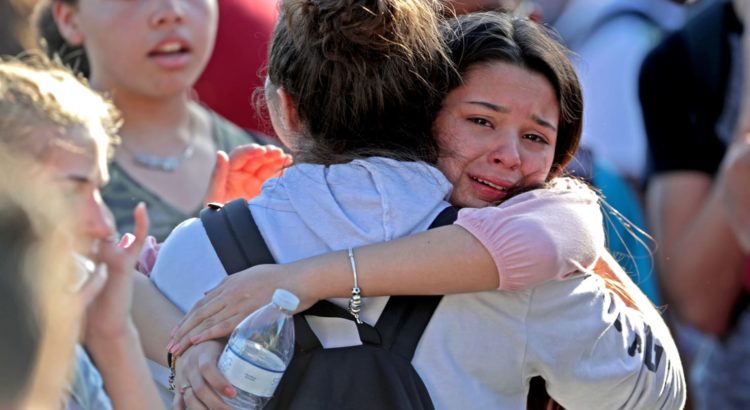
Los docentes de todo el mundo han expresado su conmoción y consternación ante la noticia de un nuevo tiroteo mortal perpetrado en una escuela estadounidense.

Según informan los medios de comunicación, un joven fuertemente armado irrumpió el miércoles en su antiguo instituto, situado al noroeste de Miami, disparando contra los estudiantes y los profesores, y matando a 17 personas. Este saldo podría incrementarse aún más, según las autoridades.

Los afiliados de la Internacional de la Educación (IE) en Estados Unidos, la American Federation of Teachers(AFT) y la National Education Association(NEA), han emitido declaraciones en las que brindan su apoyo a las víctimas y condenan el ataque.

Randi Weingarten, presidenta de la AFT, sostuvo que ante los 18 tiroteos en las escuelas ocurridos este año uno se pregunta «¿cuándo será suficiente?» Además, la presidenta reafirmó el apoyo incondicional que su sindicato profesa a las víctimas: «Haremos todo lo posible para apoyar a nuestros docentes, niños, padres y allegados durante los próximos días, semanas e incluso años. [Y nosotros] seguiremos luchando para evitar que la violencia armada se convierta en la nueva normalidad en nuestros centros escolares».

La presidenta de la NEA, Lily Eskelsen García, ha instado al Gobierno a que actúe contra la violencia en las escuelas. «Todos tenemos la responsabilidad de crear escuelas y comunidades seguras. Como estado y como país, podemos y debemos hacer más para garantizar que todos aquellos que crucen las puertas de nuestras escuelas, ya sean docentes, estudiantes, padres o miembros de la comunidad, estén seguros y a salvo de la violencia», declaró ella.

El secretario general de la IE, Fred van Leeuwen, se ha unido a sus compañeros para exigir que las escuelas sean refugios de paz: «Este es otro incidente más de una terrible serie de tiroteos en escuelas estadounidenses que han truncado demasiadas vidas jóvenes en trágicas circunstancias. La Internacional de la Educación solicita que se realice un mayor control del acceso a las armas en Estados Unidos y que se incremente la seguridad en las instalaciones escolares».

Fuente: https://www.ei-ie.org/spa/detail/15698/estados-unidos-tristeza-y-desconfianza-tras-el-tiroteo-en-la-escuela

Comparte este contenido:

Estados Unidos: Answer Sheet Analysis How mass school shootings affect the education of students who survive

Por: washingtonpost.com/21-02-2108

A Washington Post analysis found that more than 150,000 students attending at least 170 primary or secondary schools in the United States have experienced a shooting on campus since the 1999 Columbine High School massacre, which is sometimes cited as the first in a string of modern mass school shootings.

What happens to these survivors a year, or two, or three later? Is their schooling affected? How have they developed emotionally?

As this Daily Beast piece notes, there is far less research on the psychology of the survivors of mass school shootings than there is on the motivations of the shooters “though the rate and increasing population of subjects means that it is a burgeoning field.”

Below is a post about one research effort to look at the educational experience of survivors, which found that enrollment fell and standardized test scores dropped, too.

This was written by Daniel Willingham, a well-regarded psychology professor at the University of Virginia who focuses his research on the application of cognitive psychology to K-12 schools and higher education. He was appointed by President Barack Obama to the National Board for Education Sciences, the independent and nonpartisan arm of the U.S. Education Department, which provides statistics, research and evaluation on education topics.

He is the author of  several books, including “Why Don’t Students Like School?” and “When Can You Trust the Experts?” He also blogs here, and his posts have appeared frequently over the years on The Answer Sheet.  He can be reached at willingham@virginia.edu, and you can follow him on Twitter @DTWillingham. This appeared on his Science & Education blog, and he gave me permission to republish it.

By Dan Willingham

Not long ago, a friend told me he was going across country to visit his friend who had lost his wife six months previously. He mentioned he had not gone to the funeral. “I don’t get that much time off so I can only go once. Everyone’s at the funeral. Somebody needs to be there six months later.”

It is important to keep this perspective in mind as we continue to process the horrific school shooting in Parkland, Fla. Just as my friend knew losing your spouse is not resolved in six months, we might guess that the trauma associated with attending a high school where murder took place would have long-term consequences.

In fact, Louis-Philippe Beland and Dongwoo Kim have examined the educational consequences for survivors. Using the Report on School Associated Violent Deaths from the National School Safety Center, they identified 104 shootings categorized as homicidal and 53 as suicidal. (Shootings took place on the property of a public or private U.S. school, or while a person was attending or on their way to or from a school-sponsored event.)

School performance data were obtained from each state’s Department of Education website. The researchers used other schools in the same district for comparisons, on the reasoning they would be roughly matched for demographics. (I wonder about the soundness of this assumption.) The researchers examined three main outcomes.

​First, they examined whether enrollment in a school would go down after a shooting. (Note: all of the effects described apply to homicidal shootings. There were no effects of suicidal shootings on any of the outcomes.) They found it did decrease, presumably as parents who could selected other schools. This effect was only observed in 9th-grade enrollments, however. Perhaps families with children already attending a school felt more committed to that school.


Second, they tested whether deadly shootings lowered test scores in later years. They found they did.

Based on the first result, it could be that lower scores are a consequence of the opt-out; maybe it is the most capable 9th-grade students who choose not to attend the school where the shooting took place. So to test the possibility, researchers examined a subset of the data from California schools, where they could access student-level data. The effect replicated. In other words, it is not due to changes in the population. When researchers examine test scores of individual students year to year, those scores dropped after the shooting.

Third, the researchers examined behavioral outcomes including graduation rates, attendances and suspensions. They observed no effects.

​The needs of the students who remain at Marjory Stoneman Douglas High School may be deemed less urgent than those of the immediate families of the slain. That is a fair assessment.

But the needs of the survivors are real, and we must ask how we can address them. And we must not forget the students who attend these schools where murder took place within the last three years:

  • Marshall County High School
  • Aztec High School
  • Rancho Tehama Elementary School
  • Freeman High School
  • North Park Elementary School
  • Townville Elementary School
  • Alpine High School
  • Jeremiah Burke High School
  • Antigo High School
  • Independence High School
  • Mojave High School

*Fuente: https://www.washingtonpost.com/news/answer-sheet/wp/2018/02/20/how-mass-school-shootings-affect-the-education-of-students-who-survive/?utm_term=.e343fe5b4cbb

Comparte este contenido:

EEUU: How higher education sets Virginia apart

EEUU/February 20, 2018/By John McLaughlin and Keith Frederick/Source: https://www.washingtonpost.com

John McLaughlin is chief executive and partner of McLaughlin and Associates. Keith Frederick is the owner of FrederickPolls.

As Virginia’s new Democratic governor and Republican-majority legislature consider the state’s budget priorities, a bipartisan group known as the Virginia Business Higher Education Council has a suggestion.

Citing Virginia’s need to grow and diversify its economy, the council has mounted a grass-roots campaign called Growth4VA to make the case for increased state investments in colleges. They want to use that investment to leverage innovative business-higher education partnerships ranging from research and business start-ups to internships, work-study opportunities for students and strategic workforce development.

The council engaged us last year to investigate what Virginians really think about higher education and its economic impact. Because we ordinarily do our survey work on different sides of the political aisle, they asked us to team up and take the temperature of the state’s taxpayers and tuition-payers on this timely topic.

Source:

https://www.washingtonpost.com/opinions/how-higher-education-sets-virginia-apart/2018/02/16/66c32ce4-102a-11e8-9570-29c9830535e5_story.html?utm_term=.e68954d9b09f

Comparte este contenido:
Page 168 of 397
1 166 167 168 169 170 397