Page 190 of 400
1 188 189 190 191 192 400

EEUU: Money for tutoring, a deal to ease transfers, new textbooks: What’s new in education

EEUU/November 11, 2017/By: Joy Resmovits/Source: http://www.latimes.com

In and around Los Angeles:

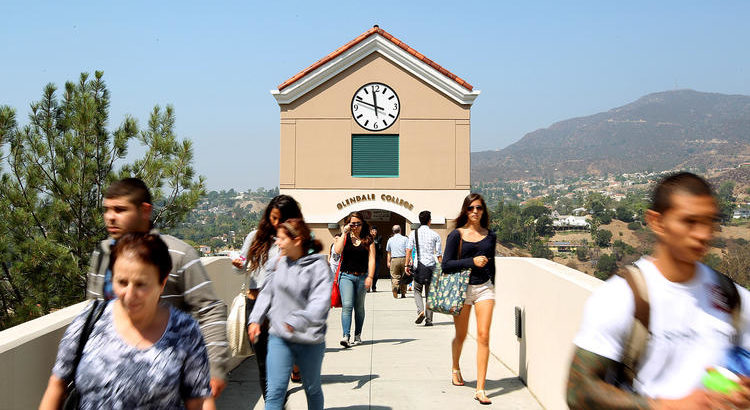
  • Los Angeles will receive an $11.2-million grant from the U.S. Department of Education for tutoring and summer school.
  • The L.A. Community College District signed an agreement with Loyola Marymount University to encourage more transfers and curricular continuity.

In California:

  • The state’s public colleges are trying to fix the transfer process.
  • Hundreds of people spoke out before the Board of Education voted to approve new textbooks to satisfy the state’s history social science guidelines.

Nationwide:

  • Private colleges are expected to outpace public universities in tuition revenue growth for the first time in a decade.
  • After some pushback, schools in Spokane, Wash., will not use Planned Parenthood’s sex education curriculum.

Source:

http://www.latimes.com/local/education/la-essential-education-updates-southern-l-a-s-tutoring-grant-easing-1510327577-htmlstory.html

Comparte este contenido:

Puerto Rico: Departamento de Educación de EE.UU. otorgará dos millones dólares a la isla

Centro América/Puerto Rico/11 Noviembre 2017/Fuente: Hoy los ángeles

La secretaria de Educación de Puerto Rico, Julia Keleher, informó hoy que el Departamento de Educación de Estados Unidos otorgará a la agencia en la isla dos millones de dólares bajo el Proyecto de Respuesta a Emergencia de Escuelas Violencia (SERV, por su sigla en inglés).

Este programa financia servicios de corto y largo plazo relacionados con la educación para ayudar a agencias educativas locales e instituciones de educación superior a recuperarse de eventos violentos o traumáticos que han obligado interrumpir el curso, como pudiera ser el caso de huracanes.

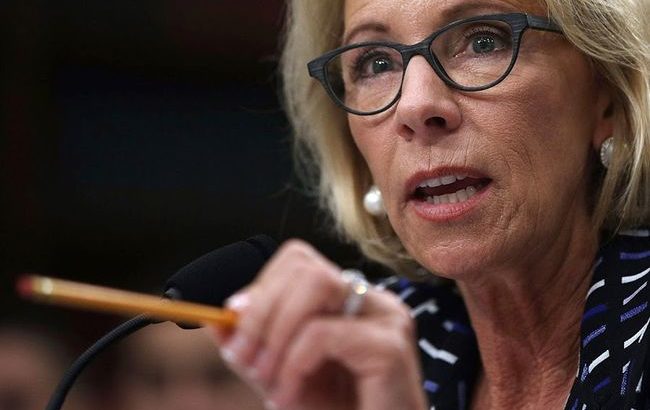
El gobernador de la isla, Ricardo Rosselló, y la secretaria del Departamento de Educación de Estados Unidos, Betsy DeVos, quien llegó a la isla para conocer de primera mano el impacto que tuvo el huracán María en el sistema de educación pública, visitaron hoy la escuela Loaiza Cordero en Santurce.

El primer mandatario indicó que «no hay mejor manera para la secretaria DeVos de conocer las necesidades que tiene nuestro sistema de Educación en la actualidad, que entrar en contacto con la comunidad escolar y los diferentes componentes de nuestra agencia educativa».

Además agradeció a la secretaria de Educación federal «por apoyar la reconstrucción del Departamento, a fin de servir con excelencia a nuestra comunidad estudiantil».

El proyecto busca ayudar en la recuperación a las agencias de educación o instituciones de educación superior que han enfrentado alguna interrupción en el proceso de enseñanza tras un evento violento o traumático.

Al agradecer que DeVos aceptara la solicitud de visitar la isla, Keleher señaló que «es muy importante que la secretaria DeVos vea y conozca personalmente la situación en Puerto Rico para que cuando le toque hablar sobre la educación aquí, o cuando le toque presentar o defender presupuestos, esté clara y tome decisiones basadas en su experiencia».

Asimismo, la titular de Educación estatal indicó que «también deseo agradecer la ayuda y cooperación de la secretaria DeVos y el Departamento de Educación federal en todo momento, ya que anteriormente había enviado a Puerto Rico al secretario auxiliar de Educación Elemental y Secundaria, Jason Botel».

«Nuestro empeño es seguir tocando puertas, todas las que sean necesarias, para lograr que nuestro sistema educativo robustezca y cumpla con las necesidades de nuestros estudiantes y las demandas del siglo XXI», concluyó Keleher.

Durante la visita, DeVos estuvo acompañada de su ayudante especial, Josh Venable, así como del secretario auxiliar interino de Educación Elemental y Secundaria y subsecretario auxiliar del Departamento de Educación federal, Jason Botel.

Fuente: http://www.hoylosangeles.com/g00/efe-3432729-13547465-20171108-story.html?i10c.encReferrer=

Comparte este contenido:

EEUU: Defensores de la educación pública condenan la estafa del impuesto Trump y aplauden a Sewell Bill

América del Norte/EEUU/pfaw.org/

El 3 de noviembre, People For the American Way anunció su oposición a la versión del fraude fiscal del Presidente Trump presentado por el presidente de la Cámara de Representantes, Paul Ryan, y otros republicanos de la Cámara, citando sus promesas vacías de cuidado infantil y el daño que podrían causar a la libertad religiosa. eliminando la Enmienda Johnson. Ahora estamos agregando a nuestra lista de preocupaciones sus ataques a la educación pública, en particular el esquema de cupones escolares que han establecido para recompensar a los estadounidenses ricos por destinar más dinero para la educación de las escuelas privadas de sus hijos.

Tanto PFAW como los ministros afroamericanos en acción son miembros de la Coalición Nacional para la Educación Pública , que dijo lo siguiente sobre el plan Trump-Ryan:

Estamos decepcionados, pero no sorprendidos, de que los republicanos incentiven a los estadounidenses ricos a reservar más recursos para la educación escolar privada en su factura. Al finalizar el programa Coverdell Education Savings Account y permitir que los ahorros pasados ​​y nuevos fluyan a las cuentas 529 -que eliminan las limitaciones de ingresos de los donantes y permiten contribuciones más altas- están permitiendo a los padres tener una nueva opción para aumentar sus activos libre de impuestos y redirigir mayores cantidades de fondos para escuelas privadas y religiosas.

El Congreso debería centrarse en financiar nuestras escuelas públicas, donde el 90 por ciento de los niños reciben educación, en lugar de renunciar a los ingresos para ayudar a las familias adineradas a enviar a sus hijos a escuelas privadas. Para colmo de males, si bien la ley actual ya permite a los padres acumular ahorros en nombre de futuros hijos, el presidente Ryan y sus colegas republicanos han permitido específicamente que los «niños no nacidos» califiquen como ahorradores de la matrícula .

Afortunadamente, también tenemos buenas noticias para compartir en el frente de la educación pública. La representante Terri Sewell introdujo la Ley de Dólares Públicos para las Escuelas Públicas , que pondría fin a otro plan de impuestos prohibiendo a las personas «doble inmersión» y aprovechando los créditos fiscales de colegiaturas privadas reclamados en sus declaraciones de impuestos estatales y federales. PFAW se unió a AASA, la Asociación de Superintendentes Escolares y otras 31 organizaciones para aplaudir el proyecto de Sewell:

Abiertas y no discriminatorias en su aceptación de todos los estudiantes, las escuelas públicas estadounidenses son un factor unificador entre la amplia gama de comunidades en nuestra sociedad. Las escuelas públicas son las únicas que deben satisfacer las necesidades de todos los estudiantes. No rechazan niños o familias. Sirven a todos los niños, incluidos aquellos con discapacidades físicas, conductuales e intelectuales, aquellos que son superdotados y aquellos que tienen diferencias de aprendizaje. La Ley de Dólares Públicos para las Escuelas Públicas asegura que el gobierno federal ya no permitirá que los estadounidenses se beneficien de sus donaciones a programas de vales que agotan los recursos del sistema de escuelas públicas.
Puede ver y descargar nuestra carta, con firmantes, aquí.

Fuente: http://www.pfaw.org/blog-posts/public-education-advocates-condemn-trump-tax-scam-applaud-sewell-bill/

Comparte este contenido:

Entrevista: El sistema educativo colombiano les exige demasiado a los niños

El sistema educativo colombiano les exige demasiado a los niños

Por: Simon Granja


Médicos de Estados Unidos, México y Colombia no daban con un diagnóstico certero sobre el padecimiento de Daniela. No hallaban la causa de los fuertes dolores estomacales que la adolescente, de 15 años, empezó a sentir un día y que no paraban. En medio de la incertidumbre, alguien planteó el peor escenario: podría ser cáncer.

Sus padres siguieron buscando hasta dar con la respuesta. “Finalmente nos dijeron que era estrés escolar, algo sobre lo que nunca habíamos escuchado”, cuenta el estadounidense Jürgen Klaric, su papá.

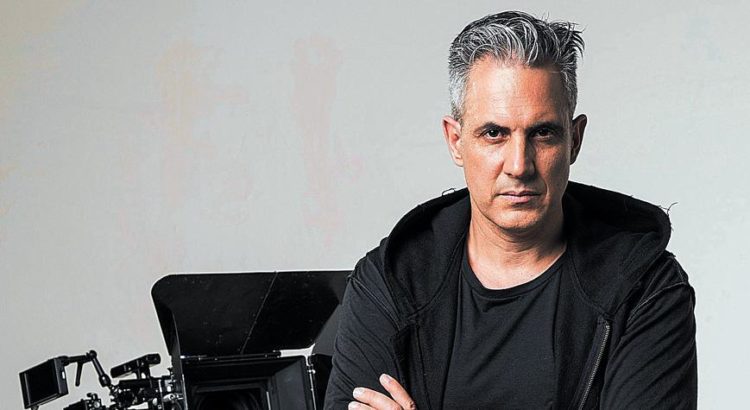
La tensión de Daniela había llegado a tal punto que desembocó en problemas gástricos. “No sabíamos que sufría tanto por el colegio. Nos explicó que le iba mal en matemáticas, pero que no nos había contado porque no quería decepcionarnos”, dice Klaric, un reconocido experto en ‘neuromarketing’, autor de dos ‘best sellers’ (‘Véndele a la mente, no a la gente’ y ‘Estamos ciegos’) y una celebridad en redes sociales: tiene más de 1,6 millones de seguidores en Facebook y en Instagram, 381.000. Además, asesora a compañías de todo el mundo en temas de motivación.

Gobernadores de la Costa piden adición al presupuesto escolar
Sin enseñanza de la historia, ¿cómo entender la Colombia del presente?

Después de esa experiencia, que ocurrió hace unos tres años, decidió retirar a su hija del colegio, enseñarle en casa junto con su esposa (con la educación virtual como complemento) e investigar por qué los sistemas educativos están enfermando a niños como Daniela.

Eso lo llevó, durante los últimos dos años, a 14 países (incluidos Finlandia, Singapur, Estados Unidos y Colombia), donde consultó a más 100 personas. Habló con el expresidente uruguayo Pepe Mujica y los colombianos Rodolfo Llinás y Antanas Mockus, entre muchas otras personalidades, y construyó el documental ‘Un crimen llamado educación’, que desde este sábado estará al aire en redes sociales.

Klaric, de 47 años, estuvo esta semana en Bogotá, donde conversó con EL TIEMPO.

Su documental empieza con ‘Another Brick in the Wall’, de Pink Floyd. ¿Acaso, como dice la canción, no necesitamos educación?

Claro que sí, la educación es lo más maravilloso del mundo. Todos la necesitamos. El ser humano, para trascender, debe tener conciencia y valores, y para tenerlos debe estudiar. Pero la educación de hoy no está formando al ser humano en competencias blandas –liderazgo y trabajo en equipo, por ejemplo– ni en habilidades prácticas para la vida. La gente se gradúa sin saber hacer nada y después sale al mundo y se encuentra con una pared. Por eso hay tanta gente tan afectada por su situación económica y por su infelicidad.

¿Debemos romper el muro?

Sí, debemos romper el muro creado por la industrialización de hace 200 años, que hoy es totalmente incompetente e insensible a las necesidades del ser humano.

El sistema educativo está dirigido hacia una sola inteligencia, la matemática, y eso va en contra de la teoría de Howard Gardner sobre las inteligencias múltiples

¿Por qué dice que la educación es un crimen?

Porque no considera que todos los seres humanos somos diferentes y enseña a todos igual. El sistema educativo está dirigido hacia una sola inteligencia, la matemática, y eso va en contra de la teoría de Howard Gardner sobre las inteligencias múltiples. Menospreciamos las mentes creativas, visuales, a los artistas, a los músicos. Ellos siempre se ven afectados por el sistema, que está hecho para la mente matemática.

¿Cuáles pueden ser las consecuencias de este crimen?

Hoy se suicidan entre tres y cuatro chicos al día (en promedio) por estrés, ‘bullying’ escolar y matoneo del maestro. No sabemos lo que está pasando en el mundo. En Corea del Sur, que tiene el mejor sistema educativo según las pruebas Pisa, la mitad de los estudiantes tiene pensamientos suicidas. Allá hay hasta una terapia contra el suicidio, para que los estudiantes descubran lo doloroso que es suicidarse y cómo esa decisión puede afectar a sus familias.

¿Cuál es el principal problema del sistema educativo?

Describir el principal problema es muy difícil porque el mecanismo tiene muchos engranajes y son muchos los que están mal. Sin embargo, creo que uno de los más grandes es que no somos conscientes de lo que está pasando. La gente no tiene tiempo para analizar, para estudiar y para enterarse de por qué un sistema educativo es malo. La gente no sabe cómo funciona el cerebro y cómo el sistema educativo actual está agrediendo a nuestros niños y dejándolos sin las competencias básicas para la vida.

Uno de los países que visitó fue Colombia, donde habló con reconocidos personajes del sector educativo, como Antanas Mockus. ¿Qué piensa ahora de nuestro sistema educativo?

El sistema educativo colombiano es demasiado exigente. Tiene una problemática muy atípica y es que los niños entran al colegio a muy tempranas horas. Se ha podido comprobar que no hay nada mejor para el desarrollo cerebral de los niños que dormir. Cuando hicimos el documental, detectamos que Colombia es uno de los países donde los niños comienzan más temprano la jornada escolar.

Y otra cosa: es uno de los países que más tareas les dejan a los niños. Los chicos se despiertan a las 5 de la mañana, empiezan clases a las 7 y regresan a sus casas a las 5 de la tarde. Y después tienen que hacer dos horas de tarea. Entonces, no les queda tiempo para tener desarrollo social o para el entretenimiento. En resumen, entre los grandes problemas de Colombia están los horarios y el exceso de tareas, que generan un estrés escolar excesivo.

Entre los grandes problemas de Colombia están los horarios y el exceso de tareas, que generan un estrés escolar excesivo

¿Cómo debería ser la educación?

Debería ser práctica, no por materias. Por ejemplo, un chico al que le encanta dibujar puede diseñar una montaña rusa; al que le gustan las matemáticas puede hacer los cálculos de velocidad y al que le gusta la comunicación podría hacer un reportaje sobre el tema.

En Estados Unidos se utiliza el Project Based Learning (PBL o aprendizaje basado en proyectos) desde hace 20 años y ha sido todo un éxito, solo que el Gobierno no permite que más del 7 por ciento de los colegios enseñen mediante esta técnica, debido a intereses económicos. Finlandia lleva un año implementándolo y allá también ha sido un éxito.

¿Cómo se imagina la educación del futuro?

Libre. Me imagino niños yendo felices al colegio –muchos no quieren ir–, un colegio donde ellos cultiven sus alimentos, donde coman de forma sana, donde no sean castigados, sino que los lleven a cuartos de meditación para controlar su energía.

Me imagino una educación en la que esté prohibido recetar Ritalina y en la que predominen el deporte y la respiración. Me imagino colegios hermosos donde profesores y chicos trabajen en proyectos, y en la que se aprenda a hablar en público y a ser felices.

Usted dice en el documental que el mundo necesita amor, pero yo me pongo de abogado del diablo y digo que eso no le sirve al sector productivo. ¿O sí?

Claro que sí. La gente feliz produce más, la gente que no tiene estrés es más exitosa. Yo creo que el sector productivo sí está interesado en que la gente sea más integral y tenga valores, y no simplemente en que sepa cosas específicas. Hoy es necesario que la gente aprenda a trabajar en equipo y tenga mejor comunicación asertiva, por ejemplo. Esas habilidades permiten que la gente sea más productiva.

¿Por qué está en contra de las pruebas estandarizadas?

Estoy 100 por ciento en contra de los exámenes Pisa; están haciendo un daño enorme porque principalmente evalúan las matemáticas, las ciencias y la lectura. El ser humano podría ser buenísimo en matemáticas, en ciencia y en lectura, pero si no tiene competencias blandas –como inteligencia emocional– no habremos cumplido el rol principal de la educación, que es trascender. Creo que los exámenes Pisa deben revaluar totalmente su propuesta y evaluar qué tan felices son los estudiantes en el sistema educativo. Podemos ser los mejores en matemáticas, ciencia y lectura, pero ¿qué logramos si los niños ni siquiera quieren ir al colegio?

¿Qué espera lograr con este documental? 

Generar conciencia. Me he dado cuenta en estos dos años de trabajo de investigación, en tantos países, de que no hay conciencia; la gente no sabe por qué el sistema educativo afecta tanto a la gente. Otra cosa es que no saben cómo reaccionar a la problemática, están desesperados porque no ven resultados.

Y también es bien importante que los padres sean conscientes de que son los más responsables de la educación de sus hijos. Yo creo que vamos a generar conciencia, y siempre que generas conciencia generas propuesta. Y cuando hay conciencia y propuesta, hay cambio.

¿Qué se necesita para que haya un cambio de verdad en el sistema educativo?

Lo primero es que seamos conscientes de que todos somos el problema. No es de los políticos, de los maestros o de los rectores; el problema no es del método, no es solo de los padres. Es un problema generalizado. Cuando se dice sistema, se habla de muchos componentes y engranajes. Todos debemos tener presente el rol que tenemos dentro del sistema educativo y todos debemos generar un cambio específico en una zona específica. Yo creo que este documental puede lograr eso.

Fuente: http://www.eltiempo.com/vida/educacion/entrevista-con-el-estadounidense-juergen-klaric-sobre-su-documental-un-crimen-llamado-educacion-148102

Comparte este contenido:

Gobernador se reúne con secretaria de Educación de Estados Unidos

Estados Unidos/Noviembre de 2017/Fuente: Metro

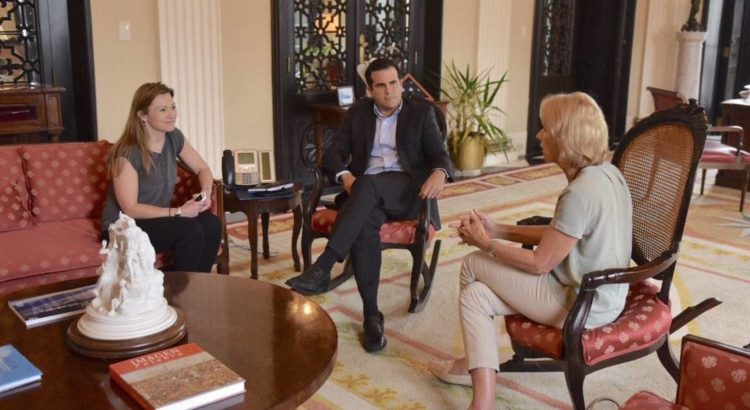
El gobernador Ricardo Rosselló Nevares se reunió en la mañana de hoy con las secretaria de Educación de EEUU, Betsy DeVos.

En la reunión con la funcionaria estadounidense,  también participó la titular de Educación de Puerto Rico, Julia Keleher, quien afronta críticas y protestas debido a que no ha abierto la mayoría de los planteles de la Isla a casi dos meses del paso del huracán María.

Organizaciones como la Federación de Maestros alegan que Keleher aprovecha la coyuntura del huracán para cerrar definitivamente escuelas.

DeVos dialogó con el gobernador sobre el estado de las escuelas en la Isla y los planes de reconstrucción para reiniciar las clases.

Junto al mandatario, la secretaria de Educación estadounidense tiene planificado visitar la escuela Loaiza Cordero.

La funcionaria de EEUU defiende la privatización de la educación y apoya las escuelas “charter”, ya que ha sido una defensora de marginar al gobierno de la educación.

Fuente: https://www.metro.pr/pr/noticias/2017/11/08/gobernador-se-reune-secretaria-educacion-estados-unidos.html

Comparte este contenido:

Estados Unidos: NC superintendent slams ‘disturbing’ spending at state education agency

Carolina del Norte / 08 de noviembre de 2017 / Por: Kelly Hinchcliffe / Fuente: http://www.wral.com/

State Superintendent Mark Johnson listened last week as State Board of Education members bemoaned the millions of dollars in recent budget cuts to the North Carolina Department of Public Instruction. The cuts have harmed staff and students, one board member explained, and he urged Johnson to join them in reaching out to state lawmakers to say «enough is enough.»

But Johnson declined. Instead, he said in his 11 months as superintendent he has found excessive spending at the state education agency and said he hopes an upcoming $1 million audit he has commissioned will root out any other potential waste at the agency.

«In my time as state superintendent, I have found a lot of things that I’ve found disturbing about this department,» Johnson said. «I will not go into the long list of them, but one little item that I can point out is our SurveyMonkey accounts.»

Johnson explained that the agency uses the online tool to send out surveys to principals, teachers and others to get feedback on important topics. Instead of the agency sharing one account, Johnson said he discovered it was paying for nine accounts. SurveyMonkey plans cost anywhere from $0 for a basic account to nearly $1,200 a year for a premier plan. DPI’s accounts varied in level.

«The really great professional staff (at DPI) pointed that out to me, and that’s something we’re taking care of,» Johnson said.

The communications department’s account alone was $800 to $900 a year, according to newly hired communications director Drew Elliot. He said the agency has stopped anyone from renewing an annually billed account and has begun consolidating them. In addition to the nine SurveyMonkey accounts, the North Carolina Virtual Public School has its own contract with Qualtrics for surveys, Elliot said.

WRAL News asked the superintendent to provide other examples of spending that he has found disturbing since he took office in January. Lindsey Wakely, the superintendent’s senior policy advisor and chief legal counsel, said they did not have a pre-existing document tracking or detailing any examples, but she agreed to put together a list.

«Below are some examples of DPI’s past spending practices and costs, while facing budget cuts, that the Superintendent and his staff have identified and are seeking to address moving forward,» Wakely wrote.

In addition to the nine SurveyMonkey accounts, the superintendent’s office identified the following items:

  • Extensive conference-related costs, such as:
    • Paying excess rates for conference speakers
    • Large sums for meals and room rentals
    • $25,000 to sponsor World View Symposium held by UNC
  • $2,500 to sponsor one episode of a single-market television program.
  • Overhead charges paid to hire personnel through intergovernmental contracts rather than directly hiring personnel, which would cost DPI less.
  • Reversion of over $15 million in Excellent Public Schools Act funds that could have been used to support early childhood literacy.

In an emailed statement, Johnson said «the General Assembly is frustrated with inefficiencies at DPI under the State Board’s leadership, and I understand that. To avoid future cuts, we must work on building trust that we are spending our available dollars wisely – keeping our educators and students as the top priority.»

The board and other education leaders «must be held accountable for the taxpayer dollars entrusted to them,» he wrote. Johnson said the agency did not give educators access to almost $8 million in funds provided in fiscal years 2015 and 2016 for early childhood literacy efforts.

«That’s a total of over $15 million that went unused to support the education of our youngest students,» Johnson wrote. «When I was made aware that the same thing was about to happen earlier this year, I worked with the General Assembly to salvage $5 million to procure digital devices for literacy support under NC Read to Achieve. Moving forward, I am working with DPI literacy and early learning staff to ensure that funding provided by the General Assembly for Read to Achieve is fully utilized to support the critical goal of our children becoming lifelong readers.»

In an interview with WRAL News after last week’s meeting, State Board of Education Chairman Bill Cobey praised the superintendent’s efforts to find wasteful spending at the agency.

«Well, I’m glad to hear that,» Cobey said, adding that he was not aware of what other waste the superintendent had found.

After WRAL News provided Cobey with the superintendent’s list of spending issues, the chairman emailed a statement, saying he «applaud(s) the efficient use of appropriated funds and the elimination of any wasteful spending.»

«As the administrative head of DPI, it is important that the Superintendent and his staff continuously focus on the best utilization of all appropriated funds for the benefit of the public school children of NC,» Cobey wrote.

Lawmakers cut the education agency’s operating funds by 6.2 percent – $3.2 million – this year and 13.9 percent – $7.3 million – next year. State board members have urged the superintendent to speak out against the cuts in recent months, but he has repeatedly refused, saying he prefers to talk with lawmakers privately and does not think it’s productive «to try to negotiate through the media.»

Last month, state board member Greg Alcorn asked the superintendent to address «the elephant in the room» – the budget cuts – during his monthly superintendent’s message so the board could have clarity about where he stands. He declined, saying he wants his monthly report to focus on good things happening in schools.

Last week, state board member Eric Davis tried a different approach and told the superintendent of a recent conversation he had with an unnamed education leader in the General Assembly.

«I brought up these cuts and said, ‘Is there anything we can do to avoid this?’ And this education leader said if the state board and the state superintendent came together to the General Assembly and said, ‘Enough is enough. We can’t serve our students and absorb another cut,’ that would have great weight in the General Assembly,» Davis said. «So I would suggest we take this education leader up on his advice.»

«I would love to talk to that education leader as well,» Johnson responded. «There are many, many different education leaders in the General Assembly that have vastly different opinions. I know that because I’ve been working very closely with all of them. And so, yes, that is a conversation we can have. I’d like to talk to who you talked to.»

Davis tried again.

«Sure. I think this particular advice was keen on that we are together in that request, that we are unified in advocating for the department, that the department can’t absorb any more cuts. It’s important for us to publicly say that,» Davis said.

«I look forward to discussing that with the education leader you discussed it with,» Johnson responded.

«So are we in agreement on avoiding future cuts?» Davis asked.

The superintendent stared straight ahead, not acknowledging Davis’ question, as others in the room laughed nervously at the awkward silence.

A few minutes later, Davis circled back to the discussion, this time urging all of his colleagues to work together to fight budget cuts.

«Before we can confront what we need to do in terms of equity for our students, we have to know who we have on the team that can deliver whatever our message is. We’ll never make progress on equity with a constantly diminishing staff worried about their own jobs, unable to deliver the kinds of (services) needed,» he said. «I hope my colleagues will join me in saying enough is enough, we cannot absorb any more cuts.»

Johnson quickly responded, telling Davis and the rest of the board about the «disturbing» spending he had discovered at the agency and said he will be relying on the upcoming $1 million outside audit to find any other potential waste.

«The operational audit might say no more cuts. It might say here are places where we can be more efficient and drive the work better and combine departments and be better, and that might also mean no cuts,» Johnson said. «But I am very much looking forward to the operational review and having that information to guide these conversations and to tell us what is working and what is not.»

Johnson said he hopes the audit will be ready in April. In the meantime, board member Becky Taylor said she wants everyone to be on the same page.

«I think the audit’s going to be great, because it’s going to provide efficiencies, which all agencies need,» she said. «But I think we need to send the message that we are unified in supporting our DPI staff in delivering the services they need to deliver and really stop the bleeding.»

Fuente noticia: http://www.wral.com/nc-superintendent-slams-disturbing-spending-at-state-education-agency/17089497/

Comparte este contenido:

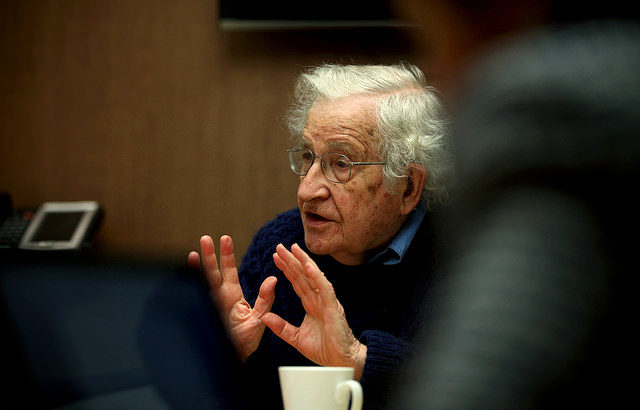
Interview 3: Noam Chomsky and Robert Pollin: Breaking Through the Political Barriers to Free Education

Interview/ By C.J. Polychroniou, Truthout

In an increasingly unequal country, the stakes are high for debates over student debt and the prospect of free higher education. Driven by neoliberal politics, our current educational system is both a product of and a driver of deep social inequities. In this interview, world-renowned public intellectuals Noam Chomsky and Robert Pollin take on the question of who should pay for education — and how a radical reshaping of our educational system could be undertaken in the US.

This is the third part of a wide-ranging interview series with world-renowned public intellectuals Noam Chomsky and Robert Pollin. Read part one here and part two here.

C.J. Polychroniou: Noam, higher education in the US is a terribly expensive affair, and hundreds of billions are owed in student loans. First, do you think that a system of free higher education can coexist alongside tuition-charging universities? Secondly, what could and should be done about student debt?

Noam Chomsky: The educational system was a highly predictable victim of the neoliberal reaction, guided by the maxim of «private affluence and public squalor.» Funding for public education has sharply declined. Tuition has exploded, leading to a plague of unpayable student debt. As higher education is driven to a business model in accord with neoliberal doctrine, administrative bureaucracy has sharply increased at the expense of faculty and students, developments reviewed well by sociologist Benjamin Ginsburg. Cost-cutting dictated by the revered market principles naturally leads to hyper-exploitation of the more vulnerable, creating a new precariat of graduate students and adjuncts surviving on a bare pittance, replacing tenured faculty. All of this happens to be a good disciplinary technique, for obvious reasons.

For those with eyes open, much of what has happened was anticipated by the early ’70s, at the point of transition from regulated capitalism to incipient neoliberalism. At the time, there was mounting elite concern about the dangers posed by the democratizing and civilizing effects of 1960s activism, and particularly the role of young people during «the time of troubles.» The concerns were forcefully expressed at both ends of the political spectrum.

At the right end of the spectrum, the «Powell memorandum» sent by corporate lobbyist (later Supreme Court Justice) Lewis Powell to the Chamber of Commerce called upon the business community to rise up to defend itself against the assault on freedom led by Ralph Nader, Herbert Marcuse and other miscreants who had taken over the universities, the media and the government. The picture was, of course, ludicrous but it did reflect the perceptions of Powell’s audience, desperate about the slight diminution in their overwhelming power. The rhetoric is as interesting as the message, reminiscent of a spoiled three-year-old who has a piece of candy taken away. The memorandum was influential in circles that matter for policy formation.

At the other end of the spectrum, at about the same time, the liberal internationalists of the Trilateral Commission published their lament over «The Crisis of Democracy» that arose in the «terrible» ’60s, when previously apathetic and marginalized parts of the population — the great majority — began to try to enter the political arena to pursue their interests. That posed an intolerable burden on the state. Accordingly, the Trilateral scholars called for more «moderation in democracy,» a return to passivity and obedience. The American rapporteur, Harvard professor Samuel Huntington, reminisced nostalgically about the time when «Truman had been able to govern the country with the cooperation of a relatively small number of Wall Street lawyers and bankers,» so that true democracy flourished.

A particular concern of the Trilateral scholars was the failure of the institutions responsible for «the indoctrination of the young,» including the schools and universities. These had to be brought under control, along with the irresponsible media that were (occasionally) departing from subordination to «proper authority» — a precursor of concerns of the far-right Republican Party today.

There is no economic reason why free education cannot flourish from schools through colleges and university.

The right-liberal spectrum of concerns provided a good indication of what was to come.

The underfunding of public education, from K-12 through colleges and universities, has no plausible economic rationale, and in fact is harmful to the economy because of the losses that ensue. In other countries, rich and poor, education remains substantially free, with educational standards that rank high in global comparisons. Even in the US, higher education was almost free during the economically successful years before the neoliberal reaction — and it was, of course, a much poorer country then. The GI bill provided free education to huge numbers of people — white men overwhelmingly — who would probably never have gone to college, a great benefit to them personally and to the whole society. Tuition at private colleges was far below today’s exorbitant costs.

Student debt is structured to be a burden for life. The indebted cannot declare bankruptcy, unlike Trump. Current student debt is estimated to be over $1.45 trillion, [more than] $600 billion more than total credit card debt. Most is unpayable, and should be rescinded. There are ample resources for that simply from waste, including the bloated military and the enormous concentrated private wealth that has accumulated in the financial and general corporate sector under neoliberal policies.

There is no economic reason why free education cannot flourish from schools through colleges and university. The barriers are not economic but rather political decisions, skewed in the predictable direction under conditions of highly unequal wealth and power. Barriers that can be overcome, as often in the past.

Bob, what’s your own response to the question I posed above?

Robert Pollin: Student debt in the US has exploded in the past decade. In 2007, total student debt was $112 billion, equal to 0.8 percent of GDP. As of 2016, total student debt was [more than] $1 trillion, equal to 5.6 percent of GDP. Thus, as a share of GDP, student debt has risen approximately seven-fold. As of 2012, nearly 70 percent of students left college carrying student loans, and these loans averaged $26,300.

The rise in student debt reflects a combination of factors. The first is that the private costs of attending college have risen sharply, with public higher education funding having been cut sharply. Average public funding per student was 15 percent lower in 2015 than in 2008, and 20 percent lower than in 1990. The burden of the public funding cuts [has] been worsened by the stagnation of average family incomes. Thus, in 1990, average tuition, fees, room and board amounted to about 18 percent of the median household income. By 2014, this figure had nearly doubled, to 35 percent of median household income.

Despite these sharply rising costs, college enrollments have continued to rise. There are many good reasons for young people to go off to college, open their minds, develop their skills and enjoy themselves. But probably the major attraction is the fact that income disparities have increased sharply between those who go to college versus those who do not. This pattern corresponds with the stagnation of average wages since the early 1970s that we discussed [previously]. The reality under neoliberalism has been that, if you want to have a decent shot at a good-paying job with a chance for promotions and raises over time, the most important first step is to get a college education. The pressures to go to college would be much less intense if working-class jobs provided good pay and opportunities to advance, as was the pattern prior to the onset of neoliberalism.

Virtually all student debt in the US is now held by the federal government. It would therefore be a relatively simple matter to forgive some, if not all of it. This would enable young people to transition much more easily into creating their own households and families. At the same time, if the government is going to enact a major program of student debt forgiveness, it should be at least equally committed to relieving the heavy mortgage debt burdens still carried by tens of millions of non-affluent households in the aftermath of the 2007-09 financial crash and Great Recession. Similarly, the government should also be at least equally committed to both lowering the costs of college education in the first place, and [supporting] better wages and work opportunities for people who do not attend college.

The blueprint for a progressive US that the two of you have sketched out requires that a certain course of political action is carried out … which includes educating the masses in getting from here to there. How is this to be done, especially given not only the peculiarities of American political culture, but also the balkanization of progressive and left forces in the country?

Chomsky: The answer is both easy and hard. Easy to formulate (and familiar), and hard to execute (also familiar). The answer is education, organization [and] activism as appropriate to circumstances. Not easy, but often successful, and there’s no reason why it cannot be now. Popular engagement, though scattered, is at quite a high level, as is enthusiasm and concern. There are also important elements of unity, like the Left Forum, novel and promising. And the movements we’ve already mentioned. Significant efforts are underway, such as those alluded to briefly [before], and there’s no reason why they cannot be extended. While the left is famous for constant splits and internal disputes, I don’t think that’s more so now than in the past. And the general mood, particularly among young people, seems to me conducive to quite positive changes.

It is not idle romanticism to recognize the potential that can be awakened, or arise independently, in communities that free themselves from indoctrination and passive subordination.

I don’t feel that there is anything deep in the political culture that prevents «educating the masses.» I’m old enough to recall vividly the high level of culture, general and political, among first-generation working people during the Great Depression. Workers’ education was lively and effective, union-based — mostly the vigorous rising labor movement, reviving from the ashes of the 1920s. I’ve often seen independent and quite impressive initiatives in working-class and poor and deprived communities today. And there’s a long earlier history of lively working-class culture, from the early days of the industrial revolution. The most important radical democratic movement in American history, the populist movement (not today’s «populism»), was initiated and led by farmers in Texas and the Midwest, who may have had little formal education but understood very well the nature of their plight at the hands of the powerful banking and commercial sectors, and devised effective means to counter it….

I’ve been fortunate enough to have seen remarkable examples elsewhere. I recall vividly a visit to an extremely poor, almost inaccessible rural village in southern Colombia, in an area under attack from all sides, where I attended a village meeting that was concerned with protecting their resources, including irreplaceable water supplies, from predatory international mining corporations. And in particular. a young man, with very little formal education, who led a thoughtful and very informed discussion of sophisticated development plans that they intended to implement. I’ve seen the same in poor villages in West Bengal, with a handful of books in the tiny schoolroom, areas liberated from landlord rule by Communist party militancy. The opportunities and, of course, resources are vastly greater in rich societies like ours.

I don’t think it is idle romanticism to recognize the potential that can be awakened, or arise independently, in communities that free themselves from indoctrination and passive subordination. The opportunities I think are there, to be grasped and carried forward.

Pollin: I think it is inevitable that leftist forces in the US would be divided, if not balkanized, to some extent. Among the full range of people who are committed to social and economic equality and ecological [justice] — i.e. to some variant of a leftist vision of a decent society — it will always be the case that some will be more focused on egalitarian economic issues, others around the environment and climate change, others on US imperialism, militarism and foreign policy, others on race and gender equality, and still others on sexual identity.

I certainly do not have the formula for how to most effectively knit all these groups together. But I do think we can learn a lot from the major successes out there. The 2016 Bernie Sanders presidential campaign is a first obvious example. Another is the California Nurses Association/National Nurses United (CNA/NNU) that I mentioned [before]. This is a union, fighting first for the well-being of its members, who are overwhelmingly women, with a high proportion being women of color. At the same time, CNA/NNU has been in the forefront of campaigns for single-payer health care and even the Robin Hood Tax on speculative Wall Street trading.

There are other progressive organizations that have proven track records of success. One is the Los Angeles Alliance for a New Economy (LAANE), which has long been active around both living wage and other worker rights issues, as well as community economic development and environmental justice. A more recently formed coalition is NY Renews, which is comprised of 126 organizations in New York State who have come together to advance a serious program in the state to both dramatically reduce greenhouse gas emissions and expand good job opportunities. The Washington State Labor Council — part of the AFL-CIO — has also been committed and innovative in bringing together coalitions of labor and environmental groups.

The US left needs to learn and build from the achievements and ongoing work of these and similar groups. In fact, as Margaret Thatcher used to say, «there is no alternative» — if we are serious about successfully advancing a left alternative to the disasters caused by 40 years of neoliberal hegemony.

Source:

http://www.truth-out.org/opinion/item/42422-noam-chomsky-and-robert-pollin-breaking-through-the-political-barriers-to-free-education
Comparte este contenido:
Page 190 of 400
1 188 189 190 191 192 400