Page 220 of 396
1 218 219 220 221 222 396

EEUU: Education expert warns Washington state’s budget controversy isn’t over

08/07/2017.  By http://education.einnews.com
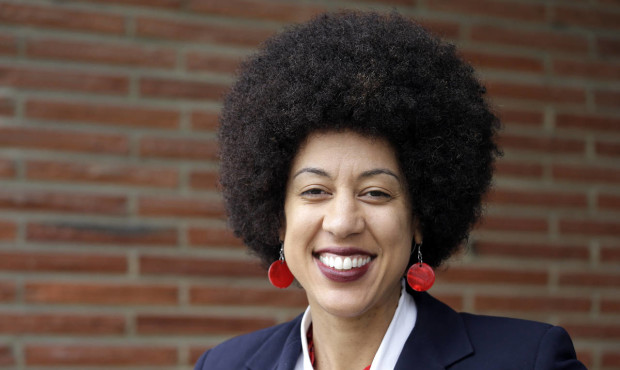
Erin Jones faced fellow Democrat Chris Reykdal for the role of superintendent for the Office of Public instruction. Reykdal won the 2016 election. (AP)
LISTEN: Education expert says the state budget controversy is not over

When Erin Jones saw Governor Jay Inslee’s proposed budget she made a prediction — the budget process was going to be lengthy.

In fact, she thought if any budget was going to pass, it would happen at the 11th hour. That’s exactly what happened as Washington lawmakers narrowly avoided a government shutdown during a third special session.

“His budget was so big D, big Democrat, that the Republicans would not be able to (work with) his budget,” Jones told KIRO Radio’s Dave Ross. “He had already put himself out there very clearly, this is a Democratic budget. And I know with the Senate being Republican that there’s way too much space between the two.”

RELATED: Erin Jones says Inslee’s budget is ‘dead on arrival’

Jones is a former candidate for state superintendent of public instruction and an education consultant. She has a new prediction: The Supreme Court isn’t going to like the budget that was passed in the nick of time. More specifically, she feels that the Legislature was strategic. It passed a budget that would keep the state running, but would place the controversial decision about education funding on the steps of the Supreme Court.

“I feel like that played itself out last week,” Jones said.

State lawmakers were tasked with adequately funding K-12 education after a landmark Supreme Court decision — the Legislature was basically ordered to do it. For years, Republicans and Democrats in Olympia have wrestled with how to accomplish it. The latest budget adds $7.3 billion to fund public education, paid for through a property tax. But Jones says it’s not that straightforward.

“What they’ve done is take money that was already in the system, the levies that are typically used in districts — it’s a swap,” Jones said. “That money was already out there, it’s not new revenue. I think a lot of Democrats are going to say, ‘We didn’t create any new revenue, we’re taking money that districts had already raised with levies and are now calling it ‘state money.’”

“In our Constitution, it says the paramount duty is to amply fund education,” she said. “But also, there is a clause that says it has to be a sustainable source of revenue. And I don’t think the source of revenue is regular and sustainable. I worry we are relying on levies, which are not sustainable, they are not predictable … my concern is that (the Supreme Court) will look at the funding source and say it’s not predictable enough.”

Jones said she doesn’t ultimately know how the Supreme Court will react to the new budget. The last time it fined the Legislature for not doing a good enough job of funding education. Beyond the court, Jones said there are still issues waiting to be addressed in Washington classrooms.

“I don’t think money is always the answer, but how we spend our money is really important,” Jones said. “Are we making sure we are training up teachers well? That’s something we haven’t had a conversation about. Are teachers prepared to teach? Are we preparing teachers for 2017 or are we preparing them for 1995?”

“They need to be able to use technology, they need to be able to navigate social media,” she said. “Not every kid is going to become a STEM kid, but they need to at least be exposed to that.”

From: http://education.einnews.com/article/391082127/5g-pXVh87OHcBsKP?lcf=ZdFIsVy5FNL1d6BCqG9muZ1ThG_8NrDelJyazu0BSuo%3D
Comparte este contenido:

Niños y adolescentes de EE.UU: bajo el peligro de las balas

Por: Martha Andrés Román

Con preocupante frecuencia se leen en la prensa estadounidense historias como la de un niño pequeño que mató a su hermano con la pistola de su padre, o la de dos muchachas alcanzadas por el fuego cruzado de un tiroteo.
La alarma ante esos casos, que a veces aparecen como sucesos aislados en diarios y televisoras, se encendió mucho más con la reciente publicación de un informe en el cual se concluyó que el país registra anualmente unos mil 300 fallecimientos por armas de fuego entre menores de 17 años.

El estudio, publicado el 19 de junio en la revista Pediatrics, arrojó además que unos cinco mil 790 infantes y adolescentes son atendidos cada año por heridas de bala.

Tales cifras significan que diariamente pierden la vida poco más de tres menores, mientras otros 15 son tratados de emergencia a causa de alguna lesión de ese tipo.

TRAGEDIAS EN CIFRAS

Para realizar ese reporte, los investigadores de los Centros para el Control y la Prevención de Enfermedades analizaron datos sobre lesiones y muertes por disparos en niños de 0 a 17 años.

En ese estudio recopilaron información de tres bases de datos nacionales que rastrean detalles tales como lesiones no fatales, certificados relacionados con la violencia armada, registros de médicos forenses, informes de cumplimiento de la ley, entre otros aspectos.

De ese modo, concluyeron que de 2012 a 2014 murieron como promedio mil 287 niños y adolescentes cada año, lo cual coloca a Estados Unidos como el lugar donde ocurren nueve de cada 10 decesos de ese tipo que se reportan en los países desarrollados del orbe.

Los hechos vinculados con armas de fuego provocan más fallecimientos entre esos grupos etarios que los casos de anomalías congénitas pediátricas, las enfermedades cardíacas, la influenza o la neumonía.

Según la investigación, la mayoría de las muertes corresponde a niños de 13 a 15 años, y los homicidios representan el 53 por ciento de los eventos reportados, con la mayor cantidad de víctimas entre infantes afronorteamericanos.

Los estados con las tasas más altas de asesinatos por armas de fuego en esas edades se concentraron en gran parte del sur (Alabama, Florida, Georgia, Luisiana, Mississippi, Carolina del Sur y Tennessee).

También hubo números elevados en territorios del medio oeste (Illinois, Missouri, Michigan y Ohio), dos del oeste (California y Nevada), y tres del noreste (Connecticut, Maryland y Pensilvania).

La investigación detectó un aumento alarmante en los suicidios, que de 2012 a 2014 representaron el 38 por ciento de las muertes, con los índices más altos en Montana, Idaho y Alaska.

En alrededor de un tercio de esos casos, el niño sufría de un estado de ánimo deprimido, y aproximadamente un cuarto tenía un problema de salud mental diagnosticado clínicamente, mientras el 26 por ciento le dijo a alguien con anticipación su intención de quitarse la vida.

Los análisis del presente informe confirman que los suicidios suelen ocurrir en respuesta a crisis de corto plazo. La disponibilidad de un arma de fuego puede ser especialmente crítica para un adolescente impulsivo en esos momentos, escribió el doctor Eliot W. Nelson, del Hospital Infantil de la Universidad de Vermont.

LA PELIGROSA CERCANÍA DE LAS ARMAS

El 26 de junio un niño de 9 años de edad falleció de un disparo cuando él y un amigo estaban jugando con una pistola, según dio a conocer la policía del condado de Marion, en el estado de Indiana.

Días antes, Bentley Thomas Koch, de cuatro años, se disparó fatalmente en el rostro en el estado de Pensilvania; y Harmony Warfield, de siete años, fue baleada por su primo de dos años en Tennessee.

Sucesos de esa índole hacen aún más controversial el tema de la portación de armas, al cuestionar las medidas de seguridad que se toman para mantenerlas alejadas del alcance de los menores.

Datos de la organización sin fines de lucro Law Center to Prevent Gun Violence indican que aproximadamente una de cada tres pistolas se mantiene cargada y desbloqueada en Estados Unidos, al tiempo que la mayoría de los niños saben dónde sus padres las guardan.

En julio de 2004, el Servicio Secreto y el Departamento de Educación publicaron un estudio que examinó 37 tiroteos ocurridos en escuelas desde 1974 hasta 2000, y de acuerdo con ese análisis, en más del 65 por ciento de los casos el atacante obtuvo el arma en su propia casa o en la de un pariente.

A decir del Law Center to Prevent Gun Violence, a nivel federal no existen en esta nación las llamadas leyes de prevención del acceso de los niños, las cuales imponen responsabilidad penal a los adultos que dan a los niños acceso sin supervisión a las armas de fuego.

El mayor o menor control sobre este tema recae entonces en las normas específicas de cada estado.

La cuestión es muy compleja en un país de 321 millones de habitantes, donde se calcula que existen más de 300 millones de esos artefactos y su portación es un derecho constitucional que usan como escudo los grupos de presión a favor de las armas de fuego.

Para la doctora Ruth Abaya, profesora asistente de pediatría en la división de Medicina de Emergencia del Hospital Infantil de Filadelfia, los hallazgos sobre la incidencia en los infantes sugieren que se necesitan iniciativas comunitarias para abordar el problema.

Creo que vamos a necesitar un enfoque multifacético para hacer que la prevención de la violencia armada en este país sea efectiva, manifestó a la cadena CBS.

A su vez, David Wesson, cirujano pediátrico del Hospital Infantil de Texas, indicó a la misma televisora que esta cuestión está llena de connotaciones políticas que pueden hacer difícil abordarla.

Sin embargo, sugirió como posibles enfoques la promoción de leyes de seguridad de armas y el uso más extendido de dispositivos de almacenamiento que las alejen del alcance de los menores.

Más allá de esas sugerencias, advirtió sobre el principal problema: ‘cuantas más armas hay, más mueren las personas por heridas de balas’.

Fuente: http://prensa-latina.cu/index.php?o=rn&id=97067&SEO=ninos-y-adolescentes-de-ee.uu-bajo-el-peligro-de-las-balas
Comparte este contenido:

EEUU: From public good to personal pursuit: Historical roots of the student debt crisis

América del Norte/Estados Unidos/Julio 2017/Noticias/https://theconversation.com


The promise of free college education helped propel Bernie Sanders’ 2016 bid for the Democratic nomination to national prominence. It reverberated during the confirmation hearings for Betsy DeVos as Secretary of Education and Sanders continues to push the issue.

In conversations among politicians, college administrators, educators, parents and students, college affordability seems to be seen as a purely financial issue – it’s all about money.

My research into the historical cost of college shows that the roots of the current student debt crisis are neither economic nor financial in origin, but predominantly social. Tuition fees and student loans became an essential part of the equation only as Americans came to believe in an entirely different purpose for higher education.

Students took to the streets to protest their debt burdens as part of Occupy Boston in 2011. CampusGrotto/flickrCC BY-NC

Cost of a college degree today

For many students, graduation means debt. In 2012, more than 44 million Americans (14 percent of the total population) were still paying off student loans. And the average graduate in 2016 left college with more than $37,000 in student loan debt.

Student loan debt has become the second-largest type of personal debt among Americans. Besides leading to depression and anxiety, student loan debt slows down economic growth: It prevents young Americans from buying houses and cars and starting a family. Economist Alvaro Mezza, among others, has shown that there is a negative correlation between increasing student loan debt and homeownership.

The increase in student loan debt should come as no surprise given the increasing cost of college and the share that students are asked to shoulder. Decreasing state support for colleges over the last two decades caused colleges to raise tuition fees significantly. From 1995 to 2015, tuition and fees at 310 national universities ranked by U.S. News rose considerably, increasing by nearly 180 percent at private schools and over 225 percent at public schools.

Whatever the reason, tuition has gone up. And students are paying that higher tuition with student loans. These loans can influence students’ decisions about which majors to pick and whether to pursue graduate studies.

Early higher education: a public good

The Stanford University crew team, between 1910-1915. Stanford was founded on the principle of providing a free education. The university did not start charging students tuition until 1920. Library of Congress

During the 19th century, college education in the United States was offered largely for free. Colleges trained students from middle-class backgrounds as high school teachers, ministers and community leaders who, after graduation, were to serve public needs.

This free tuition model had to do with perceptions about the role of higher education: College education was considered a public good. Students who received such an education would put it to use in the betterment of society. Everyone benefited when people chose to go to college. And because it was considered a public good, society was willing to pay for it – either by offering college education free of charge or by providing tuition scholarships to individual students.

Stanford University, which was founded on the premise of offering college education free of charge to California residents, was an example of the former. Stanford did not charge tuition for almost three decades from its opening in 1891 until 1920.

Other colleges, such as the College of William and Mary, offered comprehensive tuition scholarship programs, which covered tuition in exchange for a pledge of the student to engage in some kind of service after graduation. Beginning in 1888, William and Mary provided full tuition scholarships to about one third of its students. In exchange, students receiving this scholarship pledged to teach for two years at a Virginia public school.

And even though the cost for educating students rose significantly in the second half of the 19th century, college administrators such as Harvard President Charles W. Eliot insisted that these costs should not be passed on to students. In a letter to Charles Francis Adams dated June 9, 1904, Eliot wrote, “I want to have the College open equally to men with much money, little money, or no money, provided they all have brains.”

College education becomes a private pursuit

The perception of higher education changed dramatically around 1910. Private colleges began to attract more students from upper-class families – students who went to college for the social experience and not necessarily for learning.

This social and cultural change led to a fundamental shift in the defined purpose of a college education. What was once a public good designed to advance the welfare of society was becoming a private pursuit for self-aggrandizement. Young people entering college were no longer seen as doing so for the betterment of society, but rather as pursuing personal goals: in particular, enjoying the social setting of private colleges and obtaining a respected professional position upon graduation.

John D. Rockefeller was instrumental in bringing about the modern day reality of college tuition and student loans. The Rockefeller Archive Center

In 1927, John D. Rockefeller began campaigning for charging students the full cost it took to educate them. Further, he suggested that students could shoulder such costs through student loans. Rockefeller and like-minded donors (in particular, William E. Harmon, the wealthy real estate magnate) were quite successful in their campaign. They convinced donors, educators and college administrators that students should pay for their own education because going to college was considered a deeply personal affair. Tuition – and student loans – thus became commonly accepted aspects of the economics of higher education.

The shift in attitude regarding college has also become commonly accepted. Altruistic notions about the advancement of society have generally been pushed aside in favor of the image of college as a vehicle for individual enrichment.

Dartmouth College students carving canes on campus in the early 1920s. In the early 20th century, as more students from upper-class families began attending college for the social – rather than educational – experience, many colleges began the practice of charging tuition. Council of the Alumni of Dartmouth College

A new social contract

If the United States is looking for alternatives to what some would call a failing funding model for college affordability, the solution may lie in looking further back than the current system, which has been in place since the 1930s.

In the 19th century, communities and the state would foot the bill for college tuition because students were contributing to society. They served the common good by teaching high school for a certain number of years or by taking leadership positions within local communities. A few marginal programs with similar missions (ROTC and Teach for America) still exist today, but students participating in these programs are very much in the minority.

Instead, higher education today seems to be about what college can do for you. It’s not about what college students can do for society.

I believe that tuition-free education can only be realized if college education is again reframed as a public good. For this, students, communities, donors and politicians would have to enter into a new social contract that exchanges tuition-free education for public services.

Fuente:

https://theconversation.com/from-public-good-to-personal-pursuit-historical-roots-of-the-student-debt-crisis-79475

Fuente imagen:

https://lh3.googleusercontent.com/rwTCWZGYZNrG-MeAdq7_0UzMkgAS_5UBcZ-GROxCnqUjfi3ZoRRQmKokeav0KfX5KlMPOg=s


Comparte este contenido:

Estudio: Profesores no innovan por miedo a «hacer el ridículo frente a sus alumnos»

America del NOrte/EEUU/observatorio.itesm.mx

A pesar de ser una institución líder en investigación en educación, la Universidad Carnegie Mellon ha fracasado a la hora de adoptar sus propios hallazgos. Para averiguar por qué, la antropóloga Lauren Herckis observó a profesores de la Universidad Carnegie Mellon durante más de un año.

La Dra. Herckis tuvo la enorme tarea de asistir a todas las reuniones académicas y leer los correos electrónicos institucionales de los profesores para averiguar por qué no estaban cambiando sus estilos de enseñanza, informa David Matthews en el Times Higher Education.

Su conclusión fue sorprendente: los profesores tienen una fuerte necesidad de aferrarse a su «afirmación de identidad personal». En otras palabras, los profesores tienen demasiado miedo de verse estúpidos frente a sus estudiantes, por eso no quieren probar algo nuevo. Aunado a esto, uno de los principales obstáculos para la innovación es el miedo a las evaluaciones de los estudiantes.

La antropóloga también encontró que muchos académicos se aferran a su idea de lo que es una «buena enseñanza». «Cuando nuestro instinto nos dice que hagamos una cosa y un artículo nos dice otra», es muy difícil cambiar el comportamiento dijo la Dra. Herckis.

Además, se encontró que los profesores eran mucho más propensos a entusiasmarse con implementar sus propias ideas, en lugar de adoptar las propuestas de otros.

Después de este estudio, los profesores de la Carnegie Mellon fueron animados a experimentar con nuevas formas de enseñanza y a no «preocuparse si los estudiantes te odian por un semestre».

Fuente: https://observatorio.itesm.mx/edu-news/2017/7/4/estudio-profesores-no-innovan-por-miedo-a-hacer-el-ridculo-frente-a-sus-alumnos

Comparte este contenido:

Estados Unidos: The Future of US Education Is Standing Rock

Estados Unidos / 05 de julio de 2017 / Por:  Sandy Grande / Fuente: http://www.truth-out.org

As a professor of education, an Indigenous scholar and member of the NYC Stands with Standing Rock Collective, I was ecstatic to learn that the Wallace Global Fund recently named the Standing Rock Sioux the inaugural recipient of the Henry A. Wallace Award, a $250,000 prize that includes up to an additional $1 million to support the tribe’s transition to renewable energy.

To be sure, such recognition and capital investment will go a long way in eradicating dependence on fossil fuel. But if the Fund’s broader aim to «lift up the extraordinary courage and will it takes to stand up to oppressive corporate and political power» is to be realized, then a commensurable investment in education will be needed.

As it stands, Wall Street billionaires, hedge fund managers and corporate think tanks are driving education reformnot out of concern for the environment, but in the interest of profit and — still — land. Indeed, historically, US schools were designed for Native erasure and little has changed.

The dominant narrative about Native American students and tribal schools remains that they are «failing.» The evidence? The so-called achievement gap as measured by standardized test scores. Beyond the specious nature of the tests, Native student «failure» should not be confused with the refusal to trade one’s culture and ways of being for a form of «success» marked by individualist modes of competition and an «American Dream» fundamentally reliant upon property ownership and resource exploitation.

Neither Native peoples nor the planet can afford systems of education that are built upon the reduction of life to transactional relationships, whether for profit or individual advancement. So, without an educational paradigm shift, there will always be a next Standing Rock (see: Bears EarsLancaster County, central Florida).

Toward this end, Native education — centered in Indigenous knowledge and decolonial curricula — has much to teach mainstream schools. For example, the Defenders of the Water School, founded by Alayna Eagle Shield at the Oceti Sakowin camp, engaged a curriculum centered on Lakota language, culture and intergenerational knowledge as a practice of Indigenous sovereignty. Students at the school spent their days in song, dance and prayer, as well as learned the history, math and science embedded in their surroundings. Most importantly, however, they witnessed the courageous actions taking place in defense of water and their peoples. And, in so doing, they learned about what it means to be a good relative, to be accountable to each other as well as to the generations to come.

In other words, the children of Standing Rock learned that the resistance was not just about a pipeline or even unchecked corporate power, but rather about their right to defend themselves, their land and relatives, including the Missouri River. It was about the history of US settler colonialism — based on the dispossession of Indigenous peoples from land and Black peoples from labor — and the ongoing impact of these relations of power on their communities. They learned to question and contest alternative facts: that we need more fossil fuel, more extraction, more oil; that climate change is a myth; that we can trust a multibillion-dollar industry to tell the truth about renewable energy; that history doesn’t matter; and that actions of the people don’t make a difference.

In short, they learned that Standing Rock was, and is, about a broader struggle for liberation.

So, what is needed is an education for liberation, one that begins with examining the knowledge systems that gave rise to the dispossession of Native peoples and Black enslavement in the first place. Such an education would not only offer a more accurate, complex and nuanced understanding of the history of the United States as a settler nation, but also help to strengthen solidarities between Black, Indigenous and other colonized peoples working to bring an end to violence and injustice in all forms.

Particularly as the US faces devastating debt, dangerous climate change and unprecedented inequality, understanding settler colonialism as a structure defined by processes of extraction, removal, elimination and consumption is not only instructive, but also imperative for defining alternative ways of being. Henry A. Wallace’s broader vision for a more democratic US that places well-being ahead of profits needs and deserves an analogous vision for education; one grounded in the ethics of relationship so we would no longer need to make the case that #BlackLivesMatter or «water is life.» Enough is enough.

Fuente noticia: http://www.truth-out.org/opinion/item/41146-the-future-of-us-education-is-standing-rock

Comparte este contenido:

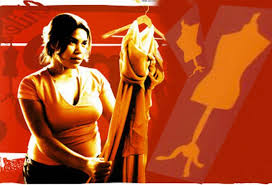
Película: Las mujeres de verdad tienen curvas

Las mujeres de verdad tienen curvas es una película estadounidense de 2002 dirigida por Patricia Cardoso de origen colombiano y que es su Ópera Prima.

Argumento

Ana pertenece a una familia mexicana afincada en Estados Unidos. Tiene aptitudes e interés por el estudio, lo que le ha hecho que obtenga una beca para una universidad muy importante en Nueva York, pero su madre se niega a dejarla ir.

Comentarios

Aborda en forma de comedia el enfrentamiento generacional que existe entre Ana y su madre Carmen, que únicamente está obsesionada con que sus hijas se casen, tengan hijos y luego puedan cuidar de ella cuando sea mayor. En cambio, Ana quiere romper con ese modelo de vida y busca su salida en los estudios universitarios que le permitan una vida mejor e independiente.

Ana es una chica de 18 años de origen hispano que reside con su familia. Está a punto de acabar los estudios de secundaria y es la primera de su familia que puede atreverse a soñar con ir a la Universidad. Tiene posibilidades reales de conseguir una beca, pero su madre se opone. No cree que sea lo más conveniente para ella, pues lo que espera es que se ponga a trabajar, adelgace y encuentre novio pronto. Al acabar las clases Ana tiene que empezar a trabajar en el taller de costura de su hermana, presionada por un gran pedido de vestidos, el cual vende a una compañía muy grande que le paga poco por un trabajo muy fuerte.

Ver película haciendo clic aquí:

Fuente de la Reseña:

https://es.wikipedia.org/wiki/Las_mujeres_de_verdad_tienen_curvas

Comparte este contenido:

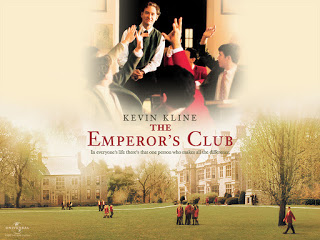
Película: Lección de Honor

Lección de Honor

William Hundert. Un profesor, ya maduro, ha sido convocado en un lujoso hotel para una reunión de antiguos alumnos suyos. Los recuerdos se agolpan en su memoria. Aquel curso del 72, en la prestigiosa escuela de St. Benedict. Un año más, logra apasionar a sus alumnos con la enseñanza de la historia de Roma. Sabe usar recursos pedagógicos para alimentar la curiosidad natural de los adolescentes: como el de hacer leer la inscripción que preside el fondo de la clase, que narra los hechos guerreros de un rey del que, en la actualidad, nadie recuerda siquiera el nombre. Puede empeñarse uno en ganar el mundo entero, pero para que las realizaciones perduren, hay que hacer algo más, salir del cascarón del propio egoísmo.

Hundert lo tiene claro: no sólo enseña una asignatura; ante él hay personas, jóvenes, con toda una vida por delante, que en el futuro ocuparán posiciones importantes en la sociedad. Y tiene que moldear su carácter, ayudarles a forjar su personalidad. Pero ese curso se va a encontrar con un alumno problemático, que llega con el curso ya empezado. Se trata de Sedgewick Bell, hijo de un senador. Un chaval muy listo, pero que va a lo suyo, y sometido a una enorme presión por parte de su padre, quien no se ocupa mucho de él, pero que sí desea su triunfo social.

Para ver la película, haga clic aquí:

Fuente de la Reseña:

http://www.formandotec.com/2010/03/el-club-del-emperador-o-leccion-de.html

Comparte este contenido:
Page 220 of 396
1 218 219 220 221 222 396