Page 517 of 1684
1 515 516 517 518 519 1.684

Summer Celebrations in Mexico

By Rosalía Nalleli Pérez-Estrada

Summer is here and, in Mexico, the graduations bring unforgettable moments everywhere. These days you can see gowns and elegant suits in kinder gardens, elementary schools, junior high schools, high schools and in universities. Parents, students and godparents walk along the halls and corridors of the schools, while satisfaction invades the ambiance and their happiness promotes group bonding.I don’t know if this activity is also practiced in other countries but I guess it is not. I say this because a coworker, from The United States, was telling me that in his country they just celebrate the end of high school and that one of the university. Here, in Mexico, there is always a moment to celebrate and to be happy: it is a manner to stop the time and to record beautiful moments.

Meanwhile in the streets, people are seen with presents or flowers in their hands and it is impossible to avoid remembering that group of the Scientists, of the 20th century, who proposed a scientific direction for the government and country, and who thought that positivism was the only right manner to reaffirm knowledge by following Comte´s proposal.

Here, if the child finishes kinder garden, he is congratulated by his family and at school, he dances a prom and receives presents from his people. After that, there is usually a meal at home which includes chicken stew, white or red rice, salad, and tortillas. If the family has more money to spend, they all go together to a restaurant to eat or they contract a musical group to dance, because finishing school is an important achievement for the family. The level does not matter. What matters is that a period is being finished. And, as a witness, slumped onto a chair, I sometimes wonder if the family worries how much knowledge changed the students´ life, although I believe that it is assumed that if the child goes to school, he learns. Now it’s time to celebrate. However, if we think about cognitive, socioconstructive or formative learning theories, we know that after having been for three years or more at school, the student has definitely learnt more things than those he could have learnt if he had just stayed at home. For sure, traditions, beliefs, customs, behaviors and perceptions have been shared with him at school and at home, and have both developed a new human being, with a new vision of the life and a modified world.

If it is moment to celebrate, nobody cares about that 5% of gross domestic product invested in education (or few wonder about the non-complete, invested money for educative issues). Moreover, probably few of the relatives at the party worry about those results which can be shown by OECD to the world or, there is little concern about those researchers who have criticized Mexican education results, when they say that we, Mexicans, read less than three books in a year.

In any case, it has been predicted that Mexico will become, in little time, the eighth largest economy by 2050, and, if we, Mexicans, have been deprived from better education opportunities because the minds that control this country have decided so, anyway, we have learnt how to spend our life in a happier mood than the expected one. And; while better conditions come for us, we continue trusting on our leaders as a baby trusts on his parents, with a soul freed from wickedness. We feel angry when we do not get what we expect to have, but forget everything while we dance or laugh, probably without being aware that when we laugh, we lower our stress, decrease our pains, relax our muscles, ease anxiety and tension and strengthen our relationships.

Therefore, it could be said that those colorful bouquets, the expensive presents, the delicious meals or fruit drinks all seem to help Mexicans to forget the harsh moments of violence, theft and murder that are being lived by, in several places, and that attending at least fourteen parties in a year (some people may attend more than 40!), somehow helps them to forget grief or regret and have them united, while they enjoy the life in short periods of unconsciousness while singing or hugging.This common situation of every summer shows that many times humans behave according to what they have learnt at school and at home, recognizing that education and culture go hand by hand and are influenced reciprocally, (Solana et al. 2011) and that finally, life goes on and that human beings just go changing of space and places, where to stretch out their arms and to free their dreams.

References:

Solana, et al (2011) La historia de la Educación Pública en México. CFE

https://www.reuters.com/article/us-mexico-education-factbox-idUSTRE73C4UY20110413

https://www.helpguide.org/articles/mental-health/laughter-is-the-best-medicine.htm

*Rosalía Nalleli Pérez-Estrada. Directora de Universidad Santander, Campus Tlaxcala. Profesora por asignatura, de la Universidad Politécnica de Tlaxcala y en coordinación del Departamento de idiomas de la misma universidad. Investigadora invitada por CIFE y Fundadora de la Sociedad Anónima Madison School Come to be the Best, desde 1999.

Email: rosalia_na@hotmail.com this article was originally published at: Tlaxcala Cultural, https://tlaxcalacultural.com/2019/07/14/summer-celebrations-in-mexico/
Comparte este contenido:

Niñas en medio de las crisis, una alerta desde ONU

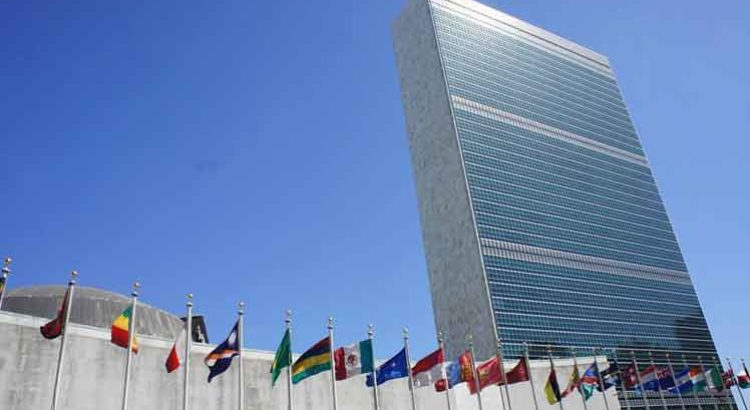
Naciones Unidas, 29 jul (Prensa Latina) Para alertar sobre la situación desesperada de las niñas atrapadas en medio de una crisis, abre hoy en el lobby del cuartel general de ONU la exposición fotográfica Algún día lo haré.


Según anunciaron sus organizadores, la secretaria general adjunta de Naciones Unidas, Amina Mohammed, presidirá la inauguración de la muestra, que es organizada por la Oficina de Coordinación de Asuntos Humanitarios de la ONU y apoyada por las misiones permanentes de Francia y Marruecos.

Además de exhibirse en el vestíbulo de visitantes de la ONU -del 29 de julio al 9 de septiembre-, los retratos también se mostrarán en la cerca exterior del edificio en Nueva York.

La apertura de la exposición dará inicio a la campaña por el Día Mundial de la Asistencia Humanitaria 2019, que honrará a las mujeres.

Según cifras de la ONU, las niñas son una de las poblaciones más vulnerables en medio de conflictos armados y situaciones de crisis, y por ello demandan más protección.

Además, ellas sufren de manera desproporcionada cuando se trata de la salud sexual y reproductiva, y de acceder a otros servicios básicos como la medicina y la educación.

Fuente de la Información: https://www.prensa-latina.cu/index.php?o=rn&id=294081&SEO=ninas-en-medio-de-las-crisis-una-alerta-desde-onu
Comparte este contenido:

Education for people in fragile communities

By: Gerard Tousand Robinson.


Education serves as a principal driver of economic growth and mobility in the United States. This is why many scholars, lawmakers, nonprofit organizations and entrepreneurs focus on this area. As research on the topic indicates, completion of high school, postsecondary education or both has significant potential to positively impact individual and societal prosperity. Yet before a student completes high school — and at least 85% did in 2017 — we must consider the other factors at play for her along the way: money and how it is invested in education, the parenting gapeducator recruitment and retentionprograms, public and private choice offerings, and the use of litigation to achieve equal educational opportunity.

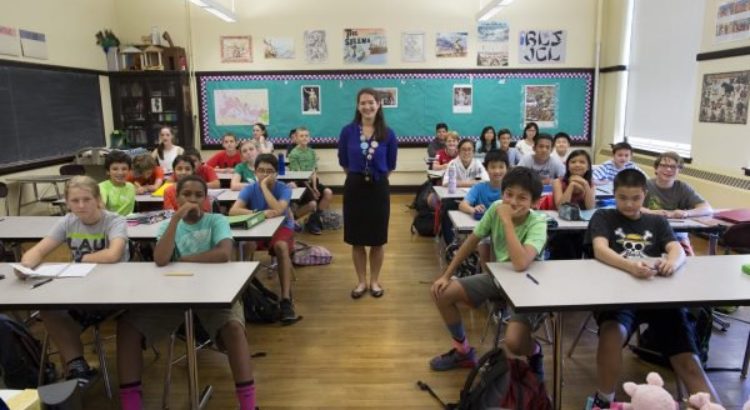
Teacher Elizabeth Moguel poses for a photograph with her seventh grade Latin class at Boston Latin School in Boston, Massachusetts September 17, 2015. REUTERS/Brian Snyder

Embedded in any discussion about education and opportunity is student learning. One tool to gauge student progress over time is the National Assessment of Educational Progress (NAEP), referred to as the Nation’s Report Card. Since 1969, NAEP has administered the largest national assessment of subject-matter achievement for a representative sample of students in grades 4, 8, and 12 in the United States. NAEP uses the same tests across states and districts, which includes public (traditional, charter, and magnet) and private school students. Given the reach of NAEP and its recognition as a measure of our children’s academic vitality, we should analyze the results to identify our strengths and areas for improvement.

The percentage of students who scored at or above proficient on the most recentassessment of NAEP subjects is not impressive. This quantifiable deficiency is evidence of the necessity for research and reform surrounding educational systems geared towards the needs of individual communities.

Public School Students Only

Subject Grade 4 Grade 8 Grade 12
Civics 26 23 23
Economics 41
Math 39 32 23
Reading 35 33 36
Science 37 33 21
Technology & Engineering Literacy 45
US History 19 14 11
Writing 27 26 25

Private School Students Only

Subject Grade 4 Grade 8 Grade 12
Civics 35 38 38
Economics 62
Math
Reading 54
Science 48 43
Technology & Engineering Literacy 60
US History 31 31 17
Writing 39 41

Creating meaningful change to the current state of affairs in K-12 education initially requires a thorough understanding of the factors underlying the exclusions and limitations that families confront in search of quality education for their children and themselves, particularly in fragile communities. The Center for Advancing Opportunities (CAO) defines these as places characterized by high proportions of residents struggling in their daily lives and possessing limited opportunities for social mobility. Following awareness of these deep-seated and enduring conditions, the next step must be to study the practices and systems through which we can close the opportunity gap.

In April 2019, the CAO released its State of Opportunity in America Report in partnership with Gallup, the Charles Koch Foundation, and Koch Industries. The report contains information about education (among other topics) gathered from 5,784 people living in some of the most challenging socioeconomic zip codes in 47 states, including residents in the northern and central regions of Appalachia.

A sample of those living in fragile communities includes the following: 71% are people of color and 29% are white; 53% have a household income of $34,999 or less, with the majority earning under $24,000 a year; 51% rent their place of residence; and 13% do not have a high school diploma — though 12% have earned a bachelor’s degree or more. Despite economic challenges, many people in fragile communities want their children and themselves to have access to a quality education.

One intention of the CAO report is to present a more nuanced understanding of the barriers to opportunity burdening those living in fragile communities as they relate to education. We accomplished this goal by asking the people living closest to the issue what they think.

We asked individuals in fragile communities several questions about K-12 and higher education. We also gathered data from 1,683 people in Birmingham, Alabama; Fresno, California; Chicago, Illinois; and the northern and central Appalachian region to learn how residents in low-income urban and rural areas view their own circumstances and the options available to them. These communities were selected in part because they represent unique geographic regions in the US, each with its own social, economic and historical influences, as well as different racial and ethnic compositions.

Demographic Characteristics of Fragile Community Residents

Education Total (N=5,784) Birmingham(N=696) Chicago(N=569) Fresno(N=751) Appalachia(N=455)
Less than high school 13% 11% 12% 12% 12%
High school graduate 33% 35% 35% 30% 35%
Technical/Vocational school 12% 10% 10% 13% 14%
Some college but no degree 20% 21% 16% 20% 19%
Associate degree 9% 14% 7% 6% 12%
Bachelor’s or more 12% 9% 21% 19% 9%

Note: 2017 data used for income results. Education and race/ethnicity data from Gallup general population survey, December 2018.

Overall, an analysis of the survey results found the following about the quality of local K-12 public schools, higher education, and confidence about career goals.

How satisfied or dissatisfied are you with the quality of public K-12 schools in your area?

Chicago

35% responded as extremely satisfied or satisfied and 42% were dissatisfied or extremely dissatisfied.

Appalachia

65% responded as extremely satisfied or satisfied and 20% were dissatisfied or extremely dissatisfied.

Birmingham

32% responded as extremely satisfied or satisfied and 37% were dissatisfied or extremely dissatisfied.

Fresno

44% responded as extremely satisfied or satisfied and 33% were dissatisfied or extremely dissatisfied.

What these findings show are significant discrepancies in levels of public satisfaction with the quality of public K-12 schools that vary from one community to the next. Strikingly, individuals in historically disadvantaged communities indicated satisfaction. However, the%age of those dissatisfied remains substantial.

How important is a college education today?

At least 62% of all people in fragile communities reported that college is very important. By subgroup, 45% of whites said college is very important compared to 69% of blacks and 70% of Hispanics. More women than men believe a college education is very important at 69% to 55%, respectively.

How satisfied are you with the availability of high-quality community college and job training programs?

Overall, 42% of people in fragile communities are extremely satisfied or satisfied with the availability of high-quality community college programs in their area, and 28% say the same for job training programs.

How confident are you in your ability to achieve career goals you set for yourself — very confident, confident, somewhat confident or not at all confident?

Each percentage represents people who responded “very confident” and “confident” by education level:

Less than high school = 54% of the people in this cat

Technical/Vocational school = 64%

Some college but no degree = 67%

Associate degree = 73%

Bachelor’s or more = 80%

For individuals residing in fragile communities, education not only allows for increased opportunity — entrepreneurial and otherwise — but has also been correlated with elevated well-being and optimism scores.

Altogether, these figures supply fresh evidence that reflects the major obstacles standing in the way of many families in search of high-quality public schools, higher education and job training. A heightened focus on access to education and fluctuations in the caliber of education across communities has yielded important insights about the sources of particular educational disparities. In order to produce effective amendments within this arena, research-based solutions are necessary. Professors such as Kathaleena Monds, director of the Center for Educational Opportunity at Albany State University, are playing a role in creating a foundation base for an informed understanding of community and individual needs that must be applied and consistently reassessed to incorporate into impactful reforms.

By asking people in fragile communities and scholars alike “what works, why, why not and for whom?” we improve our understanding about the delivery of teaching and learning opportunities, and provide research that can strengthen our country’s commitment to advancing opportunity for all people.

Source of the article: https://www.aei.org/publication/education-for-people-in-fragile-communities/

Comparte este contenido:

Reforma educativa: el negocio que debe terminar

Por: Mauro Jarquí Ramírez. 

Hace algunos meses tuve un brevísimo intercambio de ideas en Twitter con una ex consejera del Instituto para la Evaluación Educativa (INEE). Al cuestionar los efectos de su cercanía con la Fundación Empresarios por la Educación Básica –de la que Esteban Moctezuma fue vicepresidente poco antes de la elección presidencial– la reconocida investigadora me respondió sin preocupación alguna que tal organización estaba formada por empresarios que aportan apoyo a escuelas públicas. Sin otra pretensión que la de apoyar a los niños.

El convencimiento con el cual emitió su respuesta no me extrañó, debido al cada vez más pronunciado triunfo cultural que a nivel internacional ha obtenido el ideario educativo de mercado entre una muy significativa franja de quienes diseñan, promueven y también ejecutan las políticas educativas. Para ciertos sectores de expertos en el tema, ministros de educación, consultores y docentes, la intervención programática y orgánica de actores ajenos al ámbito educativo (ligados principalmente al mercado y al llamado Tercer Sector) en la provisión de ese servicio público es sinónimo de eficiencia en el gasto, innovación en el diseño de las políticas y satisfacción para las familias. Por eso no se cuestiona el impulso de formas gerenciales de autogestión escolar, de construcción de alianzas público-privadas, de gobernanza educativa con intervención de grupos de interés, entre otros.

Desde hace algunos años, el debate nacional sobre la reforma educativa ha sido impulsado en gran medida por organismos privados que tras la bandera de la educación de calidad han posicionado proyectos que buscan reconfigurar el sistema educativo bajo una lógica de competitividad, orientados por visiones eficientistasdel proceso escolar.

La experiencia internacional y nuestra propia historia reciente nos muestran que a menudo la intervención de organizaciones de la sociedad civil proempresariales, fundaciones corporativas o asociaciones filantrópicas en el campo educativo público comprende un fin mucho más amplio que únicamente el de aportar apoyo a escuelas públicas para apoyar a los niños. En su práctica, persiste una búsqueda de beneficio o lucro que se consigue bajo distintas formas.

Se lucra cuando los privados diseñan la oferta de servicios educativos, por ejemplo, en lo relativo a profesionalización docente, educación inclusiva e inicial o educación musical; cuando grupos de interés reciben financiamiento del Estado para impulsar en el ámbito de lo público proyectos privatizadores; a través del pago a prestación de servicios o vía alianzas público-privadas, y se lucra también cuando la perspectiva social del mundo de actores privados se convierte en dominante con el beneplácito del gobierno.

El sexenio anterior fue paradigmático en esta materia. Además de que grupos de interés del mundo editorial hicieron un gran negocio debido a su cercanía con el poder político, el gobierno mexicano financió proyectos educativos de organizaciones como ExEB, Suma por la educación y Únete, promotoras de la reforma educativa. Según datos oficiales,1 Exeb recibió aportaciones de 9 millones 963 mil 771 pesos en 2014 y 5 millones en 2016, que se sumaron a los 10 millones recibidos en 2012 para promover su modelo gerencial de autogestión escolar. Por su parte, Suma recibió aportaciones por 3 millones 100 mil pesos en 2013 y en 2014, y 2 millones en 2016 para impulsar sus proyectos de participación social en la educación y reproducir videos y animaciones digitales, así como elaborar un documento de 21 páginas sobre la comunidad mazahua. Finalmente, Únete recibió en 2015 12 millones 128 mil 800 pesos para dotar a 50 escuelas con un aula de medios. Es importante mencionar que incluso sumando las cantidades de las asociaciones el resultado es ínfimo comparado con la enorme cantidad de dinero recibido por Asociación Azteca para promover sus orquestas en el mismo periodo.

Todo ello mientras miles de escuelas carecían de la infraestructura básica para su normal funcionamiento a lo largo y ancho del país.

El gobierno de López Obrador tiene de frente un reto más en materia educativa: terminar con el negocio privado que ha representado el discurso y la práctica de la reforma.

Sin embargo, el panorama no pinta muy bien al respecto:

a) Se ha anunciado ya un programa de profesionalización docente por la Fundación Telefónica, vinculada tanto con ExEB como a organizaciones empresariales de Argentina y Brasil interesadas en la educación. El programa consiste en tres cursos para el fortalecimiento de las habilidades digitales y competencias pedagógicas de las maestras y maestros. El esquema de financiamiento del curso aún no es claro.

b) En el campo de la educación inicial, el hilo a seguir proviene del Movimiento Tres Doce, impulsado por su presidente rotativo, Federico Núñez Perea, quien ha colaborado en campañas de recaudación con Fundación Azteca. Tal como ha insistido el colectivo Educación Especial Hoy, la intervención de actores privados en tal propuesta representa un foco de atención.

c) En el campo de la educación musical está ya en marcha el programa de Orquestas Escolares, basado en el modelo de orquestas Esperanza Azteca, de Fundación Azteca. ¿En qué rubros colaborará la fundación de Salinas Pliego con la SEP? ¿Cuál será su retribución? ¿Por qué anteponer un modelo empresarial a las tradiciones locales de la enseñanza artística? Tampoco queda claro.

El cambio que ha propuesto la 4T no llegará si las prácticas de corrupción o compadrazgo se mantienen en su proyecto educativo. En este sentido, es imperante que el negocio privado en la educación pública termine de inmediato.

1 SFP (2017) Donativos otorgados por las Instituciones de la Administración Pública Federalhttps://datos.gob.mx/busca/ dataset/donativos-otorgados


Fuente del artículo: https://www.jornada.com.mx/2019/07/28/opinion/013a1pol

Comparte este contenido:

How climate change is taught in Canadian high schools — and how it can improve

North America/ Canada/ 29.07.2019/Source: www.cbc.ca.

Curricula lack emphasis on impacts, solutions and scientific consensus, study finds

Most provinces and territories are failing to teach at least some of the basic tenets of climate change, a new study has found.

The study, published in the peer-reviewed scientific journal Plos One last week, found that in some cases, climate change education is not even consistent with scientific understanding.

«[It’s] a good start, but [there’s] room for improvement,» said lead author Seth Wynes, a PhD candidate in the geography department at the University of British Columbia.

Wynes and co-author Kimberly Nicholas of Sweden’s Lund University, studied science curricula and textbooks across the country to figure out what was being taught and how.

They analyzed the documents to look for six essential concepts in learning about climate change:

  • The basics of climate.
  • That temperatures are warming.
  • That climate change is mainly caused by humans.
  • That there is overwhelming scientific consensus about it.
  • That climate change is bad.
  • That we can mitigate it.

«We’d recommend that Canadian curriculum documents ought to cover these basic ideas, these core topics that are important for understanding climate change and also for motivating students and taking action,» said Wynes, who is also a former high school science teacher.

Seth Wynes is a PhD candidate in the geography department at the University of British Columbia. (Submitted by Seth Wynes)

While all provinces and territories teach students about the basics of climate, including topics like ocean currents and the greenhouse effect, there were many gaps across the country.

The researchers found that Saskatchewan had the most comprehensive coverage, teaching all six basic concepts. Ontario, Newfoundland and Labrador, Quebec and Prince Edward Island taught five of the six, Alberta, Northwest Territories and Nunavut taught four of the six, British Columbia, Manitoba and Yukon taught half, and Nova Scotia and New Brunswick taught only one of the six.

The curricula were particularly weak in teaching students about the strong scientific consensus that humans are causing climate change.

«That’s important because if students don’t understand these facts, then they are less likely to be motivated to help solve the problem,» said Wynes.

Waves and debris cover the roadway near Nova Scotia’s Lawrencetown Beach after a storm in January 2018.(Submitted by Allan Zilkowsky)

Manitoba’s supplementary materials, for instance, recommend that students read publications produced by Friends of Science — an organization that believes the sun is responsible for climate change and that opposes the understanding of climate change put forth by the Intergovernmental Panel on Climate Change, a Nobel Prize-winning UN organization — and tells students «there is significantly polarized debate» on whether humans cause climate change.

However, there is virtually no scientific doubt that climate change is caused by humans, Wynes’s study notes. A 2013 study of 11,944 peer-reviewed climate science abstracts found that of the papers that expressed a view on human-caused climate change, 97 per cent supported that view.

Newfoundland and Labrador and Prince Edward Island encourage students to debate what’s causing climate change.

Wynes said while encouraging students to be critical, evaluate evidence and draw their own conclusions is important, that’s not appropriate for something that has already been settled by scientists.

«We don’t ask students to decide whether or not second-hand smoking causes cancer in health class. And in the same way, we would suggest that probably climate change is a subject where we need to be communicating with certainty that it is happening.»

During the summer drought of 2015, metro Vancouver reservoir levels dropped to 73 per cent below norms.(CBC)

The study found that some textbooks pointed to «positive» aspects of climate change, such as extended growing seasons and the notion that cruise ships could visit the North «so tourists can follow in the wake of Arctic explorers.»

Another area of weakness across most of the country’s curricula was in teaching students that climate change can be mitigated through action, the study noted.

Wynes said he’d like to see more jurisdictions teaching students how to take action.

«I think the health metaphor holds up,» he said. «If we’re talking about healthy eating, we tell students, ‘Look, here are some options for healthy eating.’ … We encourage providing that information to students. It makes sense that we would do the same thing for climate change.»

Firefighters make their way through a flooded street in May in Sainte-Marthe-sur-le-Lac, a suburb northwest of Montreal. (Ryan Remiorz/The Canadian Press)

Wynes and Nicholas also examined the curricula in relation to political conservatism and greenhouse gas emissions in each province and territory, but they did not find a relationship between them.

However, they suggest there may be a weak correlation between when the curricula were written and how extensively climate change is covered.

Manitoba’s climate change curriculum was published in 2001, making it the oldest in Canada, with New Brunswick’s 2002 curriculum a close second.

A spokesperson for New Brunswick’s Education Department said staff are in the process of updating the science curriculum, but it may take a few years before changes are implemented. In the meantime, staff are developing resources to help teachers integrate climate change into the current curriculum.

Wynes said he wasn’t surprised by the age of some of the curricula, because developing and implementing them can take a long time. But he said he’s optimistic that climate change education will improve as the issue gains more momentum in the media and politics.

What Nova Scotia education officials are doing

Sue Taylor-Foley, Nova Scotia’s executive director of education innovation, program and services, said despite the study’s findings about the province, the Education Department has incorporated environmental stewardship, climate science and sustainability into the curriculum since at least 2000, from Primary to Grade 12.

She said the province will be renewing the curriculum for grades 9 to 12 this fall.

Source of the notice: https://www.cbc.ca/news/canada/nova-scotia/climate-change-curriculum-canadian-high-schools-1.5221358

Comparte este contenido:

¿Es gratuita la educación pública?

Por: Manuel Clouthier. 


Pienso, luego insisto: la Constitución, en el artículo 3, luego de afirmar que la educación es un derecho, establece que el Estado «impartirá y garantizará la educación inicial, preescolar, primaria, secundaria, media superior y superior». Además, señala que la impartida por éste, además de obligatoria, «será universal, inclusiva, pública, gratuita y laica». En ambos fragmentos se usa el verbo impartir para indicar los niveles educativos en que este derecho es tal y, segundo, al establecer sus características. Una de ellas —gratuita— no se lleva de manera cabal, por lo que para millones de mexicanos que asisten a las escuelas públicas, el derecho estipulado no es un hecho.

Esto sucede en la práctica y, en el colmo de la incoherencia, también en la Ley Reglamentaria más importante del tercero, la Ley General de Educación. En la versión vigente (Artículo 6) como en la iniciativa que se dio a conocer por parte de la administración actual (Fracción IV del Artículo 7).

Entre la Ley y la propuesta de cambio en curso, no hay diferencia más que en el orden de la presentación de las mismas disposiciones. Si atendemos a la segunda, luego de reiterar que la educación pública ha de ser gratuita (por ser un servicio público garantizado por el Estado), prosigue: a) «Se prohíbe el pago de cualquier contraprestación que impida o condicione la prestación del servicio…» b) «No se podrá condicionar la inscripción, acceso a los planteles, aplicación de exámenes, entrega de documentación al pago de contraprestación alguna, ni afectar la igualdad de trato a los educandos» y, c) «Las donaciones o aportaciones voluntarias destinadas a dicha educación en ningún caso se entenderán como contraprestación del servicio educativo. Las autoridades educativas definirán los mecanismos para «la regulación, destino, aplicación, transparencia y vigilancia de las donaciones o cuotas voluntarias».

De nuevo, escribo y persisto como hace años: la gratuidad no admite grados. Es o no es. Si se tiene que dar «voluntariamente» un peso, se desliza de gratuita a barata. En otras palabras: la educación que imparta el Estado puede, o no, ser gratuita. En caso de no serlo, las autoridades, por ley, definen cómo se administran los recursos que aportan los ciudadanos.

Con inusitada frecuencia se solicita a los padres de familia que cooperen, en pecuniario o en especie, porque lo que el Estado destina no alcanza. Hay escuelas que emiten formatos para pagar en bancos las cuotas «voluntarias» de inscripción, y no son pocas. Contribución para el desayuno, o dos cubetas de agua cada día para poder entrar: los baños no tienen ese servicio, cuando, en su caso, hay baños. Pintar los salones, incluido el costo de la pintura por supuesto. Llevar una silla o un banco, y la coperacha para el pizarrón. Cuanto más pobre es la comunidad, más cara —en proporción a sus ingresos— es la educación pública dizque gratuita.

Si se trata de un derecho, y la gratuidad no admite grados, es menester prohibir todo tipo de cuotas, eliminar estos vericuetos torcidos en la Ley, y aportar a las escuelas lo que requieren para ser dignos espacios en el ejercicio de una garantía constitucional incontrovertible. Es curioso: las autoridades prometen conseguir un fondo especial para cumplir con la gratuidad en la educación superior al final del sexenio. ¿No convendría contar, también, con el equivalente para la educación básica y la media superior? Es cierto, son miles de millones, y no abundan. Ya es hora que haya un gobierno que donde la constitución establece un derecho, ponga los recursos para que sea realidad en serio. Sería una transformación, con o sin número.

Fuente del artículo: https://pulsoslp.com.mx/opinion/es-gratuita-la-educacion-publica/970336

Comparte este contenido:

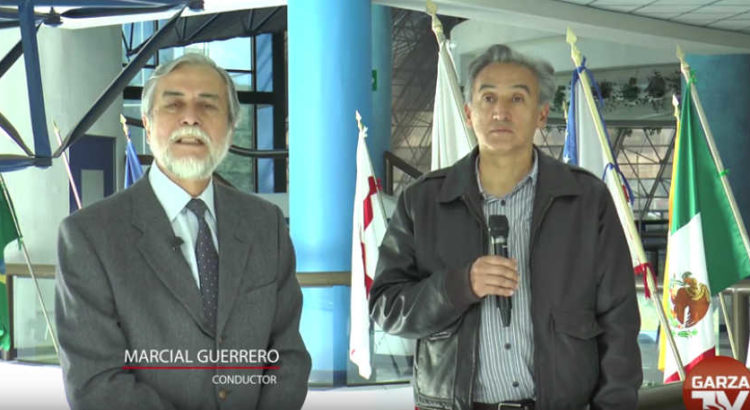
Editorialmente Cuarta Temporada Programa No.3 : «Transgresión y educación siglo XVI-XIX» (Video)

México / 28 de julio de 2019 / Autor: GarzaTV UAEH / Fuente: Youtube

Publicado el 26 jul. 2019


Editorialmente es un programa editorial que comparte los trabajos publicados de los investigadores de la Universidad Autónoma del Estado de Hidalgo.Cuarta Temporada Programa No.3 : «Transgresión y educación siglo XVI-XIX» por Dr. Felipe Durán Sandoval. Profesor Investigador del Instituto de Ciencias Sociales y Humanidades.

Fuente: https://www.youtube.com/watch?v=70xfoZhjPtA

ove/mahv

Comparte este contenido:
Page 517 of 1684
1 515 516 517 518 519 1.684