Page 732 of 1673
1 730 731 732 733 734 1.673

Libro: El Ascenso del hombre

Reseña:

Probablemente entre las nuevas generaciones el título El Ascenso del Hombre es poco conocido, pero se trata de una de las producciones pioneras de documentales sobre ciencia y tecnología para la televisión. Producida por la British Broadcasting Corporation (BBC) en 1973, esta serie tuvo un gran impacto internacional siete años antes que la famosa Cosmos y presentó el desarrollo de la ciencia a lo largo de la historia de la humanidad en 13 capítulos.

Lo mejor de este proyecto dirigido por el matemático Jacob Bronowski, convertido en gran divulgador y conductor de televisión que inspiraría al mismo Carl Sagan, es la manera de presentar una especie de biografía personal de las ideas en forma de programas de televisión y que más tarde se convertiría en libro de divulgación de culto, ahora publicado por Editorial Planeta bajo el sello de Paidós.

A partir de esta serie, la televisión se convertiría en un excelente vehículo de divulgación y de fomento de la cultura científica. El mismo Bronowski afirmaría que “si la televisión no se usara para presentar estos pensamientos en forma concreta, sería tanto como desperdiciarla”.

Este libro es una excelente opción para iniciar las lecturas de este 2018. Aborda el desarrollo del conocimiento en general y de la ciencia en particular, no como ideas abstractas sino como ideas concebidas desde las diversas culturas humanas, desde la aparición hombre hasta el siglo XX.

Abarca los conceptos fundamentales que iniciaron el largo camino del ser humano hacia el conocimiento de la naturaleza a partir de las culturas humanas más simples, de acuerdo con sus facultades básicas y su contexto geográfico, biológico y social específico. Nos explica la ciencia como una actividad humana donde los descubrimientos son hechos por los hombres, no solamente por las mentes privilegiadas.

El Ascenso del Hombre es un clásico de la literatura de divulgación científica ameno, interesante y con un lenguaje al alcance del público no especializado.

Link de descarga: http://www.eumed.net/jirr/pdf/4.pdf

Comparte este contenido:

EEUU: Muere Linda Brown, sí, la de «Brown v. Board of Education», que acabó con la segregación racial en escuelas.

Por: aztecaamerica.com/28-03-2018

Monroe School, 1949. Imagen: NPS

Linda Brown, una mujer de Kansas que en la década de 1950 puso nombre a un contencioso que prohibió la segregación racial en las escuelas estadounidenses, murió a los 76 años, según informaron este lunes medios locales.

Nacida en Topeka, la capital de Kansas, Brown tenía 9 años cuando su padre, el reverendo Oliver Brown, trató de inscribirla en 1950 en la escuela pública primaria más cercana a la vivienda familiar.

La negativa de la escuela Summer School a aceptarla por ser negra provocó cuatro años más tarde el histórico fallo «Brown v. Board of Education», con el que el Tribunal Supremopuso fin a la doctrina «segregada pero igual» que regía en la educación pública estadounidense desde 1896.

El Supremo determinó que «separar (a los niños negros) de otros de edad y calificaciones similares únicamente por su raza genera un sentimiento de inferioridad en cuanto a su posición en la comunidad que puede afectar a sus corazones y mentes de un modo improbable de revertir».

Concluyó, asimismo, que la segregación era una práctica que violaba la cláusula de «protección igualitaria» recogida en la Constitución.

Aunque Brown puso el nombre, el contencioso agrupaba numerosos casos recopilados por la Asociación Nacional para el Avance de la Gente de Color (NAACP, en inglés) de estudiantes afroamericanos rechazados en instituciones educativas alrededor del país.

Un portavoz de la funeraria de Topeka Peaceful Rest Funeral Chapel confirmó a medios estadounidenses que Brown murió este domingo por razones que no han trascendido.

En una entrevista con PBS en 1985, a raíz del 30 aniversario de la sentencia, Brown dijo «sentir» que la decisión del Supremo había tenido «un impacto en todas las facetas de la vida de las minorías en toda el país».

«Lo pienso en términos de lo que ha hecho para nuestros jóvenes, en la eliminación de ese sentimiento de ciudadanía de segunda clase. Creo que ha hecho que los sueños, las esperanzas y las aspiraciones de nuestros jóvenes sean hoy mayores», añadió.

Según The Washington Post, la escuela Summer School, que había rechazado su inscripción en 1950, intentó negársela de nuevo el mismo día de 1954 en el que el Supremo prohibió la segregación.

Aunque fue ella quien se convirtió en un icono de los derechos civiles, el «Brown» de la sentencia «Brown v. Board of Education» pertenece a su padre, que fue quien interpuso la demanda y que murió en 1961.

*Fuente: http://www.aztecaamerica.com/notas/noticias/279051/muere-linda-brown-si-la-de-brown-v-board-of-education-que-acabo-con-la-segregacion-racial-en-escuelas

Comparte este contenido:

EEUU: Apple’s Plans To Win Back The U.S. Education Market May Be Too Little Too Late

Por: forbes.com/Susan Adams/28-03-2018

At an hour-long event staged in a Chicago public high school auditorium this morning, Apple said it would introduce lower-priced devices and initiatives aimed at regaining market share at America’s schools.

The company will offer a new 9.7-inch iPad that will be compatible with its Pencil drawing stylus, which previously only worked on the higher-priced iPad Pro. Last year Apple dropped the price it charges schools for the low-priced tablet to $299, a reduction of $30 from the consumer price. Today Apple also announced that Logitech, a Swiss company that makes computer accessories, will introduce a $49 drawing stylus that can substitute for Apple’s $99 Pencil.

Since 2012, Apple has lost its grip on the educational hardware market for students in kindergarten through 12th grade. According to a report by U.K.-based Futuresource Consulting, which sells its market research studies to Apple and other tech firms, in 2012 Apple sold 52% of all mobile computing products to K-12 schools in the U.S. But last year Apple had only 15% of that market. Chromebooks made by Samsung, Acer, and other manufacturers are now the dominant players, with 58% of the market last year. Windows machines trailed in second place at 22%.

Courtesy: Futuresource

Apple’s share of the education hardware market has shrunk since 2012.

Future source doesn’t break out the value of the K-12 education hardware market but its research shows that school spending on all information technology products, including hardware, software, information technology services and assessments totaled $18 billion in 2017.

Why has Apple’s popularity taken such a hit? Four reasons: Its devices have cost more than twice as much as competitors’, its batteries didn’t last as long, iPads lack the keyboards viewed by teachers as essential to writing instruction, and Apple’s computing environment does not live mainly in the cloud. By contrast, students working on cloud-based Chromebooks can use any machine to get access to their work and administrators can easily implement systemwide changes from a dashboard on a single computer. And Chromebooks sell for as little as $149.

At the Chicago event today, Apple announced several new education apps. It is introducing a tool called Schoolwork, which will make it possible for teachers to give digital handouts to students, including notes, PDFs, and web links. One of Schoolwork’s selling points is privacy. Only teachers will be able to see students’ data. But Google also promises privacy for student information and it’s not clear whether Apple’s system is more secure. Schoolwork will launch in June. Apple is also updating its Pages word processing app, which will allow teachers and students to make books together using handwritten notes, photos, videos and drawings using pre-made templates.

*Fuente: https://www.forbes.com/sites/susanadams/2018/03/27/apples-plans-to-win-back-the-u-s-education-market-may-be-too-little-too-late/

Comparte este contenido:

Thompson hosts northernmost March For Our Lives event in Canada

Por: thompsoncitizen.net/Kyle Darbyson-Thompson Citizen/28-03-2018

While the crowd size didn’t compare to the hundreds of thousands who converged on Washington, D.C., Thompson’s March For Our Lives event still managed to attract a small but dedicated group of participants.

Just like the other 845 sibling marchers that took place throughout the globe March 24, this local walk, which began at R.D. Parker Collegiate, was designed to stand in solidarity with victims of gun violence in the United States.

Given that this was the northernmost March For Our Lives event to take place in Canada, the three-kilometre loop around Thompson Drive and Cree Road was littered with ice and snow.

Thankfully, the over 50 students, parents, teachers and volunteers who showed up for this event all dressed appropriately for the weather and completed the route without any traffic-related incidents.

Of course, this worldwide movement against gun violence in the U.S. largely kicked off in the wake of the Marjory Stoneman Douglas High School shooting in Parkland, Florida on Feb. 14, which left 17 dead.

Much like the how the Stoneman Douglas students spearheaded the central rally in the American capital, a local high school group from RDPC was responsible for organizing the only March For Our Lives event to take place in Manitoba.

Even though this group, Students Offering Support (SOS), normally focus their mental health awareness campaigns on their own school, on Saturday they shone a light on the struggles of students south of the border.

“The students in the U.S. are exhausted, and they do not want one more child to be shot at school,” said SOS member Hayley Jenkins just before the start of Saturday’s march.

“They do not one more teacher to make the choice to jump in front of a firing assault rifle to save the lives of students … they are taking charge and we are supporting them because we must stop letting this become the normal.”

While some have been quick to dismiss a movement that is largely lead by teenagers, SOS member Rishwan Dherdi reminded everybody at the March 24 rally that this campaign has already managed to garner some results.

Not only did the Florida State Senate recently raise the legal age to buy a firearm from 18 to 21, but they’ve also banned the sale or possession of bump stocks, attachments that allow a semi-automatic rifle to fire at a quicker rate.

Fellow SOS member Lala Rukh also mentioned that these students who are marching in the U.S. will be able to transform all this rhetoric into votes in a very short time.

“Those students, who will be 18 as of November of this year, are registering right now to be able to vote for the mid-term election and select their members of Congress,” said Rukh. ”These students are also reminding President Trump and his government that they will be the ones selecting the new [president] in 2020 in the new election.”

After finishing the march on Saturday, School District of Mystery Lake trustee Leslie Tucker echoed her comments from a March 13 school board meeting by saying that she was immensely proud of the youth activism on display here in Thompson and around the world.

In fact, Tucker said that the last time she witnessed student-led activism on this scale was during the South African Anti-Apartheid Movement.

“I remember being much younger, because that was a long time ago, and just fighting and fighting and fighting and eventually it changed,” she said. “So that’s what we do here. It might not change overnight for Americans with respect to gun control, but the pressure has to be put on.”

*Fuente: http://www.thompsoncitizen.net/news/thompson/thompson-hosts-northernmost-march-for-our-lives-event-in-canada-1.23214050

Comparte este contenido:

EEUU: Apple to launch low-cost iPad for education next week

EEUU/March 27, 2018/BY JAMES WALKER/Source: http://www.digitaljournal.com

Apple is said to be preparing a low-cost iPad for launch at a rare education-focused event next week. The company will make a revived push into classroom devices after losing ground to strong competition from Microsoft and Google.

Education software

According to a report from Bloomberg today, Apple will launch a «lost-cost iPad» for teachers and students during its event at the Lane Technical College Prep High School in Chicago next week. It comes as Apple recommits to education devices with its first dedicated event since 2012.

The device will be a new lower-cost version of Apple’s entry-level 9.7-inch iPad. Apple is also developing specialised classroom software to improve the iPad’s usability in schools. Further details on the as-yet unannounced device are currently scarce. Insiders who spoke to Bloomberg said they could not disclose more information because of the private nature of the plans.

9.7-inch iPad Pro

9.7-inch iPad Pro
Apple

The launch will see Apple make a bold re-entry into the education market. Over the past couple of years, education PC makers have become highly competitive. The industry is currently led by Microsoft’s Windows 10 and Google’s Chrome OS platforms, both of which have recently launched new education software experiences and upgraded school-oriented hardware.

Throughout the increasingly fierce battle between Microsoft and Google, Apple has so far remained on the sidelines. The rising dominance of Chrome OS, coupled with Microsoft’s renewed efforts to promote Windows 10, now seems to have prompted Apple to take action. The cheaper iPad may help it to regain its lost ground in the classroom, particularly in the U.S. market where it has struggled to compete with low-cost Chrome OS products.

Tablet convenience

It’s of note that Apple seems to be choosing the iPad as the device to spearhead its new education strategy. For years, the company has promoted the iPad as a more modern alternative to traditional PCs. Apple frequently cites advantages including the device’s portability, light weight and responsiveness as key reasons for consumers to choose one over a regular PC.

Apple may now be taking this message into classrooms. With Microsoft and Google still predominantly focused on laptops and convertibles, Apple could try to sell schools on the promise of touchscreen tablets. iPads might be simpler to distribute to students and easier to carry during the day.

Apple MacBook Pro (2016)

Apple MacBook Pro (2016)
Apple

With Apple also expected to unveil a new entry-level MacBook, the company seems to be waking up to the computing needs of schools. While MacBooks are still popular with college students, Apple’s failure to launch more low-end devices has made them uncommon in the classroom.

 Next week’s event could debut a renewed focus on education PCs, which can only be positive for teachers and students. With Microsoft, Google and now Apple now aggressively competing for classroom dominance, schools have more hardware to choose from and increasingly sophisticated software platforms. Soon, all three major ecosystems may have compelling hardware options and dedicated learning experiences, helping to digitally transform the education sector.

Source:
Comparte este contenido:

Canada: Specialty education programs can help students launch a successful career

Canada/March 27, 2018/By: ROSE O’LEARY/Source: https://www.theglobeandmail.com

Executive director, Canadian School of Natural Nutrition.

With the increasing demand for work-life balance, a great company culture and a flexible working schedule, many young Canadians are moving toward starting their own business.

Based on a recent study from Intuit Canada, the software company behind TurboTax and Quick Books, Michael Shulman of Yahoo Finance Canada determined that nearly half of Canada’s work force will be self-employed by 2020.

It is important that education in Canada adapts to meet these changing trends. Specialty post-secondary education programs provide the skills, tools and certifications required to fulfill these changing demands and for students to begin a successful career.

In addition to providing the skills for these new careers, there are many benefits of enrolling in specialty education programs with small class sizes and flexible learning schedules. The primary benefit is that students can obtain the tools, credibility and support they need to start their new career within a relatively short period of time.

For example, in 1994, the late Danielle Perrault, founder of the Canadian School of Natural Nutrition (CSNN), identified the need for a specialty holistic nutrition program taught in the classroom. Today, approximately 8,800 students have graduated from CSNN’s specialty Natural Nutrition diploma program, resulting in numerous entrepreneurs merging the worlds of self-employment and alternative medicine.

Tools: Those looking for a new career now – not later – may want to consider a specialty education program that provides them with the necessary tools and certification. A specialty education diploma program may not provide the traditional status of a degree; however, it does provide the knowledge and tools needed to start practicing tangible skills that will be used in the work force. This is very different from a four-year degree program that may additionally require graduation from a master’s program or an internship program before a career is able to begin.

Credibility: Finding the specialty education program that provides the necessary education, tools and certification to be credible is crucial in launching a new successful career. Certifications are only credible if students’ knowledge and skills have been adequately tested and screened with board exams. For example, in the holistic nutrition industry, the public looks to see that an author of a book or article is certified and has a designation from a reputable specialty education program before trusting what is written about nutrition and health. And holistic nutrition practitioners must be certified to obtain insurance in their private holistic nutrition practices. This could be true of any entrepreneurial industry where consumers are trusting individuals, relying on internet searches and word-of-mouth referrals for services.

Networking: As is true in any new career, those new to an industry benefit if they have continued support after graduating and access to those with industry experience. When researching specialty education programs, search for schools that offer these levels of support because, even with excellent skills training, some graduates may lack confidence in navigating a new industry.

The mandate of provincially regulated private career colleges is to provide the skills and tools graduates need to acquire jobs and self-employment opportunities. As a result, many specialty education programs have job boards for their graduates and work collaboratively with their alumni associations and industry associations that help graduates navigate the industry and find ways of attracting new clientele. The goal is to collectively help graduates be successful in their budding careers.

Canadians have a lot of choice when it comes to educational programs and careers, especially if entrepreneurship is desired. As new industries and careers emerge, and as the employment trend increasingly moves toward self-employment, specialty programs may be the right step to gain the tools, credibility and network needed to reach career goals.

Executives, educators and human resources experts contribute to the ongoing Leadership Lab series.

Source:

https://www.theglobeandmail.com/report-on-business/careers/leadership-lab/specialty-education-programs-can-help-students-launch-a-successful-career/article38319100/?cmpid=rss1

Comparte este contenido:

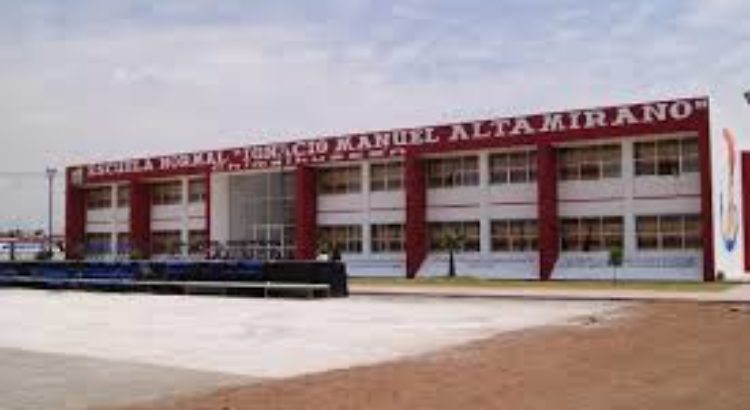
Artículo 24: ¿La puntilla de las Normales?

Por: Rogelio Javier Alonso Ruiz

De acuerdo a la Convocatoria del Estado de México sobre el Concurso de Oposición para el Ingreso a la Educación Básica, ciclo Escolar 2017-2018, quien desee contender por una plaza docente de Matemáticas en Educación Secundaria, deberá contar con título en la carrera normalista de Educación Secundaria con Especialidad en Matemáticas o bien en alguna carrera universitaria como Robótica, Mecatrónica o Estadística Industrial, por mencionar algunas.  Entonces, aquel joven que busque prepararse para enseñar la asignatura en este nivel educativo tendrá dos vías: una carrera normalista o una carrera universitaria. ¿Cuál le convendrá más? En términos de preparación pedagógica, no hay duda que la primera; en términos de oportunidades de trabajo, la segunda es la opción más favorecedora.  Dicho coloquialmente, al estudiar la carrera de Robótica un joven estaría “matando dos pájaros de un tiro”, pues además de tener la posibilidad de ejercer en industrias, empresas o centros de investigación, podrá, aunque no sea su especialidad, desempeñarse como docente del nivel educativo mencionado.

El artículo 24 de la Ley General de Servicio Profesional Docente (LGSPD) establece que el perfil de ingreso para los profesores de Educación Básica “corresponderá al académico con formación docente pedagógica o áreas afines que correspondan a los niveles educativos, privilegiando el perfil pedagógico docente de los candidatos; también se considerarán perfiles correspondiente a las disciplinas especializadas de la enseñanza”. Así pues, aunque es entendible que un joven que desea prepararse para profesor, en vez de elegir una carrera normalista, elija una universitaria, alguien interesado en la calidad del servicio educativo probablemente se haría preguntas como las siguientes: ¿En qué momento un estudiante de la licenciatura de Robótica o Mecatrónica tiene acercamientos con la didáctica de las Matemáticas? ¿Qué le enseñan sus maestros sobre teorías del aprendizaje? ¿Cuándo se le explica la relevancia de la evaluación formativa? ¿Cuándo se le habla sobre las características físicas y cognitivas de los niños y los adolescentes? ¿Cuándo tiene la posibilidad de practicar en un grupo escolar?

Si bien la presencia de profesionistas con poca o nula formación pedagógica no es un fenómeno desconocido en las escuelas mexicanas, la situación anterior ha sido aceptada por la LGSPD, promulgada en septiembre de 2013. Aunque el abandono oficial a las Escuelas Normales, el desprestigio público de la figura del docente y la represión a estudiantes normalistas (rurales sobre todo) son factores de peso, a partir de la LGSPD la matrícula normalista se ha desplomado de manera alarmante. Recientemente, un estudio de Medrano, Ángeles y Morales (2017) ha revelado que para el ciclo escolar 2015-2016 se presentó el número más bajo de alumnos normalistas en casi medio siglo (44 años); tan solo en los primeros cuatro ciclos escolares del sexenio del presidente Peña Nieto, la matrícula normalista ha tenido una disminución de casi 20%, situación que no obedece a la contracción de la población infantil y juvenil esperada para los próximos años, pero sí a los factores que se mencionaron anteriormente, entre los que destaca la apertura de las plazas docentes a licenciados no normalistas.

Lo establecido en el artículo 24 de la LGSPD no sólo trae consecuencias negativas para las Escuelas Normales, sino también para la Educación Básica y el magisterio como gremio. Si lo que se desea es incrementar la calidad del servicio que se ofrece en las escuelas de Educación Básica, no parece adecuado abrir las puertas a profesionistas que únicamente tienen una preparación “afín”, y no especializada, para estar a cargo de un grupo escolar. En cuanto a las afectaciones al gremio, la entrada de profesores que no comparten un origen, que carecen de una identidad profesional docente, que ven a la docencia como una opción secundaria a su proyecto laboral,  sin duda será un terreno propicio para embestidas que pretendan acelerar la de por sí creciente desprofesionalización del magisterio, algo que, en cambio, sería más difícil con un cuerpo magisterial conformado por integrantes que valoran su profesión y la ven como un proyecto de vida: ¿defenderá igual la dignidad de la profesión docente quien encontró esta ocupación como una alternativa que quien desde joven sintió la vocación por estar en las aulas?

La disminución de la matrícula normalista, además de generarse por el hecho de que un universitario tenga pase a los exámenes de ingreso al servicio profesional docente, posiblemente se intensificará en un futuro, pues, tal como se establece en el documento Aprendizajes clave para la formación integral. Plan y programas de estudio para la educación básica, las universidades “deberán construir la oferta académica [docente] de la que ahora carecen” (SEP, 2017, p. 42). Ante esto, un eventual enfrentamiento entre universidades y escuelas normales sería totalmente disparejo: en cuanto a tamaño, por ejemplo, mientras las primeras concentran a más del 90% del estudiantado superior, las segundas apenas alcanzan un escaso 3%; aunado a lo anterior, se agregan las diferencias en presupuesto, infraestructura, personal y cuerpos académicos, entre otras, a favor de las universidades.   Así pues, dadas las condiciones actuales y la proyección a futuro, no es descabellada la posibilidad de que las universidades tomen la batuta de la formación docente, llevando a las Normales a un plano secundario, si no es que a su extinción.

Mientras la Ley General del Servicio Profesional Docente permita el ingreso al servicio de profesionistas con perfiles semiespecializados o ajenos a la labor docente, no se podrá esperar una recuperación de la matrícula normalista. Si lo que la Reforma Educativa buscaba era precisamente incrementar la calidad de la educación, entonces es incomprensible que se consienta que los nuevos maestros puedan contar únicamente una formación “afín” a la labor educativa, y no exigir, en cambio, una preparación especializada para esta tarea. Así pues, se quiere una educación de calidad, pero contradictoriamente se da pie a que los nuevos docentes sean egresados de escuelas que no privilegian la preparación pedagógica. Es comprensible que los jóvenes, al momento de elegir una carrera, dada la difícil situación económica por la que atraviesa el país, privilegien los aspectos económicos  y de versatilidad laboral, en detrimento, en este caso, de la especialización en la labor docente.

En suma, el artículo 24 de la ley en cuestión representará quizá la concreción de un proceso de debilitamiento sistemático que apunta hacia la extinción de las Escuelas Normales.  Restó valor a la formación normalista, afectando así no sólo la matrícula, sino la relevancia social de estas instituciones. Transmitió la idea de que la labor docente es tan sencilla que hasta un profesionista con escasas o nulas nociones pedagógicas puede desempeñarla. En tauromaquia, la puntilla es un pequeño puñal que se que se emplea para quitar la vida de los toros derrotados y moribundos, que previamente han sido torturados físicamente, pero se aferran a la vida. Se emplea cuando la estocada propinada por el torero, si bien generó un daño severo, no fue suficiente para matar al toro, por lo que se hace necesario el uso de esta arma para lesionar órganos nerviosos relacionados con la respiración y el latido cardiaco de la bestia.  ¿Algo similar pudiera representar, a mediano plazo, el artículo 24 de la LGSPD?


REFERENCIAS

DIARIO OFICIAL DE LA FEDERACIÓN. Ley General del Servicio Profesional Docente. México: autor, 2013.

MEDRANO, V., ÁNGELES, E. y MORALES, M. La educación normal en México. Elementos para su análisis. México: INEE, 2017.

SEP. Aprendizajes clave para la educación integral. Plan y programas de estudio para la educación obligatoria. México: autor, 2017.

Comparte este contenido:
Page 732 of 1673
1 730 731 732 733 734 1.673