United States / March 18, 2018 / Author: MARIA DANILOVA / Source: WFTV
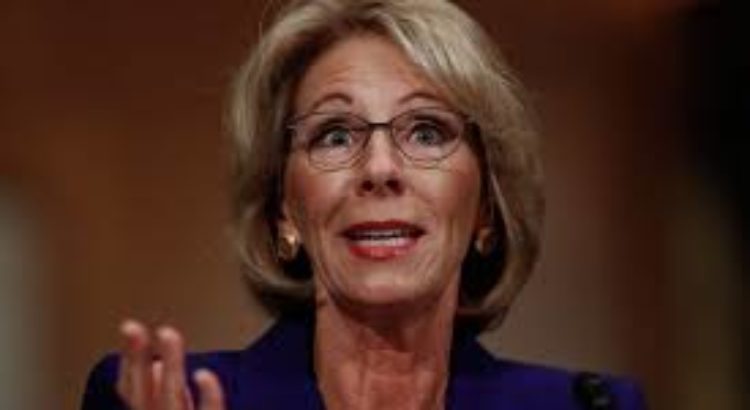
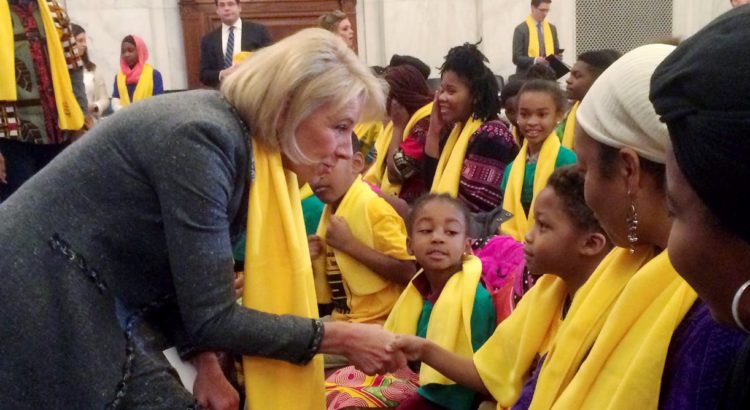
Education Secretary Betsy DeVos got a less than ringing endorsement from the White House on Monday after a pair of uncomfortable television interviews raised questions about her commitment to help underperforming schools and support for President Donald Trump’s proposal to curb school violence.
Less than a day after DeVos was appointed to chair a federal commission on school safety, White House press secretary Sarah Huckabee Sanders downplayed DeVos’ role in the process. Asked whether DeVos would be the face of the commission, Sanders said, «I think that the president is going to be the lead on school safety when it comes to this administration.»
Sanders also said that the focus is «not one or two interviews, but on actual policy.»
In an interview with CBS’ «60 Minutes» that aired Sunday night, DeVos said years of federal investment in public education had produced «zero results» and that American schools were stagnating and failing many students. But asked by CBS’ Lesley Stahl whether she had visited low-performing schools to understand their needs, DeVos, an ardent proponent of school choice, admitted to having visited none.
«I have not intentionally visited schools that are underperforming,» DeVos said.
«Maybe you should,» Stahl said.
«Maybe I should,» DeVos said.
DeVos’ spokeswoman Liz Hill said that the secretary’s focus was on promoting successful innovation, including in traditional public schools.
«The secretary has been very intentional about visiting and highlighting high performing, innovative schools across the country,» Hill told The Associated Press in a statement. «Many of these high performing schools are traditional public schools that have challenged the status quo and dared to do something different on behalf of their students – many where teachers are empowered in the classroom to find what works best for students.
DeVos took to Twitter on Monday to defend her comments.
«I’m fighting every day for every student, in every school – public and private – to have a world-class education. We owe that to our children,» she wrote. She also suggested that some of her remarks were unfairly left out of the show.
This wasn’t the first time DeVos faced criticism following an uneven performance at a public forum. She was ridiculed last year after suggesting at her confirmation hearing in the Senate that some schools needed guns to protect students from grizzly bears.
Elizabeth Mann, an education expert with the Brookings Institution, said that DeVos’ failure to tour struggling schools undermines her credibility as an advocate for the children that they serve.
«It’s difficult for her to establish credibility in speaking about those issues when she hasn’t visited an underperforming school as secretary,» Mann said.
But Mike Petrilli, president of the conservative Thomas B. Fordham Institute, said the criticism was unfair and that the questions and the tone of the interview were tough. He added that he is not sure that DeVos’ predecessors in the Obama administration would have done a better job in a similar interview.
«She is facing the glare of the spotlight much more than they did and the press is much less friendly to her,» Petrilli said.
Los científicos han descubierto que este sistema potencia las capacidades de análisis y abstracción de los alumnos y, por ende, es útil para enseñar cálculo.
Lo más seguro es que estés leyendo esto porque 1) tienes niños y no sabes qué hacer para que aprendan matemáticas de una vez, 2) se te dan mal los números y quieres dejar de usar el móvil para hacer hasta unas simples restas, o 3) tienes demasiado tiempo libre o te aburres en el trabajo.
Sea como fuere, esto te va a interesar. Los científicos han descubierto que el sistema matemático que utilizaba la población maya potencia las capacidades de análisis y abstracción de las personas y, por ende, es útil para enseñar matemáticas a los más pequeños. Esto se explica por las características táctiles y simbólicas del sistema maya.
Los niños indígenas se sientan en plena selva a escuchar al profesor, quien les enseña cómo hacer el «ábaco maya», una tabla pintada sobre la tierra
Fernando Magaña, catedrático de la Universidad Autónoma de México (UNAM), promueve la enseñanza de este método en los colegios. El experto explicó a Efe que con este sistema, la memorización cede el paso al entendimiento, al análisis puro y a la abstracción. «El pensamiento abstracto facilita el razonamiento de las cosas, nos ayuda a tomar decisiones, a hacer esquemas, a programar causas y efectos…», aseguró Magaña.
El catedrático dio clases de matemáticas mayas a profesores en comunidades indígenas de 2010 a 2015 como parte de un programa de la Secretaría de Educación Pública del estado de Yucatán.
¿Cómo funciona el método?
Los niños indígenas se sientan en plena selva a escuchar al profesor, quien les enseña cómo hacer el «ábaco maya«, una tabla que los menores pintan sobre la tierra o en un periódico viejo. En dicha tabla se llenan tres tipos de fichas con un significado concreto y con las que realizan las operaciones matemáticas a través de desplazamientos entre las distintas columnas. El punto (cuyo valor es 1) lo puede representar el botón de una camisa, la raya (de valor 5) una judía, y el caracol (cuyo valor es 0), con una pequeña piedra.
Este método educa el razonamiento matemático, facilitando que el cerebro se acostumbre a analizar y a deducir desde muy temprana edad
Como vemos, el sistema, además de ser bastante barato, libra a los niños de aprender las tablas para poder realizar operaciones como sumas, restas, multiplicaciones, divisiones y hasta raíces cuadradas.
Al contrario, observan, interpretan y desplazan los objetos sobre la tabla para obtener los resultados y, mientras, razonan sobre lo que se está haciendo. «Se trata de un método más táctil, más concreto, pero que, a través de lo táctil, permite llegar al pensamiento abstracto«, expuso Magaña.
Si se enseña a los niños así desde la infancia, se educa el razonamiento matemático y el cerebro se acostumbra a analizar y a deducir desde muy temprana edad. «No tienes que memorizar las tablas de multiplicar; todo es puro análisis, así desarrollas la inteligencia analítica», matizó.
Las tablas, «un problema a nivel mundial»
El investigador dijo que la enseñanza de matemáticas con base en la memorización de tablas de multiplicar es «un problema a nivel mundial». «Apenas el niño sabe contar lo empezamos a entrenar en la memoria. Le decimos que eso son matemáticas, lo cual es un engaño«, aseveró.
Aprenden a sumar y restar en tan solo una hora, a multiplicar en otra y en tres o cuatro horas están capacitados para realizar una división
Además, el sistema maya es más rápido de asimilar por los niños. De hecho, aprenden a sumar y restar en tan solo una hora, a multiplicar en otra y en tres o cuatro horas están capacitados para realizar una división. Así, «en un lapso de dos o tres meses, un niño de cuatro años ya puede salir representando números del uno al diez mil».
«¿Por qué vamos a poner cárceles al cerebro?», se preguntó Magaña indignado.
Resumen: El Ministerio de Educación, Juventud e Información reitera que las escuelas NO deben cerrarse sin la aprobación previa del Ministerio.
The Ministry of Education, Youth and Information is reiterating that schools should NOT be closed without prior approval from the Ministry.
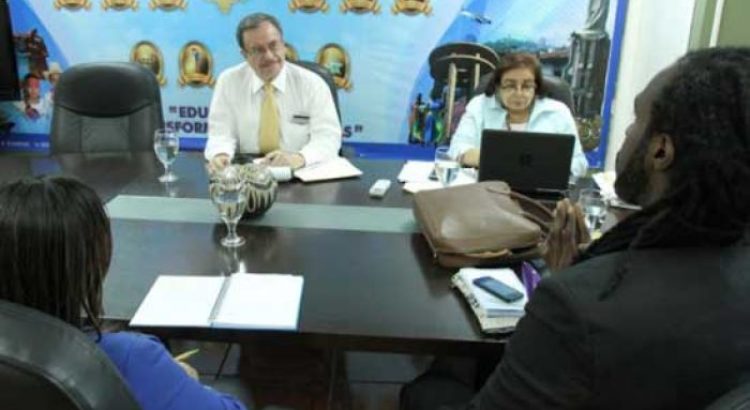
Information reaching the Ministry is that some teachers who turned up for work and in some cases principals had told students that there would be no school tomorrow. This is in contravention of the Ministry’s instructions.
Seventy-five of the 466 schools checked today had classes in the earlier part of the day up to just before mid-day. Others had classes up to the end of the normal school day.
In the meantime, the Ministry will be deploying additional personnel tomorrow, March 13, to support the schools.
This support includes Regional Response Teams (RRTs) comprising officers from the Ministry of Education, Youth and Information, selected tertiary institutions, Secondary Schools Student bodies and the National Parent Teachers Association of Jamaica.
Para establecer condiciones idóneas en los centros educativos en cuanto a la inclusión de personas con “Discapacidad”, el ministro de Educación sostuvo este día una reunión con el director de Comunicaciones de la Organización de las Naciones Unidas para la Educación la Ciencia y la Cultura (UNESCO), de San José Costa Rica, Jamion Knight.
En 2017 UNESCO realizó una conferencia regional sobre los derechos de las personas con discapacidades y para dar seguimiento a este evento fue de mucha importancia reunirme este día con el ministro de Educación Marcial Solís, para saber cuáles son los tipos de proyectos que UNESCO y el gobierno podrían implementar juntos como el acceso y uso de tecnologías con personas con discapacidad, destacó Jamion Knight.
El primer paso sería el desarrollo del plan nacional, el cual contiene un documento amplio con iniciativas específicas y después de desarrollar el plan hay que desarrollar, un plan de acción que incluye temas como bibliotecas accesibles, formación de docentes en el uso de tecnologías, porque deben de tener conocimientos para poder apoyar a los estudiantes con discapacidad, indicó Knight.
El especialista explicó que se pretende implementar herramientas con tecnología para apoyar a los estudiantes, incluyendo aplicaciones para leer documentos, es de esta manera que estos son dos elementos muy importantes.
En junio pretendemos realizar un evento para poder sensibilizar a los docentes sobre los tipos de aplicaciones que están disponibles y utilizar en las clases.
América del Norte/Canada/Audrey McKinnon · CBC News
Resumen: Después de semanas de cabildeo por parte de los padres y el presidente de la Junta Escolar de Prince George, el BCMinisterio de Educación ha publicado un informe sobre la educación rural que previamente se había ocultado a la vista pública. La madre Trudy Klassen acusó al gobierno de «enterrar» el informe después de que su solicitud fue rechazada en virtud de la Ley de Libertad de Información y Protección de la Privacidad. En febrero, el Ministerio de Educación dijo que el informe estaba siendo retenido por una variedad de razones, incluida la divulgación que sería «perjudicial para los intereses financieros o económicos de un organismo público». El 9 de marzo, el informe completo se publicó en borrador y el Ministerio de Educación dijo que «siempre» había planeado publicar la información. «Tenerlo disponible para que todos lo vean es muy importante», dijo Klassen. Klassen vive en Salmon Valley, una pequeña comunidad en el norte de Columbia Británica cerca de Prince George que perdió su escuela primaria en 2010.
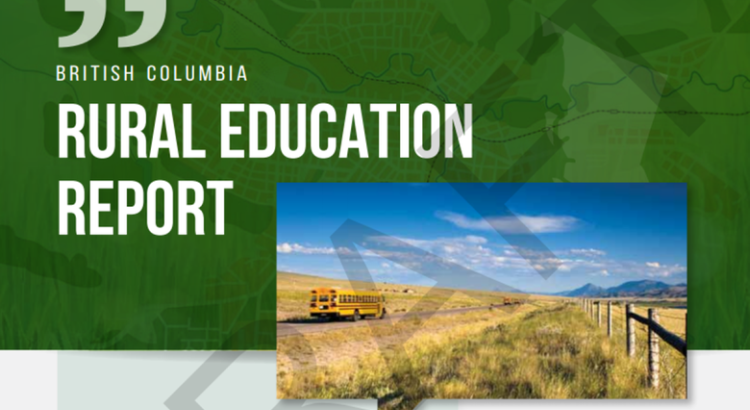
After weeks of lobbying from parents and the chair of the Prince George School Board, the B.C.Ministry of Education has released a report on rural education that was previously withheld from public view.
Parent Trudy Klassen accused the government of «burying» the report after her request for it was refused under the Freedom of Information and Protection of Privacy Act.
B.C. parent accuses province of burying rural education report after Freedom of Information request denied
In February, the Ministry of Education said the report was being withheld for a variety of reasons including that disclosure would be «harmful to the financial or economic interests of a public body.»
On March 9, the entire report was released in draft form and the Ministry of Education said it had «always» planned to release the information.
A draft of the Rural Education Report was released March 9, one month after the B.C. Ministry of Education said it would be withheld. (Ministry of Education)
«Having it available for everyone to take a look at is very important,» Klassen said. Klassen lives in Salmon Valley, a small northern B.C. community near Prince George that lost its elementary school in 2010.
Rural schools face many challenges
Her community participated in the creation of the Rural Education Report and Klassen looked forward to seeing how other rural communities handled the challenges schools outside of city centres face.
The report points to seven key areas in which rural schools struggle, such as having limited access to quality educational programs, difficulties with staffing and human resources, the deteriorating state of school facilities and school closures.
«This isn’t an isolated problem. It’s not a small problem,» Klassen said. «There has to be a co-ordinated cross-governmental strategy and policy changes in order for rural education to be able to thrive.»
Prince George School Board chair Tim Bennett said the report will be put to good use, now that it’s public.
«We’re just glad this report is recommending ways to ensure that schools stay vibrant in those communities,» he said.
Bennett said he will encourage the government to follow the report’s 20 recommendations.
They include developing local action plans in rural school districts to meet their needs and creating a more flexible capital funding criteria.
To see the report: http://s3.documentcloud.org/documents/4411779/Draft-Rural-Education-Report-2017.pdf
Resumen: Gloria Ladson-Billings , presidenta de la Academia Nacional de Educación, compartirá a las 4 pm, el miércoles 4 de abril los resultados de su investigación «Hip Hop / Hip Hope: La (R) Evolución de la Pedagogía Culturalmente Relevante» como parte de la Serie de Conferencias Edward e Ilene Lowenthal, que se llevaran a cabo en el juzgado simulado Bryan Cave de Anheuser-Busch Hall en la Universidad de Washington en St. Louis. La investigación de Ladson-Billings examina las prácticas de los maestros que tienen éxito con los estudiantes afroamericanos. La Profesora emérita de la Universidad de Wisconsin, es muy conocida por su discurso presidencial de AERA de 2006 , «De la brecha de logros a la deuda educativa: comprender el rendimiento en las escuelas de EE. UU.» Esta Líder de opinión sobre la importancia de los métodos de enseñanza culturalmente relevantes durante 25 años, Ladson-Billings ha argumentado que la cultura juvenil es un elemento perdido que debe tenerse en cuenta al desarrollar estrategias de enseñanza efectivas para los jóvenes que luchan por tener éxito en la escuela . Su charla explora cómo la tecnología y la cultura juvenil pueden y deben revolucionar nuestras prácticas de enseñanza. La conferencia de Ladson-Billings es copatrocinada por el Departamento de Educación en Artes y Ciencias y la Ley de Interés Público de la Facultad de Derecho y Serie de Oradores de Políticas. Una recepción seguirá en Crowder Courtyard de la facultad de derecho. El evento es gratuito y abierto al público, pero se solicitan reservas. Confirme su asistencia antes del 23 de marzo. El estacionamiento para visitantes está disponible en los talleres de Snow Way o Millbrook.
Gloria Ladson-Billings, president of the National Academy of Education, will discuss “Hip Hop/Hip Hope: The (R)Evolution of Culturally Relevant Pedagogy” as part of the Edward and Ilene Lowenthal Lecture Series at 4 p.m., Wednesday, April 4, in Anheuser-Busch Hall’s Bryan Cave Moot Courtroom at Washington University in St. Louis.
A thought leader on the importance of culturally relevant teaching methods for 25 years, Ladson-Billings has argued that youth culture is a missing element that must be factored in to how we develop effective teaching strategies for young people who are struggling to be successful in school. Her talk explores how technology and youth culture can and should revolutionize our teaching practices.Ladson-Billings’ research examines the practices of teachers who are successful with African-American students. A professor emerita at the University of Wisconsin, she is well-known for her 2006 AERA Presidential Address, “From the Achievement Gap to the Education Debt: Understanding Achievement in U.S. Schools.”
Ladson-Billings’ lecture is co-sponsored by the Department of Education in Arts & Sciences and the School of Law’s Public Interest Law and Policy Speakers Series. A reception will follow in the law school’s Crowder Courtyard.
The event is free and open to the public, but reservations are requested. RSVP by March 23. Visitor parking is available in the the Snow Way or Millbrook garages.
For more information, contact Marilyn Broughton at marilynb@wustl.edu or 314-935-6730.
Betsy DeVos exposed the education reform movement’s pitfalls in her highest-profile media appearance to date.
President Donald Trump’s education secretary got the job based on her years of advocacy for expanding “school choice,” especially in Michigan, her home state. Yet she stumbled when Lesley Stahl asked her in a widely watched CBS “60 Minutes” interview to assess the track record for those efforts.
“I don’t know. Overall, I – I can’t say overall that they have all gotten better,” DeVos stammered.
It’s not just Michigan or Midwestern conservatives. Policymakers and philanthropists across the ideological spectrum and the nation have teamed up to reform public education for decades, only to find that their bold projects have fallen short. Regardless of the evidence, however, top-down reform remains the standard among politicians and big donors.
As an educational policy scholar, I have identified a few reasons why school reform efforts so persistently get lackluster results, as well as why enthusiasm for reform hasn’t waned. Despite its long-term failure, large-scale education reform maintains consistent bipartisan support and is backed by roughly US$4 billion a year in philanthropic funding derived fromsome of the nation’s biggest fortunes.
Shiny objectives
DeVos may be a uniquely polarizing figure, but she is hardly the first federal leader to champion school reform.
Still, the larger ethos of reform hasn’t changed. And none of the leaders of this effort, including DeVos, appear to be wavering in their efforts, even when challenged with evidence, as happened during her cringe-inducing “60 Minutes” interview.
Former PBS NewsHour education correspondent John Merrow sums up his book ‘Addicted to Reform,’ which describes the pitfalls of the K-12 reform movement.
But it has routinely failed to produce promised results. Today, educators, scholars and policymakers now almost universally regard No Child Left Behind as a washout. And many critiques of Obama-era reform efforts have been equally blistering.
Nevertheless, the core approach to federal education policy has not markedly changed.
The chief reason that all this activity has produced so little change, in my view, is that the movement’s populist politics encourage reformers to make promises beyond what they can reasonably expect to deliver. The result, then, is a cycle of searing critique, sweeping proposal, disappointment and new proposal. The particulars of each recipe may differ, but the overall approach is always the same.
Cookie cutters
Beyond this dysfunctional cycle, the other big reason the school reform movement has consistently come up short has to do with an approach that is both too narrow and too generic.
Ever since 1966, when Johns Hopkins University sociologist James S. Coleman determined in his government-commissioned report that low-income children of color benefit from learning in integrated settings, most education researchers have agreed that economic inequality and social injustice are among the most powerful drivers of educational achievement gaps. What students achieve in a school, in other words, reflects their living conditions outside its walls.
Yet rather than addressing the daunting issues like persistent poverty that shape children’s lives and interfere with their learning, education reformers have largely embraced a management consultant approach. That is, they seek systems-oriented solutions that can be assessed through bottom-line indicators. This has been particularly true in the case of conservatives like DeVos, who even in her stand against the public education “system,” has proposed a new kind of system – school choice – as a solution.
Sean Reardon, a Stanford University professor, discusses the gap between how low-income and rich students perform academically.
At the same time, reformers of all stripes have tried to enact change at the largest possible scale. To work everywhere, however, education reforms must be suitable for all schools, regardless of their particular circumstances.
This cookie-cutter approach ignores educational research. Scholars consistently find that schools don’t work that way. I believe, as others do, that successful schools are thriving ecosystems adapted to local circumstances. One-size-fits-all reform programs simply can’t have a deep impact in all schools and in every community.
Entrepreneurial outsiders
Perhaps this flawed approach to education reform has survived year after year of disappointing results because policy leaders, donors and politicians tend not to challenge each other on the premise that the ideal of school reform requires a sweeping overhaul – even though they may disagree about the best route. DeVos may be criticized for her dogmatic demeanor, but her approach is fairly mainstream in most regards.
Additionally, many leading reformers generally subscribe to the ethos of educational entrepreneurism. They consider visionary leadership as essential, even when leaders have scant relevant professional experience. That was the case with DeVos before she became education secretary. As outsiders operating within a complex system, however, reformers often fail take the messy real-world experiences of U.S. schools into account.
Finally, the reformers see failure as an acceptable part of the entrepreneurial process. Rather than second-guess their approach when their plans come up short, they may just believe that they placed the wrong bet. As a result, the constant blare of pitches and promises continues. And it’s possible that none of them will ever measure up, no matter the evidence.
Editor’s note: This article incorporates elements of a story published on March 8, 2018, and the Bill and Melinda Gates Foundation is a strategic partner of The Conversation US and provides funding for The Conversation internationally.
OtrasVocesenEducacion.org existe gracias al esfuerzo voluntario e independiente de un pequeño grupo de docentes que decidimos soñar con un espacio abierto de intercambio y debate.
¡Ayúdanos a mantener abiertas las puertas de esta aula!







 Users Today : 95
 Total Users : 35493123
 Views Today : 101
 Total views : 3611921