Page 944 of 1684
1 942 943 944 945 946 1.684

Mexico: LANL Foundation Awards $61,298 In Education And Community Grants

Mexico/August 8, 2017/by Carol A. Clark/Source: http://www.ladailypost.com

The LANL Foundation awarded 26 grants totaling $61,298 to support education and community programs in Northern New Mexico during the second-quarter grantmaking period.
Sixteen programs received $37,000 in Education Outreach funding that directly supports kindergarten through 12th grade public school children. An additional 10 Community Outreach Grants totaling $23,798 were awarded to programs aligned with the LANL Foundation’s mission and vision of innovative programming, collaboration, and advocacy for lifelong learning but are not directly tied to kindergarten through 12th grade public education. Early childhood, adult learning, or community events are a few focus areas that fall under this category.

Education Grants

  • Animal Protection of New Mexico, The Animal Connection: implementation of school-based humane education curriculum in five public schools in Santa Fe and Sandoval Counties
  • ARTsmart, ARTreach: weekly, 24-week comprehensive art education class for 24 weeks taught by highly qualified teachers to all 225 students of Dixon and Abiquiu Elementary schools
  • Bernalillo Public Schools, STEM Sisters: support opportunities for students to experience and participate in STEM activities such as field trips, STEM competitions, and math festivals
  • Bridges Project for Education, College Connections: program to guide Taos High School students in grades 8–11 aligning actions in school with post-secondary and life goals
  • Dual Language Education of New Mexico, Student Leadership Institute 2017: all-day event at the National Hispanic Cultural Center in Albuquerque on November 3 for youth in eighth through 12th grade provides students the opportunity to attend student-lead workshops as a means of reflection, growth, and support toward successful, youth-driven school and community projects
  • Embudo Valley Library and Community Center, Maker Program: students in fourth through eighth grade create projects using computational tools, a 3-D printer, Lego robots, and Makey Makey kits under the supervision of a STEM mentor and library staff over 28 sessions, with a community event to present the projects
  • Española Valley Fiber Arts Center: trainer-led six-week, after-school program for secondary youth in local fiber arts heritage and culture; skill-development in spinning, dyeing, weaving, and embroidery; and development of an installation piece displayed at a show in Santa Fe
  • Girls Incorporated of Santa Fe, summer camp STEM programming: 120 girls receive 45 hours of programming that incorporates developmentally appropriate, research-based STEM curricula
  • Hispanic Culture Foundation, Dream Builders: program provides the accessibility of science, technology, engineering, and math by emphasizing these disciplines through traditional Hispanic arts and customs
  • May Center for Learning: community-based tutors partner with schools to identify students performing below grade level and provide them with two, 90-minute small-group tutoring sessions per week during the academic year
  • National Dance Institute of New Mexico: at-risk elementary and middle school children in the Española Valley area participate in in-school and after-school educational enrichment for 26–30 weeks with learning and adoption of key academic skills and improvement in fitness through NDI-NM’s methodology using dance and music
  • New Mexico Indian Affairs Department and Sundance Educational Consulting, Inc., Community Builders Youth Conference II: teams of students, adults, and elders from tribal communities attend the three-day event offering learning opportunities in STEAM and other topics such as architecture, robotics, rocketry, geodesics, native arts and music, and cultural awareness, with a mentor-led project management session for students to plan local conferences
  • New Mexico Wildlife Center: NMWF and the Chimayó and Abiquiu Boys and Girls Club offer two youth outings to cultivate the next generation of environmental conservationists and create an atmosphere where life experience and cultural knowledge of diverse youth inform their interests in science and technology
  • Pajarito Environmental Education Center: Northern New Mexico students participate in an ongoing scientific study of migratory birds at Bandelier National Monument allowing them to observe and practice scientific problem-solving skills using the bird banding data
  • Santa Fe Botanical Garden: Twelve members of the Santa Fe Community Educators Network work with a summer recreation camp in Santa Fe to provide enrichment curricula to students
  • UNM STEM-H Center for Outreach, Research & Education, Southwest Region Junior Science and Humanities Symposia: event includes an oral/written competition where high school students present results of research before judging panels; participate in a forum honoring achievement in STEM; qualify for scholarships/recognition; and explore careers and develop skills in the application of science technology, engineering, math, and health

Community Grants

  • Explora Science Center and Children’s Museum: three programs for 60 child/caregivers in early childhood experiential science in collaboration with local libraries
  • Family Learning Center, STEM for Preschoolers: teachers provide a weekly science experiment for 36 weeks sent home for each child and parents to repeat, building science skills and vocabulary
  • Gerard’s House: age-appropriate, peer grief group support sessions throughout the school year in Santa Fe Public Schools
  • IMPACT Personal Safety, Project PREPARE: school day or after-school classes for youth that address aspects of violence prevention including boundary-setting, anti-bias, anti-bullying, de-escalation, and verbal or physical self-defense skills in collaboration with public schools and Eight Northern Indian Pueblos Council
  • Interfaith LEAP, Sangre de Cristo House: program to raise residents’ GED scores by increasing access to computers, classroom materials, and curriculum, with the goal of improving comprehension, test-taking skills, and computer proficiency
  • MAKE Santa Fe: 12-week (four 3.5 hour sessions) pilot program in partnership with YouthWorks! offers instruction and lab time with experts at Make Santa Fe, focusing on additive and  subtractive manufacturing, computer numerical control basics, electronics, and certification in digital fabrication, making, and manufacturing
  • Many Mothers: baby boxes, safe sleep instruction, educational materials, and supportive in-home visitation services for families in Rio Arriba, Los Alamos, and Santa Fe counties, with community behavioral and mental health service referrals
  • Rio Arriba County Fair Association: supports 4-H and Future Farmers of America agricultural livestock projects where youth raise animals and learn anatomy in preparation for showing and competing at the county fair and Expo NM
  • Rocky Mountain Youth Corps, Learning Lab: program based on community service, personal accountability, specialized academics, teamwork, and life-skills development provides a customized and culturally appropriate alternative education to high school and middle school students at risk of expulsion from Taos Municipal Schools
  • Santa Fe Community College Foundation: support for the transfer of the First Born® home visiting program model and curriculum to Santa Fe Community College

Public school districts, nonprofit New Mexico educational institutions, IRS-qualified 501(c)(3) organizations, government agencies, and Pueblo/Tribal communities serving the Northern New Mexico counties of Los Alamos, Mora, Rio Arriba, San Miguel, Sandoval, Santa Fe, or Taos are eligible to apply for grants of up to $2,500.

Application and instructions may be found online at www.lanlfoundation.org/grants. Grant proposals are accepted quarterly. The deadline for second quarter funding is Aug. 15.

For more information, contact Susanne Miller at 505.753.8890 or susanne@lanlfoundation.org.

About the LANL Foundation

Since 1997, the Los Alamos National Laboratory Foundation, a 501(c)(3) nonprofit, has worked to inspire excellence in education and learning in Northern New Mexico through innovative programming, collaboration and advocacy. By investing in human potential, the Foundation’s vision is that all New Mexicans have the skills and confidence they need to be self-sufficient, lifelong learners who are engaged in their communities. Programs in early childhood, STEM inquiry education, scholarships and small grants serve Northern New Mexico communities primarily in Los Alamos, Mora, Rio Arriba, San Miguel, Sandoval, Santa Fe and Taos counties.

Source:

http://www.ladailypost.com/content/lanl-foundation-awards-61298-education-and-community-grants
Comparte este contenido:

Financing universal education

By Steven J. Klees

The 17 United Nations Sustainable Development Goals represent a remarkable commitment by the international community to eliminate poverty and improve health, the environment, education, and much more in all countries by 2030. The SDG for education is straightforward: “Ensure inclusive and equitable quality education and promote lifelong learning opportunities for all.”

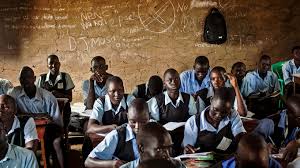
Unfortunately, we are a long way from achieving this goal, particularly in developing countries. More than 250 million of the world’s 1.6 billion children are not in school, and 400 million lack basic literacy.If current trends continue, by 2030 half of all children will not have the basic skills needed for employment.

The main problem is a shortage of resources. While developing countries can finance more than 90% of what they need to ensure universal access to quality primary and secondary education, there is still a large funding gap – approaching $40 billion in 2020, and $90 billion by 2030 – that must be filled by international aid.

Solving this problem has been the goal of the International Commission on Financing Global Education Opportunity (the Education Commission), chaired by Gordon Brown and comprising luminaries in business, government, and academia. But the Education Commission’s two principal recommendations are wrongheaded, and should be replaced by two other solutions. Both will be politically difficult to achieve, but are necessary for financing the SDGs.

The Education Commission’s first proposal is to count on “philanthropists, corporations, and charitable organizations” to increase their annual aid contributions from $2 billion today to $20 billion by 2030. This is unlikely to happen. More to the point, charity is not a responsible way to finance public policy. As one recent study shows, charitable education-reform efforts tend to be short-sighted, uncoordinated, and self-interested, ultimately contributing little to advancing education priorities.

The Education Commission’s second proposal is to form an International Finance Facility for Education, to be overseen by the World Bank and various regional development banks. Under the proposed IFFEd, development banks would borrow from capital markets to increase their annual investments in education to $10 billion by 2020, and to $20 billion by 2030.

The principal problem with this approach is that the World Bank has no business spearheading education reform. In fact, as my own research shows, the World Bank has already been misdirecting education reform in developing countries for three decades, by pushing for increased privatization and narrowly defined educational outcomes and accountability based on excessive testing.

The World Bank’s market-fundamentalist approach to education (and other sectors) resembles that of right-wing think tanks such as the Cato Institute or the Heritage Foundation. But while these are recognized as partisan organizations pursuing an ideological agenda, the World Bank makes a pretense of objectivity and inclusiveness. Moreover, unlike Cato and Heritage, the World Bank is a public, tax-financed entity that wields vast influence around the world through its grants, loans, and policy recommendations.

Future generations will be aghast at how we have allowed banks to determine educational and other priorities. Rather than handing institutions such as the World Bank and the International Monetary Fund more power, we need a new Bretton Woods conference to make them democratically accountable and less ideological.

As things stand, the World Bank is the 500-pound gorilla of the international-aid establishment, and the proposed IFFEd would put the gorilla on steroids. It would also make coordinating aid to education an administrative nightmare. In addition to the Global Partnership for Education (GPE), which focuses on low-income countries, and the recently established Education Cannot Wait (ECW) fund, which focuses on countries with humanitarian emergencies, we would have a third body focusing on lower- and middle-income countries.

It makes no sense to have three multilateral institutions competing with one another for funding. As Columbia University’s Jeffrey D. Sachs has long argued, we need just one Global Fund for Education to work toward the education SDG, and it can be a revamped GPE. Whereas donors will dominate IFFEd decision-making, the GPE operates more democratically, with equal representation of donor and recipient countries and strong participation from civil-society organizations. While the GPE is still too dependent on the World Bank, which supervises 80% of its grants, that can be changed.

Instead of the proposed IFFEd, we need two things. Wealthy countries need to honor the commitment, made in 1970 and repeated ever since, to allocate 0.7% of GDP toward ODA. While a few countries already do this, most fall far short. Just by keeping past promises, wealthy countries could close the education-funding gap – and cover all of the other SDGs’ financing needs, too. The Education Commission, by contrast, lets wealthy countries off the hook, by asking them to commit just 0.5% of GDP to ODA, and not until 2030.

Second, we need a global approach to taxation. As my colleague and I point out in a report for the Education Commission, corporate-tax reforms could eliminate tax avoidance and evasion, which are costing the global economy more than $600 billion every year. To achieve the needed reforms, we need to increase the UN’s capacity instead of relying on the OECD, which has proposed only minor changes.

We also need to institute a global wealth tax, as economist Thomas Piketty has proposed. It is obscene that the world’s eight richest people hold as much wealth as the poorest 50%. Like corporate-tax reform and fulfilling past promises to fund ODA, a 1% global wealth tax could finance all of the SDGs combined.

The SDGs, even more so than the Millennium Development Goals that preceded them, represent an extraordinary global commitment. But if the international community is serious about meeting them, it must do something even more unprecedented: put its money where its mouth is.

Copyright: Project Syndicate: Financing Universal Education

Source:

https://www.azernews.az/analysis/117234.html

Comparte este contenido:

UNICEF: Global Coalition Fights Education Under Attack In Conflict Zones

UNICEF/August 8, 2017/By Riley Bunch/ Source: http://reliefweb.int

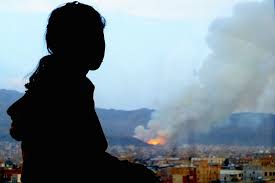
According to UNICEF, conflict zones around the world are preventing 25 million young students from getting access to education. Schools being targets for attacks, military use and occupation by armed forces has caused global concern surrounding protection of education under attack in conflict zones.

In 2010, The United Nations alongside multiple non-governmental organizations recognized the need for immediate action. As a solution to this problem, they created the Global Coalition to Protect Education from Attack (GCPEA). The agencies coming together acknowledged the need for implementation of policies and programs to protect students and teachers from deliberate attacks.

The multidisciplinary coalition, in hand with humanitarian law agencies, education in emergency groups, and child protection agencies, now focuses on advocacy among ministries and government bodies in conflict affected countries on how to reduce war crimes on schools and increase safety for future generations.

Diya Nijhowne, director of the GCPEA, addresses the phenomenon as a major global crisis—one that is only growing.

“Sadly, the problems of schools and universities being bombed and burned and students being raped, killed, executed, abducted from their schools is continuing,” Nijhowne said. “Generally, we have not seen it go down. And in some places, such as the middle east it is getting worse.”

Within a report titled Education Under Attack (based on data gathering for the period 2009-2013), over the past five years armed nonstate groups, state military, security forces and criminal groups have attacked thousands of primary students, university students, teachers, academic instituions and education establishments in at least 70 countries worldwide.

In coordination with the United Nations, the GCPEA has developed the Safe Schools Declaration. Within it are outlined steps, and procedures nations must implement to combat the issue of education under attack in conflict zones. Countries who have already endorsed the document get given training and programs to abide by the terms of the declaration.

These terms include monitoring education under attack in conflict zones and collecting accurate data to respond to the issue, creating contingency planning for emergency situations and creating “conflict sensitive” learning environments that can continue education under warring times.

Currently, 76 or one-third of the members of The United Nations states have signed onto the Safe Schools Declaration and agree that this issue is of high importance. Endangerment to education within conflict zones is not only physically impacting communities, but taking a severe psychological toll on students and staff.

“If you are worried your school is going to be bombed or this phenomenon of military use of schools as well,” Nijhowne said. “Forces might be in the classroom next to the kids or on the play field, just having that sort of militarized atmosphere is very stressful.”

One commitment countries must make when signing the Safe School Declaration is to assist victims. Support can range from making sure perpetrators are punished all the way to psycho-social support for the people impacted.

“Schools are traditionally there to provide routine, they provide safety, they have a protection function, not only within society but within a war zone,” Nijhowne said. “If that place that is supposed to be a sanctuary becomes somewhere that might be attacked that diminishes what would have been a protective function that the school is offering.”

Anecdotal evidence taken from reports done by the GCPEA shows that women and girls are disproportionately affected by education under attack in conflict zones. If military forces are present on school grounds, parents are more likely to be protective of their daughters and refrain from sending them to school. Also, if there is limited opportunity for children to attend school, parents often choose their sons to go to school rather than their daughters.

Under international law, there is no prohibition against using schools for military purposes. However, with the growing number of schools and universities getting targeted by the military, ministries and other government agencies around the world have become increasingly willing to work on alternative approaches to avoid using schools as bases.

GCPEA continues to work on addressing war crimes against education under attack in conflict zones and furthering their advocacy in countries who have yet to sign the Safe Schools Declaration.

Source:

http://reliefweb.int/report/world/global-coalition-fights-education-under-attack-conflict-zones

Comparte este contenido:

EEUU: Texas Governor Mark White, Houstonian and Public Education Reformer, Dies at 77

EEUU/ August 8, 2017/

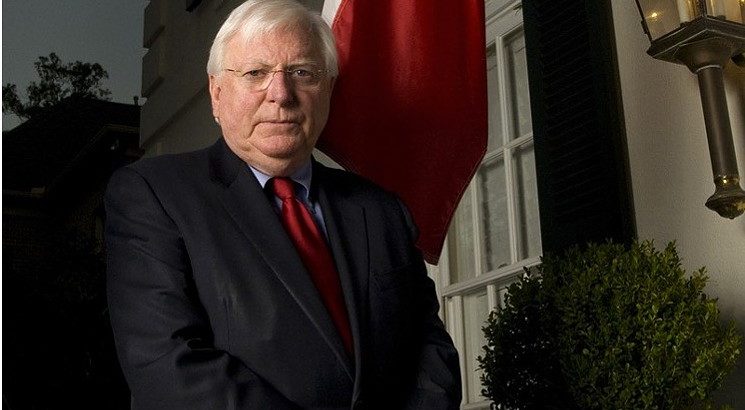
Mark White, who fought to reform the public education system in Texas as the state’s 43rd governor, died of a heart attack Saturday at his Houston home. He was 77.

White, a Democrat who served a single term from 1983 to 1987, was the most recent Texas governor from Houston. His brief tenure is remembered for the strides made to improve the educations of Texas public schoolchildren. Among other successes, White pushed the Legislature to adopt a 22-to-1 student-teacher ratio, to prevent overcrowded classrooms. Under his watch, Texas also introduced its first standardized testing standards.

More controversially, White pushed for a «no-pass, no-play» policy for student-athletes — meaning in football-crazed Texas, football players who were flunking a course had to ride the bench. The Houston Chronicle noted that White said in a 2009 interview that the policy was bad politics, but good for the kids who learned how an education is a more applicable life skill than throwing a spiral or catching a pass.

White continued to care about education long after he left office. In 2010, he was the subject of a Houston Press column on his fight to keep the Legislature from undoing many of his education reforms — including his hard-fought student-teacher ratio cap. In 2014, Houston ISD named an elementary school after White.

Born in Henderson, White was educated in Houston public schools before earning a bachelor’s degree and later a law degree from Baylor University. He worked in private practice in Houston, and served as the attorney general and secretary of state before he was elected governor.

Curiously, White is survived by just two former governors — George W. Bush, who served two terms as president of the United States; and Rick Perry, the current Secretary of Energy.

Governor Greg Abbott on Sunday ordered flags to be flown at half-staff, and in a statement praised his predecessor for his devotion to educating children.

“Mark’s impact on Texas will not soon be forgotten, and his legacy will live on through all that he achieved as Governor,» Abbott said. «Cecilia and I extend our deepest condolences to Linda Gale White and family during this difficult time, and I ask that all Texans join us in praying for the White family as they mourn the passing of a devoted husband, father and public servant.»

Source:

http://www.houstonpress.com/news/former-texas-governor-mark-white-dead-at-77-9676440

Comparte este contenido:

México: Multarán a padres de niños que hagan Bullying

México/07 agosto 2017/Fuente: Veraz Baja California

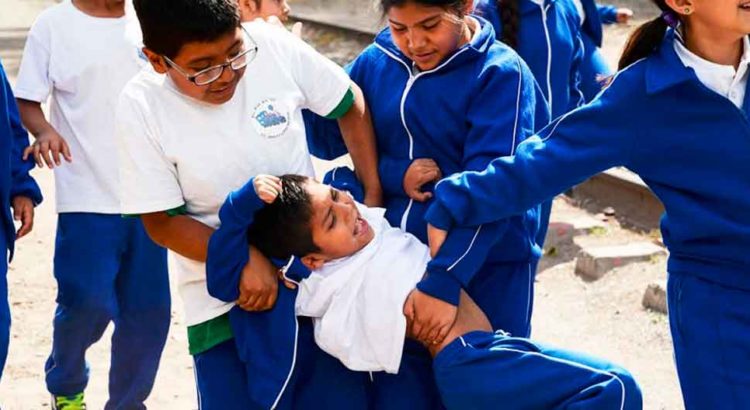
A partir del próximo ciclo escolar, que comenzará a mediados de agosto, entrará en vigor una nueva medida que permitirá multar a los padres de niños que hagan “bullying” en escuelas municipales.

Esta disposición fue aprobada por unanimidad en Cabildo y tiene como fin proteger a los estudiantes que son víctima de maltrato por parte de sus compañeros.

 De esta manera, un juez municipal determinará si los progenitores serán acreedores a un regaño o sanción económica de cinco hasta 20 días, equivalente a mil 500 pesos.

Serán catorce escuelas municipales las que se someterán a esta medida, pues el 70% de las instituciones educativas las que presentan el problema.

La Comisión de Educación señala que la principal razón de burla entre estudiantes es el sobrepeso.

La regidora Karina del Real expresó que es verdad que en las escuelas municipales se presentan diferentes problemáticas, pero la principal es el bullying.

“En algunas escuelas se da el cutting, pero el bullying sobresalía en casi todas”.

Serán diversas las medidas que se aplicarán en las escuelas para prevenir los casos de acoso.

Los maestros recibirán capacitación para vigilar y detectar el bullying, además de que se enviará a los estudiantes involucrados a un área donde recibirán ayuda de asociaciones civiles enfocadas en el tema.

Por otra parte, los padres y alumnos formarán parte de actividades educativas como conferencias y pláticas coordinadas por la Secretaría de Educación Pública Municipal.

Se espera que al aplicar estas medidas se reduzca en un 60% los casos registrados en las escuelas municipales y así evitar suicidios como los que han sucedido en otros estados del país.

Fuente: http://verazinforma.com/estatal/multaran-a-padres-de-ninos-que-hagan-bullying/

Comparte este contenido:

La función social de la educación superior en México: la que es y la que queremos que sea

México/07 agosto 2017/Autor: Guillermo Villaseñor García/Fuente: Biblioteca Clacso

En este libro, referido a la Función Social de la Educación Superior en México, Guillermo Villaseñor profundiza y actualiza las reflexiones que inició hace varios años, al publicar su obra La Universidad pública alternativa (1994). Su nuevo libro es extremadamente oportuno, ya que las circunstancias en que se encuentra el país y, sobre todo, los efectos que éstas han tenido en las Instituciones de Educación Superior (IES) lo estaban exigiendo con urgencia.

Para leer, descargue aquí: http://biblioteca.clacso.edu.ar/Mexico/dcsh-uam-x/20170524030753/pdf_676.pdf

Fuente noticia: http://biblioteca.clacso.edu.ar/colecciones/saladelectura/index.php?novedad=si&c=mx-024&d=12809

Fuente imagen: http://www.ororadio.com.mx/noticias/wp-content/uploads/2015/07/educación-superior-presupuesto.jpg

Comparte este contenido:

Vietnam y Estados Unidos intercambian sobre educación

07 agosto 2017/Fuente: Vietnam Plus

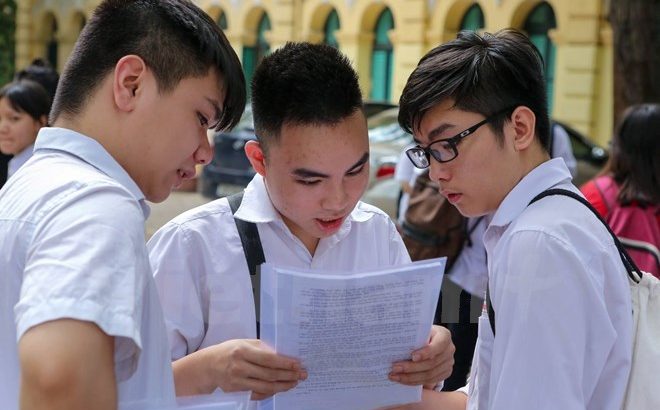
La conferencia “Educación liberal – el modelo estadounidense” fue celebrada hoy en Ciudad Ho Chi Minh por la Federación de Asociaciones de Amistad municipal (FAA).

El evento presentó las ideas fundamentales de la educación liberal del modelo estadounidense  y su interactividad con el sistema de enseñanza vietnamita.

Al inaugurar la cita, el presidente de la FAA, Huynh Minh Thien, destacó que la conferencia trata de la relación binacional desde una perspectiva educativa a diferencia de otras ocasiones en las que normalmente se dialogaba sobre asuntos económicos.

A su vez, la consulesa general de Estados Unidos en Ciudad Ho Chi Minh, Mary Tarnowa, afirmó que impulsar la cooperación bilateral en educación es una de las tareas priorizadas de la misión diplomática estadounidense en Vietnam.

La educación liberal es un sistema de educación superior diseñado para impulsar el pensamiento independiente de los estudiantes mediante programas de enseñanza dinámicos e interdisciplinarios.

Fuente: http://es.vietnamplus.vn/vietnam-y-estados-unidos-intercambian-sobre-educacion/76479.vnp

Comparte este contenido:
Page 944 of 1684
1 942 943 944 945 946 1.684