Saltar al contenido principal
Page 30 of 146
1 28 29 30 31 32 146

How a top Chinese university is responding to coronavirus

By: .

  • Chinese universities have shut campuses in response to the coronavirus outbreak;
  • Zhejiang University (ZJU), spanning seven sites in east China’s Zhejiang province, has moved its teaching online;
  • Thanks to its smart campus, teacher training in online delivery and digital learning platforms, more than 5,000 courses were on offer just two weeks into the transition.

The deadly coronavirus outbreak presents a host of challenges for different sectors of society. University campuses with their congregate settings are considered particularly susceptible to contagion. As China continues to battle the epidemic, universities across the country have followed public health guidance to shut campuses.

Responding to such disruption, many are shifting to online instruction so that students can keep up their studies. Zhejiang University (ZJU), a comprehensive research university, spanning seven sites in east China’s Zhejiang province, has proactively joined what might be the world’s largest remote learning experiment.

Move tuition online but mind the pitfalls

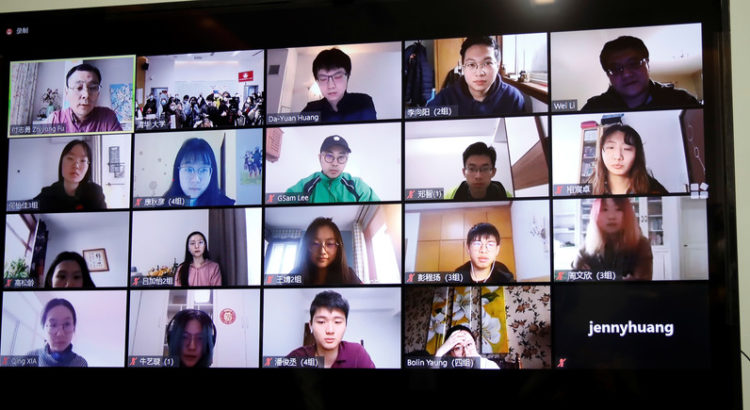
To minimize the impact of the outbreak, ZJU officially started online teaching on 24 February in line with the original term calendar. Contingency teaching covers all ZJU students, including international students, and many courses are open to learners worldwide.

Two weeks into the “experiment”, the university was offering more than 5,000 courses to both undergraduate and graduate students. The course hub “Learning at ZJU” attracted 570,000 visits, and “DingTalk ZJU”, a live streaming app co-developed by Alibaba, recorded a total audience of 300,000. Meanwhile, around 2,500 graduate students at the university are expected to defend their theses in spring. Now they can apply for an online oral defence in order to graduate as planned.

Alongside extensive offerings, the quality of and equality in education are the other critical issues that warrant our attention. Although online teaching is no longer a novelty, we are aware that not all faculty members are equally adept at harnessing related technology and managing virtual classrooms. As part of the quality assurance process, ZJU organized a series of training sessions in mid-February for 3,670 faculty members. An instructor of one of our most popular MOOC (Massive Open Online Course) courses was invited to demonstrate how he adapted pedagogy to online tuition and forged a strong sense of community.

Student success is what online teaching efforts are all about. It is, therefore, crucial to ensure no one is left out. Seeking to bridge the digital divide, since January ZJU has funded access to online learning for more than 1,000 disadvantaged students. The university has also negotiated deals with several network providers to subsidize the data plans of its faculty and students. For students without access to live streaming or grappling with shaky internet connections, ZJU provides them with lecture playbacks and courseware packages.

Enhance preparedness by embracing technology

ZJU sees Covid-19 as an intensive test of its organizational agility. It would be impossible to pull off any alternative teaching plan without concerted action by faculty and support staff. Furthermore, given a limited window of time, the success rate is also contingent on whether there has been adequate openness to new technology and investment in infrastructure.

Drawing on its traditional strength in ICT, ZJU started early in creating a smart campus. In 2017, the “ZJU Online” project was launched which encompassed five components: administrative services, online education, academic resources, information bulletins and personal profiles. After two years, an upgraded “Learning at ZJU” platform, a significant development of the project, was put into use in November 2019.

Image: World Economic Forum

In 2018, the university began to build a wide spectrum of smart classrooms, equipped with new functions such as audio recognition and simultaneous interpreting. In recent weeks, a total of 200 smart classrooms have been quickly put in place for teachers to shoot video courses or live stream their classes.

The crisis represents an unprecedented occasion for us and our peers in China to evaluate the technical preparedness for new changes. It has also galvanized us into reflection and action, for instance, regarding how we can tap into disruptive technologies such as mixed reality, data science and artificial intelligence to better serve the needs of education and address latent disruptors like Covid-19.

Rising to future challenges with an innovation mindset

Research universities are known for their contributions to human welfare through education, research and services. While bracing for unpredictable challenges, it is becoming a strategic imperative for research universities to transform themselves into innovation-driven institutions with a greater level of excellence.

The innovation-driven university transcends the conventional model of a comprehensive research university on many fronts. For example, it places a greater emphasis on systematic development, internal/external interaction and governance capacity. In the context of the coronavirus outbreak, we are impelled to think forward and look at some of the important steps universities can take.

In an era of scientific and industrial revolutions, education is undergoing rapid changes. Information technology and cognitive science are driving the transition from education 1.0 to learning 2.0. Meanwhile, the concept of “whole-person education” is gaining momentum worldwide and globalization is turning campuses into international crossroads.

Universities need to adapt to this new environment by advocating for human-machine symbiosis, teacher-student interaction, life-long learning and ubiquitous learning. A mix of online and face-to-face teaching is one example of how universities can diversify their provision beyond bricks and mortar. The priorities may include general education, which aims at well-rounded development of students; and open-loop education, featuring co-creation and resource convergence.

In the same vein, the global innovation landscape is reshaped at a faster speed. Open innovation is taking place online through synergies regardless of time constraints or geographical boundaries. In early March, ZJU announced the one-stop “Research at ZJU” platform allowing scientists and students to collaborate online despite the disruption caused by the epidemic.

The platform is part of our ongoing efforts to create an innovation system, which is instrumental in sustaining the vitality of research universities. Internally, this system consists of disciplines, faculty, teaching and research; externally, it engages multiple stakeholders including talent, industry, alumni and public institutions on a global scale. Through an open-loop, open-source and open-system approach, the internal elements and external stakeholders can be strongly connected.

Last but not least, research universities should develop strategic thinking to achieve constant innovation and become more resilient. It comes down to the following aspects: holistic thinking, practical thinking and bottom-line thinking, as well as an excellence-oriented and open approach to work. In times of crisis, keeping the big picture in mind and maintaining smooth coordination among different units will enable a university to respond quickly and achieve shared goals. As much as we prepare for the worst, we will try our best to turn a crisis into an opportunity too.

Comparte este contenido:

China: Investigadores chinos desarrollan memoria cuántica integrada sólida de alto rendimiento

Asia/China/15-03-2020/Autor(a) y Fuente: spanish.xinhuanet.com

Investigadores chinos han desarrollado una memoria cuántica integrada de estado sólido de alta fidelidad, marcando un avance significativo en el almacenamiento cuántico y sentando una base firme para el desarrollo de redes cuánticas.

El resultado fue obtenido por un grupo de investigadores, dirigido por Li Chuanfeng y Zhou Zongquan de la Universidad de Ciencia y Tecnología de China, y publicado en las revistas Optica y Applied Physics Review.

Como un dispositivo clave para la construcción de una red cuántica, la memoria cuántica puede superar eficazmente la pérdida de canal, ampliar la distancia de la comunicación cuántica e integrar la computación cuántica y los recursos de detección cuántica en diferentes posiciones.

La memoria cuántica integrada de estado sólido fue desarrollada mediante la tecnología de micromecanizado láser de femtosegundo, que, según los expertos, grabó por primera vez guías de onda ópticas en cristales de silicato de itrio.

Los especialistas también demostraron dos esquemas de almacenamiento cuántico óptico, que alcanzan una tasa de fidelidad del 99 y de más del 97 por ciento, respectivamente.

Según los editores de la revista Optica, es un estudio importante porque muestra la diversidad de técnicas y programas experimentales.

La investigación demuestra que las guías de onda grabadas en cristales dopados con tierras raras constituyen una plataforma prometedora en el campo de la información cuántica, de acuerdo con las publicaciones.

Fuente: http://spanish.xinhuanet.com/2020-03/11/c_138866765.htm

Imagen: skeeze en Pixabay

Comparte este contenido:

Conozca las consecuencias positivas del coronavirus

Redacción: TeleSUR

La gran cantidad de voluntarios chinos en su país, la cooperación de ciudadanos en el extranjero que envían máscaras y otros equipos médicos a China, son algunos aspectos positivos relacionados con el Covid-19.

El Covid-19 reconocido por la Organización Mundial de la Salud (OMS) como una pandemia, este viernes ya sobrepasa los 135.000 casos de personas infectadas en 126 países, con unos 5.000 fallecidos a nivel mundial. No obstante, el virus también ha traído consigo algunas consecuencias positivas que vale reconocer.

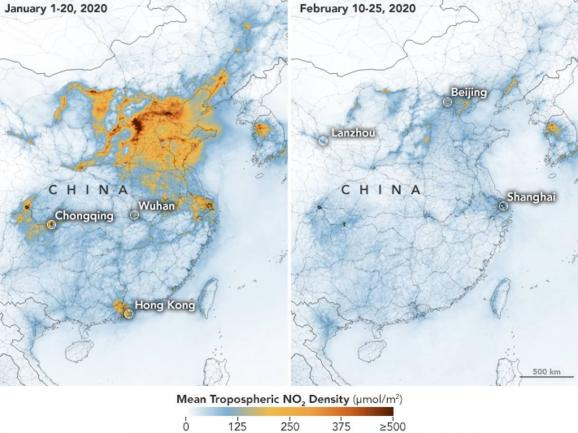
Disminución de la contaminación

Debido a los protocolos de contención se han reducido las actividades industriales, y a su vez se han disminuído los desplazamientos en vehículos y aviones, lo que ha causado una baja en las emisiones como las de CO2 y dióxido de nitrógeno (NO2) y particulas finas en China, durante los últimos meses, de acuerdo con organismos como la Administración Nacional de la Aeronáutica y del Espacio (Nasa) y la ONG World Air Quality Index.

Ver imagen en Twitter

Los animales salvajes temporalmente están a salvo en China

El Parlamento chino reconoció «el grave problema del consumo excesivo de animales salvajes y los grandes peligros ocultos para la salud y la seguridad pública», por lo que prohibió desde el 24 del pasado mes de febrero, la comercialización de dichas especies.

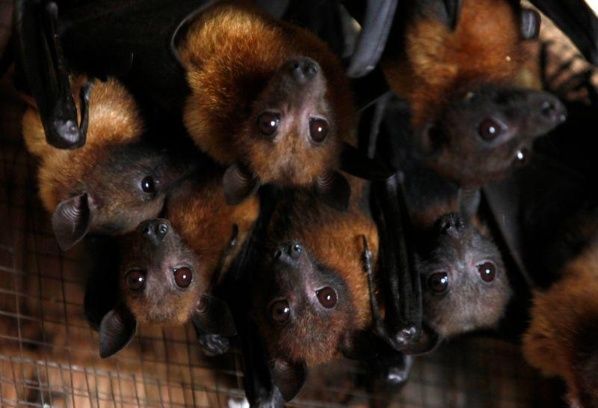
Expertos en salud creen que el brote de Covid-19 podría haberse originado en murciélagos. FOTO: Reuters

De modo que, murciélagos, serpientes, civetas, salamandras, y especialmente, pangolines, una especie que se encuentra en la lista roja de las amenazadas, por ser una de las más cazadas a nivel mundial para su consumo, sobretodo en el sudeste de Asia; entre otros animales, se encuentran provisionalmente protegidos por ser considerados intermediarios en la transmisión del coronavirus.

El pangolín, que es el único mamífero cubierto de escamas que existe, está temporalmente a salvo, por ser considerado un posible transmisor del Covid-19.  FOTO: Reuters

Las medidas de protección han disminuído la gripa en Francia

El seguimiento de las medidas de protección frente al coronavirus, como el hecho de lavarse con frecuencia las manos, ha influenciado en el hecho de que «la actividad gripal está disminuyendo en la mayoría de las regiones de la metrópoli» según la Salud Pública de Francia, dicha reducción representa una noticia positiva considerando que la epidemia de la gripa ocasionó 8.000 fallecidos en esa nación entre los años 2018 y 2019.

Ver imagen en Twitter

Intención de reducir la dependencia de la producción china

Ante la disminución de los suministros provenientes de China, y otras naciones de Asia, debido a los efectos económicos del Covid-19, especialmente en el caso de las industrias farmacéuticas, varias naciones europeas han considerado «urgente reducir nuestra dependencia de estos países y restablecer nuestra soberanía sanitaria, en especial para los medicamentos indispensables como antibióticos o anti-cancerígenos» según la integrante de la Academia Nacional de Farmacia de Francia, Marie-Christine Belleville.

Esa motivación de la reubicación de las empresas en Europa, generaría más empleos en ese continente y favorecería su economía a largo plazo.

La disminución de los suministros de China hacia países europeos, los ha llevado a replantearse el tema de la producción nacional y las reubicaciones empresariales. FOTO: Bizneo

La promoción de una mejor higiene en los centros educativos

Entre los efectos positivos del coronavirus está  reconocer las deficiencias de productos higiénicos, como papel sanitario y jabón, en las instituciones educativas, así como las fallas en los sistemas de salud de las naciones, para mejorarlas.

Por ejemplo, siguiendo las recomendaciones de la OMS, que ha aconsejado lavarse las las manos con agua y jabón como medida preventiva frente al Covid-19, el ministro de Educación francés, Jean-Michel Blanquer, ha asegurado que trabajará en conjunto con la Asociación de Alcaldes de Francia (AMF) y las rectorías, para garantizar el suministro del jabón en los establecimientos escolares de ese país.

Esta nueva guía de @UNICEFenEspanol y la @WHO da consejos básicos para prevenir el en las escuelas y proteger a alumnos y maestros de la pandemia: https://www.who.int/es/news-room/detail/10-03-2020-covid-19-ifrc-unicef-and-who-issue-guidance-to-protect-children-and-support-safe-school-operations 

Ver imagen en Twitter

La unidad ejemplar de China

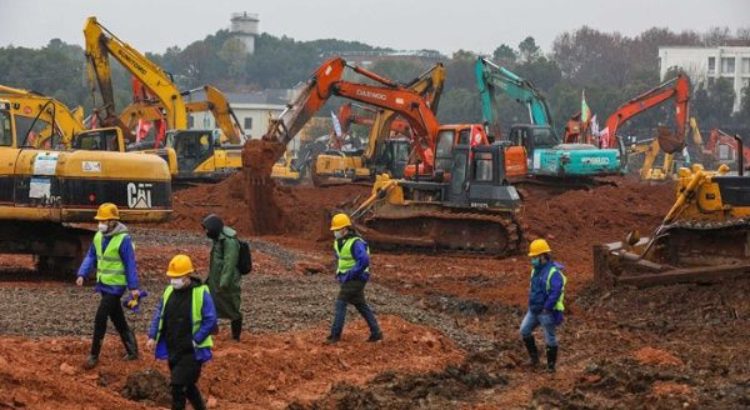
La construcción de un hospital en diez días, el acatamiento de las medidas de contención en una nación con una cantidad enorme de habitantes, lograr mantener temporalmente a 1.400 millones de personas en casa bajo cuarentena, el caso de una granjera que donó sus ahorros para ayudar a los médicos chinos a combatir el coronavirus, son consecuencias admirables que han tenido que ver con la presencia del virus en esa nación.

La gran cantidad de voluntarios, la cooperación de chinos en el extranjero que envían máscaras y otros equipos médicos a China, también son aspectos positivos relacionados con el Covid-19, que demuestran la unidad, la eficiencia y la autodisciplina de esa nación asiática, y que sirve de ejemplo al mundo entero.

 El coronavirus ha sacado a relucir la eficiencia y autodisciplina China. FOTO: La Vanguardia


Fuente: https://www.telesurtv.net/news/coronavirus-consecuencias-positivas-pandemia-oms-20200313-0028.html

Comparte este contenido:

China: La crisis está haciendo que la economía de la educación en línea se generalice

Asia/China/Universityworldnews

El lunes 3 de febrero, los líderes de la Universidad de Tsinghua, incluido el presidente del Consejo Chen Xu, el presidente Qiu Yong y el rector Yang Bin dieron la primera clase a más de 50,000 estudiantes y 5,000 profesores, y anunciaron que el nuevo semestre sería ‘educación como siempre’ a pesar de la expansión. de un germen aterrador como un rey: el coronavirus.

Desde el 17 de febrero, casi 2,700 docentes de la Universidad de Tsinghua han impartido 4,000 cursos en línea a 25,000 estudiantes en cada zona horaria y continente. El cambio a la nube de uno de los campus universitarios más elitistas del mundo ha requerido claridad, experiencia, comunidad y computadoras.

La decisión de Tsinghua de continuar con la enseñanza como de costumbre transmitió el claro mensaje de que la educación superior es uno de nuestros recursos más preciados. En tiempos de incertidumbre y miedo, el aprendizaje y la investigación son más importantes que nunca. No te asustes. Estudia y descubre.

A millones de mentes les llevará muchas décadas decodificar por completo las ramificaciones de este shock en la educación superior. Pero es importante que las personas de todo el mundo sepan lo que sucedió e inmediatamente comiencen a dar sentido a lo que está sucediendo.

No hay vuelta atrás

Ha nacido una nueva «economía educativa» global. En este momento, las universidades, el profesorado y los estudiantes en países como China y Australia confían completamente en el aprendizaje en línea para ofrecer servicios educativos básicos.

Los sistemas, las experiencias y las expectativas se han forjado rápidamente, lo que seguramente producirá cambios generalizados y duraderos para la educación superior mundial. No es posible ni deseable ‘regresar’ de mucho de lo que se ha experimentado.

El aprendizaje en línea ha crecido más allá de las siglas inteligentes y se ha unido a la educación general. Siguiendo el ejemplo de China, los países de Asia seguramente pondrán más énfasis formal en el aprendizaje en línea. Tal movimiento tiene consecuencias globales, con Asia siendo la zona horaria más grande del mundo para la educación superior.

Se requerirán nuevas políticas reguladoras y acuerdos transfronterizos. Los países necesitarán negociar nuevas reglas con instituciones físicas, como universidades basadas en campus, incluido el refuerzo del surgimiento ya floreciente del aprendizaje a lo largo de la carrera.

El papel de los líderes universitarios.

Aunque a menudo son triunfadores callados, los líderes universitarios desempeñarán un papel global más prominente. Los hallazgos del proyecto de investigación Global University President Interviews, dirigido por el Instituto de Educación de Tsinghua, revela el papel que juegan los líderes universitarios en la dirección de la investigación y el debate y en la formación de futuros en casi todas las áreas imaginables.

Como confirma el caso actual de Tsinghua, el liderazgo se prueba más cuando las cosas van mal. La situación actual presenta un llamado a comprender mejor el liderazgo universitario en tiempos de crisis y cómo dirigir un futuro cada vez más incierto. Esto es esencial, ya que mientras la tecnología permite la educación superior global, son realmente los líderes, los sistemas y las personas comprometidas las que hacen que la educación tenga éxito.

El choque reciente es un agudo empujón para comenzar a aprender rápidamente sobre la educación superior global en línea. En las últimas décadas, la ‘educación internacional’ ha dado lugar a economías de información, mercados de estudiantes, ecosistemas de investigación y geopolítica razonablemente conocidos. Mucho menos se sabe sobre la nueva era global. Hay poca política sobre cómo los gerentes pueden apoyar a cientos de profesores ubicados en todo el mundo que imparten educación universitaria de primer nivel a estudiantes de todo el mundo.

Si bien genera grandes datos, sabemos poco sobre el valor de la educación en línea. Sabemos aún menos acerca de cómo los países, las universidades y las familias distribuirán tiempo y dinero a través de plataformas físicas, tecnológicas e intercontinentales. Los primeros indicios sugieren que la era global combinará concreto, queroseno y silicona de manera creativa e inteligente. Muchos países, particularmente en Asia, deben reformar rápidamente la política nacional para adoptar piezas de aprendizaje en línea.

La educación superior acaba de ser sacudida por fuerzas más allá de su control. Tal sorpresa no es sorprendente dado el papel que las universidades desempeñan ahora en la economía general. Las universidades pueden y deben dirigir su futuro para el bien del mundo, como lo han demostrado los líderes de Tsinghua. La educación universitaria de élite es seguramente más global y en línea que nunca. Ahora es el momento de realizar experimentos de educación audaz, informados por importantes investigaciones útiles.

El profesor Hamish Coates, el Dr. Wen Wen y el profesor Jinghuan Shi tienen su base en el Instituto de Educación de la Universidad de Tsinghua, China. Correo electrónico: hamishcoates@tsinghua.edu.cn

Fuente: https://www.universityworldnews.com/post.php?story=20200302091409436

Comparte este contenido:

China, lecciones ‘online’ para 280 millones de alumnos

Asia/China/12 Marzo 2020/elpais.com

El sistema ha puesto de relieve las diferencias entre los estudiantes acomodados y los menos pudientes

Un niño sale a la azotea de la casa de sus padres en la provincia de Hubei y levanta el móvil en busca del mejor punto de conexión a Internet. Otro, en Xichuan (centro de China), se coloca en una esquina estratégica de su terraza, donde logrará enganchar el wifi de su vecino. Parecen escenas sacadas de Parásitos, la multioscarizada película de Bong Joon-ho, pero no. Son estudiantes con pocos recursos económicos mencionados en la prensa estatal y que intentan seguir, como pueden, las clases online para cerca de 280 millones de alumnos en China, donde la epidemia de Covid-19 mantiene cerrados los centros educativos desde hace siete semanas.

Desde el 17 de febrero, el Ministerio de Educación ha puesto en marcha una nube nacional de educación a distancia con una serie de clases básicas para los niños en edad escolar, a completar por los profesores de cada centro. Esas lecciones enlatadas cubren 12 asignaturas, entre ellas la educación cívica o nociones básicas para protegerse de la epidemia. Comienzan, como la jornada escolar presencial, con un saludo a la bandera, aunque en este caso, virtual. El niño, también como en un aula normal, tiene que registrarse en línea como presente.

Dada la cantidad de conexiones al mismo tiempo, los primeros días no fueron fáciles. Los servidores se saturaban y las imágenes se congelaban, o se caían. El Ministerio de Industria y Tecnología tuvo que pedir a las empresas chinas de telecomunicaciones, y los principales proveedores de Internet que aportaran 7.000 servidores, con una banda de 90 terabytes, que permiten que hasta 50 millones de personas puedan estar conectadas al mismo tiempo.

El sistema es especialmente importante para los alumnos de grado 12, el último, que en junio deberían presentarse al temido “gaokao”, la selectividad china. El examen más numeroso -este año congrega a unos 10 millones de estudiantes- y uno de los más exigentes del mundo. El Ministerio de Educación se plantea la posibilidad de aplazarlo si la epidemia no amaina con tiempo suficiente para prepararlo, según ha admitido uno de sus funcionarios, Wang Hui, en una rueda de prensa.

Las universidades, por su parte, también ofrecen su propia enseñanza virtual a los alumnos, utilizando diversas plataformas que ya existían en el mercado. En general, cada profesor, tras recibir unas nociones prácticas de cómo utilizar ese medio, decide cómo dar su clase. Algunos, en asignaturas más formales, simplemente se graban recitando una lección magistral.

“El problema es cuando se trata de enseñanza de idiomas, en la que es necesaria una interacción profesor-estudiante e incluso entre estudiantes” explica el profesor de español Sergio Villa, de la universidad de Tecnología del Sur de China en Cantón. En su caso, aunque la plataforma ofrece una pizarra virtual y un chat para hacer preguntas, “falta feedback, ya sea verbal o no verbal, cuando se dan las explicaciones o se corrigen deberes, etcétera, realmente estás hablando con una máquina sin saber cómo están respondiendo las personas al otro lado. Si están atendiendo, si se han dormido…”

La también profesora de español Nerina Piedra, de la Universidad de Pekín -la más prestigiosa de China-, igualmente se lamenta de perder el contacto directo de los alumnos. En su caso, le pidieron no regresar al país hasta que no se reanudaran las clases presenciales, por lo que envía desde España las lecciones grabadas. “Aunque ellos [los estudiantes] tienen mucha autodisciplina, no es lo mismo que ir a clase. Algunos se lo toman de manera más relajada, entregan los trabajos más tarde o los hacen de peor calidad”.

En el caso de los alumnos en edad escolar, el proceso ha requerido aún más adaptación. En viviendas donde, en muchos casos, al menos uno de los dos padres trabaja desde casa hasta nueva orden por la epidemia, es difícil encontrar el espacio para seguir las clases en la pantalla sin molestarse mutuamente, o el tiempo para comprobar que los pequeños no se distraen, hacen las tareas correctamente y ayudarles a enviárselas al profesor.

“Es un trabajo que en clase le toca al profesor, y que ahora tengo que hacer además del mío”, se lamenta en Pekín, en conversación a través de las redes sociales, Jeanette, madre de un niño de 12 años.

Este tipo de enseñanza ha acentuado, además, la diferencia entre los estudiantes urbanos más acomodados, que cuentan con móviles y ordenadores con una buena conexión a Internet, y aquellos menos pudientes, que no cuentan con terminales o no pueden pagar un plan de datos lo suficientemente generoso como para seguir las clases en línea. Varios medios estatales se han hecho eco de las dificultades de estos alumnos en zonas rurales con peor cobertura o que, simplemente, no pueden pagar unos planes que pueden llegar a costar hasta ocho o nueve euros diarios.

Como respuesta, el lunes pasado el Ministerio de Industria emitió una orden para mejorar la cobertura en las áreas rurales y que las telefónicas ofrezcan descuentos en sus planes de datos los estudiantes con menos ingresos. Otros centros también han anunciado ayudas: la Universidad de Pekín ofrecerá subsidios, según informa la agencia Xinhua, a sus más de 2.000 estudiantes de bajos recursos para “cubrir sus costes de telecomunicaciones”.

Fuente e imagen tomadas de: https://elpais.com/sociedad/2020-03-05/china-lecciones-online-para-280-millones-de-alumnos.html

Comparte este contenido:

China: Millions of children across the world aren’t going to school. It’s not just their education that could suffer

Asia/ China/ 10.03.2020/ Source: edition.cnn.com.


For 18-year-old Huang Yiyang, school starts when she opens up her laptop.

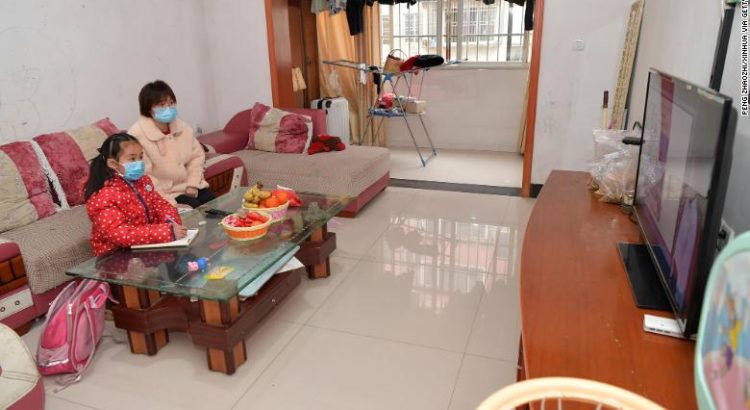
Over the past two weeks, there have been no school bells, bustling corridors, busy canteens or uniforms. Instead of physically traveling to her public school in Shanghai, Huang sits at her laptop from 8 a.m. until 5 p.m. often in her pajamas, watching livestreamed class after livestreamed class.
For physical education class, her teacher performs exercises for students to follow. For English, she sits silently through lectures to virtual classrooms of 20 to 30 students.
She puts stickers or tissues over her webcam, so her classmates can’t see her if a teacher calls on her to answer a question. «We’re at home, so we don’t look so good,» she says.
Huang barely leaves the house, and she hasn’t seen her friends for a month. But while she is isolated, she’s also part of what may be the world’s largest remote learning experiment.
An English teacher gives online tuition to students at Lushan International Experimental Primary School in Changsha, central China's Hunan Province, Feb. 10, 2020.

China is battling a deadly coronavirus outbreak that has killed more than 2,700 in the country alone. In a bid to stop the spread of the disease, schools across the country are closed, leaving about 180 million school-aged children in China stuck at home.
And mainland China is just the start. Millions of students in Hong Kong, Macao, Vietnam, Mongolia, Japan, Iran, Pakistan, Iraq and Italy have been affected by school closures. For some, that means missing class altogether, while others are trialing online learning. Authorities in the United States, Australia and the United Kingdom have indicated that, if the outbreak gets worse, they could shut schools, too.
But while online learning is allowing children to keep up their education in the time of the coronavirus, it’s also come with a raft of other problems. For some students, the issues are minor — shaky internet connections or trouble staying motivated. For others, the remote learning experiment could come at a cost of their mental health — or even their academic future.

What it’s like doing school from home

The components are the same: a laptop, an internet connection, and a bit of focus. But thetype of online study differs from school to school, and country to country.
For Huang, learning at home means spending hours in front of a computer with little social interaction. There’s no discussion in class, and she often can’t hear her teacher because of the poor internet connection. She feels her classmates — and their teachers — are struggling to stay motivated.
«We cannot give (the teachers) a response even though they want it. So they feel bad and we feel awkward as well,» she said.
Teacher Zhang Weibao shoots a video course at a middle school in Urumqi, northwest China's Xinjiang Uygur Autonomous Region, on February 3, 2020.

Even after class, her work isn’t over. She usually stays up until about 10 p.m. each night, completing homework which she submits online. Although she doesn’t see her friends face-to-face, Huang says she actually feels closer to them — they talk more than they would usually on Chinese online messenger apps such as WeChat and QQ because they’re all hungry for contact.
«Because we can’t meet anyone our age in reality, so we have to go online.»
Across China, primary and middle school students are required to provide online learning, according to state media agency Xinhua. China has started broadcasting primary school classes on public television, and launched a cloud learning platform based on its national curriculum that 50 million students can use simultaneously.
In Hong Kong, where schools have been closed for a month, some teachers are doing things differently.
At the International Montessori School, students work together in small groups on Google Hangouts so they can all see and talk to each other.
The school started off just posting videos and activities for students on their website, but quickly realized that it was crucial for children to see each other and speak with their teachers. Now they study together in small online groups.
«They were all getting cabin fever — they were all locked inside in apartments,» said principal Adam Broomfield. «I’ve never experienced a school closure like this.»
The different learning style has actually led to innovation, he said — a student made a video explaining how they solved a math problem, and a teacher made a video from a beach to help with a geology lesson.

Schooling in Italy

Students in Hong Kong and mainland China have been isolated for weeks already, but in Italy, where the number of people infected with coronavirus soared past 800 this week, remote learning has just started.
What to know about the coronavirus

The novel coronavirus is spreading globally and has killed at least 2,800 people, the vast majority in mainland China. There have been more than 83,000 global cases, with infections on every continent, except Antarctica.

Here’s what’s happening:

Schools closed this week in the northern regions of Lombardy and Veneto, which include the cities of Milan and Venice, and together have a combined population of about 15 million.
In Milan, Gini Dupasquier’s two daughters have been learning through a combination of live PowerPoint presentations, group work with other students over Google Hangout, and a live chat with teachers.
«Emotionally, they’re fine,» Dupasquier said. «They’re having fun with this new method. So far I see no problem at all.»
A bigger problem for her — like other working parents — is having to balance being at home with her child with the demands of her job as a consultant. «I need to adapt my working hours,» she said. «The balance is a bit tough.»
In Casalpusterlengo, a northern Italian town in the so-called «red zone» where tens of thousands of residents have effectively been cut off from the rest of the country, Monica Moretti’s 15-year-old daughter doesn’t have access to livestreaming — instead, she’s doing homework using an electronic notebook. Unlike many children in mainland China, every afternoon she goes for a walk.

Future-defining exams

Students in senior grades are potentially facing bigger problems than falling behind on their schoolwork.
Jonathan Ye, an 18-year-old high school student in his final year at international school Shanghai Pinghe, has conditional entry to university in the United Kingdom. He still needs to do well on his final International Baccalaureate exam in May if he wants to start university overseas — something he’s been working toward for years.
«If I do not do well on that exam, then I’m screwed,» he said. «I think I’ll be OK because I like to self-study, but I’m not sure. I still get nervous because we are not going to school right now, so we might be missing information from the teacher.»
But Ye’s situation is better than most.
High school students take part in a rally for relieving stress two days ahead of the upcoming annual gaokao or college entrance examinations in China, in Haikou in China's southern Hainan province.

In June, the vast majority of final year students in mainland China are due to sit the gaokao — the notoriously intense and ultra competitive university entrance exams. Even at the best of times, those exams can change lives — they can be the difference between a prestigious university and no university at all.
Students become consumed by studying for the test, and teachers sometimes tell them to focus on nothing else. While it’s possible to resit the gaokao, that would require studying your whole final year again.
The Ministry of Education said it will assess and decide whether to delay the gaokao. Beijing authorities have already said there will be an online mock exam ahead of the gaokao — although that isn’t the actual gaokao exam.
Although Hong Kong schools are shut until April 20, the city will still hold its university entrance exam on March 27 as planned. The only difference: students will be required to wear face masks and desks will be moved further apart than normal.
A teacher gives a lecture with her smart phone during an online class at a middle school in Donghai in China's eastern Jiangsu province on February 17, 2020.

That’s also an issue for students sitting other exams. Hong Kong-based Ruth Benny found home study just wasn’t working for her 14-year-old daughter, who is sitting GCSEs this year. «There was no learning happening. It was just like a big long holiday,» she said. Her daughter has now transferred to boarding school in the United Kingdom.
Some parents have raised concerns over paying expensive international school fees when their child isn’t doing regular schooling.
Benny, who runs education consultancy Top Schools, said that if schools are doing the best they can, there’s no need for reimbursement.Her 12-year-old son normally boards during the week at Harrow International School in Hong Kong, but they’ve reimbursed the cost of boarding while her child is out of school. «It’s really as good as it can be, but I know that it’s not like that for all schools.»
Broomfield, the principal of International Montessori School, said that if schoolsreimbursed parents, the schools might not survive.
«We still have to run, we still have to pay our staff. We still want a school here when all this is over,» he said. «I just don’t see how those refunds can be provided.»
And he pointed out that it had been a difficult time for teachers too, with much longer hours than usual, and a steep learning curve, particularly for the «tech dinosaurs» on their staff.
In a way, the situation was like trying to plumb a bathroom with the water still running, he said. «We had very little preparation for this,» he said. «If you’re going to renovate your bathroom, you turn your water off first. This was a whole replumbing of education, but we had to do it on the run.»

Psychological effects

There’s also a risk that studying from home could impact children psychologically.
Hong Kong-based mental health expert Odile Thiang said the loss of routine and the loss of social activity could have a big impact on children, who were also stuck inside with their parents during an already stressful time. «There’s also that general fear of contamination that people are feeling, so everything is adding up.»
«(The psychological lessons) is yet to be learned, to really see what is going to come out of this major public health experiment that we’re doing here,» she said, adding that children tend to be very resilient.
Chris Dede, a professor at Harvard University’s Graduate School of Education, said there were plenty of studies showing the negative psychological effects on students who had been isolated from their peers after suffering serious illnesses.
Children studying from home could experience the same effects. But he pointed out that, in this situation, whole schools were studying remotely — not just one single student who might feel lonely and left out.
«The shared problem becomes a way of having shared support,» he said.

Is studying remotely a good thing?

It’s not the first time that schools have had to shut down or experiment with remote learning. In countries with particularly harsh winters, children sometimes find their school canceled for «snow days.» In Hong Kong, some schools canceled classes last year over the ongoing pro-democracy protests.
And it’s not like education experts have never thought of studying without a face-to-face teacher before. Children in remote parts of Australia have long taken lessons via education programs over the radio. And, in China artificial intelligence has been touted as a way to ensure students in rural communities get a better education.
A teacher gives a lecture in front of a camera during an online class at a middle school in Donghai in China's eastern Jiangsu province on February 17, 2020.

According to Dede, a mix of online and face-to-face teaching is better than learning entirely offline, or entirely online. But the crucial thing isn’t the medium, he said — it is the quality and the method of teaching.
«The worst thing for children would be just to be isolated, at home, without emotional support from their friends, without the opportunity to have a skilled educator to help them learn,» he said.
He sees this as a chance for educators to experiment with new teaching approaches, and then take what works back into the physical classroom.
Regardless of the teaching style, students were still lucky in a sense that this was happening now.
«We have social media, and the internet, and we have smart phones. So the degree of isolation and the degree of lost opportunity to learn would have been much greater if this happened two decades ago,» he said.
Source of the notice: https://edition.cnn.com/2020/02/28/asia/remote-school-education-intl-hnk/index.html
Comparte este contenido:

China ajusta programas de pregrado para impulsar especialidades nuevas urgentemente necesarias

Asia/China/08-03-2020/Autor(a) y Fuente: spanish.xinhuanet.com

China ha aprobado el establecimiento de 1.672 programas de pregrado en colegios y universidades, incluida la medicina preventiva y la seguridad del ciberespacio, para apoyar el desarrollo de especialidades nuevas urgentemente necesarias.

Los nuevos programas de pregrado incluyen también la rehabilitación por medio de medicina tradicional china, la inteligencia artificial y la tecnología de ciencia de datos y macrodatos, de acuerdo con el Ministerio de Educación.

El ministerio ha añadido también 181 nuevas especialidades al catálogo estatal de especialidades de pregrado, tales como tecnología de realidad virtual, ingeniería de cadena de bloques y gestión de emergencia.

Un control estricto ha sido impuesto contra el establecimiento de especialidades saturadas, incluidas administración de empresas, contabilidad y administración turística, para ayudar a orientar a colegios y universidades a capacitar a personas talentosas para cubrir las necesidades sociales, indicó el ministerio.

Fuente: http://spanish.xinhuanet.com/2020-03/05/c_138847248.htm

Imagen: Pete Linforth en Pixabay

Comparte este contenido:
Page 30 of 146
1 28 29 30 31 32 146
OtrasVocesenEducacion.org