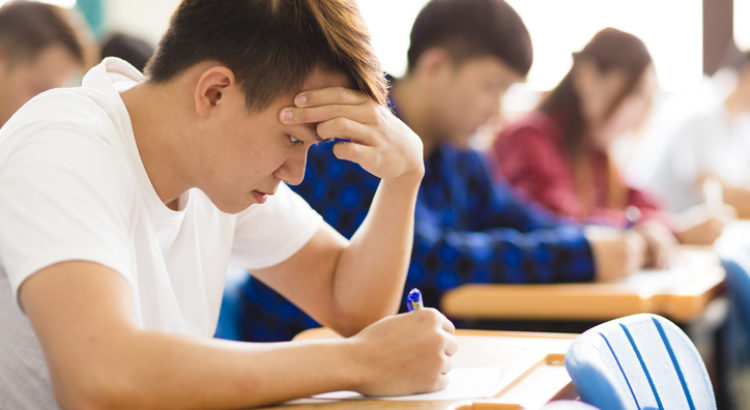
Educadores chinos han pedido que se modifiquen los métodos de estudio de los estudiantes para mejorar sus cualidades centrales durante un seminario nacional sobre enseñanza en clase.
Más de 1.000 expertos en educación de todo el país asistieron al evento, discutieron temas sobre cómo la educación puede cumplir con los requisitos a la reforma de examinación y evaluación, y cómo apoyar la práctica extracurricular de los alumnos.
Según Yang Yinfu, secretario general de la Sociedad de Educación de China (SECh), los esfuerzos para profundizar la reforma educativa deberían centrarse en que los alumnos combinen aún más el aprendizaje con el pensamiento, así como, normalizar la enseñanza heurística y el estudio de la investigación.
El responsable también sugirió que la enseñanza debería ser más personalizada de acuerdo con las aptitudes de los estudiantes, y que la tecnología informática y la educación deberían estar integradas en un nivel más profundo.
El seminario que fue organizado por la SECh y otras organizaciones se llevó a cabo el 22 y 23 de noviembre. Se trata de la segunda edición del mismo evento.
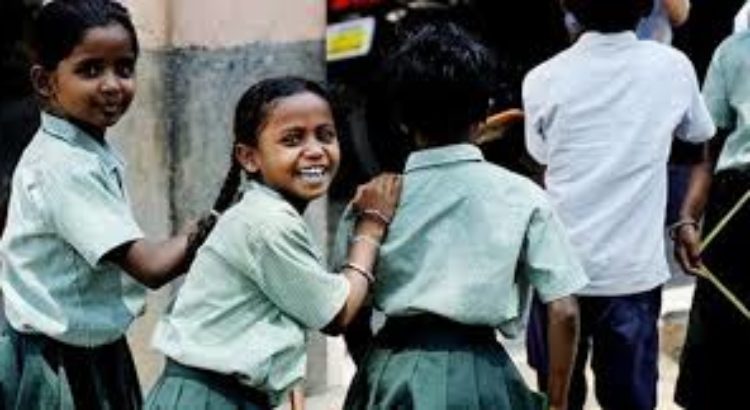
El XIX Festival Internacional de Cine Infantil en la ciudad india de Calcuta muestra películas de 12 países con el tema de la violencia contra los niños, como parte de una iniciativa global de Unicef.
Mohammad Mohiuddin, jefe de la oficina del Fondo de la ONU para la Infancia (Unicef) en el estado indio de Bengala Occidental, señaló que hay una necesidad urgente de acción conjunta para poner fin a todas las formas de violencia contra los niños y niñas, incluyendo el abuso sexual.
Las películas infantiles -acotó- son uno de los medios más potenciales para la educación de valores entre el público joven de todo el planeta.
Mohiuddin señaló al periódico digital Ganashakti que Unicef tiene como objetivo destacar las cuestiones relacionadas con la violencia contra los niños y niñas a través de diversos discursos, talleres y proyecciones de filmes durante todo el festival de cine.
El secretario general del Club de Cine Central de Calcuta, Parimal Mukherjee, indicó que este festival es un intento de cerrar la brecha y mostrar cintas que destacan temas que afectan la vida y el bienestar de los niños en todo el orbe.
Agregó que las obras fueron seleccionadas no solo por sus interesantes argumentos y su calidad cinematográfica, sino también por los mensajes que transmiten sobre temas relacionados con la infancia.
Un total de 20 cintas de 12 países, incluida la India, se proyectarán en diferentes lugares de las ciudades de Calcuta y Malda hasta la última semana de diciembre.
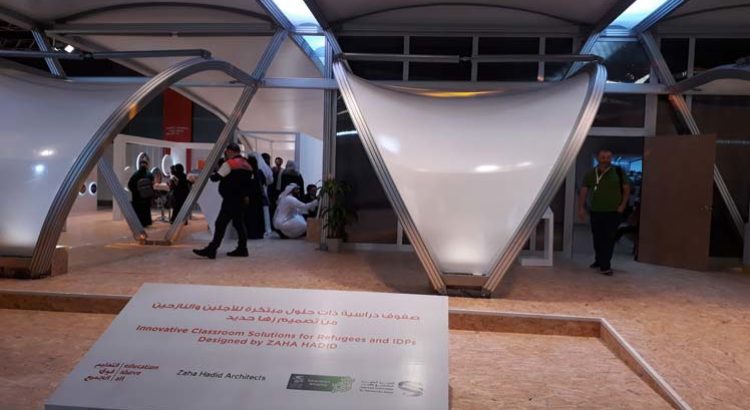
Un prototipo de aulas para refugiados y desplazados se halla entre los proyectos presentados por la Cumbre Mundial de Innovación para la Educación (WISE, por sus siglas en inglés), con cita en esta capital.
Al dialogar sobre la iniciativa hoy en sesión plenaria, la presidenta de la Fundación de Qatar para la Educación, la Ciencia y el Desarrollo Comunitario, Moza bint Nasser, catalogó al modelo de asequible y adaptable a diferentes condiciones climáticas.
El aula innovadora, diseñada por Zaha Hadid y llevado a cabo por el grupo Zaha Hadid Arquitectos, forma parte de los esfuerzos de la Fundación Educación Sobre Todo, también creada por la jequesa, de proveer oportunidades de educación a grupos en situación de crisis o pobreza.
Por medio de la fundación más de 10 millones de niños han accedido a las escuelas, afirmó Moza bint Nasser, quien llamó a ver a los infantes desamparados con ojos de padres y trabajar en pos de la meta de cero niños sin educación.
En su discurso, recordó la alegría expresada por la reconocida creadora iraquí al proponerle tomar acción, desde la arquitectura, a favor de los refugiados y desplazados.
Hadid, quien falleció en marzo de 2016, diseñó el estadio Al Janoub, uno de los que acogerán la Copa Mundial de la FIFA 2022 en Doha.
De hecho, las 100 aulas trazadas para el proyecto servirán durante el certamen como pasaje de entrada del público a los estadios, y luego serán destinadas como aulas en Cambodia, Cameron, Colombia, Jordania, Lebanon, Mali, Myanmar, Palestina, Sudán del Sur, Sri Lanka, Turquía y Uganda.
A diferencia de las tiendas tradicionales, el prototipo puede reajustar su tamaño y diseño a la locación y las necesidades de sus beneficiarios, y gracias a la calidad del material que emplea cuenta con una mayor ventilación y entrada de luz.
Por otro lado, debido a su flexibilidad y movilidad, puede ser ensamblado, desmantelado y transportado de un espacio a otro, a lo que se suma la extensión de su vida útil a al menos 10 años en condiciones normales frente a los cuatro de las carpas utilizadas hasta el momento en campos de refugiados.
No obstante su función escolar, estas aulas tendrán otros usos para la comunidad una vez concluidas las clases.
Próximamente, uno de los modelos irá a Mali para ser probado allí; el primero de ellos superó de forma exitosa su ensayo en el campo de refugiados Nizip 1, al sureste de Turquía.
China’s prestigious Tsinghua University has unveiled its Big Data Intelligence Research Center as part of efforts to push forward the development of artificial intelligence (AI).
The research center, which is coordinated by the university’s Institute of Artificial Intelligence, will focus on the improvement of AI’s theoretical research and big data computing method. Through the interdisciplinary research of data science, cognitive science and social science, the center aims to develop a new generation of people-oriented big data intelligent computing.
Zhang Bo, director of Tsinghua’s Institute of Artificial Intelligence, said the center will improve basic theoretical research of data intelligence as well as promoting integration with industries and fostering international cooperation.
You Zheng, vice president of Tsinghua University, said the center hopes to pool wisdom in AI research and generate theoretical achievements with international influence, contributing to China’s AI development.
Information reference: http://www.xinhuanet.com/english/2019-09/25/c_138421861.htm
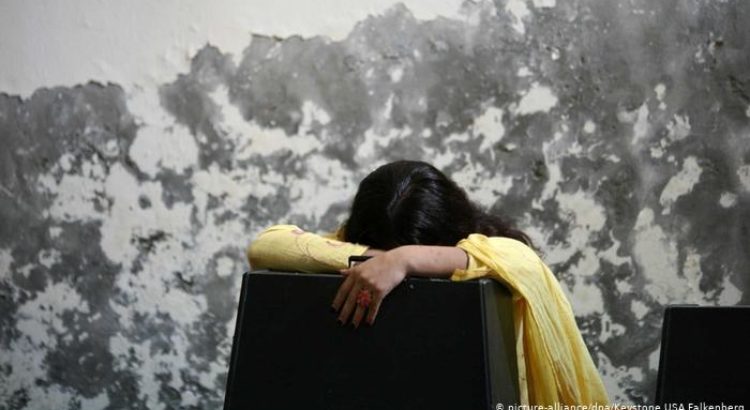
Pakistan ranks as the sixth most dangerous country in the world for women, with cases of sexual crimes and domestic violence recording a rapid rise. Activists blame society’s patriarchal attitudes for the problem.
40-year-old Shazia S. was busy talking to her daughter at her parents-in-law’s house in Lahore. The mother of six barely had any idea what awaited her. Her husband Sajjad R., a mason by profession, suddenly turned up and asked her to accompany him. She was surprised, but went with him nonetheless.
«He grabbed me firmly, shoving me against the wall and unleashing a barrage of kicks and slaps,» Shazia told DW. «Then he picked up a metal pipe and started hitting me mercilessly,» she added. Shazia’s husband suspected that his wife was having an extramarital relationship. He kept asking about it while hitting me and wouldn’t listen to me even though I stressed that I wasn’t having any extramarital affair, she said.
Sajjad even threatened to kill her and used his knife to cut off her nose, Shazia said. «No one could hear my cries because he had tightly locked the door. He also inflicted wounds on other parts of my body, including my neck, and then fled. He left me bleeding and crying for help,» she recollected.
After the ordeal, Shazia’s neighbors took her to a hospital, where she was treated. The doctors said they couldn’t fix her nose with plastic surgery, but that she could try and get some treatment abroad.
Amjad Ali, an investigating officer in the case, told DW that the police raided various locations to nab the accused, but could not find him. Shazia’s husband has now received bail and the court hearings of the case are set to take place in the coming weeks.
«The police failed to arrest my husband, who managed to get bail even before his arrest,» Shazia said. «He came back to our area just the other day and told one of the residents that he chopped off my nose to teach me a lesson and save his honor, because he suspected me of meeting another man.»
Shazia, who is now living with her mother in Lahore, fears for her life. Her husband wants her to withdraw the case against him. But she says she cannot imagine living together with a person who has ruined her life. She is also afraid that her father-in-law, a retired police official, might influence the authorities and seek to compromise the legal case against his son. Shazia stressed that she would not let her husband go scot-free.
Rising numbers
Shazia is not the only victim of gender violence in Pakistan over the past several months. Recently, a woman was badly beaten up by her husband, a policeman, in Sheikhupura, a city located 55 kilometers away from Lahore.
Violence against women has been on the rise in Pakistan, a country of over 200 million people. It ranks sixth on the list of the world’s most dangerous countries for women.
According to statistics collected by White Ribbon Pakistan, an NGO working for women’s rights, 4,734 women faced sexual violence between 2004 and 2016. Over 15,000 cases of honor crimes were registered. There were more than 1,800 cases of domestic violence and over 5,500 kidnappings of women during this period.
According to media reports, more than 51,241 cases of violence against women were reported between January 2011 and June 2017. Conviction rates, meanwhile, remain low, with the accused in just 2.5% of all reported cases ending up being convicted by the courts.
The chief justice of Pakistan has recently announced that 1,000 courts would be set up to deal with the cases of violence against women.
«Women police stations and other facilities are set up in cities while the majority of the violence cases take place in villages,» Mai said. «In rural areas, feudal landlords call the shots; the administration and police are subservient to these feudal chieftains who view women as commodities. So how can justice be delivered in such cases?»
Farzana Bari, another prominent women’s rights activist, believes the patriarchal attitudes prevalent in Pakistani society are responsible for the problem. «No government has ever tried to put an end to this mindset,» she said.
«It can be done by educating women in rural areas, empowering them economically and raising their representation in the legislature. If women constitute more than 45% of the population, why should they not have the same representation in the economy, employment and government?»
Critics say the current Pakistani government, under Prime Minister Imran Khan, hasn’t been focusing on empowering girls and women.
In the northwestern Khyber Pakhtunkhwa province, governed by Khan’s Pakistan Tehreek-e-Insaf (PTI) party, official recently issued guidelines ordering girls to wear the veil or abaya.
The order drew widespread outrage, forcing the government to reverse the decision. PTI leader and former federal minister Ishaq Khakwani admitted that the government did not pay enough attention to address the issue of violence against women.
«Only the government cannot be blamed for this situation. The entire society will have to come forward. The police and the judiciary will also have to play their roles. If cases linger in courts for years, then victims are forced to find other ways to settle such cases. So a comprehensive reform program is needed and all sections of society will have to play their role.»
Source of the notice: https://www.dw.com/en/violence-against-women-on-the-rise-in-pakistan/a-50550672
India released a Draft National Education Policy (DNEP) in June 2019. It’s the first comprehensive policy proposal on education in the country since 1986 and a major, game changing statement.
Australia has a moral duty to engage with the global challenge of providing quality education to hundreds of millions of Indian youth. And by engaging with India as it rolls out this policy, Australian universities stand to gain knowledge and research capacity, among many other things.
What’s the new policy trying to achieve?
India’s National Policy on Education was framed in 1986 and modified in 1992. Clearly a lot has change in the country since then.
The proposed new policy is remarkable for two main reasons.
First, it takes a cold-eyed look at the existing educational structures and processes in India. The document reflects honestly and in depth on state-level universities and colleges where the majority of students study. In these institutions, the facilities, teaching, and governance are usually poor.
A second remarkable element to the draft is the scale and boldness of the vision. The policy aims to make changes across all levels of education – from early childhood to university.
The draft policy, which is currently in the consultation phase, recommends doubling funding for public education from the present figure of roughly 3% of GDP to 6%.
It aims to change the structure of school education so children begin their schooling at three years old, with three preschool years incorporated into the formal structure.
The draft policy also calls for an overhaul of teacher training which will now occur in universities rather than specialist colleges, which are often of low quality.
In tertiary education (though the draft is weak on the issue of vocational education), the policy sets a target of 50% of youth being enrolled in universities by 2035 (in 2016, the figure was 24.5%).
The DNEP recommends dismantling the current system of universities and private and public colleges to develop between 10,000-15,000 multi-disciplinary universities, which would be funded in part through the increased government investment in higher education.
The document notes the current system is made up of more than 850 universities and about 40,000 colleges, with 20% of those colleges offering just a single program of study, and 20% having under 100 students.
The main thrust of this policy regarding higher education is the ending of the fragmentation of higher education by moving higher education into large multidisciplinary universities and colleges, each of which will aim to have upwards of 5,000 or more students.
The new institutions are envisioned to promote education in the arts and social sciences. The focus on “liberal arts” will encourage critical thinking and appreciation of the value of education beyond just preparing the population for employment.
The DNEP emphasises the importance of developing a research culture across most universities in India and stresses the value of internationalisation by “preparing our students to participate in world affairs through providing them with learning experiences that cut across countries and cultures”.
It also aims to to “attract students from other countries to participate in our higher education programmes”.
Why Australia should care
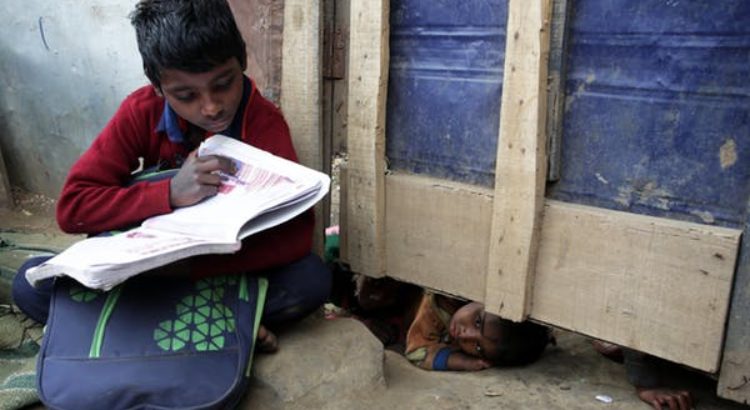
The poor quality of school and university described in the DNEP is a critical global challenge. As it stands, large parts of India, especially northern India, are unlikely to meet the United Nation’s Sustainable Development Goal 4, which calls for accessible, quality education for everyone.
Australia should partner with India to address the needs of the hundreds of millions of young people demanding a better education.
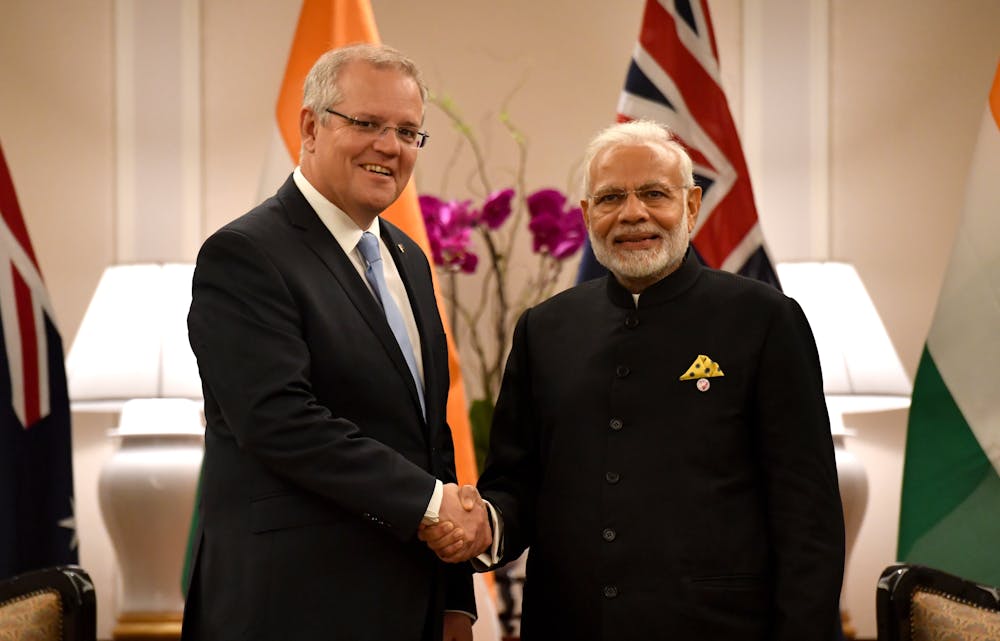
Australia has a lot to gain from engaging with India on its new education policy.MICK TSIKAS/AAP
By interacting with top Indian researchers and students, Australia can also improve its own research and knowledge capacity. Australia can make commercial gains from working with India in the redevelopment of its education system.
Australian universities can act in five areas in particular:
1. Build research capacity in India and across the Australia-India boundary
Australia already has a research partnership with India, the Australia India Strategic Research Fund (AISRF). This should be extended, through a joint new research fund with India’s already established new National Research Foundation.
India faces a major challenge in creating a body of excellent researchers capable of occupying positions in its proposed new universities. It is therefore crucial that research partnership also involves building this capacity, especially by creating new PhD training and post-doctoral positions.
2. Partner with India in open and distance learning (ODL)
The DNEP’s goal of increasing the number of students in university in India to 50% can’t occur through bricks and mortar expansion. India has a lot of experience on ODLs but Australia and India could usefully partner in the development of better quality technology platforms.
3. Help train Indian school teachers
Australia has major strength in teacher education. India is looking to other countries to assist in training the staff in universities who will be responsible for training teachers in the new system. Australian action in this area would greatly help Indian education into its next phase.
4. Provide expertise on internationalisation
Australia has been very successful since the 1990s in internationalising its education. Education is now one of Australia’s largest exports. Australian universities and peak bodies such as the Group of Eight Universities could be partners in India’s efforts to internationalise.
5. Building campuses in each other’s countries
The DNEP recommends overturning regulation that prevents foreign universities from establishing campuses in India. It invites the world’s top 200 universities to develop a physical presence in the subcontinent. It also encourages Indian institutions to consider opening campuses abroad.
Australian universities could approach Indian institutions to discuss the development of a physical presence in each other’s countries, such as laboratory spaces, research centres or campuses.
The DNEP is remarkable on many levels: a bold effort to rethink education from first principles in a country containing one fifth of the world’s youth. Australia should make it a priority to engage.
Source of the notice: https://theconversation.com/india-is-reforming-education-for-the-first-time-since-1986-heres-why-australia-should-care-121812
No mas Violencia contra la Mujer, derrotemos la cultura patriarcal
Latinoamérica y el mundo viven un despertar de la conciencia colectiva respecto a la situación denigrante del femicidio y el maltrato contra las mujeres. Esta realidad es una muestra de la degeneración social que genera el capitalismo. Las relaciones humanas son cada día más permeadas por la lógica de la mercancía y el lucro, que supone la competencia, la dominación y la violencia verbal, psicológica, física y de clase social.
Desde Otras Voces en Educación nos sumamos al aleteo de millones de mariposas y luciérnagas que le gritamos al mundo que no puede haber libertad, desarrollo sostenible ni humanidad si continua siendo la violencia contra la mujer un problema de nuestras sociedades.
Por ello, le hemos pedido a mujeres de distintas geografías que nos digan que se esta haciendo para saber cómo podemos juntarnos mucho más.
En este podcast tenemos a la profesora Mariangela Petrizzo de Venezuela, quien es del colectivo activista sobre el software libre, nos habla de la ciberviolencia hacia las mujeres
+Fuente de la imagen: http://www.comunidad.madrid/actividades/2019/jornada-ciberviolencia-ninas-mujeres
OtrasVocesenEducacion.org existe gracias al esfuerzo voluntario e independiente de un pequeño grupo de docentes que decidimos soñar con un espacio abierto de intercambio y debate.
¡Ayúdanos a mantener abiertas las puertas de esta aula!






 Users Today : 29
 Total Users : 35459495
 Views Today : 37
 Total views : 3417795