Page 155 of 772
1 153 154 155 156 157 772

Estudiantes de India luchan por una educación accesible

Estudiantes de India luchan por una educación accesible

El país ha estado marcado por protestas, desde el pasado mes de octubre, luego que la Universidad Jawaharlal Nehru, en Nueva Delhi subió los costos de los estudios.

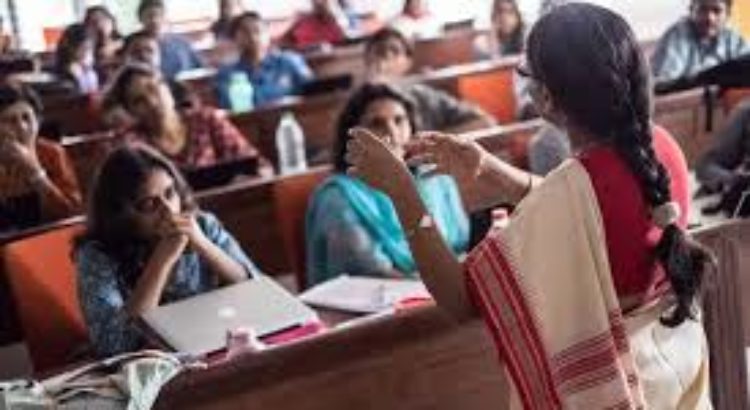
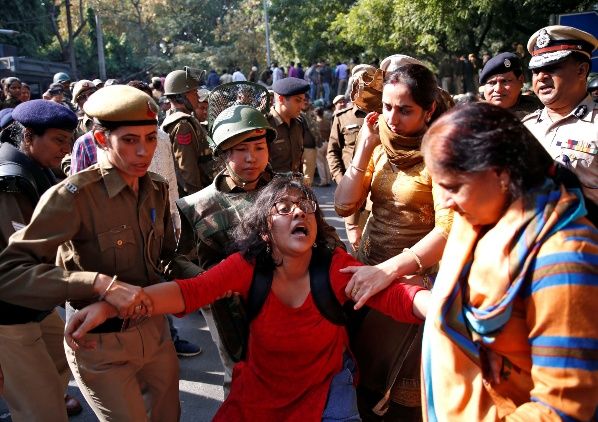
Organizaciones estudiantiles de la India se movilizaron este viernes hasta el Parlamento del país para exigir una educación asequible para los jóvenes más humildes de la nación.

La prensa local reseña que desde finales del pasado mes de octubre comenzó la lucha de los estudiantes de varias universidades del país, luego que se intesificara la privatización de la educación.

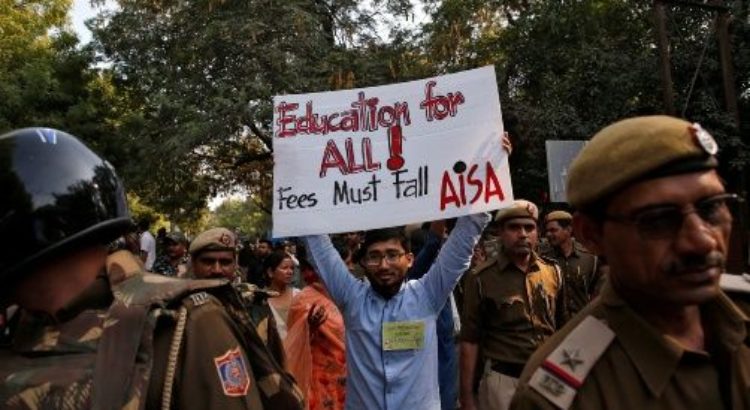
Bajo los lemas «educación asequible para todos» y «lucha por tus derechos», los jóvenes están en las calles exigiendo que se reduzacn los costos para estudiar en las universidades, ya que esto es un derecho y no un privilegio.

Los jóvenes estudiantes han marchado bajo las consignas «educación asequible para todos» y «lucha por tus derechos». | Foto: Reuters.

Los estudiantes denuncian que la privatización en la educación superior el Gobierno elude su responsabilidad de garantizar ese derecho y excluye a los jóvenes más humildes en prepararse con una profesión.

El pasado mes de octubre, el vicerector Mamidala Jagadesh Kumar anunció la subida del 400 por ciento en las tarifas de albergue para la Universidad Jawaharlal Nehru.

Ante la medida de la JNU de la India, los estudiantes iniciaron las protestas por el aumento de tarifas debido a que temen que los jóvenes de familia más humildes no puedan seguir con sus estudios.

Fuente de la Información: https://www.telesurtv.net/news/india-estudiantes-protestas-educacion-accesible-20191129-0019.html

Comparte este contenido:

Reviving Higher Education in India

Asia/ India/ 03.12.2019/ Fuente: www.brookings.edu.

India has seen a dramatic increase in the capacity of its higher education sector in the last two decades. Enrolment in higher education has increased four-fold since 2001. With a Gross Enrolment Ratio (GER) of 26.3% (AISHE 2018-19), we are close to achieving the target of 32% GER by 2020. However, many important questions such as the quality of Higher Education Institutions (HEIs) and employment of graduates merit further examination.

In this report, we address these questions by examining the enrolment trend and patterns; graduation and employment patterns; and the quality assurance framework for HEIs in India. We also track the policy shifts that enabled this expansion. We offer context to India’s expansion by comparing it to other countries. We also compare the growth of India’s higher education sector to that of China over the last 25 years.

Despite the increasing number of professional colleges, three-year degrees in arts, commerce and sciences remain the most popular programmes as evidenced by high enrolment rates.

  • India has seen a rapid expansion in the higher education sector since 2001. There has been a dramatic rise in the number of higher education institutions (HEIs) and enrolment has increased four-fold. The Indian higher education system is now one of the largest in the world, with 51,649 institutions.
  • Despite the increased access to higher education in India, challenges remain. Low employability of graduates, poor quality of teaching, weak governance, insufficient funding, and complex regulatory norms continue to plague the sector. India’s gross enrolment ratio (GER) in 2018-19 was 26.3% but still far from meeting the Ministry of Human Resource Development’s target of achieving 32% GER by 2022.
  • As the government evaluates proposals to reform the University Grants Commission and implement the recently proposed Draft New Education Policy 2019, this Brookings India report takes a wider view of reforms necessary to respond to challenges facing higher education in India today. It examines the capacity of HEIs with respect to students as well as teachers; governance and accountability; funding and affordability; research and innovation; and, regulatory regime, to create a globally relevant and competitive ecosystem that can produce employable graduates and sophisticated knowledge workers.
  • The exponential growth of the sector has been due to the increased demand for higher education. The higher education sector has grown across all levels and disciplines. However, broad trends and patterns in enrolment, graduation and placement suggest that access to higher education continues to remain a challenge, especially at the postgraduate level.
  • Given the low proportion of students that go on to pursue postgraduate and doctoral education, a shortage of qualified teachers is a further problem that is plaguing even the best universities in India. High entry barriers, poor incentive structures, stringent tenure rules and rigid promotion practices lead to a limited supply of faculty.
  • Faculty shortage, low inputs available for research and inadequate industry linkages amplify the existing limited uptake of good quality independent research in HEIs across all disciplines. We find that while countries like the United States, China and South Korea have invested in research to build a skilled, productive and flexible labour force, HEIs in India, in contrast, lack the culture of independent academic research.
  • The higher education sector in India is crippled due to the lack of financial, academic and administrative autonomy granted to institutions. Overall, this has resulted in the poor quality of institutions as well as education. Under the affiliating university model, the supervisory authority for most colleges is the university or a government authority; both lack the capacity to effectively regulate their constituent colleges and hold them accountable. In contrast, autonomous HEIs are at an advantage since they have the power to constitute their own academic councils and make decisions on academic matters.
  • In the last three decades, the government has taken a step back from its role as the primary funder of higher education. Union funding for government and government-aided HEIs is skewed in favour of central universities, and state governments spend a lot more than the central government on higher education. While, there is little to no data on how the higher education sector is funded, we do know that household expenditure on higher education is now the biggest source of funding. Private HEIs are funded almost entirely by student fees. Research suggests that the average tuition fee for an engineering degree from a private institution is almost twice as that of a public institution, while private HEIs account for three-fourths of all enrolments.
  • Limitedassessment and accreditation capacity of the NAAC and NBA has been a significant barrier in linking the performance of an institution to autonomy and funding decisions. Thus far, NAAC has retained the exclusive power to accredit HEIs, allowing corruption and profiteering to creep into the sector.
  • Several proposals, committees and draft policies in the last decade have suggested the need to revamp the University Grants Commission in order to resolve the numerous roadblocks in an over-regulated regime in the Indian higher education sector. The distribution of functions, roles and responsibilities among several agencies and providers has inhibited innovation and creativity, and led to issues with accreditation of HEIs, their autonomy and inadequate funding. Some recent measures—for instance, granting Institution of Eminence status to select HEIs, enactment of IIM Bill 2017, many proposals made under the DNEP19—demonstrate that these issues have been acknowledged and reforming the regulatory regime is non-negotiable.


Fuente de la noticia: https://www.brookings.edu/research/reviving-higher-education-in-india/

Comparte este contenido:

High stake exams for children

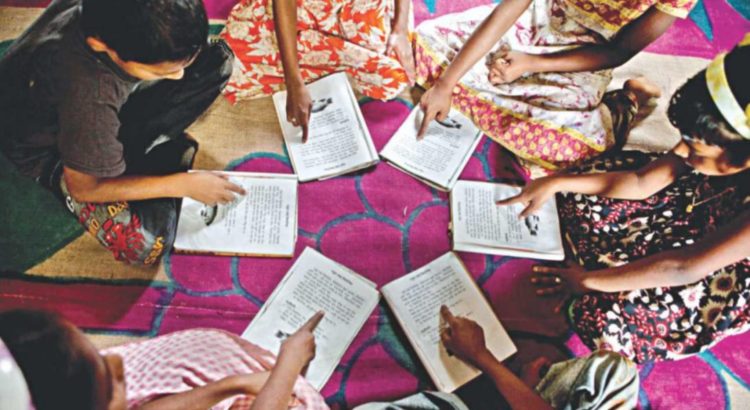
Issuing a suo moto rule on November 20, the High Court questioned the legality of the expulsion of children from Primary Education Completion Examination (PECE) and its madrasa equivalent Ebtedayee terminal examinations. The HC bench of Justice M Enayetur Rahim and Justice Md Mostafizur Rahman issued the rule following a report published in a Bangla daily. The daily reported that around 15 students had been expelled from PEC and Ebtedayee terminal examinations which had started on November 17. The hearing has been set for December 10.

The court will consider the circumstances and justification of children being expelled from the exam. According to some reports, the expelled children were proxy examinees on behalf of other children, an offense, if true, that cannot be tolerated. The larger and more serious concern is how a primary school exam has such high stake that children, their parents, and perhaps teachers find it necessary to collude to commit a crime.

This is the question, we hope, the HC will consider. The education authorities have failed to address this question. It has been raised persistently by education researchers, child development experts, and parents ever since the nationwide public examination at the end of class 5 was introduced in 2010.

Until 2010, school-based assessment of students in primary school was the common practice. A small number of students of class 5, aspiring for a government scholarship, sat for a centrally administered test. The rest went on to secondary school after obtaining a certificate from their school.

Since then, highly competitive, high-stake, national, centrally administered public examinations at the end of grades 5 and 8, were added to the already existing SSC and HSC exams at the end of grade 10 and 12. The intention was to put teachers and schools under scrutiny, set some common standards of performance, and satisfy over-anxious parents.

The potential effect on children and teaching-learning in school from frequent public exams was forgotten. Education experts were sceptical about this move. But there was a great hype about the virtues of frequent examinations by politicians and officials, always on the lookout for quick-fixes. A dispassionate look was not taken at the consequences of making students totally pre-occupied with preparing for and taking tests, instead of engaging in and enjoying learning. Frequent exams became the remedy for the perceived decline in students’ learning outcome.

The counter-productive and perverse consequences of too many public exams since 2010 have been well documented. These included a surge of private coaching, commercial guidebooks, rote memorisation, desperation for guessing questions, cheating in exams, question leaks, incentive for authorities to show high pass rates and so on. (Education Watch Report 2014, Whither Grade 5 Examination, CAMPE.)

Evidence collected by researchers and CAMPE led to the recommendation to the government in 2016 to drop the grade 5 public exam and rethink student assessment. The then Minister of State for Primary and Mass Education, Mr Mostafizur Rahman, MP accepted the recommendation, but was not able to persuade his cabinet colleagues to change the status quo. Exams continue to reign supreme—and learning a lesser priority.

A Bangla daily, under a banner headline, “A Primary Education Board in the Offing,” reported that establishment of a new education board along the line of secondary education boards, is under consideration to conduct the nationwide PECE. An institutional structure, it is argued, is needed to administer the exam for over three million examinees at the end of class 5. The parliamentary committee on primary and mass education apparently has suggested such a step.

This move would be wrong on at least three counts. First, with grave doubts and ongoing debate about the PECE, it is not right to double down to take measures for institutionalising this exam. Secondly, it is necessary to get beyond the past fragmentation of school education management into primary and secondary and start thinking about curriculum, learning assessment and quality improvement for school education, pre-primary to grade 12, as a whole; universal quality primary and secondary education is the SDG 2030 goal which is also a pledge of Bangladesh’s. Thirdly, we need a technical body for learning assessment research, development and application, rather than an examination board of the type that exists today at the secondary level.

It is not that all exams and student assessment should be ditched. The value of traditional school-based annual exams needs to be restored. Public assessment at key stages should be for assessing basic competencies in language, math and science rather than using these as a substitute for the annual school-based exams. Schools, teachers, parents and the education authorities need to prioritise teaching and learning, rather than preparing for and taking public exams.

The example of Singapore or Finland having primary level public exam is sometimes mentioned in justifying our primary completion examination. This is based on a misunderstanding of student assessment in advanced systems. Singapore has a Primary School Leaving Examination (PSLE) at the end of grade 6, which, among other things, determines school choice for students. It is held over four days in October, about two hours each day, on students’ skills in English, mother tongue, math and science, rather than on all school subjects and is not linked to textbooks. Elimination of even this form of PSLE is under consideration, to be replaced by an assessment approach in line with the “learning for life” goals (“Testing and Learning – How Singapore Does It,” The Daily Star, October 5, 2018).

In Finland, a grade 6 external exam is optional for students, and is used to assess schools and the system rather than individual students who are not given a specific mark or grade based on the exam.

Moreover, the learning resources and teacher skills and competencies are very different in Singapore and Finland and similar advanced systems. Assuring the quality of teaching-learning is the priority there; assessment in school and external ones are a secondary means to this end.

The original introduction of PECE and class 8 public exam (JCE/JDE) and the prospective exam board are examples of how decisions affecting millions of children should not be taken. It is a closed and bureaucracy-dominated approach without due consideration of all the consequences and lessons from research. Could the Parliamentary Committees for Primary and Mass Education and for Education hold a joint public hearing inviting experts and stakeholders on these issues?

Source of the article: https://www.thedailystar.net/opinion/education/news/high-stake-exams-children-1834363

Comparte este contenido:

Misplaced Modesty Hampers Sex Education in Japan’s Schools

Asia/ Japan/ 02.12.2019/ Source: www.nippon.com.

Sex education in Japan’s schools lags behind that in other countries on many fronts. What are the differences and why is Japan behind so much of the rest of the world? We asked Hashimoto Noriko, professor emeritus at Kagawa Nutrition University and an authority on educational sociology and gender studies, to explain.

Learn About the Body—But Keep It Clothed

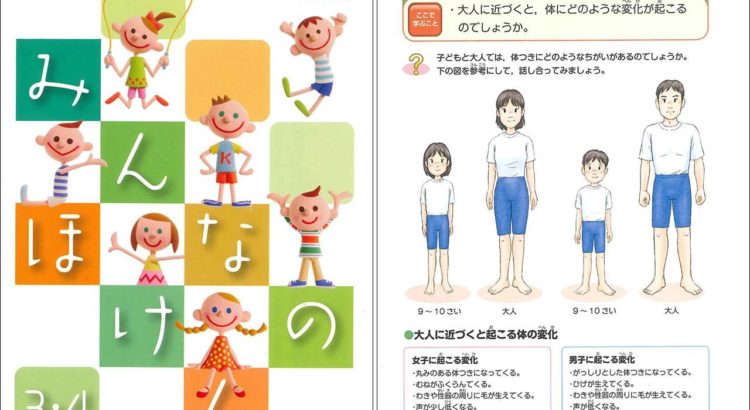
This is a page from a health and physical education textbook for third and fourth grade school students. The textbook is Minna no hoken (Health for Everyone, published in 2011 by Gakken) and the page is titled, Otona ni chikazuku karada (“As the Body Approaches Adulthood”).

Shown are a boy and girl, around age 10 and as adults. All are depicted wearing short-sleeved tops and shorts. Says Hashimoto: “How can you learn about the changes in the body by looking at an illustration of clothed figures?” In the 2005 edition of the textbook, the figures are naked, but someone decided to put clothes on them for the 2011 edition.

What are the textbooks like in other countries and how do they handle sex education? Hashimoto explains, “Many countries carry out comprehensive sex education based on UNESCO’s International Technical Guidance on Sexuality Education. Comprehensive sex education covers much more than just the subject of how the body develops. It encompasses everything from relationships and rights to sexual diversity and gender equality.”

The international differences are stark, as she explains. “In Finland and France, they teach biological facts, such as the role chromosomes play in determining the sex of a fetus; they delve into the diversity of human sexuality; and they explore the phenomena of human relationships. In China, they use explicit illustrations of the sexual organs to teach about sex, and the sex education in major Chinese cities is strongly influenced by the attitudes of Chinese citizens who have studied abroad. In Japan, however, as we can see by this textbook illustration, nothing is taught about the biological and scientific facts of human reproduction.

“In South Korean sex education textbooks, they even explain how to put on a condom. Thailand doesn’t go into that much detail, but does teach about safe sex as one way to deal with sexual urges. The correct way to put on a condom is not taught in Japan. Most sex education textbooks in Japan just do not meet international standards.”

Hashimoto Noriko believes Japan has much progress to make in the area of sex education. (Photo provided by Hashimoto)

A great part of this is due, says Hashimoto, to National Curriculum Standards that prohibit teaching about the processes of fertilization in fifth-grade science or about pregnancy in first-year junior high school health and PE classes.

Hashimoto explains how sex education in Japan got to this point.

“In the 1990s, sex education in Japan was among the most advanced in Asia, in part because of the AIDS scare. It was possible then to teach junior high school students about sexual urges and sexual behavior, sexual intercourse and birth control, and sexually transmitted diseases. The revised government education guidelines for elementary schools issued in 1992 for the first time called for health class textbooks for the fifth and sixth grades. A supplementary reader published in 1991 included a section on sexual intercourse. A textbook with similar content is being used in South Korea right now for sixth grade classes. But in Japan, this supplementary reader is out of print.”

Backlash Against Sex Education

Japan’s sex education was at the forefront in the 1990s. Why did it suddenly regress? The backward trend is related in part to a 2003 campaign to stop sex education at what is now the Nanao Special Support School, a Tokyo public institution for children with special needs. The campaign was led by some members of the Tokyo metropolitan assembly who were shocked to learn the school was teaching children with mental disabilities about sex using songs and dolls. They criticized the school for teaching “inappropriate” content that went well beyond government curriculum guidelines. The Sankei Shimbun concurred with a report critical of such “extreme” education, and the Tokyo Metropolitan Board of Education took disciplinary action against the principal and other teachers at the school. The faculty and parents fought back, however, taking the case to court with the claim that such intervention by metropolitan assembly members and the board of education was illegal. The case went all the way up to the Supreme Court, where it ended in 2013 in the defeat of the Tokyo metropolitan government and legislature.
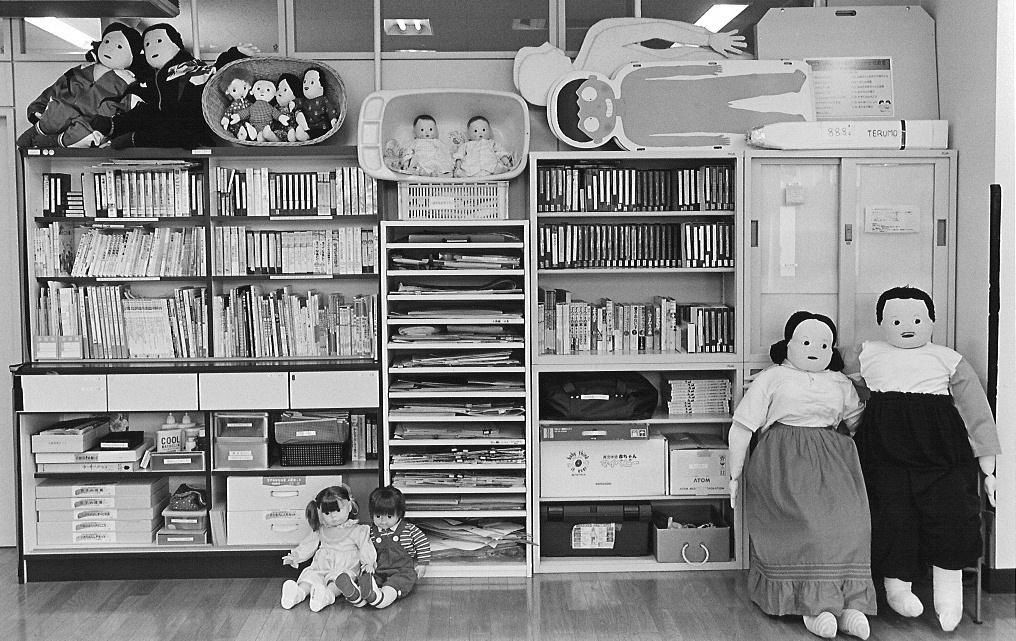
These sex education materials in the health care office at the Nanao school were confiscated by the Tokyo Metropolitan Board of Education in 2003 in response to growing public disapproval of sex education in general.

“The court decision stated that the National Curriculum Standards could not be interpreted as word-for-word legal writ,” says Hashimoto. “In other words, the Standards are simply guidelines and a school’s decision to do something outside of the guidelines cannot be immediately judged as illegal. This case took ten years to resolve and went all the way to the Supreme Court. During this decade, sex education stagnated in Tokyo schools, where the disciplining of the Nanao teachers had a chilling effect.”

In 2004, immediately following the furor over the Nanao incident, the Tokyo Board of Education revised its handbook on sex education to emphasize that sex education must be pursued systematically and in stages appropriate to students’ physical development and in line with the National Curriculum Standards.

The Nanao defeat did not deter a Tokyo assemblyman involved in the case to once again, in 2018, decry as “inappropriate” a school’s approach to sex education. This time the criticism was aimed at a ninth-grade class on birth control and abortion in a public junior high school in Adachi, Tokyo. The National Curriculum Standards recommend that these topics be covered in senior high school, but this does not mean the junior high school acted illegally by including them in their curriculum.

“This junior high school had found in a survey that nearly half of its students thought it was OK to be sexually active once they moved on to high school. This, and the fact that the school was located in a less affluent district, led to the decision that earlier education on birth control and abortion was imperative. The school did not bring up the topics all of a sudden. The teachers began by teaching the seventh graders about relationships and the importance of equality, gradually leading up to the topics of birth control and abortion.”

Hashimoto stresses: “Children who undergo sex education learn to control their bodies. Without proper knowledge, they are left defenseless. And yet there are people who do now want to give children the knowledge they need.”

The Problem with Sex Ed in Ethics Classes

In the case of this junior high school, the Tokyo Board of Education reprimanded the school for prematurely introducing topics that did not coincide with the children’s level of development, but the Adachi Board of Education refuted this claim. Against this background, the revised Tokyo Board of Education guidelines for sex education issued this year for the first time concede that sex education going beyond the National Curriculum Standards may be implemented with the approval of the parents. Still, Hashimoto sees a problem in the numerous examples given in the guidelines of sex education being implemented within ethics classes.

“I see problems with every one of the eight publishers of government-approved junior high school ethics textbooks,” says Hashimoto. “Take for example, the ethics textbook for public junior high schools published by Nihon Kyōkasho, a textbook publisher with close ties to Nippon Kaigi, an ultranationalist group. This ethics textbook—which, by the way, Tokyo decided not to use in its schools—has a section titled ‘Life Roles,’ which tells the story of a mother on the day she is to be interviewed for a promotion at work. Both parents work in this family, and they usually have the grandmother who lives nearby take care of their youngest elementary school child during the day. On this important day, however, the grandmother falls ill and needs to be taken to the hospital. The father says he must go to work, and the elder daughter, a university student, says she has to go to school to make a presentation. The mother phones her company to cancel the promotion interview saying, ‘It appears I have another role to play.’ The family’s junior high school daughter is left to wonder what this ‘other role’ might be. The message is: Housework, childcare, and nursing care of elderly parents take precedent over a woman’s career. This is completely out of line with the concepts of gender equality and diversity in UNESCO’s International Technical Guidance on Sexuality Education.”

The Impact of the Failure to Teach About Sex

The biological, scientific facts of sex, noted earlier, and the concept of gender equality are missing in Japan’s sex education, says Hashimoto. Gender equality is a core concept in the global standard set by UNESCO’s Guidance. Japan’s failure to teach this concept is evident in a number of areas.

“Some years ago Thailand introduced a policy allowing married couples to choose to have different surnames. This is still not allowed in Japan. As with the approval of oral contraceptive pills, Japan is once again the last holdout in the United Nations to approve such policy. The virility drug Viagra was promptly approved to treat erectile dysfunction in men, but it took a long time before contraceptive pills were approved. As can be seen in the ethics textbook example cited earlier, there is a neoconservatism, which first appeared in the 1970s, that blames Japan’s economic ills on a decline in morals and advocates a return to traditional conservative values. This dovetails nicely with the neoliberal interest in the pursuit of profit.”

Hashimoto goes on: “These people want to cut back on social security. The family should be the safety net, they say, and women should sacrifice themselves for the family. But this perception of society goes completely against the Convention on the Elimination of All Forms of Discrimination Against Women which calls for the elimination of gender-based roles.”

The CEDAW was adopted by the United Nations General Assembly in 1979, took effect in 1981, and was ratified by Japan in 1985. Later, in 1999, an amendment was added that allowed for individuals to directly appeal to the UN’s Committee on the Elimination of Discrimination against Women when their rights as stipulated by this treaty were violated and they were unable to find recourse within their own country. Hashimoto notes, though: “This is an optional protocol, and Japan is the only developed country that has yet to ratify it. If Japan had ratified this protocol, it would be possible to appeal to the United Nations to make Japan give couples the option to each retain their respective surnames after marriage.”

What does this kind of delay in promoting human rights mean for Japan?

“The UNESCO Guidance asserts that sex education from early childhood through adulthood can determine a person’s happiness throughout life. The failure to provide proper sex education hinders individual development and happiness. If things continue here as they are now, Japan is going to find itself isolated within the international community.”

Source of the notice: https://www.nippon.com/en/japan-topics/c06603/misplaced-modesty-hampers-sex-education-in-japan%E2%80%99s-schools.html
Comparte este contenido:

Educación vocacional ayuda a combatir pobreza en China, según informe

Asia/China/01-12-2019/Autor(a) y Fuente: spanish.xinhuanet.com

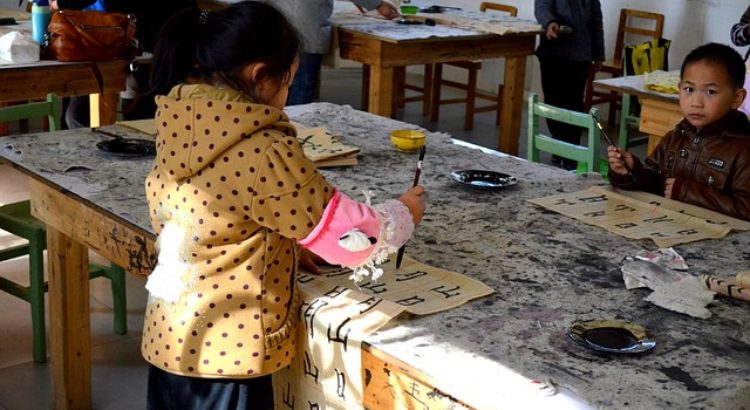
Las escuelas secundarias vocacionales han jugado un rol activo en la lucha contra la pobreza, según un informe de evaluación sobre este campo publicado por el Ministerio de Educación de China.

Hay 347 escuelas de formación profesional secundarias en áreas de extrema pobreza, con casi 600.000 estudiantes inscritos. Alrededor de 142.000 graduados profesionales de estas escuelas encontraron trabajo en 2017, con una tasa de empleo superior al 90 por ciento, indica el informe.

Más de 2,5 millones de estudiantes de escuelas vocacionales secundarias en todo el país recibieron becas y subvenciones en 2017, de los cuales la mitad eran de las zonas occidentales del país, añade el informe.

China contaba con un total de 10.671 escuelas secundarias vocacionales en todo el país en 2017. Alrededor de 15,9 millones de estudiantes de tiempo completo fueron matriculados en dichos centros educativos, lo que representa el 40 por ciento del número total de alumnos de nivel secundario, de acuerdo con el documento.

En 2017, 840.000 maestros de tiempo completo trabajaron en escuelas secundarias vocacionales de toda China, alcanzando la proporción de un maestro por cada 19 educandos, precisa el informe.

El texto agrega que las condiciones concernientes a los dispositivos y recursos de enseñanza continúan necesitando modernizaciones a fin de mejorar la calidad de la educación.

La evaluación fue realizada por la Academia de Ciencias Pedagógicas de Shanghai en 2018, basada en información de más de 6.800 escuelas vocacionales de todo el país y alrededor de 340.000 cuestionarios.

Fuente: http://spanish.xinhuanet.com/2019-11/29/c_138592826.htm

Imagen: PublicDomainPictures en Pixabay

Comparte este contenido:

Mujeres marchan para evitar otra guerra civil en El Líbano

Asia/Líbano/01-12-2019/Autor(a): Armando Reyes Calderín/Fuente: www.prensa-latina.cu

Por: Armando Reyes Calderín

Centenares de mujeres, sobre todo madres, marcharon en una zona de recientes enfrentamientos para evitar que surgiera otro conflicto armado interno en El Líbano.
La manifestación se concentró en un lugar que una vez dividió el este cristiano del oeste musulmán para rechazar los tambores de la guerra que se escucharon hace unas horas entre seguidores de una y otra confesión religiosa.

‘Sentimos que, como madres, teníamos que venir a decirles a nuestros hijos que vivimos una guerra y no queremos que se repita’, expresó Isabella, de 50 años de edad, en declaraciones citadas hoy por la versión digital del periódico The Daily Star.

Del mismo modo, Suzan Abdel-Ridah, profesora de la Universidad Libanesa, aseguró que salieron a la calle para que nadie los obligue a llevarlas al pasado.

‘Esta calle era toda una barricada’, recordó, mientras señalaba carriles que estuvieron obstruidos por los grupos que chocaron en días recientes.

La manifestación femenina portaba flores blancas en expresión de paz y tolerancia.

Una mujer musulmana con velo llevaba una cruz pintada en su frente, ‘mi apariencia de hoy habla por sí misma, no somos ni lo uno ni lo otro, somos libaneses’, dijo.

Las muestras de unidad contrastaban con episodios anteriores cuando desde ambas zonas se lanzaban piedras y otros objetos, lo cual pudo ir a más a no ser por la intervención del Ejército.

Se sabe que en la localidad de Chiyah predominan los musulmanes chiitas, mientras que en la aledaña de Ain al-Rummaneh hay mayoría del partido cristiano Fuerzas Libanesas.

Wissam, propietario de un supermercado de 34 años de edad, aseguró que la rivalidad de los dos bandos continúa presente desde la guerra civil de 1975-1990.

Empero, apuntó, ‘no queremos permanecer atrapados en esa mentalidad de guerra, muerte y sangre, queremos vivir, y es nuestro derecho vivir’.

Musulmanes y cristianos estaremos juntos hasta la muerte, nadie puede interponerse entre nosotros, según Mohammad Ghaddar, de 22 años de edad, y residente en Chiyah.

Del otro lado, en Ain al-Rummaneh, Simon Jawwous, actor (24) refrendó lo dicho por Ghaddar, ‘nuestra generación está viviendo la convivencia? todavía hay sensibilidades heridas, pero tal vez con la marcha de madres de hoy comiencen a desaparecer’, subrayó.

Jawwous confesó que junto a otros centenares combatió con bastones y piedras en la anterior jornada, pero ahora con más calma analiza que el problema no era entre cristianos y chiitas, más bien entre partidos.

Un intento, afirmó, de descarrilar el levantamiento popular sin precedentes que cubrió y cubre al país desde el 17 de octubre último.

‘Somos una generación que repudia la guerra. No quiero ser como mi papá que, a los 16 años de edad, estaba luchando contra personas que no conocía’, acotó.

Rima Majed, profesora de sociología en la Universidad Americana de Beirut, denunció que los políticos acudieron a la retórica de la convivencia sectaria para eludir la profunda división de clases existente.

‘Es importante para nosotros que en esta coyuntura crítica de nuestra historia no caer en la trampa de la división sectaria’, apostilló.

Lo clave es seguir luchando contra la división de clase y luego será contra el sistema sectario, concluyó.
Fuente: https://www.prensa-latina.cu/index.php?o=rn&id=324241&SEO=mujeres-marchan-para-evitar-otra-guerra-civil-en-el-libano
Imagen: jorono en Pixabay
Comparte este contenido:

Publican serie de libros sobre desarrollo de la filosofía y las ciencias sociales en la Nueva China

Asia/China/01-12-2019/Autor(a) y Fuente: spanish.xinhuanet.com

Una colección de libros fue publicada para abordar el desarrollo del pensamiento académico en filosofía y ciencias sociales desde la fundación de la República Popular China en 1949.

Revisada y publicada por la Editorial de Ciencias Sociales de China, la serie abarca 20 volúmenes basados en 35 libros publicados entre 2008 y 2018 y revisados este año por la casa editorial.

Los autores de los volúmenes son todos investigadores y miembros prestigiosos de la Academia de Ciencias Sociales de China o de las mejores universidades del país asiático.

La colección muestra cómo el pensamiento académico en filosofía y ciencias sociales se ha establecido, desarrollado y prosperado en los últimos 70 años bajo el fuerte liderazgo del Partido Comunista de China, así como los logros y experiencias de ese proceso, por lo que tiene un gran valor académico, afirmó hoy viernes en un simposio sobre este tema el presidente de la academia, Xie Fuzhan.

Fuente: http://spanish.xinhuanet.com/2019-11/29/c_138593534.htm

Imagen: ElasticComputeFarm en Pixabay

Comparte este contenido:
Page 155 of 772
1 153 154 155 156 157 772